

Key Takeaways
Treat civilization's crisis as a choice point, not an automatic ending.
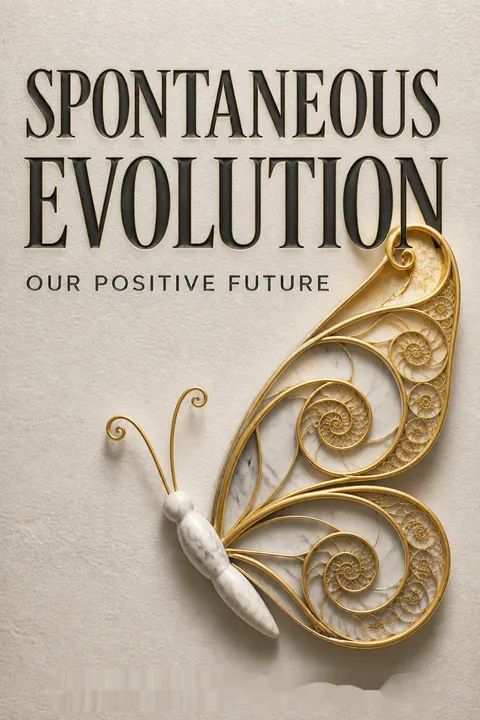
Crisis can open change. Bruce Lipton and Steve Bhaerman frame human history as a sequence of long stretches of stability interrupted by sudden upheavals. They compare this to a caterpillar becoming a butterfly: the same organism reorganizes under a new pattern, rather than simply growing into a larger caterpillar. In their metaphor, people who notice that old arrangements are failing are like imaginal cells, clusters that begin forming a different future inside the old structure.
Participation matters. The authors argue that crisis alone cannot guarantee a better society. People must change personal habits and shared assumptions, then build institutions that reflect those changes. The first widely circulated images of Earth from space, they suggest, helped people see the planet as a shared and vulnerable home.
The strongest part of this framing is its refusal to treat breakdown as either doom or automatic progress. A crisis can loosen habits and expose the cost of existing arrangements, but it can also intensify fear and authoritarian responses. The butterfly metaphor is useful as a prompt to organize and cooperate, not as a forecast that societies reliably transform in a humane direction. Its practical question is concrete: which small, connected efforts are building alternatives while familiar systems are under strain?
Change the signals and stories shaping your biology, not just your genes.
Cells respond to surroundings. The book describes cells as systems whose proteins perform functions when environmental signals activate them. In its model, membrane receptors detect those signals, while other proteins relay them into the cell. The authors extend this account to human life: experiences, relationships, and interpretations help shape bodily responses, rather than genes operating as a complete script.
Belief has limits. The authors use the placebo effect, in which expectation can affect a treatment's perceived benefit, and the nocebo effect, in which negative expectation can worsen experience, to argue that perception matters. But their more dramatic examples, including extraordinary strength and spontaneous remission, are anecdotes, not proof that belief alone cures disease. Their useful advice is to take mental and social conditions seriously without treating them as substitutes for medical care.
This section makes a valuable correction to the simplistic picture of the body as a machine running independently of context. Stress, expectation, and social conditions matter to health and deserve attention in medical conversations. The crucial distinction is between influence and control. A person's outlook can shape experience without making them responsible for every illness or able to reverse any diagnosis. That distinction protects the empowering message from turning into blame, especially for people facing serious or chronic disease.
Bring unconscious scripts into view before mistaking them for your character.
Autopilot is powerful. The authors distinguish the self-conscious mind, which can reflect and choose, from the subconscious mind, which runs learned routines. They cite an estimate that subconscious activity accounts for about 95 percent of behavior. In their account, early experiences, especially before age six, can become enduring expectations about worth, safety, and what a person can achieve.
Awareness changes responsibility. A child repeatedly told they do not deserve something may later undermine an opportunity without recognizing the old message at work. The point is not that every setback comes from childhood programming, but that automatic patterns can conflict with conscious intentions. Seeing those patterns can replace reflexive self-condemnation with a chance to respond differently. The authors also argue that forgiveness helps people stop reproducing inherited grievances, while still acknowledging harm and its consequences.
The distinction between intention and automatic behavior is a practical way to understand why insight alone often fails to change a habit. It also offers a humane account of how family and culture transmit patterns without making any one person their sole author. Yet the book's numerical claims about subconscious control should be read as a model, not a precise measurement of an individual's choices. Responsibility is most useful when it means capacity to act now, not blame for the conditions that shaped someone.
Build survival around cooperation and ecological fit, not endless rivalry.
Life depends on relationships. The book challenges the popular use of evolution as a justification for ruthless competition. It points to the long history of single-celled organisms joining into communities, then specializing into the cells and organs of complex bodies. Lynn Margulis's account of symbiosis supports the idea that cooperation and mutual dependence have been major forces in life's development.
Fit the whole system. The authors contrast individual advantage with what they call fittingness: whether an organism's way of life supports the environment it depends on. They describe research on a baboon troop whose social behavior became less aggressive after dominant males died, and bonobos whose food-rich habitat is associated with less resource conflict. These examples suggest behavior is shaped by social and ecological conditions, though neither case proves that cooperation always wins.
The book's central shift is from asking who wins a contest to asking whether the surrounding system remains viable. That question is useful in organizations, communities, and ecology, where one party's gains can impose costs elsewhere. It also prevents a common mistake: treating cooperation as the opposite of individual achievement. Shared systems can support individual development, but cooperation is not automatically benign. Groups need ways to handle conflict, unequal power, and free riding, rather than assuming harmony emerges by itself.
Use genes as responsive instructions, not as an unchangeable sentence.
Expression is regulated. Epigenetics is the study of mechanisms that influence how genes are read and expressed. The authors use a contractor-and-blueprint analogy: genes provide instructions, while signals from the environment influence which instructions are used. They point to the Human Genome Project, which identified about 23,000 human genes, far fewer than researchers had expected, as a challenge to the idea that complexity simply requires more genes.
Influence is not omnipotence. The book also discusses identical twins whose gene activity can diverge as their lives differ. These examples support a role for experience and environment in gene expression, but they do not mean people can freely choose their biology or eliminate inherited risks. The practical lesson is to consider conditions such as stress, nutrition, and social environment alongside genetic information, while recognizing that biology has multiple causes.
This is a persuasive argument against genetic fatalism, especially when genetic risk is communicated as destiny. Contemporary biology broadly supports the idea that gene activity interacts with development and environment. The book overreaches when it turns that interaction into a claim that beliefs make people masters of their genes. A more careful reading preserves both sides: inherited biology matters, and lived conditions can influence outcomes. That balance encourages agency without promising control that no individual actually possesses.
Combine ecological cycles with innovation instead of choosing past or progress.
Civilizations tell changing stories. The authors trace Western thought through four broad worldviews: animism, polytheism, monotheism, and scientific materialism. Each offered a way to answer where life came from, why people are here, and how to live. They argue that material progress brought useful technologies but also encouraged separation from nature and overconfidence in control. Their proposed next worldview, holism, tries to integrate physical science with spiritual and ecological awareness.
History has omissions. The book also highlights the influence of the Iroquois Confederacy on American political thought, including federal cooperation and local autonomy. It notes that the founders did not adopt the Confederacy's political authority for women. The authors use this history to challenge a triumphalist account of the United States and to argue that progress can learn from earlier forms of communal life without pretending the past was perfect.
The both-and approach gives the book's historical narrative a useful direction: preserve the knowledge and tools that improve life while restoring attention to the ecological systems they depend on. Its account of civilizations is a broad interpretive model, not a neutral or complete history, and the categories can flatten important differences within cultures. The Iroquois example is most valuable when treated as a source of political ideas and a reminder of exclusions, rather than as proof that one tradition offers a ready-made solution for modern societies.
Measure prosperity by well-being and ecological renewal, not money alone.
Wealth means more than currency. The authors define genuine wealth through well-being and argue that a healthy economy should meet people's basic needs while allowing communities and ecosystems to flourish. They cite a 1997 estimate that global ecosystem services were worth about $33 trillion annually. This figure attempted to value benefits such as clean water, fertile soil, and climate regulation, services often missing from ordinary market prices.
Keep value circulating. The book contrasts this with debt-centered finance and overreliance on consumption. It recommends local production, community currencies, and measures such as Bhutan's Gross National Happiness as ways to attend to relationships and quality of life. The $33 trillion estimate is not a price tag that could simply be collected; its point is that economies depend on natural systems whose contributions are routinely left out of financial accounting.
The distinction between market price and social value is essential: a product can be profitable while shifting environmental costs onto the public or future generations. The book's cellular-economy analogy makes interdependence vivid, and its emphasis on local circulation gives the idea a practical scale. Still, no single happiness index or ecosystem valuation can settle political choices. Measures should make trade-offs visible, not conceal them behind an apparently objective score or imply that every human need can be priced.
Shift resources from chronic defense toward prevention, repair, and growth.
Protection consumes energy. The authors' Survival Index is a way of thinking about an organism's ability to stay viable, considering available energy, growth, protection, resources, efficiency, and awareness. They argue that growth and defense compete for energy: when an organism perceives danger, it diverts resources toward protection and away from maintenance and development.
Apply the analogy cautiously. The book compares chronic stress in a body with a society that devotes large resources to military defense while neglecting health, infrastructure, and environmental care. Its example is the United States' post-September 11 shift toward security and war. This analogy does not make a nation literally equivalent to a body, but it invites a useful budget question: are protective measures reducing actual risks, or consuming resources that could prevent harm more effectively?
The framework is valuable because it makes opportunity cost visible. Security spending is not free simply because its benefits are framed as protection; it displaces other forms of resilience, including public health, maintenance, and prevention. The challenge is to avoid a false choice between defense and social investment. Some threats are real, and protection can preserve the conditions for growth. The better test is whether each protective measure is proportionate, effective, and less costly than the risks it is meant to address.
Design politics for shared wisdom, not just competition for power.
Crowds can reason well. The authors recount Francis Galton's 1906 ox-weight contest. The average of 787 guesses was 1,197 pounds, just one pound below the animal's actual dressed weight. They draw on this example to explain why groups can make strong judgments when members contribute varied, independent perspectives rather than simply echoing one another.
Structure the conversation. The book highlights citizen deliberative councils, where a diverse group studies an issue, hears evidence, and develops recommendations. It also presents Johan Galtung's idea of a fiver: a solution that moves beyond a win-lose contest or a compromise that leaves everyone dissatisfied. In one example, a farmer gave his neighbor's children lambs as pets, prompting the neighbor to restrain dogs that had been killing sheep. The solution addressed the relationship, not just the dispute.
This account connects sound decision-making to institutional design. Diversity alone does not produce wisdom; people need access to relevant information, independence from pressure, and a fair process for listening. The ox story illustrates the value of aggregation, but a crowd can also share the same blind spots or be manipulated. Deliberative forums are strongest when recommendations are transparent, participants can question experts, and elected officials remain accountable for what they do with the results.
Make compassion a practice that changes relationships, not a distant ideal.
Repair requires contact. The book's recurring ethical principle is to treat others as connected members of a shared community. It recounts how Jewish cantor Michael Weisser and his wife reached out to Larry Trapp, a local Ku Klux Klan leader who had threatened them. Their continued contact helped Trapp leave the Klan, apologize to targeted groups, and convert to Judaism before his death from illness.
Compassion is not passivity. The story does not erase the danger or excuse Trapp's actions. It shows how a relationship can create an opening for accountability and change. The authors connect this approach to the Truth and Reconciliation Commission in South Africa, which gathered testimony about political crimes as part of a transition away from apartheid. Their practical claim is that forgiveness can interrupt cycles of retaliation, while truth-telling keeps repair grounded in reality.
These stories make compassion more demanding than good intentions: it involves sustained attention to people who have caused harm, while protecting those they target. The South African process also shows why forgiveness cannot replace justice or public acknowledgment. The book's broader spiritual claims about love as a force in nature are less secure than its ethical insight. A relationship may alter someone's choices, but compassion should not be presented as a guaranteed cure for hatred or a duty imposed on victims.
Analysis
Spontaneous Evolution is a hybrid argument: part popular biology, part history of ideas, part civic manifesto, and part spiritual interpretation. Its organizing move is to carry the cell metaphor outward. If cells depend on signals, environments, and cooperation, the authors suggest, then human lives and institutions should be understood relationally rather than as isolated machines competing for scarce resources. This produces a memorable through-line from personal responsibility to ecological economics and participatory politics.
The book is most persuasive when it identifies the consequences of narrow models. Genetic explanations can obscure environmental influences; market prices can omit ecological costs; and security policies can consume resources without resolving the causes of danger. Its cellular analogy helps readers see these as connected failures rather than separate policy disputes. Yet analogy is not evidence of identity. A body has a tightly integrated biological organization, while societies contain disagreement, unequal power, and competing legitimate interests. A healthy organ metaphor cannot by itself specify fair institutions.
The book also blends well-supported ideas with claims that require much greater caution. Gene expression responds to biological and environmental context, but that does not show that beliefs can command genes at will. Quantum measurement does not establish that human consciousness creates ordinary social reality. Reports of remote prayer, psychic communication, and field effects are presented with more confidence than their evidential status warrants. The authors' narrative often slides from a metaphor that inspires inquiry to a scientific conclusion that the metaphor cannot establish.
The durable contribution is therefore less a new scientific theory than a moral and systems-level prompt: examine the assumptions built into institutions, track who bears their costs, and design for interdependence. The proposed shift from competition to cooperation is strongest when treated as a practical design problem, not a claim that nature is uniformly benevolent. Readers can keep the book's questions about context, ecological limits, and shared responsibility while testing extraordinary causal claims independently.
Review Summary
Spontaneous Evolution receives mostly positive reviews, praised for its hopeful message and synthesis of scientific and spiritual ideas. Readers appreciate Lipton's insights on evolution, cellular biology, and human potential. The book is seen as thought-provoking and transformative, offering a new perspective on personal and global change. Some critics find the writing style inconsistent or overly new age. Despite mixed opinions on specific aspects, many readers consider it an important work that challenges conventional thinking and promotes a more cooperative, loving approach to life and society.
People Also Read








Glossary
Spontaneous Evolution
intentional societal transformationThe authors' name for a hoped-for rapid change in human society as individuals and communities revise beliefs and behavior in response to crisis. The phrase draws on biological evolution and spontaneous remission, but it is used as a social and spiritual vision, not as an established scientific mechanism or a guaranteed outcome.
Biological imperative
drive to sustain lifeThe authors' term for the basic drive of living organisms to survive and reproduce. They extend it from individual cells and bodies to humanity, arguing that survival now requires attention to the species and the planet as well as to individuals. In this broader use, it becomes a guide for collective responsibility.
Epigenetics
regulation of gene activityThe study of mechanisms that affect how genetic information is expressed without changing the underlying DNA sequence. The book emphasizes that environmental conditions and cellular signals can influence gene activity. It uses this to challenge genetic fatalism, while its wider claims about beliefs directly controlling health go beyond what the term itself establishes.
Four Myth-Perceptions of the Apocalypse
four challenged cultural assumptionsThe book's label for four beliefs it sees as dangerous foundations of modern society: that physical matter is all that exists, competition governs survival, genes fix human destiny, and evolution is purposeless chance. The authors argue that these assumptions shape institutions and behavior, and that revising them could open more cooperative and sustainable possibilities.
Fractal evolution
repeating patterns across levelsThe authors' application of fractal geometry to biological and social development. They argue that self-similar patterns recur at different scales, so the organization of cells may offer clues about bodies and societies. The idea functions as an analogy and organizing framework in the book; resemblance across scales does not by itself prove that social systems follow biological laws.
Survival Index
model of organism viabilityA conceptual framework the authors use to discuss an organism's prospects for survival. It considers energy, growth, protection, resources, efficiency, and awareness. The book applies the model to human civilization, asking whether societies waste too much energy on defense and extraction while neglecting development, ecological renewal, and informed response.
Imaginal cells
clusters envisioning new formsThe book borrows this term from the caterpillar-to-butterfly metaphor for cells associated with the formation of a different organismal pattern during metamorphosis. The authors use imaginal cells as an image for people who recognize a failing social order and begin cooperating around new possibilities. It is a metaphor for social change, not a literal biological classification of activists.
Fiver
solution beyond compromiseA term associated with conflict mediator Johan Galtung's approach to resolving disputes. The authors use it for a solution that moves beyond either side winning, the other losing, or both accepting an unsatisfying compromise. A fiver reframes the issue so participants can pursue an outcome that addresses the underlying problem and offers value to all sides.
Co-intelligence
shared group problem-solvingA framework used in the book for combining the different knowledge and perspectives of a group to produce better decisions. It depends on inclusion, cooperation, and processes that prevent one voice from dominating. The authors connect it to citizen councils, collaborative online projects, and the possibility of making collective decisions more thoughtful and responsive.
The One Suggestion
practice reciprocal careThe authors' shorthand for the Golden Rule, expressed across several religious traditions as treating others with the consideration one would want for oneself. They present it as a practical principle for interdependent life, rather than a doctrine requiring agreement about religion. In the book, it links compassion in personal relationships with cooperation in public life.
Punctuated Equilibrium
stability interrupted by changeAn evolutionary theory associated with Stephen Jay Gould and Niles Eldredge. It describes a pattern in which species remain relatively stable for long periods, with evolutionary change concentrated in comparatively shorter episodes. The authors use the pattern as a model for understanding sudden social transformation, while biological evolutionary patterns do not guarantee that civilizations change in the same way.
About the Author

Download PDF
Download EPUB
.epub digital book format is ideal for reading ebooks on phones, tablets, and e-readers.








