

Plot Summary
Prologue
Aboard the Jolly Roger, Captain James Hook studies the letter Gwen traded for a night with him. He is already fixated on her, imagining a future in which grief will make her return to him.
He keeps the letter instead of sending it on at once, aware that Peter may come looking. Beyond the ship, lightning gathers above Neverland. Hook reads the storm as evidence that Peter knows Gwen has gone, and that the island’s next conflict is drawing near.
The prologue frames desire as a contest over who gets to interpret Gwen’s choices. Hook treats her letter as both a message and a possession, and his private fantasy turns her grief into an opportunity for control. Yet the storm outside unsettles his imagined mastery: the weather belongs to Peter’s emotional world, not Hook’s. The opening therefore establishes the novel’s central tension between intimate attachment and political force. Gwen’s absence is not a clean ending for anyone. It is a disturbance that each man reads according to his own need.
London's Borrowed Hours
Back in London after Neverland, Gwen can barely get out of bed. Her sister Michaela has stopped cancer treatment and wants to spend her remaining time comfortably, while Gwen keeps pressing her to try another specialist. To blunt the heartbreak of leaving Peter and the Lost Boys, Gwen drinks heavily and begins training at a boxing gym with Hannah.
After a fight with Michaela over funeral plans and an appointment Gwen arranged without permission, she runs into her ex, Jamie Holder. She uses their sexual encounter to reclaim a sense of control, then returns home to face Michaela’s anger. During their argument, Gwen shatters one of Eben’s enchanted knives. Michaela touches its faerie dust, and her health briefly returns.
Gwen tries to convert helplessness into action, first by exhausting her body, then by controlling Michaela’s medical choices and finally by reversing the power dynamic with Jamie. Each strategy offers a short-lived sense of agency, but none addresses the grief beneath it. Michaela’s refusal of treatment is not simple surrender. She is asserting ownership over a body that illness and her sister’s fear have made contested territory. The knife changes that conflict: magic offers hope, but only through the destruction of a treasured link to Neverland. Its cure comes with a cost before either sister understands the terms.
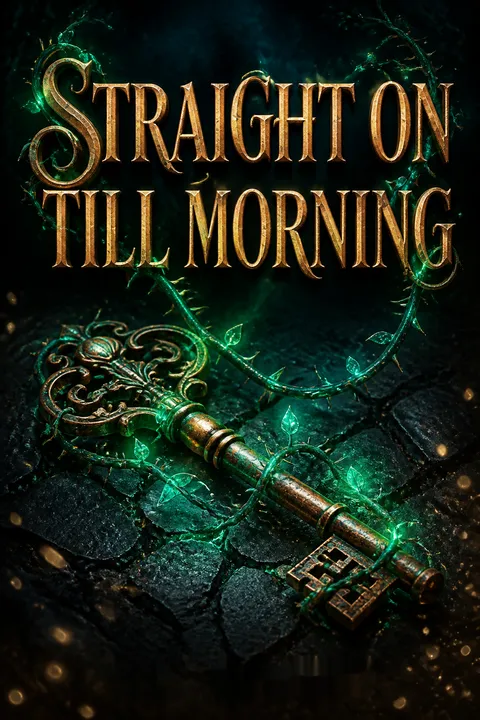
A Key Behind Stories
Michaela’s improvement fades, and a second dose of dust restores her only temporarily. The sisters decide they must return to Neverland, then visit their great-grandmother, Gram, whose dementia intermittently gives way to memories of Peter and the island. Gram passes Gwen an old skeleton key and hints that its answer lies in the stories.
At home, Gwen and Michaela find a concealed room behind a bookcase, opened by the key in a hidden copy of Peter Pan. Their mother’s notes reveal that their parents had secretly searched for a Lost Boy named Gage, hoping Neverland held a cure for Michaela. Files on the Lost Boys, including Ryder, show that the family’s connection to the island stretches back generations.
The key turns family history into an active inheritance. Gwen had understood her parents’ absence through the wound of abandonment; their notes expose a different motive, though they cannot undo the years of anger or their deaths. The hidden room gives the sisters something more useful than reassurance: evidence, names, and a route forward. Their search also echoes Gwen’s emotional predicament. She once treated Neverland as a private fantasy that could be shut away, but the family archive shows that its influence was never confined to her brief visit. The past becomes both a resource and a burden she must carry.
The Boy Called Gage
Gwen and Michaela contact Gage and travel to Heathrow, where a Fae sentry named Dain spirits them onto a cargo plane bound for Dublin. Their scheduled passenger flight crashes after takeoff, convincing them it was targeted to stop their journey. At the airport, Gage finds them and drives them to his cabin.
He confirms that sentries are watching the Darling family and explains that the Veil between realms has thin places, but humans need faerie dust and Fae help to cross. A sea route can bring the sisters to the right coordinates while Gage draws the sentries away. Before leaving, he gives Gwen an ancient atlas and a Fae-forged sword. A sentry later kills him for helping them.
Gage makes the sisters’ pursuit concrete, but every piece of progress arrives entangled with danger. The plane crash transforms their private search into a crisis with innocent lives attached, and Michaela’s guilt deepens the cost of continuing. Gage’s map and sword are practical tools, yet his story complicates the rescue fantasy: he once wanted to return to Neverland and was forced out after losing his legs. His sacrifice gives Gwen a model of purpose beyond personal longing. The journey can save Michaela, but it also draws other people into violence, challenging Gwen’s belief that determination alone can make the consequences acceptable.
The Storm Takes Its Toll
On a cargo ship approaching the Veil, Gwen destroys her final enchanted knife to preserve faerie dust for the crossing. Sentries intercept the sisters in a violent storm, seize Michaela, and scatter the dust. The Fae leader reveals that Tiger Lily wants Gwen alive as leverage over Peter. Lucius, a prince of the Neverland beasts whom Gwen once encountered, intervenes before the sentries can kill Michaela.
He shifts into a bear and defeats them, then carries both sisters across the Veil. In Neverland, Lucius explains that Michaela’s cancer is the human name for the Tribulation, a dangerous emergence of magic in her family line. He shares his own power with her, waking her and briefly easing her decline.
The crossing recasts Michaela’s illness from a medical tragedy into a political and magical consequence of a world beginning to change. That explanation offers meaning, but not an easy cure: even faerie dust only buys time, and Lucius’s intervention leaves the sisters dependent on alliances they do not understand. Gwen’s final knife is spent not to preserve a romance or a memory but to keep her sister alive. The choice marks a shift in her priorities. Her attachment to Neverland remains powerful, yet she enters it now as a protector responsible for someone else, not simply as a girl hoping to be chosen.
A Bargain with Beasts
Lucius takes Gwen to the court of his brother Nico, ruler of the beasts, while Michaela remains under the protection of the wolf Alo. Nico resents Lucius and distrusts Gwen, who has been banished from Neverland by the Council. She offers the ancient atlas Gage gave her in exchange for a healer and a promise to help Michaela.
Nico agrees, revealing that the healer, Iver, is already at court. As the group travels back, Tiger Lily’s forces ambush them. Gwen helps Iver reach the wounded Jase, then a satyr cuts deeply into her thigh. Eben, one of the Lost Boys, appears in the battle and carries her to safety. Gage’s sword and Gwen’s refusal to retreat help her survive the attack.
The beast court makes aid transactional: Gwen must wager a rare atlas because moral appeals alone cannot move Nico. Her negotiation shows how far she has traveled from the helplessness she once felt in Neverland, though she remains exposed to powers far beyond her strength. The ambush tests whether she can act under pressure rather than merely endure it. By assisting Iver and defending herself, she becomes a participant in the conflict, not simply its protected object. Eben’s return complicates that new self-possession. The man she misses is also tied to the betrayal she believes she suffered, so rescue cannot immediately restore trust.
The Lost Boys Return
At the Resistance camp, Amara’s people treat Gwen’s wound while she confronts Eben. He insists he did not knowingly abandon her to Hook: Tiger Lily had persuaded the group that Gwen left willingly, and the Council forbade them to pursue her. Gwen explains that she believed the Lost Boys had conspired against her and that Hook never delivered her letters as promised.
The misunderstanding begins to loosen, though Ryder and Tripp remain hurt by what she wrote. Lucius brings Michaela back to camp, where Iver begins treating her Tribulation. Her renewed strength and glowing connection with Lucius suggest a fated bond between them. The reunion is tender and uneasy at once, while Tripp reports that Peter has been captured by Tiger Lily.
The novel treats betrayal as a failure of information as much as a failure of loyalty. Gwen and the Lost Boys each made decisions from partial accounts, then experienced the other’s actions as proof of abandonment. Their explanations do not erase the damage, but they create room for responsibility on both sides. Michaela’s revival gives the group a rare moment of relief, while her emerging bond with Lucius hints that intimacy in Neverland carries consequences beyond desire. Peter’s captivity prevents the reunion from becoming a simple return to romance. The people who have just begun repairing trust must cooperate under pressure before they can decide what that trust means.
The Bone Faerie's Price
The Resistance asks Captain Hook, an alchemist and longtime enemy of Peter, to identify the black poison controlling him. Hook recognizes it as Black Lethe, made with the Osakren, a powerful relic the Lost Boys stole from the bone faerie at Tiger Lily’s request. The group returns to the Viridianwood and uses a replacement breastbone to revive the faerie they had buried.
She agrees to give Gwen a clue to Peter’s antidote if Gwen returns the Osakren. Before she releases them, the faerie marks Gwen’s wrist with black veins, binding her life to the bargain. She also foretells that Gwen’s choices will shape the conflict. A later vision reveals that restoring Peter’s true bond requires Gwen to reach him through intimacy.
The bone faerie’s bargain converts knowledge into a debt with a visible clock. Gwen receives what she needs, but the blackening veins make sure that insight cannot be treated as a gift without consequence. The Osakren also exposes the political chain behind Peter’s captivity: the Lost Boys once stole it to satisfy Tiger Lily, and that decision now empowers her. Hook’s expertise helps the group, but his participation remains uneasy because his history with Gwen and Peter is as charged as his rivalry. The vision’s intimate condition is especially fraught. It turns Gwen’s body into an instrument of rescue, echoing the bargains she has made while asking whether desire can be freely chosen amid danger.
The Camp in Ashes
The group returns to find the Resistance camp destroyed. Tiger Lily’s forces have captured Michaela, restrained Nico’s brothers Jase and Luca with wolfsbane, and killed Iver in the burning healer’s tent. Gwen finds Michaela’s damaged locket beside his body and breaks under the loss before turning her grief into resolve.
She and the Lost Boys seal a blood oath to protect one another and seek vengeance. Amara gives them a map of the Temple Mount, including a secret tunnel she left unsealed, and an Inalto that can magnify Gwen’s magic at a dangerous cost. Hook promises assistance but does not join their departure. The survivors prepare to enter Tiger Lily’s stronghold with no healer and little margin for failure.
The attack removes the structures that had made rescue seem manageable. Iver was not only a healer but the sisters’ clearest path to a lasting cure, and his death makes the conflict personal without making it simple. The broken locket concentrates that loss in a small object once meant to keep family close. Gwen’s blood oath answers devastation with chosen kinship: the Lost Boys become allies through mutual commitment rather than the idealized devotion she once assumed. Yet the oath is also a response to fear. Amara’s warning about the Inalto anticipates the danger of power used without restraint, while Hook’s absence leaves Gwen to decide whether his promise can be trusted.
The Moon Opens Stone
Amara’s hidden tunnel opens beneath the Temple Mount when the moon reaches its peak. Inside, the group evades patrols, but a bone faerie vision pulls Gwen away from the others and toward a trail of faerie dust. She finds Peter chained in a chamber, his eyes darkened and his body under Tiger Lily’s control. Gwen’s embrace and kiss begin to bring him back, while Eben works to free the chains.
Lilleybell, Peter’s pixie, signals that Gwen’s closeness is breaking the spell. Tiger Lily then reveals the trap: Michaela is chained at her throne, and soldiers surround the room. She intends to end the Darling line and keep Peter bound to her. Gwen has reached the captive she came to save, but her sister is now in the enemy’s hands.
The tunnel gives the Resistance a secret route, but the vision and dust trail make Gwen’s path increasingly personal and difficult to share. She has to trust a guide whose earlier silence contributed to her confusion, and she follows the signs before she can explain them. Peter’s chains embody a literalized version of the novel’s central question: can attachment be restored when one person has been reduced to obedience? Gwen’s kiss begins to answer that, but Tiger Lily’s arrival turns the rescue into a trap. The moment refuses a clean victory. Saving Peter exposes Michaela to immediate danger, forcing Gwen to choose between two people she loves.
The Temple Breaks Open
Four beast princes smash through the Temple wall and surround Michaela, giving Gwen and the Lost Boys an opening to chase Tiger Lily through the collapsing halls. Gwen challenges the princess to fight rather than flee. Tiger Lily attacks with twin blades, and Gwen counters with Gage’s sword and the obsidian weapon the bone faerie made.
When Tiger Lily uses the Osakren to unleash magic against her, Tripp is thrown into the wall and Gwen is nearly overwhelmed. She swallows Amara’s Inalto, drawing power into herself. The magic lets her overpower Tiger Lily and pin her beneath a storm of blows. Gwen raises the obsidian blade to kill her, but Peter, freed from his chains, catches Gwen with a cold metal chain and drags her away.
The battle turns Gwen’s development into a physical test, but it does not present power as uncomplicated triumph. She has learned to fight and to act decisively, yet the Inalto amplifies rage as readily as courage. The attack on Tripp pushes her toward vengeance, and the magic answers by narrowing her moral world until killing seems like justice. Tiger Lily’s defeat is therefore not the climax’s only question. Peter’s intervention interrupts Gwen at the point when she risks becoming governed by the same coercive force she opposes. The rescue of Michaela and the return of Peter do not settle the conflict; they expose the danger within Gwen’s newfound strength.
Peter Stops the Blade
Gwen’s magic has turned her into a threat even to herself. As she prepares to finish Tiger Lily, Peter pulls her down with the chain from his restraints. He has been freed from the poison’s control, but the sudden struggle leaves the fate of Tiger Lily, Michaela, and the collapsing Temple unresolved.
The narrative then shifts to Hook, who receives word that Gwen’s party is moving toward the Temple Mount. The bone faerie’s warning that Gwen may die by his hand troubles him, but he cannot decide whether staying away or intervening is more dangerous. He fears both the prophecy and the possibility of losing her. The novel ends with Peter holding Gwen back and Hook still weighing his choice.
The ending withholds the expected release. Peter’s return does not restore an easy romantic order; his first decisive act is to restrain Gwen, whose borrowed magic has carried her past self-defense into potential execution. That reversal keeps the moral stakes alive after the apparent rescue. Hook’s closing dilemma extends the uncertainty beyond the Temple: prophecy becomes a psychological force that may shape the actions it predicts. His fear does not make him harmless, just as Gwen’s love does not make her choices safe. The cliffhanger leaves the characters in a state of divided agency, with no one yet able to control the power, loyalties, or predictions surrounding them.
Analysis
The novel repeatedly turns emotional bonds into material forces: the enchanted dust heals Michaela, the Osakren gives Tiger Lily leverage over Peter, the blood oath binds Gwen to the Lost Boys, and the bone faerie’s bargain marks Gwen’s body with a deadline. These devices make intimacy consequential rather than merely symbolic. Love can restore, protect, or control, depending on who holds power and whether the people involved can choose freely.
Gwen’s central development is not a simple movement from weakness to strength. She begins by trying to manage grief through exertion, intoxication, and sexual retaliation. In Neverland, she gains practical agency, but her deepest tests arise when agency threatens to become another form of coercion. The Inalto magnifies her power at the moment she is most angry, and her near-execution of Tiger Lily shows how quickly protection can become vengeance. Peter’s intervention leaves that question unresolved rather than rewarding Gwen with effortless mastery.
The sisters’ relationship provides the story’s clearest ethical counterweight. Michaela insists that her body and remaining time belong to her, forcing Gwen to confront the difference between devotion and control. Later, Gwen risks everything to find a cure, but the journey also gives Michaela a chance to pursue a life shaped by magic rather than illness. Their bond is reciprocal: Gwen protects Michaela, while Michaela’s judgment repeatedly corrects Gwen’s self-deception.
The misunderstandings between Gwen and the Lost Boys show how secrecy can create the experience of betrayal even without a shared conspiracy. Their reconciliation requires more than declarations of love. It depends on each side naming what was hidden, what was believed, and what those beliefs cost. The cliffhanger extends that demand into the political plot. Peter is free of Tiger Lily’s restraint, but he must now restrain Gwen, whose power has become dangerous. The book leaves its characters suspended between rescue and harm, asking whether love can survive when it must also set limits.
Review Summary
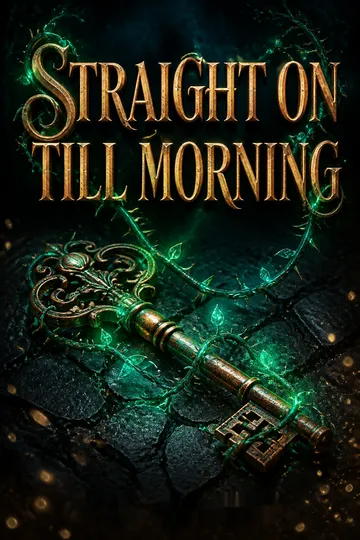
Straight on till Morning receives mixed reviews, with an average rating of 3.99/5. Many readers praise the improved plot, character development, and spicy content compared to the first book. They appreciate Gwen's growth and her relationship with her sister. The cliffhanger ending generates excitement for the next installment. Some criticize inconsistencies and find certain plot elements frustrating. Overall, fans of Peter Pan retellings and reverse harem stories enjoy the book, while others find it lacking in certain areas.
People Also Read


Characters
Gwen
The Darling who fights backGwen is a young woman whose attachment to her sister and hunger for belonging pull her in different directions. Her earlier experiences in Neverland make her intensely responsive to pleasure, danger, and the promise that someone else might take responsibility for her. Back in London, she recognizes that she has used drinking, training, and sex to manage grief, but insight does not immediately give her control. She is protective of Michaela and increasingly willing to act without waiting for permission. Her central struggle is learning to distinguish chosen intimacy from surrender, and courage from self-sacrifice. She begins as someone seeking a story that will make her feel wanted, then becomes a woman forced to author her own decisions.
Michaela
Gwen's fiercely devoted sisterMichaela is Gwen’s older sister, a cancer patient who has spent years living with treatment and the limits it imposes. Her decision to stop treatment reflects a wish to control how she spends her remaining time, not indifference to Gwen’s pain. She is perceptive about her sister’s emotional avoidance and challenges Gwen when she sees her spiraling. Michaela’s warmth and humor keep the sisters’ relationship from becoming defined solely by illness. She also has a strong instinct for generosity, often making space for other people even when she is the one who needs help. Her presence asks Gwen to respect love as care rather than as the power to decide another person’s fate.
Peter
Neverland's troubled princePeter is the leader of the Lost Boys, a figure whose charm and authority are inseparable from the island’s magic and political struggles. He is drawn to the Darling family, but his history with Wendy complicates how Gwen understands his feelings. Peter can be protective and deeply attached, yet his position gives his choices consequences for everyone around him. He is accustomed to taking charge, which can make tenderness difficult to separate from possession. His relationship with Gwen challenges his assumptions about love, memory, and control. The story presents him not as a flawless fairy-tale rescuer, but as a powerful man whose emotional needs and political responsibilities repeatedly collide.
Eben
The Lost Boy with regretsEben is one of Peter’s Lost Boys and a man whose steadiness can become hesitation when a choice carries serious consequences. He cares deeply for Gwen, but his loyalty to Peter, the Council, and the group’s obligations has shaped decisions Gwen experienced as abandonment. He is physically formidable and protective, yet his most important struggle is learning that good intentions do not erase the harm caused by silence. Eben tries to earn trust through actions rather than asking Gwen to forget what happened. His devotion is intense, but he must make room for Gwen’s independence instead of treating protection as a substitute for honesty.
Ryder
The Lost Boy with a soft heartRyder is a Lost Boy whose sunny manner conceals how deeply he invests in the people he loves. He is expressive, emotionally open, and quick to feel wounded when he believes that trust has been withdrawn. His connection with Gwen is shaped by affection and by the choices he made to keep her close, including withholding information he feared might send her away. Ryder’s warmth makes him a source of comfort, but his vulnerability can harden into anger when he feels misunderstood. He must face the difference between wanting someone to stay and giving them the truth needed to choose freely.
Tripp
The Lost Boys' steady secondTripp is a disciplined Lost Boy who often serves as Peter’s second in command. His calm under pressure makes him a reliable strategist, while his reserved manner can leave others guessing about what he feels. He loves Gwen but does not treat their bond as proof that she owes him trust. When they are separated, he has to confront his own grief and the limits of the information he was given. Tripp’s care is expressed through steadiness, protection, and a willingness to explain his side without denying hers. His arc emphasizes that loyalty becomes meaningful only when it allows room for disagreement and repair.
James Hook
The dangerous pirate captainHook is the captain of the Jolly Roger, an alchemist, and Peter’s longtime enemy. He is calculating, theatrical, and accustomed to using fear and desire as instruments of influence. His reputation for cruelty makes his moments of care difficult for Gwen and the Lost Boys to interpret. Hook prizes control, but Gwen unsettles his usual detachment and makes him imagine a bond he cannot simply command into existence. He can provide knowledge and assistance that others lack, yet every offer carries the question of what he expects in return. His self-interest is real, but so is his capacity to choose loyalty when the choice costs him.
Lucius
The beast prince in exileLucius is one of the beast princes, estranged from his brothers and living apart from their court. He is blunt, proud, and impatient with vulnerability, especially when it appears to put someone in danger. His bear form gives him frightening physical power, but he is also capable of gentleness toward Michaela. He distrusts Gwen and repeatedly reminds her that her presence may attract violence. Beneath his abrasive manner is a man carrying old injuries and unfinished family conflict. His unexpected concern for Michaela suggests that bonds in Neverland can be recognized before they are understood, challenging his insistence that he needs no one.
Tiger Lily
The ambitious Neverland princessTiger Lily is a princess with political ambitions and a careful understanding of how power can be secured through alliances, relics, and influence over others. She is disciplined and strategic, able to present herself as a reasonable authority while keeping her larger aims concealed. Her interest in Peter is bound up with both personal desire and the future balance of power in Neverland. She sees the Darling connection as an obstacle and treats people as pieces in a plan when it suits her. Tiger Lily is not driven by impulse alone; her patience makes her dangerous, because she can turn other people’s choices into leverage.
Gage
The exile who knows the VeilGage is a former Lost Boy living in Ireland after the Council judged him no longer useful to Neverland. He is wary, blunt, and shaped by the loss of his legs and his failed attempts to return. His knowledge of the Veil and its crossings makes him the sisters’ most practical guide. Gage distrusts easy optimism, but he still chooses to help Gwen and Michaela, risking his safety to give them a route forward. His experience gives the story a counterpoint to Gwen’s belief that returning to Neverland will solve everything: home can be a place that rejects you as readily as one that calls you back.
Amara
The Resistance's wise guideAmara is a mountain nymph and a leader within the Resistance. She combines political judgment with spiritual knowledge, understanding both the immediate danger posed by Tiger Lily and the larger patterns shaping Neverland. Amara once tried to warn Gwen, but she does not mistake a warning for control over Gwen’s choices. She offers the group information, a hidden route into the Temple, and a magical resource while insisting they understand its cost. Her guidance is generous without being sentimental. She sees potential in Gwen but expects her to earn responsibility through difficult decisions.
Nico
The beasts' formidable rulerNico is the eldest beast prince and the ruler of his brothers’ court. He is commanding, proud, and attentive to the political value of information. His estrangement from Lucius has left him suspicious of his younger brother’s motives, and he is not easily persuaded by appeals to family feeling. Nico respects a strong bargain more than a plea, which forces Gwen to negotiate on terms that protect Michaela’s chance of help. Beneath his authority lies a fierce attachment to his brothers and a concern for the standing of the beasts in Neverland.
Iver
The aging healerIver is an elderly healer whose knowledge of rare magical illnesses makes him essential to Michaela’s hope of recovery. He is gentle and formal, treating care as a serious responsibility rather than a display of power. Though physically frail, he shows courage when someone needs his help. Iver understands the Tribulation as a difficult passage into magic, and his attention helps the sisters see that Michaela’s illness has a deeper cause than ordinary medicine can explain. His work represents the patient, skilled care that Gwen cannot provide by force of will alone.
Dain
The sentry who breaks ranksDain is a Fae sentry who helps Gwen and Michaela evade surveillance at Heathrow. His assistance is motivated by a debt to Gage, not by a sudden belief that the sisters’ journey is safe. He warns them that returning to Neverland could bring death, then makes sure they reach Ireland before leaving them to their own choices.
Lilleybell
Peter's watchful pixieLilleybell is Peter’s pixie companion, small but attentive to dangers that the Lost Boys may overlook. Her loyalty to Peter puts her near the center of the group’s private world, while her ability to signal without attracting notice makes her an important observer. She is cautious and quick to act when she senses that Peter is in danger.
Jamie Holder
Gwen's toxic former partnerJamie is Gwen’s wealthy ex-boyfriend, a handsome and self-assured man whose attention is transactional. He represents a familiar pattern Gwen is trying to outgrow: mistaking attraction and status for care. Their encounter lets Gwen briefly reverse the power dynamic, but it does not offer the emotional connection she misses.
Plot Devices
The enchanted throwing knives
Hope with a costEben gives Gwen enchanted knives containing faerie dust, which can temporarily restore Michaela’s health when the dust touches her skin. The effect fades, so Gwen and Michaela cannot treat the blades as a lasting cure. Each use requires Gwen to destroy one of the knives, which makes the magic inseparable from loss: the objects represent her connection to the Lost Boys as well as the only relief Michaela can access. The remaining dust also becomes necessary for crossing the Veil. The knives therefore force Gwen to choose between preserving cherished memories and spending them to keep her sister alive.
Gram's skeleton key
Family history unlockedGram gives Gwen a skeleton key and directs her toward the stories. In the family library, the key opens a concealed mechanism hidden behind a copy of Peter Pan, revealing a room filled with records gathered by generations of the Darling family. The papers show that Gwen’s parents searched for Gage and believed Neverland might hold a cure for Michaela. The key turns the fairy tale into an archive and gives Gwen a concrete lead when memory and grief have left her with few reliable answers.
The atlas of realms
A map across worldsGage gives Gwen an ancient atlas that maps the realms and the weak points in the Veil. Because the Veil shifts and only certain crossings are passable to humans with Fae help, the atlas is not a simple travel guide. It helps the sisters understand why Peter’s cryptic directions matter and gives them a route from Ireland toward Neverland. The atlas also becomes leverage at Nico’s court: Gwen offers it in exchange for a healer and assistance. Its usefulness is both practical and political, turning knowledge into bargaining power.
The Osakren
A relic of controlThe Osakren is a powerful bone relic connected to the bone faerie. The Lost Boys steal it at Tiger Lily’s request, and she later uses its magic to make Black Lethe, a poison that leaves Peter under her control. The relic links an earlier choice by the Lost Boys to the present struggle for Neverland, showing how a favor granted for political silence can become the means of domination. The bone faerie’s bargain requires Gwen to return it, making the relic central to both Peter’s rescue and Gwen’s debt.
The bone faerie's bargain
Knowledge tied to debtAfter Gwen and the others revive the bone faerie with a replacement breastbone, the ancient Fae gives Gwen clues about Peter and the conflict at the Temple Mount. In return, Gwen must recover the Osakren. The faerie seals the bargain with black veins spreading from Gwen’s wrist, making the deadline visible and dangerous. Her visions arrive in fragments, so Gwen must interpret them under pressure rather than receive a complete plan. Amara’s Inalto offers another source of power, but it can intensify Gwen’s magic and impulses. Both devices make every advantage carry a cost.
The Neverland Chronicles Series

About the Author
Download PDF
Download EPUB
.epub digital book format is ideal for reading ebooks on phones, tablets, and e-readers.








