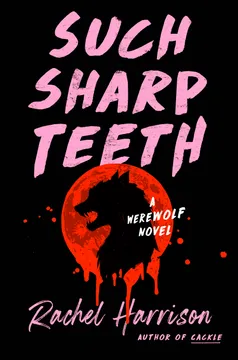


Plot Summary
Mist, Moon, and Teeth
At twenty-seven, Rory Morris1 has left Manhattan for six months to help Scarlett,2 her pregnant twin sister,2 whose partner Matty6 is no longer living with her. On her first night back, Rory1 reconnects with Ian Pedretti,3 a gentle, towering boyhood friend who once carried a crush on her.
Driving home through the mist, she hits a deer, then discovers a huge, unnatural creature4 standing over the carcass. It chases her into the woods, mauls her side, and turns away only when another animal crosses its path. A runner finds Rory1 alive in the clearing and calls for help. Rory1 returns to consciousness with a story she cannot tell: the thing that attacked her4 was no bear.
The attack makes Rory’s return home more than a change of scenery: the place she left becomes a landscape her body can no longer safely navigate. Her first instinct is to distrust her own account, even though pain makes the encounter undeniable. That split between bodily certainty and conscious self-doubt becomes the novel’s central pressure. The attack also alters how the reader sees the hometown’s mist and woods. They are not quaint markers of childhood but spaces where ordinary explanations fail, and where a woman accustomed to managing risk discovers that survival may depend on believing herself.
The Wound Won't Explain
At the hospital, doctors find only minor cuts and bruises, a poor match for Rory’s1 memory of being torn open. She tells Scarlett2 the creature4 was a bear, protecting herself from the disbelief she fears more than the injury. Back at home, pain flares beneath the bandages; the wound leaks thick, silver fluid, and Rory1 sees the attacker4 in mirrors and shadows.
She starts craving meat, wakes ravenous, and notices Reaper,9 Scarlett’s2 hostile old terrier, growling whenever she comes near. A Halloween-store werewolf looks disturbingly familiar, and Rory1 confirms that the attack happened during a full moon. The possibility that she has been bitten by a werewolf begins to explain symptoms that medicine cannot.
Rory’s visible injuries are slight, but the mismatch between her memory and the hospital’s findings deepens her isolation. The wound becomes a private record that no one else can read, while her habit of dismissing herself as an unreliable witness keeps the record from becoming proof. The early supernatural clues arrive as bodily inconveniences rather than grand revelations: appetite, smell, an animal’s response, a strange discharge. This makes the horror intimate. Rory is not simply learning that monsters exist; she is discovering that her own body may be changing without giving her permission or providing a language others will accept.
A Kiss, Then Claws
At Ashley’s7 crowded Halloween party, Rory1 and Ian3 slip away to the children’s swing set, where a long-delayed kiss makes their teenage history feel suddenly present. Inside, Rory’s pregnant sister2 grows emotional, while Rory’s old friend4 Mia Russo4 returns to town after her father’s death. When a drunken guest crowds Rory,1 she pushes him lightly and sends him crashing into the front door, revealing strength she cannot explain.
Later, she scratches at her bandage and finds fur beneath her skin. A werewolf search suggests she may transform at the next full moon, now only days away. The party has given her a kiss to remember, but it has also made the frightening changes in her body impossible to treat as ordinary healing.
The party places two kinds of exposure beside each other. Rory risks emotional exposure with Ian, whose feelings she has long understood but avoided answering; at the same time, her body reveals a force she cannot yet control. The supernatural change does not create her appetite for intensity or her reflex to keep people at a distance, but it makes those tendencies physically consequential. Mia’s return also restores a friendship shaped by youthful mischief, although Rory does not yet know how much danger sits inside that familiarity. The scene’s bright costumes and playful setting sharpen the contrast with the hidden fur under Rory’s skin.
The Date That Changes Shape
Ian3 invites Rory1 bowling, and she discovers that even restraint cannot disguise her new strength: her ball rockets down the lane hard enough to alarm the staff. At Ian’s3 converted-bank home, their old ease returns through music, food, and the intimacy of being known. They sleep together, but Ian3 makes clear that he does not want a one-time encounter that leaves him hurt when Rory1 returns to Manhattan.
Rory1 cannot promise a future, yet she chooses to stay with him rather than retreat. Over the next few days she struggles to hide the wound, the wolf-like figure in mirrors, and her growing fear of the approaching moon. Ian’s3 steadiness draws her toward attachment just as her body gives her new reasons to fear closeness.
Ian’s request changes the terms of Rory’s familiar arrangement with intimacy. Casual encounters allow her to be physically close while remaining emotionally unreadable; Ian knows her history and asks her to acknowledge what she wants. His honesty is not a cure for her guardedness, but it makes avoidance harder to disguise as independence. Meanwhile, her supernatural condition turns bodily closeness into a question of safety as well as desire. The scene therefore binds romance to vulnerability without making love magically resolve danger. Rory steps toward Ian knowing that she has not solved the larger problem, and that choice unsettles the control she has relied on.
A Crate Beneath the Moon
On the next full moon, Rory1 drives to an abandoned distillery and locks herself inside a dog crate, hoping to contain whatever the bite has done. As the transformation tears through her, the pain pulls her into memories of Dave,14 a man her mother5 once brought into their home. When Rory1 was eleven, Dave14 groomed and sexually abused her; she told Scarlett2 and then their mother,5 but neither responded with the belief and protection she needed.
Counselor Mrs. Meyer15 was the adult who listened. The moonlight finishes remaking Rory1 into a wolf, and she breaks the crate, eats rats, and escapes into the night. At dawn she wakes naked and sick, with teeth and animal remains in her vomit, carrying a new horror alongside the old one.
The transformation links supernatural loss of control to an earlier violation of Rory’s bodily autonomy. The flashback does not equate the two experiences, but it shows why the moon’s coercion lands with such force: Rory has already lived through an adult overriding her boundaries and a mother failing to believe her. The crate is both a practical attempt at safety and an image of confinement that cannot protect her. Her wolf body is frightening partly because it is powerful, but also because Rory experiences it as something happening to her rather than something she has chosen. The memory gives the monster story a specific emotional history.
A Shower Full of Secrets
Cyndi5 arrives to visit, and Rory’s mother5 tries to repair their strained relationship while continuing to minimize Rory’s1 anger about the past. She and Ashley7 arrange a surprise baby shower for Scarlett,2 who endures the celebration despite disliking attention and the pressure surrounding pregnancy.
Afterward, Rory1 and Cyndi5 argue about the man who abused Rory1 and her mother’s5 refusal to accept responsibility. Scarlett2 leaves them searching for her; they later find her assembling the crib alone.
While the sisters talk about pregnancy, bodily change, and fear, Rory1 admits she is a werewolf and demonstrates her rapidly healing wound. Scarlett2 is horrified and listens, but her first response is still uncertain. Rory1 has finally told the truth, yet telling it does not immediately make her believed.
The baby shower gathers the novel’s competing ideas of care into one uncomfortable room. Cyndi and Ashley mean to celebrate Scarlett, but their good intentions do not erase Scarlett’s need for privacy or control over her own body. Rory recognizes that mismatch because she is facing a more violent version of bodily change herself. Her confrontation with Cyndi is not a clean reconciliation: Rory needs accountability, while her mother wants relief from guilt. Telling Scarlett about the wolf is a bid for intimacy, but the disclosure also exposes the sisters’ old vulnerability around belief. Their love remains real, yet love alone cannot instantly repair the damage caused by doubt.
Proof on the Phone
After Scarlett2 suggests that stress may be distorting Rory’s1 experience, Rory1 prepares for another full moon at the distillery. She brings meat, handcuffs herself to a pipe, and records the night on her phone.
The transformation is again agonizing; once changed, she snaps the restraints and hunts through the woods. By morning, Rory1 has no clear memory of what she did, but the video shows every bone-wrenching moment. Scarlett2 watches it repeatedly and can no longer dismiss what Rory1 has become, though the footage frightens her and leaves them emotionally distant.
Rory1 searches for a cure, visits an occult shop, and finds no trustworthy help. The recording establishes the truth for Scarlett,2 but proof does not tell either sister how to live with it.
The phone camera serves as witness where Rory’s memory and other people’s skepticism have failed. It makes the transformation observable, but observation does not equal understanding: Scarlett can see the evidence and still recoil from what it means for her sister. That distinction keeps the scene from offering an easy resolution through proof. Rory’s attempt to prepare with meat and restraints also reveals the limits of information gathered from folklore and internet speculation. She can document the danger without mastering it. The video is therefore both a tool of recognition and a record of helplessness, forcing the sisters to confront a reality neither has the power to explain.
The Hospital's False Alarm
When Cyndi5 leaves town, she takes Scarlett2 to the hospital after the pregnant woman develops pains. Rory1 arrives to find Matty6 there, and anger at his supposed abandonment of Scarlett2 sends her shoving him hard enough to injure his shoulder.
Matty6 explains that Scarlett2 herself asked him to leave, though he cannot explain her reasons. Rory1 sees Scarlett2 and feels shut out, then leaves and runs until her heightened senses overwhelm her. Later, she encounters Ian3 at a convenience store, apologizes for disappearing, and accepts his invitation home.
Their renewed intimacy gives Rory1 room to speak about family and anger, even while she keeps the werewolf secret. The episode exposes how protective love can become aggression when Rory1 acts on a story she has not checked.
Rory’s attack on Matty is a consequence of care distorted by incomplete information. She wants to protect Scarlett, but her certainty that Matty is the villain lets her act before asking what her sister has actually chosen. The scene echoes Rory’s history of not being believed, while also showing how that history can lead her to overcorrect by treating her own interpretation as fact. Her reunion with Ian offers a different model: he listens to her account of anger without immediately condemning her. Yet she still withholds the central truth about her body, illustrating that intimacy can grow while trust remains partial.
A Silver Sleep
Rory1 and Ian3 begin building a more honest connection, including a rage-room date where she smashes a car while he breaks Christmas ornaments beside her. She also reaches a tentative understanding with Cyndi,5 though forgiveness cannot erase what her mother5 failed to do.
Later, Scarlett2 admits she cheated on Matty6 during the pregnancy and asked him to leave because guilt and fear made the truth impossible to face. The sisters begin repairing their bond.
Meanwhile, Rory1 hears that Ian3 once took Mia4 for a drink and assumes betrayal, then pursues a stranger at a bar. Desperate to numb herself, she fastens a silver bracelet to her wrist and falls unconscious for three days. Scarlett2 removes it and wakes her, finding that silver has burned into Rory’s1 skin.
This stretch gives the characters different forms of agency over truths they have been avoiding. Scarlett’s confession makes her less a passive wronged partner than a frightened person who made a damaging choice and must face its consequences. Rory’s forgiveness of Cyndi is similarly complicated: it is an attempt to stop rage from governing her, not proof that the past has become harmless. Her experiment with silver turns that struggle inward. Rather than finding a reliable cure, she uses an unknown substance to escape feeling, and her sister becomes the person who brings her back. Care here is imperfect, but it becomes reciprocal.
Mia's Borrowed Boots
At Ashley7 and Seth’s8 New Year’s party, Rory1 confronts Ian3 about Mia4 after hearing they had gone out together. Ian3 explains that he took Mia4 for a drink after her father’s funeral and that nothing romantic happened, but Rory’s1 mistrust has already widened the rift between them. Mia4 approaches and, during their argument, Rory1 recognizes the vintage boots she lost the night of the attack.
Mia4 admits she found them in the woods and suggests that she was the creature who bit Rory.4 Rory1 grabs Mia4 and threatens her, while the party guests watch. Mia4 escapes into the decorated yard. The revelation turns an old friendship into a source of danger, and Rory’s1 fury becomes visible to the people she has tried to protect from the truth.
The boots make betrayal material. Until this moment, Rory has had only a memory of a creature and a body full of evidence; Mia’s possession of the lost boots connects the attack to someone Rory trusted. That intimacy intensifies the injury, because the threat did not come from an anonymous wilderness but from inside her circle. At the same time, Rory’s public outburst reveals how easily her longing for accountability can become a desire to punish. Ian’s explanation is plausible, but Rory has already built a narrative around suspicion. The scene places trust and evidence in direct conflict: the boot is proof, while Mia’s relationship with Rory complicates what that proof means.
A Birth, a Poisoned Cure
After the party, Mia4 leaves Rory1 a vial of wolfsbane tonic and instructions, claiming it can weaken the wolf before a full moon. Rory1 tries it despite the agony it causes, then drops the vial and cuts herself on the glass. At the same time, Scarlett2 goes into labor. Rory1 reaches the hospital feverish, bleeding silver, and barely able to stand, but stays beside her as the labor stretches on.
The family sings together before Scarlett2 gives birth to a daughter, Lennox,11 whom Rory1 carefully holds. The experience softens the sisters’ strained connection and makes Rory1 feel protective of a future she had not expected to want. The tonic has not solved her condition, and the next full moon is still approaching.
Rory’s attempt to take the tonic shows how fear can make an unverified remedy feel preferable to doing nothing. Its cost becomes especially stark beside Scarlett’s labor, another involuntary bodily ordeal that cannot be controlled through willpower. Yet the birth also creates a new form of attachment. Holding Lennox gives Rory a concrete reason to imagine a future beyond managing symptoms and surviving each moon. The sisters’ shared singing briefly restores an old family rhythm, but it does not make their lives simple. The scene’s hope is deliberately fragile: Rory has gained someone to love, while the danger she carries remains unresolved.
Silver Under the Moon
On the next full moon, Rory1 loses track of the date while driving with Ian3 near the road where she was attacked. She orders him to stay in the car, then runs into the woods and tells him she is a werewolf. Ian3 follows and sees her transform. The silver medallion at her chest spreads its sheen across her fur, restoring Rory’s1 awareness and control.
Before she can explain, Mia4 appears in wolf form and attacks Ian.3 Rory1 drives Mia4 off, fights her in the clearing, and finally pins her without killing her. She recognizes her friend beneath the violence and refuses to turn revenge into murder. Ian3 escapes the immediate attack, but the sight of Rory’s1 transformation leaves their relationship waiting on an answer neither can avoid.
The silver medallion changes the meaning of the transformation without making it painless or harmless. Rory remains a wolf, but she can act as a conscious person within that body, rather than being reduced to hunger alone. Her choice to spare Mia is the climax’s ethical test: the power to retaliate does not obligate her to repeat the harm she suffered. The scene also brings intimacy to its sharpest threshold. Ian sees the truth in its most frightening form, not through a confession carefully managed by Rory. Her control matters, but it cannot guarantee that he will stay; it only allows her to meet him without hiding.
The Pack She Chooses
At dawn, Mia4 explains that she had been bitten before Rory1 and gave her the tonic in a belated attempt to help. Rory1 orders her to leave town and make sure she cannot endanger Scarlett,2 Lennox,11 or Ian3 again; Mia4 promises to go, though their farewell remains affectionate and uneasy. Rory1 returns home to find her family gathered around the baby,11 then discovers Ian3 has been searching for her.
He admits he saw everything and still cares for her. Rory1 explains the monthly transformations and the danger she is learning to manage. Ian3 accepts the truth and kisses her without asking her to become less frightening or less herself. Rory’s1 future remains uncertain, but she no longer has to face it by pretending her body and history are secrets.
The ending does not cure Rory or erase the risks attached to her condition. Instead, it gives her a more livable structure: a sister who has begun to believe her, a niece she wants to protect, and a partner who can hear the truth without making acceptance conditional on normality. Mia’s departure is not a clean moral victory; affection survives alongside distrust, and Rory insists on distance as a form of protection. The book’s resolution therefore rests on chosen boundaries rather than a fantasy of total repair. Rory’s strength is not that she becomes harmless, but that she can recognize danger and decide what to do with her power.
Epilogue
Mia4 sends Rory1 a message from Texas, where she has found open space and plenty of meat. She claims she is keeping her promise to stay away and behave, while leaving open the possibility that she may not always want restraint.
Her note carries affection, provocation, and a reminder that their bond has not disappeared just because Rory1 has drawn a boundary. Mia4 is gone from town for now, but the relationship remains unresolved enough to reach across the distance.
Mia’s closing note refuses the comfort of a completely settled aftermath. Rory has protected her family by insisting that Mia leave, but the old intimacy between them survives in the form of teasing and a promise that may or may not hold. The message also reflects the book’s refusal to treat self-control as a simple moral achievement. Mia experiences power as relief from former helplessness, while Rory sees the harm that power can cause when it goes unchecked. Their distance is necessary, but it does not make either woman’s pain or attachment disappear.
Analysis
Such Sharp Teeth uses werewolf horror to make bodily autonomy visible, but it does not reduce Rory’s1 experience to a supernatural metaphor. The attack is real within the story, and so are the practical dangers of transforming, hunting, and waking injured or sick. At the same time, the monthly loss of control resonates with Rory’s1 earlier experience of adults failing to protect her boundaries. The book’s force comes from holding those realities together without suggesting that trauma explains away the monster or makes Rory1 responsible for what was done to her.
Rory’s1 central defense is competence. She has made a career, a city life, and a sexual identity out of moving forward before anyone can claim too much of her. That strategy has genuine value: it gives her independence and lets her build a life beyond a damaging childhood. But the wolf makes her usual separation between desire and vulnerability harder to maintain. Her strength can injure Matty,6 frighten party guests, and threaten people she loves. Control therefore becomes an ethical problem, not simply a personal achievement. Rory1 must decide what she owes others without concluding that she herself is monstrous beyond repair.
The novel also refuses easy versions of forgiveness. Cyndi’s5 love does not undo her failure to listen. Scarlett’s2 pregnancy does not require her to feel grateful every moment, and her choices about Matty6 cannot be reduced to either innocence or betrayal. Mia’s4 pain helps explain her attraction to power, but it does not excuse the harm she causes. These distinctions give the women moral complexity without flattening their injuries into lessons.
Connection offers no cure, yet it changes what survival can mean. Rory1 tells Scarlett2 the truth, allows Ian3 to see the transformation, and chooses restraint when she has the power to retaliate. Her eventual hope rests not on becoming safe or ordinary, but on building boundaries, accepting care, and claiming responsibility for what she does next. The body remains dangerous, but it no longer has to be a secret Rory1 faces alone.
Review Summary
Such Sharp Teeth receives mixed but generally positive reviews, averaging 3.83/5. Many praise its blend of horror, humor, romance, and family dynamics, highlighting relatable characters and sharp wit. Fans appreciate the werewolf transformation as a metaphor for trauma and bodily autonomy. Critics note tonal inconsistency, finding it more romance than horror, with some feeling the protagonist is a "cool girl" archetype. Most agree it's an entertaining, fast-paced read, ideal for autumn, though some wish for more genuine scares and deeper werewolf content.
People Also Read




Characters
Aurora Rory Morris
The city-bred twinRory is a sharp-witted business consultant who has built an independent life in Manhattan and treats casual intimacy as a way to keep control of how much others can know about her. She returns to her hometown to support Scarlett2, her pregnant twin, but her confidence conceals a long practice of dismissing her own pain and anger. Rory is funny, observant, and fiercely protective, yet protection can harden into aggression when she acts on incomplete information. Her story tests the difference between self-reliance and isolation. She wants to remain the author of her life, even as her body becomes unpredictable, and must learn that accepting help is not the same as surrendering agency.
Scarlett Morris
Rory's guarded twinScarlett is Rory’s1 identical twin, a tattoo artist and illustrator whose black clothes, blue hair, and precise makeup give her a composed exterior. She is practical, wry, and deeply attached to her sister1, but she often keeps distress private rather than risk burdening anyone. Pregnancy unsettles her sense of ownership over her body and her future, feelings she struggles to admit in a culture that expects uncomplicated maternal joy. Scarlett’s closeness with Rory1 is built on shared history, but the twins do not always interpret that history alike. She wants to be trusted and supported without being treated as fragile, and her reserve can make her needs difficult for even Rory1 to read.
Ian Pedretti
The patient old friendIan is Rory’s1 tall, blue-eyed childhood friend, a musician who now teaches guitar and works with his father renovating houses. His long-standing affection for Rory1 is matched by a quiet insistence on honesty: he does not want to be reduced to a convenient fling, but he avoids pressuring her to promise what she cannot yet give. Ian is attentive without being flawless, and his habit of going quiet when hurt can leave Rory1 guessing. He remembers the person she was as a teenager while making room for the adult she has become. Their connection challenges Rory’s1 assumption that being known must mean losing freedom.
Mia Russo
The reckless old friendMia is an old high-school friend whose beauty, boldness, and appetite for attention once made her a natural accomplice to Rory’s1 mischief. She has pursued a restless adult life, moving through acting, fitness, travel, and social media rather than settling into one identity. Beneath the performance is a history of family pain that she shares with Rory1 because she believes the two understand one another in ways outsiders cannot. Mia uses humor and sexual confidence to control how others see her, but she can also mistake defiance for freedom. Her closeness with Rory1 carries both warmth and volatility.
Cyndi Morris
The charming motherCyndi is Rory1 and Scarlett’s2 image-conscious mother, warm and sociable when she wants closeness, but inclined to defend her own choices when confronted with harm. She prizes romance and often assumes family members will eventually move past old injuries. Her relationship with Scarlett2 is easier than her relationship with Rory1, whose anger forces Cyndi to face memories she would rather soften or explain away. Cyndi’s affection is genuine, but affection does not automatically become accountability.
Matty
Scarlett's partnerMatty is Scarlett’s2 longtime partner, a handsome, self-assured man whose absence from the household shapes Rory’s1 understanding of the pregnancy. Rory1 initially judges him from the outside, but he remains emotionally attached to Scarlett2 and is more complicated than her assumptions allow. He is connected to a close-knit family that includes his mother13 and grandmother16. His relationship with Scarlett2 reflects the difficulty of staying present when love is strained by fear, shame, and unspoken choices.
Ashley Ash
The generous best friendAsh is Rory1 and Scarlett’s2 longtime best friend, married to Seth8 and raising their energetic son, Luca10. An enthusiastic host, she fills her house with elaborate seasonal decorations and feeds people as a form of care. Ash is warm, patient, and perceptive, though her optimism can lead her to arrange celebrations others may not want. She makes room for Rory’s1 sharp humor and tries to keep the old friendship group connected.
Seth
The steady family doctorSeth is a doctor, Ash’s7 husband, and a longtime friend of the Morris sisters. He treats Rory1 after her attack and checks on her healing, while also managing family life with Ash7 and Luca10. Seth is practical and caring, though Rory’s1 jokes often test his patience. His presence links the sisters’ old friendship circle to their adult lives.
Reaper
The growling house dogReaper is Scarlett’s2 elderly Jack Russell terrier, a grumpy, vocal little dog whose hostility toward Rory1 becomes one of the first signs that her body has changed in ways animals can detect.
Luca
Ash and Seth's toddlerLuca is Ash7 and Seth’s8 spirited young son, known for his loud protests, resistance to clothes, and relentless energy. His presence gives Rory1 a comic glimpse of the demands and disorder of family life.
Lennox Lenny Morris
Scarlett's expected daughterLennox is Scarlett2 and Matty’s6 daughter, whose expected arrival changes the family’s sense of time and responsibility. Before she is born, she is already the focus of conflicting hopes, anxieties, and plans. Her presence draws Rory1 toward imagining a future in which she can offer care rather than merely escape.
Guy
Cyndi's steady husbandGuy is Cyndi’s5 husband and the girls’ stepfather. Kind and comparatively even-tempered, he lives with Cyndi5 in Charleston and offers a calmer contrast to the unstable men who shaped Rory’s1 early understanding of family.
Joann
Matty's protective motherJoann is Matty’s6 mother and a familiar presence in his family. She cares about Scarlett2 and the baby11, though Rory’s1 protectiveness makes her arrival at the shower difficult for Rory1 to accept.
Dave
A troubling childhood presenceDave is a man from Rory’s1 childhood whose presence in her family home remains tied to her distrust of adult judgment and her mother’s5 decisions. Rory’s1 memories of him shape how she understands safety, responsibility, and the cost of not being believed.
Mrs. Meyer
The counselor who listenedMrs. Meyer is Rory’s1 school guidance counselor, an adult who treats the young Rory’s1 distress seriously. Her willingness to listen stands apart from the confusion and dismissal Rory1 encounters elsewhere.
Grandma Candy
Matty's irreverent grandmotherCandy is Matty’s6 outspoken grandmother, confined to a wheelchair and frustrated by relatives who treat her as less capable than she is. She enjoys Rory’s1 frankness and gives her a lively ally at family gatherings.
Plot Devices
The Full Moon
The monthly reckoningThe moon governs Rory’s1 recurring transformation after the attack. Each full moon brings a violent physical change, loss of ordinary control, and a dangerous night in which she may hunt before waking sick and disoriented. The cycle creates a deadline that drives Rory1 to seek folklore, prepare restraints, and test possible ways to stay safe. It also makes the body’s calendar more powerful than Rory’s1 professional plans or romantic wishes. The moon is not merely a trigger for horror; it repeatedly forces Rory1 to confront whether she can remain herself while inhabiting a form she fears.
The Changed Body
Evidence beneath the skinRory’s1 altered senses and physical symptoms make the supernatural threat impossible to keep at a distance. Her wound leaks silver fluid, grows fur, and heals rapidly; her appetite shifts toward meat, her strength surges, and her hearing and smell become overwhelming. These changes provide concrete evidence even when doctors find little damage and Rory1 questions her memory. They also interfere with everyday life, from dating and eating to walking through a crowded bar. The body functions as both the site of violation and an increasingly powerful instrument Rory1 must learn to understand.
The Silver Medallion
A tether to awarenessAfter silver burns Rory’s1 skin and leaves her unconscious, she suspects it may affect her wolf form differently. She transfers a silver medallion to a leather cord so it will not touch her human skin, then wears it when the next transformation begins. In wolf form, the silver spreads across her fur and helps restore her awareness, allowing her to resist the hunger that previously controlled her. The medallion does not erase the transformation or its danger, but it gives Rory1 a means to act within it. Its effect turns an old piece of jewelry into a test of whether power and self-command can coexist.
Wolfsbane Tonic
A punishing restraintMia4 supplies Rory1 with a wolfsbane tonic and a recipe, presenting it as a way to weaken the wolf in the days before a full moon so Rory1 will be less able to hunt. The remedy requires repeated doses and causes severe illness, making it a desperate compromise rather than a clean cure. Rory1 tries it because she wants to protect the people around her and has found little reliable guidance elsewhere. The tonic’s unpleasant effects reveal how easily survival can become self-punishment when no safe treatment is available. It also foreshadows that Mia4 knows more about the condition than she has admitted.
The Transformation Video
Proof without comfortRory1 records her second full-moon transformation at the abandoned distillery, hoping the footage will make Scarlett2 believe what Rory1 has been unable to explain. The video captures the pain, the physical changes, and the moment Rory1 escapes her restraints. It ends the dispute over whether the transformation is real, but it does not solve the sisters’ emotional distance or tell them how to manage the danger. The recording also gives Rory1 an external witness to an experience she cannot fully remember. It turns a private crisis into evidence, while showing that seeing the truth is not the same as knowing what to do with it.
Download PDF
Download EPUB
.epub digital book format is ideal for reading ebooks on phones, tablets, and e-readers.








