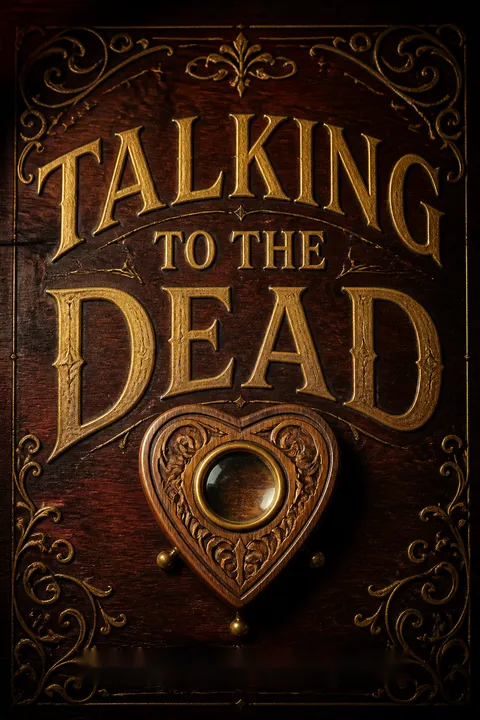


Key Takeaways
The Fox sisters turned raps into a public way to test death
A noise became a message. In March 1848, the Fox family began hearing unexplained knocks in their rented Hydesville home. Their mother, Margaret, asked questions and treated the answers as evidence of an intelligent presence. The raps described a murdered peddler, identified a local suspect, and claimed his body lay in the cellar. Neighbors arrived to listen, question the sounds, and search the house. The story made two young sisters, Kate and Maggie, the apparent link between the living and the dead.
The mystery never settled. Searchers found fragments of bone and pottery, but rising water stopped the excavation, and skeptics disputed whether the remains supported the peddler’s story. The raps could be heard; what caused them remained contested. That gap between an event and its meaning became the engine of the sisters’ fame.
What makes this origin story unusually powerful is its small scale: a family trying to sleep, a frightened mother, and neighbors deciding whether to trust their senses. The event becomes public before it becomes conclusive. That pattern resembles modern disputes over ambiguous evidence, where observation is shared but interpretation depends on prior beliefs. The narrative also cautions against treating a compelling account as a verified one. A dramatic claim can mobilize attention long before the material evidence is strong enough to settle it.
Spiritualism grew where grief, new science, and social upheaval met
An unsettled age wanted answers. Mid-nineteenth-century Americans faced frequent early deaths, rapid migration, industrial change, and uncertainty about heaven and hell. The book notes that more than one in five children died before their first birthday, while adult life expectancy at birth was little above forty. Many people wanted reassurance that loved ones survived death, but traditional religious teaching and emerging scientific explanations did not always comfort them.
The region supplied kindling. Western New York, nicknamed the Burned-over District for its repeated religious revivals, was also a center of reform and new ideas. Mesmerism, electricity, the telegraph, abolition, and women’s rights all challenged familiar boundaries. Spiritualism promised that contact with the dead could be experienced directly, perhaps even investigated as a natural phenomenon. The Fox sisters became catalysts because their story met needs already present in the culture.
The movement makes more sense as a response to overlapping pressures than as a sudden outbreak of credulity. New technologies made invisible forces seem plausible, while death and migration made old forms of comfort less dependable. The telegraph offered a particularly vivid analogy: if messages could cross vast distances through wires, perhaps the dead could communicate by another medium. Such parallels help explain belief without proving it. Cultural conditions can make an idea imaginable, but they cannot establish whether the idea is true.
Make inquiry participatory, but don't confuse shared experience with proof
The audience entered the experiment. Early gatherings used simple signals: raps could mean yes or no, and calling out the alphabet let participants spell longer messages. People questioned the supposed spirits, held hands, listened for sounds, and watched tables move. These meetings became known as séances, gatherings intended for communication with spirits. The format made investigation feel personal rather than remote: anyone in the room could ask a question and assess the reply.
A movement took shape. In one account, George Willets sought advice about moving west. The spirit messages urged him to stay near Rochester and apply for railroad work, which he eventually obtained. Such episodes made the sessions seem useful as well as consoling. As the practice spread, private circles and public demonstrations multiplied, and more people began to claim they could serve as mediums, people believed able to relay spirit messages.
Participation can make inquiry more democratic and memorable. It also creates a subtle evidentiary trap: a roomful of people may agree that something happened without agreeing on how it happened. The séance gave mourners agency, skeptics a chance to test claims, and newcomers a role in the unfolding drama. Those are real social effects, even if the supernatural explanation remains unproven. The distinction matters because emotional and communal value should not be mistaken for independent verification.
Separate what witnesses heard from what they concluded it meant
Investigators disagreed after seeing the same events. At Rochester’s Corinthian Hall in 1849, committees examined Maggie and Leah, listened for raps, and searched for ways the sounds might be produced. No committee established a definitive cause. In Buffalo, doctors argued that Maggie could create raps by moving joints in her legs; Leah countered that the tests were hostile and incomplete. Later witnesses likewise described phenomena that believers called miraculous and skeptics called theatrical or meaningless.
Evidence arrived through interested people. Witnesses wrote pamphlets, letters, memoirs, and newspaper accounts, often with strong commitments to defend or expose the sisters. The earliest Hydesville record did not include testimony from Kate or Maggie. Leah’s later memoir was useful but sometimes self-serving, and reports often contradicted one another. The result is not a clean verdict, but a history in which the source, setting, and limits of each claim matter.
This case is a useful lesson in epistemology, the study of how claims become knowledge. A report that a sound occurred is different from a claim that a spirit made it, and both differ from a claim that the spirit’s message was accurate. The distinction is especially important when witnesses are emotionally invested or conditions are poorly controlled. Yet skepticism also requires discipline: failure to detect a trick does not prove spirits, but neither does a plausible trick explanation prove that every reported event was staged.
A public platform gave women power, then exposed them to scrutiny
Mediumship opened an unusual door. Respectable women were expected to remain in the home, yet the Fox sisters traveled, earned money, addressed audiences, and drew influential visitors. Spiritualists often described mediums as passive channels, a framing that made women’s public authority more acceptable in a culture wary of female ambition. In practice, the sisters helped run sessions, managed audiences, and shaped what happened.
The price was intrusive attention. At Corinthian Hall, women investigators searched the sisters’ clothing and bodies, while male examiners held their feet and watched their movements. Critics treated their public work and contact with male clients as evidence of sexual impropriety. Their beauty could attract audiences and soften suspicion, but it also invited gossip and objectification. Mediumship offered a livelihood and a voice, while leaving the women exposed to tests and judgments that male performers rarely faced in the same way.
The sisters’ work shows how institutions can grant authority conditionally. Calling a woman a vessel for spirit speech may let her address a crowd, but it can also deny her ownership of her intelligence and performance. The same ambiguity appears in many forms of women’s public labor: access is permitted when framed as service, inspiration, or exceptional nature, then challenged when it looks like independent power. The historical record also invites caution. The book documents unequal treatment, but it cannot establish that every critic’s motive was simply misogyny.
Read the sisters as changing people, not fixed frauds or saints
Their lives resisted one label. Leah, the oldest sister, promoted the family’s work and helped turn local curiosity into a public movement. Maggie was drawn to excitement, city life, and the attention mediumship brought, yet she also longed for a quiet home. Kate, often treated as a childlike channel, became a celebrated medium and later a mother. Their temperaments and choices differed, even as outsiders often discussed them as a unit.
Their motives could shift. The sisters lived through fame, financial pressure, grief, illness, alcohol dependence, and changing relationships with Spiritualism. The author considers possibilities such as performance, belief, self-deception, and mixed motives, without reducing the story to any one of them. Leah could seek security while sincerely believing in the cause; the younger sisters could enjoy the spectacle while sometimes experiencing it as real. Their identities were not static, and the surviving accounts cannot fully resolve them.
A person can act strategically without being wholly cynical, and can believe something while also helping to manufacture its appearance. That combination is familiar in social life: identities are performed, but performance does not automatically mean fraud. The sisters’ story becomes more credible as history when it allows for mixed motives and change over time. There is still a limit to this sympathetic approach. Complexity should not become a way to excuse deception if it occurred, or to claim certainty about private beliefs the archive cannot reveal.
Maggie's romance exposed the cost of being loved conditionally
Kane offered both escape and control. In 1852, explorer Elisha Kent Kane met Maggie during a séance and began a passionate, often secret courtship. He criticized Spiritualism, urged her to leave mediumship, and imagined educating her into a life acceptable to his family. Maggie wanted affection and domestic security, but she also had a public career and a strong attachment to her sisters. Their relationship mixed genuine tenderness with his repeated attempts to reshape her.
His death left the promise unresolved. Kane departed on an Arctic expedition in 1853 and died in 1857, before his family publicly recognized any marriage or commitment to Maggie. She later claimed they had married privately; his relatives rejected that account. Grief, financial dependence, and the conflict between his wishes and her livelihood shaped Maggie’s later relationship with Spiritualism. The romance is not just a love story, but a struggle over who had the right to define her future.
Kane’s affection appears sincere, but sincerity does not prevent control. His offer of education and security came with conditions: Maggie should abandon her work and become a version of herself his family could accept. That tension connects the romance to broader questions about autonomy in intimate relationships. Care can be generous and paternalistic at once. The archive cannot fully establish the private terms of their bond, so the strongest conclusion is about the documented imbalance: he had social standing and financial leverage, while she faced the greater reputational risk.
When a witness reverses herself, examine pressure as well as evidence
The confession was dramatic, not final. In 1888, Maggie publicly said that the sisters had created the raps through physical tricks, including movements of the feet and toes. She demonstrated raps onstage, and doctors attributed the sounds to her body. Her account also accused Leah of exploiting the girls. The confession gave skeptics a concrete mechanism, but it did not independently explain every manifestation reported over four decades.
Then Maggie recanted. A year later, she said she had spoken under pressure from opponents of Spiritualism and reaffirmed her belief in the spirits. Both moments had personal and financial stakes: she was distressed, had struggled to support herself, and hoped to earn money through public appearances. Neither her confession nor her recantation can be treated as a transparent window into truth. Together, they reveal how unstable testimony becomes when belief, livelihood, family conflict, and public spectacle collide.
A reversal should prompt investigation, not automatic dismissal. Researchers weigh consistency, opportunity, incentives, corroboration, and the conditions under which a statement was made. Maggie’s admission that bodily movements could produce raps is relevant evidence about one possible mechanism; it does not settle every reported event. Her later recantation also deserves scrutiny, especially because she hoped to return to public work. The intellectually responsible position is not to split the difference, but to specify what each statement can support and what it leaves unresolved.
Spiritualism outlived the Foxes because grief kept asking for contact
The movement survived its founders’ troubles. Maggie’s confession did not end Spiritualism, and its practices continued through organized churches, summer communities such as Lily Dale, and later interest in psychical research. The movement’s appeal rested on more than the sisters’ reputation: it offered intimate contact with the dead, a more hopeful account of the afterlife, and a setting where ordinary people could participate.
Its fortunes changed with society. The book connects Spiritualism’s decline to falling death rates, new work and educational opportunities for women, internal divisions, and increasingly rigorous exposure of fraudulent physical mediums. Its cultural influence continued in later interest in psychic phenomena and channeling. The Fox sisters’ story therefore has two endings: their personal lives were marked by hardship and uncertainty, while the movement they helped popularize continued to adapt to new audiences and new explanations.
A belief system can persist even when its original evidence is disputed, especially if it supplies practices for grief, community, and hope. That does not make the belief true, but it does explain why debunking individual performers rarely ends a wider tradition. The book also shows that decline has multiple causes rather than a single decisive exposure. Better health, changing roles for women, new technologies, and institutional conflict all altered the demand for séances. Cultural survival and factual validation remain separate questions.
Analysis
Barbara Weisberg’s history is strongest when it treats the Fox sisters not as a puzzle with a final answer, but as people and performers caught in a culture trying to decide what counted as evidence. The narrative begins with the Hydesville raps, then widens to include revival religion, new communications technology, women’s constrained public roles, popular entertainment, and the ordinary terror of early death. This movement between intimate biography and social history explains how a local disturbance could become a transatlantic religious phenomenon.
The book’s most important methodological insight is that the record itself is part of the story. Witnesses heard sounds, felt tables move, and disagreed about what those experiences proved. Reports were shaped by grief, skepticism, reputation, money, and the conventions of journalism. Later accounts by Leah, Maggie, and their defenders or critics added further layers. The archive therefore supports a history of belief, performance, and conflict more securely than it supports a definitive account of supernatural events.
That restraint is also a strength of the ending. Maggie’s confession seems decisive, especially because she demonstrated a physical method for making raps. Yet her subsequent retraction, the limitations of her account, and the diversity of reported phenomena complicate any total verdict. The possibility that the sisters mixed invention, belief, and emotional responsiveness is harder to narrate than a simple fraud story, but it better fits the evidence presented.
The sisters’ public authority also came at a cost. Mediumship offered women income and an unconventional platform, while the language of passivity and the invasive examinations of their bodies policed that freedom. Their personal histories show that celebrity did not guarantee protection, stable identity, or control over one’s future. The result is a book about Spiritualism, but also about how people use stories and rituals to manage uncertainty, and how difficult it is to separate the comfort a practice provides from the truth of its claims.
Review Summary
Talking to the Dead is a well-researched biography of the Fox sisters, who sparked the Spiritualist movement in 19th-century America. Readers appreciate Weisberg's contextualization of the sisters' story within broader social and political movements. While some found the book engaging and thought-provoking, others felt it was slow-paced and overly detailed. The author's sympathetic approach to the sisters and her exploration of the era's fascination with spirit communication are praised. However, some critics note a potential bias towards believing in spiritualist phenomena.
People Also Read




Glossary
Modern Spiritualism
movement for spirit communicationA nineteenth-century religious and social movement popularized by the Fox sisters’ reported raps. Its central belief was that the dead survived bodily death and could communicate with the living, often through mediums at séances. Many adherents presented spirit communication as compatible with scientific investigation and as evidence that ordinary people could directly experience the afterlife.
medium
spirit-message intermediaryA person believed to be unusually able to receive or transmit communications from spirits. In the Fox sisters’ case, raps were said to occur in their presence, while other mediums used trance speech, automatic writing, or physical manifestations. The term also described a public occupation that gave some women opportunities to earn income and address audiences.
seance
gathering to contact spiritsA session in which participants attempted to communicate with spirits, usually through a medium. Early Fox family sittings took place in homes, with people asking questions, listening for raps, and sometimes using an alphabet to spell messages. As the movement grew, séances became both intimate gatherings for mourners and public demonstrations for curious or skeptical audiences.
spirit circle
group séance gatheringA group meeting organized to seek or receive spirit communication. Participants commonly sat together, asked questions, listened for signals, and aimed to create a congenial atmosphere. The circle was important to Spiritualist practice because it made communication appear collective and accessible, rather than the exclusive revelation of a priest, prophet, or isolated visionary.
harmonial philosophy
spiritual progress through affinityA system associated with Andrew Jackson Davis and used by early Spiritualists to explain relationships between the material and spiritual worlds. It emphasized affinity, the idea that like tends to draw together, and presented spirits as progressing toward higher conditions after death. The framework helped explain why the dead might remain attached to living friends and relatives.
Summerland
Spiritualist name for heavenA term used by Spiritualists for the afterlife or a heavenly realm inhabited by spirits. In the Fox sisters’ circles, departed relatives were often described as continuing to live, grow, and communicate from this realm. The idea offered a more intimate and hopeful image of the afterlife than accounts centered on judgment, damnation, or permanent separation.
automatic writing
writing attributed to spiritsA practice in which a medium’s hand produces writing believed to carry a spirit’s message, sometimes without the medium’s conscious direction. Accounts describe messages written in unusual forms, including reversed script. Spiritualists treated the practice as another channel of communication; skeptics questioned whether the writing came from spirits, unconscious activity, or deliberate performance.
Psychic Force
proposed force behind phenomenaA possible explanation suggested by scientist William Crookes for physical effects he observed in séances, such as raps or movement of objects. Crookes allowed that the force might arise from the medium’s mind, while leaving open the possibility that another intelligence could direct it. The term offered a proposed natural mechanism without excluding spirits.
Download PDF
Download EPUB
.epub digital book format is ideal for reading ebooks on phones, tablets, and e-readers.








