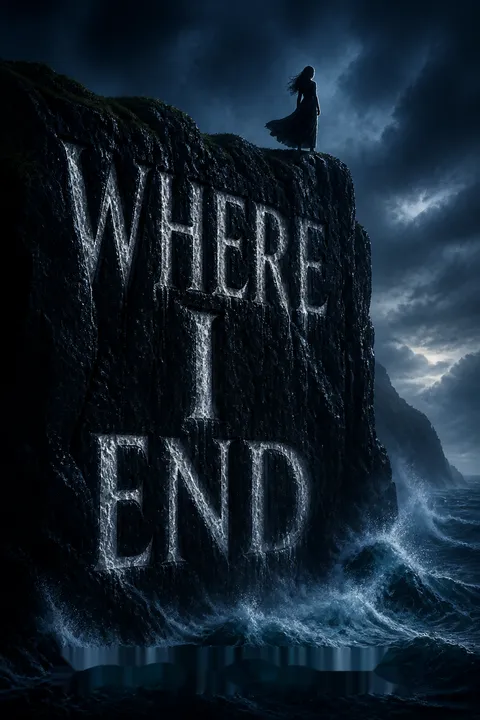


Plot Summary
The House Above the Cliffs
At nineteen, Aoileann lives with her grandmother, Móraí, and her silent, wasting mother, who spends her days strapped into a specially rigged bed. Each morning they haul the bed upright, feed her, change her, and move her through the house on a chair. Aoileann has done this for as long as she can remember, but the work is becoming hers alone: Móraí is about to take a summer job at a museum in the island’s ruined knitting factory.
The family hides the mother from neighbors and mainland visitors, while the islanders treat Aoileann as a curse. With the museum drawing outsiders closer and Móraí preparing to leave, Aoileann faces a longer stretch alone with the body she resents and cannot understand.
The novel begins by making care both intimate labor and a form of confinement. Aoileann knows the ropes, belts, and chair tracks better than she knows her own history; competence has become the narrow territory where she can exercise control. The family’s secrecy compounds that dependency. Their home is physically sealed, socially isolated, and organized around a person no one will name openly. The coming museum job threatens the fragile routine without offering Aoileann an alternative. Her story starts not with a sudden monster, but with the daily machinery of a life already narrowed around another person’s body.
Letters Under the Floor
Aoileann has learned that her mother sometimes escapes the bed at night and scratches the floors until her hands are ruined. Móraí says restraints and drugs have failed to stop the damage, and the family sands away every mark before Aoileann’s father, Eoghan, visits. But Aoileann finds shapes among the gouges: first a letter, then more fragments.
She begins recording them in a hidden copybook, tracing the marks before the floor can be scrubbed smooth. The signs yield no clear message, and Móraí warns her against looking for things that may not be there. Still, the possibility that her mother is trying to communicate unsettles the story Aoileann has been told: that the woman in the bed is barely present.
The scratches turn the house’s maintenance routine into a struggle over evidence. Móraí removes marks to preserve the family’s concealment, while Aoileann copies them to preserve a possibility of meaning. Her secret notebook is not simply investigative; it offers a first private act that belongs to her rather than to caregiving. Yet her uncertainty matters. The letters may be language, compulsion, or both, and the narrative refuses to make interpretation easy. That ambiguity mirrors Aoileann’s larger predicament: she has learned to distrust her perceptions because the adults around her withhold context, then use that same uncertainty to keep her compliant.
A Stranger on the Beach
On the morning Móraí starts at the museum, Aoileann goes swimming and finds a baby on the grey beach beside a woman emerging from the sea. The woman, Rachel, has recently arrived for an artist residency with her newborn, Seamus. Instead of recoiling from Aoileann, Rachel asks her to hold the child while she dresses.
Aoileann is startled by Rachel’s warmth and by the healthy fullness of her body, so unlike the mother she tends at home. Rachel explains that she is an artist, then invites Aoileann to visit and help move a worktable. For the first time, someone outside the family asks Aoileann for ordinary help rather than treating her as a bad omen. The invitation gives her a reason to return.
Rachel’s first gesture is consequential because it places Aoileann inside a familiar human exchange without making her earn entry through explanation. Holding Seamus gives her a temporary role that is neither patient nor servant. But the encounter also activates a hunger she cannot distinguish from affection, curiosity, or desire. Rachel’s body and baby present a living intimacy that Aoileann has only observed from a distance. The beach makes this meeting precarious: Rachel has come seeking an opening in her own life, while Aoileann experiences that openness as a promise addressed specifically to her.
Milk in the Dark
At Rachel’s cottage, Aoileann encounters paintings, sewing, scattered art materials, and a warm meal unlike the food at home. She helps secure a large workboard, then watches Rachel breastfeed Seamus.
When Rachel falls asleep, Aoileann unbuttons her dress and secretly tastes a drop of milk from her breast. The baby wakes and begins feeding too; Aoileann retreats, shaken by the pleasure and by the sense that she and Seamus have shared something. Back home, she asks Móraí whether her own mother fed her.
Móraí confirms that she did, though the feeding exhausted her. That knowledge sharpens Aoileann’s fixation. She pushes porridge into her mother after the woman has had enough, making her vomit, then tries to draw milk from her mother’s depleted breast.
This section links nourishment to power before Aoileann understands the distinction. Rachel’s milk signifies a body that gives freely, while the memory of her own feeding becomes a belated clue to a bond she cannot recall. Aoileann’s imitation of nursing does not restore that bond; it converts longing into an attempt to extract something from a body that cannot answer. Her forced feeding of her mother shows the first clear turn from curiosity toward coercion. The book makes the impulse emotionally legible without making it harmless: unmet need explains the action, but it does not erase the harm.
The Window After Midnight
After burning her lips with hot water to erase the sensation of her mother’s breast, Aoileann begins crossing the island at night to watch Rachel through the cottage windows. She sees the new mother exhausted by Seamus’s crying, sometimes setting him safely on the bed while she collapses nearby. Aoileann imagines herself replacing the baby in Rachel’s embrace.
At home, her mother drags herself outside and ends up bent over a wall, hands bloodied. Aoileann hauls her back, then tightens a belt around her throat to silence her creaking. She loosens it enough for her mother to breathe and hides the marks when Móraí returns. Her private surveillance and her violence now grow together, each making the other easier to justify.
Aoileann’s nocturnal watching is a form of intimacy without reciprocity: she can study Rachel closely while remaining unseen, and so can avoid the risk of being refused. The imagined replacement of Seamus reveals how quickly care becomes competition in her mind. Meanwhile, the belt scene gives that fantasy a material counterpart. Aoileann discovers that she can regulate another person’s body and sound, even if only briefly. Her actions do not arise from a simple wish to injure; they come from resentment, exhaustion, and the intoxication of control. The horror lies in how these motives can coexist with genuine tenderness.
A Letter in the Stones
While tending the bed and sanding its floor, Aoileann spots arrows scratched from the boards up the wall toward the stone-blocked window. She pries apart the tightly wedged rocks and frees an old letter addressed to her mother, Aoibh. Eoghan wrote it when Aoileann was an infant, begging Aoibh to return to the family and reminding her that their baby needed her.
On the reverse, Aoibh has carved a second text into the paper. Aoileann slowly copies the faint marks into her notebook. The fragments describe regret, self-punishment, and a belief that the island blames her for Aoileann’s emptiness. The letter offers no neat explanation, but it proves that the silent woman has been trying to make something known.
The letter changes the status of the mother’s body from an object of care into a witness, though not yet a reliable interpreter of events. The arrows show intention in the very space the family has sealed off, and the paper joins the daughter’s private record to the mother’s hidden account. Yet the words are damaged, difficult to order, and saturated with blame. Aoileann receives evidence without a trustworthy guide to its meaning. This is crucial to the novel’s moral design: revelation does not automatically liberate her. In the absence of shared interpretation, fragments can deepen obsession as readily as they can correct ignorance.
A Useful Confidante
After seeing Rachel’s distress through a window, Aoileann approaches her in daylight and says her mother has died, concealing the truth at home. Rachel admits she is exhausted, frightened by her thoughts, and hearing a baby cry when Seamus is quiet.
Aoileann claims she hears it too, then invents a story about unburied island infants and suggests that men may be watching Rachel’s cottage. By presenting herself as the one person who understands the island, she persuades Rachel to let her come at night.
When Móraí later discovers how long Aoileann has been away, Aoileann lies again. She retaliates against her mother by forcing dry oats into her and cutting the webbing between her fingers, then returns to the hidden letter, newly convinced that its pain is a kind of permission.
Aoileann’s deception works because it is built from partial truths. The island does contain ominous burial practices, and Rachel is genuinely exhausted and frightened; Aoileann twists those realities into a story that makes her indispensable. Her lie about her mother’s death also rehearses an emotional severance she cannot yet enact. At home, she converts the power gained with Rachel into punishment of the person who has defined her days. The letter’s language of deserved suffering becomes dangerous when Aoileann reads another person’s self-condemnation as authorization. Interpretation begins to function as an alibi.
The Baby’s Thirst
Aoileann settles into Rachel’s nights, soothing Seamus and helping Rachel sleep. As Rachel starts to recover and says she may soon manage without help, Aoileann secretly gives the baby seawater.
She watches for signs of dehydration, easing off when he improves and increasing the dose when Rachel’s worry fades. The infant grows drier and more unsettled, keeping Rachel dependent on Aoileann’s explanations and care. Aoileann also takes a rope from the island’s grave site and leaves it on Rachel’s door.
When Rachel finds it, Aoileann falsely identifies it as a burial rope for a dead child and frames the object as a threat from the island. Rachel becomes more frightened, while Aoileann presents herself as protector and promises to handle the rope.
The seawater is the novel’s clearest conversion of nurture into calculated harm. Aoileann does not merely intrude on Rachel’s maternal bond; she engineers a crisis inside it, then offers the only relief Rachel can see. The rope extends that strategy from the baby’s body to Rachel’s imagination. Both devices make Aoileann necessary by making the world seem dangerous without her. This pattern echoes the family’s earlier concealment, but the power relation has shifted: Aoileann now controls what another person knows and how she responds. Her need for attachment has become a method of manufacturing dependence.
The Mother Looks Back
Before the museum opening, Móraí confronts Aoileann about visiting Rachel and harming her baby. During the argument, Aoibh’s restless eyes finally fix on her daughter, a first direct acknowledgment that leaves Móraí terrified.
Aoileann dunks her mother’s face under bathwater, then prepares her for Eoghan’s early visit by forcing needles into her cheeks to hold her mouth in a smile. Eoghan reveals that Aoileann had a twin, Étaín, who drowned at six weeks old.
He says Aoibh had become severely disturbed after the birth and watched the babies near the water without intervening; he rescued Aoileann but never found Étaín. Aoibh’s hidden writing describes the pregnancy and birth as terrifying and her guilt afterward as unbearable. The family’s silence now has a history.
The revelation reframes the household without resolving its supernatural uncertainty. Aoibh’s account resembles a profound postpartum crisis, while her descriptions of the island as an active, accusing force leave open whether the place is more than a projection of distress. Eoghan’s memory adds another problem: he loved Aoibh, but his distance and grief helped preserve a family structure in which no one explained what happened to Aoileann. The mother’s first sustained look at her daughter is not reconciliation. It arrives amid abuse, terror, and confession, making recognition itself morally unstable.
The Museum Door Opens
At the museum opening, Rachel displays paintings and sculptures shaped by her residency, while Seamus remains visibly unwell from Aoileann’s secret dosing. Móraí takes Rachel aside and warns her about Aoileann, hoping to break their connection. Instead, Rachel finds Aoileann and urges her to leave the house where she has been kept small.
She says she and Seamus are returning to the mainland the next morning and invites Aoileann to come with them. Aoileann accepts, presenting herself as someone who can help Rachel recover and care for the baby. She does not reveal that she caused his illness. The invitation offers the escape she has wanted, but it also lets her imagine carrying her new role beyond the island.
The museum gathers the island’s competing versions of itself: outsiders display a curated past, Móraí tries to protect a concealed family history, and Rachel’s work makes visible feelings the community avoids naming. Her invitation gives Aoileann a real route away from the house, but the escape is compromised by the dependence Aoileann has manufactured. Rachel sees a companion and rescuer; Aoileann sees a place in Rachel’s future. Their hopes overlap only partly. The novel refuses a clean rescue narrative because leaving the island cannot by itself undo the habits of secrecy and control learned there.
The Rope at the Edge
That night, Aoileann packs her few clothes and refuses Móraí’s plea to stay. She leaves her mother on the floor, then retrieves the grave rope she has hidden in her bed. With it looped around the woman’s body, Aoileann drags her across the rocky ground toward the island’s high rear edge. There, her mother rises and walks for the first time in Aoileann’s memory, silently following the rope.
Aoileann ties it to a projecting rock and pushes her mother over the cliff, lowering her until only her head remains above the edge. She lets go. Her mother hangs below, alive and unable to reach the waves, with death likely to take days. Aoileann turns back toward the road and Rachel, carrying the knowledge that the ending is not yet complete.
The final act literalizes the book’s central entanglement of care and coercion. The rope once used to secure and move Aoibh becomes an instrument that transfers her beyond the household, but not into a merciful or certain death. Aoileann’s decision is neither a straightforward rescue nor a simple escape: she leaves her grandmother with the consequences and chooses an act that repeats the island’s brutal treatment of bodies. Her mother’s sudden ability to walk destabilizes the boundary between incapacity and will. The scene denies cathartic closure; the person who has suffered is still suspended, and the daughter still has to choose what she will become.
A Name Taken Anew
As dawn lifts, Aoileann begins the descent from the cliffs toward Rachel and the mainland boat. She understands that the crying she has heard for years may have belonged to Étaín, the twin lost in the water, rather than to some distant infant on the island. The revelation does not undo what she has done, or settle whether the island has spoken through her and her mother.
Aoileann decides to take Étaín’s name, imagining that she can leave behind the identity shaped by her family’s secrecy. Her mother remains alive, hanging from the rope; Móraí and Eoghan remain in the house. Rachel is preparing to leave with Seamus. Aoileann walks toward them, but the book ends before she reaches the boat or reveals what Rachel will do.
The new name is an attempted severance, not proof of transformation. By choosing the identity of the twin who was lost, Aoileann tries to step outside the role her family and the island have assigned her, yet she does so after repeating their violence. The crying offers an emotional bridge between the present baby and the infant whose loss shaped the household, but the novel keeps its source uncertain. Ending before Aoileann reaches Rachel preserves that uncertainty. Departure is possible, but not equivalent to freedom, and a chosen name cannot erase the actions that made it necessary.
Analysis
Where I End makes caregiving the book’s central horror mechanism. The daily labor of lifting, washing, feeding, and repositioning Aoibh is materially necessary, yet the family’s secrecy turns that labor into a closed system with no outside witness and almost no language for what has happened. Aoileann inherits the system before she can understand it. Her longing for touch is therefore not a simple absence of affection; it is a deprivation produced by specific arrangements of bodies, rooms, and withheld knowledge.
The island amplifies those arrangements. Its cliffs, blocked windows, drowning customs, and wind-borne cries make the setting feel capable of intention, but the novel does not settle whether that agency is supernatural or filtered through trauma. Aoibh’s account resembles a severe postpartum crisis, while the family’s folkloric world offers an alternate explanation that is emotionally persuasive and factually unstable. This ambiguity matters because neither explanation absolves the people who kept silent or acted violently.
Aoileann’s relationship with Rachel exposes the danger of treating need as proof of love. Rachel’s trust gives Aoileann a real experience of welcome, but Aoileann responds by making herself necessary, first through attention and help, then through fear and the deliberate illness of Seamus. The novel traces how an unmet need can become an instrument of control without presenting harm as inevitable. Its final movement offers no clean liberation: Aoileann leaves the house only after repeating its violence, and the new name she chooses cannot settle what she has done. Escape is a direction, not a cure.
Review Summary
Where I End is a disturbing, atmospheric horror novel set on a remote Irish island. It follows Aoileann, a young woman caring for her bedridden mother while isolated from the community. When a visitor arrives with a baby, Aoileann becomes obsessed. Readers praise the vivid, unsettling prose and exploration of motherhood's dark side. Many found it deeply unsettling yet compelling, with strong gothic and psychological horror elements. Some criticized its portrayal of disability. Overall, it's a polarizing read that elicits strong reactions for its visceral, haunting narrative.
People Also Read







Characters
Aoileann
The captive caretakerAoileann is nineteen and has spent most of her life in a sealed, isolated house, helping her grandmother care for her nearly unresponsive mother. The island’s adults avoid her and its children turn her into a figure of rumor, leaving her with little experience of friendship or ordinary affection. She is observant, methodical, and capable of learning by watching, but her curiosity is sharpened by deprivation. She longs for touch and recognition while often interpreting other people through the narrow evidence available to her. Her fascination with bodies, wounds, and caregiving is not separate from her need for connection; it is one of the ways that need takes shape.
Aoibh
The silent motherAoibh is Aoileann’s mother, a woman whose severely damaged body has been cared for at home for years. She cannot speak, and her eyes rarely settle on anyone, so her family has built its routines around actions that seem to elicit no response. Her past is kept from Aoileann, while the care she receives leaves her both vulnerable and difficult to understand. The family’s secrecy makes her more than a patient in her daughter’s eyes: she becomes an unanswered question at the center of the house. Her presence shapes how Aoileann thinks about motherhood, responsibility, and what a body can communicate when words are absent.
Móraí
The practical gatekeeperMóraí is Aoileann’s grandmother and the household’s most experienced caregiver. A former island midwife, she is capable, blunt, and accustomed to solving problems through work rather than explanation. Her daily competence keeps Aoibh alive, but her silence about the family’s past also leaves Aoileann to make sense of the house alone. Móraí distrusts outsiders and resents the museum’s effort to package island life for visitors, even as she takes a job there. Her severity contains both exhaustion and protectiveness, though Aoileann rarely experiences the distinction as comfort.
Eoghan
The guilty absent fatherEoghan, whom Aoileann calls Dada, is Aoileann’s father and Aoibh’s husband. He visits the island once a month, bringing money, clothes, and the hope of seeing his wife as he remembers her. His tenderness is real, but distance allows him to preserve an image that daily caregiving has made impossible for Móraí and Aoileann. He carries grief and guilt, yet often approaches difficult truths indirectly. His visits reveal a man who still loves his family but has left much of its practical and emotional burden to the women in the house.
Rachel
The artist from elsewhereRachel is a mainland artist who comes to the island for a short residency shortly after giving birth to Seamus. She is generous, curious, and willing to treat Aoileann as a person before she knows anything about her family. The demands of new motherhood leave her exhausted and vulnerable, while her art gives shape to feelings she struggles to explain. Rachel’s warmth offers Aoileann a rare experience of welcome, but her trust also makes her dependent on the account Aoileann chooses to give her. She is not simply a rescuer: she arrives with needs, limits, and a life of her own.
Seamus
The dependent newbornSeamus is Rachel’s newborn son. His crying, feeding, and need for constant attention structure Rachel’s days and nights, while his small, vulnerable body becomes the focus of Aoileann’s longing and jealousy. He cannot understand the island or the adults around him, yet his dependence changes their choices and relationships. To Rachel he is beloved and exhausting; to Aoileann he represents both the closeness she wants and the obstacle she cannot accept.
The islanders
The fearful communityThe islanders form a close community bound by fishing, local custom, and a long history of loss at sea. They keep their distance from Aoileann’s household and pass stories about it among themselves rather than explaining their suspicions directly. Their superstitions and hostility make the family’s isolation worse, while their willingness to treat tragedy as ordinary helps preserve the island’s secrets. They are not a single mind, but their shared habits leave little room for anyone marked as different.
Plot Devices
The hoisted bed
Care made mechanicalA system of ropes, hooks, belts, pulleys, and a wheeled chair lets Aoileann and Móraí lift, wash, dress, feed, and move Aoibh. The apparatus makes survival possible in a house without outside help, but it also turns care into a repeated procedure that dictates the family’s days. Its tracks cut into the wooden floors, recording the narrow geography of Aoibh’s life and the labor Aoileann inherits. The bed is both practical equipment and a measure of how completely the household has been reorganized around one body.
The carved messages
Evidence inside the damageAoibh scratches marks into the floor and wall with her damaged hands. Móraí and Aoileann usually sand away the marks to conceal them before Eoghan visits, but Aoileann copies fragments into a hidden notebook. The arrows eventually lead her to a letter wedged inside the blocked window, where writing on the paper’s reverse offers part of Aoibh’s account. The messages connect bodily harm with communication while keeping their meaning uncertain. Their slow decoding shifts Aoileann’s understanding without providing a simple or complete explanation.
Milk and seawater
Nurture turned into controlRachel’s breastfeeding becomes the first image of bodily abundance and maternal intimacy that Aoileann can approach. Her secret taste of Rachel’s milk deepens a fixation that soon shapes how she treats her own mother and Seamus. Later, she secretly gives Seamus seawater, making him ill enough to keep Rachel frightened and dependent on her help. The contrast between milk and seawater turns nourishment into a measure of power: one sustains a bond, while the other corrupts it. This device reveals how Aoileann confuses being needed with being loved.
The sealed house
A home turned enclosureThe family’s old doors and windows are packed with jagged stone, leaving the house dark and cut off from the island. Wind passes through the exposed kitchen wall, creating sounds Aoileann and Rachel sometimes experience as cries. The house’s blocked openings conceal Aoibh from outsiders and restrict Aoileann’s view of other lives. Its architecture makes the boundary between protection and imprisonment difficult to distinguish. The sounds and gaps also sustain uncertainty about whether the island is merely a hostile setting or an active presence in the family’s minds.
The gravewall rope
A tool of island memoryThe island uses ropes to hang the dead beyond the reach of the tide, and the custom becomes part of its folklore about death and disappearance. Aoileann takes one of these ropes and leaves it at Rachel’s door, then uses its history to frighten her. The same object later becomes central to Aoileann’s final confrontation with her mother. It carries the island’s treatment of the dead into the private household, making a local burial practice both a threat and a means of exerting control.
Download PDF
Download EPUB
.epub digital book format is ideal for reading ebooks on phones, tablets, and e-readers.








