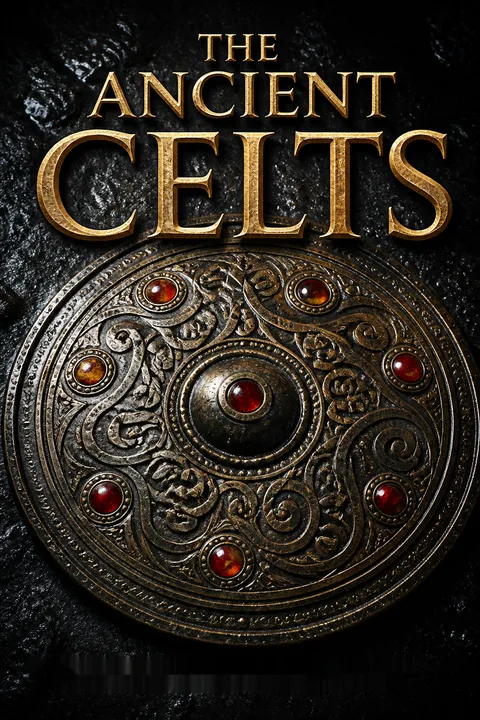


Key Takeaways
Use 'Celt' as a working category, not a single ancient nation
A contested category. Greek and Roman writers used names such as Celts, Gauls, and Galatians for peoples they encountered across Europe. Later scholars added language, archaeology, and art to the picture, sometimes making them fit stories of national ancestry. The result is not one timeless Celtic nation, but a history assembled from evidence that does not always align.
A workable definition. Cunliffe uses 'Celt' broadly for people who normally spoke a Celtic language, while recognizing that communities could be multilingual and identities could shift. Celtic speech, shared artistic traditions, and political allegiance overlap, but none alone proves that every group saw itself as part of one people.
What's useful here is the distinction between a category that helps historians explain patterns and an identity ancient people necessarily shared. Language can connect communities without giving them common rulers, customs, or political aims. The same caution applies to archaeological labels: a familiar style of object may signal contact or imitation rather than migration. This approach avoids two opposite mistakes, treating the Celts as a unified nation or declaring the term useless because its boundaries are imperfect.
Treat an Atlantic Celtic lingua franca as a hypothesis, not settled fact
A maritime possibility. Cunliffe suggests that Celtic may have developed as a shared language along Atlantic Europe, where coastal communities exchanged goods and ideas over long periods. Passage-grave traditions spread from Portugal toward Brittany, Britain, Ireland, and Orkney. Later, around 2800 to 2200 bc, the Bell Beaker phenomenon carried linked customs and metalworking knowledge across much of western Europe.
A debated origin. This model proposes that language may have traveled through networks that were already moving people and skills. It remains a hypothesis, not a demonstrated chain of events. Other models place the spread of Indo-European languages with early farmers from Anatolia or with later steppe populations. The book argues that language, archaeology, and ancient DNA must be compared without assuming they tell the same story.
The model's strength is that it takes connectivity seriously. A common language can be useful where people repeatedly trade, marry, and negotiate across communities, even without a centralized state. Yet material similarities do not identify the language spoken by their makers. The spread of a tomb design or pottery style may reflect imitation, movement, or both. The proposal is most persuasive as a testable account of how a language could spread, not as proof that a particular archaeological culture was Celtic.
Map exchange networks before attributing cultural change to invasion
Connections came first. Late Bronze Age communities around the Atlantic exchanged metals, weapons, and feasting equipment. An Irish spearhead could reach Huelva in southwestern Iberia, while related shield designs appeared across distant coastal regions. These similarities point to sustained contact, but not necessarily to a single people moving together or sharing identical customs.
Networks could break. From the tenth century bc, Phoenician traders sought metals in Iberia and established ports such as Gadir, modern Cádiz. Their activity drew southern Iberia toward the Mediterranean trading system and weakened its older ties with the northern Atlantic zone. Elsewhere, new styles were adopted selectively: a local swordsmith might copy a foreign form while keeping a community's preferred weapons.
The network perspective makes cultural change less binary. Ideas, goods, and people can move at different speeds, and a community can borrow one technology without adopting an entire way of life. That is a better fit for archaeological evidence than treating every shared artifact as a migration marker. The model also has limits: exchange networks are easier to infer from surviving objects than to reconstruct in full. Their routes and participants remain partly invisible, especially where goods were passed from one intermediary to another.
Control the route, and Mediterranean trade could become political power
A chief's advantage. In Iberia, Celtiberian groups occupied a position between metal-producing Atlantic regions and Mediterranean markets. In west-central Europe, Hallstatt leaders controlled important river routes and contacts with southern traders. Imported vessels, wine, and gold made this influence visible in elite burials. The tomb at Vix, for example, included a huge wine-mixing vessel and other Mediterranean drinking equipment.
Prestige through exchange. A prestige goods economy is a system in which leaders strengthen their standing by controlling scarce valuables and redistributing them to followers. Such control could support alliances and loyalty, but it also made power dependent on continued access to imports. The West Hallstatt centers lost prominence around the middle of the fifth century bc, while new centers arose around their former periphery.
This account links geography to political structure without reducing society to economics. A river junction or pass matters because people can use it to organize exchange, and control of exchange can then support authority. The burial evidence is especially vivid, but it is also selective: a magnificent grave records how a lineage wanted to be remembered, not the everyday distribution of wealth. The model is strongest when treated as an explanation of elite power, rather than a complete description of the communities beneath it.
Trace the Celtic diaspora through Italy, Greece, and Anatolia
A branching movement. From roughly 450 to 200 bc, communities and war bands moved from west-central Europe in several directions. Around 400 bc, Celtic groups entered the Po valley. In 390 bc, a force attacked Rome, an event that became a lasting Roman memory. In 279 bc, another large expedition reached Delphi. Some groups then settled in Asia Minor, where they became known as Galatians.
Different kinds of movement. These were not all the same event. Some involved families seeking land, others roaming fighters or mercenaries hired by Mediterranean rulers. Archaeological evidence shows that La Tène objects spread widely, but objects alone cannot establish the size or identity of a migrating population. The familiar story of one mass invasion therefore conceals a series of movements with different motives and outcomes.
The diaspora is compelling precisely because it resists a single dramatic explanation. Migration, raiding, and military service could overlap, and groups could change composition as they traveled. That makes the historical accounts useful for naming events, while archaeology helps reveal longer patterns that written sources overlook. Neither is a neutral record: classical writers had reasons to portray Celts as a terrifying external threat. The careful reader separates the documented movement from the literary image built around it.
Read Celtic battle as a social performance governed by status and obligation
More than combat. Celtic warfare helped define rank, loyalty, and leadership. A warrior's weapons and retinue displayed his standing; a successful raid could bring spoils to distribute. At feasts, seating and the serving of prized meat also marked hierarchy. Challenges to rank could lead to single combat, turning a social dispute into a public test of courage.
A shifting battlefield. Classical accounts emphasize fierce charges, boasts, horns, and naked warriors, but these descriptions also reflect Mediterranean stereotypes of the barbarian. The evidence points to variation in equipment and tactics. Chariots were important in Britain, while cavalry became increasingly useful elsewhere. The battle was not simply an eruption of violence: it belonged to a wider system of competition, obligation, and public reputation.
This social reading explains why combat could remain meaningful even when it was strategically costly. Warfare offered visible tests of courage and a setting for leaders to gather followers, while feasting made rank legible in peacetime. The framework also helps explain the classical focus on boasts and individual challenges. Still, public ritual should not obscure the physical reality of battle or the different roles played by ordinary fighters. Elite behavior is easier to reconstruct than the experience of the majority.
Treat Celtic art as communication, not decoration
Skilled and symbolic. Celtic artists worked in bronze, iron, gold, wood, and pottery, combining technical skill with designs drawn from local and Mediterranean traditions. Their work ranged from intricate sword scabbards to decorated vessels and carved figures. A boar, human face, or intertwined pattern could carry meanings that mattered to its original audience, even when those meanings cannot now be recovered.
Regional invention. Early Celtic metalwork drew on Etruscan and Greek forms, as well as influences from farther east, then transformed them into distinctive styles. The art was not merely a pale copy of southern models. Craftspeople developed original ways to handle plant forms, animals, and human figures, and decorated objects could mark status, identity, or religious purpose.
The crucial insight is that style can be evidence of relationships, not just an aesthetic category. A vessel's shape may reveal borrowing, while its decoration shows how a local craft tradition remade the borrowed form. The uncertainty around specific symbols is equally important. It prevents modern viewers from assigning precise meanings to images whose original context has disappeared. Formal analysis can establish skill and influence, but interpretation becomes much stronger when an object is studied alongside its find context and use.
Track Celtic religion through offerings and sacred places, not only gods' names
A lived landscape. Celtic religious practice appears in groves, springs, lakes, temples, and the deposition of valuable objects. At La Tène, weapons and other goods were placed beside the water; at Gournay, offerings accumulated around a sanctuary over generations. Such deposits suggest repeated acts of communication with divine powers, not simply discarded equipment.
Many local forms. Classical writers matched Celtic deities to Roman gods, but this made diverse beliefs easier for Roman readers to grasp. The Coligny calendar records a lunar year and seasonal festivals, while Irish traditions describe ceremonies tied to the agricultural cycle. Druids appear as religious authorities, teachers, and judges in Gaul. These fragments suggest shared patterns, but not one uniform Celtic religion.
The archaeological approach is valuable because it shifts attention from a catalog of divine names to repeated actions and places. A spring, a river, or a carefully structured sanctuary reveals how belief was practiced in daily life. The evidence still resists certainty: weapons in water may indicate offerings, but the precise ritual cannot be reconstructed from the objects alone. Texts add names and narratives, yet their authors often simplify or condemn unfamiliar practices. Combining both forms of evidence produces a richer account than either can supply by itself.
Rome's wine trade opened routes that conquest later reorganized
Commerce before conquest. From the second century bc, Roman wine moved through southern Gaul and along river routes into Celtic territories. Amphora fragments found at settlements such as Bibracte show that imported wine reached far beyond the Mediterranean coast. Trade also carried other goods and tied local elites to Roman markets. The exchange was not simply cultural: Roman demand included metals, agricultural products, and enslaved people.
Power followed commerce. Julius Caesar's conquest of Gaul in the 50s bc transformed a region already connected to Roman trade. Roman roads, towns, and administration reorganized those connections, while military campaigns devastated communities and supplied captives for slavery. The sequence was not an inevitable march from merchant to soldier, but economic contact helped make the frontier more consequential to both Roman and Celtic leaders.
The trade story highlights how political change can build on relationships formed before formal annexation. Markets create dependencies and incentives, while the power to secure routes can become an argument for territorial control. Yet commerce should not be mistaken for a hidden master plan behind conquest. Caesar also pursued military prestige and political advantage, and the book emphasizes the violence of the campaigns. Holding economic and political motives together gives a fuller account than treating either trade or imperial ambition as the sole cause.
Celtic speech survived longest along Europe's Atlantic fringe
Uneven Romanization. Roman rule reshaped much of Gaul and southeastern Britain, but its reach was shallower in western and northern Britain. Ireland remained outside the empire. These differences mattered: where Roman towns, administration, and population movement were strongest, Celtic languages and institutions faced greater pressure; in less Romanized regions, local traditions persisted more fully.
A changing survival. Celtic-speaking communities remained in Ireland, Wales, Scotland, Cornwall, and Brittany, though their histories were not identical. Some Irish settlers established footholds in western Britain, and migrants from Britain settled in Armorica, the region later called Brittany. Medieval texts preserved parts of older oral traditions, but their Christian editors reshaped them. Survival, then, meant continuity through change, not an untouched ancient world.
The geographic pattern makes survival a question of degree rather than a simple opposition between Roman and Celtic worlds. Languages persist through institutions, family life, and community memory, but they also change through migration and contact. The Breton case is especially instructive because the language's relationship to indigenous Armorican speech and incoming British dialects remains debated in the book. A surviving language is strong evidence of continuity, but it cannot by itself prove that every custom or political identity endured unchanged.
Analysis
Cunliffe's central achievement is not a definitive portrait of one Celtic people, but a method for building a history from evidence that rarely agrees neatly. Classical writers supply characters and events, archaeology maps material practices, linguistics tracks related speech, and later literature preserves transformed memories. Each source has a different bias and timescale. The book's most useful move is to place these sources in conversation without pretending that they describe the same social unit.
The resulting narrative is deliberately uneven. Atlantic Europe appears as a long-lived network of maritime connections; west-central Europe as a zone where elite power rose and collapsed; and the Mediterranean frontier as a powerful engine of trade, warfare, and political change. This makes geography active rather than decorative. Rivers, passes, ports, and metal deposits explain why some communities could broker exchange and why others remained comparatively remote. The account also resists the conventional plot of successive Celtic invasions, showing that the best-attested movements ran south and east, while western cultural change often traveled through exchange and selective adoption.
The approach's main vulnerability is the temptation to turn a plausible network into a language history. Shared artifacts, burial forms, and beliefs support connectivity, but do not establish which language any community used. Likewise, a Roman author's label for a people cannot be treated as direct evidence of that group's own identity. Cunliffe usually marks these uncertainties, but the large-scale synthesis can make provisional links feel more settled than they are. Its strongest claims are therefore about patterns of contact, changing power, and regional difference. Its more speculative claims, especially the early Atlantic origin of Celtic, are best read as hypotheses that organize research rather than conclusions that close debate. That distinction is the book's lasting lesson: a coherent past can be reconstructed without mistaking coherence for certainty.
Review Summary
The Ancient Celts receives mixed reviews, with an average rating of 3.93 out of 5. Readers appreciate the comprehensive archaeological information and beautiful illustrations but find the writing style dry and dense. Some praise Cunliffe's critical approach to sources and detailed analysis of Celtic history and culture. Others struggle with the book's structure and lack of engaging narrative. Many readers recommend it for those with a strong interest in Celtic studies or archaeology, while casual readers may find it challenging.
People Also Read




Glossary
Hallstatt culture
Early Iron Age cultural complexAn archaeological term for related communities in central Europe during the early Iron Age, named after the cemetery at Hallstatt in Austria. The book distinguishes Hallstatt phases and regions, including a wealthy zone of chiefs in west-central Europe whose power was visible in fortified settlements, elite burials, vehicles, and imported Mediterranean goods.
La Tène culture
Later Iron Age material traditionAn archaeological term for material traditions associated with Iron Age communities across much of Europe, named after the site of La Tène in Switzerland. It includes distinctive metalwork, weapons, and artistic styles, and is often connected with historically described Celtic peoples. The language and material culture overlap, but they are not identical categories.
oppidum
Large defended settlementA Latin term Caesar used for a range of substantial settlements in Gaul. Archaeologists apply it broadly to large nucleated sites, often defended and containing residential, productive, political, or religious activity. Oppida differed in size and function; they were not all equivalent to cities or tribal capitals.
murus gallicus
Timber-laced rampart constructionA defensive wall type described by Caesar and identified archaeologically at several Celtic settlements. It used crossing layers of timber, stone, and rubble to create a substantial rampart. The timbers gave the structure resilience, while the stone facing helped protect it from fire and attack.
prestige goods economy
Power through scarce valuablesA system in which leaders build and maintain status by controlling valuable or rare goods and distributing them to followers. In the book's account of Hallstatt society, Mediterranean imports and local wealth could strengthen elite authority. Such power depended partly on continued access to goods and the ability to manage their circulation.
nemeton
Sacred grove or clearingA Celtic word for a sacred place, often associated with a grove or clearing. The term appears in place names across the Celtic-speaking world and is also used for religious locations. Classical descriptions and archaeological evidence suggest that sacred places could be natural settings or structured sanctuaries.
Coligny calendar
Inscribed lunar-solar calendarA calendar inscribed on bronze sheets found at Coligny in France and dating to the late first century bc. It records lunar months, alternating 29- and 30-day lengths, and an intercalary month to keep the calendar aligned with the year. It also marks auspicious days and seasonal festivals.
Viereckschanze
Rectangular ritual enclosureA rectangular ditched enclosure found in parts of central Europe, especially Germany and northern France, often dating to the later Iron Age. Some contain shafts, wells, burials, or timber structures. Their exact functions remain uncertain, but their form and contents support interpretation as places with ritual significance.
Download PDF
Download EPUB
.epub digital book format is ideal for reading ebooks on phones, tablets, and e-readers.








