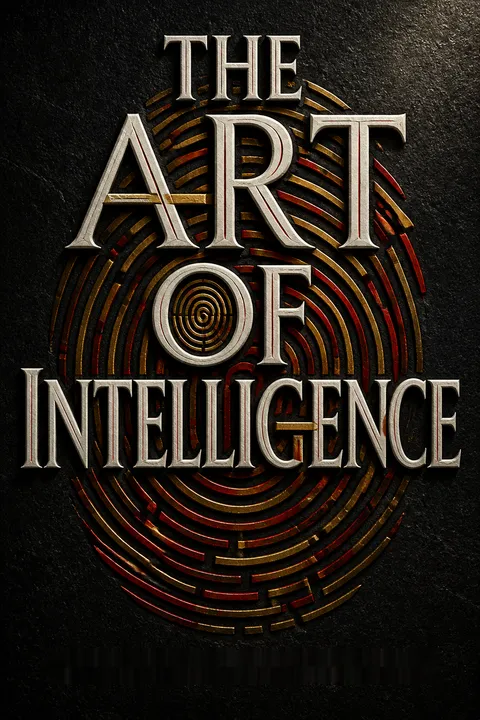


Key Takeaways
Judge intelligence by the decisions it improves, not the secrets it collects.
Information must travel. Intelligence matters when it reaches someone able to use it: a president choosing policy, a commander planning an operation, or an ambassador working with an ally. A case officer’s report separated what a source said from what the officer knew about the source’s access and reliability. A restricted companion message explained how the information was obtained, without revealing the source’s identity to every reader. The aim was to let decision makers judge the report without endangering the person who supplied it.
Collection is only a beginning. In Afghanistan, reports, analysis, and operational information moved among CIA teams, military partners, Afghan allies, and policy makers. A fact without context could mislead; a well-sourced report without a customer could go unused. Intelligence had to be timely, relevant, and clear about uncertainty.
The section makes intelligence a relationship between collector, analyst, and decision maker, rather than a trophy of secret access. That distinction helps explain why reporting quality includes provenance and uncertainty, not merely dramatic content. It also exposes a danger: a powerful customer may want intelligence to validate a preferred decision. A system that serves leaders well must preserve the analyst’s ability to distinguish evidence from inference, even when the resulting answer is inconvenient.
Recruit the person, not the motive you wish they had.
Motives are personal. Crumpton describes recruitment as a changing mix of practical need, political conviction, vulnerability, status, resentment, and pressure. He groups these forces as MICE/RC, a mnemonic for considering why someone might cooperate. It is a guide to inquiry, not a formula for predicting behavior. One prospective source wanted money and produced little useful intelligence; a different source, a neglected government clerk, was energized when told that the U.S. president had read his report.
Trust takes work. A promising recruit once withdrew after his frightened wife objected. Crumpton left, but the man later chose to cooperate after deciding his opposition to his government outweighed the risks. Recruitment required patient assessment, repeated testing, and acceptance that an officer might never know whether an asset was worth the investment.
This account treats motivation as a moving target, which is more realistic than assuming people act from one stable interest. Recognition, belonging, and moral purpose can matter alongside material reward, as the clerk’s reaction illustrates. Yet a recruiter’s interpretation of another person’s motives is still an interpretation. The same source may have mixed loyalties or reasons for withholding information. Respectful listening helps build trust, but ongoing verification protects both the mission and the person being recruited.
Know your own cultural blind spots before reading someone else's.
Perspective can mislead. On a hike in Africa’s Rift Valley, Crumpton offered a Maasai boy chocolate and assumed the boy would be impressed by his tent and camping equipment. Instead, the boy sniffed his boot and reacted with disgust. Crumpton realized he had mistaken his own ideas of comfort and status for universal ones. The boy might have seen a person dependent on gear, without cattle, and unfamiliar with local life.
Listen for local meaning. Crumpton calls culturally grounded understanding “deep intelligence.” It means learning how people interpret events through their own customs, interests, and social relationships. His African agent explained how cattle, tribal alliances, and local revenge shaped a conflict that Washington viewed mainly through the Cold War. Without such insight, analysts can mistake an unfamiliar choice for irrationality and make bad decisions.
The Maasai encounter offers a useful corrective to the assumption that more information automatically means better understanding. A person’s categories shape what they notice, what they ask, and what they misread. This connects intelligence work to anthropology and field research, where observing local practice can challenge an outsider’s theory. Cultural humility is not the same as accepting every local claim as true, however. It is a reason to ask better questions and check interpretations against other evidence.
Let technology extend human access, never stand in for it.
People shape the signal. Human intelligence, or HUMINT, is information obtained through human sources. Technical systems can widen its reach, but they cannot make a target talk. In one operation, CIA officers installed a listening device in an apartment and executed the entry cleanly. They collected no useful intelligence because the target was disciplined and rarely discussed sensitive matters at home. The team had studied the equipment and access better than the person being monitored.
Combine collection methods. During the Afghanistan campaign, Afghan sources and allies helped identify locations for Predator surveillance. The aircraft’s imagery then tested and refined what people reported. Signals intelligence and other technical systems added further evidence. The sources worked best together: human access directed the technology, while technical collection helped assess and improve human reporting.
The failed listening operation is a compact lesson in measurement: a device can function perfectly while answering the wrong question. The broader campaign shows the advantage of feedback, with each source helping focus or test another. This is a strong model for complex investigation, where independent forms of evidence can reduce blind spots. Still, multiple streams do not guarantee truth if they share the same underlying assumption. Analysts must ask whether sources genuinely corroborate one another or merely repeat a common error.
Bridge law enforcement and intelligence without confusing their missions.
Different jobs create friction. After the 1998 embassy bombings in East Africa, the FBI investigated crimes and assembled evidence for prosecution. The CIA collected intelligence about threats, networks, and future attacks. FBI agents worried that sharing information could damage a case in court; CIA officers expected reporting to move to a wider range of customers. Their working cultures differed too: the FBI relied heavily on oral briefings and field offices, while the CIA depended on written reporting and centralized information systems.
Cooperation needs structure. The agencies often worked well together in the field, but incompatible incentives and weak information sharing limited the larger response. Crumpton found that FBI offices could hold useful leads without headquarters having a clear picture of them. Intelligence and evidence are not interchangeable, yet each can help the other when legal protections, responsibilities, and channels for collaboration are clear.
The contrast is not simply between a forward-looking agency and a backward-looking one. Prosecutors need admissible evidence, while intelligence officers need information that can be shared without exposing sources. Those are legitimate but sometimes competing constraints. The organizational lesson is to design interfaces before a crisis, not to demand trust after the stakes rise. Shared priorities, clear rules, and compatible reporting systems can improve cooperation without erasing the distinct protections each mission requires.
Use covert action only when policy knows what it is trying to achieve.
A secret operation is not a strategy. Covert action means secretly influencing events or behavior on behalf of a government. Crumpton argues that it should support a wider policy, coordinated with diplomacy, military power, and economic measures. It cannot replace a decision about the desired outcome. He points to episodes such as the Bay of Pigs invasion and the 1973 coup in Chile as warnings about covert action conducted amid weak or confused policy.
Afghanistan showed both reach and limits. CIA teams helped organize Afghan forces, gather intelligence, and support military strikes after September 11. The campaign quickly removed the Taliban from major cities and disrupted al Qaeda’s base. But the United States did not sustain comparable attention to Afghanistan’s governance and development. The author’s own account concludes that an operational victory could buy time and space, but could not by itself secure a lasting political settlement.
This principle separates operational competence from political success. A covert action can achieve its immediate objective and still worsen the conditions surrounding it if the sponsor has no credible plan for what follows. The distinction is especially important because secrecy can obscure who owns the consequences. Covert action may give leaders flexibility, but it can also tempt them to substitute deniable activity for difficult public choices. Its value depends on whether the larger policy is coherent, legitimate, and sustainable.
Build campaigns around local allies, not around an invading force.
Local interests supplied the force. In Afghanistan, the CIA could deploy quickly, but its small teams could not defeat the Taliban alone. Afghan tribal forces knew the terrain, had existing networks, and could recruit other Afghans. The CIA’s purpose was to help coordinate those forces and connect them to intelligence, supplies, and U.S. air power. The alliance also required political judgment: northern leaders argued that a Pashtun such as Hamid Karzai was essential to a government with national reach.
Speed depended on partnership. The book says roughly 110 CIA operatives and about 300 U.S. Special Forces worked on the ground as Afghan allies helped remove the Taliban from power in less than three months. The success was not complete: Osama bin Laden escaped at Tora Bora, and the broader political objectives remained unmet. Local partnership made rapid victory possible, but it did not guarantee durable peace.
The Afghan campaign illustrates how a small outside force can gain reach by working through people who already possess local knowledge and political ties. It also complicates the familiar image of military power as a contest between national armies. Yet an ally is not an instrument with a single objective. Afghan leaders pursued their own rivalries and visions, sometimes conflicting with U.S. priorities. Partnership can improve access and legitimacy, but it demands continued negotiation and a serious plan for the political order that follows military success.
Centralize purpose, decentralize decisions, and give the field shared information.
Command needs a common picture. Crumpton’s teams worked from clear strategic goals, while experienced leaders made rapid decisions on the ground. Their “Magic Box” was a geographic information system, or GIS, that combined map layers showing enemy positions, friendly teams, roads, terrain, and protected sites. It let headquarters and military partners see updated information in a shared format. During the air campaign, that common picture helped prevent strikes when friendly positions were uncertain.
The field had room to act. Teams also shared information laterally rather than waiting for every instruction from headquarters. When a team near Mazār could not establish contact with allies in central Afghanistan, it sent officers overland to scout an insertion point. That decision advanced the larger plan. Decentralization was not improvisation without direction: teams knew the mission, had access to shared intelligence, and were expected to exercise judgment.
This arrangement addresses a basic organizational tradeoff. Central control can keep actions aligned, but too much of it slows decisions when conditions change faster than headquarters can respond. Shared maps and clear objectives let authority move closer to the event without losing the wider picture. The approach depends heavily on selecting capable people and maintaining reliable information. A visual system can create confidence as well as clarity, so leaders still need to question data quality and make room for dissent.
Treat intelligence as a civic capability, while protecting the liberties it serves.
The private sector holds access. As head of the CIA’s National Resources division, Crumpton worked with U.S. companies, universities, and specialists who could provide foreign expertise, access, or intelligence. A scientist might understand a weapons program; a company might know a communications network; a university leader might notice risks on campus. The book calls the convergence of biology, artificial intelligence, robotics, and nanotechnology the BARN revolution, arguing that government cannot keep pace with these fields in isolation.
Cooperation must remain voluntary. Some business and university leaders chose to help protect their communities and country. Crumpton also worried that fear of terrorism could justify excessive domestic power or weaken civil liberties. He favored intelligence cooperation with citizens but resisted merging intelligence, law enforcement, and military authority at home. Public understanding matters because secrecy can protect sources, but it can also leave citizens unable to judge the agencies acting in their name.
The argument broadens national security beyond government agencies: universities, companies, and citizens can possess knowledge that public institutions lack. Their participation may improve detection and response, especially in fast-changing technical fields. But private cooperation does not remove questions of consent, privacy, or accountability. A voluntary partnership can still affect people who never agreed to be part of it. The book’s own tension is productive: democratic societies need intelligence, yet the power to gather it must remain bounded and publicly contestable.
Analysis
The book is a memoir with a strategic argument: intelligence is a human practice that connects access, interpretation, policy, and action. Its strongest narrative evidence comes from the gap between what can be collected and what can be understood. A listening device yields nothing when the target stays silent; a local source explains why a conflict makes sense to the people fighting it; a Predator becomes useful when human reporting points it toward the right place. These episodes make the central claim concrete without reducing intelligence to technology or heroic instinct.
The Afghan campaign is the book’s central case study in organizational design. Small teams, trusted local partners, shared maps, and rapid decisions created a capacity that conventional institutions struggled to supply. The account also distinguishes tactical success from strategic completion. Major cities fell quickly, yet bin Laden escaped, and the author acknowledges that political and economic conditions remained unresolved. That distinction is essential: operational speed is not proof of durable policy success.
The memoir’s first-person perspective is both a strength and a limitation. Crumpton offers unusually close access to decision making, but his account naturally foregrounds the CIA’s contribution and the urgency of its mission. Readers should therefore separate firsthand operational description from broader judgments about agency performance, political motives, or what alternatives leaders faced. The book itself shows that policy makers, intelligence officers, military commanders, and local allies disagreed, sometimes for defensible reasons.
Its enduring question is institutional: how can a democracy act quickly against dispersed threats without letting urgency erase scrutiny? The answer suggested here is not simply more intelligence or more centralized authority. It is better communication, clearer objectives, local knowledge, capable partners, and leaders willing to distinguish what they know from what they want to be true.
Review Summary
The Art of Intelligence receives mixed reviews. Many praise Crumpton's insider perspective on CIA operations, especially post-9/11 counterterrorism efforts. Readers appreciate the insights into intelligence gathering, covert actions, and geopolitics. However, some criticize the book for being overly positive about the CIA and lacking critical reflection. The writing style is described as engaging by some, but dry by others. Overall, reviewers find it an informative, if sometimes sanitized, account of CIA operations and Crumpton's career in intelligence.
People Also Read




Glossary
MICE/RC
Recruitment motive guideA mnemonic Crumpton uses to organize possible reasons someone might spy for the CIA. It encompasses material self-interest, political or personal convictions, compromising vulnerabilities, status needs, resentment, and coercive pressure. The letters are a prompt for assessing an individual, not a predictive formula. Motives can overlap, change, or remain hidden, so continued verification matters.
deep intelligence
Culturally grounded understandingCrumpton’s term for intelligence informed by empathetic understanding of local people, norms, and interests. It goes beyond collecting facts about a place to understanding how those facts acquire meaning for the people who live there. Without this perspective, collectors and analysts can misread behavior, overlook local priorities, and produce flawed assessments or operations.
HUMINT
Human-source intelligenceHuman intelligence is information collected from people, including recruited agents, informants, and other sources with relevant access. In Crumpton’s account, HUMINT can reveal plans, intentions, relationships, and local context that technical collection may miss. It can also help direct and validate technical collection. Its value depends on source access, reliability, security, and careful assessment.
National Resources
Domestic collection and recruitmentThe CIA division Crumpton led that worked within the United States with citizens, businesses, universities, and foreign nationals. It combined the debriefing of Americans with access to foreign information and the recruitment of foreign sources based in the United States. The division connected domestic expertise and relationships to the Clandestine Service’s overseas intelligence and recruitment needs.
Magic Box
Dynamic geospatial displayThe name Crumpton’s Afghanistan team gave its geographic information system. The system combined mapped data, including terrain, roads, friendly positions, enemy locations, and protected sites, into a shared, updateable picture. It helped headquarters and field teams coordinate operations and helped military partners avoid striking locations where allies or civilians might be at risk.
BARN revolution
Four converging technology fieldsCrumpton’s shorthand for the convergence of bioscience, artificial intelligence, robotics, and nanotechnology. He argues that advances in these fields can change intelligence collection, warfare, and national security, while creating both opportunities and threats. The term also underscores his view that government agencies need private-sector knowledge and relationships to understand technologies developing beyond their own institutions.
covert action
Secret government influenceAn operation intended to influence events or behavior while concealing the government’s role. In the book, covert action is a tool of statecraft, distinct from intelligence collection and not a replacement for public policy. Crumpton argues that it works best when it supports clear objectives and is coordinated with other measures, such as diplomacy, military action, and economic policy.
FAQ
What’s The Art of Intelligence by Henry A. Crumpton about?
- CIA Memoir and Analysis: The book is a memoir of Henry A. Crumpton’s career in the CIA’s Clandestine Service, focusing on espionage, covert action, and counterterrorism.
- Afghanistan and Counterterrorism: It provides a detailed account of the CIA’s role in the Afghanistan War post-9/11 and global counterterrorism efforts.
- Personal and Professional Insights: Crumpton blends personal stories, operational details, and reflections on intelligence tradecraft, leadership, and the evolving nature of warfare.
Why should I read The Art of Intelligence by Henry A. Crumpton?
- Firsthand Insider Perspective: The book offers rare, candid insights into the CIA’s counterterrorism operations and the complexities of intelligence work.
- Understanding Modern Warfare: It explains how nonstate actors and new technologies have changed the nature of war and intelligence.
- Leadership and Ethics Lessons: Readers gain valuable lessons on leadership under pressure, the integration of intelligence and policy, and the moral challenges of covert action.
What are the key takeaways from The Art of Intelligence by Henry A. Crumpton?
- Critical Role of Intelligence: Intelligence is essential for national security, policy-making, and modern warfare, especially against asymmetric threats.
- Integration and Innovation: Success in intelligence requires integrating human and technical collection, rapid decision-making, and innovative tools like the “Magic Box.”
- Ethics and Empathy: Effective intelligence work demands empathy, self-awareness, and careful navigation of moral and legal dilemmas.
How does Henry A. Crumpton describe the CIA’s role in the Afghanistan War in The Art of Intelligence?
- Lead Agency Post-9/11: The CIA, especially the Counterterrorism Center (CTC), was given the lead in the initial Afghanistan campaign, working closely with Afghan allies and Special Forces.
- Networked Command Structure: The CIA established dynamic, empowered teams capable of rapid operational decisions, supported by real-time intelligence visualization.
- Overcoming Challenges: The agency faced internal competition, limited resources, and skepticism from other agencies but maintained focus on mission objectives.
What is the “Magic Box” in The Art of Intelligence and why is it significant?
- Geospatial Intelligence System: The “Magic Box” was a rapidly developed GIS tool that integrated thousands of geo-coordinated intelligence data points in Afghanistan.
- Enhanced Targeting and Coordination: It allowed real-time visualization of enemy and friendly positions, improving targeting accuracy and reducing civilian casualties.
- Innovation Under Pressure: The system exemplified the CIA’s ability to innovate quickly and transform intelligence collection and covert action integration.
How does The Art of Intelligence by Henry A. Crumpton explain intelligence collection methods?
- Human Intelligence (HUMINT) Focus: While technical methods are important, human espionage remains central, providing access to people and their behavior.
- Synergy with Technology: Technical means like UAVs, bugs, and cyber operations complement human sources, enabling more precise and actionable intelligence.
- Complex Operations: The book details operations such as bugging embassies and managing agent communications, highlighting the risks and complexities involved.
What are the key lessons about recruitment in The Art of Intelligence by Henry A. Crumpton?
- MICE/RC Framework: Recruitment motivations are categorized as Money, Ideology, Compromise, Ego, with additions of Revenge and Coercion, requiring tailored approaches.
- Human Element is Paramount: Understanding the target’s aspirations and fears, building trust, and managing emotions are crucial for successful recruitment.
- Recruitment Challenges: Recruiting terrorists or hostile agents is especially risky, demanding unique skills, courage, and ongoing management of sources.
How did the CIA recruit and work with Afghan allies during the Afghanistan War, according to The Art of Intelligence?
- Empowering Tribal Militias: The CIA built coalitions with diverse Afghan tribal leaders, appealing to motivations like revenge, honor, and shared interests.
- Cultural Sensitivity: Officers respected Afghan customs, adapted to local practices, and maintained alliances through cultural understanding.
- Material and Intelligence Support: The CIA provided weapons, money, intelligence, and humanitarian aid to support and sustain allied forces.
What role did technology, especially UAVs like the Predator, play in CIA operations in The Art of Intelligence?
- Revolutionizing Intelligence Collection: UAVs offered persistent surveillance, real-time video feeds, and laser designation of targets, enhancing situational awareness.
- Armed UAV Strikes: The Predator was equipped with Hellfire missiles, enabling targeted strikes and close air support—a first in warfare.
- Integration with Operations: UAV intelligence was shared with military partners, enabling coordinated strikes and reducing collateral damage.
How does The Art of Intelligence by Henry A. Crumpton describe the CIA-FBI relationship in counterterrorism?
- Cultural and Operational Differences: The FBI focuses on law enforcement and prosecution, while the CIA emphasizes intelligence collection and covert operations.
- Information Sharing Barriers: Legal and cultural obstacles hindered effective cooperation and intelligence sharing, especially before 9/11.
- Interagency Exchange Efforts: Crumpton worked to bridge gaps through exchange programs, though bureaucratic and cultural frustrations persisted.
What are the main challenges and reflections Henry A. Crumpton shares about intelligence and policy after the Afghanistan campaign in The Art of Intelligence?
- Policy Shortcomings: Crumpton critiques the lack of sustained political will and resources for governance and development in Afghanistan.
- Intelligence-Policy Tension: He reflects on the need for better integration between intelligence collection and policy demands, and the challenges of bureaucratic inertia.
- Evolving Warfare: The rise of nonstate actors and the globalized battlefield require adaptive strategies and a broader understanding of intelligence.
What are the best quotes from The Art of Intelligence by Henry A. Crumpton and what do they mean?
- On Intelligence and War: “If you know the enemy and know yourself, you need not fear the result of a hundred battles.” —Sun-tzu, emphasizing the value of intelligence.
- On Espionage: “The essence of espionage is access.” —Allen Dulles, highlighting the importance of human access to information.
- On Leadership and Courage: “Clausewitz... stressed the courage of responsibility over all other forms of courage.” —underscoring the moral challenges of leadership.
- On America’s Need for Spies: “May God bless America and her spies. We will need them, more than ever.” —honoring the sacrifices and critical role of intelligence officers.
Download PDF
Download EPUB
.epub digital book format is ideal for reading ebooks on phones, tablets, and e-readers.








