

Key Takeaways
Treat Iran's contradictions as political clues, not evidence of hypocrisy.
Contradiction is the entry point. Hooman Majd, an Iranian raised in the West, keeps encountering people who defy easy categories. His Jewish-Iranian friend supported the 1979 revolution, while a devout Egyptian Sunni vendor in New York admired Iran as a defender of Muslims. These reactions make sense only when identity, faith, and national independence are understood together, rather than assigned to separate boxes.
A revolution with mixed motives. Iranians overthrew the Shah in 1979 to escape dictatorship and foreign influence. The new Islamic Republic was also a claim to political self-determination. Its citizens can resent its restrictions, admire its independence, and disagree with its leaders without feeling inconsistent. The book's central task is to make those overlapping loyalties legible.
What's valuable here is a method, not a defense of any government: treat apparently inconsistent behavior as evidence that several loyalties are operating at once. Political psychology often distinguishes identity from policy preference; a person can oppose a state's domestic rules while valuing its sovereignty. That helps explain otherwise puzzling support for Iran's international posture. The caution is that understanding a constituency does not validate a leader's rhetoric or erase harms imposed on minorities and dissidents. Context explains why a message resonates, but it cannot settle whether the message is just.
Look behind Iran's public rules to the private life they leave intact.
Walls divide public and private. Majd describes Iranian homes as places where people can often drink, watch foreign television, criticize leaders, and socialize more freely than the street would suggest. The boundary is both literal and cultural. The Islamic Republic generally enforces public codes more aggressively than private behavior, while people find pockets of privacy in homes, cars, and even informal gatherings.
Control has changed hands. In the 1930s, Reza Shah's government forcibly removed women's veils. After the revolution, women could be punished for appearing without prescribed covering. In each era, the state tried to dictate public dress, while citizens adapted the rules in practice. Activists also used salons, buses, and private homes to gather support for legal change, making the boundary itself politically useful.
This resembles what political anthropologists call a hidden transcript: the criticism and practices people keep out of official view. Such private space can preserve ordinary life under restrictive rule, and it can also become a venue for organizing. But privacy is not evenly distributed. People with secure homes and social connections can create more shelter than those exposed to policing in public. The comparison between the two veiling campaigns is especially revealing: coercion can arrive in opposite ideological costumes, so the key question is who controls the choice, not which garment is preferred.
Hear Iranian demands for nuclear rights as claims about sovereignty, not just pride.
Rights mean more than civil liberties. Majd uses the Persian word haq for a sense of rightful entitlement that can include fair pay, affordable essentials, political voice, and control over national resources. Many Iranians see uranium enrichment as a right under the Non-Proliferation Treaty, not merely a trophy of scientific achievement. The memory of foreign interference, especially the 1953 coup against Prime Minister Mossadeq after he nationalized oil, gives such claims force.
Bread still matters. Ahmadinejad gained support by promising to direct oil wealth toward ordinary households and by speaking for people who felt ignored by the elite. When sanctions and inflation raised the price of staples such as tomatoes, public frustration grew. A foreign-policy position could therefore be popular as a matter of sovereignty and unpopular for its costs at the dinner table.
The distinction between recognition and material welfare is useful well beyond Iran. Political leaders often turn a technical dispute into a test of equal treatment: who gets to use a technology, set the terms, or claim national resources? That framing can mobilize people across class lines. Yet sovereignty language can also obscure distribution. Citizens may defend a national program while bearing unequal costs, and governments can present their own choices as the people's rights. Asking who benefits, who pays, and who gets to decide keeps the analysis grounded.
Read Shiite mourning as a living politics of injustice and endurance.
Karbala supplies a moral story. Shiites remember Imam Hussein's defeat and death in 680 as the martyrdom of a just figure resisting unjust power. During Ashura, Iranian mourners beat their chests, sing laments, and sometimes carry a symbolic coffin. The ritual does more than recall distant history. It connects present suffering to a shared story about injustice, loyalty, and the refusal to surrender moral legitimacy.
Hope and sacrifice intertwine. The missing twelfth Imam, the Mahdi, is expected to return as a deliverer. In Qom, pilgrims leave him written requests at Jamkaran, a shrine associated with a vision of the Imam. The same martyrdom narrative animated volunteers in the Iran-Iraq War, including young Basij recruits sent into perilous battles. Majd shows why faith can offer hope while also making sacrifice politically powerful.
Ritual gives abstract political memory a bodily form. Repeated gestures, music, and shared grief can make a community's account of injustice feel immediate across generations, much as commemorations elsewhere sustain national identity. This helps explain why a defeat can function as a source of moral strength rather than simple humiliation. The same emotional force deserves careful scrutiny, however. A tradition that honors sacrifice can console the bereaved, but leaders can also use it to make dangerous costs seem sacred. Meaning is not the same as consent.
Understand ta'arouf as social courtesy with a strategic edge.
Politeness has a local grammar. Ta'arouf is an Iranian social ritual of elaborate courtesy: people may refuse payment, minimize their own worth, or insist that a guest accept something before getting down to business. A taxi driver might repeatedly decline a fare while the passenger repeatedly insists on paying. The exchange is not always literal. It signals respect, establishes the relationship, and lets each person assess the other.
Courtesy can negotiate power. In business and diplomacy, the ritual can soften an approach, create obligations, or disguise a contest over advantage. Majd contrasts former president Khatami's polished, conciliatory manner with Ahmadinejad's more confrontational defense of haq. The styles differ, but both operate within Iranian conventions. Bluntness itself can carry a calculated message when it is delivered to a specific audience.
Ta'arouf is a reminder that communication is not just the dictionary meaning of words. Anthropologists describe such exchanges as ritualized face-work: participants protect dignity and establish social standing through recognizable forms. That perspective prevents outsiders from mistaking a refusal for a final answer or a compliment for simple flattery. Still, reading every courtesy as strategy would be another mistake. Social rituals can express warmth as well as calculation, and their meaning depends on the relationship, setting, and stakes. The useful habit is to observe the exchange before deciding what it means.
Notice how the revolution raised the underclass while centralizing clerical authority.
Revolution altered social rank. Before 1979, neighborhood toughs called laats and their more established counterparts, jahels, held local influence in working-class districts. Some had helped the Shah's supporters mobilize street violence in 1953. After the revolution, clerical committees displaced their authority, but the new state also created routes for poorer, religious citizens to gain education and public roles.
The Basij embodied that shift. Recruited largely from religious and working-class neighborhoods, the volunteer force became a protector of the revolution and a presence in universities, demonstrations, and wartime mobilization. Ahmadinejad's modest clothes and working-class background helped him speak to people who felt excluded by wealthy Tehran elites. Yet the revolution did not hand power to the street: clerics retained ultimate authority, and local toughs who joined state institutions operated under their command.
This is a story about incorporation, not simply class rebellion. A regime can broaden access to education, careers, and political belonging while preserving a hierarchy at the top. That combination helps explain why people may defend a system that also constrains them: it offers status and opportunity unavailable under the previous order. The book's class lens is incisive, though class alone cannot explain every vote or affiliation. Religious commitment, regional identity, economic insecurity, and personal ambition also shape political choices.
Track how Iran's Supreme Leader balances elected government and armed institutions.
The presidency is not the summit. Khomeini's doctrine of velayat-e-faqih, or rule by a qualified Islamic jurist, places a Supreme Leader above the elected president. The Leader can shape foreign policy, oversee the armed forces, and intervene in domestic decisions, while presidents absorb much of the public blame for everyday failures. Majd portrays Khamenei as preserving authority by allowing elected leaders to take credit when things go well and responsibility when people grow dissatisfied.
Institutional loyalty matters. The Revolutionary Guards were created as an all-volunteer force loyal to the new regime, after the Shah's conscript army failed to defend him. They developed military power and economic interests, and report to the Supreme Leader. The elected Assembly of Experts selects and can supervise the Leader, but it must also choose someone acceptable to powerful clerics and security institutions.
The system is best understood as layered authority rather than a simple contest between democracy and dictatorship. Elections create real public expectations, while unelected institutions retain vetoes and coercive power. That arrangement can absorb discontent by directing blame toward presidents without changing the underlying hierarchy. It also creates internal negotiation: leaders must maintain support among voters, clerics, and armed institutions. Majd's portrait is especially helpful in showing how stability can come from managed ambiguity, though the same ambiguity makes it difficult to assign responsibility when policy fails.
Hold Persian heritage, Islamic faith, and Western aspiration in the same frame.
Identity is not a single allegiance. Majd describes Iran as a country where Shia Islam and Persian culture have long intertwined, even as many Iranians distinguish themselves from Arabs and take pride in pre-Islamic history. Persian poetry remains part of everyday speech, quoted by ordinary people and senior clerics alike. The word pairidaeza, meaning an enclosed garden, names a Persian architectural tradition that also gave English the word paradise.
Modern desires coexist with devotion. In a Qom household, a young woman watched pop videos from Los Angeles, dreamed of seeing New York, and gave Majd prayer beads from a shrine. Her family lived amid religious ritual and economic hardship, yet admired American technology. Such scenes are not proof that faith is fading or that Western influence has won. They show how people combine inherited belonging with imagined possibilities.
This layered view resists the familiar modernization story in which tradition and modernity must replace one another. People can value religious belonging, national history, consumer technology, and life abroad at the same time. Cultural identities behave less like sealed containers than overlapping repertoires, activated differently in different settings. The book also warns against treating Persian pride as evidence of uniform nationalism: Iran contains many ethnicities and sharply divided classes. A more precise question is not which identity is authentic, but when and for whom each identity becomes politically important.
Do not mistake anger at Iran's rulers for a desire to overthrow the republic.
Reform can matter more than rupture. Majd presents Khatami as a reformist who sought greater openness within an Islamic system, not its abolition. His presidency widened social and press freedoms, but conservative institutions limited his ability to change the system. Even many people dissatisfied with the regime did not want another revolution; they wanted political change, economic improvement, and room to live their lives.
Foreign sponsorship can backfire. Dissidents such as Akbar Ganji drew attention for challenging the state, yet many Iranians remained wary of opposition based abroad or of activists welcomed by American officials. The memory of foreign intervention made outside endorsement politically suspect. Majd's conclusion is that Iran's future is shaped not only by rulers and dissidents, but by citizens whose attachment to independence and revolutionary history makes them resistant to solutions presented as imported.
Reformist politics often depends on a distinction between regime legitimacy and regime performance. Citizens can believe the system has a rightful place in national history while demanding that it govern better, a stance that outsiders may misread as acquiescence. The book's account also highlights a recurring dilemma in international advocacy: foreign attention can protect dissidents, but it can let authorities portray them as agents of outsiders. That tension should not become an excuse to discount repression. It is a reason to listen closely to local strategies and the risks people themselves identify.
Analysis
Majd's most useful claim is that Iran becomes intelligible when its contradictions are treated as evidence of layered social life rather than as a defect in Iranian character. The same person can value religious tradition, privately ignore public rules, resent foreign pressure, admire Western technology, and oppose a president without rejecting the republic. This is not a uniquely Iranian capacity for inconsistency. It is a familiar feature of politics in which private life, collective memory, material interests, and national dignity are managed through different institutions and social codes.
The book's form supports that argument. Majd moves between family history, street encounters, religious ceremonies, and conversations with presidents and clerics. The taxi driver, the Qom family, the revolutionary rally, and the private gatherings are not decorative travel writing. Each scene tests whether an outside observer's categories explain actual behavior. His position as a Western-raised Iranian gives him access to social settings a foreign reporter might miss, while his fluency in both cultural registers lets him notice the meaning carried by clothing, jokes, and courtesy.
That access also has limits. Majd relies heavily on elite contacts and personal encounters, so the vivid individual story cannot establish how representative a view is across a country of many classes and ethnicities. His account, published in 2008 and grounded largely in visits from 2004 to 2007, is a historical portrait, not a guide to contemporary Iranian politics. The strongest reading therefore treats it as an interpretive map rather than a survey.
The book's lasting lesson is methodological: distinguish the public state from the society it governs, and distinguish symbolic loyalty from agreement with policy. Iran's political system draws strength not only from coercion, but from memories of foreign interference, religious narratives of injustice, and real opportunities for constituencies once excluded from power. Those sources of legitimacy coexist with dissatisfaction and demands for change. Seeing both sides makes the country less mysterious, while making its internal conflicts more serious, not less.
Review Summary
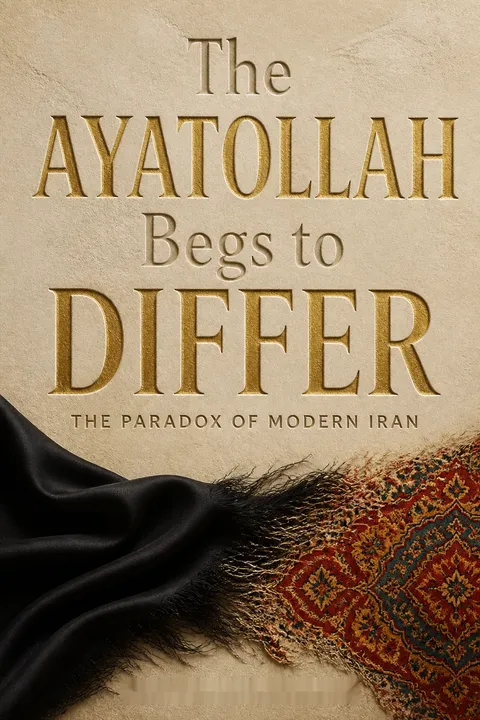
The Ayatollah Begs to Differ offers unique insights into Iranian culture and politics, combining personal anecdotes with historical context. Readers appreciate Majd's witty writing style and balanced perspective, though some find it apologetic. The book explores concepts like ta'arouf and haq, shedding light on Iranian society's complexities. While some criticize Majd's long-winded sentences and repetitive storytelling, most reviewers find the book informative and engaging. It challenges Western misconceptions about Iran, presenting a nuanced view of the country's people, government, and traditions.
People Also Read







Glossary
ta'arouf
Ritualized courtesyA Persian social practice of elaborate politeness, self-deprecation, and conventional refusal or insistence. A host may insist that a guest accept something, or a service provider may initially decline payment, while the other person politely pushes back. The exchange can express respect and hospitality, but can also shape status, obligation, or negotiation.
haq
Rightful claimA Persian term for a right or legitimate entitlement. In Majd's account, it can refer to individual concerns such as a fair wage or affordable necessities, as well as national claims to sovereignty and access to technology. Its meaning is broader than the liberal-democratic emphasis on civil liberties, and its precise content is politically contested.
gholov
Rhetorical exaggerationA Persian practice of emphatic, often theatrical exaggeration. It can appear in boasts, insults, or storytelling, where the point is not always literal accuracy but emotional force, humor, or persuasion. Majd presents it as a familiar counterpart to ta'arouf's elaborate modesty, both of which shape Iranian social and political speech.
velayat-e-faqih
Rule by Islamic juristAyatollah Khomeini's political doctrine that an Islamic state should be guided or ruled by a qualified Islamic jurist. It became the constitutional basis for the Supreme Leader's authority in the Islamic Republic. Clerics disagree about how extensive that authority should be, including whether the jurist should guide the state or directly govern it.
taghiyeh
Religious dissimulationA Shia concept permitting concealment of one's beliefs under threat, historically associated with protecting a vulnerable religious minority from persecution. Majd notes that interpretations differ over its scope. In the Islamic Republic, it is also discussed as a possible justification for concealment in order to protect the wider Shia community.
pairidaeza
Enclosed Persian gardenAn Old Persian word for a walled or enclosed garden, formed from words meaning around and wall. Majd uses the Persian garden as a cultural image for privacy and for the separation between public and private life. The term is also the linguistic source of the English word paradise.
Basij
Volunteer revolutionary forceA volunteer force under the authority of Iran's Revolutionary Guards, recruited substantially from religious and working-class communities. Its members have served as defenders of the Islamic Republic, participants in wartime mobilization, and enforcers of public order. Majd presents the Basij as both a security institution and a route into public life for some poorer citizens.
laat
Neighborhood toughA Persian social type associated with working-class street culture and a reputation for toughness. In Majd's account, laats could command local influence while also living outside respectable social norms. Their authority differed from that of a jahel, a more established neighborhood figure, and their social world was partly displaced after the revolution.
jahel
Established neighborhood bossA former street tough who had acquired authority and respect within an urban neighborhood. Jahels were associated with working-class codes, local influence, and a range of legal and illegal activities. Majd describes their role as particularly visible in twentieth-century Tehran, before revolutionary committees and clerical authority displaced much of their local power.
noheh
Shiite mourning chantA devotional lament sung during Shiite ceremonies, especially commemorations of Imam Hussein's martyrdom. In contemporary Iran, Majd describes noheh as often accompanied by collective chest beating and a strong rhythmic performance. The chants communicate grief and religious devotion while helping turn shared historical memory into a public communal experience.
FAQ
What's The Ayatollah Begs to Differ about?
- Exploration of Modern Iran: The book provides an in-depth look at the complexities of Iranian society, politics, and culture, especially after the Islamic Revolution of 1979.
- Personal Narrative: Author Hooman Majd shares his experiences as an Iranian-American, offering a unique perspective on Iran's cultural and political landscape.
- Religious and Political Dynamics: It examines the role of Shia Islam in shaping Iranian identity and governance, highlighting the ongoing struggle between reformists and conservatives.
Why should I read The Ayatollah Begs to Differ?
- Unique Perspective: Majd offers an insider's view of Iran, combining personal anecdotes with historical context, challenging stereotypes and promoting empathy.
- Rich Cultural Context: The book is rich in cultural references, including poetry and traditions, providing a deeper appreciation for Iranian life beyond the headlines.
- Engaging Storytelling: Majd's writing style combines humor, poignancy, and critical analysis, making the book both informative and enjoyable.
What are the key takeaways of The Ayatollah Begs to Differ?
- Iranian Identity: The book emphasizes the duality of Iranian identity, where pride and humility coexist, reflecting a complex relationship with history and the West.
- Role of Religion: It discusses how Shia Islam influences Iranian politics and identity, particularly through the concept of martyrdom and the figure of Imam Hossein.
- Political Dynamics: The narrative illustrates the tension between reformists and conservatives, affecting the everyday lives of Iranians.
What are the best quotes from The Ayatollah Begs to Differ and what do they mean?
- “Yeki-bood; yeki-nabood.”: This phrase encapsulates the paradoxical nature of Iranian storytelling and identity, meaning “There was one; there wasn’t one.”
- “The blood of Hossein boils inside all of us.”: This quote reflects the deep emotional connection Iranians have with the martyrdom of Imam Hossein, symbolizing justice and resistance.
- “If you want to understand Iran, you must become a Shia first.”: It underscores the importance of understanding Shia Islam to grasp the complexities of Iranian identity and politics.
How does Hooman Majd approach the topic of Iranian politics in The Ayatollah Begs to Differ?
- Personal Engagement: Majd engages with political figures, including former presidents, to provide firsthand accounts of the political landscape.
- Historical Context: He places contemporary political issues within a historical framework, discussing the impact of the 1979 revolution.
- Nuanced Analysis: The author presents a nuanced view of the political spectrum, avoiding oversimplification and exploring motivations of both reformists and conservatives.
What role does Shia Islam play in The Ayatollah Begs to Differ?
- Cultural Foundation: Shia Islam is portrayed as a foundational element of Iranian culture, influencing social norms and political ideologies.
- Political Justification: The concept of velayat-e-faqih is discussed as a political justification for clerical rule, intertwining religion and governance.
- Public Sentiment: Majd illustrates how religious beliefs shape public sentiment and responses to political events, particularly through martyrdom.
How does Majd depict the Iranian people's relationship with their government?
- Complex Dynamics: The relationship is depicted as complex, with a mix of admiration, criticism, and a desire for rights and justice.
- Public Discontent: Majd highlights instances of public discontent, particularly regarding economic issues and government policies.
- Cultural Resilience: Despite challenges, Iranians are portrayed as culturally resilient, navigating their identities within governmental constraints.
What insights does The Ayatollah Begs to Differ provide about Iranian culture?
- Rich Traditions: The book showcases the richness of Persian culture, including literature and the arts, as integral to Iranian identity.
- Social Practices: Majd discusses practices like ta’arouf (the art of politeness) and their reflection of broader cultural values.
- Religious Observances: The significance of religious observances, especially during mourning periods, is explored as cultural expression and community bonding.
How does the author address the topic of Western perceptions of Iran?
- Challenging Stereotypes: Majd challenges common stereotypes about Iran, advocating for a nuanced understanding of its people and culture.
- Personal Narratives: He uses personal stories to illustrate the disconnect between Western perceptions and Iranian realities.
- Cultural Exchange: The author suggests that cultural exchange is essential for bridging the gap between Iran and the West.
What is the significance of the title The Ayatollah Begs to Differ?
- Contradictory Nature: The title reflects the contradictory nature of Iranian society, where traditional values coexist with modern aspirations.
- Political Commentary: It serves as a commentary on Iran's political landscape, where differing opinions and interpretations of Islam are prevalent.
- Cultural Reflection: The title encapsulates the complexities of identity, faith, and politics in contemporary Iran.
How does Majd's background influence his perspective in The Ayatollah Begs to Differ?
- Personal Connection: As an Iranian-American, Majd brings a personal connection to the subject, navigating both cultures with insight.
- Insider Knowledge: His experiences living in Iran provide insider knowledge that enriches his narrative and analysis.
- Cultural Duality: Majd's dual identity allows him to explore tensions between Western and Iranian perspectives, offering a unique lens on modern Iran.
How does Hooman Majd describe the mourning rituals in Iran?
- Public Mourning Practices: Majd vividly describes ceremonies like Tasua and Ashura, where men engage in self-flagellation as expressions of grief.
- Cultural Significance: These practices reinforce Iranian identity and solidarity, reflecting a collective memory of suffering and resistance.
- Contradictions in Rituals: He notes the coexistence of public mourning with private celebrations, illustrating the complexity of Iranian identity.
Download PDF
Download EPUB
.epub digital book format is ideal for reading ebooks on phones, tablets, and e-readers.








