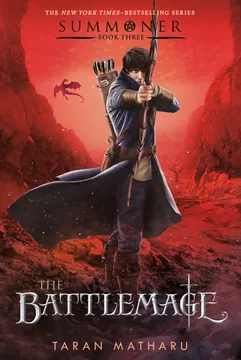


Plot Summary
The Zaratan’s Refuge
Fletcher wakes choking in the ether, where Othello has hauled him from a dark river onto the shell of a giant Zaratan. His friends and demons have escaped the orc temple, but Lysander is still paralyzed by Jeffrey’s darts, and their supplies are soaked. Then Fletcher recognizes the gaunt prisoner beside him as Alice, the mother taken from him when he was a child, not the noblewoman they had mistaken her for.
Before he can make sense of finding her, crocodilian Sobeks surround the moving shell and attack. Fletcher freezes the water around them with a spell learned from Jeffrey, buying time for the Zaratan to escape. The party has survived, but the orcs will hunt them.
The rescue offers Fletcher the reunion he has wanted, but not the mother he remembers. Alice’s blankness makes kinship an obligation before it can become a relationship: he must care for someone who cannot yet recognize him. The attack immediately denies the group time to grieve or celebrate. Their survival depends on knowledge borrowed from an enemy, making the escape morally untidy from the outset. The Zaratan’s protection also matters: in a world where demons are often captured and used, this creature chooses to help without a summoner’s bond.
Petals Against Poison
As the Zaratan carries them out of the swamp, Fletcher discovers that ether air is poisoning them and their remaining yellow petals provide only hours of protection at a time. The group cannot simply open a portal home; they must find flowers or reach Hominum’s region of the ether. Sylva finds the answer in Jeffrey’s journal: the needed Euryale flowers grow near volcanoes.
Fletcher is reluctant to risk sending a scout, but Sylva reminds him that waiting is also a decision. While she tends Alice’s hair, Alice briefly responds to her touch, giving Fletcher a first, fragile reason to hope her mind may return. He sends Athena to scout, and the group commits to crossing the ether rather than turning back toward the orcs.
The petal shortage turns an abstract magical danger into a clock that governs every choice. Fletcher’s hesitation is not simple cowardice: newly reunited with Alice, he wants to preserve the small safe world around her. Sylva sees that protection can become another form of abandonment if it prevents action. Her tenderness toward Alice helps Fletcher understand care as something practical and shared, rather than a private duty he must carry alone. Jeffrey’s journal becomes useful despite the cruelty recorded in it, complicating Fletcher’s impulse to divide people into wholly trustworthy and wholly evil.
The Catoblepas Hunt
With food running out, Fletcher hunts a poisonous Catoblepas alone while Athena tries to distract the charging beast. His arrow wounds it but does not stop it, and the demon’s toxic breath leaves him unable to fight at close range. Athena deliberately crashes into its flank, drawing its attention long enough for Fletcher to leap onto its back and drive his sword into its spine.
The beast dies, but its weight fractures Athena’s wing. The others bring the carcass back to the Zaratan, where Fletcher splints her injury and the group cooks and preserves the meat. Their hunger eases, yet Athena’s sacrifice makes clear that survival is no longer a matter of simply asking loyal demons to take risks for him.
Fletcher’s first successful hunt in the ether is also a lesson in the cost of command. Athena acts against his attempt to protect her, choosing a risk he cannot control because she understands the immediate danger better than he does. Her broken wing makes that choice tangible. The feast that follows is not a triumph over nature so much as a temporary bargain with it: the group eats because Fletcher and Athena accept injury and death as possibilities. His practical knowledge from Pelt, especially preserving food, becomes a form of leadership as valuable as spellcraft.
A Scout Above
Ignatius catches a rare, camouflaging Pyrausta, and Fletcher gives the useful scout to Othello, whose slow Golem cannot search the treetops. Othello names her Pria and uses her to spot a narrow pass through the mountains. She also reveals Khan, the white orc, camping there with Wyvern riders and searching for the fugitives.
Once the party crosses the pass, they reach a clear lagoon, where Sheldon can drink and rest. During the journey, Sylva tells Fletcher that her sister poisoned their mother in a bid for power, sharpening his understanding of her distrust. Sylva and Fletcher grow closer, but she also explains that her people punish relationships between elf castes, leaving their attraction suspended between desire and political cost.
Pria’s capture changes the party’s chances because knowledge, not force, is what lets them move unseen. Fletcher’s gift to Othello reflects their friendship, while also supplying the group with a scout it urgently needs. The revelation of Khan’s pursuit makes the landscape feel watched, even when no enemy is visible. On the lagoon, intimacy and danger arrive together: Sylva’s history explains why she guards trust, while the caste rule gives her restraint a social consequence beyond personal fear. Their closeness is real, but it cannot be separated from the systems that police belonging.
The Drake Is Born
Fletcher and Sylva leave the others to search for the Euryale flowers, following Jeffrey’s notes to a volcano. They find a patch stripped of its blooms, but Fletcher uses a growth spell to make the plants flower again. Sylva realizes they can repeat the spell and harvest enough petals to keep the group alive.
As they gather the flowers, Ignatius dives into the lava and returns transformed: the Salamander has become a winged Drake, a change Khan’s prophecy has made him seek. Orc Wyverns arrive, and Fletcher understands that Khan has tracked them for the demon. He sends Sylva away with the petals and Alice, then stays behind to draw the orcs’ attention while Ignatius gathers power from the volcano’s heat.
The flowers reverse the group’s countdown, but the solution also brings the pursuers directly to them. Fletcher’s growth spell turns a scarce resource into renewable protection, a rare moment when learning produces more than survival by inches. Ignatius’s transformation changes the scale of the story: the demon is no longer merely a companion but the object of an enemy’s religious and military ambition. Fletcher’s choice to send Sylva away reveals how he understands leadership at this point. He still equates responsibility with absorbing danger himself, even when others have earned the right to choose their own risks.
Across the Abyss
Khan traps Fletcher inside a shrinking shield and demands the Salamander. Fletcher provokes him into explaining that the orcs’ prophecy concerns a Salamander’s transformation into a Dragon, then claims Ignatius is dead. Ignatius erupts from the lava as a Drake, breaks the shield, and carries Fletcher into the clouds.
Unable to outrun the Wyverns, Fletcher dives into the Abyss, where tentacled Ceteans seize several pursuers. He escapes their grasp and flies for hours through lethal cold, circling back toward the ether’s edge. His theory that the Ceteans do not inhabit the lightless depths proves correct. But the Wyverns have regrouped near the lagoon, where Fletcher finds Sylva and the others fighting a surviving attacker.
Fletcher survives by turning the enemy’s certainty into a weapon. Khan’s confidence in prophecy makes him talk, and Fletcher uses the revelation to understand why Ignatius matters. The Abyss strategy is a wager built from observation rather than strength: Fletcher cannot defeat the whole squadron, so he exploits the predators’ territory and the Wyverns’ fear. Yet the escape does not grant him control of the consequences. His return leads straight into another battle, and the cold, the pursuit, and Ignatius’s exhaustion show how narrow the margin between ingenuity and recklessness has become.
Sheldon Comes Back
Fletcher and Ignatius strike the Wyvern attacking Sylva, Othello, Cress, and Alice on the lagoon shore. Sheldon, who had disappeared after carrying the group through the swamps, returns to drag the enemy under the water. The team survives, but the Zaratan has suffered fatal wounds.
As they mourn him, Sylva finds evidence in Jeffrey’s journal linking Zacharias Forsyth to the Anvil bombings, including a letter that also names Inquisitor Rook and an official called Rook. The proof cannot safely go to Hominum’s authorities, who are controlled by the same political circle. The group instead uses migration patterns and their position near the deadlands to identify a possible route toward Hominum’s part of the ether.
Sheldon’s return gives the fugitives a rescue they did not earn through mastery or ownership. His death makes the cost of relying on freely offered help impossible to ignore. At the same time, the journal turns the group’s private escape into a political crisis: evidence exists, but institutions cannot be trusted to receive it. This is not merely a question of finding truth. It is a question of who can make truth audible without being silenced first. Their route home now carries both a personal and public purpose.
Shrikes Find the Portal
Following migrating Shrikes across desert and jungle, the exhausted group finds no portal until a blue light appears far off in the deadlands. Pria scouts ahead and confirms the opening, but the Shrikes roost directly above their camp. Alice’s laugh alerts the flock as they prepare to leave.
Fletcher and the others launch under a storm of diving birds, fighting toward the portal while Shrikes wound Fletcher and nearly pull the riders from their demons. They crash through just before it closes, landing in a Vocans summoning lesson. Arcturus recognizes them and hides them in the library. Fletcher has brought Alice home, but he learns that Hominum believes Cress killed Rufus and blames the dwarves for the bombings.
The portal is not a reward for reaching the right place; it is a narrow opening that demands one final, costly passage. Alice’s laugh, an ordinary sign of recovering feeling, nearly destroys the escape, making her vulnerability part of the danger rather than a separate subplot. Once home, the group finds that physical return has not restored social safety. Hominum has built a false account of events around Cress and the dwarves. The transition forces Fletcher to confront a second kind of hostile territory, one made from rumor, power, and public belief.
The King’s Impossible Proof
Arcturus explains that Jeffrey’s actions were misread in public: witnesses think Cress killed Rufus, and the Pinkertons have surrounded the Dwarven Quarter. The dwarven recruits will soon return to a city ready to treat them as enemies. Fletcher and Sylva bring Jeffrey’s journal to King Harold, Captain Lovett, and Arcturus, but the evidence implicates officials who control the courts and police.
Harold cannot reveal it to generals without risking civil war, especially with elves mobilizing and orcs preparing to attack. Lovett shows them a new use for scrying stones: a connected Mite can carry a spoken message across Hominum. Sylva sees a way around the authorities and persuades the group to appeal directly to the people.
The crisis is built from a gap between what happened and what the public saw. Jeffrey’s performance has turned evidence into its opposite, leaving Cress and the dwarves exposed. Harold’s powerlessness complicates the familiar assumption that a king can simply correct injustice; his title cannot overcome a captured state. Sylva’s insight shifts the audience of political action from elites to ordinary citizens. The Mite-based broadcast matters because it changes not only who can speak, but who can witness. The strategy treats public opinion as a real political force rather than background noise.
The Masquerade Broadcast
Disguised for King Alfric’s masquerade, Fletcher and Sylva enter the palace while Othello and Cress work as servants. They slip away from the banquet and reach the throne room, where Alfric’s Mite is fixed to a staff. Inquisitor Rook and Zacharias Forsyth intercept them. Sylva reads Jeffrey’s records to the Mite, while Fletcher holds off the two battlemages.
Zacharias privately admits that he gave the orcs the route into Raleighshire, sacrificing Fletcher’s family to revive his weapons business. Fletcher knocks Zacharias down, and Sylva restrains both men rather than killing them. Their evidence reaches the public; Othello and Cress’s drugged drinks distract the guests long enough for the group to escape with the prisoners.
The masquerade lets the plot make a precise contrast between appearance and proof. The nobles hide behind costumes and social performance, while Sylva uses the Mite to carry a documentary record beyond the room. Zacharias’s confession connects political violence to private profit: he treats lives and borders as inputs to a business plan. Fletcher’s refusal to kill the defeated men is strategic, but also ethical. Public accountability requires them alive, and his choice resists the retaliatory logic that has governed much of the conflict.
The People Kneel
Harold takes Rook and Zacharias into custody, but cannot promise that the journal will prevent Alfric from provoking a dwarven revolt. At the military parade, the arriving dwarven recruits face a silent crowd and Alfric’s open contempt.
Instead of refusing the ceremony, they sing Hominum’s anthem and kneel toward the people, offering loyalty to the citizens rather than to the king. The crowd gradually kneels with them, and Harold secures the soldiers’ oath to defend the country.
The moment prevents Alfric from claiming public support for immediate repression. Still, the Pinkertons remain around the Dwarven Quarter, and the city’s political crisis is unresolved. Harold proposes that some dwarves resettle on Fletcher’s estate in Raleighshire.
The dwarves answer humiliation with a performance that exposes the difference between patriotism and obedience. Their song uses a shared national ritual to claim membership, while their kneeling redirects the ceremony’s allegiance toward the people. The crowd’s participation shows how quickly public courage can gather once someone acts first. But the scene does not solve structural hostility. Alfric retains force, and the Pinkertons remain in place. Raleighshire therefore emerges as more than a refuge: it is an attempt to build a community less dependent on the institutions that have made the dwarves vulnerable.
Raleightown Rises
Fletcher agrees to host a limited number of dwarven settlers and forms an equal partnership with the dwarves and the Pashas. Berdon arrives with the displaced people of Pelt, while Sir Caulder helps Fletcher recruit freed slaves, wood elves, convicts, and former Vocans students to defend the estate. They reach the ruined town of Raleightown and begin clearing buildings, restoring the well, and organizing food and shelter.
Fletcher finds his family home and a protected painting of his parents holding him as a baby. The discovery gives his inheritance a human shape, while the colony itself demands immediate labor and judgment. Fletcher names the mixed group the Foxes and starts training them to defend Raleighshire’s only pass.
Fletcher’s inheritance shifts from a title into a set of obligations: land must be made habitable, defended, and shared. The coalition is practical before it is harmonious, assembled from people with different histories and reasons to distrust one another. Finding the portrait places Fletcher’s present work beside a life stolen from him, but it does not allow nostalgia to become an escape. The ruined estate needs decisions now. Naming the soldiers the Foxes gives them a common identity, yet the name’s symbolic promise will be tested by the old divisions they bring with them.
The Foxes Fracture
As Raleightown develops, Fletcher trains the Foxes and builds trade around the estate’s ebony trees. But dwarves, elves, humans, and former convicts keep to separate circles, and Logan’s insults nearly provoke a fight with Dalia and Gallo.
Fletcher confronts the soldiers in the rain and forces them to face how pride, rather than an irreconcilable hatred, is driving the feud. Soon Didric arrives with armed men to collect the Forsyth troops. When Fletcher refuses, Didric kills Dalia’s fox, Rabbit, and withdraws under threat from Rotherham’s riflemen.
The shared grief begins to knit the company together. Then Blue arrives with gremlin refugees and warns that the orcs are attacking from both sides; the riders they just defeated were only scouts.
The army’s first danger comes from inside its own lines. Fletcher’s intervention refuses to let prejudice masquerade as a permanent truth, though his staged confrontation risks turning his soldiers into instruments of his lesson. Rabbit’s killing then supplies a grief no faction can claim alone. Didric’s casual cruelty makes the colonists’ fragile cohesion feel precious and contingent. Blue’s warning enlarges the conflict abruptly: the community’s internal divisions are not harmless, because a coordinated invasion is approaching. Solidarity must become a practice before it can become a defense.
The Cleft Holds
Fletcher’s outnumbered Foxes prepare the narrow Cleft with a stone wall, sharpened stakes, and improvised ammunition. A buried cannon and bamboo charges tear apart the first goblin assault, but the enemy returns behind a Phantaur, whose armor defeats ordinary musket fire.
Fletcher wounds its sensitive trunk and draws it into a concealed spike trench; Ignatius kills it, allowing the Foxes to burn manchineel wood and drive toxic smoke into the pass. The attack breaks, but Rory dies, and the next wave gathers beyond the smoke.
With ammunition gone, Sir Caulder and Rotherham stay behind to hold the Cleft while Fletcher leads the wounded and refugees away. Their stand buys minutes, not safety, and Fletcher sees them disappear beneath the advancing horde.
The Cleft battle turns Fletcher’s learning and resourcefulness into collective survival: the cannon, trench, and manchineel smoke work because many people prepare and execute them together. Yet tactical success cannot erase the imbalance of force. Rory’s death makes leadership painfully specific: Fletcher must keep moving while grieving someone he might have saved if he had noticed his injury. Sir Caulder and Rotherham’s decision to remain is not a clean heroic victory. It buys time through sacrifice, leaving Fletcher with both the burden of escape and the knowledge of who paid for it.
Atilla’s Last Charge
Fletcher reaches the stranded colonists, whose wagons Didric has sabotaged, and forces them to abandon most possessions as goblins close in. When the Foxes prepare to make a final stand near Watford Bridge, Othello and a force of dwarven riders arrive. The counterattack breaks the goblin formation, but Atilla, Othello’s twin, dies after spending his last mana on a devastating blast.
Cress explains that Khan is winning the wider war with a Dragon, a transformed demon whose fire kills everything around it. Fletcher is one of the few fighters immune to that flame, and Ignatius is a Drake. With the front lines collapsing, Fletcher leaves the survivors and flies toward the battle, joined by Sylva and the elven army.
Rescue arrives through the relationship Fletcher has helped build with the dwarves, but it does not restore what the retreat has taken. Atilla’s sacrifice keeps others alive and turns victory into mourning even as the goblin force breaks. Cress’s account reframes Fletcher’s role: his immunity is no longer a private oddity but a military necessity. That knowledge threatens to reduce him to a weapon, precisely when he is already exhausted and grieving. His flight toward the front is an act of agency, but it also shows how war keeps converting personal bonds into reasons to risk another life.
The Dragon’s Fall
At Vocans, the battered human army holds a thin line as Khan’s Dragon burns through its ranks. Fletcher draws Khan away by challenging his pride, then lets Ignatius meet the fire head-on. The flames part around them, creating an opening for Sylva, Captain Lovett, and Ophelia Faversham to attack.
Ophelia is killed, Lovett is thrown clear, and Sylva wounds the Dragon’s eye before Fletcher and Khan crash through Vocans’s dome. Inside the atrium, Khan admits that Fletcher’s Salamander is the one named in the prophecy.
Injured and nearly strangled, Fletcher uses the last mana shared by Ignatius and Athena to topple Khan, then decapitates him with the orc’s own weapon. Sylva heals Ignatius, and the battle’s silence leaves the outcome uncertain until they fly above the field.
The climax makes prophecy a contested interpretation rather than a script. Khan believes that possessing the right demon guarantees victory; Fletcher’s strength comes instead from reciprocal bonds with Ignatius and Athena, whose remaining mana makes his final move possible. The attack succeeds only through coordinated risk from Sylva, Lovett, and Ophelia, and the cost is immediate. Fletcher defeats Khan, but the victory is not emotionally clean: a battlefield full of casualties waits below. The book refuses to equate winning with restoration, even as the central threat is finally removed.
Epilogue
A month later, Fletcher attends Arcturus and Lovett’s wedding in Raleightown, now shared by humans, dwarves, and a nearby gremlin colony. A memorial names the Foxes and allies who died defending the settlement. King Harold has punished the Triumvirate, imprisoned Zacharias and Rook, and granted the dwarves new lands.
Sylva leaves to help guard the frontier, though she kisses Fletcher before departing. Then Berdon returns with Alice, whose mind has recovered enough to recognize her son. Fletcher takes her hand and leads her toward the rebuilt family home. The refuge he created has become a home, and the reunion he had feared might never come finally begins.
The epilogue resolves the novel through several forms of rebuilding, none of them identical. The political order changes because Harold can act openly after Alfric’s death; the community grows through trade and coexistence; and Fletcher’s family becomes possible again as Alice recovers. The memorial prevents the restored town from pretending its stability was free. Sylva’s departure also keeps romance from becoming a reward that cancels political obligations. Fletcher’s final homecoming is therefore not a return to an untouched past. It is a new life made from the losses, alliances, and work that survived the war.
Analysis
The novel’s central movement is from escape to institution-building. Fletcher begins by trying to keep a handful of loved ones alive in the ether, where poison, hunger, predators, and pursuit make every hour consequential. When he returns to Hominum, the danger changes form: public lies and captured institutions threaten the dwarves as surely as the orcs do. The shift matters because Fletcher cannot solve a political crisis by being the strongest summoner in the room. Sylva’s decision to address ordinary citizens, and the dwarves’ performance at the parade, show how collective legitimacy can interrupt a ruler’s plan.
The book repeatedly measures power against relationship. Demons are often treated as possessions, yet Sheldon helps without being bound, Athena disobeys to save Fletcher, and Ignatius shares pain and power with him. These bonds are not sentimental decoration. They are tactical, emotional, and ethically consequential. Khan’s prophecy offers the inverse model: he believes power belongs to the one entitled to command it. His pursuit of Ignatius turns an intimate bond into a political prize, and Fletcher’s resistance depends on refusing that logic.
The settlement at Raleightown extends the same argument into social life. Humans, dwarves, elves, former slaves, and convicts do not become a community merely because they share a threat. They bring old hierarchies with them, and Logan’s insults nearly fracture the Foxes before battle can test them. Fletcher’s leadership improves when he stops assuming that loyalty will arise on its own and makes people confront the consequences of their conduct. Even then, unity does not prevent loss. The deaths at the Cleft and on the battlefield leave the victory marked by grief.
The ending offers repair without pretending that repair erases harm. Hominum’s political changes, the new settlements, the memorial, and Alice’s recovery answer different forms of damage. Fletcher’s final homecoming is therefore not a return to the childhood stolen from him. It is a chance to build a place where belonging is chosen, maintained, and shared.
Review Summary
The Battlemage receives mostly positive reviews, with readers praising its action-packed plot, character development, and imaginative demon world. Many find it a satisfying conclusion to the trilogy, though some feel the pacing is uneven and the ending rushed. Fans appreciate Fletcher's growth as a leader and the emotional investment in the characters. Critics note inconsistencies in world-building and a simplistic plot. Overall, readers recommend the series for its engaging fantasy elements, likening it to a mix of Pokemon, Harry Potter, and Lord of the Rings.
People Also Read



Characters
Fletcher Raleigh
Reluctant border lordFletcher is a young summoner raised in the village of Pelt, now carrying both a noble inheritance and the habits of a commoner. His instincts are practical: he hunts, repairs, studies his enemies, and notices what frightened people need. He is fiercely loyal to his friends and demons, but often mistakes responsibility for having to face danger alone. Finding his mother intensifies his need to protect, while his new position forces him to make decisions for people whose lives he cannot personally control. Fletcher’s defining tension is between private attachment and public duty. He wants to save particular people, yet learns that leadership requires building a community capable of surviving without him at its center.
Sylva
Elven strategistSylva is a high elf, an accomplished fighter and one of Fletcher’s closest allies. She is perceptive, skeptical, and slow to trust, shaped by family betrayal and the strict caste rules of elven society. Her caution is not coldness: she is capable of tender, deliberate care, especially when someone cannot protect themselves. In the group, Sylva often sees the practical consequence Fletcher would rather postpone, whether that means scouting ahead or questioning a political plan. Her connection with Fletcher is genuine, but she understands that desire has social costs. Sylva’s independence and political awareness keep her from becoming merely a companion to his journey.
Othello Thorsager
Dwarven loyalistOthello is Fletcher’s dwarf friend, a summoner whose Golem gives him strength but little subtlety. His humor and steadiness make him a reassuring presence, though he is deeply aware of the discrimination his people face. Othello values family, especially the Thorsagers, and takes pride in the dwarven community’s craft and resilience. He is generous with his knowledge and does not treat friendship as a ledger of debts. Still, when political decisions threaten his people, he is unwilling to accept safety bought at the cost of their agency. Othello’s loyalty links Fletcher’s private friendships to the broader struggle for dwarven equality.
Cress
Dwarven crossbow fighterCress is a dwarf and a formidable fighter, practical enough to notice danger and blunt enough to say what others avoid. Her loyalty to Othello and the dwarves is matched by a capacity for affection that appears in how she cares for Alice and her demon, Tosk. Cress can be irreverent under pressure, but humor does not make her careless; she understands the stakes of political choices because her people bear their consequences. She is also vulnerable to despair, especially when the group seems trapped without a route home. Cress combines physical courage with emotional candor, often forcing the group to acknowledge fear instead of disguising it as strategy.
Alice Raleigh
Fletcher’s lost motherAlice is Fletcher’s mother, taken from him when he was very young and held captive for years. When Fletcher finds her, she is physically frail and profoundly disconnected from herself and the people around her. Her condition shapes the group’s daily choices, requiring food, warmth, patience, and care rather than dramatic acts of rescue alone. Alice’s bond with Athena and her occasional responses to gentle attention reveal that connection can survive even when memory and speech are damaged. She is not simply the object of Fletcher’s search: her needs expose the long aftermath of captivity and the difference between bringing someone home and helping them feel at home again.
Ignatius
Fletcher’s changing demonIgnatius is Fletcher’s loyal Salamander, small and mischievous at first, with a talent for fire and an unusually strong emotional bond with his summoner. He is not a tool that Fletcher can always command: his curiosity and independent impulses sometimes put him in danger, while his instincts can also save the group. His relationship with Athena and his affection for Alice reveal a gentleness beyond his usefulness in battle. Ignatius’s connection to Fletcher is reciprocal, communicating fear, delight, pain, and determination through their shared consciousness. His presence repeatedly asks Fletcher to distinguish between controlling a companion and trusting one.
Athena
Loyal Gryphowl scoutAthena is Fletcher’s Gryphowl, valued for sharp senses, night vision, and the ability to scout from above. She is affectionate and brave, but also independent enough to disobey when she believes Fletcher is in danger. Her bond with him gives her access to his fear and affection, yet she retains her own will. Athena’s care for Alice creates an unexpected companionship, offering the captive woman comfort when Fletcher cannot reach her emotionally. Because Athena can be injured and frightened, her role continually reminds Fletcher that loyalty does not make a demon invulnerable or erase its capacity to choose.
Khan
Orc war leaderKhan is a powerful white orc who commands shamans and Wyvern riders. He speaks Fletcher’s language and is adept at exploiting both fear and pride, having learned how to manipulate Alice during her captivity. His interest in Ignatius is driven by a prophecy and by an expansive vision of orc victory. Khan presents himself as chosen for a historic purpose, but his certainty depends on treating other lives as expendable. He is physically formidable and politically dangerous, combining military authority with religious conviction. His pursuit makes him Fletcher’s most personal enemy, while his methods reveal how prophecy can be used to authorize conquest.
Berdon
Fletcher’s adoptive fatherBerdon is a blacksmith from Pelt who raised Fletcher after the boy was left at the village. Large, warm, and practical, he gives Fletcher the experience of family that blood alone could not provide. Berdon’s affection is expressed through work, guidance, and physical reassurance rather than elaborate speeches. He is proud of Fletcher but does not confuse pride with certainty that the young man can do everything alone. As the colony grows, Berdon becomes a steady presence among displaced villagers and new allies. His relationship with Fletcher anchors the story’s idea of family in care freely given.
King Harold
Constrained reforming kingHarold is the king of Hominum, though his father Alfric holds much of the actual power. He wants to protect the dwarves and avert a wider war, but understands that open resistance can trigger civil conflict and leave the empire exposed to the orcs. Harold is neither a helpless figurehead nor an effortless reformer: he works through narrow political openings and sometimes asks others to take risks he cannot. His decisions reveal the cost of governing inside a compromised system. Fletcher’s group becomes a way for Harold to act beyond the channels his father controls.
Arcturus
Scarred battlemage mentorArcturus is a seasoned battlemage and teacher who supports Fletcher’s group when they return to Vocans. His history with Fletcher’s parents gives him a personal stake in the Raleigh family, while his military experience helps him recognize when the students must be protected from political retaliation. Arcturus is capable and direct, but not omnipotent; he must work around the same institutions that threaten the group. His bond with Captain Lovett adds a quieter personal story to the wider conflict.
Captain Lovett
Veteran summoner and allyLovett is an experienced summoner and officer who has trained and protected Fletcher’s group. She is perceptive, irreverent, and willing to use her technical knowledge against political manipulation. Her work with the scrying stones helps create a way for ordinary people to hear evidence directly. Lovett’s relationship with her demons is grounded in long familiarity, and she treats younger battlemages as people to guide rather than expendable assets. She remains an active force despite disability and changing military duties.
Zacharias Forsyth
Powerful weapons nobleZacharias is a wealthy noble and head of the Forsyth family, accustomed to treating influence as a form of protection. His public manner is confident and respectable, but his interests are tied to weapons, political alliances, and the preservation of his family’s power. He views other groups, especially dwarves and elves, through a hierarchy that places his own advantage first. Zacharias is an important counterpoint to Fletcher’s emerging responsibilities: both possess inherited status, but they understand its obligations in opposite ways. His polished authority makes him dangerous even when he is not physically present.
Inquisitor Rook
Political enforcerRook is an Inquisitor and battlemage whose authority connects religious and legal power. He is skilled in spellcraft and comfortable using official institutions to pressure those who challenge the ruling elite. His presence at the palace makes clear that political repression is not carried out by nobles alone; it has bureaucratic and magical enforcers. Rook’s confidence depends on the belief that the law and the truth are whatever those in power can make the public accept.
Didric
Pelt’s ruthless rivalDidric is a young noble whose rivalry with Fletcher began in Pelt and whose ambitions are backed by armed followers. He is spiteful, status-conscious, and adept at turning political turmoil into a chance to assert control. Didric treats cruelty as a display of strength, particularly when he believes his targets cannot retaliate. His contempt for Fletcher’s alliances with dwarves and elves makes him a local expression of the larger prejudice driving the conflict.
Uhtred Thorsager
Dwarven craftsman and negotiatorUhtred is Othello’s father, a blacksmith and a skilled negotiator who helped develop firearms for Hominum. He thinks in terms of resources, trades, and long-term security, and he recognizes that the dwarves need more than temporary protection. Uhtred is cautious about asking Fletcher to share his land, insisting that any arrangement should be fair and voluntary. His practical intelligence links the colony’s survival to the wider dwarven economy.
Briss
Dwarven family anchorBriss is Othello’s mother, a generous host and a capable organizer. She feeds exhausted travelers, makes clothes, and offers care without requiring people to earn it first. Her warmth helps make political alliance feel like a lived relationship rather than a treaty. Briss is also perceptive about the risks Fletcher’s choices create for the people around him.
Sir Caulder
Veteran defender of RaleighshireSir Caulder is an old soldier who served Fletcher’s family and survived the attack that destroyed their home. His experience is physical and practical: he knows terrain, weapons, discipline, and the limits of inexperienced recruits. Blunt and demanding, he can seem severe, but his loyalty is rooted in affection and long memory. Caulder helps Fletcher understand that command is a craft learned through preparation, not simply a title inherited with land.
Rotherham
Veteran rifle instructorRotherham is an experienced soldier, a former mentor to Fletcher, and an old friend of Sir Caulder. He combines a rough humor with exceptional knowledge of firearms and battlefield discipline. Rotherham understands how to motivate inexperienced fighters by demonstrating competence rather than merely demanding it. His loyalty to Fletcher is personal, but he also knows when a commander needs to be challenged.
Rory
Young battlemage officerRory is a young battlemage and former Vocans student who joins Fletcher’s force alongside Genevieve. His low summoning level has led others to undervalue him, but he has formal training and the capacity to lead. Rory is earnest and sometimes anxious, qualities that make his courage feel learned rather than effortless. His partnership with Genevieve gives him both a personal anchor and a shared military purpose.
Genevieve
Young battlemage officerGenevieve is a young battlemage who joins Fletcher’s colony after the military fails to recognize her beyond her mana reserves. She is capable of healing and leadership, and takes her responsibilities seriously. Her bond with Rory is affectionate but never removes her from the dangers of command. Genevieve’s experience shows how military systems can reduce people to their practical usefulness, while her choices assert a broader identity.
Atilla
Othello’s twin brotherAtilla is Othello’s twin and a fellow dwarf whose military role ties him to the struggle for his people’s rights. He is part of a close-knit family and shares the Thorsagers’ commitment to protecting their community. His bond with Othello gives the dwarven political conflict an intimate, familial dimension.
Blue
Gremlin refugee leaderBlue is a gremlin leader whom Fletcher meets during the mission in orc territory. He is cautious with humans but able to recognize practical allies, and he speaks in a distinctive, halting manner. His concern for gremlin families and Warrens gives the invasion a perspective beyond the human and dwarven armies. Blue’s warnings bring news that the established powers often cannot see.
Dalia
Wood elf soldierDalia is a wood elf recruit, a skilled fighter with a sharp temper and little patience for insults. She is protective of her people and of the small fox she adopts, but her fierceness is not simply aggression. Dalia has to decide whether Fletcher’s mixed force can be trusted to treat its members as equals. Her presence makes the colony’s fragile cohesion visible in daily life.
Mason
Freed slave and scoutMason is a young former slave who guides Fletcher’s team during the orc mission and later joins the defense of Raleighshire. He is resourceful, blunt, and familiar with the brutality of the orc frontier. His knowledge of goblin behavior comes from lived experience rather than classroom lessons, giving him an important perspective in battle.
Plot Devices
Ether petals
Time against poisonYellow Euryale petals protect humans from the ether’s poisonous atmosphere, but each dose lasts only a few hours. The supply saved during the escape is too small for the group’s journey, turning distance into a countdown. Jeffrey’s journal identifies the flowers’ volcanic habitat, and Fletcher later uses a growth spell to multiply them. The petals make the party’s route and pace materially urgent, while the plants’ regrowth allows knowledge and magic to replace a finite stockpile.
Summoning bonds
Shared minds, shared riskSummoners capture demons and form bonds that allow the creatures to be infused, summoned, and controlled through a shared mental connection. The bond carries emotion and pain as well as commands, giving Fletcher access to his demons’ fear and instincts. When a demon loses its summoner, it can revert to a wild state, as Lysander does after the portal closes. The bond is therefore both a practical system of magic and a relationship with ethical limits: demons can resist, choose, and suffer.
Scrying crystals and Mites
Witness beyond the roomScrying crystals show what a connected demon sees, letting the group scout terrain and track distant danger without exposing themselves. Lovett and Electra develop a way to make charged stones carry amplified speech through a Mite. That innovation gives Sylva a method to broadcast Jeffrey’s documentary evidence beyond the palace’s controlled institutions. The device changes information from a private possession into a public event, making the crowd a witness to political wrongdoing.
Jeffrey’s journal
Evidence with a priceJeffrey’s journal contains demonological observations, including where the protective flowers grow, as well as records of payments and details related to the Anvil bombings. A letter from Zacharias Forsyth links the conspiracy to the Inquisition and the ruling establishment. The journal is useful first as a survival guide and later as proof, joining the ether journey to Hominum’s political crisis. Because the courts and police are compromised, possessing evidence is not enough; the group must find a way to make the public hear it.
The Salamander prophecy
Power pursued as destinyOrc tradition identifies a Salamander as the key to victory, and Khan believes its transformation can produce a Drake and then a Dragon. This belief explains why he pursues Fletcher across the ether and why Ignatius’s growth changes the war’s stakes. The prophecy is not a guarantee of victory so much as a force that shapes decisions: Khan treats it as entitlement, while Fletcher and Ignatius depend on trust and cooperation. Its importance becomes clear only after Ignatius changes and Khan’s Dragon devastates the battlefield.
Summoner Series

Download PDF
Download EPUB
.epub digital book format is ideal for reading ebooks on phones, tablets, and e-readers.








