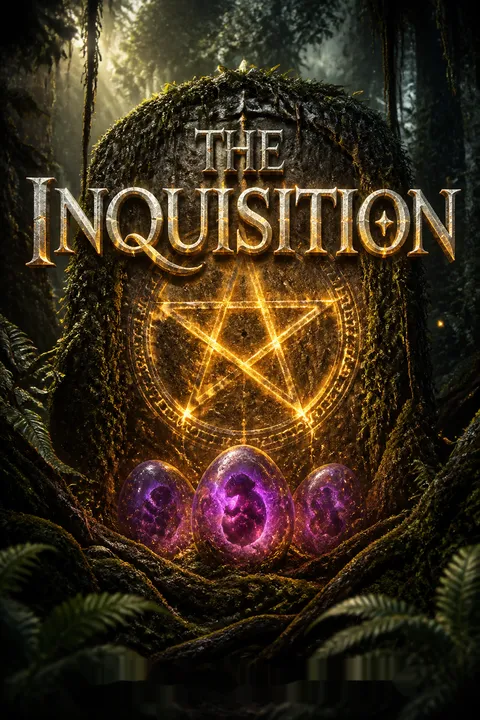


Plot Summary
The Cell Opens
On the anniversary of his imprisonment, Fletcher Wulf marks another day on his cell wall while his Salamander, Ignatius, keeps him company. Books hidden in his bedding have sustained him through a year without news of the friends who helped him at Vocans Academy. Then a hooded intruder enters with a pistol and a venomous Mite.
Fletcher recognizes his childhood enemy, Didric Cavell, whose face is still scarred from Ignatius's fire. Didric explains that the attack gave him the power to summon demons, and that Fletcher's friends have finally won him a trial. He escorts Fletcher from the cell, promising no freedom beyond the hearing. For Fletcher, even a walk beneath the open sky feels like a life returned.
The opening turns confinement into a conflict over who gets to define the past. Fletcher has spent a year preserving his mind through study, but the books cannot tell him whether his friends survived or whether justice is possible. Didric's burned face makes the old violence visible, while his new summoning ability shows how harm can redistribute power rather than end a feud. Fletcher's first taste of sunlight is not freedom yet. It is a reminder that hope can be offered by the same person who intends to take it away.
Pelt Becomes a Prison
Didric leads Fletcher through the former Cavell mansion, now a prison, and into a village stripped of its old life. Caspar Cavell has called in debts, emptied homes, and turned shops into cells to finance a fortress on the mountain above Pelt.
Armed guards obey Didric as a lord, while hundreds of dwarves arrive to collect uniforms after serving on the northern front. Fletcher learns that the elven peace talks stalled after Sylva was badly injured at the Tournament, though he cannot know how much of Didric's account is true.
At the courthouse, Calista presents herself as a frightened victim and accuses Fletcher of attacking her, Didric, and Jakov after summoning Ignatius. Jakov backs her story, adding that Berdon was beaten and his forge hut burned.
The village makes political power tangible: debts become prison walls, private wealth becomes an army, and a childhood home becomes the machinery of its owner's authority. Didric's lordship is not merely a personal triumph over Fletcher. It rests on making ordinary people dependent and then calling that dependence law. The courtroom continues the same logic by recasting the aggressors as witnesses and the captive as a threat. Fletcher's anger is justified, but the prosecution's deliberate provocation makes restraint a condition of being believed.
The Scroll Betrays Didric
Captain Arcturus takes the defence after no one else dares challenge Didric's allies. He establishes that Fletcher had fought Didric the night before the graveyard encounter, then asks how a novice could control a demon well enough to attack without cause.
Calista cannot remember the summoning tools, while Didric supplies a conventional scroll and leather mat. Arcturus produces the actual orcish summoning scroll, a piece of inscribed skin, and the leather book cover Fletcher used as his summoning surface.
Their evidence exposes the witnesses' invented account. The judge acquits Fletcher of every charge. Before the manacles can be removed, Inquisitor Rook intervenes with a new accusation: high treason, tied to the deaths of Forsyth soldiers during a dwarven council meeting.
Arcturus wins not by asking the court to trust Fletcher, but by making the accusers commit themselves to physical details. The scroll matters because memory is being used as a political instrument, and the object can contradict it. Yet the acquittal exposes the limits of procedural justice: the verdict defeats one charge, only for the Inquisition to replace it with another. Fletcher is vindicated in a narrow legal sense but remains inside the power structure that wanted him silenced. The scene's hope is real, though precarious.
A Trial Built for War
Rook and Inquisitor Charles Faversham try Fletcher and his dwarf friend Othello before a jury chosen under the Inquisition's authority. Their evidence includes Othello's stolen tomahawk, Fletcher's old Anvil membership card, and a soldier who truthfully places both young men at the scene of the fighting.
The prosecution turns the killings into proof of rebellion and uses Othello's history of resisting anti-dwarf laws as motive. When Othello refuses to answer, the inquisitors let Jakov cut off his beard and ponytail, a deliberate humiliation in front of the court.
Captain Lovett arrives on her Griffin and testifies through her demon's sight, but Rook excludes her account. Outside the courtroom, Uhtred's grief hardens into a plan to storm Didric's fortress and free his son.
The trial does not simply distort evidence. It manufactures a public spectacle in which Othello's cultural identity is treated as both motive and provocation. Cutting his hair converts prejudice into a bodily act, then invites the jury to read his distress as proof of barbarity. Lovett's testimony is rejected because its method threatens the court's control over what can count as knowledge. Uhtred's impulse to attack is therefore psychologically legible: when law stages humiliation, force can seem like the only remaining language. Fletcher must resist that temptation.
The Manticore Test
King Harold secretly explains that his father, old King Alfric, controls the courts, Inquisition, and Pinkertons; Harold cannot openly protect the defendants without risking civil war. He asks Fletcher to confess so Othello can be acquitted and the human, dwarf, and elven alliance preserved.
Fletcher takes the blame, and the jury convicts him while freeing Othello. Sir Caulder then reveals that Fletcher was carried as a baby from the murdered Raleigh estate and left near Pelt by a dying Gryphowl.
Harold pardons him as a noble, but Alfric demands proof through a Manticore sting. Fletcher survives the lethal venom, confirming his Raleigh blood. The elves purge the poison, and Harold restores Raleighshire to him, then gives him his father's rare Gryphowl, Athena.
Fletcher's confession turns the individual trial into a calculation about collective survival. He accepts the state's false account because Othello's execution could trigger a wider slaughter. The resulting revelation of his parentage does not erase that choice. Instead, noble birth supplies protection only after he has already acted from loyalty rather than status. Alfric's test makes identity a matter of bodily risk, reducing kinship to a dangerous experiment. Athena then offers a less coercive inheritance: a living connection to Fletcher's parents and to the history he was denied.
A Kingdom's Impossible Bargain
At a council in the Great Forest, Harold confronts the mistrust dividing humans, dwarves, and elves. A former Forsyth soldier named Mason has escaped an orc camp with the preserved body of a new creature: a goblin, bred in great numbers from eggs deep beneath an ancient pyramid.
He also reports that Lady Cavendish, the mother of Vocans student Rufus, may still be alive in captivity. Harold proposes sending small teams of academy graduates to destroy the eggs and rescue her, then broadcasting their progress through newly abundant scrying crystals.
The proposal risks the only air defence Hominum has, and the younger races doubt one another's motives. Fletcher, Sylva, and Othello agree to join. Their mission must demonstrate cooperation before prejudice turns the allied armies against each other.
The council's plan is both a military operation and a performance designed for an audience at home. The scrying crystals make heroism visible, but visibility also exposes the teams to danger and turns their conduct into political evidence. Harold hopes a shared enemy will soften racial division, yet the mission places that hope on a small group of young people who have inherited the conflict rather than created it. Fletcher's agreement marks a shift from surviving injustice to accepting responsibility for consequences beyond his own fate.
Pelt's Refugees Choose Raleighshire
After the council, Fletcher returns to Pelt with Lovett and finds Berdon and Sir Caulder facing Cavell guards who mean to expel the villagers from their makeshift settlement. Fletcher offers the displaced families a place in abandoned Raleighshire, his newly restored estate, and promises to protect them when he returns.
Berdon and Caulder agree to lead whoever will come, and the refugees follow with what they can carry. Fletcher tells Berdon that his title has not changed who his father is. At Vocans, he reunites with Othello and watches Cress defeat Didric in the Tournament's final duel. He then chooses Cress for his mission team alongside Othello and Sylva, while Atilla joins Seraph's team.
The settlement decision gives Fletcher's inheritance an immediate human meaning. Raleighshire is not valuable because it confers rank; it matters because people threatened with homelessness can rebuild there. Fletcher's promise is deliberately incomplete, since he must leave before he can fulfill it, but the burden of return keeps his new title connected to obligation. His reunion with Berdon also repairs a threatened emotional foundation: biological ancestry answers one question, while chosen parenthood continues to determine where Fletcher feels at home.
The Anvil Tavern Explodes
In Corcillum, the mission teams gather at the abandoned Anvil Tavern, where Othello's relatives bring uniforms, weapons, and Fletcher's possessions saved by Arcturus. Fletcher receives two engraved pistols, while Electra Mabosi's alchemical vials offer healing and restored mana.
Before deployment, Fletcher, Othello, and their guide Jeffrey visit the front line. In a soldiers' tent, they find gremlins forced to fight starving rats for gamblers. When the blue-marked gremlin holds out longest, Fletcher leaps into the pit, drives the rats back with Ignatius, and carries the survivor away.
A bomb detonates among the watching soldiers, killing and injuring many. Fletcher, Othello, and Jeffrey escape in a carriage with the gremlin hidden in Fletcher's pack, then Uhtred teaches Fletcher how to load and fire his pistol.
The pit presents war as entertainment stripped of its patriotic language: soldiers wager on creatures' deaths while treating their suffering as disposable. Fletcher's rescue is morally instinctive, but it also creates a practical risk by bringing an unknown being into a covert operation. The bomb compounds the danger and shows how easily violence can be staged to implicate the vulnerable. Meanwhile, the newly delivered weapons suggest adulthood as competence, not invulnerability. Fletcher has more tools than before, but he still needs others to teach him how to use them.
The Forest Takes Them
The Celestial Corps carries the teams above the jungle canopy and drops them in a remote swamp, leaving Lovett's Griffin, Lysander, with Fletcher's group as their scrying link to the watching public. Their guide Jeffrey shares practical lessons about food, water, tracks, and poisonous plants.
Fletcher secretly releases the blue gremlin, who speaks his thanks before disappearing into the trees. After the teams separate, Fletcher's group discovers that Isadora's Forsyth-backed team is following their route despite agreeing to travel elsewhere.
When an orc patrol approaches, the young battlemages hide, then see Isadora's team attack it. Fletcher's group joins the fight to prevent the soldiers and goblins escaping to raise the alarm. Afterward, someone fires Cress's blue-fletched bolt at Fletcher, then a poison dart strikes Sylva. The team loses consciousness and wakes imprisoned.
Fletcher's release of the gremlin is an act of compassion made without evidence that it is safe. The choice complicates the mission's central demand for discipline, yet it also tests whether the humans treat every nonhuman life as an enemy by default. The attack on Isadora's team reverses the expected roles: Fletcher protects people who have repeatedly threatened him because their survival matters to the alliance. The planted bolt exploits the same racial distrust the mission is meant to overcome, turning a weapon into a false accusation.
Blue Leads Them Underground
Armed gremlins surround Fletcher's group after they wake in a hanging cage. Their leader, Half-ear, distrusts humans because soldiers have slaughtered gremlins during earlier raids.
The blue gremlin intervenes, explaining that he learned human speech from a noblewoman held by the orcs and that Fletcher once saved him from the soldiers' pit. He leads the team into a vast underground Warren, where gremlins raise mara animals, protect their eggs, and farm insects.
Their guide is an elderly blind orc shaman called Mother, whose Mites act as her eyes. Through a giant scrying stone, she shows them how orc warriors abduct young boys and beat them into soldiers. Mother agrees to help them because she wants to free gremlins and stop the cycle of violence.
The Warren corrects the team's assumptions by showing that gremlins have families, agriculture, and political judgment, not merely a place in someone else's army. Blue's gratitude does not instantly dissolve Half-ear's fear; trust has to be argued for in light of repeated human violence. Mother's account complicates the enemy further. Orc cruelty is not presented as an innate racial essence but as a system that captures children and manufactures brutality. Fletcher's earlier mercy becomes strategically useful, but its deeper value is that it made a relationship possible.
Gremlins Join the Raid
Mother's gremlins guide Fletcher's party back to the surface and down a creek, where fishers give them their confiscated weapons. Blue offers a coalition: his fighters will attack the orcs and free captive gremlins when the battlemages begin their raid.
The teams travel in shallow coracles, passing a ruined orc statue and schools of pink river dolphins before crossing the great river at night. The current threatens to separate them, but the gremlins tow the boats to shore and lead Fletcher's group to the pyramid's hidden entrance.
Seraph's and Malik's teams are already there, exhausted from their own crossing. With Isadora's team missing and the eight-hour extraction window approaching, the leaders decide to shelter until morning rather than enter the sacred pyramid in the dark.
The alliance with Blue is reciprocal rather than sentimental. The gremlins have a concrete reason to fight, and Fletcher's team needs their knowledge of the river and the terrain. The dolphins and the ruined statue briefly reveal a living world beyond military maps, but the crossing quickly strips away that ease. At the pyramid, the teams face a familiar strategic temptation: delay until they feel ready. The choice is understandable after exhaustion, yet it spends time that cannot be recovered and allows the enemy's ceremony to begin.
Khan's Festival of Blood
Drums wake the teams at dawn, and Verity sends her Mite, Ebony, above the pyramid to investigate. Her scrying tablet reveals a sprawling orc city crowded with tribes celebrating brutal trials. Mason identifies the games as a yearly test that separates the strong from captive boys considered weak.
A golden, skull-shaped litter brings Khan, the albino orc, to the pyramid. After the games, he sacrifices defeated youths at the summit while the crowd celebrates. Inside, Fletcher's group finds ancient wall paintings showing humans and orcs on opposing sides of a battle, with a Salamander between them.
They then reach a vast chamber, hide among its rafters, and watch Khan's shamans use blood and a complex summoning spell to enlarge gremlin eggs into goblin eggs. Khan and the young adepts enter a portal to the ether.
The festival reveals how violence becomes civic ritual. The games do not merely entertain the crowd; they sort captives into a hierarchy and make sacrifice appear like a public necessity. The mural unsettles any simple account of history by placing humans inside an ancient conflict that predates their arrival in the region. Then the blood ritual turns that political spectacle into material production: defeated bodies literally feed the next army. Khan's passage into the ether poses a new question about the boundary between species, magic, and environmental danger.
The Orc Keys Appear
When Khan's procession approaches, Fletcher's group leaves the rafters and follows passages toward the caves beneath the pyramid. In a central chamber, they find the carved keys that identify the orcs' region of the ether.
The shamans had marked the symbols with blood before opening their portal, and Lysander's scrying link has carried their shapes to observers across Hominum. Fletcher's team has uncovered knowledge that could let human summoners reach a new source of demons.
They also discover that thousands of swollen eggs fill a lower pit, with a separate tunnel leading toward prisoners. Sylva pierces an egg to test it, and the stench confirms its contents. The group descends toward the caves, knowing that the ritual has produced a growing reserve of goblin soldiers.
The discovery changes the mission from a narrow rescue and sabotage operation into a strategic breakthrough. The keys matter because knowledge of the ether has been controlled as tightly as a military secret, and the broadcast makes it difficult to bury what the team has seen. Yet this gain comes with a grim mirror: access to new demons could shift power without changing the habits of conquest. The swollen eggs make the future threat visible and countable, while the distant prisoners insist that the war's costs are already being paid by individual bodies.
The Prisoners in the Cave
The four teams enter a cavern packed with thousands of goblin eggs and begin destroying them before the extraction window closes. Rufus abandons the work to search for his captive mother, and Fletcher follows with Mason.
In another chamber, Fletcher quietly frees the human boys and gremlins held as slaves, while Mason keeps watch. Rufus cuts open the cage built around Lady Cavendish and carries her back, though she is barely aware of him. Mason saves Fletcher from a waking goblin as they retreat.
Back in the main cavern, the first eggs split and newborn goblins shriek, waking thousands more. The teams burn the remaining eggs and flee toward the pyramid with Lady Cavendish and the freed prisoners, while the advancing goblins turn the mission into a running battle.
The cave forces the team to choose between strategic scale and immediate human need. Destroying the eggs may prevent future deaths, but Rufus cannot leave his mother in captivity simply because the mission plan assigns her a later place. Fletcher's decision to help him costs time, yet it reflects the same refusal to treat people as expendable units that shaped his earlier rescue of Blue. The newborn goblins make delay irreversible. Once the eggs hatch, the team must protect those they freed while confronting the consequences of its own limited time.
Jeffrey Turns His Blowpipe
In the pyramid's antechamber, Jeffrey reveals that he has secretly worked with the Forsyths and engineered the Anvil attacks to inflame hatred of dwarves. He used Blue's poisons to paralyze the team, admits he killed Rufus, and intended to frame Cress or another rival for Fletcher's death.
Before Jeffrey can escape, Fletcher forces down an alchemical healing potion and kills him with a lightning spell. Demons pursue the survivors, and Sylva's Canid, Sariel, holds them back long enough for Fletcher to collapse the tunnel.
The falling rock traps the creatures but also kills Sariel. Jeffrey's poison then leaves Fletcher, Sylva, Othello, Cress, and their demons immobilized in darkness. Sylva blames Fletcher for Sariel's death, and the team hears orcs blasting through the rubble.
Jeffrey's betrayal gives ideological hatred a human face: he has converted private prejudice into bombings, false evidence, and a strategy of making cooperation appear fatal. His confession also reframes earlier scenes, including the team's trip to the front and the planted bolt. Fletcher's retaliation is immediate and morally charged, but the collapse that saves them exacts a cost he cannot choose for Sylva. Her grief is not a misunderstanding to be argued away. The paralysis leaves the group alive yet powerless, forcing them to confront the emotional and physical consequences of Fletcher's split-second decision.
The Portal Beneath the Dust
As the team slowly recovers, Fletcher notices an old summoning pentacle beneath the dust and links the yellow flowers to the ether-protective effect he had observed in Electra's alchemy. The group eats the petals, fills the pentacle's grooves with blood from a hidden mechanism, and opens a portal.
They send their wounded companions, freed prisoners, and Lady Cavendish through first. The woman suddenly recognizes Athena and calls her the demon who guarded her baby. Fletcher remembers his infusion vision of the Raleigh household under attack and understands that the captive is Alice Raleigh, his mother.
He sends her through with Cress, then follows into the ether as goblins break through the rubble. The novel ends with Fletcher entering the unknown, without knowing whether the portal offers escape or another danger.
The final escape gathers the book's recurring questions about memory, kinship, and survival into one physical threshold. The flowers that once seemed like an unexplained substance become the means to enter a poisoned realm, while blood turns the old pentacle into a usable passage. Recognition arrives not through genealogy or law but through Athena, whose memory bridges the lost nursery and the present. Fletcher finally learns who his mother is, but the revelation comes at the instant he must leave her behind others' care. His identity is clarified as his future becomes less certain.
Analysis
The novel makes captivity its central political and psychological condition. Fletcher's prison cell is the most literal version, but the same pattern appears in Pelt's debt-bound residents, Othello's humiliation in court, the gremlins' enslavement, and the captive boys trained into orc soldiers. Power works by restricting not only movement but also the stories people can tell about themselves. Didric's prosecution turns Fletcher's past into a lie; Jeffrey's bombings manufacture evidence that dwarves are dangerous; the Inquisition excludes Lovett's testimony because it cannot control its form.
Against these systems, the book places relationships that cross imposed boundaries. Fletcher's bond with Ignatius is intimate but not reducible to obedience. His friendship with Othello and Sylva requires him to respect political histories that are not his own. Saving Blue does not erase human violence, but it creates a chance for negotiation that no official treaty could have produced. Mother makes the same argument from the other side of the conflict: orc cruelty is taught and organized, not a biological destiny. This does not excuse atrocities. It makes responsibility more precise by asking who benefits from teaching children to commit them.
The public mission is an experiment in representation. Scrying crystals allow people across Hominum to watch young people of different races cooperate, but the broadcast also exposes them to manipulation and turns private grief into spectacle. Harold hopes shared action can dislodge inherited prejudice, while the Triumvirate hopes to profit from war and the Inquisition tries to dictate what the audience sees. The mission's moral test is therefore not simply whether the teams can defeat the enemy. It is whether they can refuse the enemy's methods when betrayal, revenge, and fear offer easier choices.
Fletcher's final discovery of his parents does not solve his identity. His Raleigh inheritance grants land and protection, but Berdon's care remains the measure of home, and Athena's memories connect him to a past he never knew. By ending with Fletcher entering the ether to save the others, the story makes inheritance an unfinished obligation rather than a settled reward.
Review Summary
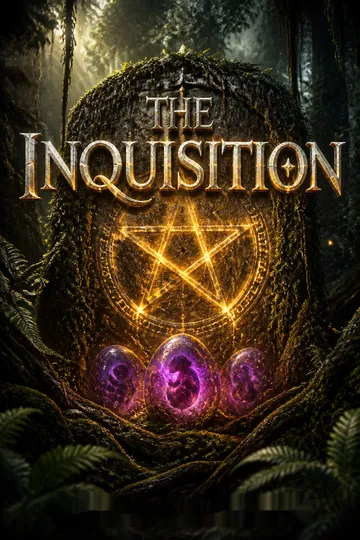
The Inquisition received mostly positive reviews, with readers praising its fast-paced plot, character development, and world-building. Many found it more engaging than the first book, appreciating the expanded lore and new characters. Reviewers enjoyed the trial scenes, jungle quest, and political intrigue. The demon companions were highlighted as a favorite aspect. Some criticized the simplistic writing and predictable twists. The cliffhanger ending left readers eager for the next installment. Overall, it was considered a strong sequel that improved upon the original.
People Also Read


Characters
Fletcher Wulf
The reluctant battlemageFletcher is a young summoner raised by the blacksmith Berdon in Pelt, where his childhood rivalry with Didric helped set his life on a dangerous course. He is observant, quick to learn, and emotionally responsive to suffering, qualities that make him both resourceful and vulnerable. His bond with Ignatius gives him power, but his deepest decisions are often guided by loyalty rather than advantage. At Vocans, he learns to work with people divided by class and race. His years in prison test that compassion without extinguishing it. Fletcher's growth is not a conversion from weakness to strength so much as a widening sense of responsibility: he increasingly weighs his choices by their effects on friends, strangers, and the fragile alliances around him.
Ignatius
Fletcher's fierce SalamanderIgnatius is Fletcher's Salamander demon and closest constant companion. Small, warm, mischievous, and capable of devastating fire, he combines the intimacy of a pet with the independent will of a bonded partner. He responds strongly to Fletcher's moods and often acts before his summoner can think, especially when Fletcher is threatened. Their connection is mental as well as emotional, allowing trust to function as a practical form of communication. Ignatius's loyalty is not abstract: he comforts Fletcher in the cell, trains and plays with him, and repeatedly enters danger at his side. His presence also reminds Fletcher that summoning is a relationship, not merely a technique for turning creatures into weapons.
Othello Thorsager
The loyal dwarf battlemageOthello is Fletcher's close friend, a dwarf summoner from the respected Thorsager family. He is practical, generous, and often funny, but his steady temperament carries the weight of a people repeatedly denied safety and dignity. He believes cooperation with humans can change that history, even when his own family pays for the belief. Othello's courage is not limited to combat. He endures public humiliation without allowing his enemies to dictate what he stands for, and he keeps choosing solidarity over revenge. His relationship with Fletcher is built on candor and mutual trust. Through Othello, Fletcher learns that political injustice is not a distant idea but a force that reaches into homes, families, and private grief.
Sylva
The guarded elven summonerSylva is an elven summoner and the daughter of a clan chief. Skilled, disciplined, and politically alert, she must often balance personal loyalties against her people's safety. Her friendship with Fletcher is genuine, but she does not treat affection as a reason to ignore the risks faced by the elves. This makes her both an ally and a source of friction, especially when the mission demands trust across old divisions. Sylva's reserve protects her from being easily manipulated, though it can also make her feelings difficult to read. Her partnership with Sariel, her Canid demon, reflects her confidence and care. She brings tactical judgment to Fletcher's team and insists that unity must be earned through conduct, not assumed.
Didric Cavell
The polished childhood enemyDidric is Fletcher's former nemesis, heir to the Cavell family's wealth and influence in Pelt. He is ambitious, proud, and skilled at making domination look respectable. His polished clothes and noble title contrast sharply with the violence that underpins his authority. Didric's rivalry with Fletcher is personal, but his choices are also shaped by a political network that rewards cruelty when it serves wealth and power. His scarred face marks a history neither boy can ignore, while his mastery of social performance lets him turn sympathy and status into weapons. Didric represents the way resentment can be institutionalized: private humiliation becomes a public program of punishment, and personal revenge gains the cover of law.
Arcturus
Fletcher's steadfast defenderArcturus is a scarred army captain and former Vocans instructor who defends Fletcher when political intimidation leaves him nearly alone. He is disciplined, sharp-minded, and openly contemptuous of powerful people who bend institutions to their interests. His courtroom argument shows a scholar's command of summoning as well as a soldier's attention to evidence. Arcturus has a personal history with Fletcher's parents and with the politics of the ruling family, but he does not need blood ties to act as a protector. His loyalty is expressed through practical acts: securing a fair hearing, preserving Fletcher's books and possessions, and continuing to support young battlemages under pressure.
King Harold
The constrained reformerHarold is the public king of Hominum, a thoughtful and morally serious ruler whose actual authority is limited by his father, old King Alfric. He wants peace among humans, dwarves, and elves, but he must conceal how deeply he opposes the prejudices built into the state. Harold's political skill lies in creating openings rather than issuing commands he cannot enforce. This makes him neither a simple hero nor a powerless figure: he has helped change laws and build alliances, while accepting compromises that place others in danger. His affection for Fletcher's parents gives his concern personal depth, but he tries to serve the broader population rather than turn friendship into favoritism.
Captain Lovett
The watchful Griffin captainLovett is a veteran battlemage and instructor whose Griffin, Lysander, is central to her life and work. After an earlier ordeal leaves her unable to walk, she adapts by learning to perceive events through her demon. Her manner is usually brisk and controlled, but she has a dry humor and a protective tenderness toward the young summoners she trains. Lovett understands that military institutions can be as dangerous as battlefields, particularly for people who do not fit the powerful families' expectations. She lends her skills and her demon to the mission because she believes the students deserve a chance to act for themselves, even when doing so costs her independence and comfort.
Cress Freyja
The unmasked dwarf fighterCress is a young dwarf cadet, tournament champion, and direct, confident fighter. She refuses to veil her face because she understands the custom as a choice, not an obligation imposed by men. Her blunt humor can ease tension, but she is also quick to challenge prejudice and willing to take responsibility when danger arrives. Cress's presence broadens Fletcher's understanding of dwarven life beyond Othello's family and traditions. She is ambitious without being vain, proud of her skill yet generous toward teammates. Her relationship with Atilla exposes a conflict between inherited expectations and individual autonomy, while her willingness to join Fletcher's team signals faith in the possibility of a less rigid future.
Berdon
Fletcher's adoptive fatherBerdon is the blacksmith who found and raised Fletcher in Pelt. Large, warm, and unpretentious, he expresses care through ordinary acts: feeding, grooming, teaching, and making a home. His affection is not diminished by Fletcher's unknown origins or later noble status. Berdon has endured the Cavells' economic abuses and the violence that follows Fletcher's arrest, yet he remains a source of steadiness rather than bitterness. He recognizes Fletcher's strengths without turning him into a symbol. Their bond gives the story its clearest account of parenthood as daily commitment, and it keeps Fletcher grounded when titles and ancestry threaten to redefine him.
Uhtred Thorsager
Othello's formidable fatherUhtred is Othello's father, a respected dwarf leader and skilled blacksmith. He has worked to secure a place for dwarves within Hominum's military and political life, but the courtroom's abuse of his son tests his belief in peaceful cooperation. His anger is intense because it grows from love and from a long record of injustice, not from a desire for power alone. Uhtred can be stubborn and impulsive, especially when his family is threatened, yet he listens when Fletcher shows him the consequences of rebellion. His relationship with Othello combines pride, protection, and the difficult work of accepting that his son must make his own choices.
Sir Caulder
The old weapons masterSir Caulder is Vocans Academy's elderly weapons master, a veteran marked by the loss of a hand and leg. He carries longstanding guilt about a past attack on the Raleigh family and has spent years close to the young people whose lives were shaped by it. Caulder is gruff and sometimes theatrical, but his courage is grounded in a willingness to expose his own failures. He understands that truth may arrive too late to repair the past, yet still believes it can prevent another injustice. His loyalty to Fletcher is shaped by duty, affection, and the hope that a younger generation may escape the failures he survived.
Jeffrey
The quiet jungle alchemistJeffrey is a servant at Vocans and a devoted pupil of Electra Mabosi, with expertise in plants, demons, and the jungle ecosystem. His asthma has kept him from ordinary military service, but he is eager to prove that knowledge can be as valuable as strength. He speaks little in company and often seems uncertain beside trained battlemages. Fletcher's team takes his field knowledge seriously, giving him a role in a mission where food, water, and safe routes matter as much as combat. Jeffrey's quietness makes him difficult for others to read, and his desire to contribute complicates the group's assumptions about who can serve.
Blue
The escaped gremlin scoutBlue is a gremlin Fletcher rescues from a soldiers' gambling pit. He is wary, resourceful, and unusually able to communicate with humans after learning their language from a captive noblewoman. Rather than trusting Fletcher immediately, he makes his own judgments about whether humans can be allies. His familiarity with captivity and the jungle gives him a perspective the academy-trained summoners lack. Blue's connection to the wild gremlins lets him move between worlds that rarely meet, and his choices are driven by a desire to protect his people from both orc control and human violence.
Mother
The blind orc shamanMother is an elderly, blind orc summoner who lives among the wild gremlins and uses her Mites to see and hear. Once part of a small, peaceful tribe, she has witnessed the systems that turn captured children into warriors and enslave gremlins. Her own history has left her wary and sorrowful, but she continues to teach and protect the Warren. She does not ask the humans to accept her account without question; instead, she shows them what she has learned through her scrying stone. Mother offers a vital counterpoint to the assumption that an entire people can be reduced to the violence of its armies.
Mason
The escaped orc-camp guideMason is a former Forsyth soldier who escaped years of enslavement in an orc camp. His knowledge of patrols, terrain, and captives makes him essential to the teams' route through the jungle. He is physically weakened and carries the habits of someone who has survived by staying quiet and alert. His past returns sharply when he sees fellow prisoners, but he still acts to protect them and the mission. Mason's loyalties are complicated by his former military service and the treatment he endured; he must decide whether the people who once abandoned him can become allies in freeing others.
Lady Cavendish
Rufus's missing motherLady Cavendish is a noblewoman believed lost behind enemy lines and the mother of Vocans student Rufus. Reports describe her as a former officer who disappeared during the war, making her fate a private concern for her family and a public symbol of the people left in captivity. Her long absence shapes Rufus's hopes and gives the rescue mission an intimate stake beyond military objectives. The story initially presents her through secondhand accounts from soldiers and gremlins, leaving the extent of her condition and her own history uncertain.
Rufus
The searching young nobleRufus is a young noble and Vocans student whose mother has been missing in orc territory for years. Shy and socially awkward, he has spent much of his academy life seeking approval from more powerful students. The mission forces him to act from a more personal source of courage: his determination to find his mother. His concern for her can make him impatient with military priorities, but that urgency is also understandable after years of uncertainty. Rufus reveals how a polished title can conceal a young person with little control over the losses that shape his family.
Old King Alfric
The power behind the throneAlfric is Harold's father and the former king of Hominum, though he retains control over the institutions that enforce the law and command the military. He is openly prejudiced against dwarves and elves, and regards political equality as a threat to human power. Alfric is calculating, theatrical, and adept at disguising coercion as tradition or procedure. His influence makes Harold's reforming role more complicated than it appears. Alfric's relationship with the younger king is both familial and political, with obedience demanded under the guise of royal order.
Zacharias Forsyth
The weapons magnateZacharias is a powerful noble, father of Tarquin and Isadora, and one of the central figures in Hominum's weapons trade. He treats military policy as a business interest and regards dwarven competition as a threat to his family's position. His courtesy is thin and strategic, while his command of soldiers and political allies gives his hostility practical force. Zacharias's hatred of Fletcher is entangled with the larger conflict over who gets to profit from war. He represents an elite capable of turning private commercial interests into public policy.
Isadora Forsyth
The disciplined Forsyth heirIsadora is Zacharias Forsyth's daughter and a capable battlemage who competes at Vocans alongside her twin brother, Tarquin. She is proud, sharp-tongued, and accustomed to treating hierarchy as a natural fact. Her tactical confidence makes her useful in the field, though her family's politics place her in direct tension with Fletcher's goals.
Tarquin Forsyth
The combative twin heirTarquin is Isadora's twin brother and another heir to the Forsyth family's military influence. He is competitive, confident in his rank, and quick to insult people he considers beneath him. His long-standing rivalry with Fletcher is intensified by his family's opposition to the alliances Fletcher represents.
Verity Faversham
The observant first-year summonerVerity is a first-year summoner from the Faversham family and the granddaughter of Ophelia Faversham. She is intelligent, self-possessed, and more interested in judging people by their actions than their family names. Her careful manner hides confidence in her studies and her demon, and her presence challenges Fletcher's assumption that inherited loyalties determine personal character.
Electra Mabosi
The eccentric alchemistElectra is a botanist, chemist, and demonologist who conducts secret research at Vocans. Curious to the point of eccentricity, she studies demons and plants for practical uses, including new spells and healing elixirs. Her frustration at being kept away from teaching is balanced by a fierce desire to make her discoveries useful. Electra represents a kind of knowledge that formal military training tends to overlook.
Plot Devices
Summoning and demon bonds
Power through partnershipSummoners use mana, etched symbols, and organic pentacles to call demons from the ether and bind them to their intentions. Each demon has particular abilities, but control is not automatic; a bond requires practice, attention, and trust. Fletcher's connection with Ignatius provides both combat power and emotional companionship, while the addition of Athena increases his mana and gives him access to flight and heightened sight. The rules of summoning also make demons vulnerable to poison, exhaustion, and their master's death. The device drives combat and intimacy together, repeatedly asking whether a creature is a tool, an ally, or both.
Scrying crystals
Witnesses across the EmpireCorundum crystals transmit a demon's point of view to distant observers. Harold and the Triumvirate use them to make the jungle mission a public demonstration of cooperation among humans, dwarves, and elves. The crystals also create operational risks: teams must protect their sponsors' demons, manage what the public sees, and avoid revealing information to the enemy. During the mission, the broadcasts capture evidence of the orc ritual and its secret summoning coordinates. The same device that turns the students into political symbols can therefore carry discoveries beyond the people who intended to control the narrative.
The Manticore's venom
A test of hidden ancestryAlfric invokes an old story linking the Raleigh family to immunity from Manticore venom and orders Fletcher exposed to a lethal sting. The test becomes a public method of deciding whether Fletcher's claim to noble birth is credible. Earlier, Didric's transformation into a summoner after Ignatius burned him establishes that magical injury can alter a person's abilities, making the test's premise plausible within the story. Fletcher survives, though he needs elven treatment to recover. The device joins family history to bodily risk, showing how the powerful make identity subject to dangerous proof rather than accepting testimony or affection.
The orc ether keys
A hidden route to new demonsOrc summoners use a set of carved symbols and a blood-fed pentacle to open a portal to their region of the ether. Fletcher's team sees the symbols during Khan's ritual and understands that they could let Hominum's summoners reach an unfamiliar ecosystem. The same mechanism is later echoed by an old pentacle beneath the pyramid, where blood and a button activate a portal. Yellow ether-grown petals provide protection from the realm's poisonous air. The keys turn the mission into a discovery with consequences beyond its original objectives, and they provide the means for the final escape.
The goblin eggs
A manufactured armyThe goblin threat begins with a preserved corpse brought back by Mason, then expands into thousands of eggs hidden beneath the pyramid. The eggs are grown through a ritual using blood and magic, linking the sacrifice of defeated youths to the production of future soldiers. Their immense number forces the teams to divide their time between sabotage and rescuing captives. When the first eggs hatch, the mission's stealth ends and the newborn goblins summon the larger force. The eggs make the orc threat concrete and expose the violence as organized production rather than spontaneous warfare.
Summoner Series
Download PDF
Download EPUB
.epub digital book format is ideal for reading ebooks on phones, tablets, and e-readers.








