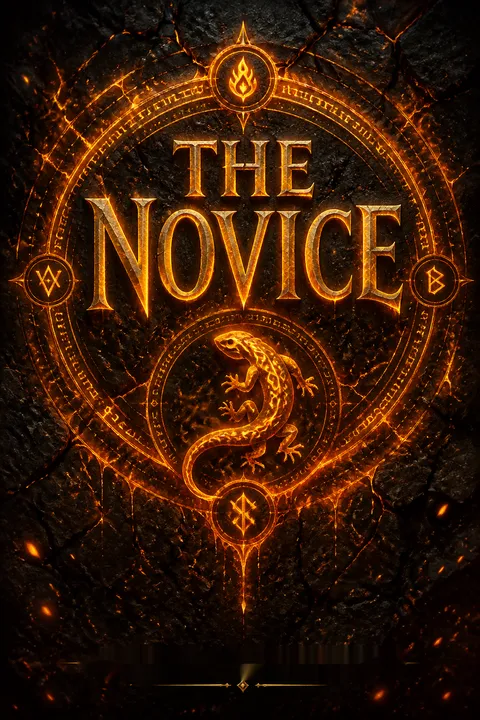


Plot Summary
Didric Takes the Elk
Fletcher, a poor fifteen-year-old hunter raised by blacksmith Berdon, shoots an elk for its meat and valuable hide. He reaches Pelt’s gate before the curfew bell, but Didric Cavell, the rich moneylender’s son, has the guards shut it early. Didric demands the elk’s antlers in exchange for opening the gate, then twists their agreement and leaves Fletcher outside with a headless carcass.
Fletcher spends the night skinning and preserving the animal before Berdon wakes him for the annual traders’ market. The extortion sharpens a grievance Fletcher already knows well: in Pelt, wealth buys the right to make rules, while the poor are left to survive their consequences.
The elk is both dinner and capital, so Didric’s theft reaches beyond a personal insult. Fletcher loses the product of his labor and is forced to choose between property and safety. Didric’s verbal trick exposes how power can disguise coercion as a fair bargain, while Fletcher’s refusal to surrender the entire kill preserves a small but consequential boundary. His poverty has taught him practical calculation, yet his anger shows that adaptation has not become acceptance. The conflict begins with a material injustice, not a prophecy, making Fletcher’s later resistance grow from an ordinary demand for dignity.
The Soldier’s Strange Book
At the market, an old soldier named Rotherham sells war trophies and tells the crowd about a dead summoner whose demon guided him back from an orc ambush. The soldier displays the summoner’s illustrated journal, but Didric exposes his exaggerations and claims the book for four shillings. Fletcher recognizes the same price Didric extorted for the elk’s antlers.
That evening, Didric tries to seize the journal from Rotherham at the tavern. Fletcher and the veteran fight back, and Fletcher escapes Didric’s chokehold by biting his wrist. Rotherham leaves before morning, but hides the journal in Fletcher’s bedding. Reading its final pages, Fletcher finds an orc summoning scroll and decides to test it.
The journal moves knowledge out of official hands and into Fletcher’s, but it arrives through a relationship built on reciprocal respect rather than institutional permission. Rotherham’s story is partly embellished, yet his candor about that fact makes him more trustworthy than the powerful men who claim authority over the book. Fletcher’s fight with Didric reverses their earlier encounter: this time, Fletcher does not bargain away his property or wait for rescue. His decision to experiment with the scroll is not simply curiosity. It is a wager that knowledge might offer a route beyond the narrow life Pelt has assigned him.
Fire in the Graveyard
Fletcher reads the strange syllables alone in Pelt’s graveyard. A portal opens, and a small burgundy demon appears, eats a beetle-like creature, then curls around Fletcher’s neck. He brings the book and demon back toward town, only to hide inside a mausoleum when Didric, guardsman Jakov, and Calista search for him.
Their threat becomes clear: Didric plans to kill Fletcher, seize village homes through his father’s debts, and turn Pelt into a prison for incoming conscripts. He also intends to undercut Berdon by monopolizing military supplies. Fletcher’s anger reaches the demon through their new bond. It attacks Didric with fire, and Fletcher escapes through the crypt tunnels, uncertain whether the boy survived.
The summoning makes Fletcher powerful, but it also makes his private choices politically dangerous. His first bond with Ignatius is not command in the usual sense: the demon responds to an emotion Fletcher can barely regulate. That intimacy saves him from Didric, while exposing the cost of acting under rage. The prison scheme enlarges the original gate injustice into a system designed to profit from the village’s vulnerability. Fletcher is no longer resisting a bully over an elk. His discovery has connected him to a conflict in which personal survival and the fate of his home are suddenly entangled.
Berdon Sends Him South
Berdon wakes as the village alarms sound and hears Fletcher’s account. Instead of blaming him, the blacksmith calls him family, packs supplies, and gives him a curved khopesh, a finely made bow, money, preserved elk meat, and the leather jacket Fletcher had hoped to buy. He sends Fletcher south to Corcillum, away from the route Didric’s men will expect.
After days evading hunters, Fletcher reaches the city and is cornered by thieves. A scarred officer named Arcturus shields him from a bullet with magic and recognizes Ignatius as a rare Salamander. Though initially suspicious of Fletcher’s account, Arcturus takes him to an inn and arranges transport to Vocans Academy, where Fletcher hopes to train as a battlemage.
Berdon’s gifts convert affection into equipment, but the farewell’s deeper force is its change in Fletcher’s self-understanding. The abandoned child who feared he was merely a burden leaves knowing someone chose him as a son. That knowledge does not make exile painless; it gives him a reason to endure it. Arcturus’s rescue then offers a second kind of passage, from fugitive to student, while demonstrating that magic is neither abstract nor harmless. Fletcher’s new future begins through care given freely, in sharp contrast to Didric’s transactional use of power.
Commoners Enter Vocans
At Vocans, Fletcher meets fellow commoners Rory, Genevieve, Seraph, and Atlas, then discovers that the academy also trains Othello, a dwarf, and Sylva, an elven chieftain’s daughter. He first offends Sylva by entering the girls’ quarters, where her Canid demon knocks him down. The class divide is visible in separate, unequal lodgings and in the nobles’ practiced command of magic.
At breakfast, Othello explains the discrimination dwarves endure, while Seraph describes the academy’s merit-based commissions and the advantages noble students inherit. Provost Scipio announces that first- and second-year students will compete together for early commissions and a seat on the King’s council. Fletcher signs the military pledge and begins lessons.
Vocans gathers people whom Hominum’s social order prefers to keep separate, but shared schooling does not erase unequal starting conditions. Nobles arrive with inherited demons and private instruction; commoners must learn both the craft and the rules governing access to it. Othello’s presence makes prejudice concrete, while Sylva’s diplomatic role turns the academy into a small-scale test of whether former enemies can cooperate. The tournament raises the stakes by placing public recognition on the line. Fletcher has found a place to belong, but it is a place that asks him to compete inside an unfair structure.
Corcillum’s Brutal Welcome
On the commoners’ first trip to Corcillum, Fletcher and Othello split from their friends to visit the Dwarven Quarter. Pinkertons assault Othello for carrying his ceremonial tomahawk, and Fletcher bluffs them into backing down by pretending Othello is connected to the powerful Forsyth family.
In the city square, they find Sylva bound on a platform while a mob prepares to kill her for being an elf. Othello’s Golem, Solomon, scatters the crowd; Ignatius burns the would-be executioner, and Fletcher uses magic and dirty fighting to help subdue the attackers.
Sylva kills the man who nearly crushes Fletcher. The three flee through the storm and shelter in an abandoned shed, where Sylva explains her diplomatic mission and the old human-elf alliance.
The city outing turns prejudice from a lesson into immediate bodily danger. Othello is punished for carrying the very weapon his culture requires, while Sylva is targeted as a symbol before the crowd knows anything about her. Fletcher’s instinct to intervene is brave but not sufficient on its own: survival depends on Othello’s judgment, Solomon’s strength, and Sylva’s decisive action. Their shelter conversation complicates the simple idea of enemy peoples. Sylva’s history shows that political hostility can erase an alliance from public memory, while the characters’ cooperation creates a fragile alternative to inherited suspicion.
Lovett Enters the Ether
Captain Lovett teaches the novices to infuse their demons, drawing them inside themselves so the creatures can recover and remain protected. She then opens a portal into the ether, using her Scarab, Valens, to scout.
A migrating Shrike attacks and injures him; Lovett enters the hostile landscape in a protective suit to retrieve him. The Shrike follows her back through the portal, where Tarquin’s Hydra and Fletcher’s Ignatius help drive it away. Lovett survives, but falls into ethershock and is left paralyzed and unconscious.
Inquisitor Rook takes over etherwork, measures the students’ capacities, and reserves the academy’s powered portals for nobles until after the tournament. Fletcher learns he has unusual spellcraft talent, but little institutional leverage.
The lesson reveals that summoning is a relationship sustained through risk, not a simple act of ownership. Lovett endangers herself for Valens because a demon is a companion, not disposable equipment; her students witness the ethic that Rook’s hierarchy refuses to honor. The accident also changes the balance of authority at Vocans. With Lovett incapacitated, Rook can convert a temporary safety measure into unequal access, restricting commoners just as their training begins. Fletcher’s talent cannot by itself overcome rules designed to preserve inherited advantage, so practical ingenuity and collective loyalty become as important as magical capacity.
Arcturus Names a Possibility
After a confrontation with Tarquin and Isadora during a lesson, Arcturus explains why he sponsored Fletcher: he suspects the orphan may be the unrecognized son of Lord Faversham, as Arcturus believes himself to be.
He describes how noblemen’s firstborn children can inherit summoning ability and how the discovery of commoner adepts exposed noble infidelity. Fletcher cannot tell whether Arcturus’s theory is true, and Othello later urges him not to mistake speculation for proof.
Meanwhile, Sylva tries to repair relations with the Forsyth twins because she believes their family could influence an alliance between Hominum and the elves. Fletcher feels abandoned by her choice, while Seraph confides that his father’s partnership with dwarven miners threatens the Forsyths’ arms business.
The possible ancestry revelation destabilizes Fletcher’s identity without resolving it. Arcturus offers an explanation for the gift that has separated Fletcher from other villagers, but the explanation also risks replacing one uncertain story with another. Othello’s skepticism protects Fletcher from accepting a powerful man’s theory simply because it promises belonging. Meanwhile, Sylva and Seraph show how personal relationships are shaped by political calculation: each must decide when cooperation is strategic and when it becomes complicity. Fletcher’s discomfort is justified, but his friends’ choices are not reducible to betrayal; they carry obligations he does not yet share.
Ignatius Remembers Corcillum
Fletcher experiences a memory from Ignatius’s past: the ancient Battle of Corcillum, where humans and elves fought together after the albino orc leader was killed. Sylva identifies the broken-arrow banner in his account and confirms that the battle preceded centuries of peace. The image makes Fletcher reconsider his anger at her diplomacy.
That night, he follows Sylva as she tracks a mysterious figure leaving Vocans. They find Othello entering a guarded cave for a dwarven war council. Fletcher and Sylva use Ignatius and a scrying stone to watch from above. Inside, Othello argues against rebellion, while Atilla, his identical twin, supports a plan to seize the royal palace. Before the council can settle, armed men approach the cave.
Ignatius’s memory turns the past into evidence rather than legend. Fletcher can see the old alliance, but he needs Sylva’s historical knowledge to interpret what he has witnessed; neither character possesses the whole account alone. This shared inquiry softens their earlier conflict and models the cooperation their governments struggle to achieve. The council scene then tests Fletcher’s trust in Othello. Othello’s secrecy looks suspicious from outside, yet his presence proves to be an attempt to prevent war. The section makes a useful distinction between concealed action and disloyal intent, a distinction Fletcher must learn before reacting.
The Cave Becomes a Trap
Fletcher and Sylva realize that Grindle, the man who tried to execute Sylva, is waiting with armed soldiers to attack the dwarven gathering on behalf of Lord Forsyth. Fletcher sends Ignatius down to warn the council with a burst of flame. As the dwarves retreat, Atilla chases the demon and brings the pursuers to the cave entrance.
Sylva shields the opening while Fletcher blinds the soldiers; Sariel and Solomon help the group fight through them. With reinforcements approaching, Fletcher tricks Grindle into letting them pass. Gunfire catches the fleeing party, and Atilla is shot in the leg. Fletcher refuses to leave him behind, carries him through the dark, and follows Valens’s guidance back to Vocans.
The attempted attack exposes how quickly private prejudice can be converted into a manufactured political crisis. Forsyth’s soldiers are poised to make a dwarven council look like the aggressor, turning suspicion into a justification for war. Fletcher’s warning is unconventional and dangerous, but it gives the dwarves time to withdraw rather than letting their meeting become a massacre. His decision to carry Atilla matters just as much: he refuses to reduce the hostile twin to his political beliefs or leave him to die. Mercy here is not softness; it is a refusal to let the enemy define who deserves rescue.
The Plot Comes Into View
At Vocans, Othello and Sylva learn that Fletcher has brought the wounded Atilla back alive. Lovett, still immobile, appears to have guided Valens to the group through her connection with the demon. As they compare what happened in Corcillum with the attack on the dwarven council, Seraph recognizes the Forsyths’ motive: a public killing of Sylva could provoke war with the elves, while an attack on dwarves could break Hominum from within, both protecting the family’s arms profits.
Sylva warns her father away from the Forsyths. Atilla admits his hatred is directed at the unjust system, not every human, and agrees to join Vocans. The friends decide to train for the tournament before the Forsyths can control its outcome.
The conspiracy becomes legible through converging evidence, not a confession: Sylva’s attempted execution, the armed ambush, and the Forsyths’ commercial interests point toward the same design. Seraph’s knowledge of his family’s business helps the others see that profit is not background detail but a motive shaping violence. Atilla’s change is similarly grounded in experience. Fletcher saves him without demanding ideological agreement, giving him a reason to separate resentment of injustice from hatred of an entire people. Their plan to train shifts the group from reacting to crises toward competing for influence.
A Tattoo Replaces the Circle
As the tournament nears, Fletcher struggles to cast reliable shield spells, while the nobles practise with inherited advantages and the commoners train in secret. Atilla crafts Fletcher an eyepiece from his small scrying crystal, freeing both hands while Fletcher watches through Ignatius.
Fletcher also asks Athol to tattoo a summoning pentacle on his palm and the four battle glyphs on his fingertips, inspired by the image in Ignatius’s ancient memory.
In the first arena challenge, Fletcher faces Rory and a second-year student; the contestants must guide demons up a pillar using telekinesis. Fletcher’s blasts knock Malachi from the air, and his final strike destroys the pillar. He advances, but Rory believes Fletcher has nearly killed his beloved demon.
Fletcher’s inventions translate exclusion into design pressure. Denied a useful scrying stone and unable to cast quickly through conventional methods, he asks what can be changed rather than waiting for permission. The eyepiece and tattoos are not effortless triumphs: each carries risk, and the tattoo idea comes from an image whose history he barely understands. The first challenge makes ingenuity morally costly. Fletcher wins, but the broken pillar leaves Malachi badly hurt and damages his friendship with Rory. Competition exposes the difference between intending harm and causing it, a distinction Fletcher cannot dismiss simply because the rules permitted his action.
Sylva Falls, Fletcher Advances
In the next tournament contests, Seraph loses to Tarquin, while Fletcher defeats Malik in a sword match by using the arena’s pillar and his khopesh against the better-trained noble. Othello beats Rufus but breaks his leg, leaving him unable to fight again. Sylva defeats Isadora, then faces Tarquin while already exhausted from her earlier match.
Tarquin overwhelms her with a kinetic blast and leaves her badly injured. Fletcher sees the danger of the Forsyths’ advantage more clearly, but he also knows Sylva has made the elves impossible to dismiss as weak. Othello withdraws from his semifinal against Fletcher so Fletcher can reach the final without spending more mana. Fletcher accepts the sacrifice and prepares to face Tarquin.
The tournament’s apparent meritocracy is repeatedly undermined by unequal preparation and by Rook’s control over the format. Yet the matches reveal capacities that inheritance cannot fully explain: Fletcher adapts under pressure, Othello competes despite the cost, and Sylva’s victory over Isadora carries diplomatic meaning beyond the arena. Her injury makes that meaning painful rather than abstract. Othello’s withdrawal is a strategic act of solidarity, not defeat; he preserves Fletcher’s strength for the opponent who represents the larger threat. The friends’ ambition is therefore collective even when the scoring system records individual winners.
Victory, Then Manacles
Fletcher enters the final against Tarquin after losing much of his strength in earlier contests. Ignatius first feigns defeat, then returns to the fight; Fletcher draws the demon into himself through the tattooed pentacle and unleashes fire, lightning, and kinetic force together.
Tarquin’s shield breaks, and Fletcher wins the tournament, securing a captaincy and a place on the King’s council. As Scipio begins arranging his commission, Pinkertons Murphy and Turner arrive with Inquisitor Rook.
They arrest Fletcher for attempting to murder Didric Cavell in Pelt. When Othello objects, Turner knocks him down, and Rook makes clear that Fletcher is being sent back north. His victory has won him influence, but it has not made him safe from the authority pursuing him.
The final victory brings Fletcher’s scattered skills into one act: the Salamander bond, his improvised tattoo, and his willingness to risk everything converge against Tarquin’s inherited power. Yet the result does not settle the larger conflict. The arrest reveals that achievement inside an institution cannot erase a prior accusation when the institution’s officials have their own interests. Fletcher has gained a council seat precisely as he becomes vulnerable to removal from the academy. The ending refuses the comfort of a completed rise: public recognition and private freedom remain separate, and the next struggle begins at the moment he appears to have won.
Analysis
The Novice makes access to power its central practical question. Fletcher does not begin with a destiny or an inheritance he can claim. He begins with a stolen elk, a foster father’s protection, and a skill set built for survival. Magic changes what he can do, but it does not remove the structures that decide whose talent receives training, whose evidence is believed, and whose violence is punished. Vocans reproduces those inequalities even as it recruits commoners, dwarves, and an elf to meet the army’s needs.
The novel’s strongest counterweight to inherited rank is collaborative knowledge. Fletcher needs Sylva to interpret Ignatius’s memory, Othello to explain dwarven politics, Seraph to understand the arms economy, and Atilla to make a different choice after being treated with compassion. Their abilities are not interchangeable, and their alliances are not effortless. Trust is repeatedly tested by secrecy, competition, and injury. The story treats solidarity as a practice: warning people in danger, sharing expertise, and refusing to abandon someone whose beliefs are difficult to accept.
Demons give this political argument an intimate form. A demon is a source of power, but also a creature that can suffer, learn, and respond to affection. Lovett’s risk for Valens, Fletcher’s reliance on Ignatius, and Rory’s attachment to Malachi show why a purely instrumental view of strength is inadequate. Fletcher’s improvised tattoos and eyepiece matter because he turns unequal access into a problem of invention, yet his victory does not abolish the system around him. The final arrest makes that limit explicit. Public success gives Fletcher a voice, but the authorities can still seize his body and redirect his future. The novel ends on the tension between earned merit and institutional control, leaving his triumph real but incomplete.
Review Summary
The Novice receives mostly positive reviews, praised for its engaging fantasy world, likable characters, and compelling plot. Readers enjoy the blend of magical elements reminiscent of Harry Potter and Pokemon. The protagonist Fletcher and his demon companion Ignatius are particularly well-received. Some critics note predictable plot points and simplistic character development. The book is considered suitable for both young adult and middle-grade audiences. While not groundbreaking, it offers an entertaining and fast-paced read that leaves many readers eager for the next installment in the series.
People Also Read




Characters
Fletcher
Orphaned hunter turned cadetFletcher is a resourceful, observant boy raised in the remote village of Pelt by the blacksmith Berdon. Hunting and forge work have taught him to value useful skill over status, while poverty has made him alert to bargains that conceal exploitation. He is reserved, quick to anger when he sees someone abused, and more compassionate than his pride sometimes allows. At Vocans, his unusual bond with a Salamander draws him into a world of magic and military politics. Fletcher’s central tension is between acting on instinct and learning to think strategically. He wants a place where he belongs, but increasingly understands that earning one may require challenging the rules that define who deserves power.
Ignatius
Fletcher’s fire-breathing demonIgnatius is a small, burgundy Salamander with amber eyes, a pointed tail, and a habit of curling around Fletcher’s neck. Though initially unpredictable and sleepy, he is intelligent, emotionally responsive, and fiercely loyal once he bonds with Fletcher. Their connection allows him to sense Fletcher’s feelings and lets Fletcher draw on his mana for magic. Ignatius is not merely a weapon: he has his own impulses, needs rest, and can be frightened or hurt. His unusual origins make him a source of wonder and a living link to a history Fletcher does not yet understand.
Berdon
Fletcher’s devoted foster fatherBerdon is Pelt’s broad-shouldered blacksmith, a practical, teasing man who took Fletcher in as a baby when no one else would. He expresses affection through work and preparation: food, shelter, training, and carefully made tools. His warmth is deliberately unsentimental, allowing Fletcher privacy while making his loyalty unmistakable. Berdon’s forge gives Fletcher a trade and a model of craftsmanship, but the relationship also gives the boy a home that is chosen rather than inherited. Berdon believes in Fletcher’s character even when Fletcher is ashamed of his own mistakes.
Othello Thorsager
Dwarven cadet for equalityOthello is a thoughtful dwarf and summoner who enters Vocans determined to prove that dwarves can serve as officers and allies. He is patient, scholarly, and keenly aware of how prejudice becomes law, policing, and daily humiliation. His friendship with Fletcher grows from a shared instinct to defend people treated as lesser, though Othello brings a broader political vision to that instinct. He is close to his family and especially entangled with his twin brother, Atilla. Othello’s restraint is not passivity: he chooses when to endure, when to speak, and when a risky intervention may prevent a worse conflict.
Sylva Arkenia
Elven diplomat and summonerSylva is the daughter of an elven chieftain, sent to Vocans as a diplomatic representative as well as a student. Proud, politically alert, and initially guarded, she carries the burden of representing a people who are mistrusted on both sides of the frontier. Her Canid demon, Sariel, offers protection and companionship, but Sylva’s own judgment drives her choices. She studies human and elven history carefully and understands that public gestures can affect negotiations between nations. Her reserve can read as arrogance, especially to Fletcher, yet it reflects the pressure of having to make personal relationships serve a fragile political mission.
Arcturus
Scarred battlemage sponsorArcturus is a battle-hardened officer with a scarred face, a Canid demon named Sacharissa, and little patience for careless manners. He rescues Fletcher in Corcillum and sponsors his entry to Vocans, where he teaches spellcraft with rigor. His bluntness can turn physical or frightening, but he is also capable of apology and recognizes Fletcher’s potential. Arcturus distrusts entrenched institutions and understands how military decisions shape ordinary lives. He expects Fletcher to learn discipline without surrendering initiative, and his own complicated position among the nobility informs his wariness about status and belonging.
Seraph Pasha
Charming, strategic cadetSeraph is a charismatic commoner from Antioch, quick with a story and quicker to make a room feel less tense. His confidence sometimes masks careful calculation: he researches academy politics and understands the economic forces behind the war. He values friendship but keeps family and business information close until he trusts someone. His Barkling demon, Sliver, reflects his preference for unusual opportunities over easy approval. Seraph’s wit can become a shield, yet he is serious about his family’s future and the political consequences of Hominum’s decisions.
Tarquin Forsyth
Entitled heir and rivalTarquin is the heir to a powerful noble house and arrives at Vocans expecting inherited rank to command respect. Polished, confident, and skilled in magic, he treats commoners and other marginalized groups as naturally subordinate. His ambition is reinforced by his family’s political and commercial interests, while his twin sister Isadora is his closest ally. Tarquin can be courageous and capable, but he uses those qualities to defend a hierarchy from which he benefits. His rivalry with Fletcher is personal, yet it also embodies a larger contest over who gets to lead Hominum’s army.
Didric Cavell
Pelt’s calculating bullyDidric is Fletcher’s contemporary and the son of Caspar Cavell, a wealthy moneylender. Privileged, verbally clever, and eager to exercise authority, he turns small advantages into opportunities to humiliate or profit from others. He enjoys presenting selfishness as rational judgment, which makes his cruelty more calculating than impulsive. Fletcher’s refusal to remain an easy target gives their rivalry a personal charge.
Caspar Cavell
Pelt’s powerful moneylenderCaspar is Didric’s father and one of Pelt’s wealthiest men. He lends money when villagers are desperate, then uses complicated terms and accumulated debt to secure their dependence. His public role as a benefactor conceals a sharp appetite for influence. Caspar’s power comes less from force than from contracts, connections, and the village’s limited alternatives.
Rotherham
Veteran who passes on knowledgeRotherham is an aging soldier and practiced storyteller who travels toward the elven front selling war trophies. He has survived long enough to distrust heroic versions of war, though he admits to embellishing a tale when it suits his sales. His generosity toward Fletcher grows from recognizing both the boy’s curiosity and his unfair treatment by Didric.
Provost Scipio
Gruff keeper of VocansScipio is the veteran Provost of Vocans, a formidable teacher with a strict sense of conduct and a history as a warrior. He values discipline, but his decisions are shaped by the urgent need to produce battlemages for a worsening war. He can be brusque with students while still recognizing merit and intervening when powerful adults threaten a fair contest.
Rory Cooper
Cheerful commoner and loyal friendRory is an openhearted northern boy whose jokes and easy friendliness help Fletcher feel welcome at Vocans. He is proud of his beetle demon, Malachi, even when others compare it unfavorably with rarer creatures. Rory wants to succeed but is sensitive to measures of ability that seem to place limits on his future.
Genevieve Leatherby
Warm, perceptive commonerGenevieve is a freckled, red-haired cadet who combines kindness with a dry sense of humor. She cares about her family and takes an active interest in the lives of her fellow students. Her beetle demon, Azura, is a source of affection and pride, and Genevieve resists the assumption that a modest beginning makes a student unworthy.
Atlas
Blunt cadet with a LutraAtlas is a sociable, heavyset student whose frank comments can land as insults, especially when he speaks about dwarves. He is proud of his Lutra demon, Barbarous, and wants a place among the academy’s successful students. His insecurity about status sometimes makes him receptive to promises from people with more power.
Atilla
Othello’s embittered twinAtilla is Othello’s identical twin, a dwarf shaped by repeated exposure to human discrimination and abuse. He is quick-tempered, politically distrustful, and convinced that accommodation will not secure his people’s freedom. His bond with Othello is deep but strained by their opposing strategies. Atilla’s anger is understandable, though it can make him vulnerable to choices that endanger the very people he hopes to protect.
Isadora Forsyth
Tarquin’s ambitious twinIsadora is Tarquin’s twin sister, a noble student with polished manners and a sharp sense of rank. She confidently pressures commoners to accept the roles her family considers proper. Like Tarquin, she treats political advantage as a family responsibility, though she can also recognize when a useful relationship should not be destroyed by a moment of anger.
Captain Lovett
Fearless summoning instructorLovett is a skilled officer and teacher who specializes in demon capture. Direct, fair-minded, and protective of her students, she treats demons as companions whose safety matters even under battlefield pressure. Her Griffin, Lysander, reflects her long experience and the discipline required to control a powerful creature. Lovett expects novices to practise carefully, because she knows mistakes in summoning can have lasting costs.
Inquisitor Rook
Controlling academy examinerRook is an Inquisitor tasked with testing adepts and teaching etherwork. He is calculating, observant, and openly contemptuous of commoners, dwarves, and those who challenge inherited status. His knowledge of summoning gives his judgments institutional weight, while his personal alliances make his apparent neutrality questionable.
Sir Caulder
One-handed weapons masterSir Caulder is Vocans’s weapons master, an old soldier who has lost a hand and foot in war. He is abrasive, irreverent, and unsparing in practice, believing that students need to learn how violence actually works. His grief over past losses makes him wary of relying too heavily on demons, but he still teaches cadets to understand them and the enemies they will face.
Dame Rose Fairhaven
Librarian and academy nurseDame Rose manages Vocans’s library and infirmary. Patient and intellectually curious, she recognizes the value of research that military leaders have overlooked. Her careful reading helps preserve knowledge about demons and gives students access to histories that are otherwise easy to ignore.
Uhtred
Othello’s master smith fatherUhtred is a master dwarf blacksmith and father to Othello and Atilla. He is fiercely protective of his workshop and skeptical of outsiders, but judges people by their skill and conduct once given evidence. His craft connects dwarven pride to practical innovation, including the manufacture of firearms.
Athol
Dwarven gunsmith and allyAthol is a dwarf and a skilled gunsmith who first offers Fletcher directions in Corcillum. He acts with quiet kindness, helping Fletcher find a place to stay and later supporting the work of Othello’s family.
Jeffrey
Helpful Vocans servantJeffrey is a young servant at Vocans who guides Fletcher through the castle and explains its routines. Though his asthma prevents him from joining the military, he serves with diligence and treats Fletcher with unusual courtesy.
Calista
Didric’s guard allyCalista is a physically capable guard who helps Didric search for Fletcher. She is hard-edged and comfortable using her authority, though her presence mainly reflects the small circle of people Didric can recruit to enforce his will.
Plot Devices
Summoning and demon bonds
Power through a living bondSummoners open portals to the ether and bind demons to themselves, gaining access to mana for spellcraft. A demon can be summoned into the human world, infused into its summoner for safety and rest, or used as a scout through a scrying stone. The bond is emotional as well as magical: Fletcher and Ignatius sense one another’s feelings, and their connection affects how well they act together. Demons have distinct abilities, needs, and levels of power, so a summoner’s success depends on more than raw magical strength. This system drives the academy training, battlefield danger, and Fletcher’s most consequential acts.
James Baker’s summoning book
A forbidden route to magicThe journal of summoner James Baker contains demon sketches, observations, and an orc summoning scroll made from an enemy’s skin. Rotherham gives it to Fletcher after Didric tries to claim it, and Fletcher uses the scroll to summon Ignatius. The book later gives Vocans valuable information about demons from a part of the ether Hominum’s summoners rarely study. It also links Fletcher’s personal gift to the larger question of what the orcs know about summoning. The book functions as both a catalyst and a record of neglected research, exposing the cost of treating knowledge as useful only when it serves established authority.
The ether and keyed portals
A dangerous frontier beyond sightThe ether is the otherworldly territory from which demons are summoned. Portals are opened through pentacles, while carved keys help direct summoners toward particular regions. Scrying stones let a summoner see through a demon’s eyes before risking a human body in the ether. The landscape is not uniformly safe: demons occupy different regions, predators hunt weaker creatures, and a damaged portal or protective suit can prove fatal. Access to portals and the academy’s charging stone is also controlled unequally. The ether therefore works as a literal wilderness and a political resource, shaped by both ecology and the choices of those who control entry.
The Vocans tournament
A contest for military powerThe tournament tests cadets through demon challenges, spellcraft, and armed combat. Its winner receives a high-ranking commission and a place on the King’s council, making the competition matter to national policy as well as student pride. The format is shaped by adults with their own loyalties, and nobles enter with inherited demons and years of private practice. Fletcher and his friends respond with intensive training, teamwork, and improvised equipment. The tournament concentrates the book’s social tensions into a public arena: skill matters, but so do access, reputation, and the power to define what counts as a fair test.
Debt and arms contracts
Profit turns conflict into policyThe Cavells use loans and contracts to control Pelt, while the Forsyths depend on the sale of weapons and military equipment. Dwarven firearms and the Pasha family’s control of ammunition supplies threaten established businesses, giving powerful families a financial motive to shape military policy. These economic arrangements connect Fletcher’s small village to the academy and the wars on Hominum’s borders. Debt can turn homes into assets, and arms competition can make peace seem less profitable than conflict. The device reveals how private wealth operates through public institutions, giving the story’s political antagonism a concrete material basis.
Summoner Series

Download PDF
Download EPUB
.epub digital book format is ideal for reading ebooks on phones, tablets, and e-readers.








