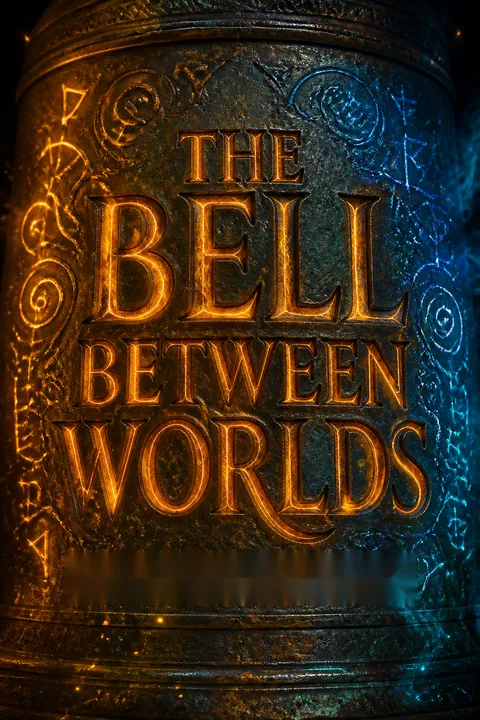


Plot Summary
The Shop of Things
Twelve-year-old Sylas Tate lives with his uncle, Tobias, in Gabblety Row, a crooked old building that shelters him from people and gives his imagination room to roam. He visits the churchyard to remember his dead mother and spends his happiest hours dreaming up flying kites. One Friday, while delivering Tobias’s letters, Sylas notices a new sign above a shop that has been empty for years.
A voice invites him inside, speaking directly into his thoughts. Almost struck by traffic as he backs away, Sylas decides the mysterious shop is safer than his own doubts and steps through its door. Beyond the dusty windows, a maze of parcels waits, and the shopkeeper is already expecting him.
Sylas’s imagination is both refuge and vulnerability. After his mother’s loss, he has made solitude feel chosen, filling an emotionally narrowed life with private worlds and handmade kites. The shop’s silent invitation crosses that boundary: the first extraordinary event does not arrive through a heroic quest but through a child’s decision to trust curiosity. His choice matters because it is not yet bravery in the conventional sense. It is the risk of letting the world answer him.
Three Impossible Things
The shopkeeper, Mr Zhi, shows Sylas a hanging flock of silver birds. As Sylas watches, the birds seem to fly, and Mr Zhi tells him that his imagination has revealed what the object could become. A pair of mirrors promises another kind of discovery, but an unexpected visitor makes Mr Zhi hide them and hurry away.
Instead, he gives Sylas the Samarok, a jeweled book whose changing Ravel Runes look like ordinary writing but refuse to make sense. Mr Zhi also gives him a short handwritten note to help unlock the code. Sylas rushes out to post Tobias’s letters, carrying the book beneath his clothes. Outside, the shop’s sign has vanished, leaving no easy way back.
The three Things introduce the story’s governing tension between seeing an object and seeing its possibilities. The birds respond to Sylas’s inward attention, while the mirrors and Samarok point toward capacities he has not yet recognized. Mr Zhi does not explain the whole system; instead, he gives Sylas tools that require participation. The gift is therefore also a burden. Sylas leaves with wonder, but no reliable means to distinguish imagination from fact, or a welcome from a warning.
The Mother Still Lives
Tobias erupts when Sylas admits he missed the post, then insults Sylas’s dead mother as foolish and deluded. Alone in his room, Sylas opens the Samarok and Mr Zhi’s note, but a black hound prowling in the ruined churchyard soon draws his attention. Later, while helping Tobias sort his papers, he finds recent clinical reports from Winterfern Hospital.
They describe his mother, Amelie, as alive and still receiving treatment. An older committal order bears Tobias’s signature, showing that he helped have her confined. Sylas’s grief turns abruptly into anger and disbelief. He gathers the documents and retreats to his room, where the Samarok lies beside the shattered account of the life he thought he knew.
The revelation does more than restore hope; it makes Sylas doubt the emotional history on which he has built his identity. His uncle’s lie has prolonged bereavement while controlling what Sylas was allowed to know. The hound’s appearance also complicates the discovery: the ordinary household has become unsafe at the same moment that its hidden past opens. Sylas is not simply looking for his mother now. He must learn which adults have acted to protect him, which have deceived him, and why.
The Bell Calls
A tremendous bell sounds from the distant hills, though the traffic and Tobias remain unaffected. Sylas alone hears it, and the rain bends toward its source. He packs the Samarok, Mr Zhi’s note, and the committal order, then slips from Gabblety Row. The black hound attacks, smashing through the apartment doors as Sylas escapes down the stairs.
Undertaker Herr Veeglum locks the outer door long enough to slow the beast and directs Sylas across the road. On Hailing Bridge, Sylas meets Espen, the scarred stranger who had been Mr Zhi’s unseen assistant. Espen turns the Samarok’s S-shaped cover emblem into a bracelet, the Merisi Band, and insists it will protect Sylas. Together they run toward the bell.
The bell transforms private grief into physical motion. Its call seems addressed to Sylas alone, while the people around him continue their ordinary routines, isolating him even as it offers direction. The chase makes that invitation irreversible: returning to Tobias’s home is no longer a meaningful option. Veeglum’s timely intervention and Espen’s bracelet suggest a hidden network surrounding Sylas, but the boy receives protection before explanation. His first step toward agency is taken under pressure, with trust still largely borrowed from strangers.
Across the Passing Bell
Espen leads Sylas through back streets and factory grounds while the hound closes in. He uses strange powers to impede the creature, then sends Sylas alone into the forest as the bell swings through the trees. Sylas reaches out before it strikes and wakes later beneath its immense shadow, in a winter-cold wood where summer should be.
A red-haired girl named Simia appears and mistakes his bracelet for the mark of a trained Bringer. Before she can explain more, the bell sinks into the earth and disappears, leaving Sylas with no route home. Simia calls herself one of the Suhl and urges him to follow. When the hounds approach, she reshapes the woodland into a rushing, water-filled path that carries them downhill.
The passage through the bell makes Sylas’s imaginative life materially consequential: he does not merely picture escape, he enters a world that seems shaped by reflection and difference. The bell’s disappearance prevents the crossing from functioning as a reversible adventure. Simia, by contrast, offers practical knowledge without full explanation, setting a pattern in which Sylas must act before he understands. Her improvised route also gives him his first experience of magic as collaboration with a place, not simply a weapon against an enemy.
The Other Town
The forest opens onto a smoky town of mud lanes, pyramid-roofed houses, and carts instead of cars. Simia explains that they are in the Other, a world occupying the same place as Sylas’s, and identifies their pursuers as Ghor and Ghorhund, hunters made to track people. They hide in a fruit cart, escape the beasts, and duck into the Mutable Inn.
There Sylas meets Bowe, its watchful barman, and Ash, a young Muddlemorph. Ash demonstrates how his people transform substances by reshaping smoke from a drink called Plume. Sylas tries the same trick and forms a smoking model ship, then a woman’s face, with startling ease. Bowe cuts the display short when Ghor begin searching the street.
The Other unsettles Sylas’s assumption that technology and magic belong to separate categories. Simia sees his science as a form of wonder; Sylas sees the Muddlemorphs’ transformations as impossible, until he performs one himself. His sudden skill hints at a capacity he has not chosen or earned through formal training. Yet the inn scene keeps discovery tied to danger: showing what he can do draws attention, and a talent can become a liability before its owner knows how to govern it.
A Mill of Mirrors
Bowe leads Sylas and Simia through the inn’s cellar and sends them toward the river, where they must pass the Lord’s Chamber. The children keep their eyes down among its Ghor guards, but witness Scarpia, one of Thoth’s powerful servants, publicly brutalize the fruit-cart driver as punishment for helping them. Simia leads Sylas through the fish market to a hidden entrance beneath a giant waterwheel.
Inside Meander Mill, a lift carries them into a circular sanctuary built from river wreckage and lit by carefully reflected sunlight. Filimaya, a senior Suhl leader, welcomes them, heals Sylas’s wounded knee, and recognizes the Merisi Band. She is especially surprised that Sylas knows Mr Zhi, whose name has meaning here.
The route into Meander Mill juxtaposes the public machinery of fear with a concealed space built from care, craft, and shared resources. The driver’s punishment shows that Sylas’s escape has consequences for people who never chose his journey, complicating the easy pleasure of adventure. Filimaya’s response suggests that his arrival carries political significance, but she offers hospitality before certainty. The mill becomes a provisional home, not because danger has passed, but because its inhabitants make protection through cooperation and ingenuity.
Two Worlds, One Town
Filimaya uses the mill’s mirrors to show Sylas that the Other shares the same landscape and time as his world, though its seasons run in reverse and its people use magic where his use technology. Sylas recounts his mother’s illness and the hospital reports that exposed Tobias’s lie. Filimaya cannot explain the connection, so she summons a Say-So, a gathering of the Suhl.
The elders debate whether Sylas is a Bringer, since the Passing Bell, Samarok, and Merisi Band all suggest he belongs to that tradition, though he has no training. They decide to take him to Paiscion, a powerful Magruman who may answer his questions. Simia, despite being told to remain behind, insists she will accompany him.
The mirrored landscape reframes Sylas’s home without making it unreal: his world and the Other are distinct, yet neither is complete in isolation. This relational account challenges the habit of treating unfamiliarity as evidence of inferiority. The Say-So extends that principle into politics. The Suhl do not agree automatically, and Sylas becomes the subject of a debate about risk, not merely a welcomed chosen one. Simia’s insistence matters because it asserts that care and competence need not follow rank.
The Fourth Way
In the Water Gardens, Filimaya teaches Sylas about Essenfayle, the Suhl practice of working through relationships already present in nature rather than changing matter by force. Sylas makes fish leap from the stream, suggesting that the talent may come naturally to him. Filimaya then sends him to the Den of Scribes, where Fathray shows him the secret scripts used to preserve Suhl history.
Sylas recognizes their symbols and the names of their colored inks from the paints his mother gave him. He learns to read the Samarok’s Ravel Runes with Mr Zhi’s note as a key, and discovers that Veeglum signed the order committing Amelie to hospital. Before they can investigate further, Bowe warns that the Ghor have found the mill.
The discovery binds Sylas’s artistic habits to a history he never knew he was carrying. His mother’s paints were not simply keepsakes; their names and symbols connect his childhood creativity to Suhl knowledge. Essenfayle offers a model of power based on attunement rather than domination, but the evidence about Veeglum complicates any simple division between helpers and enemies. Knowledge arrives as both recognition and destabilization. The attack interrupts interpretation, forcing the characters to act before every clue has been resolved.
The Mill Falls
The Suhl evacuate Meander Mill by boat, carrying their books and records while Slithen pour through the garden. Fathray returns to the Den of Scribes to save several old volumes, then stays behind as the others escape. The archive and Water Gardens catch fire, with Fathray apparently captured. Slithen pursue the boats through the river, while Ghor line the banks under Scarpia’s command.
Filimaya raises a wave to carry the fugitives forward, but the pursuit reaches them near a bridge. Sylas feels the river’s living things gather at his will, drawing the Slithen underwater and allowing the survivors to escape the worst of the attack. The surviving boats turn toward the hills, while the Suhl community is scattered and its sanctuary lost.
The destruction of the mill exposes the cost of preserving a culture under surveillance. Fathray’s choice to protect records, even at the risk of capture, treats memory as something more substantial than property. Sylas’s intervention is powerful but frightening: his empathy with river life gives him influence over it, yet also makes him feel the struggle of the creatures he commands. The victory is therefore not clean. The Suhl escape, but their home, archive, and sense of safety have been broken.
The Chasm Opens
The survivors reach the Barrens, a lifeless landscape left by the war between the Suhl and Thoth’s forces. As Ghorhund close in, Espen returns and uses the trees to hold them back, allowing Sylas, Simia, Ash, and Bayleon to run. At a dried riverbed, Espen asks Sylas to imagine the ground collapsing.
Sylas does, and the earth opens into a chasm that swallows the pursuing creatures before closing again. At camp, Simia explains that she survived the war by learning to trust natural connections, a lesson once given to her by the Suhl leader Merimaat. Espen then reveals he is Espasian, a Magruman believed dead, and tells them that the Glimmer Myth may link Sylas to someone across the worlds.
Sylas’s power has now moved beyond accidental performance: he acts on a frightening image and the landscape obeys. The sequence refuses to present this as effortless mastery. He needs Espen’s instruction, and the result is lethal. Simia’s account offers a contrasting ethic: survival through attention and reciprocity rather than command. Espen’s identity and the Glimmer Myth widen the story’s scale, but they also sharpen its central uncertainty. Sylas may be part of a larger design, yet neither he nor his companions knows what that design will demand.
The Circle Betrays
At the ruined Circle of Salsimaine, Espen explains the Glimmer Myth through an ancient poem about each person having a counterpart in the other world. He says Sylas’s mother knew the Merisi and may have shared a connection to her own counterpart. Later, while the others sleep, Simia follows Bayleon and discovers Espen speaking with Scarpia among a company of Ghor.
She hears enough to believe he has been guiding them into a trap. Bayleon gives Simia a tracking glass and stays behind to confront the Ghor, buying her time to wake Sylas and Ash. Ash also chooses to remain and mislead the hunters. Simia and Sylas flee across the Barrens, following the glass’s silver tracks toward Thoth’s city.
The betrayal works because it attacks the fragile trust assembled through shared danger. Simia has reason to believe what she witnessed, while Sylas has reason to remember Espen’s earlier help; neither interpretation can yet be discarded. Bayleon’s decision to face the Ghor shifts the cost of uncertainty onto the group’s most capable guide. Ash’s choice to stay similarly resists the idea that loyalty means obedience to Sylas’s quest. The pursuit now tests not only physical endurance but whether trust can survive incomplete evidence.
The City Below
Simia guides Sylas through the Barrens by sensing the land around her, and he gradually learns to feel the banks of a dried stream rather than rely on sight. They reach Thoth’s immense city and glimpse the Dirgheon, a black pyramid and prison rising above its crowded streets. In a slum marked by the Suhl feather, they find the wrecked Windrush, where Paiscion, the Magruman, has been hiding.
Sylas shows him Mr Zhi’s note and the Samarok. Together they uncover the message concealed in the note’s faded letters: it points toward Sylas and Naeo, Bowe’s daughter. Paiscion confirms that Naeo is Sylas’s counterpart and that Thoth holds her in the Dirgheon. Sylas decides he must reach her.
The journey into the city brings the story’s private mystery into contact with visible systems of power: the Dirgheon dominates not only the skyline but the lives beneath it. Simia’s guidance and Sylas’s growing ability to sense the terrain show learning as embodied practice rather than a sudden gift. The message names Naeo, converting a dreamlike presence into a person with a history and a location. That knowledge does not resolve Sylas’s longing for his mother, but it gives his journey a concrete next purpose.
The Glimmer Glass
Paiscion explains that the Samarok’s poem calls for Sylas to seek his reflection in the Glimmer Glass, a pair of mirrors kept aboard the Windrush. Sylas concentrates until the face in the opposing mirror changes from his own into a girl’s. He recognizes her from his dreams, though he cannot yet understand their connection.
The Merisi Band aches as the image appears, warning that the encounter is dangerous. When Naeo looks over her shoulder and vanishes, Paiscion identifies her as the daughter of Bowe, the Scryer who helped the Suhl at Meander Mill. The discovery makes the rescue urgent: Naeo is not an abstraction in a prophecy but a captive person, and the band can guide Sylas toward her.
The mirror scene makes recognition feel bodily before it becomes intellectual. Sylas does not identify Naeo through a name or explanation; he recognizes a face that seems both unfamiliar and intimate. The pain of the Merisi Band interrupts any easy romanticism about reunion, establishing that connection may carry risk as well as comfort. The revelation also gives Bowe’s grief a new dimension. A personal bond spans the larger conflict, linking Sylas’s search to the fate of a family already damaged by war.
The Name Is Message
As the companions prepare for the Dirgheon, Paiscion deciphers the poem’s missing final line and understands that the worlds may one day be joined. Simia studies the letters in Mr Zhi’s note and discovers that they can be rearranged to spell Sylas Tate, Naeo Bowe, and the Merisi signature. Sylas realizes that his mother may have known the poem and chosen his name deliberately.
The revelation deepens his trust that finding Naeo is connected to understanding his mother. Paiscion maps a concealed canal into the Dirgheon and assigns himself the task of drawing its guards away. He and Sylas will use the canal, while Simia and Ash carry supplies and prepare a way to escape over the pyramid’s terraces.
The name puzzle turns identity into evidence, but not into certainty. Sylas’s name may carry his mother’s intention, yet the implications exceed what he can verify. Simia’s role is crucial: she notices a pattern the older, more authoritative figures overlook, showing that insight does not belong exclusively to specialists. The proposed rescue also transforms interpretation into commitment. The poem, note, names, and map become operational tools, while the promise of joining worlds remains a dangerous possibility rather than an established outcome.
The Dirgheon’s Trap
Paiscion creates a violent storm above the Temple of Isia, drawing the Ghor guards away from Ending’s Gate. Sylas enters the Dirgheon through its canal, while Simia and Ash head for the terraces with their escape equipment. Espen meets Sylas inside and admits that he concealed the truth: after the Reckoning, he bargained with Thoth to keep Naeo alive while searching for Sylas.
His story explains his apparent alliance with Scarpia, but he has led Sylas directly into the Dirgheon. In the Medial Chamber, Simia and Ash appear under guard, alongside Naeo. Espen reveals that he has delivered them to Thoth after all, insisting that keeping Naeo alive was his only priority. Sylas sees that his friends were part of the bargain’s cost.
Espen’s confession complicates the usual moral vocabulary of loyalty. His actions have protected Naeo, but they have also exposed the Suhl and placed Sylas’s companions in danger. His stated motive does not undo the harm; it asks Sylas to judge whether protection can justify betrayal. The Dirgheon makes that question immediate by turning private trust into physical captivity. Sylas is forced to confront the danger of being treated as the central piece in other people’s plans, even when those plans claim to serve him.
Where None Have Gone
Scarpia taunts the captives as the Magrumen gather to control them. Espen suddenly releases Sylas and turns his power against the guards, unleashing a storm of books and freeing the prisoners. Sylas and Naeo reach for each other; the Merisi Band melts into a gold ring on Sylas’s wrist while a silver band forms on Naeo’s.
Standing together, they stop the flying books and then bring the battle’s chaos to a halt. They join Simia and Ash, but the Magrumen attack again, warping the marble floor and sending fire across the chamber. Sylas and Naeo answer with wind and flame, defeating Scarpia and her allies as the hall burns. Espen survives the first assault, badly wounded, while the group searches for a route out.
The meeting of Sylas and Naeo is presented less as the completion of a prophecy than as a new capacity to act together. Their power stops the violence of the room, but it also unleashes destructive forces that destroy the chamber and its contents. This is not a frictionless cure for division. The scene’s ethical center lies in the children’s mutual recognition and shared agency, set against the Magrumen’s attempts to control them. Connection becomes powerful precisely because neither child possesses it alone.
Birds Above the City
Naeo leads the group toward the Apex Chamber, where she last saw her father, Bowe, but Espen warns that they cannot risk being recaptured. In a library of books about Sylas’s world’s industries and weapons, Sylas recognizes knowledge being used for conquest and throws the volumes into the fire.
They escape through a concealed stairway and reach the terraces, where Simia and Ash have prepared gliders using Sylas’s knowledge of kites. The group launches into the night as Ghorhund swarm up the pyramid.
From the air, Sylas and Naeo see Thoth standing above the wounded Bowe. Bowe urges Naeo onward, so they fly away rather than surrender their chance to escape. Great eagles gather around the gliders as the children head over the city toward the sea.
The ending offers escape, not restoration. Sylas and Naeo leave the Dirgheon together, but Bowe remains in Thoth’s power, and Espen’s fate is unresolved. Sylas’s decision to destroy the war books extends the conflict beyond physical survival: he rejects the extraction of knowledge for domination. The gliders turn his solitary kite-making into shared technology, while the eagles echo the birds that once represented private freedom. The final flight gives hope a direction, but leaves the work of rescue and reconciliation unfinished.
Analysis
The novel makes imagination consequential without equating it with arbitrary wish fulfillment. Sylas’s ability grows through acts of attention: he studies the birds in Mr Zhi’s shop, reads the Ravel Runes, feels his way through dark ravines, and finally responds to the life of river, wind, and sky. His imagination becomes effective when it is relational, not merely private. That distinction underlies the contrast between Essenfayle and the other forms of magic. The Suhl seek to work with existing connections; Thoth’s power treats living systems as material to be controlled.
Sylas’s emotional journey is structured around interrupted knowledge. He begins by grieving a mother he believes dead, then learns that Tobias concealed her survival, that her gifts contain unfamiliar symbols, and that her history reaches into the Other. Each revelation repairs one part of his world while making another less secure. The book therefore treats truth not as a single liberating answer but as a demanding practice: Sylas must judge testimony, accept uncertainty, and decide what obligations follow from what he learns.
The Glimmer Myth extends that problem from family to identity. Sylas and Naeo are not simply two halves that erase their difference; their meeting enables joint action. Their connection matters because it is chosen and enacted under pressure, not because a prediction makes their decisions unnecessary. Simia, Ash, Filimaya, Bowe, and the Scribes also show that survival depends on many forms of knowledge and care, not a lone hero’s power.
The ending offers escape but withholds completion. Bowe remains captive, the Suhl are scattered, and Thoth survives. Sylas and Naeo leave together, carrying a possibility rather than a settled victory. That open horizon fits the book’s deepest claim: understanding a connection is only the beginning of deciding what to do with it.
Review Summary
The Bell Between Worlds receives mixed reviews averaging 3.78/5 stars. Readers praise Ian Johnstone's imaginative world-building, vivid descriptions, and the unique concept of parallel worlds connected by mirrors. Many compare it favorably to C.S. Lewis and Philip Pullman. The protagonist Sylas and his journey through "the Other" captivate most readers, particularly the magic system and memorable characters like Simia. However, some criticize the slow pacing, overly descriptive writing, and predictable plot elements. Several reviewers note it works better for middle-grade readers, though adults can enjoy it too. The book's ending leaves readers eager for the sequel.
People Also Read



Characters
Sylas Tate
The dreaming kite-makerSylas is a lonely, imaginative twelve-year-old who lives with his uncle in Gabblety Row and holds tightly to memories of his mother. He turns sorrow into creative work, painting kites with unusual colors and symbols, and he is more observant than he first appears. His habits of imagining, making, and navigating the crooked building become practical strengths when he faces a world whose rules are unfamiliar. Sylas wants to understand who he is and what happened to his mother, but he also fears the consequences of learning too much. His defining tension is between retreating into private fantasy and accepting that imagination can create obligations to other people.
Simia Roskoroy
The fearless pathfinderSimia is a quick-witted, red-haired Suhl girl who knows the forests, streets, and hidden routes of her world. She is brave, practical, and impatient with people who mistake ignorance for helplessness. Her oversized coat belonged to her father, and her attachment to it carries the weight of family loss without making her fragile. Simia protects Sylas while demanding that he keep up, learn, and take responsibility. Her curiosity can make her impulsive, but her instincts are sharp, and she often sees patterns that more powerful adults overlook. Beneath her sarcasm is a strong need to belong to a community that has been scattered by war.
Mr Zhi
The keeper of wondersMr Zhi is the kindly, enigmatic proprietor of the Shop of Things, a collector who chooses objects for the people most capable of responding to them. He treats imagination as a faculty that can reveal possibilities, not merely an escape from reality. His warmth makes Sylas feel trusted, but his careful silences suggest that he believes revelation must arrive at the right time. Mr Zhi gives Sylas the Samarok and a clue to its code, setting the boy on a path without explaining its destination. He represents knowledge offered as a responsibility: the recipient must do the work of understanding.
Espen
The scarred MagrumanEspen is a powerful, scarred man whose guarded manner and urgency make him difficult to read. He can manipulate forces in the world around him and is skilled at surviving hostile territory. His decisions are shaped by the devastation of war and by a fierce commitment to protecting those he considers essential to the future. Espen is capable of tenderness, but he also believes that secrecy and hard choices may be necessary when enemies control the terms of a conflict. That conviction places him in continual tension with companions who need honesty as much as protection.
Filimaya
The keeper of sanctuaryFilimaya is an experienced Suhl leader who welcomes Sylas into Meander Mill and introduces him to the Suhl’s way of working with nature. She combines authority with a gentleness that allows people to speak honestly, especially about grief. Her knowledge is extensive, but she does not pretend to possess answers she lacks. Filimaya values shared judgment, living systems, and the preservation of a community under attack. She is a mentor whose care does not erase danger; instead, she gives Sylas the concepts and confidence to meet it.
Ash
The irreverent MuddlemorphAsh is a lively, quick-thinking young Muddlemorph whose unruly appearance matches his taste for improvisation. He can transform substances through Kimiyya and is an inventive performer, but he is also a committed member of the Suhl community. Humor helps him resist despair and keep others moving when circumstances feel hopeless. Ash is proud of his skill and sometimes too eager to prove it, yet he is attentive to what a group needs. His friendship with Simia and growing trust in Sylas give him a place between personal flair and collective responsibility.
Bowe
The searching ScryerBowe is a broad-shouldered innkeeper whose striking tattoos and searching green eyes reflect his unusual ability to sense connections between people. He is perceptive, compassionate, and protective, often noticing emotional truths others have not spoken aloud. His quiet presence steadies frightened companions, though his gift also exposes him to the suffering around him. Bowe’s love for his daughter shapes his private hopes, while his loyalty to the Suhl makes him a trusted guide. He embodies the cost of seeing other people deeply without being able to spare them pain.
Paiscion
The hidden MagrumanPaiscion is a learned, intense Magruman who lives aboard the dilapidated Windrush and surrounds himself with treasured objects from both worlds. His manner can be theatrical and impatient, but his knowledge of the Samarok, the Glimmer Myth, and the Dirgheon is indispensable. He is devoted to understanding connections between worlds and people, and he sees Sylas’s arrival as a rare chance to act on long-held beliefs. Paiscion’s confidence in the larger pattern sometimes runs ahead of what can be proved, making him both inspiring and potentially reckless.
Naeo
The distant dreamerNaeo is a young girl whose face and presence reach Sylas through dreams and the Glimmer Glass. She is the daughter of Bowe and has lived through the consequences of the Suhl’s defeat. Her connection to Sylas is mysterious even to those who know the old traditions, and she remains a person with her own history, fears, and resolve rather than a mere symbol. Naeo’s courage and intuitive power make her important to the struggle against Thoth, while her relationship with Sylas raises questions about identity, connection, and the boundaries between worlds.
Tobias Tate
The rigid guardianTobias is Sylas’s tall, irritable uncle, a bookkeeper who values punctuality, paperwork, and control. He provides Sylas a home but manages it through rules and criticism rather than warmth. His own grief and fear remain difficult for Sylas to read, because Tobias rarely speaks plainly about painful matters. His rigid habits create the ordinary world Sylas longs to escape, while his guardianship raises the question of whether protection without honesty can still be trusted.
Amelie Tate
Sylas’s absent motherAmelie is Sylas’s mother, a biologist who introduced him to books, nature, scientific curiosity, and the vivid paints he uses on his kites. Sylas remembers her as loving and attentive, though his memories are incomplete and shaped by years of separation. She valued learning and encouraged him to discover his own capacities. Her illness and absence form the emotional center of Sylas’s early life, while the unusual knowledge embedded in her gifts suggests that there is more to her history than he has been told.
Thoth
The masked tyrantThoth is the powerful ruler behind the Ghor and the campaign against the Suhl. He is associated with the immense Dirgheon, a symbol of authority, imprisonment, and surveillance. His forces use the Three Ways of magic to alter matter, command forces, and create creatures. Thoth’s motives are not clearly understood by the people he persecutes, which makes his power feel both political and existential. He represents a system that treats living communities, knowledge, and individual gifts as things to control or erase.
Scarpia
Thoth’s elegant enforcerScarpia is one of Thoth’s Magrumen, an imposing woman whose poise and beauty sharpen rather than soften her cruelty. She uses public punishment to frighten the population and commands Ghor with confidence. Her intelligence is political as well as magical: she understands that fear can turn a crowded city into an instrument of control. Scarpia is not merely a battlefield opponent; she is the polished face of a regime that makes violence appear deliberate, official, and unavoidable.
Bayleon
The veteran SpoorrunnerBayleon is a huge, bearded Spoorrunner, a guide and tracker trained to read marks in the earth, wind, and landscape. His competence gives the group security, while his bluntness reflects a life shaped by responsibility and loss. He is suspicious of easy promises and carries anger toward people he believes failed the Suhl during the war. Beneath his imposing manner is a willingness to risk himself for others, especially the younger people who still have a chance to shape what comes next.
Fathray
The old ScribeFathray is an elderly Scribe devoted to preserving the histories, registers, and teachings of the Suhl. His humor, love of language, and patience make him an encouraging teacher for Sylas. He understands that written records are not inert possessions; they keep a people’s memory and identity alive. Fathray’s loyalty to the archive is matched by loyalty to his friends, and he sees Sylas’s ability to read the Ravel Runes as a rare opening into knowledge others have struggled to preserve.
Herr Veeglum
The watchful undertakerHerr Veeglum is the reserved undertaker and one of Tobias’s clients in Gabblety Row. Sylas initially knows him as a quiet, formal presence, but Veeglum proves alert to danger and willing to intervene when the hound attacks. His measured manner conceals a connection to the Merisi and the wider conflict. Veeglum’s role complicates Sylas’s first impressions of adults: people who seem remote may be acting within obligations the boy cannot yet see.
Merimaat
The lost Suhl leaderMerimaat was the leader of the Suhl before their defeat, remembered for her power, wisdom, and ability to teach through simple observations of nature. Simia’s memory of crossing stepping stones with her shows how Merimaat’s influence could change a person’s understanding without issuing commands. To the surviving Suhl, she represents both what their society once was and the principles they are struggling to preserve.
Salvo
The doubtful elderSalvo is a forceful Suhl elder who questions Sylas’s arrival and urges the Say-So to demand evidence before taking risks. His caution comes from the danger facing the community, not simple hostility. He voices the understandable fear that hope may be a trap.
Grayvel
The courteous scholarGrayvel is a thoughtful Suhl scholar who helps lead the debate about Sylas and the proposed journey. He values evidence and careful reasoning, but he is willing to revise his position when the group has heard the boy’s account.
Galfinch
The master RunereaderGalfinch is an elderly Scribe who understands how the Ravel Runes connect meanings across the Samarok. His expertise helps Sylas discover that reading the book involves more than replacing symbols with letters. He is excitable, fiercely protective of written records, and devoted to the craft of interpretation.
Plot Devices
The Samarok
A map hidden in writingThe Samarok is an ancient book containing the accumulated writings of Bringers and fragments of a much older text. Its Ravel Runes initially appear to be familiar writing, but their form conceals a cipher that Sylas learns to read through Mr Zhi’s note and his own unusual perception. The book links historical records, the Glimmer Myth, and the people Sylas encounters. It makes knowledge an active process: the reader must notice connections and allow meanings to shift, rather than treating the text as a fixed answer.
The Passing Bell
A summons between worldsThe immense bell rings across the landscape, but Sylas is the only person in his world who hears it. Its sound draws rain toward the hills and eventually swings through the forest, carrying him into the Other. The bell’s call makes Sylas’s crossing feel chosen, although the people who understand its history do not know who summoned him. Its disappearance after his arrival also makes the journey one-way for the moment, forcing him to seek answers on the other side.
The Merisi Band
A warning and compassEspen turns the Samarok’s gold and silver S-shaped emblem into a bracelet for Sylas. The Merisi Band is associated with Bringers and protects its wearer, while its pain warns when Sylas is near a significant connection to Naeo. As Sylas and Naeo meet, the band changes, marking a relationship that the old traditions have struggled to explain. It serves as both practical signal and physical reminder that knowledge about identity may carry danger.
The Glimmer Glass
A mirror to the unseen selfThe Glimmer Glass consists of paired mirrors that let Sylas see beyond his ordinary reflection. It first appears as one of Mr Zhi’s Things, then becomes the means by which Sylas sees Naeo’s face and recognizes her from his dreams. The mirrors make the novel’s idea of a hidden counterpart visible without immediately explaining it. They turn self-knowledge into an encounter with another person, and their use provokes a warning from the Merisi Band.
Essenfayle
Magic through connectionEssenfayle is the Suhl’s practice of working with relationships already present in nature. Filimaya demonstrates it by directing water, fish, leaves, and light without creating or transforming them. Sylas discovers that imagination can help him sense these connections, from navigating dark ravines to influencing the river and the land. The practice contrasts with the Three Ways, which alter matter or force, and supplies the ethical framework behind the Suhl’s beliefs. Its power grows through attention, responsiveness, and shared action.
Download PDF
Download EPUB
.epub digital book format is ideal for reading ebooks on phones, tablets, and e-readers.








