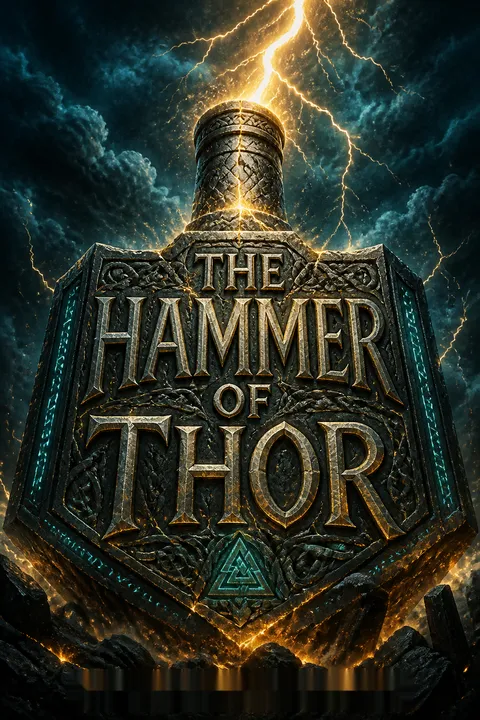


Plot Summary
Otis Dies Over Coffee
Samirah al-Abbas, Magnus's Valkyrie friend, summons him to a Boston cafe to meet a source, then leaves abruptly to collect a newly dead warrior. The informant arrives in a trench coat: Otis, one of Thor's goats, who has heard that the missing Mjolnir lies in a barrow in Provincetown. Thor has kept its loss secret for months, but giants are growing bold and preparing to invade Midgard.
Otis says the tomb belongs to a weapon-hoarding wight and warns that Magnus will need his dwarf and elf friends, Blitzen and Hearthstone. Before he can explain more, an unseen assailant drives an axe through his chest. Otis dissolves into mist, leaving Magnus with a location, a murdered informant, and a threat already moving through Boston.
The quest begins not with a summons from a god but with an exhausted teenager trying to do a favor for a friend. That scale matters: Magnus has only recently exchanged homelessness for Valhalla, and the cafe's ordinary spring sunlight still feels unfamiliar. Otis's casual account of being killed nightly makes divine violence sound routine, while the sudden murder of this informant restores its real cost. The missing hammer is at once a strategic weapon and the fragile secret holding off invasion. Its concealment has already begun to fail, so Magnus inherits an emergency before he understands who is shaping it.
The Wolf Mask Warns
Magnus pursues the killer across Boston rooftops, with his talking sword, Jack, fighting beside him. The masked attacker proves fast enough to match Jack and skilled enough to nearly kill Magnus with a thrown axe. A wolf's howl freezes Magnus: it recalls the night wolves killed his mother.
The assassin escapes in a burst of pigeons after warning Magnus away from Provincetown and suggesting his friends will pay if he continues. Back at the cafe, Sam identifies the weapon as giant-forged and explains that armies are gathering in Jotunheim, waiting for proof Thor is vulnerable.
She has kept Blitzen and Hearthstone in hiding after Hearthstone read a death omen, but the wight's barrow may require their skills. She also reveals the new warrior she brought to Valhalla is her brother.
The chase turns a practical investigation into a personal threat. The assassin's wolf mask and distant howl reach past Magnus's training and reopen the grief surrounding his mother's death, showing that trauma can interrupt action even when the danger is immediate. Sam, meanwhile, manages information as if withholding it were protection. Her secrecy has a caring motive, but it leaves Magnus excluded from decisions that affect him. The scene puts both habits under pressure: Magnus must learn that courage is not the absence of fear, and Sam must decide whether she can rely on her friends without controlling what they know.
Grimwolf Breaks Training
At Valhalla's battle, Magnus meets the unruly new recruit, Alex Fierro, who corrects the warriors about her pronouns and refuses to explain herself. An ancient lindworm called Grimwolf crashes into the training ground and hunts Alex. She climbs its neck and tightens a wire around its throat while Magnus draws the monster's attention.
Then Loki invades Magnus's mind through his uncle Randolph, burning his face and announcing a wedding tied to Samirah and Thor's hammer. The god's power begins to overwhelm Magnus, so Alex cuts his head off with her wire to break the connection. Magnus wakes later in Valhalla, alive again, carrying both Loki's warning and the memory of a stranger making a brutal choice to save him.
Alex's first encounter with Magnus is shaped by misrecognition: he sees a threatening, brilliant stranger before he understands how deliberately she names herself. The battle accelerates that lesson by making her competence undeniable. She does not comfort Magnus or ask permission before saving him; she makes a rapid, lethal decision because hesitation would let Loki consume him. Loki's intrusion also establishes that family can function as a weapon, with Randolph serving as the channel for pain. The scene makes intimacy unsettling: survival depends on trusting someone Magnus barely knows, while the person attacking him claims kinship.
The Wedding Invitation
At the welcome feast, the warriors watch Sam's recording of Alex's mortal death. Alex had thrown herself between three wolf-creatures and a homeless man, giving him a chance to fight while she died protecting him.
Valhalla honors her, though Alex remains furious about being dead and fears an eternal afterlife will trap her in one gender. Afterward, Magnus tells Sam about Loki's wedding announcement and the visions in which a giant named Thrym holds Mjolnir.
Sam admits Loki has delivered invitations to her grandparents and Amir, her betrothed, and intends to marry her to Thrym in exchange for the hammer. She insists she will not accept. Magnus agrees to retrieve Mjolnir before the ceremony, and Sam says Blitzen and Hearthstone will meet them at the Provincetown barrow.
The feast places two forms of recognition side by side. Alex's heroic action earns her a place among the dead, but the ceremony praises her through language that reduces her to a category and leaves her visibly alienated. Her fear of permanent gender confinement exposes a conflict specific to an afterlife that promises safety by making change impossible. Sam's wedding crisis echoes that threat in another register: Loki treats her future as a bargaining token. Both women are resisting other people defining their identities, though Sam's response begins in refusal while Alex's is rooted in constant self-authorship.
The Barrow's False Prize
Sam flies Magnus, Blitzen, and Hearthstone to a hidden entrance beneath the Pilgrim Monument in Provincetown. A fall into the sealed chamber breaks Hearthstone's ankle, which Magnus heals with power inherited from Frey.
Inside, they find twelve mummified guards and a sarcophagus encircled by a rune inscription meaning Blood River. Hearthstone opens it, releasing Prince Gellir, a centuries-old draugr who thanks them before explaining that his famous Skofnung Sword, not Thor's hammer, earned the tomb its name.
Gellir's sword cannot be drawn in daylight or near a woman, so he orders his dead bodyguards to attack instead. The group defeats the draugr, but the empty tomb proves Otis's lead was misleading. Their victory opens a portal, and Loki steps through with Randolph.
The tomb converts the promise of a simple retrieval into a lesson about how knowledge arrives contaminated. Otis's lead is not wholly false: it brings the group to a potent weapon, but not the one they sought. The distinction between an object and its history matters here. Skofnung carries a legacy of sacrificed warriors and binding rules, so retrieving it changes the danger rather than resolving it. The draugr's deliberative culture adds an absurd surface to a serious trap, showing how procedure can delay violence without preventing it. Hearthstone's rune work and Magnus's healing make the group effective, but their competence has also opened the door Loki needed.
Blitzen's Wound Won't Close
Loki paralyzes Sam and forces Randolph to draw Skofnung, a blade whose wounds cannot heal without its matching stone. Randolph lunges past Magnus and stabs Blitzen in the stomach. Magnus drives the sword away and tries to heal his friend, but the cut keeps reopening.
Loki demands the whetstone from Hearthstone's home in Alfheim, using Blitzen's failing life as leverage. With no way to stop the bleeding, Magnus calls on Frey and breaks sunlight through the barrow ceiling.
Blitzen turns to stone, preserving him rather than curing him. Loki leaves with Randolph, while Sam wakes and Hearthstone agrees to go after the stone despite his terror of returning home. Magnus now has to save Blitzen in the place that taught Hearthstone to fear his own family.
The injury transforms friendship into an ethical trap. Magnus's healing has usually allowed him to help without mastering others, but Skofnung makes his gift inadequate; he cannot simply will a wound closed. Turning Blitzen to stone is a desperate refusal to accept a prophecy as a death sentence, though it postpones rather than solves the crisis. Loki understands the group's attachments and weaponizes them with precision. Hearthstone's decision to return to Alfheim is therefore not a routine quest assignment. He agrees because love makes him act despite fear, while Magnus must accept that rescue can involve choices with irreversible costs.
Hearthstone Returns Home
In Alfheim, police officers detain Magnus and Hearthstone for trespassing and take them to Hearthstone's wealthy father's estate. Mr. Alderman recognizes his son but refuses to help at first, then reveals that Hearthstone's mother died after he left home and blames him for her death as well as his brother Andiron's.
Hearthstone's old room contains a fur rug made from the creature that killed Andiron, surrounded by coins he was ordered to earn until the rug was covered.
Mr. Alderman calls this a wergild, a blood debt, and offers the Skofnung Stone only if Hearthstone completes it and Magnus attends a public reception. The debt is built to keep Hearthstone in permanent failure, but a servant named Inge knows of a dwarf whose treasure might cover it.
The Alderman estate gives physical form to guilt as an institution. Hearthstone's room is not merely an unpleasant memory; its lists, coins, and preserved monster hide turn grief into a debt that can never be paid. His father presents cruelty as discipline and reputation management as family duty. That arrangement makes Hearthstone's silence psychologically legible: careful self-containment has been a survival skill in a home where every expression can be judged. Inge's quiet assistance offers a counter-model of care, one that acknowledges his pain without pretending she can erase it. Magnus's task is not to rescue Hearthstone from his history, but to stand beside him inside it.
Andvari's Gold Has Teeth
In the woods behind the estate, Hearthstone and Magnus find Andvari, a dwarf hiding as a fish beneath a waterfall. They seize his hoard, including a ring that Andvari says ruins anyone who keeps it. Hearthstone needs the gold to satisfy his father's demand, but even the treasure cannot cover every hair on the rug until Magnus gives up the ring.
Mr. Alderman accepts it, then eagerly puts it on. He gives Hearthstone the Skofnung Stone, and the friends restore Blitzen under a shower, pressing the whetstone to his wound until it closes. Mr. Alderman's ensuing party turns violent when the ring's greed drives him to sic water spirits on his guests. Hearthstone summons a hailstorm, and the group escapes through a rift into Midgard.
The ring makes wealth a psychological contagion rather than a simple reward. Magnus feels its pull almost immediately, while Mr. Alderman already has a life structured around status and resentment that the ring can intensify. Paying the wergild should free Hearthstone, yet the father refuses to accept an ending that does not preserve his power. Blitzen's restoration is a genuine reprieve, earned through teamwork and a risky return to Hearthstone's childhood home. The storm escape then turns private family damage outward: the guests become collateral in Alderman's hunger. The episode asks whether a debt can ever be settled when the creditor's real need is continued authority.
Heimdall Sees the Armies
On a Boston rooftop, Sam tries to help Amir understand her life as a Valkyrie. Magnus, Sam, and Alex lead him to the Citgo sign, which reveals itself as an anchor for the Bifrost, the bridge to Asgard.
Heimdall meets them there, distracted by his endless photographs, but finally looks across the Nine Worlds and sees giants massing for invasion. He confirms Thrym has the hammer buried deep underground and identifies Utgard-Loki's bowling palace as their best lead on the wolf-masked assassin.
Sam swears she will marry only Amir, while Amir chooses to believe her and accept the supernatural world he has seen. At the food court, he cooks for the group, then asks how he can support Sam. She leaves to return to her grandparents, while Magnus and Alex prepare to follow the clue.
Amir's discovery is not treated as a conversion or a sudden surrender of his beliefs. He sees the Bifrost and still interprets the Norse beings as powerful creatures rather than gods, preserving his religious framework while making room for Sam's reality. That distinction lets trust remain relational instead of requiring ideological sameness. Sam's vow to Amir also gives her a boundary against Loki's plan, though the danger is that her father's power can undermine bodily autonomy regardless of her stated choice. Heimdall's distracted vision suggests that vast perception is not the same as attention: he can see distant worlds, yet only acts when someone makes him look carefully.
A Bowling Bag Blocks Jotunheim
The next morning, Magnus and Alex search Randolph's mansion and find a wedding invitation hidden behind a photograph of Bridal Veil Falls. Since the invitation's deadline is approaching and the location changes, Magnus suspects the waterfall may be a future entrance to Thrym's fortress.
At a Public Garden rendezvous, the group sets out for Jotunheim, but Magnus, Alex, and Blitzen are thrown from Stanley the eight-legged horse after striking what looks like a tree branch.
It is the shoelace of Tiny, a giant who directs them toward Utgard Lanes and asks them to carry his enormous bowling bag. Sam and Hearthstone travel separately. Tiny leaves the bag behind, a mountain of leather that blocks the path and forces Blitzen to invent a way to shrink it.
Randolph's photograph introduces a fragile possibility: the uncle who has repeatedly harmed Magnus may still be leaving clues. Magnus cannot know whether this is remorse, manipulation, or both, so he acts on evidence without granting trust. That uncertainty continues in Jotunheim, where physical scale makes ordinary judgment unreliable. A branch becomes a shoelace; a bowling bag becomes a cliff. Blitzen's practical mind becomes essential because brute strength cannot solve a problem whose premise is an illusion. The group is divided at precisely the moment it needs coordination, making the journey's absurd obstacles feel less like comic detours than tests of how each friend contributes under pressure.
Blitzen Names the Bag
Blitzen turns Tiny's uncompleted bowling bag into a magical container by stitching it with thread made from Magnus's hair and Alex's blood, using Jack as his needle. While they wait, Alex tells Magnus the pottery studio gave her refuge when home was unsafe, and that Loki's serpent symbol represents change she claims for herself.
The group reaches Utgard Lanes with the bag and finds Sam and Hearthstone held at the giant king's table. Utgard-Loki shrinks the giants to a manageable size, grants the travelers guest status, and keeps up a cheerful performance for his followers.
In private, he says his subjects will kill them unless they win the tournament and earn his support. The team's passage into the palace depends on a craft solution, not a weapon.
The bag's enchantment turns Blitzen's aesthetic expertise into a survival technology. He completes an object by giving it a name and purpose, a small counterpoint to the giants' habit of distorting scale and rules for humiliation. Alex's account of pottery deepens that idea: clay can be reshaped, but only if its maker retains agency. Her use of Loki's symbol is not an allegiance; it is an effort to prevent a parent from monopolizing the meaning of change. Utgard-Loki's public friendliness and private threat repeat the book's concern with performance. Power often appears as hospitality, kinship, or tradition before revealing what it demands.
The Bowling Trick Breaks
The tournament begins with Sam exposing a supposed child opponent as the embodiment of Fear, which she defeats by striking first. Hearthstone beats a giant's skee-ball score with an enormous pinball run, and Blitzen transforms a filthy giant through expert tailoring.
Magnus and Alex discover their bowling lane sends balls toward New Hampshire, not nearby pins. Magnus uses Frey's light to reveal and erase the portal, then Alex changes into an elephant and clears the lanes with one throw.
Their victory earns a private meeting. Utgard-Loki explains the wedding bargain: Skofnung and its stone are the bride-price for Loki, while Mjolnir is meant as Sam's morning gift but would remain under the giants' control. Loki wants the sword to cut his bonds and escape.
The contests make perception, not strength, the decisive skill. Sam identifies terror hidden beneath a child's disguise; Magnus and Alex recognize that the bowling lane is a portal; Alex wins by becoming the very force the giants assumed they could measure and mock. Each victory reclaims control from a rigged framework. The revelation changes the moral shape of the quest: returning Thor's hammer was never the whole objective, and a successful bargain would deliver a weapon to Loki. Utgard-Loki is useful but not benevolent; he helps because he fears Loki's escape and wants to preserve his own authority. Knowledge advances the group, but it does not remove the need to act.
Alex Takes the Veil
The group returns to Thor with the truth, but the thunder god resists any plan that recalls his earlier humiliation by Thrym's family. Alex volunteers to pose as Sam's bride, allowing Sam to keep her promise to Amir. Thor agrees to use the ceremony to locate Mjolnir, while Magnus carries Skofnung and its stone. At Sif's palace, Alex receives a wedding gown and a golden wire weapon, and Sam dresses as her attendant.
Randolph's photograph proves accurate: the invitation directs them to Bridal Veil Falls, where the waterfall opens into the giants' moving tunnel. Thrynga searches the party for hidden Aesir, then closes the entrance behind them. The wedding party is now inside the fortress, beyond the point where escape is simple.
Alex's offer is not simply a disguise plot. It allows Sam to honor a promise made to Amir while placing Alex in danger because she believes she can resist Loki's control. Thor's embarrassment initially narrows his imagination, but the practical need for a different bride forces him to accept a strategy that depends on Alex's gender fluidity without treating it as deception about who she is. The golden weapon from Sif also carries symbolic weight: Alex receives a tool not derived from Loki, a material sign that her abilities need not belong to her parent. Once the waterfall closes, consent and agency become the central stakes of the ceremony.
Loki Breaks His Chains
At Thrym's underground bar, Alex impersonates Sam while Magnus and Sam stall the wedding. Thrynga produces Randolph, who demands Skofnung so he can trade it for his dead family. During the ceremony, Thrym summons Mjolnir for its blessing.
Alex attacks him, Sam strikes Thrynga, and Magnus fights the giants as Randolph cuts Loki's bonds with Skofnung. Hearthstone freezes Loki, but Randolph uses the whetstone to sharpen the sword and severs the final restraint.
Thor's allies break into the cavern; Vidar crushes Thrym, Thor destroys Thrynga, and the hammer returns to its owner. The chamber collapses, carrying Loki, Sigyn, and the dissolving Randolph into a chasm before the gods can recapture them. The team wins the weapon and loses its larger objective.
The climax makes success inseparable from failure. The heroes recover Mjolnir, but their attempt to protect the Nine Worlds gives Loki the exact blade and sharpening stone he needs to escape. Randolph's choice is tragic rather than merely treacherous: his longing to recover his family has been shaped into obedience, and he acts even as the sword destroys him. Alex and Sam resist Loki's commands in different ways, yet neither can prevent the release. The gods arrive in time to win the battle and too late to secure its purpose. The result refuses the comforting equation of courage with control: the group can act bravely and still cause the catastrophe it meant to prevent.
The Next Hunt Begins
Valhalla celebrates the returned hammer, but Magnus and his friends know Loki has escaped. Odin's ravens summon them to manager Helgi's office and assign Sam to lead the search for her father. The ravens reveal that Loki has gone to the Eastern Shores to finish building Naglfar, the ship made from the nails of the dead, and that the frozen route will open at midsummer.
Sam admits she intends to retire from Valkyrie work after Loki is captured, then meet Amir's future with him. At a cafe, she and Magnus compare what the ravens have revealed and agree that the journey must go by sea. Magnus contacts his cousin Annabeth, who offers to bring in her boyfriend Percy for advice about the dangerous waters ahead.
The return of Mjolnir restores a defensive weapon, not the old order. The feast's celebration becomes a study in collective denial: the warriors praise a victory while the actual threat has moved toward Ragnarok. Sam's next assignment presses against the life she wants with Amir, making duty a chosen burden rather than an unquestioned identity. Her intention to retire gives the pursuit a personal horizon, while Magnus's call to Annabeth reconnects him with family beyond the Norse world. The ending therefore closes the hammer crisis but not the emotional or political consequences. Its final movement is outward, toward a sea journey that will demand counsel, preparation, and a different kind of courage.
Analysis
The novel makes identity and power inseparable from who gets to define a person's choices. Loki treats parenthood as ownership: Sam's body can be halted, Alex's abilities can be claimed as inherited property, and Randolph's grief can be converted into obedience. Against this, the heroes practice different forms of self-determination. Sam anchors herself in faith, a promise to Amir, and a future she has chosen. Alex claims fluidity as a changing reality rather than a performance for other people. Hearthstone's runes turn language into action, while his family's rules show how easily responsibility can become abuse. Magnus's healing offers a quieter model: he tries to preserve others without commanding them, although his power cannot undo every wound.
The objects carry these conflicts. Mjolnir represents deterrence through force, and the missing hammer exposes how much security rests on a single weapon. Skofnung promises another kind of force, but its rules and cost make it a tool Loki can exploit. Andvari's ring shows desire hardening into compulsion, while Blitzen's enchanted bag illustrates craft as the ability to make a new possibility from incomplete materials. The heroes often prevail by noticing that an imposed contest is rigged and changing their approach, as Sam does against Fear and Magnus and Alex do on the bowling lane.
Yet the climactic failure prevents ingenuity from becoming a simple formula for victory. The group retrieves Thor's hammer and loses the larger struggle when Randolph frees Loki. Their courage matters, but it does not confer perfect control over consequences. The ending insists that repair is collective and unfinished: Sam accepts the next mission, Magnus seeks help from family beyond the Norse worlds, and the friends must prepare for a threat they helped unleash. The story's emotional achievement lies less in triumph than in choosing one another again after plans, identities, and loyalties have been tested.
Review Summary
The Hammer of Thor received mostly positive reviews, with praise for its humor, diverse characters, and fast-paced plot. Readers enjoyed the introduction of Alex Fierro, a gender-fluid character, and the continued development of Sam's Muslim faith. Some criticized the book for being too silly or repetitive of Riordan's formula. The ending, teasing a crossover with Percy Jackson, excited many fans. While some felt the plot was disjointed or predictable, most found it an entertaining and fun read in the Magnus Chase series.
People Also Read
Characters
Magnus Chase
Reluctant healer-heroMagnus is a sixteen-year-old einherji, an honored warrior who died bravely and now trains in Valhalla. Before his death he lived on Boston's streets, and that experience leaves him alert to people others ignore. He is the son of Frey, whose gifts make him a healer and connect him to life, even though he often feels more suited to running from danger than fighting it. Magnus's humor keeps fear at a manageable distance, but it can also disguise how deeply he feels responsible for friends' safety. His instincts favor compassion over triumph: he gives money to homeless strangers, heals wounded companions, and hesitates to abandon even a compromised relative.
Samirah al-Abbas
Valkyrie with a flight planSamirah is a Muslim teenager, a Valkyrie, and Magnus's closest ally in Odin's special missions. She balances school, tutoring, soul-reaping, and flight lessons because she wants a future as a professional pilot. Discipline gives her a way to keep several demanding worlds from swallowing one another, but secrecy can become her reflex when she believes others need protection. Her engagement to Amir represents a life she has chosen beyond combat and divine politics. Her relationship to Loki, her father, complicates that choice: she fears his influence while insisting that her faith and commitments remain her own.
Alex Fierro
Shape-shifting rule-breakerAlex is a gender-fluid, transgender einherji and a child of Loki. She moves between feminine and masculine identities and expects others to respect the pronouns she gives them. A fierce fighter with a garrote, she can also transform into animals, including a cheetah, a weasel, and a dog. Her colorful clothes and sharp manner keep people at a distance, but beneath them is someone who knows what exclusion costs. Pottery offers her a place to choose shape and change on her own terms. Alex distrusts easy reassurances, especially from family, and resists being made into a symbol or representative for anyone but herself.
Blitzen
Dwarf and master designerBlitzen, usually called Blitz, is a dwarf and one of Magnus's oldest friends. He cares about beauty, tailoring, and the history of crafted objects, treating design as a form of intelligence rather than decoration. His refined clothes and practical chain-mail details make him memorable, but his deeper loyalty is to Hearthstone and the small family they have built with Magnus. Blitz is resourceful under pressure, finding solutions through workmanship when strength or weapons will not suffice. He can be stubborn about taking risks himself, especially when he believes usefulness is better than safety.
Hearthstone
Silent rune-casterHearthstone is a deaf elf who communicates through American Sign Language and uses runes as a skilled form of magic. He is precise, observant, and often more decisive than his quiet manner suggests. His friendship with Magnus and Blitzen gives him a chosen family that contrasts with the wealthy, judgmental household where he grew up. Hearthstone's magic is powerful but physically draining, so every rune carries a cost. He is protective of the people he loves and can turn that care inward as guilt, particularly when he believes someone else's suffering might have been prevented.
Loki
Imprisoned god of mischiefLoki is a giant-born god of deception, magic, and shape-shifting, known to manipulate people through promises, disguises, and intimate knowledge of their vulnerabilities. He is Samirah and Alex's parent, a relationship that turns family ties into both emotional conflict and magical leverage. His charisma is real, but it serves control rather than mutual trust. Loki treats other people's futures as pieces in a private game, and he can make coercion sound like an offer of help. His long punishment by the Norse gods complicates the image of a powerful trickster with the visible suffering of a captive.
Randolph Chase
Grieving Chase uncleRandolph is Magnus's maternal uncle and a scholar of Norse history, archaeology, and the Chase family's ancestry. His estrangement from Magnus's mother has left him on the edge of the family, though his knowledge repeatedly intersects with the supernatural world. Randolph is intellectually driven and drawn to discoveries that promise meaning or recognition. He also carries the grief of losing his wife and daughters, a wound that makes promises of reunion especially powerful. His guarded manner can resemble coldness, but it sits beside a desperate wish to undo a loss that cannot be undone.
Amir Fadlan
Samirah's steadfast betrothedAmir is Samirah's fiancé and the son of the family that runs Fadlan's Falafel. He is thoughtful, generous, and grounded in the ordinary responsibilities of family business and their planned future. When Sam's supernatural life enters his understanding, he struggles to reconcile it with his faith and familiar view of the world. His willingness to listen does not erase that shock. Amir's steadiness gives Sam a relationship based on choice and honesty, not divine arrangements.
Thor
Hammerless thunder godThor is the thunder god whose hammer, Mjolnir, deters giant armies. He is physically formidable, loud, and often governed by appetite, television, and immediate frustration. His power is not matched by consistent foresight, so he can underestimate the consequences of a plan or overestimate what force will solve. Thor's history with the giants makes the wedding plot personally humiliating as well as strategically dangerous. Beneath his bluster is a warrior who knows how much depends on the hammer.
Utgard-Loki
Giant king and illusionistUtgard-Loki is a powerful sorcerer and king of the mountain giants, ruling from a bowling palace in Jotunheim. He uses illusion, spectacle, and rigged contests to test visitors, but his political position depends on keeping his followers' respect. Unlike the god Loki, he is not related to Samirah or Alex. He is willing to help Magnus's group when their aims overlap with his own concern about Loki's escape, yet he never stops calculating what assistance costs him.
Mr. Alderman
Hearthstone's controlling fatherMr. Alderman is Hearthstone's wealthy father and a collector of artifacts from the Nine Worlds. He values order, reputation, and measurable achievement, using rules and debts to keep his household under control. His treatment of Hearthstone turns grief into an obligation that can never be fully repaid. He is not emotionally simple: pride and sorrow exist beneath his harshness, but he uses them to justify punishment rather than repair. His estate's beauty conceals an environment built around judgment.
Andvari
Cursed hoard-keeperAndvari is an ancient dwarf who hides in the form of a fish beneath a waterfall in Alfheim. His hoard is vast, portable, and repeatedly stolen, while a magic ring helps it find its way back to him. He warns people about the misfortune attached to the ring, but his fear of losing his treasure makes him a slippery negotiator. His name means the careful one, an ironic title for a keeper who is forever being robbed.
Thrym
Earth-giant wedding kingThrym is an earth-giant king who has hidden Mjolnir deep underground and seeks a political marriage with Loki's family. He is vain, hungry for stature, and eager to avenge his family history with Thor. His confidence rests on the assumption that a marriage alliance will strengthen his claim among the giants. He is less perceptive than his sister, but his command over earth makes him dangerous.
Thrynga
Ambitious giant princessThrynga is Thrym's sister and a powerful giantess who doubts her brother's judgment. She is sharp, forceful, and unwilling to let politeness restrain her ambitions. Her concern about Loki's bargain is not evidence of kindness; she has her own vision of power and watches for opportunities to improve her position. Her shifting loyalties make her more difficult to predict than the ceremony's official groom.
Sif
Goddess of earth and rowanSif is Thor's wife and a goddess associated with the earth and rowan trees. She is proud of her beauty and status, and initially regards the young heroes as hired help. Her craftsmanship with magical gold hair becomes practically useful, though her vanity and generosity exist side by side. Sif is capable of revising an opinion when someone gives her reason to do so.
Heimdall
Distractible bridge guardianHeimdall guards the Bifrost and possesses extraordinary sight and hearing across the Nine Worlds. He is sociable, enthusiastic about taking photographs, and prone to focusing on his phone even when a crisis is developing. His abilities make him a valuable source of information once the group persuades him to pay attention. The contrast between his cosmic reach and everyday distraction gives him an unusual mixture of authority and comic unreliability.
Sigyn
Loki's silent companionSigyn is Loki's wife, stationed beside him in his punishment chamber with a bowl meant to catch the serpent's venom. She has endured a long, brutal vigil and no longer speaks. Her stillness offers little explanation of what she believes or chooses, leaving her presence both tragic and difficult to read.
Vidar
Silent god of vengeanceVidar is a mute god associated with vengeance. He communicates through sign language and wears an extraordinary shoe assembled from discarded footwear. His calm attention to the wounded contrasts with the chaos surrounding him, while his capacity for force is unmistakable.
Otis
Thor's anxious informant goatOtis is one of Thor's resurrecting goats and the source of the Provincetown lead. He is anxious, talkative, and prone to reflecting on his trauma, despite working for a god who kills and revives him as part of dinner. His odd mixture of fear and dutifulness makes him an unlikely but useful messenger.
Tiny
Giant with a giant bagTiny is a giant bowling enthusiast who is small only by the immense standards of Utgard-Loki's court. He commissions the group to carry his oversized bowling bag, bringing them to the palace. His attachment to his Elvis-themed bowling ball is unexpectedly tender.
Plot Devices
Thor's missing hammer
A weapon and a lureMjolnir is Thor's chief defense against the giants, so its disappearance makes a full invasion of Midgard more likely. The search appears to organize the quest: Otis supplies a lead, Sam mobilizes her friends, and the group follows increasingly dangerous clues. The hammer also functions as bait, drawing the heroes toward the Skofnung Sword and the wedding bargain. Its recovery matters, but it is not the true purpose of Loki's scheme.
Skofnung Sword and Stone
A blade with a priceSkofnung is an ancient sword bound to the spirits of twelve berserkers. It carries strict rules: it cannot be drawn in daylight or near a woman, and once drawn it cannot be sheathed until it has tasted blood. Its whetstone both sharpens it and closes its wounds. The pair is sought as a bride-price, but the blade's special edge is also useful for cutting Loki's magical bonds. Its rules turn an artifact into a problem of timing, gender, lineage, and consequence.
Andvari's cursed ring
Greed made portableThe ring belongs to Andvari and draws its possessors toward wealth while attaching misery to the treasure it accompanies. It enters the Alfheim plot as a possible final piece of Hearthstone's wergild, then becomes the object Mr. Alderman chooses over forgiveness. The ring's curse amplifies existing desires instead of creating them from nothing. Its presence turns a family debt into a new danger and leaves the consequences of the bargain unresolved.
Alex's clay-cutter
Change made into a weaponAlex's thin wire begins as a tool for cutting clay, then becomes an enchanted garrote capable of lengthening, binding, and slicing through hard material. The weapon suits her history with pottery and her insistence that change belongs to her, not to Loki. It saves Magnus from Loki's mental assault, helps Alex fight monsters, and gives her a means of acting when others underestimate her size. Sif later makes a golden version that is not derived from Loki's magic.
The Bifrost and the ravens
Routes and revelationsThe Bifrost provides a passage between Midgard and Asgard, while its appearance above Boston allows Amir to see that Sam's supernatural life is real. Heimdall's view across the worlds reveals the gathering giants and identifies the lead to Utgard-Loki. Odin's ravens later deliver memories and thoughts that point Sam toward Naglfar and the Eastern Shores. These channels broaden the story beyond the immediate hammer hunt, but access to information does not guarantee that the gods will act wisely or in time.
FAQ
Synopsis & Basic Details
What is The Hammer of Thor about?
- A perilous quest unfolds: Magnus Chase and his friends embark on a dangerous journey to retrieve Thor's missing hammer, Mjolnir, before giants invade Midgard.
- Deception and betrayal: They face manipulation from Loki, who plans to marry his daughter, Samirah, to a giant in exchange for the hammer, forcing the group to navigate complex relationships and divine politics.
- Personal growth and sacrifice: The quest tests the characters' loyalty and courage, as they confront their pasts and make difficult choices to protect the Nine Worlds.
Why should I read The Hammer of Thor?
- Fast-paced adventure: The book is filled with action, humor, and mythological elements, making it an engaging read for fans of fantasy and adventure.
- Complex characters: The story explores the inner struggles and motivations of its diverse cast, offering a deeper understanding of their relationships and personal growth.
- Norse mythology reimagined: Rick Riordan seamlessly blends Norse mythology with modern settings, creating a unique and captivating world that appeals to both young and adult readers.
What is the background of The Hammer of Thor?
- Norse mythology: The story draws heavily from Norse myths, featuring gods, giants, elves, dwarves, and other creatures from the ancient sagas.
- Modern setting: The book is set in contemporary Boston and other locations in the United States, blending the ancient world with modern culture.
- Continuation of Magnus Chase series: It builds upon the events of "The Sword of Summer," further exploring the characters' relationships and the ongoing conflict between gods and giants.
What are the most memorable quotes in The Hammer of Thor?
- "If you take a Valkyrie out for coffee, you'll get stuck with the check and a dead body.": This opening line sets the tone for the book's blend of humor and danger, highlighting the chaotic nature of Magnus's life.
- "Getting killed is part of Otis's job description.": This darkly humorous line reflects the absurd and often dangerous situations the characters face, emphasizing the cyclical nature of life and death in Norse mythology.
- "Blood is thicker than water. We have a solid connection!": This quote, spoken by Loki, reveals the manipulative nature of the god and the complex relationship between family and destiny, highlighting the theme of betrayal.
What writing style, narrative choices, and literary techniques does Rick Riordan use?
- First-person perspective: The story is told from Magnus Chase's point of view, providing a humorous and relatable voice that engages the reader.
- Fast-paced dialogue: Riordan uses witty and fast-paced dialogue to create a sense of urgency and keep the story moving.
- Modern slang and humor: The author incorporates modern slang and humor to make the ancient myths accessible and entertaining for contemporary readers.
Hidden Details & Subtle Connections
What are some minor details that add significant meaning?
- The mark on Randolph's cheek: The appearance of Loki's symbol on Randolph's cheek foreshadows his manipulation and connection to the god of mischief, hinting at a deeper plot.
- The initials A.F. on pottery: The initials A.F. and the serpentine stamp on the pottery in Alex's room reveal her connection to Loki and foreshadow her role in the events to come.
- The description of the grove of Glasir: The grove's golden foliage and the Valkyries collecting it hint at the value of the einherjar and the importance of their service to Odin.
What are some subtle foreshadowing and callbacks?
- Otis's warning: Otis's warning about being careful and the mention of being stalked foreshadow his death and the dangers that Magnus and his friends will face.
- The wolf howl: The recurring wolf howl from the night of Magnus's mother's death foreshadows the appearance of Fenris's children and the danger they pose.
- The mention of Mimir's safe houses: The mention of Mimir's safe houses foreshadows the reappearance of Hearthstone and Blitzen, who have been hiding there.
What are some unexpected character connections?
- Alex and Loki: Alex's connection to Loki as her parent is a major plot point, but the fact that she is gender-fluid and trans adds a layer of complexity to her character and her relationship with her father.
- Randolph and Loki: The connection between Randolph and Loki, revealed through the mark on Randolph's cheek and the shared dream, highlights the manipulative nature of Loki and the vulnerability of mortals.
- Hearthstone and Mr. Alderman: The strained relationship between Hearthstone and his father, Mr. Alderman, reveals a tragic past and the burden of family expectations.
Who are the most significant supporting characters?
- Otis: Though he dies early, Otis's information about the missing hammer sets the plot in motion and highlights the danger the characters face.
- Vidar: The silent god of vengeance, who appears at the end of the book, hints at the larger conflict to come and the need for justice.
- Inge: The hulder servant in Alfheim, who helps Hearthstone and Magnus, demonstrates the importance of compassion and loyalty, even in the face of oppression.
Psychological, Emotional, & Relational Analysis
What are some unspoken motivations of the characters?
- Samirah's fear of Loki: Samirah's reluctance to talk about Loki and her attempts to control her shape-shifting abilities reveal her fear of becoming like her father and losing her own identity.
- Hearthstone's guilt: Hearthstone's guilt over his brother's death and his desire to protect Blitzen drive his actions and his willingness to face his past.
- Randolph's desperation: Randolph's desperation to see his family again makes him vulnerable to Loki's manipulation, highlighting the lengths people will go to for love and loss.
What psychological complexities do the characters exhibit?
- Magnus's survivor's guilt: Magnus struggles with survivor's guilt, feeling responsible for the deaths of his comrades and the suffering of the homeless.
- Alex's gender fluidity: Alex's gender fluidity and her struggle to define her identity add a layer of complexity to her character, challenging traditional notions of gender and self.
- Thor's insecurity: Thor's insecurity about his hammer and his fear of being seen as weak drive his actions and his need to prove himself.
What are the major emotional turning points?
- Otis's death: Otis's death at the beginning of the book serves as a catalyst for the quest and highlights the dangers the characters face.
- Blitzen's petrification: Blitzen's petrification and the threat of his permanent loss force Magnus and Hearthstone to confront their fears and make difficult choices.
- Loki's escape: Loki's escape from his chains and the revelation of his true plan create a sense of urgency and despair, forcing the characters to confront their limitations.
How do relationship dynamics evolve?
- Magnus and Samirah: Their friendship deepens as they face challenges together, learning to trust and rely on each other despite their differences.
- Hearthstone and Blitzen: Their bond is tested by the prophecy of Blitzen's death, but their loyalty and love for each other remain strong.
- Alex and Samirah: Their relationship evolves from suspicion to a grudging respect, as they learn to understand each other's strengths and weaknesses.
Interpretation & Debate
Which parts of the story remain ambiguous or open-ended?
- Loki's true motives: Loki's true motives for wanting the Skofnung Sword and his ultimate plan for Ragnarok remain unclear, leaving the reader to speculate about his intentions.
- The nature of the Skofnung Stone: The exact nature of the Skofnung Stone and its connection to the sword are not fully explained, leaving room for interpretation and future exploration.
- The future of the Nine Worlds: The ending leaves the future of the Nine Worlds uncertain, with the threat of Ragnarok still looming and the characters facing an uncertain path ahead.
What are some debatable, controversial scenes or moments in The Hammer of Thor?
- Alex's gender identity: Alex's gender fluidity and the characters' reactions to it may spark debate about representation and acceptance.
- Samirah's relationship with Loki: Samirah's complex relationship with her father and her struggle to reconcile her identity as a Valkyrie with her heritage may be seen as controversial.
- The use of violence: The book's use of violence, particularly in the battle scenes, may be seen as excessive or gratuitous by some readers.
The Hammer of Thor Ending Explained: How It Ends & What It Means
- Loki's escape: The ending sees Loki freed from his chains, setting the stage for future conflicts and highlighting the ongoing struggle between good and evil.
- The Skofnung Sword and Stone: The Skofnung Sword and Stone are now in Loki's possession, giving him the power to potentially break free from his imprisonment and wreak havoc on the Nine Worlds.
- The new quest: The ending sets up a new quest for Magnus and his friends, as they must now find a way to stop Loki and prevent Ragnarok, leaving the reader with a sense of anticipation and uncertainty.
Magnus Chase and the Gods of Asgard Series Series
About the Author
Other books by Rick Riordan


Download PDF
Download EPUB
.epub digital book format is ideal for reading ebooks on phones, tablets, and e-readers.








