

Plot Summary
Flyers in the Winter Park
Sixteen-year-old Magnus Chase wakes beneath a Boston bridge, where he has slept rough since his mother died two years earlier. His friend Blitz warns him that strangers are circulating flyers with Magnus's name and face. From hiding, Magnus recognizes his uncle Frederick and cousin Annabeth, whom he has not seen since childhood.
He learns that they are searching because his other uncle, Randolph, has finally told them Magnus is missing. The news collides with his mother's last instruction: never seek Randolph's help. Still, Magnus wants to know why his family has come looking now. He slips away from Frederick and Annabeth and heads for Randolph's Back Bay mansion, choosing answers over the safety of remaining invisible.
The opening makes homelessness a practical condition, not a symbol: Magnus survives by staying unnoticed, rationing possessions, and distrusting offers of help. His mother's warning gives that caution emotional authority, while Annabeth's distress makes the family search difficult to dismiss. The inciting choice is therefore not simple curiosity. Magnus risks returning to a family he associates with danger because isolation has left him with no reliable way to understand his past.
The Sword Beneath Boston
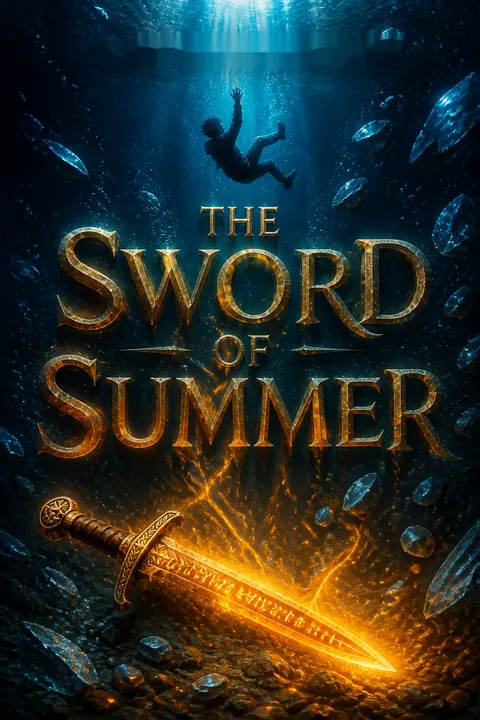
Inside Randolph's mansion, Magnus finds maps, runestones, and evidence that his uncle has spent years tracing Norse settlements in Boston. Randolph claims Magnus has turned sixteen on the very day his enemies can kill him, and says the boy's father was a Norse god. He drives Magnus to the Longfellow Bridge, where they locate an ancient sword in the Charles River.
Magnus draws it from the water just as Surt, a fire giant, arrives demanding the weapon. Magnus's friends Blitz and Hearthstone rush in with a traffic sign and toy arrows, buying time for civilians to flee. The sword awakens and wounds Surt, but Surt hurls molten asphalt into Magnus's body. Magnus tackles him over the railing, and both plunge into the river.
Randolph's history lectures become credible only when the supernatural threat arrives in public, turning an eccentric scholar's theory into immediate danger. Magnus's first heroic act is not a calculated quest: he protects strangers and friends despite having no training and little reason to trust Randolph. The sword's awakening links inherited identity to action, but its power does not spare Magnus. His death makes the story's central question concrete: what kind of courage can matter when survival is no longer the reward?
A Suite for the Dead
A Valkyrie carries Magnus through a gray void, and he wakes uninjured in the courtyard of Hotel Valhalla, a vast afterlife for warriors chosen by Odin. The doorman, Hunding, and manager Helgi explain that the dead residents train for Ragnarok and return after being killed inside the hotel.
Magnus receives a private suite stocked with comforts from his old life, including a photograph of himself with his mother. The keepsake offers relief, then sharpens his grief. His Valkyrie, Samirah al-Abbas, arrives to escort him to dinner. When Magnus asks whether his mother is in Valhalla, Sam tells him she is not among the chosen. Magnus must accept that he is dead without knowing where Natalie went.
Valhalla's lavish room answers a need Magnus has barely allowed himself to name: a place where he can sleep without guarding his belongings. Yet its comforts do not repair the loss that shaped his life. The photograph makes memory vivid rather than soothing, and Sam's answer prevents the afterlife from becoming a reunion fantasy. The book establishes a useful tension here: institutional belonging can give Magnus safety, but it cannot automatically provide the personal meaning he is searching for.
The Norns Name the Wolf
At the feast, Captain Gunilla presents footage of Magnus's death that makes his fight with Surt look clumsy and accidental. Sam argues that he saved civilians, but the thanes question whether his death qualifies him for Valhalla. Before they can settle the dispute, three Norns appear and foretell that Magnus is wrongly chosen and wrongly slain, then connect the Sword of Summer to a beast that will be unbound in nine days.
Magnus learns that he is a son of Frey. Sam urges the thanes to launch a quest for the sword, but they focus instead on her role in choosing him. They strip her of Valkyrie status and send her back to the human world, leaving Magnus with an urgent prophecy and no guide.
The ceremony turns a question of personal worth into a public judgment shaped by surveillance and procedure. Gunilla's edited footage makes institutional vision look objective while concealing the context Sam knows. The Norns disrupt that tidy verdict, but their prophecy supplies urgency rather than clarity. Sam's punishment exposes the cost of acting on moral judgment inside a hierarchy that values compliance. Magnus is not simply rejected; he is made responsible for a future danger before he understands his own powers.
The Hill of Newcomers
Magnus meets his floor mates: T.J., Mallory, Halfborn Gunderson, and X, a half-troll, who invite him to breakfast rather than leave him alone with his fears. In Valhalla's daily battle, the warriors kill one another for practice and return by dinner. Magnus struggles to strike back, but when a mob corners him, an unexpected burst of magic disarms them all.
He also senses that he can heal wounds. After a battlefield death, he dreams of Loki, who warns him against trusting appearances and hints that the sword has its own history. Gunilla later tours Magnus through Valhalla and shows him the quiet, underprepared city of Asgard. The gods' absence makes the coming Ragnarok feel less like distant training and more like a neglected emergency.
Magnus's first combat lesson is less about technique than about refusing to treat other people as disposable, even in a culture where death is routine. His reluctance frustrates the warriors but also distinguishes his moral instincts from Valhalla's game-like violence. The sudden magic suggests that his inheritance is broader than a weapon. Meanwhile, the empty streets of Asgard complicate the hotel's confidence: the army is preparing for a final battle without knowing where its leaders are.
The Squirrel at the Door
Blitz and Hearthstone drop through the trees of Magnus's suite and admit they have watched over him for two years on orders from a secret employer. Blitz is a dwarf, while Hearthstone is an elf and a skilled rune student. They came to protect Magnus, but his death has forced them to change plans. Before they can explain more, the giant squirrel Ratatosk attacks the suite.
Magnus's hallmates help hold the creature back and guide the three fugitives to a recycling chute that empties into Fenway Park. On the way, T.J. and the others risk punishment, while Halfborn charges toward the wolves chasing them. The escape makes clear that Magnus's new friendships are not merely a Valhalla convenience.
The revelation that his two closest street companions are nonhuman changes the facts of Magnus's past without invalidating the care he received. Their disguise was real, but so was their companionship. The hallmates' intervention extends this new trust beyond the street and into Valhalla. Ratatosk makes the escape chaotic rather than triumphant, emphasizing that friendship here means accepting danger on one another's behalf, not merely sharing a room or a meal.
A Funeral for Magnus
Blitz and Hearth explain that Magnus's old body is being prepared for burial, so Magnus and Hearth enter a funeral home to search the coffin for the missing sword. Instead, Magnus finds himself embalmed in a blue suit he would have hated. Annabeth appears, having suspected that his reported death did not explain everything, and embraces him before demanding answers.
Magnus gives her only enough information to keep her safe, then asks her not to reveal that she saw him. After she leaves, Samirah attacks Blitz and Hearth while searching the same site for the sword. Magnus stops the fight and persuades Sam to hear them out. Their uneasy alliance leads them to Mimir, the severed head who has been directing Blitz and Hearth.
The funeral home forces Magnus to confront the split between his living body and the person who continues beyond it. His mother's wish for a natural burial makes the display coffin feel like a second loss, not a neutral detail. Annabeth offers a route back to family, but Magnus withholds the truth out of protective fear. His choice to trust Sam after a violent first encounter begins a different pattern: he will need cooperation from people whose motives he cannot fully verify.
Mimir's Dangerous Assignment
Mimir tells Magnus that Surt wants the Sword of Summer to cut Fenris Wolf free and hasten Ragnarok. Magnus can recover the weapon because he is the only living descendant of Frey able to summon it, but Mimir warns that the island prison will surface only at the full moon. He asks Magnus and Sam to accept binding service in exchange for the location of the sword.
They refuse, unwilling to trade their freedom for information, and must search for answers themselves. Blitz explains that his own family has suffered at Fenris's hands, deepening his commitment to the mission. The group follows a giant eagle's directions to the sea, where a dangerous bargain may reveal what Ran has taken from the river.
Mimir makes knowledge costly in a way that echoes the story's recurring bargains: information can shorten the route while transferring control to someone else. Magnus and Sam refuse, not because they are self-sufficient, but because they recognize that a mission against domination cannot begin by surrendering themselves. Blitz's family grief gives the quest a personal stake beyond the prophecy. The search for the sword now has a defined purpose, but the characters still lack a map.
Ran's Net and the Apple
The eagle forces Magnus to swear that he will bring back an apple of immortality, then reveals that the river carried the sword to Ran, goddess of the sea. Following the eagle's directions, Magnus and Sam sail with a frost giant and use a massive bull's head as bait. Their catch is Jormungand, the World Serpent, whose surfacing draws Ran to the boat.
Magnus releases the serpent only after securing a promise to bargain. Ran demands his soul for the sword, but Magnus persuades her that Surt's attack would destroy her collection of lost objects. She returns the Sword of Summer and an apple. Back in Boston, the eagle reveals himself as Utgard-Loki, a giant king who warns that Surt will soon pursue Magnus again.
Magnus wins by reading Ran's attachment to salvaged objects rather than trying to overpower a goddess. His street experience, often treated as a history of deprivation, becomes practical intelligence: he understands how a collection can function as a chosen life. The bargain also shows the danger of cleverness. The apple fulfills a promise but strengthens a powerful giant, while the recovered sword attracts the attention of Surt and other forces.
The Ducklings Open Worlds
At the Public Garden's bronze ducklings, Magnus opens a passage onto Yggdrasil, the World Tree connecting the Nine Worlds. Ratatosk attacks with a bark that turns private doubts into crippling insults. Blitz pulls Magnus away while Sam and Hearth hide under Sam's camouflage cloak. The branches carry Magnus and Blitz into Folkvanger, where Freya explains that the Wolf's binding may fail even if Surt never gets the sword.
She sends them to Nidavellir for a replacement rope and asks Blitz to commission earrings from the dwarf who can make it. Freya's request exposes Blitz's painful family history, but she gives him a pouch of her golden tears to pay the smith. The detour turns a simple recovery mission into preparation for a second failure.
Yggdrasil makes travel feel like exposure to a living structure, while Ratatosk weaponizes the characters' own shame. Magnus's painful thoughts about his mother and Blitz's insecurities are not abstract weaknesses; the squirrel uses them to interrupt action. Folkvanger then offers a contrast to Valhalla's martial order, yet neither afterlife is free of obligation. Freya's practical warning changes the quest's goal from retrieving a weapon to preparing for the possibility that the old restraints are already failing.
Blitzen Forges His Future
In Nidavellir, Blitz approaches Eitri Junior, whose father was the only smith capable of replacing Gleipnir, the rope that restrains Fenris. Junior refuses to help unless Blitz wins a traditional crafting contest, where the loser forfeits his head.
Blitz admits he fears his skills are worthless because he wants to design clothes, not weapons. Magnus recognizes that his friend's real craft is fashion and urges him to make clothing that also protects warriors. Blitz creates an expanding metal duck, a bulletproof tie, and a chain-mail vest.
Sam, disguised as a horsefly, disrupts Junior's work, while Magnus protects Blitz from sabotage. The judges award Blitz the win. Junior hands over Andskoti, the replacement rope, and Freya's cat-shaped earrings.
Blitz's contest is a test of whether a skill counts when a community has already decided it is unserious. His designs succeed because they refuse the false choice between beauty and utility. Magnus helps by identifying the value in Blitz's own ambition rather than urging him to imitate a conventional smith. Sam's sabotage complicates the clean victory, but Junior's failed work and the judges' ruling still expose the gap between his reputation and his actual performance.
Thor's Missing Hammer
After fleeing Junior's angry followers, the group falls into Jotunheim and finds Thor clinging to a riverbank while a giantess forces a waterfall over him. Magnus throws Jack, the talking sword, into her nostril, and her collapse saves Thor. The god thanks them, then reveals that Mjolnir is missing, though he refuses to announce the loss.
He sends Magnus, Sam, Blitz, and Hearth to Geirrod's fortress to investigate and promises the location of Fenris's island in return. They reach the fortress, rescue Gunilla from a birdcage, and find an iron staff that Thor accepts as a temporary weapon. Thor's goats carry him away, while he sends the exhausted questers back toward their next decision.
Thor's rescue turns Magnus's growing relationship with Jack into an effective but costly tool. The sword can act independently, yet its power depends on Magnus's willingness to trust and release it. Thor's missing hammer adds a second crisis to a world already threatened by Ragnarok, and his refusal to speak plainly makes the heroes work inside an absurd secrecy constraint. The episode also complicates divine authority: even a powerful god is disorganized, distracted, and dependent on mortals.
Hel's Offer at Bunker Hill
Thor's transport sends Magnus to Bunker Hill, where Hel offers to reunite him with his mother if he abandons the sword and leaves events to unfold. Magnus recognizes that Hel would bind Natalie in the underworld rather than restore the life she had, and refuses. Sam appears at her old middle school and explains that Odin chose her to bring Magnus to Valhalla.
She also recounts how she first became a Valkyrie after luring a frost giant away from students. The friends reunite with Blitz and Hearth, then set out for Long Wharf. Sam admits that she wants both a future with Amir, the young man she loves, and the freedom to fly. The group books passage with two treacherous dwarves.
Hel's offer targets Magnus at his most vulnerable point, turning grief into leverage. His refusal does not erase his longing; it distinguishes remembrance from possession and honors what he believes his mother would choose. Sam's account of her first rescue mirrors Magnus's own unplanned courage, while her divided hopes resist a simple choice between duty and private life. Their alliance is no longer merely tactical. Each has seen the other make a costly decision without expecting a reward.
Fenris Waits on Lyngvi
The dwarven boat crew abandons the travelers on Lyngvi, the Isle of Heather, just as the full moon reveals the prison. Fenris Wolf is far smaller than the legends suggest, but his voice exploits the fears of everyone who approaches.
He reveals that he arranged for Magnus's mother to be killed so hardship would make Magnus powerful enough to find the sword. He also claims to have influenced Odin's choice of Sam as a Valkyrie. Sam, Blitz, and Magnus restrain one another from charging the Wolf, while Hearth's inability to hear him leaves him clear-headed.
Before they can act, Gunilla arrives with Magnus's former hallmates, claiming the group must be arrested. Fire giants appear behind her, led by Surt, and the crisis becomes a battle on two fronts.
Fenris's revelation rewrites Magnus's grief without making his mother's love less real. The horror lies in the Wolf's instrumental view of suffering: he treats a child's hardship as a method for producing a useful weapon. Hearth's deafness, previously a source of exclusion, becomes a protection against manipulation, giving him the clearest perception at the decisive moment. Gunilla's arrival shows how quickly institutional suspicion can aid an enemy, even when its members believe they are defending order.
Summer Binds the Wolf
Hearth uses the rune of shielding to extend the heather prison, while Sam and the einherjar hold off Surt's fire giants. Fenris tricks Jack into cutting part of his old binding, freeing his front paws. When Blitz is badly wounded, Hearth spends his strength to protect him with the rune of Tyr.
Magnus realizes he cannot kill the Wolf, so he releases Jack and uses his power as a son of Frey to flood the island with healing summer light. Jack threads Andskoti around Fenris and binds him again. Magnus then opens a rift that sucks Surt and the surviving fire giants back to Muspellheim. Gunilla and two Valkyries die in the battle. Magnus heals the dying Halfborn, exhausting himself as the island sinks beneath the sea.
The climax resolves through a change in the definition of strength. Magnus cannot win by striking harder, because Fenris is destined to survive and Jack's instincts are unreliable. He succeeds by recognizing his own life-giving power and by letting the sword act freely. The three friends contribute distinct capacities: Hearth protects, Blitz crafts, and Sam fights. Their victory is real but not clean; the deaths of the Valkyries preserve the cost of resisting a catastrophe rather than converting sacrifice into spectacle.
A Home Among Warriors
After Magnus meets his father Frey in a vision and learns that Natalie left a jar of ashes for him, the survivors return to Valhalla for judgment. X reveals himself as Odin, who claims he ordered Sam to choose Magnus and declares the quest's success worthy of reward. He frees Blitz and Hearth from Mimir's service, offers Sam a demanding new role, and allows Magnus to leave Valhalla or join Freya's afterlife.
Magnus stays with his friends. At the Valkyries' funeral, he takes his mother's ashes to the Blue Hills and scatters them above Houghton's Pond. Annabeth accompanies him, and they agree to rebuild their cousinly bond through honesty. Magnus promises to explain his strange life, but lets her tell her own story first.
The resolution answers the opening's homelessness with a chosen community rather than a return to an earlier life. Magnus has the option to leave, but belonging now comes from reciprocal loyalty, not from a house or bloodline alone. The funeral gives grief a concrete ritual that the underworld's offer denied him. His renewed bond with Annabeth also keeps the human world open, suggesting that accepting a mythic identity need not require abandoning ordinary relationships.
Epilogue
Randolph returns to his mansion after Magnus's funeral, grieving not for the boy but for the family he believes he has lost. Loki appears in a priest's clothes and reveals that he led the funeral service.
He blames Randolph for failing to secure the sword, then burns a hand-shaped scar into his face while keeping him alive. Loki still wants Randolph's help and shows him a silver hammer pendant from the collection. The sword was only one part of his design, he warns, and leaves Randolph trapped in a larger scheme.
The epilogue denies the comfort of a fully closed victory. Magnus has stopped Surt from using the sword to free Fenris, but Loki immediately reveals that the crisis has other triggers. Randolph's grief is also exposed as possessive and compromised: he wants his family restored, yet continues serving the force that exploits that desire. The pendant turns an ordinary object in his collection into a fresh threat, suggesting that knowledge without moral independence can make a person useful to danger rather than capable of resisting it.
Analysis
The novel makes belonging an action rather than an inheritance. Magnus receives a divine parentage and a place in Valhalla, but neither resolves his loneliness by itself. He becomes less isolated through specific exchanges of risk: Sam chooses him despite the cost to her standing, Blitz and Hearth protect him before he understands who they are, and his hallmates help him leave the hotel. The relationships matter because they make cooperation possible without erasing disagreement or individual boundaries.
The book also questions the heroic ideal built around violence. Valhalla's residents treat repeated death as training, while Magnus's reluctance to kill initially appears to mark him as weak. The climax overturns that judgment. He defeats Fenris not by overpowering an unkillable opponent, but by recognizing the healing force associated with Frey and by trusting Jack to bind rather than strike. Craft, healing, restraint, and tactical judgment become forms of heroism equal to combat.
Grief is the story's most persistent source of leverage. Hel offers Magnus his mother as a possession, Fenris turns hardship into a deliberate weapon, and Randolph lets his longing make him vulnerable to Loki. Magnus's refusal of Hel is not a rejection of grief; he chooses to remember Natalie without trapping her. Scattering her ashes in the Blue Hills gives that choice a physical form. The story's final emphasis is not that fate can be escaped altogether, but that people can choose what their losses will make them do.
Review Summary
The Sword of Summer receives mostly positive reviews, praised for its humor, diverse characters, and engaging Norse mythology. Many readers enjoy Magnus Chase's sarcastic narration and the book's fast-paced adventure. Some criticize its similarity to Riordan's previous works, particularly Percy Jackson. The inclusion of Muslim character Samirah is widely appreciated. While some find the jokes repetitive, others appreciate the educational aspects of Norse mythology. Overall, fans of Riordan's style will likely enjoy this new series, though some readers feel it lacks originality.
People Also Read
Characters
Magnus Chase
Homeless hero in trainingA sixteen-year-old Boston boy whose life on the streets has made him observant, resourceful, and wary of anyone offering help. His humor deflects grief, especially the unresolved loss of his mother, while his instinct to protect people often outruns his fear. Magnus is not a natural soldier; he questions commands, resists easy bargains, and learns to use his inherited abilities in ways that suit his temperament. His story is driven by a need to understand where he belongs without surrendering his independence. Family history, friendship, and the meaning of courage all press on him at once.
Samirah al-Abbas
Valkyrie with two livesA disciplined teenager balancing school, family expectations, faith, and supernatural duties. Sam is decisive in danger and guarded in private; she wants the freedom to fly without losing the ordinary future she hopes to build. Her humor can turn sharp when she feels judged, but she takes responsibility for the people she chooses to protect. She is a skilled fighter and a thoughtful observer of the rules governing the Nine Worlds. Her connection to Magnus begins under pressure, and her choices are shaped by loyalty, ambition, and the fear that others will define her by her family.
Blitzen
Dwarven style-makerA dwarf with a meticulous eye for clothing, materials, and presentation. Blitzen cares about craft as a form of self-expression, even when others dismiss fashion as frivolous beside weapons and armor. His loyalty to Magnus grew through two years of quiet companionship on the streets, and he remains fiercely protective despite his own insecurities. He is witty, careful about appearances, and more capable than he initially believes. Family history weighs on him, particularly when questions of reputation and craftsmanship arise. His presence gives the quest practical skill and a gentler model of strength.
Hearthstone
Deaf elf rune scholarA quiet elf who communicates through sign language and reads lips, Hearthstone often notices what louder companions overlook. He studies runes with unusual dedication, though magic demands a cost and his upbringing has left him guarded about displaying his abilities. His friendship with Blitzen is built on long trust, shared hardship, and an easy fluency that Magnus must learn. Hearth is cautious rather than timid, and his silence should not be mistaken for passivity. His attention to symbols and consequences makes him an essential counterweight to Magnus's improvisation.
Annabeth Chase
Cousin with a sharp mindMagnus's cousin, remembered from childhood as confident, inventive, and unwilling to accept explanations that do not add up. She joins her father in searching for Magnus and approaches danger with practical determination. Annabeth values honesty and family connection, but she also understands that people close to her sometimes need to undertake difficult tasks on their own. Her intelligence is active rather than ornamental: she observes, questions, and adapts. She represents a possible bridge between Magnus's buried family history and the life he is building.
Randolph Chase
Obsessive Norse historianMagnus's uncle, a scholar whose lifelong study of Norse exploration has consumed his reputation and personal relationships. Randolph is intense, secretive, and convinced that historical evidence can unlock a family mystery. His concern for Magnus is entangled with old guilt and an ambition he struggles to separate from care. He speaks in long explanations when frightened, using scholarship to impose order on events that exceed it. His mansion's artifacts embody a past he has preserved more carefully than the people around him.
Loki
Bound master of persuasionA shape-shifting trickster imprisoned by the gods, Loki reaches others through dreams, bargains, and carefully chosen truths. His charm is not merely decoration; it lets him make selfish proposals sound like reasonable alternatives. He is intelligent enough to identify the grief and resentment people hide from themselves, then use those feelings to redirect them. His relationship with his children is complicated, and his account of divine punishment reveals a grievance that is real without making his choices trustworthy. Loki's power lies as much in framing a decision as in changing appearances.
Surt
Fire giant warlordThe lord of Muspellheim embodies destructive heat and direct intimidation. He pursues the Sword of Summer because it can serve a larger assault on the boundaries holding the worlds together. Surt is physically imposing, impatient with resistance, and skilled at turning public spaces into hazards. His polished clothes contrast with the devastation he leaves behind, making appearance part of his threat. He treats opponents as obstacles to burn through, a bluntness that distinguishes him from Loki's more intimate manipulation.
Fenris Wolf
The bound wolf of prophecyAn ancient, intelligent wolf held by magical restraints on the shifting island of Lyngvi. Fenris combines predatory patience with a persuasive voice, reading fear and resentment as accurately as a hunter reads tracks. His size is less frightening than his ability to make listeners doubt their own judgment. The old tales describe him as a danger to the gods and the worlds, but his confinement has not made him harmless. Fenris sees people as instruments and hardship as a tool, a worldview that makes him especially threatening to a young person shaped by loss.
Frey
God of growth and summerA Vanir god associated with warmth, abundance, fertility, and the growing season. Frey's influence is felt through healing, temperate balance, and the natural world rather than through conventional battlefield glory. His past choices carry consequences that echo into the present, though he is not defined only by regret. He is gentle in manner and emotionally sincere, with an awkwardness that makes divine authority feel unexpectedly human. His presence helps frame power as the capacity to restore and sustain, not simply to defeat an enemy.
Freya
Goddess of love and battleFrey's twin sister and ruler of Folkvanger, Freya is radiant, socially perceptive, and far more formidable than her welcoming manner first suggests. She enjoys beauty and ceremony but does not mistake them for trivialities. Her affection for her children is complicated by distance and old choices, and she can turn private sorrow into something materially valuable. Freya understands the emotional motives that guide both gods and mortals, though she sometimes expects others to accept her priorities without complaint.
Mimir
Broker of hard knowledgeAn ancient source of wisdom whose counsel reaches across the Nine Worlds. Mimir treats knowledge as a commodity with a price, believing that information obtained without sacrifice is easily undervalued. His humor and business instincts make him less solemn than his reputation suggests, but his advice is rarely simple. He sees how different possible futures intersect and is willing to place risky bets when the stakes involve Ragnarok. Those who serve him may gain direction, but they do not always control what the service demands.
Odin
Valhalla's distant All-FatherKing of the Norse gods and ruler associated with wisdom, war, and the honored dead. Odin values knowledge enough to pursue it through unconventional means, and his long absences leave others uncertain about the state of Asgard. He governs through systems, tests, and intermediaries, expecting warriors to show what they will do when authority is not visible. His methods can appear eccentric beside the scale of the dangers he oversees. Odin's interest in people often combines genuine curiosity with strategic calculation.
Thor
Thunder god with distractionsA powerful god of thunder who is more rough-edged and sociable than the polished heroic image mortals expect. Thor enjoys food, stories, and television as much as combat, and his energy can turn any gathering into an ordeal. He is protective of humans and experienced in fighting giants, but he is not an especially tidy planner. His blunt friendliness coexists with enormous physical force, leaving companions unsure whether to laugh, obey, or move out of the way.
Gunilla
Wary Valkyrie captainA daughter of Thor and captain among the Valkyries, Gunilla is disciplined, forceful, and deeply protective of Valhalla's order. She distrusts Sam and interprets unusual events through the lens of past betrayals. Her confidence is strongest when rules are clear; uncertainty makes her more rigid. Beneath her authority is a history of personal hurt that influences whom she believes. Gunilla is not simply cruel: she thinks vigilance can prevent disaster, even when her suspicions risk harming people who might be allies.
Thomas Jefferson, Jr.
Civil War shield brotherKnown as T.J., he is a welcoming young warrior in a Union uniform, remembered for fighting with the Fifty-Fourth Massachusetts. His courage is paired with a habit of turning every battlefield problem into a charge uphill. T.J. is sociable and generous, the first of Magnus's Valhalla peers to offer him a place at the table. He values loyalty over rigid obedience and helps make floor nineteen feel like a community rather than a barracks.
Mallory Keen
Knife-wielding Irish rebelA sharp-tongued red-haired warrior who fights with a sword and serrated knife. Mallory uses insults to hide tenderness and treats foolishness as something to correct immediately, often with a weapon close at hand. She is skeptical of newcomers but fiercely loyal once she accepts someone as part of her circle. Her arguments with Halfborn reveal a fondness she would rather disguise as irritation. Mallory's bluntness gives her friends a form of honesty that is difficult to misinterpret.
Halfborn Gunderson
Ancient berserker companionA towering Viking warrior who has spent centuries in Valhalla, Halfborn meets danger with enthusiasm and an alarming appetite for combat. His berserker nature makes him difficult to stop once a fight begins, but he is not only a weapon: he studies languages and literature, knits, and makes room for new hallmates. He uses jokes to keep age and repetition at bay. His rough affection for Mallory is obvious to everyone except, at times, the people involved.
X
Blunt half-troll hallmateA massive half-troll who speaks sparingly and carries himself with a steady, uncomplicated directness. X's physical strength makes him a natural defender of his friends, while his concern for animals reveals a gentler ethic beneath his imposing appearance. Others sometimes underestimate him because of his size and background. He is more observant than he first appears and becomes part of Magnus's circle through action rather than explanation.
Ran
Sea goddess and collectorA sea goddess who gathers lost objects and drowned souls in a vast net. Ran is possessive of her collection and impatient with interruptions, but she understands value in intensely personal terms. Her scavenging has made her attentive to what others discard, even as it traps her in an ever-growing hoard. Negotiating with her requires recognizing what she wants rather than assuming divine power will make her reasonable.
Utgard-Loki
Mountain giant observerA powerful king among the mountain giants, Utgard-Loki watches events from the edges and enjoys seeing mortals challenged. He is a master of illusion and an amused evaluator of character. His gifts and advice are never free of risk, even when delivered with apparent warmth. Unlike Surt, he does not seem eager for the worlds to end; he prefers a future that leaves room for his own schemes and entertainment.
Hel
Keeper of the dishonored deadThe goddess who rules Helheim, Hel carries both beauty and visible decay in her divided appearance. She speaks calmly about death and offers people the reunion or security they most desire. Her understanding of grief is sharp, but she uses that knowledge to secure compliance. Hel's manner is more persuasive than openly violent, making her offers dangerous precisely because they address genuine emotional needs.
Eitri Junior
Grudge-bearing master smithAn elderly dwarf craftsman who guards his family's reputation as fiercely as his technical standing. Junior is proud, vindictive, and accustomed to winning, so he treats disagreement as an attack on his lineage. His skill is real, but his certainty that it cannot be challenged makes him vulnerable to his own errors. He values traditional contests because they let him turn old grievances into public judgment.
Amir
Falafel shop owner's sonA friendly young man who works at his family's falafel business and knows Magnus by the name he uses on the street. Amir is generous with food and attentive to people who might otherwise be overlooked. His family connection to Sam gives her private hopes an awkward presence in the middle of the quest. He represents an ordinary future that matters precisely because the supernatural world keeps threatening to consume it.
Plot Devices
The Sword of Summer
Inherited power with a willThe ancient weapon Magnus draws from the Charles River is tied to his divine ancestry and to the conflict over Fenris Wolf. It changes form to pass unnoticed, hums or resists according to its own intentions, and can act independently when Magnus releases it. The sword's history includes an earlier betrayal, so possessing it does not automatically make Magnus its master. Its most important function is not simply cutting: the weapon becomes useful when Magnus treats it as a companion and trusts it to perform work he cannot do by force.
Runes and Rune Magic
Symbols that alter realityRunes are both an ancient alphabet and a system for shaping forces in the Nine Worlds. The stones can reveal a person's fate, while skilled practitioners can use them to shield, redirect, or change reality. Their power is not an easy shortcut: learning them requires sacrifice, and using them can exhaust the practitioner. Hearthstone's study makes runes a practical tool in the quest, while the recurring symbols connect Magnus's family history to the larger structure of the worlds.
Valhalla's Afterlife
Death becomes warrior trainingValhalla gathers people who die bravely and prepares them for Ragnarok. Its residents can be killed in daily combat and return by evening, creating a culture that treats violence as routine training. This system initially unsettles Magnus, whose instincts resist harming others even when he knows the deaths are temporary. Valhalla offers shelter, food, and a community, but it also has ranks, punishments, and rules that can be used to exclude people. The afterlife is therefore both refuge and institution.
Yggdrasil and the Nine Worlds
A living road between realmsThe World Tree binds the Nine Worlds together, with its branches and roots providing routes between places that overlap around Boston. The characters travel through it by finding the right branch or opening passages at points of connection. Its scale makes navigation dangerous: Ratatosk attacks travelers, branches shift, and a wrong turn can lead to an unfamiliar realm. Yggdrasil makes mythology physically present in the modern city, turning Boston landmarks into thresholds rather than mere scenery.
Prophecy and the Binding
A countdown with a paradoxical solutionThe Norns connect Magnus, the Sword of Summer, and the unbinding of a beast to a deadline measured in days. The prophecy creates urgency but leaves its language open to interpretation, allowing characters to mistake warning for instruction. Fenris's old restraint, Gleipnir, is failing, so the quest must address both the sword and the binding itself. Its replacement, Andskoti, is made from paradoxical materials. The solution depends on an apparent contradiction: a weapon that can fight best by being released to act on its own.
FAQ
Synopsis & Basic Details
What is The Sword of Summer about?
- Homeless Teen's Norse Awakening: Sixteen-year-old Magnus Chase, living on the streets of Boston, discovers he's the son of a Norse god and is drawn into a world of myth and danger.
- Quest for a Powerful Sword: Magnus learns he must find the Sword of Summer to prevent Ragnarok, the end of the world, and faces formidable enemies along the way.
- Afterlife and Warrior Training: After dying in battle, Magnus is taken to Valhalla, where he trains as an einherji, a warrior in Odin's army, while grappling with his new identity.
Why should I read The Sword of Summer?
- Unique Blend of Humor and Mythology: Rick Riordan masterfully combines Norse mythology with modern-day humor, creating an engaging and entertaining reading experience.
- Compelling Characters and Relationships: The story features a diverse cast of characters, each with their own unique personalities and motivations, and explores the power of friendship and loyalty.
- Action-Packed Adventure: The book is filled with thrilling battles, dangerous quests, and unexpected twists, keeping readers on the edge of their seats.
What is the background of The Sword of Summer?
- Norse Mythology Foundation: The story is deeply rooted in Norse mythology, drawing on gods, giants, elves, dwarves, and other creatures from ancient legends.
- Modern-Day Boston Setting: The story is set in contemporary Boston, blending the mundane with the magical, and creating a unique backdrop for the Norse myths to unfold.
- Themes of Identity and Destiny: The book explores themes of identity, destiny, and the struggle to find one's place in the world, as Magnus grapples with his divine heritage and the responsibilities it entails.
What are the most memorable quotes in The Sword of Summer?
- "My name is Magnus Chase. I'm sixteen years old. This is the story of how my life went downhill after I got myself killed.": This opening line immediately establishes the tone of the book, blending humor with the supernatural.
- "Myths are simply stories about truths we've forgotten.": This quote highlights the book's theme of uncovering hidden truths and the importance of ancient stories.
- "You have potential, Magnus Chase. Don't prove me wrong or—": This quote from Samirah al-Abbas foreshadows Magnus's journey and the expectations placed upon him, while also hinting at her own internal struggles.
What writing style, narrative choices, and literary techniques does Rick Riordan use?
- First-Person Perspective: The story is told from Magnus's point of view, creating an intimate and humorous narrative voice that draws readers into his world.
- Fast-Paced and Action-Oriented: Riordan employs a fast-paced writing style, with frequent action sequences and cliffhangers that keep readers engaged.
- Modern Language and Humor: The book uses contemporary language and humor to make the ancient myths accessible and relatable to modern readers.
Hidden Details & Subtle Connections
What are some minor details that add significant meaning?
- The MAKE WAY FOR DUCKLINGS sign: Blitzen's use of this sign as a weapon is a humorous nod to Boston's culture, but also foreshadows the importance of the ducks as a portal to other worlds.
- The Red Sox Jersey: The Red Sox jersey worn by Loki is a subtle nod to Boston's culture, but also a symbol of his attempt to connect with the mortal world.
- The Runes on the Sword: The runes on the Sword of Summer are not just decorative; they are a key to understanding the sword's power and its connection to Norse mythology.
What are some subtle foreshadowing and callbacks?
- The Description of Randolph's House: The description of Randolph's house as dark, oppressive, and creepy foreshadows his true nature and the danger he represents.
- The Domino Stones: The domino stones that Magnus and Annabeth played with as children are later revealed to be runestones, foreshadowing Magnus's connection to Norse magic.
- The Recurring Mention of Wolves: The recurring mention of wolves throughout the story foreshadows the importance of Fenris Wolf and the danger he represents.
What are some unexpected character connections?
- Samirah al-Abbas and Loki: The revelation that Samirah is the daughter of Loki adds a layer of complexity to her character and her motivations, creating a conflict between her loyalty to Valhalla and her family ties.
- Blitzen and Freya: The reveal that Blitzen is the son of Freya adds a layer of depth to his character and his motivations, explaining his interest in fashion and his connection to the Vanir gods.
- Magnus and Annabeth: The connection between Magnus and Annabeth as cousins adds a layer of emotional depth to the story, highlighting the importance of family and the bonds that tie them together.
Who are the most significant supporting characters?
- Hearthstone: As a deaf elf with a mysterious past, Hearthstone's unique perspective and magical abilities make him an invaluable ally to Magnus.
- Blitzen: As a dwarf with a passion for fashion, Blitzen's loyalty and resourcefulness make him a crucial member of Magnus's team.
- Samirah al-Abbas: As a Valkyrie with a complicated past, Samirah's strength and determination make her a powerful ally and a complex character.
Psychological, Emotional, & Relational Analysis
What are some unspoken motivations of the characters?
- Randolph's Desire for Power: Randolph's obsession with Norse mythology and the Sword of Summer suggests a hidden desire for power and control, rather than a genuine concern for Magnus's safety.
- Samirah's Struggle with Identity: Samirah's internal conflict between her Valkyrie duties and her connection to Loki reveals her struggle to reconcile her dual identities and find her place in the world.
- Blitzen's Need for Acceptance: Blitzen's passion for fashion and his desire to open his own shop suggest a deep-seated need for acceptance and recognition, stemming from his experiences as a svartalf.
What psychological complexities do the characters exhibit?
- Magnus's Trauma and Grief: Magnus's past trauma and grief over his mother's death influence his actions and decisions, making him a complex and relatable character.
- Samirah's Internal Conflict: Samirah's internal conflict between her Valkyrie duties and her connection to Loki reveals her struggle to reconcile her dual identities and find her place in the world.
- Blitzen's Insecurities: Blitzen's insecurities about his appearance and his crafting abilities reveal a deeper vulnerability beneath his tough exterior.
What are the major emotional turning points?
- Magnus's Acceptance of His Heritage: Magnus's acceptance of his divine heritage and his role as a son of Frey marks a significant emotional turning point, as he begins to embrace his destiny.
- Samirah's Expulsion from the Valkyries: Samirah's expulsion from the Valkyries is a major emotional turning point, forcing her to confront her identity and her loyalties.
- Blitzen's Confrontation with His Past: Blitzen's confrontation with his past and his family's feud with Junior is a major emotional turning point, as he learns to accept himself and his abilities.
How do relationship dynamics evolve?
- Magnus and Blitz's Friendship: The relationship between Magnus and Blitz evolves from a reluctant alliance to a deep friendship, as they learn to trust and rely on each other.
- Magnus and Sam's Partnership: The relationship between Magnus and Sam evolves from a tense alliance to a strong partnership, as they learn to respect each other's strengths and weaknesses.
- Magnus and Hearthstone's Bond: The bond between Magnus and Hearthstone deepens as they learn to communicate and understand each other, despite their different backgrounds and communication styles.
Interpretation & Debate
Which parts of the story remain ambiguous or open-ended?
- The True Nature of Mimir: The true nature and motivations of Mimir, the severed head, remain ambiguous, leaving readers to question his role in the events of the story.
- The Full Extent of Loki's Plan: The full extent of Loki's plan and his true motivations remain unclear, leaving readers to wonder about his ultimate goals and his relationship with his daughter, Samirah.
- The Future of Ragnarok: The ending of the book leaves the future of Ragnarok open-ended, with the fate of the Nine Worlds still uncertain.
What are some debatable, controversial scenes or moments in The Sword of Summer?
- The Treatment of Gunilla: The treatment of Gunilla, the Valkyrie captain, is a controversial moment, as she is portrayed as both a formidable warrior and a victim of her own prejudices.
- The Nature of the Gods: The portrayal of the Norse gods as flawed and fallible characters raises questions about their morality and their role in the events of the story.
- The Use of Violence: The book's use of violence, particularly in the battle scenes, can be seen as both thrilling and disturbing, raising questions about the glorification of war and the consequences of violence.
The Sword of Summer Ending Explained: How It Ends & What It Means
- Magnus's Choice to Stay in Valhalla: Magnus's decision to remain in Valhalla, rather than return to the mortal world or join Folkvanger, signifies his acceptance of his new identity and his commitment to his friends.
- The Promise of Future Battles: The ending of the book sets the stage for future battles and challenges, as Magnus and his friends prepare to face the impending Ragnarok.
- The Importance of Choice and Loyalty: The ending emphasizes the importance of choice and loyalty, as Magnus and his friends choose to stand together against the forces of chaos, despite the risks.
Magnus Chase and the Gods of Asgard Series Series
About the Author
Other books by Rick Riordan


Download PDF
Download EPUB
.epub digital book format is ideal for reading ebooks on phones, tablets, and e-readers.








