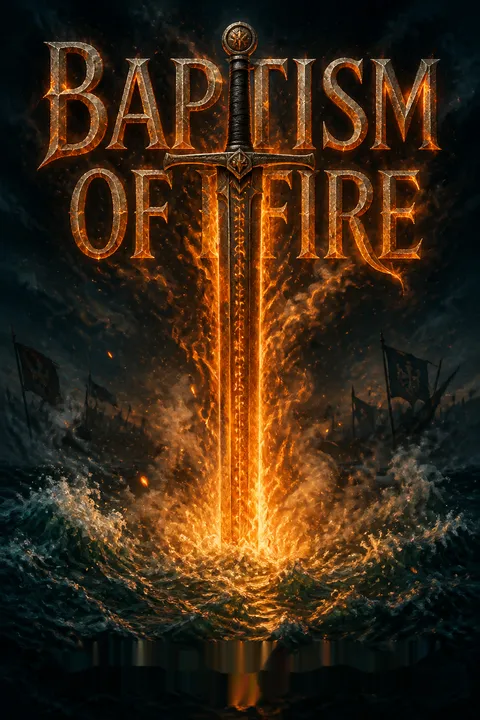


Plot Summary
Milva's Debt Comes Due
After Thanedd's coup leaves Geralt1 with shattered limbs, the sorceress Triss carries him to Brokilon, where the dryads begin his recovery. Their healer Aglais asks the archer Milva3 to gather news for him, but Milva3 refuses: the roads are dangerous, the war has turned humans against elves, and she already risks her life smuggling Scoia'tael commandos into the forest.
Dryad ruler Eithne19 reminds her that she once saved Milva3 from a deadly trap and that Milva3 still considers herself indebted. Milva3 returns to Geralt1 and accepts the mission. Her reluctance is not cowardice; she knows that helping him means leaving the forest where her skill and contacts protect her, and entering a world eager to punish anyone who asks questions.
The Missing Princess
Milva3 learns that the lawyer Codringher has been murdered and his house burned, a warning that the inquiries Geralt1 sent her to make are dangerous. She also discovers that authorities want Geralt1 and Ciri2 alive, and that the search of Thanedd's ruined tower found no trace of the girl. Geralt1 nearly collapses at that news.
Milva3 promises to keep searching, then returns with a more definite report: Ciri, princess of Cintra,2 was supposedly taken to Nilfgaard, where Emperor Emhyr18 plans to marry her. Geralt1 asks for a horse and leaves Brokilon, determined to reach her. Milva3 tells him the journey is hopeless, but her concern has become personal enough that she follows him, intending to warn him about the war ahead.
The Coffin in the Storm
On the road south, Geralt1 and his friend, the poet Dandelion,4 shelter beneath a beech tree with a trader who mistakes them for elves. Nilfgaardian soldiers arrive to collect a live prisoner hidden in a coffin, then kill the trader and his driver. Geralt1 fights back, but his healing leg buckles; Milva,3 who has been tracking him, shoots down the attackers before they can finish him.
The prisoner is Cahir,5 a Nilfgaardian knight who once tried to seize Ciri.2 Geralt1 cuts one of his bonds, leaves him a knife, and warns him away rather than killing him. Milva3 spots an approaching army, and the three flee into the forest as war closes around their route.
A Roadside Fellowship
As battle and fire force Geralt,1 Dandelion,4 and Milva3 east, they meet Zoltan Chivay,8 a dwarf guiding women and children from the burned village of Kernow. Zoltan's8 company shares its supplies and a repaired wagon with the fugitives, though the slow-moving refugee train soon strains everyone's patience.
In an ancient cemetery, the group mistakes the herbalist Emiel Regis6 for a ghoul; Regis6 explains that he lives nearby, gathers medicinal roots, and invites them to his cabin. His alchemical still provides a rare night of warmth and drink. Regis6 then chooses to travel with them, judging that the war has made solitude more dangerous than company. His careful manners and medical knowledge earn a place beside the rougher, suspicious travelers.
The Camp of Ordeals
At a refugee camp, Geralt1 finds a mob preparing to burn a bewildered young woman as a witch. A priest's supposed proof is a pot of broth, and the cat accused of being boiled sits nearby, alive. Geralt,1 Milva,3 Zoltan,8 and Regis6 challenge the accusation; Regis6 calmly lifts a red-hot horseshoe from the coals, ruining the priest's ordeal.
When Nilfgaardian cavalry attacks the camp, the crowd scatters and Geralt1 and Dandelion4 are separated from their companions. Temerian troops capture the two men and bring them before Marshal Vissegerd,20 a Cintran exile who recognizes Geralt1 from years earlier. Vissegerd20 blames him for Ciri's2 fate and believes the witcher1 has betrayed Cintra, so he orders both prisoners held for public execution.
Falka Rides with Rats
Far from Geralt,1 Ciri2 rides with the Rats, a young band of outlaws who call her Falka.2 Their freedom offers shelter from the armies and the people hunting her, but it also gives her violence a daily place. At a village feast, she dances with the elf Spark until the crowd's excitement seems to erase her former life.
Later, during a raid on a carriage, Ciri2 kills a guard and takes a jeweled brooch from a frightened noblewoman, relishing the authority her royal blood still gives her. When she kills a man who harasses her and Mistle14 at Loredo, the Rats protect her, but the killing draws attention. Imperial agent Stefan Skellen16 hires the bounty hunter Bonhart17 to hunt the gang and bring Ciri's2 story to a bloody end.
The Vampire's Bargain
Regis6 slips into Vissegerd's20 camp, uses his strange powers to put the guards to sleep, and cuts Geralt1 and Dandelion4 loose. Their escape goes awry when soldiers try to extort Dandelion's4 hidden coins; Geralt1 raises an alarm about a false Nilfgaardian attack, steals a horse, and rides into the real battle. An arrow wounds Dandelion,4 but they reach Milva3 and Cahir,5 who have recovered the horses and waited by the river.
While Regis6 treats the poet,4 Geralt1 recognizes that the healer6 casts no shadow and confronts him with a sword. Regis6 identifies himself as a centuries-old higher vampire, yet Geralt1 lets him go after Regis6 saved their lives. Cahir5 then tells Geralt1 that Ciri2 is not in Nilfgaard and that he wants to help find her.
Yennefer Leaves the Jewel
While Geralt's1 party struggles through the war, Francesca Findabair10 removes Yennefer7 from the jade figurine in which she has hidden her since Thanedd. Yennefer7 wakes weak and furious, then learns that Ciri2 is believed to be at Emhyr's18 court and Geralt1 is recovering in Brokilon.
Francesca10 explains that a secret association of sorceresses, the Lodge,9 is forming to protect magic and influence the future of the kingdoms. She invites Yennefer7 to join because the Lodge9 wants her knowledge of Ciri.2
At Montecalvo, Yennefer7 meets the assembled sorceresses, including the Nilfgaardian Fringilla Vigo,12 whose presence sharpens Yennefer's7 memories of Thanedd. The gathering requires Yennefer7 to recount Ciri's2 history, but she keeps her loyalty to the Lodge9 uncertain.
The False Cintran Heir
The sorceresses debate a plan to make Ciri2 the future queen of a northern empire, believing her royal blood and extraordinary abilities could secure magic's political power. Their discussion reveals that Ciri2 carries the Elder Blood, a lineage tied to elven prophecy and inherited through a complicated royal family history.
Assire var Anahid11 confirms the crucial contradiction: the girl held at Emhyr's court is not Ciri.2 A comparison of hair samples proves that someone substituted a double, while a report to Dijkstra13 connects Rience to the murder of Codringher and Fenn and to the abduction of another false Ciri.
Yennefer7 realizes the Lodge's9 plans may threaten the girl as much as Emhyr18 does. With Fringilla's12 covert help, she escapes Montecalvo to search for Ciri2 herself.
The Sword from Mahakam
Geralt's1 party pushes into Angren, where armies fight over timber routes and burned villages mark the path. They reunite with Zoltan8 and several dwarves, but learn that Caleb was killed by Nilfgaardian soldiers. Zoltan8 gives Geralt1 his finely forged sword, Sihil, before deciding to return toward Mahakam with the remaining dwarves and the refugees he has taken under his protection.
A young woman rescued from a burning wagon speaks in a trance, foretelling bloodshed and a misty tower called the Tower of Swallows. Geralt's1 group continues toward the druids of Caed Dhu, hoping they can locate Ciri.2 When they hear of a northern resistance army operating behind enemy lines, Geralt1 avoids it, unwilling to join a war that is not his search.
Milva's Hidden Burden
Regis6 reveals that Milva3 is about ten weeks pregnant, a fact she had concealed while guiding the party through the war. She asks him for a potion to end the pregnancy, but Geralt's1 unexpected tenderness gives her room to explain why she joined him: she hoped to help save Ciri2 as a way of answering for the child she could not protect.
Geralt1 admits he cannot repay her earlier rescue in any simple way, but his presence steadies her. Regis6 later discards the prepared potion, and Milva3 rides on. To avoid the dangerous Ysgith marshes, Geralt1 changes their route toward a ferry across the Yaruga. They pay the frightened ferryman to take them over, only to be caught between a Lyrian resistance force and Nilfgaardian troops.
Caught Between Two Banks
The ferry's crew cuts its rope in panic, sending the travelers downstream as armed forces pursue from both banks. Geralt1 recognizes the riders on one shore as Lyrian and Rivian guerrillas, not Nilfgaardians, but the confusion cannot be undone.
The guerrillas shoot at the ferry, killing the ferryman and wounding horses; Nilfgaardian archers then fire from the opposite bank. Milva3 answers with her longbow, dropping several soldiers, while an arrow strikes Regis,6 who survives the wound. The ferry drifts toward a bridge held by the northern troops.
Another volley kills more horses, and Milva3 collapses bleeding. Regis6 confirms that the pregnancy has ended. With her unable to move and Nilfgaardians nearing the bridge, Geralt1 and Cahir5 must decide whether to flee or turn back.
Geralt of Rivia
Cahir5 refuses to fight the soldiers of his former country until Geralt1 forces him to choose between retreat and protecting Milva.3 The two men climb onto the bridge and rally the fleeing defenders, then meet the Nilfgaardian attack with Sihil and Cahir's5 sword.
Their stand gives the frightened troops enough courage to fight back; Geralt1 also blasts a burning barricade apart with magic, opening a path through the smoke. The defenders hold until reinforcements arrive, and the bridge is destroyed to stop the enemy crossing.
Geralt1 survives, though bruised, and learns that the army he helped was led by Queen Meve of Lyria and Rivia.21 She knights him for his courage. Having called himself a man from nowhere, he accepts the title Geralt of Rivia1 with a bitter smile, while Ciri2 remains lost.
Analysis
Baptism of Fire makes a rescue quest travel through a war that will not stay in the background. Geralt1 wants to reach Ciri,2 yet every road toward her passes through burned villages, displaced families, executions, and armies that treat civilians as instruments. His insistence that the search is private becomes increasingly untenable: Milva3 saves him, Zoltan's8 group shelters refugees, Regis6 heals the wounded, and Cahir5 eventually fights beside him. The company changes the practical odds of survival, but it also unsettles Geralt's1 self-understanding. He has mistaken isolation for moral discipline, as if refusing help could keep other people safe from his burden. The others expose this as a form of control over who is allowed to care for him.
The novel places that intimate struggle beside political projects that claim to serve larger futures. Emhyr's18 court, the Lodge,9 and the northern armies all make Ciri's2 identity and bloodline useful to their plans. The Elder Blood gives prophecy political force, but the false princess shows how easily institutions can replace a person with a symbol and still speak as though they possess the truth. Yennefer7 and Geralt1 resist this in different ways: he searches through action, while she escapes an organization that wants her knowledge and loyalty. Neither can simply step outside power, because Ciri2 is already entangled in it.
Milva's3 pregnancy sharpens the book's concern with care and agency. Her companions must respond without treating her as helpless, and Geralt's1 tenderness matters because he offers support without converting it into a debt that she must repay. The bridge battle completes this movement from private obligation toward shared action. Geralt1 and Cahir5 fight not for a crown or prophecy, but to protect Milva3 and the people trapped around them. Meve's21 knighthood gives Geralt1 a public identity he never sought, while the search for Ciri2 remains unresolved. The title's fire is therefore not a cleansing guarantee. It is the violence of history, the painful test of loyalty, and the danger of believing that suffering alone can make a person worthy.
Review Summary
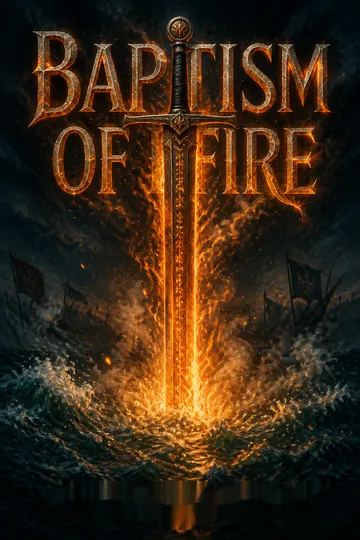
Baptism of Fire receives mostly positive reviews, with readers praising its character development, world-building, and engaging storytelling. Many consider it the best book in the Witcher series so far, appreciating the introduction of new characters and the exploration of war's impact. Some criticize the slow plot progression and occasional narrative complexity. Readers enjoy Geralt's journey and his growing fellowship, though some miss the focus on Ciri and Yennefer. Overall, fans find the book a compelling addition to the series, despite its occasional pacing issues.
People Also Read



Characters
Geralt of Rivia
Reluctant monster hunterGeralt is a witcher, a magically altered professional trained to kill monsters, whose damaged body makes this journey far harder than his determination admits. He is searching for Ciri2, the girl bound to him by the Law of Surprise, and treats that responsibility as a private burden rather than a reason to gather allies. His instinct is to protect people while denying that he needs them. War repeatedly exposes the limits of that solitude: he cannot cross the continent alone, and his companions see his refusal of help as another form of self-punishment. His dry restraint conceals intense loyalty, grief, and guilt. Even when he insists that politics do not matter, his choices repeatedly place him between vulnerable people and immediate violence.
Cirilla
Displaced princessCirilla, usually called Ciri, is the young princess of Cintra and Geralt's1 Child of Surprise. Separated from the adults who care for her, she moves through danger by adapting quickly, learning weapons and survival skills while trying to make sense of her unusual powers and royal identity. Among the outlaw Rats she uses the name Falka, a disguise that also lets her inhabit a harder, more violent self. Her need for belonging makes the gang's acceptance powerful, even when its life draws her toward cruelty. Ciri is not merely a prize in the political contest around her: she has preferences, pride, fear, and the capacity to choose, qualities that competing adults often try to ignore.
Milva
Brokilon's archerMilva is the human archer who knows Brokilon's paths, the Scoia'tael commandos, and the cost of crossing a war zone. Her bow makes her a precise and formidable protector, while her blunt speech keeps sentiment at a distance. She has chosen a life beyond the domestic role expected of her and carries both pride in that independence and unresolved debts from the people she has helped. Her loyalty to Geralt1 begins as an imposed task, then grows into genuine concern, though she resists being treated as fragile or subordinate. Milva's toughness is not an absence of vulnerability; it is a method of surviving without asking others to define what she can endure.
Dandelion
Geralt's loyal poetDandelion is Geralt's1 friend, a celebrated poet whose vanity and appetite for talk often create practical trouble. He observes people closely, remembers stories, and uses humor to keep fear from taking command, but his performance as a worldly bard can collapse when violence becomes immediate. His loyalty is more durable than his courage: he stays beside Geralt1 despite danger, argues when the witcher1 tries to dismiss the company, and makes himself useful in unexpected ways. Dandelion's language can expose secrets that Geralt1 would rather keep, yet his insistence on companionship helps the group function. He is both comic relief and a witness who understands that ordinary acts of care can matter more than heroic reputations.
Cahir Mawr Dyffryn aep Ceallach
Haunted imperial knightCahir is a young nobleman from Vicovaro who has served the Nilfgaardian Empire and wears the shadow of his failed mission to capture Ciri2. Geralt1 initially sees him only as a threat, while Cahir's pursuit of the witcher's1 company suggests a purpose he struggles to explain. His formal upbringing and military experience coexist with shame, fear, and an emerging conscience. Cahir insists on the distinction between his homeland and the imperial identity others assign him, a distinction that reveals how deeply he is caught between personal allegiance and the machinery of the state. His guarded manner makes trust difficult, but his willingness to take risks for Ciri2 gives his journey a moral direction.
Emiel Regis
Learned herbalistRegis first appears as a solitary surgeon and herbalist living beside an ancient cemetery. His precise medical knowledge, dry wit, and composure make him an unusually steady presence among frightened refugees. He is deeply curious about human beliefs and habits, often analyzing them with an intellectual distance that can sound condescending. Yet he acts when a life is in danger, even when doing so exposes him to suspicion. Regis understands that restraint is a practice rather than an inborn virtue, and his history gives that understanding personal weight. He offers the company medical care and practical judgment while asking them to see him as more than the frightening category into which others place him.
Yennefer
Ciri's sorceress guardianYennefer is a powerful sorceress whose pride, intelligence, and fierce attachment to Ciri2 often conceal how vulnerable she feels about those she loves. She understands magic as both a discipline and a means of shaping political reality, and she is skilled at resisting other people's attempts to define her loyalties. Her connection to Geralt1 is complicated by history, desire, and mutual distrust, while her bond with Ciri2 is protective and deeply personal. Yennefer's sharp wit is a form of control, especially when she is frightened or grieving. She is capable of cooperating with rivals when the stakes demand it, but her willingness to submit her choices to an institution remains uncertain.
Zoltan Chivay
Dwarven refugee guideZoltan is a practical, outspoken dwarf who leads refugees through the war with a mixture of generosity, calculation, and rough humor. He refuses to abandon women and children, yet he is no spotless idealist and does not disguise the compromises survival demands. His love of dwarven craft, especially his treasured sword, reflects pride in a culture that humans depend on while often treating it as lesser. Zoltan challenges Geralt's1 self-isolation without asking him to become a different person. He is a friend who offers help plainly, expects no grand performance of gratitude, and understands that compassion can coexist with a criminal past.
Philippa Eilhart
Architect of the LodgePhilippa is an influential sorceress who seeks to rebuild magical authority after the upheaval at Thanedd. She sees institutional power as necessary to protect magic from being subordinated to kings and emperors, and she is willing to plan across borders to secure that future. Her confidence and political skill let her manage a room of rivals, but her vision of the common good is inseparable from a desire to direct events. Philippa speaks of a political order in which sorceresses wield influence, treating Ciri's2 abilities and bloodline as strategic facts. Her pragmatism makes her formidable, though it also raises the question of whether protection can become another form of control.
Francesca Findabair
Queen of Dol BlathannaFrancesca, known among elves as Enid an Gleanna, is the beautiful and politically astute ruler of Dol Blathanna. She must balance the survival of her people against the demands of Nilfgaard and the distrust of human sorceresses. Her manner is composed, but the choices she makes are shaped by the physical danger facing elves, not by abstract diplomacy alone. Francesca understands Ciri's2 heritage and sees how prophecy can become a political instrument. Her alliance with other sorceresses is sincere in some respects and strategically cautious in others. She can preserve a life while also constraining it, a tension that defines her dealings with Yennefer7.
Cahir's family relative Assire var Anahid
Nilfgaardian sorceressAssire is a Nilfgaardian sorceress who accepts Philippa's9 secret invitation at considerable personal risk. She is reserved, scholarly, and initially uncomfortable among the more polished northern witches, but she takes intellectual questions seriously and is willing to test what others assume. Her family connection to Cahir5 gives the imperial conflict a private dimension, though she cannot openly intervene in his case. Assire's work with the evidence surrounding Ciri2 shows a disciplined mind willing to challenge official appearances. She also recognizes that magic's future may require cooperation beyond national borders, even when that cooperation threatens her security.
Fringilla Vigo
Nilfgaardian court sorceressFringilla is a young Nilfgaardian sorceress whose natural ease and sharp observation contrast with Assire's11 guarded reserve. She is curious about northern magic and its practitioners, but she understands the imperial culture in which her own position is formed. Her encounter with Yennefer7 carries the memory of opposing sides at Sodden, yet she is capable of recognizing a human need beneath political hostility. Fringilla's polished manners conceal a talent for indirect communication and calculated assistance. She sees that loyalty to a new institution does not automatically erase personal judgment, and her choices are shaped by the distance between what a powerful group demands and what an individual can bear.
Sigismund Dijkstra
Redanian intelligence chiefDijkstra is the formidable head of Redanian intelligence and, in practice, one of the kingdom's principal political operators. He collects information patiently, reads personal motives as carefully as military movements, and treats official diplomacy as another instrument of statecraft. His conversations reveal a sharp intelligence sharpened further by resentment, especially toward Geralt1. Dijkstra knows that private vengeance can compromise public duty, so he often restrains himself even when tempted to use his office for personal ends. He is neither a simple ally nor a straightforward enemy; his actions are governed by the survival and advantage of Redania, with individual loyalties assessed against that larger calculation.
Mistle
Rats' protective outlawMistle is one of the Rats, a young outlaw who becomes closely attached to Ciri2 after the girl joins the gang. She offers physical closeness and a place among people who live beyond ordinary rules, but her affection can shade into possessiveness. Mistle understands the gang's violence as a shared way of life and is alert to changes in Ciri's2 mood, especially the nightmares that reveal a past she will not discuss. Her loyalty is real, though she does not always recognize when care becomes pressure. Through her relationship with Ciri2, Mistle embodies the comfort and danger of belonging when someone has nowhere else to go.
Giselher
Leader of the RatsGiselher leads the Rats with enough authority to keep their disparate young members moving together. He frames their raids as a life of freedom and fellowship, and he sometimes tries to restrain the gang's cruelty when it threatens to spiral. His generosity toward villagers is often performative, but his rules about protecting women and maintaining loyalty give the group its own moral code. Giselher recognizes that Ciri2 is dangerous and wounded at once, and he tries to make room for her without demanding her history. His leadership depends on balancing spectacle, intimidation, and a fragile sense of kinship.
Stefan Skellen
Emperor's covert agentStefan Skellen, called the Coroner, serves Emperor Emhyr18 in covert operations. He is pragmatic, calculating, and attentive to the political value of people others might regard as merely dangerous. His decision to employ Bonhart17 against Ciri2 shows how imperial power can act through private violence while preserving official distance. Skellen measures risk in terms of usefulness, money, and control, not personal honor. He represents the bureaucracy behind the armies: a world where a young girl's unusual bloodline becomes a state secret and a target.
Leo Bonhart
Ruthless bounty hunterBonhart is a gaunt, intimidating bounty hunter known for killing the Rats and collecting proof of his work. He regards violence as a craft and prefers to define himself by the service he provides rather than the act of killing itself. That distinction gives him a chilling professional pride: he can treat murder as a contract while insisting on the standards of a tradesman. His willingness to pursue Ciri2 makes him a looming danger beyond the armies and court intrigues. Bonhart is unsettling precisely because he does not need ideological hatred to do harm.
Emhyr var Emreis
Nilfgaard's imperial rulerEmhyr is the emperor whose expansion has carried Nilfgaard's armies into the northern kingdoms. His court presents political decisions as imperial certainty, while the pursuit of Ciri2 suggests a private purpose beneath the public claims. He is surrounded by intelligence officers and sorcerers who interpret his orders, conceal facts, or compete to anticipate his intentions. Emhyr's authority shapes the lives of people he may never meet, turning a missing princess into a matter of dynastic strategy. His power is felt through armies, diplomatic disputes, and the fear of those who serve him.
Eithne
Brokilon's silver-eyed rulerEithne rules the dryads of Brokilon with a measured authority that makes even personal appeals feel like decisions about the forest's future. She knows Milva's3 history and uses that knowledge to remind her of obligations, but she does not pretend that loyalty is the same as obedience. Eithne's reflections on debt suggest that giving and receiving help can bind people to their own understanding of who they are. Her connection to Geralt1 is indirect but significant, and she believes that aiding him matters beyond the immediate mission.
Marshal Vissegerd
Exiled Cintran commanderVissegerd commands Cintran exiles fighting within the Temerian army. He is fiercely attached to the restoration of Cintra and interprets Ciri's2 position at Emhyr's18 court as a betrayal that threatens his soldiers' purpose. His anger at Geralt1 is shaped by old memories and present political desperation. As desertions weaken his force, Vissegerd turns to public accusations to defend his authority and the legitimacy of the campaign.
Queen Meve
Queen on the battlefieldMeve rules Lyria and Rivia and leads an army resisting Nilfgaard's advance. She is willing to fight near the front, where she suffers a painful wound during the battle at the Yaruga bridge. Her brief encounter with Geralt1 reveals a ruler who understands that recognition and titles can reward courage while also serving the needs of a battered army. Meve's authority is practical, earned in the same danger her soldiers face.
Vilgefortz
Missing sorcerous conspiratorVilgefortz is a powerful sorcerer who played a central role in the violence at Thanedd and has since disappeared. His connection to Rience and the competing schemes surrounding Ciri2 makes him a figure whom both intelligence agencies and sorceresses seek. The uncertainty about his location and objectives gives other characters reason to suspect one another. He represents the danger of magic when exceptional ability serves private ambition rather than shared responsibility.
Plot Devices
The Child of Surprise
Binds Geralt to CiriThe Law of Surprise establishes Geralt's1 deep connection to Ciri2 before either can fully understand what that bond will demand. In this volume, it is not a convenient magical compass: Geralt1 has no reliable path to her, and his belief that she is in Nilfgaard may be wrong. The bond instead drives his choices, keeps him moving through a war that repeatedly blocks him, and makes his companions question whether he is pursuing rescue, atonement, or both. It also gives monarchs and sorceresses a reason to claim authority over Ciri2. The device turns family attachment into a conflict between personal care and political possession.
The Elder Blood
Makes Ciri a political prizeThe Elder Blood is the inherited power associated with Ciri's2 family line and with elven prophecy. The Lodge9 interprets it as a force capable of shaping the future, while Emhyr's18 search for Ciri2 suggests that Nilfgaard also seeks to use her lineage. The sorceresses reconstruct the bloodline through royal marriages and inherited traits, revealing how dynastic history can be turned into a program of political breeding. Ciri's2 abilities therefore make her more than an heir: they make her a resource coveted by institutions that claim to protect the world. The story complicates prophecy by showing how belief in destiny can license control over a living person.
The False Princess
Disrupts the rescue missionReports place Ciri2 at Emhyr's18 court, and Geralt1 acts on that information by heading south. Evidence gathered by Assire11 and Fringilla12 proves that the girl displayed at court is a substitute, not Ciri2. The deception overturns the party's assumed destination and exposes how intelligence, rumor, and political theater can make a false identity seem official. Dijkstra13 also receives a report connecting Rience to a kidnapping involving another girl passed off as Ciri2. The device turns the rescue mission into a search without a known location and shows that powerful people can manufacture certainty even when they do not possess the person they claim to hold.
The War's Moving Front
Forces the company eastThe invasion constantly changes which roads, villages, and river crossings are safe. Geralt's1 party avoids armies, passes burned settlements, and joins refugees because the front is not a clean line but a moving field of raids, reprisals, and panic. The war also produces the unlikely encounters that shape the company: Zoltan's8 refugee caravan, the camp under attack, and the guerrilla forces at the Yaruga bridge. It repeatedly makes neutrality impossible, even for Geralt1, who insists that his search is personal. The shifting front is both obstacle and moral pressure, forcing the travelers to decide whom they will protect when escape would be easier.
The Company on the Road
Challenges Geralt's solitudeGeralt1 begins by treating companions as unnecessary risks, but the road gathers people whose skills answer dangers he cannot manage alone. Milva3 guides and shoots; Dandelion4 reads people and keeps spirits from collapsing; Zoltan8 organizes refugees; Regis6 heals; Cahir5 understands soldiers and eventually fights beside them. Their disagreements expose distinct moral codes, from Milva's3 practical loyalty to Zoltan's8 selective altruism and Regis's6 practiced restraint. The company is not a harmonious band of heroes. It is a temporary structure built through shared labor, food, danger, and care. Its existence challenges Geralt's1 belief that suffering must remain private to be deserved or meaningful.
FAQ
Synopsis & Basic Details
What is Baptism of Fire about?
- A perilous quest unfolds: The story follows Geralt of Rivia as he embarks on a journey to find Ciri, driven by prophetic dreams and a sense of duty. He gathers a diverse group of companions, including the archer Milva, the bard Dandelion, and the vampire Regis, as they navigate a war-torn world.
- War and political intrigue: The backdrop is a world engulfed in conflict, with Nilfgaardian forces advancing and various factions vying for power. The characters are caught in the middle of this chaos, facing both external threats and internal struggles.
- Themes of loyalty and sacrifice: The narrative explores themes of loyalty, sacrifice, and the bonds formed in adversity, as the characters face numerous challenges and make difficult choices along their journey.
Why should I read Baptism of Fire?
- Complex characters and relationships: The book features a rich cast of characters with compelling backstories and evolving relationships, offering a deep exploration of human nature and the bonds formed in times of crisis.
- Intricate plot and world-building: The story is set in a richly detailed world with complex political intrigue and a blend of fantasy and realism, providing a captivating and immersive reading experience.
- Exploration of moral ambiguities: The narrative delves into moral ambiguities, challenging readers to question their own beliefs and assumptions, and offering a thought-provoking exploration of good and evil.
What is the background of Baptism of Fire?
- Political turmoil: The story is set against the backdrop of a major war between the Northern Kingdoms and the Nilfgaardian Empire, with various factions and political interests vying for power. This conflict creates a volatile and dangerous environment for the characters.
- Fantasy elements: The world is populated with magical creatures, sorcerers, and mythical beings, adding a layer of fantasy and wonder to the narrative. These elements are seamlessly integrated into the story, enhancing the overall experience.
- Cultural diversity: The story features a diverse cast of characters from different cultures and backgrounds, including humans, elves, dwarves, and vampires, each with their own unique perspectives and motivations.
What are the most memorable quotes in Baptism of Fire?
- "I shall give you this advice: wear boots made of iron, take in hand a staff of steel. Then walk until the end of the world.": This quote, from the beginning of the book, sets the tone for Geralt's arduous journey and his unwavering determination to find Ciri, despite the challenges he faces.
- "Everyone has some debt. Such is life, Maria Barring. Debts and claims, obligations, acknowledgements, payments ... Doing something for someone. Or maybe for yourself? Because in reality, you always pay yourself, not others.": Eithne's words to Milva highlight the complex nature of debts and obligations, suggesting that all actions ultimately serve oneself, a theme that resonates throughout the book.
- "Fire purifies. And it hardens. We must go through it. Aenyel Fhael, ell'ea, sor'ca? Or as you say: the baptism of fire.": Coinneach Dá Reo's quote encapsulates the theme of enduring hardship and emerging stronger, a concept that is central to the characters' journeys and the overall narrative.
What writing style, narrative choices, and literary techniques does Andrzej Sapkowski use?
- Non-linear storytelling: Sapkowski often employs a non-linear narrative structure, weaving together different timelines and perspectives to create a complex and multi-layered story. This technique enhances the sense of mystery and intrigue.
- Realistic dialogue and character interactions: The dialogue is often realistic and gritty, reflecting the characters' personalities and motivations. The interactions between characters are nuanced and complex, adding depth to the narrative.
- Use of irony and dark humor: Sapkowski often uses irony and dark humor to highlight the absurdity and brutality of war and the human condition. This technique adds a layer of complexity to the narrative and challenges readers to question their own assumptions.
Hidden Details & Subtle Connections
What are some minor details that add significant meaning?
- The recurring mention of the "Seven Goats" constellation: This seemingly minor detail serves as a subtle guide for the characters, particularly Geralt, as they navigate the war-torn landscape. It symbolizes hope and direction amidst chaos.
- The description of Milva's bow: The detailed description of Milva's bow, its craftsmanship, and its history, highlights her skill and dedication as an archer, and also foreshadows her crucial role in the battles to come.
- The emphasis on the smell of herbs and spices: The recurring emphasis on the smell of herbs and spices, particularly those associated with Regis, serves as a subtle reminder of his true nature and his connection to the natural world.
What are some subtle foreshadowing and callbacks?
- The mention of the "end of the world": The recurring mention of the "end of the world" by various characters foreshadows the impending chaos and destruction that the characters will face, and also hints at the larger, more apocalyptic themes of the series.
- The description of the hawker's arrows: The detailed description of the hawker's arrows, with their jagged tips, foreshadows the brutal and violent nature of the battles to come, and also serves as a callback to the dangers of the world.
- The recurring motif of the color red: The recurring motif of the color red, often associated with blood, fire, and danger, foreshadows the violence and bloodshed that the characters will encounter, and also serves as a callback to the themes of war and sacrifice.
What are some unexpected character connections?
- The connection between Cahir and Assire: The revelation that Cahir is related to Assire var Anahid through his mother adds a layer of complexity to their characters and their motivations, and also highlights the interconnectedness of the world.
- The shared dream between Geralt and Cahir: The shared dream between Geralt and Cahir, about Ciri, creates an unexpected bond between them, despite their initial animosity, and also hints at a deeper connection between them.
- The connection between Milva and the Dryads: The connection between Milva and the Dryads, revealed through her nickname and her knowledge of the forest, highlights her unique background and her connection to the natural world.
Who are the most significant supporting characters?
- Emiel Regis: Regis, a higher vampire who has renounced blood, is a complex and enigmatic character who provides wisdom and support to the group. His past and his unique perspective on the world make him a valuable ally.
- Zoltan Chivay: Zoltan, the leader of the dwarven company, is a resourceful and honorable character who provides much-needed support and camaraderie to the group. His leadership and his skills are crucial to their survival.
- Queen Meve: Queen Meve of Lyria and Rivia, a strong and courageous leader, plays a significant role in Geralt's journey, knighting him and offering him a new perspective on his role in the world.
Psychological, Emotional, & Relational Analysis
What are some unspoken motivations of the characters?
- Geralt's fear of losing Ciri: Geralt's unspoken fear of losing Ciri drives his actions and his determination to find her, even at great personal risk. This fear is a powerful motivator that shapes his decisions and his relationships with others.
- Milva's desire for redemption: Milva's unspoken desire for redemption, stemming from her past actions, motivates her to help others and to seek a purpose beyond her own survival. This desire is a driving force behind her loyalty and her willingness to sacrifice herself for others.
- Regis's need for acceptance: Regis's unspoken need for acceptance, despite his vampire nature, motivates him to help others and to prove that he is more than just a monster. This need is a driving force behind his actions and his relationships with the group.
What psychological complexities do the characters exhibit?
- Geralt's internal conflict: Geralt grapples with his identity as a witcher and his desire to protect Ciri, often struggling with his emotions and his sense of duty. This internal conflict adds depth to his character and makes him more relatable.
- Milva's struggle with her pregnancy: Milva's struggle with her pregnancy highlights her internal conflict between her desire to help others and her own personal needs. This struggle adds complexity to her character and makes her more human.
- Regis's battle with his nature: Regis's battle with his vampire nature and his desire to be more than just a monster adds a layer of complexity to his character, highlighting his internal struggle and his journey towards redemption.
What are the major emotional turning points?
- Milva's decision to continue her journey: Milva's decision to continue her journey despite her pregnancy is a major emotional turning point, highlighting her strength and resilience, and also her commitment to the group.
- Geralt's acceptance of knighthood: Geralt's acceptance of knighthood, despite his initial reluctance, marks a significant emotional turning point, as he grapples with his new identity and the responsibilities it entails.
- Regis's revelation of his past: Regis's revelation of his past and his struggle with blood addiction is a major emotional turning point, as he opens up to the group and solidifies his place as a trusted ally.
How do relationship dynamics evolve?
- Geralt and Milva's bond: The relationship between Geralt and Milva evolves from a professional alliance to a deep bond of trust and mutual respect, as they face numerous challenges together. This bond is a testament to the power of shared experiences and the importance of loyalty.
- Dandelion and Regis's friendship: The unexpected friendship between Dandelion and Regis highlights the importance of acceptance and understanding, as they learn to appreciate each other's unique perspectives and qualities.
- The group's shared purpose: The group's shared purpose of finding Ciri and navigating the war-torn world creates a strong sense of camaraderie and unity, as they learn to rely on each other and work together to overcome adversity.
Interpretation & Debate
Which parts of the story remain ambiguous or open-ended?
- The true nature of Ciri's destiny: The true nature of Ciri's destiny remains ambiguous, leaving readers to wonder what role she will play in the future and what challenges she will face. This ambiguity adds a layer of mystery and intrigue to the narrative.
- The motivations of the Nilfgaardian Empire: The motivations of the Nilfgaardian Empire remain somewhat ambiguous, leaving readers to question their true goals and intentions. This ambiguity adds a layer of complexity to the political landscape of the story.
- The ultimate fate of the characters: The ultimate fate of the characters remains open-ended, leaving readers to wonder what will become of them and what challenges they will face in the future. This open-endedness adds a sense of realism and uncertainty to the narrative.
What are some debatable, controversial scenes or moments in Baptism of Fire?
- The treatment of the accused witch: The scene where the accused witch is subjected to a trial by fire is a controversial moment, highlighting the dangers of blind faith and the potential for abuse of power. This scene raises questions about justice and morality.
- The violence and brutality of war: The graphic depiction of violence and brutality in the war scenes is a controversial aspect of the book, challenging readers to confront the harsh realities of conflict and the human cost of war.
- The portrayal of the vampire Regis: The portrayal of Regis as a reformed vampire who has renounced blood is a controversial aspect of the book, challenging readers' preconceived notions about vampires and raising questions about the nature of good and evil.
Baptism of Fire Ending Explained: How It Ends & What It Means
- Geralt's knighthood: The ending sees Geralt unexpectedly knighted by Queen Meve, a title he never sought but now must bear. This knighthood is a symbol of his growing involvement in the political landscape and his acceptance of a role beyond that of a simple monster hunter.
- The group's separation: The group is separated, with Zoltan and his dwarves heading north, while Geralt, Milva, Dandelion, and Cahir continue their journey south. This separation highlights the challenges of their quest and the uncertainty of their future.
- The looming threat of war: The ending leaves the characters facing an uncertain future, with the war between the Northern Kingdoms and Nilfgaard still raging. This ending underscores the ongoing challenges and dangers that they will face in their quest to find Ciri.
The Witcher Series
About the Author

Download PDF
Download EPUB
.epub digital book format is ideal for reading ebooks on phones, tablets, and e-readers.








