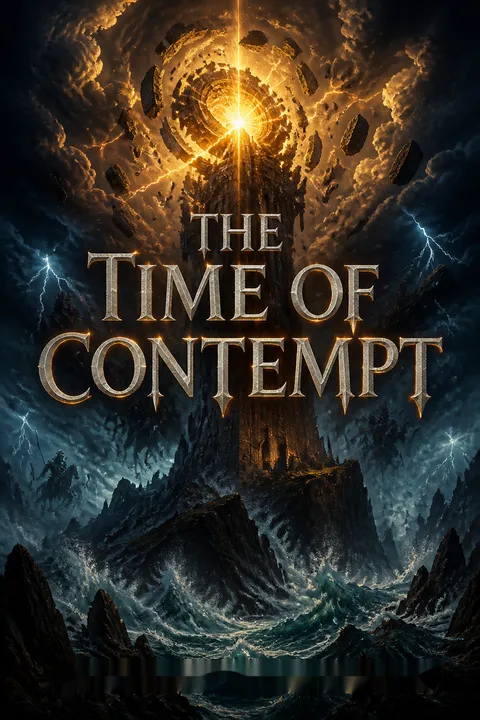


Plot Summary
The Messenger's Burden
Royal courier Aplegatt crosses a continent crowded with soldiers, wagons, and frightened rumors. Kings have stopped trusting magical messages, so he carries secret plans in his memory: an alliance is preparing an attack near Dol Angra, while other rulers debate whether the missing Princess Ciri is dead. At an inn, Aplegatt meets the black-haired sorceress Yennefer and her sleepy young companion.
The girl, Ciri, suddenly predicts danger descending on grey wings and remembers burning sand, then seems not to know she spoke. Aplegatt rides on, troubled but unable to understand the warning. His route carries the reader into a political crisis where military plans, rumours, and Ciri's unexplained visions are already converging.
The courier's work makes information a physical burden: Aplegatt must carry it in his own memory because rulers fear magical surveillance. Yet the most consequential message is not one he is paid to deliver. Ciri's involuntary vision briefly pierces the machinery of diplomacy, but Aplegatt dismisses it as sleep-talk. The scene establishes a recurrent imbalance in the novel: institutions confidently classify what they can use, while failing to recognize the warning signs that do not fit their systems.
Ciri's Blood Becomes Strategy
Geralt visits Codringher, a fixer who investigates the sorcerer Rience and the people financing his search for Ciri. Codringher traces Rience to a failed magical education, secret-service work, and an unknown patron who supplies real magic.
He also reveals that royal agents are hunting Ciri, not to rescue her, but to prevent her from becoming a political claim through marriage and children. Their fabricated evidence of her death may fool those agents, but Geralt knows other hunters remain.
Research by Codringher and his crippled partner, Fenn, points toward Ciri's Elder Blood and an old elven prophecy. Codringher urges Geralt to abandon the child to Yennefer and hide. Geralt refuses, unwilling to save Ciri by sacrificing an innocent girl as her double.
Codringher interprets politics as a market in leverage, and his proposal to substitute another girl for Ciri exposes the cost of that worldview. Geralt's refusal is not tactically useful; it is a limit he will not cross, even when the alternative may be danger for both himself and Ciri. Their disagreement also clarifies the novel's central conflict over agency. Ciri is treated as a bloodline, a claim, or a prophecy before she is treated as a person, while Geralt's loyalty begins in the stubborn insistence that she remains one.
The Wolf at Anchor
Following Codringher's warning, Geralt reaches the inn at Anchor, where three hired killers are asking after Yennefer and Ciri. Aplegatt is there too, carrying messages between courts, and lies to protect the women. When the killers recognize Geralt outside, they draw their swords; he kills all three before they can reach the inn's guests.
Aplegatt later delivers his message to Redanian spymaster Dijkstra, including news of Geralt's fight and the supposed death of Ciri. He is sent back onto the road at dawn. An elf commando ambushes him from the trees with a silent arrow, killing him before he can deliver the warning that would have changed the kings' plans.
The two outcomes turn the same road into a test of who is allowed to act. Geralt's violence protects people in immediate reach; Aplegatt's official duty leaves him exposed to a war whose participants treat couriers as expendable. The messenger's death is especially consequential because it is not a grand battlefield casualty. One arrow removes a channel of communication, while the competing powers continue to make decisions on partial or manufactured information. The scene makes secrecy look less like control than a condition in which everyone is vulnerable to miscalculation.
The Wyvern in the Market
Yennefer brings Ciri to Gors Velen and plans to enroll her at Aretuza, the isolated school for enchantresses on Thanedd. At a crowded market, Ciri wanders with the young bank clerk Fabio, spots a caged wyvern being falsely advertised as a basilisk, and warns the crowd. When the cage breaks, she uses a squire's sword to kill the creature, but lets the onlookers credit the squire and slips away with Fabio.
Archmistresses Tissaia de Vries and Margarita Laux-Antille mistake Ciri for a truant novice and catch her using Yennefer's concealment amulet. After the confusion is cleared, Ciri overhears the adults discussing Aretuza and realizes Yennefer means to leave her there. She rides out secretly toward Hirundum to find Geralt first.
Ciri's market adventure combines real competence with a refusal to claim public credit. She recognizes the animal, acts decisively when it escapes, then hides her part in the rescue because she fears Yennefer's judgment and wants to retain control over her own story. Her flight is not simple rebellion against education. She reads the school as a place where others will determine her future without asking what she wants. The episode makes her courage inseparable from impulsiveness: the same instinct that saves strangers also carries her alone into danger.
A Reunion Under the Hunt
On the storm-dark road to Hirundum, Ciri loses her way and sees the black, wing-helmeted rider who has haunted her nightmares. The Wild Hunt rises over the marsh, calling her its own, while she urges her horse toward a distant farm. Geralt is staying there with Dandelion, waiting near Thanedd and refusing to explain why.
When Ciri arrives pursued by the spectral cavalcade, Yennefer appears in a burst of magic and drives the Hunt away. Ciri reaches Geralt and Yennefer but, exhausted by fear and the journey, faints before choosing which of them to approach. Her arrival brings the estranged adults together; the next morning Geralt and Yennefer speak privately and begin repairing their relationship.
The supernatural pursuit gives visible form to the pressure others place on Ciri: even the Hunt addresses her as property. Her refusal to surrender is real, but she cannot yet separate a present danger from the trauma of Cintra. Yennefer's intervention protects her without resolving that fear, and Ciri's fainting leaves the adults to confront their own estrangement. The reunion therefore works through a child who needs care but cannot be made responsible for managing the people who love her. Her presence reconnects Geralt and Yennefer, while leaving her own future uncertain.
Thanedd's Polished Mask
Yennefer takes Geralt to the sorcerers' gathering on Thanedd, where elaborate dress and manners cover a hall full of royal agents. Dijkstra tests Geralt's claim to neutrality, while Philippa Eilhart promises to identify Rience's patron. Geralt also meets Vilgefortz, a celebrated mage who leads him through Aretuza's historical gallery and offers him a place among the victors in an approaching struggle.
Vilgefortz argues that Ciri binds Geralt to the political game whether he admits it or not. Geralt rejects the offer, but keeps his suspicions to himself. That night, he and Yennefer openly declare their love and imagine a shared home, even as she assures him Ciri will be safe at the school.
The banquet turns sociability into camouflage. Sorcerers use compliments, clothes, and flirtation to conceal which king they serve, while Geralt's private affection for Yennefer makes him appear both exposed and exploitable. Vilgefortz's appeal is psychologically precise: he offers Geralt power by presenting it as the only way to protect Ciri. Geralt rejects the bargain, but his decision to keep quiet about his fears leaves the couple without a shared understanding of the danger. Intimacy gives them hope, yet it does not automatically produce trust or good information.
The Conclave Breaks
Before dawn, Redanian agents seize the sorcerer Artaud Terranova as a suspected traitor, and Geralt is caught in the operation. Philippa's faction is arresting mages believed to be working with Nilfgaard, including Vilgefortz and the elven sorceress Francesca Findabair.
The arrests are meant to prevent a coup, but Tissaia de Vries rejects the use of force against members of the Brotherhood. She removes the magical barrier around Garstang, disabling the dimeritium restraints and allowing the captured sorcerers to fight back.
The political confrontation becomes a massacre: Lydia van Bredevoort dies, the elderly Hen Gedymdeith collapses, and Scoia'tael fighters emerge from hidden passages beneath the palace. Ciri's prophetic trance confirms that Nilfgaard has invaded Lyria and Aedirn.
Tissaia's intervention begins as a principled rejection of coercion, but it removes the safeguards holding an armed confrontation in check. Her choice reveals how ethical certainty can become dangerous when it ignores consequences already in motion. The coup's factions each claim to prevent catastrophe, yet their secret alliances and hidden forces make violence nearly inevitable. Ciri's prophecy supplies evidence that ordinary political argument cannot dismiss, but it arrives only after the mages have already split into opposing camps. Truth becomes audible at the moment when it can no longer prevent the damage.
The Tower Takes Ciri
In the burning palace, Yennefer gets Ciri moving toward an escape route but stays behind to delay their pursuers. Ciri evades Rience and Terranova, while Geralt arrives and kills Terranova before he can take her. Philippa, transformed into an owl, helps Geralt and Ciri break away, but Cahir, the black-armored knight from Ciri's nightmares, pursues them.
Ciri wounds Cahir and escapes; Geralt cuts through the Scoia'tael attackers, then confronts Vilgefortz at the entrance to Tor Lara. The sorcerer defeats him with an iron staff, breaking his arm and leg. Ciri enters the tower's unstable portal and disappears into an unknown destination. Geralt is left gravely injured, while Yennefer's fate remains uncertain.
The crisis strips away the protections each character thought they had secured. Yennefer's plan to shelter Ciri at Aretuza collapses; Ciri's training saves her from capture but cannot keep her with Geralt; and Geralt's physical skill proves insufficient against Vilgefortz's magic. The portal offers escape only by making destination unknowable. Ciri's choice to enter it is therefore neither a victory nor a surrender, but the last action available to her. The defeat also punctures Geralt's belief that refusing political allegiance can keep the people he loves outside the conflict.
Codringher's Last File
As Ciri's vision reaches the events on Thanedd, she sees Codringher and Fenn studying old records in their hidden library. They discover a genealogy linking Ciri to Falka, the condemned rebel whose blood carries a feared prophecy: an avenger may be born from her line. Codringher concludes that Nilfgaard's Emperor Emhyr wants Ciri as the mother of an heir, not merely as a princess whose claim might justify conquest.
Before the investigators can warn Geralt, three attackers arrive. Rience's agents stab Codringher, shoot Fenn, and burn the library's papers. They steal a miniature of Ciri, but much of the evidence is destroyed. Geralt loses the only investigators who had begun to understand the scale of the hunt.
The revelation changes the meaning of the pursuit without granting certainty about the prophecy itself. Codringher's conclusion is an interpretation of documents and political behavior, not proof that fate has already chosen Ciri's role. Yet the people around her act as if the possibility is enough to justify controlling her body and lineage. The murder of Codringher and Fenn then destroys both evidence and witnesses, leaving Geralt with less knowledge precisely when the stakes rise. The archive's burning is a material image of history being manipulated by those who can afford to erase it.
The North Burns
Geralt is carried to Brokilon, where dryads treat his shattered body, and Dandelion eventually reaches him with news from the outside world. Nilfgaard has overrun Lyria and defeated Aedirn; Temeria's King Foltest makes a deal to keep his own borders safe, while Kaedwen's King Henselt bargains with Nilfgaard over occupied Aedirnian land.
Francesca becomes queen of the newly granted Dol Blathanna but is forbidden to withdraw the Scoia'tael from their war. Tissaia, devastated by the bloodshed and her part in it, kills herself. Geralt learns that Ciri and Yennefer are missing. Although still impaired, he leaves Brokilon with Dandelion, unwilling to let Ciri face the world alone.
The war's aftermath makes neutrality look less like a position outside violence than a privilege purchased by transferring violence elsewhere. Foltest saves Temeria by abandoning allies, Henselt converts military cooperation into territorial gain, and Francesca receives a homeland under conditions that keep young elves fighting. Tissaia's suicide gives personal form to the gap between intended principle and actual consequence. In Brokilon, Geralt's damaged body limits his power, but his decision to search for Ciri is not a return to confidence. It is an acceptance that responsibility may remain even when control is gone.
The Desert's Last Spring
The portal throws Ciri into Korath, a desert of scorching stone and freezing nights. Injured, thirsty, and alone, she walks west, gathering dew from her dagger and eating eggs and insects. A young unicorn, whom she names Little Horse, finds water and guides her toward the mountains. When a burrowing monster traps them, Ciri and the unicorn kill it, but its venom badly wounds him.
With no other way to save her companion, Ciri draws power from a fire and heals him. The power floods her with visions urging revenge against everyone who has hurt her. Ciri resists those visions and rejects the fire's force. The rain begins, but her magical abilities disappear, leaving her physically and emotionally emptied.
The desert reduces survival to bodily arithmetic: water, shade, movement, and the strength to keep moving. Little Horse matters because he offers help without demanding that Ciri fulfill a prophecy or political role. When she draws on fire, the power makes revenge feel like competence and justice, turning her suffering into permission to hurt others. Her refusal is not a clean triumph; she saves the unicorn and loses her own access to magic. The scene frames self-control as a costly choice made under extreme vulnerability, rather than as a virtue that leaves the chooser untouched.
Falka Rides with Rats
Nilfgaardian trappers find Ciri near death and take her toward a prefect, hoping to claim a reward. When they stop at an inn, they also bring the captured Rat Kayleigh. Ciri secretly helps him loosen his bonds; Kayleigh's gang storms the inn, kills the guards and frees him. Ciri rides away with the Rats, a band of war-orphaned youths who plunder for excitement and protect their own.
Their leader, Giselher, lets her stay, and the gang gives her clothes, weapons, and the name Falka. That night Kayleigh tries to force himself on her. Mistle stops him, then initiates a coercive sexual encounter of her own. Ciri is frightened and overwhelmed, but clings to the gang's promise that she will not be alone.
The Rats offer Ciri immediate belonging after a long sequence of abandonment, but their protection is inseparable from cruelty and exploitation. Their gifts create a place for her while also drawing her into a new identity organized around violence. The sexual assaults expose the limits of that supposed refuge: being included does not mean being safe, and Mistle's intervention against Kayleigh does not make her own coercion consensual. Ciri's attachment afterward is best understood through fear, isolation, and the need for connection, not as uncomplicated choice. The name Falka signals how readily wounded people can inherit a violent legend.
A False Queen's Welcome
In Nilfgaard, Emhyr presents a girl delivered from the north as Cirilla, Queen of Cintra, and publicly promises to restore her lands. He sends her away to Darn Rowan rather than keeping her at court. In private, he recognizes that she is an impostor and orders his intelligence chief, Vattier, to find Rience and Cahir, the knight sent to capture the real Ciri.
He also directs Stefan Skellen to prepare a force to locate Vilgefortz and the missing girl. The imperial court had expected Emhyr to marry the supposed princess; instead, his actions expose a deception that has not protected Ciri. The real girl remains with the Rats, now using the name Falka, while the emperor's search continues.
The impostor's public reception shows how political legitimacy can be manufactured through ceremony, titles, and a carefully staged promise of restoration. Emhyr's private recognition breaks that performance, but his response is not to abandon the claim. He expands the search and turns the deception into another instrument of state power. The chapter closes with Ciri physically distant from every ally and surrounded by people who do not know her true identity. Her adopted name offers a fragile form of self-definition, even as the imperial hunt threatens to absorb her again into someone else's story.
Analysis
The novel treats political power less as a throne than as a contest over who gets to define another person's future. Ciri is pursued because of her royal descent, her possible magical significance, and the imagined value of her descendants. Each faction supplies a different justification for controlling her: dynastic stability, prophecy, imperial strategy, or education. The language of protection often conceals the same underlying assumption, that Ciri's choices matter less than what others believe she can produce.
Against that logic, Geralt's moral strength lies in refusing certain exchanges, but the story does not romanticize his neutrality. He declines Vilgefortz's offer and rejects Codringher's proposed substitute, yet his habit of withholding fears and acting alone leaves him poorly prepared for Thanedd. Yennefer's sincere care also carries a controlling edge. She wants to protect Ciri by placing her in a school, but Ciri experiences that plan as the loss of agency. Their affection is real; it is not a substitute for listening.
The war plot widens the personal crisis without making it abstract. Aplegatt's death interrupts communication. Merchants open gates to protect profit. Kings secure their own borders by abandoning allies, and Francesca receives a homeland on terms that leave elven commandos fighting. These choices show how institutions make violence seem reasonable by shifting its cost onto people with less power. Tissaia's tragic intervention further demonstrates that good intentions cannot be evaluated apart from the consequences they unleash.
Ciri's passage through Korath brings the novel's ethical problem down to the body. She survives by refusing to stop, accepts help from Little Horse, and draws on fire only when his life depends on it. The power offers revenge as a way to turn helplessness into mastery. Her refusal protects her from becoming the instrument of her own rage, but it leaves her emptied and without magic. The ending denies a neat recovery: Ciri finds belonging among the Rats, a group that offers companionship while repeating the violence from which she fled. The book closes with her still alive, still hunted, and still trying to make a self from the names others give her.
Review Summary
The Time of Contempt receives mixed reviews, with many praising its complex plot, character development, and political intrigue. Readers appreciate the focus on Ciri and Yennefer, though some miss Geralt's prominence. The book's darker themes and unexpected twists are noted, along with improved worldbuilding. Critics mention dense politics and numerous characters as potential drawbacks. Overall, fans of the series find it a strong entry, while newcomers may struggle with its complexity. The audiobook narration by Peter Kenny is highly praised.
People Also Read






Characters
Cirilla, Ciri
A hunted young heirCiri is the young princess of Cintra, raised among war, royal expectations, and the practical training that makes her quick with a horse or sword. She is spirited, curious, and often defiant, especially when adults decide her future without explaining it. Her visions and unusual abilities unsettle her because they arrive before she understands what they mean. Ciri wants closeness with Geralt and Yennefer, yet resists being treated as a possession or pupil whose wishes are secondary. Her courage is real, but it is entangled with impulsiveness and a fierce fear of being left alone. She is still discovering whether the skills taught to her are meant for survival, service, or something she can choose for herself.
Geralt of Rivia
A witcher who protectsGeralt is a mutant monster hunter whose profession has trained him to stay mobile, skeptical, and emotionally guarded. He prefers to call himself neutral, but his choices repeatedly bind him to people others treat as expendable. His attachment to Ciri is protective rather than possessive, though his instinct to act alone can keep important fears from Yennefer. With Yennefer, he struggles to turn private feeling into spoken trust. Geralt's personal code is not a tidy moral system; it is a stubborn refusal to accept certain bargains, especially those that make an innocent person pay for someone he loves. His physical skill is formidable, but the novel tests the limits of what skill and self-reliance can protect.
Yennefer of Vengerberg
Ciri's sorceress guardianYennefer is a powerful enchantress and member of the ruling sorcerers' council. She combines disciplined intelligence with a cultivated command of appearance, knowing how beauty and rank alter the behavior of strangers. Her care for Ciri is genuine, but she expresses it through instruction, rules, and decisions made on the girl's behalf. Her history with Geralt is marked by love, pride, and old injuries neither has found easy to name. Yennefer wants to give Ciri education and protection, yet risks confusing protection with control. She is politically experienced without being immune to political traps, and her loyalties place her between the people she loves and a magical establishment accustomed to treating young women as instruments.
Dandelion
Geralt's bard and friendDandelion is a celebrated poet, performer, and Geralt's oldest traveling companion. His vanity and comic self-dramatization often hide a sharp memory for people and a willingness to take risks when friendship demands it. He can turn events into songs, but he also knows that a beautiful account may distort what happened or conceal what a listener cannot bear to hear. His loyalty to Geralt draws him into dangerous journeys, even when he lacks the witcher's combat skills. Dandelion is both witness and interpreter: he carries news across borders and helps make sense of political events, though he sometimes delays telling Geralt what he knows because he fears the pain it will cause.
Codringher
A fixer of hidden truthsCodringher presents himself as a lawyer but makes his living through investigation, leverage, and discreet solutions to other people's problems. He is clever, cynical, and alert to the way political actors convert people into assets. His advice to Geralt is often practical, but it reflects a worldview in which nearly every human cost can be weighed against a desired outcome. He respects Geralt's refusal to exploit an innocent girl, even while considering that refusal dangerously old-fashioned. His partnership with Fenn combines streetwise intelligence with archival research.
Jacob Fenn
The scholar in hidingFenn is Codringher's brilliant research partner, a legal scholar who works from a hidden library in a wheeled chair. He is patient with documents, genealogies, and political details that others dismiss as obscure. His analytical manner complements Codringher's instinct for people and danger. Fenn's physical disability does not diminish his intellectual independence, though it makes his reliance on a carefully defended workspace especially clear.
Vilgefortz of Roggeveen
A celebrated power brokerVilgefortz is a young-looking, exceptionally gifted sorcerer who has risen to the Brotherhood's highest circle. His persuasive intelligence lets him frame political choices as inevitable and personal ambition as a path to survival. He reads other people's fears and hopes with precision, particularly Geralt's concern for Ciri. Vilgefortz's history as a foundling and former mercenary gives him a complicated relationship to power, belonging, and humiliation. He sees himself as a maker of history, and his confidence in that role makes him dangerous to anyone who refuses to become one of his pieces.
Philippa Eilhart
A sorceress in royal servicePhilippa is a formidable sorceress and political operator who advises Redania's rulers while pursuing influence within the Brotherhood. She is quick, composed, and accustomed to treating information as a weapon. Her confidence can become ruthlessness, especially when she believes decisive action is necessary to avert a greater danger. She recognizes Geralt's intelligence but tends to view personal loyalties through the lens of political usefulness.
Sigismund Dijkstra
Redania's watchful spymasterDijkstra directs Redanian intelligence and brings a soldier's bluntness to the sorcerers' polished intrigues. He is observant, physically imposing, and skilled at extracting information without appearing to ask for it. His loyalty is primarily to the Redanian state and its survival, though his relationships with individuals can be more complicated than his official role suggests. He sees neutrality as a fantasy when political forces are already moving.
Tissaia de Vries
Aretuza's exacting arch-mistressTissaia is an elder sorceress, respected teacher, and former head of Aretuza. She values discipline, institutional responsibility, and the education of young enchantresses. Her precise habits and formal bearing conceal a strong moral conviction, particularly when she believes the Brotherhood has betrayed its own principles. Tissaia's certainty can make her slow to trust political warnings, but she is not indifferent to the human cost of conflict. She serves as both mentor and critic to younger sorceresses such as Philippa and Yennefer.
Triss Merigold
A sorceress caught between loyaltiesTriss is a warm, capable enchantress whose friendship with Yennefer reaches back to their years in the magical community. She cares about Geralt and Ciri, but she also serves political interests that can pull her away from personal loyalties. Triss is more emotionally transparent than many of her peers, which leaves her vulnerable in a world where affection and information are both exploited. Her role in the crisis tests how much good intention can accomplish inside a factional struggle.
Emhyr var Emreis
Nilfgaard's calculating emperorEmhyr is the emperor of Nilfgaard, a ruler whose authority rests on military force, strict hierarchy, and carefully managed public perception. He makes decisions with a strategic patience that can seem cold even by the standards of his court. His interest in the north is inseparable from the question of succession and the political value of royal blood. Emhyr expects obedience but is alert to deception, and he distinguishes between the public story his court needs and the private facts he intends to act upon.
Cahir Mawr Dyffryn aep Ceallach
A Nilfgaardian knightCahir is a young Nilfgaardian officer assigned to capture Ciri. He is associated in her nightmares with a black horse and a helmet decorated with wings, though the image she fears is not a complete account of the man. Cahir is caught between military orders, family expectations, and the consequences of the role he has been given. His reserve makes him difficult for Ciri to read, while his position connects her personal terror to Nilfgaard's imperial designs.
Aplegatt
A royal courier on the roadAplegatt is a veteran mounted messenger who supports his wife and daughters by carrying state secrets across dangerous roads. Proud of his skill and devotion to the work, he remembers messages even when ordered to forget them. His route gives him a view of war's preparations, but not enough authority to shape them. He represents the ordinary labor behind royal decisions.
Margarita Laux-Antille
Aretuza's lively rectoressMargarita, usually called Rita, leads Aretuza and brings humor, appetite, and social ease to the sorcerers' circle. She is more openly affectionate than Tissaia and more willing to tell young women to act rather than wait for permission. Her confidence does not make her careless about Ciri's education, but her approach differs sharply from Tissaia's formal discipline.
Fabio Sachs
Ciri's young city guideFabio is a short, freckled clerk at the Gors Velen bank who becomes Ciri's guide through the city. He is earnest, talkative, and proud of knowing its streets and landmarks. Though physically small and young, he tries to act responsibly when Ciri gets into danger. His loyalty is tested when adults mistake her for someone else and demand explanations.
Mistle
A Rat with sharp edgesMistle is a member of the Rats, a young outlaw gang shaped by war and displacement. She is quick with a sword, watchful of the group's internal bonds, and capable of both tenderness and coercion. Her history has made safety feel scarce, and she seeks connection through the gang's fierce loyalty. That need does not excuse the harm she causes, but it helps explain why care and control become difficult to separate in her relationships.
Giselher
The Rats' hard-eyed leaderGiselher leads the Rats, a gang of young fugitives who survive through robbery, violence, and loyalty to one another. He is calculating enough to recognize Ciri's usefulness and vulnerable enough to understand the danger of being alone. His authority depends on keeping the group together, not on offering a safe or lawful life.
Kayleigh
A captured RatKayleigh is a young member of the Rats, sharp-tongued and accustomed to treating danger as an opportunity. His capture at an inn gives Ciri a chance to help him escape. His behavior toward her reveals how the gang's loyalty to its own can coexist with entitlement and violence toward others.
Milva
Brokilon's wary archerMilva Barring is an archer associated with Brokilon, whom Geralt seeks out as the novel closes. She is capable, independent, and guarded, living in a forest where the line between refuge and danger is thin. Her brief appearance signals that Geralt is turning toward allies rather than continuing alone.
Plot Devices
The Elder Blood prophecy
Turns ancestry into leverageCiri's lineage connects royal succession to an elven prophecy about a future avenger. Codringher and Fenn investigate the genealogy, while political actors interpret the possibility of a child from Ciri's line as a reason to control her. The prophecy does not offer a reliable forecast so much as a dangerous story that people are willing to act upon. Its power in the plot comes from the gap between uncertain evidence and absolute political consequences.
The Thanedd conclave
Conceals a coup in ceremonyThe gathering of sorcerers is meant to settle political questions, but its banquet and formal proceedings hide the competing interests of kings, spies, and mages. Vilgefortz's faction and Philippa's faction both prepare to use force, while Tissaia's choice changes the magical defenses that hold the confrontation in check. The conclave concentrates the novel's political tensions on one island, where secrecy turns negotiation into violence.
The Lara portal
Scatters Ciri beyond pursuitTor Lara contains a damaged portal that sends travelers to unpredictable destinations. Its danger is established before Ciri enters it, through accounts of failed experiments and warnings against teleportation near the tower. During the battle on Thanedd, it becomes her only available escape. The portal saves her from immediate capture while separating her from Geralt and Yennefer and placing her in an environment where survival depends on her own resources.
The messenger network
Carries secrets without magicMounted couriers carry royal letters and memorize confidential messages because rulers no longer trust sorcerers to transmit their plans. The network makes diplomacy slower and physically vulnerable, but it also reflects the kings' growing distrust of magical influence. Aplegatt's journeys expose military preparations, yet his death shows how easily a single ambush can interrupt the flow of information and worsen political miscalculation.
Ciri's visions
Warn before understanding arrivesCiri's prophetic episodes emerge as sudden images and statements, often before she can interpret or control them. Her warning to Aplegatt, her trance at the conclave, and her desert visions connect events separated by distance and time. The visions provide crucial information, but they do not give Ciri command over what happens next. Their dramatic function is to make her valuable to others while leaving her personally vulnerable to the meanings they impose on her.
The Witcher Series

About the Author

Download PDF
Download EPUB
.epub digital book format is ideal for reading ebooks on phones, tablets, and e-readers.








