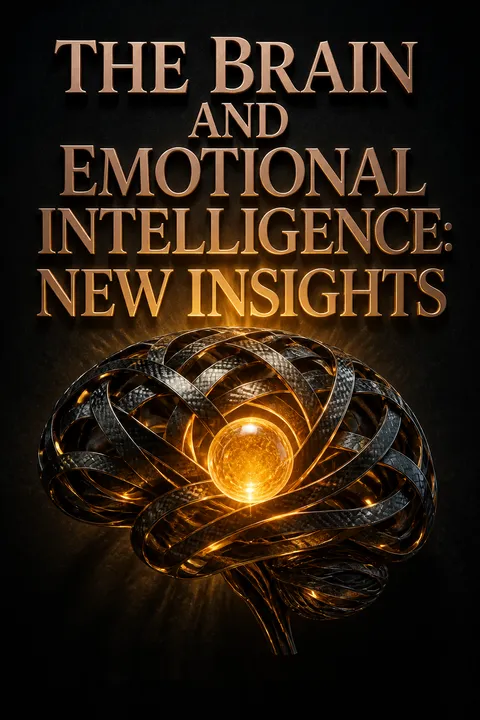


Key Takeaways
Treat emotional intelligence as a distinct skill set, not a softer IQ.
Different abilities matter. Emotional intelligence, or EI, is the capacity to recognize and manage emotions in oneself and others. Goleman argues that it is not simply academic intelligence or a personality trait: brain-injury studies link emotional and social abilities to neural systems that differ from those most involved in verbal, mathematical, and spatial reasoning.
Intelligence needs direction. A brilliant student in Goleman’s college dorm had exceptional test scores but little motivation, and struggled to complete his degree. A corporate lawyer remained intellectually sharp after surgery but lost the ability to connect options with their emotional significance. His story illustrates the practical point: reasoning can generate choices, while emotional signals help prioritize them. EI does not replace IQ; it helps explain why intelligence alone cannot guarantee effective work or relationships.
The useful distinction is between knowing how to solve a problem and knowing what deserves attention, effort, or restraint. That distinction helps explain why conventional tests can miss important predictors of performance. The neuroscience, however, should be read as support for distinct capacities, not as proof that EI is a single, neatly bounded faculty. Emotional and cognitive processes interact throughout the brain, and any test of EI must still show that it measures more than personality, social advantage, or self-presentation.
Let feelings rank your options, but make evidence answer for them.
Feelings guide decisions. Goleman recounts neurologist Antonio Damasio’s patient, a corporate lawyer whose reasoning and memory remained intact after surgery, but whose emotional connections to thought were disrupted. He could list the pros and cons of scheduling an appointment, yet could not choose a time. Feelings help give options a positive or negative value, making it possible to prioritize rather than endlessly compare.
Use intuition as a check. Goleman also describes entrepreneurs who gathered information broadly, then tested a promising deal against their gut sense. He links that sense to accumulated experience and bodily signals. The practical lesson is not to obey every hunch. If a decision looks strong on paper but feels wrong, pause, look for overlooked evidence, and ask what experience might be informing the reaction.
This account connects emotion to decision science: judgment is not calculation followed by an optional feeling, because valuation is part of choosing. Intuition can be especially useful when experience has supplied many patterns that are difficult to spell out. It can also reflect fear, prejudice, or a recent bad experience. Treating a gut reaction as a prompt to investigate preserves its informational value without granting it the authority of proof.
Catch the alarm early, before it borrows your attention and judgment.
Threat narrows the mind. An amygdala hijack is an intense emotional reaction in which the brain’s threat response captures attention and makes flexible thinking harder. The alarm system acts quickly on incomplete information, which can be useful in immediate danger but prone to mistakes in ordinary conflicts. At work, common triggers include feeling disrespected, treated unfairly, ignored, unappreciated, or trapped by an unrealistic deadline.
Interrupt the escalation. Notice early signs, such as rising anger or physical tension, before the reaction takes over. Then create room to respond: question the story forming in the mind, consider the other person’s pressures, or use a calming technique that has been practiced beforehand. Goleman’s point is not that people can choose their first emotion. They can build more choice over what they do next.
The most practical contribution here is the shift from moralizing about self-control to noticing the conditions under which self-control becomes difficult. A pause, a calmer body, and a second interpretation can restore options that felt unavailable in the heat of the moment. The alarm metaphor is useful, though it can oversimplify brain function: emotional reactions involve interacting networks, not a single switch. The real-world test is whether a strategy helps someone respond more accurately and less destructively.
Match challenge and recovery to keep performance out of boredom and overload.
Stress has a middle ground. The Yerkes-Dodson Law describes a broad relationship between arousal and performance: too little engagement can produce boredom, a manageable challenge can sharpen attention, and excessive pressure can undermine concentration and learning. Goleman calls the productive zone flow, a state of absorbed, flexible effort in which the task draws on a person’s abilities without overwhelming them.
Adjust the conditions. If someone is disengaged, increase meaningful challenge; if overwhelmed, reduce demands or add support. Goleman cites organizational research in which top-performing companies had ten times as many fully engaged workers as disengaged workers, while average organizations had roughly two engaged workers for each disengaged one. Regular recovery matters too. Chronic strain can build allostatic load, the cumulative wear of prolonged stress, and impair both health and clear thinking.
The performance curve is valuable because it rejects two simplistic prescriptions: more pressure is not always better, and comfort is not always productive. It also points to a managerial responsibility. A person’s performance depends partly on whether work is designed to fit their skills and resources, not just on personal resilience. The curve is a model, not a universal formula. Different tasks and people tolerate different levels of arousal, so managers need to observe actual performance rather than assume one ideal pressure level.
Work hard on the problem, then give insight room to recombine.
Creativity needs contrast. Goleman describes creative thinking as a whole-brain process, not a simple contest between the left and right hemispheres. A common pattern is to define a problem, immerse oneself in it, step back, and then develop and implement a promising idea. The stages are a guide, not a rigid recipe: filmmaker George Lucas preferred sustained work, while branding consultant Adrienne Weiss found a new idea for the Baskin-Robbins logo in a dream.
Prepare, then release. Studies discussed in the book found a burst of gamma activity shortly before some sudden insights, consistent with distant neural connections forming a new association. Goleman recommends focused preparation followed by relaxed attention, such as walking or resting, rather than forcing an answer. Once an idea appears, it also needs protection from reflexive dismissal so it can be tested and developed.
The alternation between effort and rest offers a useful account of creativity without making inspiration mystical. Focus supplies material; less-directed attention may let ideas combine in unexpected ways. That does not mean every break produces insight, or that an idea’s suddenness proves its quality. The best safeguard is to separate idea generation from evaluation: give a novel thought enough room to become clear, then judge it against evidence, constraints, and usefulness.
Choose motives that sustain effort without turning achievement into self-punishment.
Different drives energize work. Psychologist David McClelland’s framework describes three common motives: achievement, or improving against a meaningful standard; affiliation, or enjoying connection and shared effort; and power, or influencing people and outcomes. Power can serve personal ambition or a wider good. These motives offer different sources of persistence, so a goal may become more compelling when it connects with the person’s actual reasons for acting.
Aim high without becoming trapped. In McClelland’s ring-toss exercise, people with strong achievement motives tended to choose a challenging distance they believed they could manage, rather than an easy or impossible one. Goleman connects this pattern to entrepreneurs who take informed risks, including Google co-founder Sergey Brin. But achievement can become perfectionism: endless attention to what remains imperfect can damage health and relationships. Strong standards work best when success also leaves room for life beyond the task.
The framework helps explain why a single incentive rarely motivates everyone equally. A shared goal may energize one person through teamwork and another through measurable progress. Its strongest caution concerns achievement culture: institutions often reward visible overwork while ignoring its costs. Still, not every demanding standard is harmful, and some fields require exceptional persistence. The distinction is whether effort serves a valued purpose or whether self-worth becomes permanently dependent on outperforming the last result.
Manage the emotional climate because leaders transmit more than instructions.
Emotion travels between people. Goleman describes mirror neurons as one possible part of the social brain, which helps people register another person’s actions and feelings. In a study he discusses, strangers sitting together in silence began to converge emotionally, with the more expressive person tending to influence the other. Feedback also carried emotional force: positive comments delivered coldly could leave recipients feeling worse than criticism delivered warmly.
Rapport is more than agreement. Goleman identifies full attention, nonverbal coordination, and positive feeling as ingredients of rapport. In workplaces, the person with the most power often has an outsized influence on the group’s emotional tone. A leader’s conduct therefore shapes the conditions under which others think and collaborate, whether or not the leader intends to set that tone.
This insight turns leadership from message delivery into climate-setting. A leader’s tone can make candor safer or make ordinary feedback feel threatening, changing the quality of group participation. That influence creates responsibility, but it should not become a demand that leaders perform constant cheerfulness. Research on emotional contagion supports interpersonal influence, while the specific role and reach of mirror neurons remain debated. The larger lesson stands without a single neural explanation: people read one another’s affect and adapt to it.
Move important digital work into richer channels before trust erodes.
Text strips away context. Goleman calls the web an extension of collective thought, or “Brain 2.0,” but warns that text-only communication removes facial expressions, gestures, and vocal tone. Without those cues, a rushed or angry message can be sent before the writer has registered its effect. Receivers may also interpret a message more negatively than the sender intended.
Add human context. Goleman recounts two engineering teams whose email exchanges had become hostile and stalled their shared project. A consultant brought them together in person, giving them a relationship and context for interpreting later messages. For ongoing remote work, video or voice can provide more emotional information than text; even better, people can build familiarity before a crisis. Group emotional intelligence, or group EQ, includes trust and the ability to raise and resolve conflict, helping a team use more of its members’ abilities.
The recommendation is not to reject digital tools, but to match the channel to the task. Text is efficient for clear, low-stakes information; conflict, ambiguity, and urgent coordination benefit from richer feedback. Familiarity provides a kind of interpretive context, reducing the temptation to treat an ambiguous message as hostile. The tradeoff matters: face-to-face meetings cost time and can exclude people across locations or schedules. A good communication system uses richer contact selectively, especially when misunderstanding would be costly.
Separate understanding another person from feeling for or helping them.
Empathy has distinct forms. Cognitive empathy means understanding another person’s perspective. Emotional empathy means sharing or resonating with their feelings. Empathic concern means recognizing a need and being ready to help. These capacities can differ within the same person. Goleman notes that some people can read others accurately without caring about their welfare, a pattern associated with narcissistic, Machiavellian, and sociopathic behavior.
Practice with feedback. Empathy can improve when people check their interpretations rather than treating a guess as fact. Goleman describes training in recognizing brief facial expressions and exercises in reading emotion from silent video, then comparing guesses with what the person actually felt. He also stresses that reported gender differences are averages across groups, not rules for individuals; among top business performers, the differences in emotional competencies largely disappear.
This distinction prevents empathy from being treated as an automatic virtue. Perspective-taking can support care, but it can also help someone manipulate more effectively; concern and action matter. Feedback is equally important because confident social guesses can be wrong, especially across cultures or in ambiguous situations. The gender caveat is essential: group averages cannot reliably tell anyone what a particular person can do. Skills are more informative when assessed through behavior and context than through stereotypes.
Build emotional skills through specific practice, feedback, and repetition.
Change needs a target. Goleman presents neuroplasticity as the brain’s capacity to change with experience. To improve an EI skill, choose a specific behavior, such as giving someone undivided attention, and practice it in real situations. Anonymous feedback from colleagues can reveal which habits need work. Repetition strengthens the new response, especially when it is practiced at moments when the old habit would normally take over. Goleman estimates that replacing a strong habit often takes three to six months of regular practice.
Start early, keep learning. School-based social and emotional learning programs teach age-appropriate skills such as pausing before acting and considering consequences. A review of more than 200 programs involving 270,000 students found average gains of about 10 percent in social behavior and 11 percent in academic achievement. The same capacities matter in adult workplaces, and improvement remains possible beyond childhood.
The emphasis on observable behavior makes development more credible than vague promises to become more empathetic or composed. Feedback identifies the gap, and repetition lets a new response compete with an established one. The time estimate should be treated as a practical guide, not a fixed biological timetable; habits vary in strength, context, and ease of measurement. The school findings also suggest that emotional skills are not merely private advantages. When institutions teach and support them, learning and conduct can improve together.
Analysis
Goleman’s central argument is that emotional intelligence is not a decorative supplement to rational ability. It helps people determine what matters, regulate their responses, persist through difficulty, and coordinate with others. The book’s strongest narrative device is contrast: the brilliant student who cannot mobilize himself, the lawyer who can reason but cannot choose, and the creative practitioner whose insight arrives after focused work. Each example makes an abstract claim visible in an ordinary life consequence.
The book also links individual behavior to environments. An employee’s focus can be impaired by chronic threat; a leader’s mood can alter a group’s working climate; a school’s emotional curriculum can affect academic performance. This is an important corrective to advice that treats success as an individual willpower problem. Skills matter, but so do workload, respect, psychological safety, and opportunities to recover.
Its neuroscience is best understood as an explanatory bridge, not a final map of the mind. Terms such as amygdala hijack and left-right emotional style make research memorable, yet complex behavior depends on distributed, interacting systems. Some claims in the 2011 text, especially those involving specific circuits, should be treated with appropriate caution rather than as settled one-region explanations. The applied principles remain useful even when a neural metaphor is simplified.
A further strength is the book’s refusal to equate emotional intelligence with niceness. Emotional understanding can serve compassion, collaboration, or manipulation, depending on concern and purpose. Similarly, positive emotion is not always the right state: careful skepticism can help with detail-oriented tasks, while intense pressure can damage performance. The most durable practical message is therefore not to pursue constant positivity, but to notice what a situation demands, choose a response deliberately, and build the relevant skill through repeated practice. EI is less a personality label than a set of capacities that can be strengthened and used responsibly.
Review Summary
The Brain and Emotional Intelligence receives mixed reviews, with an average rating of 3.90 out of 5. Readers appreciate its concise overview of emotional intelligence and brain research but criticize its brevity. Some find it a good introduction to Goleman's work, while others feel it lacks depth. The book is praised for its accessibility and practical insights, particularly regarding stress management and empathy. However, some reviewers expected more comprehensive content or found it repetitive of Goleman's previous works.
People Also Read



Glossary
Emotional intelligence (EI)
Emotional and social abilitiesA set of abilities for recognizing and understanding emotions in oneself and others, regulating emotional responses, and using that awareness in relationships and action. Goleman organizes these capacities around self-awareness, self-management, social awareness, and relationship management. EI is presented as distinct from academic intelligence, though it interacts with cognitive ability in real decisions and work.
Amygdala hijack
Threat response takes controlGoleman’s term for an intense emotional reaction in which threat-related brain activity captures attention and makes flexible thinking, memory, and learning more difficult. The response can be triggered by physical danger or by social threats such as disrespect or unfair treatment. Because the alarm system works quickly with incomplete information, it can misread ordinary situations and provoke reactions a person later regrets.
Yerkes-Dodson Law
Arousal affects performanceA psychological model describing a broad relationship between arousal and performance. Too little arousal may leave a person disengaged, while a manageable level can support alertness and effort. Excessive stress can impair performance. Goleman uses the model to distinguish boredom, an optimal zone associated with flow, and overwhelm, while emphasizing that the best level varies with the person and task.
Flow
Absorbed, optimal engagementA state of deep concentration and energized involvement in a task, associated with strong performance or learning. In Goleman’s account, people in flow respond flexibly to changing demands, use their skills fully, and experience enjoyment in the activity. Flow is more likely when challenge fits a person’s capabilities and attention is not being pulled away by distraction or distress.
Allostatic load
Cumulative stress wearThe cumulative bodily cost of repeated or prolonged stress responses. Goleman describes how ongoing stress can keep the body’s alarm systems activated, disrupting recovery and contributing to problems with health, sleep, memory, and clear thinking. It can build through repeated stressful events, a persistent source of strain, or continued rumination rather than recovery.
Mindsight
Awareness of inner experienceDaniel Siegel’s term for the mind’s ability to observe and understand its own activity. Goleman connects this capacity with understanding other people, arguing that self-awareness and awareness of another person draw on overlapping brain systems. Mindsight supports reflection, emotional awareness, and the ability to notice what is happening in oneself during an interaction.
Group EQ
A team’s emotional capacitiesThe collective emotional and social abilities that allow a group to build trust, understand one another, and surface and resolve conflict. Goleman uses the term in discussing research by Vanessa Druskat, which links stronger group emotional intelligence with better team performance. It describes qualities of interaction that help members contribute their individual talents more fully.
Brain 2.0
Networked collective intelligenceGoleman’s informal label for the web’s potential to connect people and extend the intellectual resources available to them. Online networks can make knowledge and collaboration more powerful, but digital communication can also remove social cues that help people interpret one another. The term captures both the promise of networked minds and the need to build context and trust.
Social/emotional learning (SEL)
Teaching emotional and social skillsSchool-based instruction that develops emotional and interpersonal abilities in ways suited to students’ ages. Programs can teach children to notice rising emotion, pause, consider possible actions, and anticipate consequences. Goleman presents SEL as a way to give children structured practice with skills that otherwise develop unevenly through life experience, and cites research associating such programs with behavioral and academic gains.
Dark triad
Three manipulative personality patternsA psychological grouping of narcissism, Machiavellianism, and sociopathy. Goleman uses it to describe people who may be skilled at reading another person’s perspective while lacking emotional empathy or concern for that person’s welfare. The distinction illustrates why understanding someone’s feelings does not, by itself, guarantee compassion or ethical behavior.
Neuroplasticity
Experience reshapes neural connectionsThe brain’s capacity to change its connections and patterns of activity in response to experience and learning. Goleman applies this idea to emotional skills: practicing a new behavior can strengthen the neural pathways that support it, while familiar habits may remain powerful because they have been repeated many times. Repetition and feedback help a new response become more natural.
FAQ
What's "The Brain and Emotional Intelligence: New Insights" about?
- Author's Exploration: Daniel Goleman explores the intersection of neuroscience and emotional intelligence, providing updates on research since his earlier works.
- Key Topics: The book covers topics like the brain's ethical radar, creativity, motivation, empathy, and the social brain.
- Purpose: It aims to offer actionable insights into how emotional intelligence can be applied in various aspects of life, from leadership to personal fulfillment.
Why should I read "The Brain and Emotional Intelligence: New Insights"?
- Updated Research: The book provides the latest findings in affective neuroscience, making it a valuable resource for understanding emotional intelligence.
- Practical Applications: Goleman focuses on actionable insights that can be applied in real-world scenarios, enhancing personal and professional life.
- Comprehensive Coverage: It covers a wide range of topics, from the neural dynamics of creativity to the social brain, offering a holistic view of emotional intelligence.
What are the key takeaways of "The Brain and Emotional Intelligence: New Insights"?
- Distinct from IQ: Emotional intelligence is a distinct set of abilities separate from IQ, with its own neural circuitry.
- Self-Mastery: Self-awareness and self-regulation are crucial for personal effectiveness and optimal performance.
- Social Brain: Understanding the social brain can improve interpersonal relationships and leadership skills.
How does Daniel Goleman define emotional intelligence in this book?
- Four Domains: Goleman categorizes emotional intelligence into self-awareness, self-management, social awareness, and relationship management.
- Neural Basis: Emotional intelligence is supported by specific brain areas, such as the amygdala and prefrontal cortex.
- Practical Skills: It involves skills like empathy, motivation, and self-regulation, which are essential for personal and professional success.
What is the significance of the brain's ethical radar according to Goleman?
- Decision-Making: The brain's ethical radar helps in making decisions that align with one's values and ethics.
- Gut Feelings: The basal ganglia and gut feelings play a role in ethical decision-making, providing a non-verbal sense of right or wrong.
- Practical Implications: Understanding this can improve leadership and personal decision-making by aligning actions with core values.
How does "The Brain and Emotional Intelligence" explain the neural dynamics of creativity?
- Whole-Brain Involvement: Creativity involves both hemispheres of the brain, with the right hemisphere having more neural connections.
- Stages of Creativity: Goleman outlines a four-stage model: defining the problem, immersion, letting go, and execution.
- Gamma Activity: Creative insights are marked by high gamma activity, indicating new neural connections and associations.
What does Goleman say about the social brain and its importance?
- Mirror Neurons: The social brain includes mirror neurons that help us connect and empathize with others.
- Emotional Contagion: Emotions are contagious, and understanding this can improve interpersonal interactions and leadership.
- Rapport and Synchrony: Effective communication involves synchrony and rapport, which are crucial for successful relationships.
How does Goleman address the concept of empathy in the book?
- Three Types of Empathy: Cognitive empathy (understanding others' perspectives), emotional empathy (feeling with others), and empathic concern (helping others).
- Neural Basis: Different types of empathy rely on distinct brain circuits, such as the insula and mirror neurons.
- Empathy's Role: Empathy is foundational for compassion and effective social interactions, enhancing both personal and professional relationships.
What are the gender differences in emotional intelligence according to Goleman?
- Statistical Trends: Women generally score higher in emotional empathy, while men often excel in emotional self-mastery.
- Brain Differences: Women may rely more on the mirror neuron system, while men may shift to problem-solving modes.
- Performance Equality: Among star performers, gender differences in emotional intelligence tend to disappear.
What is the "dark side" of emotional intelligence as discussed in the book?
- Dark Triad: Narcissists, Machiavellians, and sociopaths can have high cognitive empathy but lack emotional empathy and concern.
- Sociopath's Brain: Sociopaths show deficits in brain areas crucial for emotional intelligence, like the anterior cingulate and amygdala.
- Organizational Impact: Sub-clinical sociopaths can be found in workplaces, often as manipulative or abusive leaders.
How can one develop emotional intelligence according to Goleman?
- Neuroplasticity: The brain's ability to reshape itself means emotional intelligence skills can be developed at any age.
- Practical Steps: Commitment, feedback, and practice are key to enhancing emotional intelligence abilities.
- Mental Rehearsal: Visualization and mental rehearsal can strengthen new neural pathways, aiding in skill development.
What are the best quotes from "The Brain and Emotional Intelligence" and what do they mean?
- "Our motives dictate where we find our pleasures." This highlights the connection between motivation and emotional well-being.
- "The social brain includes a multitude of circuitry, all designed to attune to and interact with another person’s brain." It emphasizes the importance of understanding the social brain for effective communication.
- "Emotional intelligence is a distinct set of abilities separate from IQ, with its own neural circuitry." This underscores the unique nature of emotional intelligence and its significance in personal and professional life.
About the Author
Other books by Daniel Goleman




Download PDF
Download EPUB
.epub digital book format is ideal for reading ebooks on phones, tablets, and e-readers.








