

Key Takeaways
Build more good days instead of chasing rare peak performances
Aim for attainable excellence. The book distinguishes the optimal state, a satisfying, productive condition in which people do meaningful work well, from flow, the rarer experience of total absorption and exceptional performance. Tennis player Ajla Tomljanović showed how focus can support a peak moment when she blocked out a stadium cheering for Serena Williams and won their 2022 U.S. Open match. But expecting that intensity every day can turn excellence into perfectionism. A good day can be quieter: solving a difficult problem, making progress, and feeling engaged with the people around you.
Progress counts more than spectacle. In a Harvard Business School study, hundreds of workers recorded nearly 12,000 accounts of their workdays. Good days often included small wins and support from others; setbacks and discouragement tended to sour mood and make work harder. The book cites a McKinsey survey in which some managers estimated they were five times more productive in their best state, while acknowledging that estimate needs stronger evidence.
The distinction offers a useful antidote to performance culture that treats exceptional output as the daily baseline. It also fits research on sustainable motivation: frequent, visible progress can keep effort meaningful without requiring constant triumph. Yet a good-day standard should not become another productivity scorecard. Mood and output are shaped by health, caregiving, workload, and resources, not merely personal attitude. The strongest application is to define progress in terms that fit the work and the person, while noticing when the conditions for a good day are missing.
Use emotional intelligence to amplify expertise, not replace it
Four connected abilities. Emotional intelligence, or EI, is the capacity to recognize and manage emotions in oneself and others. The book organizes it into self-awareness, self-management, social awareness, and relationship skills. These capacities help people use their expertise under pressure and work effectively with others. A study of engineers at an automobile company found EI predicted effectiveness where IQ and personality measures did not. A meta-analysis covering 99 studies and more than 17,000 people also found EI predicted job performance, with stronger links in jobs requiring frequent social interaction or emotional regulation.
Expertise still matters. The authors distinguish threshold competencies, the basic qualifications needed to do a job, from distinguishing competencies that separate top performers from average ones. Cognitive ability often gets someone through the door; once coworkers have similar technical qualifications, emotional skills can make a larger difference. The relevant skills vary by role and workplace, so EI is a map for development, not one universal checklist.
This framing avoids a false contest between IQ and emotional skill. In complex work, technical competence identifies what can be done, while emotional competence often shapes whether people can coordinate to do it. The caveat is measurement: EI models and tests differ, and a relationship between EI and performance does not prove that one simple intervention will improve every outcome. Competency models work best when tied to actual job demands, rather than treating sociability or emotional display as evidence of ability.
Strengthen attention so you can work well and notice your inner signals
Attention is trainable. Self-awareness means recognizing what you feel, why it arose, and how it affects what you are trying to do. The book presents attention as one practical doorway into an optimal state: noticing distraction and returning to the task can quiet worry and self-doubt. A simple practice is to follow the breath, notice when the mind wanders, and gently bring attention back. In a study of college football players, those who practiced attention training more consistently showed better attention and mood during demanding preseason training.
Listen inward, then test. Self-awareness also helps identify work that feels meaningful or misaligned. Oprah Winfrey described feeling physically energized when she moved from reading news to hosting a talk show. The book connects such bodily cues to somatic markers, feelings that draw on past experience and inform decisions. They are useful evidence, not infallible commands. Pairing them with reflection, feedback, and practical constraints can turn vague unease into a clearer choice.
Attention training links emotional intelligence to a basic problem of cognitive bandwidth: every worry competing for focus uses resources that could support the task. Breath practice is valuable not because it erases thought, but because noticing distraction is itself the repetition that builds attentional control. Intuition also deserves neither blind obedience nor dismissal. Bodily reactions can register subtle patterns, but they can reflect bias or temporary stress. Treating them as hypotheses to investigate preserves their value without mistaking a strong feeling for a final verdict.
Create a pause between emotional alarm and your next action
Self-command begins with noticing. Cognitive control is the ability to direct attention, inhibit an immediate impulse, and choose a more considered response. A five-year-old once described calming a tantrum by letting a wiser part of himself address his upset. Adults need the same basic move. Comedian Chris Rock, after being slapped onstage at the 2022 Academy Awards, regained composure and continued hosting. His response illustrates how a pause can protect judgment when emotion surges.
Resilience needs recovery. Chronic stress can narrow attention, impair memory, and make people rely on habit instead of flexible thinking. When high demands persist without recovery, exhaustion can turn into cynicism and burnout. The book recommends reappraising a stressor, seeking support, taking restorative breaks, and using slow breathing or gratitude practices. But it warns against blaming individuals for burnout: overload, unfair treatment, and inadequate resources may be organizational causes that require structural change.
The pause is a practical bridge between emotion and behavior, not a demand to suppress emotion. Stress can carry useful information, and the goal is to regain enough flexibility to interpret it. The book is especially persuasive when it treats resilience as both personal and systemic. Breathing exercises cannot compensate indefinitely for unsafe staffing or discrimination. A healthy response asks two questions: what can be regulated internally, and what conditions must be changed so people are not repeatedly pushed beyond their capacity?
Understand what others think and feel, then act for their welfare
Empathy has three parts. Cognitive empathy means understanding another person’s perspective. Emotional empathy means resonating with what they feel. Empathic concern adds genuine care for their welfare. A grocery delivery representative used all three when a customer’s order went to the wrong place: he listened, recognized her frustration, arranged a replacement, and offered compensation. The customer left the call feeling understood rather than merely processed.
Care needs boundaries. Emotional resonance can become distress when someone absorbs other people’s pain without relief, a risk for nurses and other caregivers. In medicine, a degree of emotional distance can help clinicians function during emergencies, but habitual detachment can damage relationships outside work. Empathy also operates at group scale. Organizational awareness means reading informal networks, influence, and unspoken rules. The book argues that seeing people as an out-group narrows concern, while curiosity about their circumstances can reopen it.
Separating understanding, resonance, and concern clarifies why empathy is not simply feeling whatever another person feels. Compassion can remain steady even when emotional contagion would overwhelm someone, a distinction with particular value in care professions. Empathy also does not guarantee agreement or sound policy. Perspective-taking can be used manipulatively, and concern for one person can conflict with fairness to a group. Ethical empathy therefore combines attention to individual experience with a wider view of consequences and power.
Earn influence by building trust before asking people to change
Connection makes persuasion possible. Relationship skills include coaching, influence, inspiration, and conflict management. Benjamin Franklin cultivated relationships in France before seeking the support that helped the American colonies win French backing. In a modern company, Nike executive Darcy Winslow persuaded shoe designers to address toxic materials by learning who could shape the work and presenting the problem in terms that engaged them. Both examples show that influence depends on understanding people and their motivations, not merely having a strong argument.
Feedback can open or close minds. A medical technology executive, Jonathan, helped a reactive colleague change by offering specific private feedback and practical support, rather than humiliating him. Research cited in the book suggests criticism focused only on mistakes can activate defensiveness, while attention to strengths and future growth can support learning. Conflict is easier to resolve when people identify shared aims before debating methods. Influence becomes manipulation when it serves only the persuader’s interests.
Trust is not a decorative extra added to persuasion; it changes whether people can hear a proposal without first defending themselves. This resembles negotiation practice that separates underlying interests from fixed positions. The examples also underscore that credibility grows through reciprocal attention and follow-through. Still, relationship-building should not become a velvet glove for coercion. The ethical test is whether the other person retains meaningful choice and whether the proposed change serves a legitimate shared interest, rather than merely making resistance less visible.
Build team norms that make disagreement and contribution safe
How a team works matters. Psychological safety is a shared sense that people can ask questions, admit mistakes, and offer dissent without being humiliated or punished. Google studied close to 200 teams and found that how members worked together predicted effectiveness more than who was on the team; psychological safety was the strongest factor. A feeling of belonging supports that safety by signaling that each member’s contribution matters.
Norms turn safety into behavior. The Consortium for Research on Emotional Intelligence in Organizations stalled until members agreed on shared practices, including better listening and shared responsibility for keeping discussions productive. High-performing teams also build habits for noticing members’ needs, addressing disruptive behavior, and maintaining relationships with other groups. In one study of small groups, social sensitivity and balanced turn-taking predicted stronger performance. A team can improve by surveying its habits, choosing a few norms to change, and practicing them consistently.
Psychological safety is sometimes mistaken for comfort or the absence of standards. In practice, it supports candor precisely because disagreement carries less social risk. But safety must be paired with accountability: a team that never challenges weak ideas is pleasant, not necessarily effective. Explicit norms help because they make interaction patterns discussable rather than leaving power to operate invisibly. Belonging also requires more than invitations to speak. Leaders need to notice whose ideas receive attention, whose mistakes are forgiven, and whose contributions change decisions.
Practice emotional skills over time, then make them part of work
EI can be developed. The book advises using assessments mainly for growth, not hiring decisions, since people may misjudge their own abilities and emotional skills can change. Effective training combines motivated participants, at least ten hours spaced over time, repeated practice, social support, and visible backing from leaders. One approach begins with a person’s desired future, compares that aspiration with feedback from people who know them, and then turns one chosen skill into a repeated practice.
Culture makes practice stick. At BL Companies, emotional skills count in performance reviews alongside results; employees who meet targets by mistreating colleagues are not treated as top performers. At MD Anderson, listening and teamwork are part of the leadership model. The authors argue that training has greater reach when leaders model the behavior and organizations reinforce it through hiring, development, and promotion. Teaching individuals to cope should not replace fixing damaging workplace conditions.
Behavioral skills are learned through rehearsal, feedback, and context, not by hearing a compelling lecture once. The training principles resemble deliberate practice, but emotional behavior is harder to rehearse cleanly because each interaction involves another person and a power relationship. That makes organizational reinforcement essential. A program can teach listening while incentives reward interruption and speed. The test of culture change is not the vocabulary in a mission statement; it is whether everyday decisions reward the conduct the organization claims to value.
Pair purpose with curiosity, then give new ideas time to become useful
Meaning sustains effort. Purpose is a sense that work matters beyond the immediate reward. New York bus driver Govan Brown treated passengers with warmth because he saw service as a human responsibility, not simply transportation. The book argues that a personal purpose can make even ordinary tasks engaging, though a serious clash between personal values and workplace demands can become a source of stress. External rewards may support motivation, but they can weaken it when they replace autonomy and meaning.
Innovation changes gears. The creative process moves from exploring a problem, to incubation, when the mind can wander, to execution, when an idea is tested and refined. Biologists François Jacob and Sydney Brenner, stuck on a laboratory problem, recognized that magnesium could stabilize a ribosome. Their insight mattered only after they returned to the lab and found the right proportions. The book links this work to systems thinking: understanding networks, incentives, and wider consequences helps people direct innovation where it can matter.
Purpose and creativity are often presented as inspirational forces, but this account gives them a more operational role: meaning supplies persistence, while incubation needs protected space and execution needs disciplined testing. The three-stage model also explains why constant urgency can suppress discovery. Yet individual purpose cannot settle conflicts over an organization’s social or environmental effects. Systems thinking asks who benefits, who bears costs, and which incentives preserve the problem. Innovation becomes valuable when novelty is joined to usefulness and responsibility.
Analysis
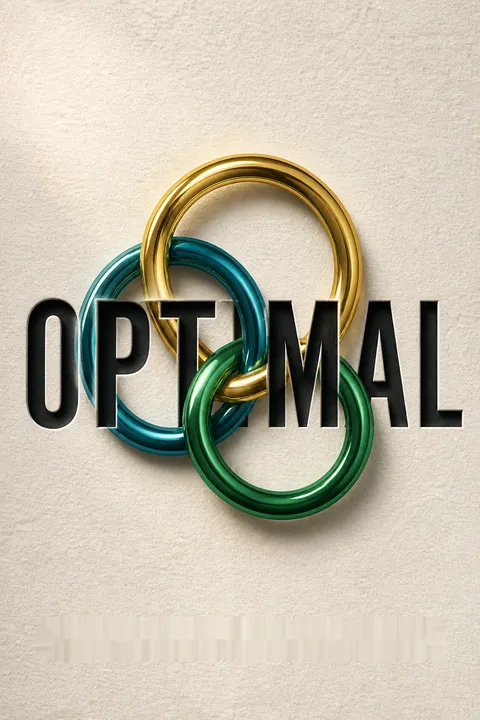
Optimal makes emotional intelligence concrete by linking inner experience to observable work: focus, engagement, cooperation, resilience, and performance. Its central move is to lower the bar from spectacular flow to repeatable good days, then explain how self-awareness, self-management, empathy, and relationship skill make those days more attainable. The argument scales outward, from the individual to leaders, teams, training, and organizational culture, before connecting purpose and systems awareness to future challenges.
The strongest feature is this multilevel account. It resists the idea that an employee’s performance is simply a private trait: a manager’s behavior, team norms, workload, and institutional incentives shape whether people can use their abilities. The examples of burnout and psychological safety make this especially clear. The authors also distinguish useful emotional regulation from suppressing feeling, and personal resilience from excusing harmful working conditions.
The evidence deserves careful reading. The book gathers meta-analyses and workplace studies, but EI is measured in multiple ways, and many findings establish association rather than direct causation. High-EI people may perform better partly because they build trust and gain cooperation, while successful workplaces may also cultivate behaviors that look like EI. The reported fivefold productivity advantage in an optimal state is explicitly presented as an estimate, not a settled scientific result. That caution matters because attractive numbers can outrun their evidence.
A second tension concerns the language of performance. EI can humanize work by recognizing care, meaning, and belonging as real conditions of excellence. It can also be misused to make employees responsible for adapting to systems that should change. The book’s strongest implication is therefore reciprocal: individuals can build emotional skills, while institutions must create conditions in which those skills are useful, safe, and fairly rewarded. Optimal performance is not just a better-managed person. It is a better relationship between people and the systems they inhabit.
Review Summary
Optimal receives mixed reviews, with an average rating of 3.37/5. Some praise its insights on emotional intelligence and optimal performance, while others find it repetitive of Goleman's previous works. Positive reviews highlight practical applications in personal and professional settings. Critics argue it lacks depth and originality. The book explores emotional intelligence, leadership, and sustaining excellence in various contexts. Some readers appreciate its comprehensive approach, while others feel it rehashes familiar concepts without offering substantial new information.
People Also Read








Glossary
Optimal state
Satisfying, effective functioningA condition in which a person feels engaged, positive, and capable of doing meaningful work well. It includes creativity, quality output, mental sharpness, commitment, and supportive relationships. Unlike flow, which describes a rare peak of total absorption, the optimal state can describe an ordinary but satisfying day.
Emotional intelligence
Emotional and social abilitiesThe ability to recognize and understand emotions in oneself and others, manage emotional responses, and use that awareness in relationships. The book groups these abilities into self-awareness, self-management, social awareness, and relationship skills. It treats emotional intelligence as a set of developable competencies that helps people apply expertise effectively.
Cognitive control
Directing attention and impulsesA set of mental abilities that helps a person focus on a chosen task, ignore distractions, restrain an immediate impulse, and avoid getting trapped in repetitive negative thoughts. In the book, cognitive control supports self-management and makes it easier to respond thoughtfully rather than act automatically when emotions run high.
Empathic concern
Care for another's welfareA form of empathy that adds genuine concern for another person’s well-being to understanding their perspective and sensing their feelings. It can motivate compassionate action, such as offering practical help. The book distinguishes it from emotional resonance alone, which can overwhelm a person without necessarily producing care or assistance.
Organizational awareness
Reading social networks and influenceThe ability to notice how relationships, emotions, informal influence, and unspoken rules operate within a group or organization. It helps someone understand who shapes decisions, how people relate across a network, and how a team’s actions affect other groups. The book also extends this perspective toward broader systems.
Psychological safety
Safety to speak and take risksA shared belief that members of a group can ask questions, admit errors, disagree, or offer ideas without being embarrassed or punished. In the book, psychological safety helps teams make use of their members’ knowledge and supports belonging, learning, and collaboration. It does not mean avoiding standards or constructive challenge.
Team EI
Emotionally intelligent team habitsA method of improving a team’s shared interaction norms, rather than focusing only on individual traits. Members assess how the group works, discuss where its habits fall short, choose norms to improve, and practice them. Examples include attentive listening, understanding members’ needs, and building constructive ties with other groups.
Emotional and Social Competence Inventory
360-degree competency assessmentA multi-rater assessment used to evaluate a person’s emotional and social competencies, especially in workplace leadership. People who know the individual provide confidential ratings, creating a profile of strengths and development needs. The book recommends using such feedback mainly to guide development, rather than as a stand-alone hiring test.
Default mode network
Brain network active during mind-wanderingA set of interconnected brain regions that becomes more active when attention is not fixed on a specific external task. The book connects this state with incubation in creative work, when ideas may combine in new ways. Creativity also requires focused exploration before incubation and disciplined execution afterward.
Intentional Change Theory
Aspiration-led behavior changeA development approach described in the book that begins with a person’s vision of their desired future, assesses current strengths and limitations, connects development goals to that vision, and builds new behaviors through repeated practice. Feedback, coaching, and social support help make the change durable.
FAQ
What's Optimal: How to Sustain Personal and Organizational Excellence Every Day about?
- Emotional Intelligence Focus: The book emphasizes emotional intelligence (EI) as crucial for achieving optimal performance in personal and organizational settings.
- Optimal State Definition: It defines an "optimal state" as a satisfying day where individuals feel productive and engaged, not just peak experiences like "flow."
- Research-Based Insights: The authors provide practical methods for accessing this optimal state through emotional intelligence, self-awareness, and relationship management.
Why should I read Optimal: How to Sustain Personal and Organizational Excellence Every Day?
- Enhance Performance: The book offers strategies to improve emotional skills, leading to better performance in work and personal life.
- Avoid Burnout: It addresses burnout and provides insights on resilience and emotional balance, crucial for well-being in high-stress environments.
- Applicable Across Fields: The principles are relevant for various professions, making it a valuable resource for improving interpersonal skills and workplace dynamics.
What are the key takeaways of Optimal: How to Sustain Personal and Organizational Excellence Every Day?
- Emotional Intelligence is Key: EI is a critical factor in achieving optimal performance, surpassing traditional measures like IQ.
- Optimal State vs. Flow: The book differentiates between the elusive "flow" state and a more attainable "optimal state."
- Practical Strategies: It provides methods for entering and maintaining an optimal state, such as mindfulness exercises and effective communication techniques.
How does emotional intelligence impact workplace performance according to Optimal: How to Sustain Personal and Organizational Excellence Every Day?
- Predictor of Success: EI is a significant predictor of workplace performance, often more so than IQ or technical skills.
- Enhances Engagement: Employees under emotionally intelligent leaders report higher engagement and job satisfaction.
- Reduces Turnover: Organizations with emotionally intelligent leadership experience lower turnover rates, contributing to a healthier workplace culture.
What practical methods does Optimal: How to Sustain Personal and Organizational Excellence Every Day suggest for improving emotional intelligence?
- Mindfulness Practices: The book recommends mindfulness exercises to enhance self-awareness and emotional regulation.
- Regular Check-Ins: Conducting regular emotional check-ins fosters greater self-awareness and helps manage emotional responses.
- Feedback Mechanisms: Seeking feedback from peers and supervisors can enhance self-awareness and interpersonal skills.
How can I create an emotionally intelligent workplace culture as described in Optimal: How to Sustain Personal and Organizational Excellence Every Day?
- Lead by Example: Leaders should model emotional intelligence behaviors to set the tone for the organization.
- Training Programs: Implementing EI-focused training programs can help employees develop essential skills.
- Encourage Open Communication: Fostering an environment where employees feel safe to express emotions and concerns is crucial.
What is the relationship between self-awareness and optimal performance in Optimal: How to Sustain Personal and Organizational Excellence Every Day?
- Foundation of EI: Self-awareness is the cornerstone of emotional intelligence, enabling effective self-management.
- Enhances Decision-Making: It leads to better decision-making by recognizing biases and emotional triggers.
- Promotes Resilience: Awareness of emotional states helps navigate challenges and fosters resilience.
How does Optimal: How to Sustain Personal and Organizational Excellence Every Day address the issue of burnout?
- Identifying Causes: The book discusses common causes of burnout and emphasizes early recognition.
- Strategies for Resilience: It offers strategies like mindfulness and self-care to manage stress and maintain balance.
- Creating Supportive Environments: Organizations should foster environments where employees feel valued and understood.
What role does empathy play in effective leadership according to Optimal: How to Sustain Personal and Organizational Excellence Every Day?
- Building Trust: Empathy helps leaders build trust and rapport with their teams.
- Enhancing Communication: Empathetic leaders are better communicators, addressing emotional needs effectively.
- Fostering Collaboration: Empathy encourages collaboration and teamwork, enhancing organizational performance.
How can I apply the concepts from Optimal: How to Sustain Personal and Organizational Excellence Every Day in my daily life?
- Daily Reflection: Incorporate daily reflection practices to assess emotional state and identify improvement areas.
- Mindfulness Techniques: Practice mindfulness techniques to enhance emotional regulation and self-awareness.
- Seek Feedback: Actively seek feedback to gain insights into emotional intelligence strengths and weaknesses.
How does Optimal: How to Sustain Personal and Organizational Excellence Every Day suggest organizations can sustain emotional intelligence over time?
- Ongoing Training Programs: Continuous EI training and development embed these skills within the organizational culture.
- Feedback and Assessment: Regular feedback mechanisms assess emotional climate and individual EI competencies.
- Leadership Commitment: Sustaining EI requires leadership commitment to model and prioritize emotional intelligence.
What is the significance of psychological safety in Optimal: How to Sustain Personal and Organizational Excellence Every Day?
- Foundation for Team Performance: Psychological safety is critical for high-performing teams, fostering innovation and collaboration.
- Enhances Engagement: Employees feel more engaged when they feel psychologically safe, leading to better performance.
- Supports Diversity and Inclusion: It creates an inclusive environment where diverse perspectives are valued, encouraging open dialogue.
About the Author
Other books by Daniel Goleman




Download PDF
Download EPUB
.epub digital book format is ideal for reading ebooks on phones, tablets, and e-readers.








