

Key Takeaways
Start meditation in the body, not by demanding a quiet mind
Begin with what is here. Tsoknyi Rinpoche noticed that students could explain Buddhist ideas clearly yet remain caught in the same emotional habits. Their understanding had not reached the feelings and bodily sensations where those habits were held. His answer is to ground attention in the body before asking the mind to settle. Dropping is a brief reset: lift the hands and let them fall onto the thighs, breathe out audibly, and move attention from thinking to bodily sensation. Rest with whatever is present, including numbness or discomfort, without trying to produce calm.
Repeat the reset when thought takes over. It is not meant to erase problems or create a special state. It interrupts the mental rush long enough to reconnect attention with present experience and begin practice from a steadier place.
The sequence matters: this approach treats meditation as a relationship among attention, emotion, and bodily experience, not merely as mental concentration. That makes the practice more responsive to people who interpret persistent thoughts as proof that they are failing. Its modest aim is also a strength. A reset need only create a small opening, not deliver instant serenity. The bodily gesture may not suit every person or setting, but the underlying instruction is adaptable: find a safe, ordinary sensation and return attention there without grading the result.
Interrupt rumination before trying to solve every thought
Separate useful concern from looping. Daniel Goleman distinguishes worry that leads to a practical step from realistic alarm that fades when danger passes, and from rumination, repetitive thought that circles without resolution. After receiving a poor grade in college, he kept fearing academic failure even as his performance improved. The worry had detached from the evidence and kept renewing itself.
The book links this loop to the brain's rapid threat response, which can keep attention fixed on a perceived danger. Dropping offers a physical interruption: release a large breath, let the hands fall, and notice the body. That pause is not a substitute for solving a real problem. It is useful when thinking has stopped producing action and is only rehearsing distress.
The practical distinction is between thinking that changes a situation and thinking that repeatedly rehearses its threat. A pause can help reveal which one is happening. If a concern has a concrete next step, the next step deserves attention; if no new information or action emerges, another circuit of analysis may only intensify the feeling. This framing avoids treating all worry as irrational. It also avoids the opposite mistake of assuming that every urgent thought deserves obedience simply because it feels urgent.
Keep your body and thinking quick; calm the feeling world's false urgency
Locate the stress accurately. Rinpoche calls the body, thinking mind, and feeling energy three different speed limits. A person can move quickly and think sharply without feeling internally rushed. The trouble is often a restless emotional pressure insisting that everything happen now. In Kathmandu, Rinpoche stopped obeying that pressure during his morning routine. He ate and drove at a natural pace, arrived at nearly the same time, and reached work less depleted.
His breathing practices aim to settle this agitated energy below the navel: breathe gently into the belly, notice where restlessness sits, and bring attention and breath downward without straining. Goleman describes research reviews in which slower breathing, especially around six breaths per minute, was associated with changes in heart-rate variability and signs of relaxed alertness. The findings are promising, not proof of every traditional explanation.
This model is useful because it distinguishes speed from strain. Demanding that a fast-moving life become slow may be unrealistic, while noticing the internal pressure attached to each task gives a person something more workable to regulate. The breathing instruction also emphasizes gentleness, an important correction to the tendency to turn self-regulation into another performance challenge. The traditional account of energy and the scientific account of nervous-system changes do not establish that they describe identical mechanisms; the practical overlap can still be valuable without collapsing one explanation into the other.
Meet recurring emotions as wounded patterns, not commands or enemies
Turn toward the feeling. Rinpoche calls distorted, recurring emotional reactions beautiful monsters: patterns that can cause harm but may have begun as attempts to cope with difficult conditions. An adult who was undervalued as a child, for example, may react intensely to ordinary criticism. The feeling is real, but its interpretation of the present may be distorted.
Handshake practice means meeting a feeling with nonjudging attention rather than suppressing, avoiding, indulging, or immediately trying to fix it. Its progression is to meet the feeling, stay with it, allow time, and communicate with it when it becomes less defensive. A person should not follow a destructive impulse simply because it is being felt. The book advises short practice and a safe grounding point, especially for people with trauma histories; professional support may be appropriate.
The distinction between welcoming an emotion and obeying it is essential. A feeling can deserve attention without serving as a reliable account of what another person intended or what action should follow. This makes acceptance compatible with boundaries and discernment. The method's strength is its refusal to shame a reaction that may once have been protective. Its limit is equally important: turning toward pain is not automatically safe in every circumstance. The recommendation to use a grounding point and proceed cautiously recognizes that emotional work needs pacing, not just courage.
Look for okayness beneath pleasure, instead of buying relief
Distinguish the trigger from the source. Rinpoche tells how a glossy laptop advertisement stirred his sense of hollowness. He bought the computer, enjoyed it for a while, then encountered greasy fingerprints, inconvenient plugs, and a crash on a rough trip. The purchase had briefly changed his mood, but it could not resolve the underlying lack.
He calls a quiet, circumstance-independent sense of basic well-being essence love. It is distinct from self-esteem or affection directed toward someone; it is described as the inner ground from which healthy expressions of love can grow. Music, gentle breathing, movement, nature, or memories of kindness can help a person notice it, but the trigger is not the well-being itself. The practice is to let the trigger fade from attention and rest with the subtle okayness that remains.
The advertisement story captures a familiar confusion: a pleasurable stimulus can briefly relieve a need without meeting it. The useful practice is not to condemn pleasure or possessions, but to notice whether they are being asked to solve a deeper feeling of emptiness. The idea of an innate, always-present inner okayness belongs to the book's contemplative view of human nature, not to a simple scientific measurement. Readers can still test the experiential claim modestly: observe whether attention can rest in well-being without requiring the next purchase, achievement, or approval.
Build compassion from inner steadiness, then widen it beyond your circle
Care without collapsing. The book distinguishes love, which wishes others well, from compassion, which faces suffering and wishes to relieve it. Compassion can become biased by attachment, blocked by indifference, or overwhelmed by aversion. Rinpoche argues that inner steadiness makes caring less dependent on whether someone is familiar, useful, or likable.
His mind-training exercises begin with the shared wish to be happy and avoid suffering. Practitioners can extend concern from loved ones to strangers and difficult people, while trying to understand the conditions behind harmful behavior. Compassion does not require approving of harm or abandoning protection. Goleman also distinguishes empathic distress, becoming overwhelmed by another person's pain, from compassionate concern, which can remain present and caring. Helping has limits: genuine care may involve discomfort, but it does not require doing what is impossible or unsafe.
The progression from familiar affection to concern for strangers is psychologically intelligible: a concrete relationship supplies an emotional starting point, while reflection challenges the assumption that care should stop at the edge of one's group. The distinction between compassion and approval protects moral judgment from being mistaken for kindness. The section also resists a common idealization of empathy, in which absorbing another person's distress is treated as the highest form of care. The claim that compassion entails willingness to suffer needs careful interpretation: sustainable help requires boundaries, capacity, and attention to consequences.
Train attention in short, balanced returns, not thought-free perfection
Notice, then come back. Rinpoche describes mindfulness as deliberately noticing experience and awareness as a broader capacity to hold both an object and the surrounding situation. His restaurant story makes the combination concrete: attentive waiters placed dishes precisely while staying aware of what was happening around them. In practice, attention can rest on the body, sensations, thoughts, or breath, then return when it wanders.
Settling can use an anchor, such as breathing, or rest in present-moment awareness without one. Neither requires an empty mind. The book recommends brief periods of fresh attention, repeated often, rather than long sessions spent drifting or straining. Agitation and dullness are common obstacles, not evidence of failure. Adjust posture, gaze, light, or movement to restore alert calm. When painful emotions become too sticky for ordinary observation, alternate with handshake practice.
The waiter example shows why attention need not mean narrow concentration alone. Skilled awareness shifts between precision and context, a useful model for work and conversation as well as meditation. The emphasis on returning rather than suppressing thoughts also changes the definition of success: noticing distraction is already part of the practice. Short sessions can preserve quality, though the appropriate duration will vary with the person and task. The distinction between calm alertness and dull relaxation is especially practical because stillness by itself can conceal disengagement rather than clarity.
Hold the self lightly: useful identity is not a fixed thing
Examine the sense of me. Rinpoche calls the tendency to treat changing experience as solid and permanent reification. It can make a passing mood feel like a permanent identity and turn ordinary setbacks into verdicts on the self. Insight practice investigates this habit rather than merely calming it. The book compares calmness to trimming weeds and insight to addressing their roots.
Its Four I's model names different ways the self is experienced: the mere I, held lightly and flexibly; the reified I, treated as fixed; the needy I, organized around getting fulfillment for oneself; and the social I, shaped by how others see a person. Selflessness does not mean having no personality or functioning identity. It means recognizing that identity changes with conditions and depends on many parts and relationships.
This account offers a middle path between a rigid identity and the fear that loosening identity means becoming nobody. Roles and personal histories remain useful, but they need not become permanent definitions. The model is especially helpful when a person can identify a shift from adaptable self-understanding to defensiveness or status-seeking. Its Buddhist language should not be mistaken for proof that the self is unreal in every ordinary sense; the practical point is narrower and strong: a changing person can relate to thoughts and roles without treating each one as the whole self.
Build a small daily practice, then choose tools by the problem at hand
Practice for familiarity. The book treats meditation as training a capacity through repetition, not securing a permanent peak experience. Its Tibetan term for meditation, gom, is explained as becoming familiar with a way of being. The closing advice is to begin with a manageable daily commitment, such as ten to twenty minutes, and let practice grow rather than forcing a dramatic schedule.
Use the tool that fits the moment: dropping for mental rush, breathing for ungrounded speed, handshake for emotional patterns, essence-love practice for hollowness, compassion exercises for narrow concern, attention practice for scatteredness, and insight for rigid self-fixation. Meditation experiences fluctuate; a difficult session does not cancel the value of returning. The book's overall aim is a grounded body, an open heart, and a clear mind that can support life and service to others.
The toolbox model prevents meditation from becoming a single technique applied indiscriminately. It also makes consistency more plausible: a brief practice can be repeated without requiring ideal conditions or a special mood. The key challenge is avoiding a new form of self-judgment, where every exercise becomes a test of progress. The book's own emphasis on familiarity supports a gentler measure: whether the person is learning to return, respond, and recover in ordinary life, not whether each session feels profound.
Analysis
The book's central contribution is its sequence. Rather than beginning with the demand to control thought, it starts by reconnecting attention with the body, then addresses emotional habits, cultivates a stable sense of well-being, develops compassion, trains attention, and finally examines the self that experiences all of these. The progression is both pedagogical and psychological: abstract instruction can be difficult to embody when a person is disconnected from sensation or afraid of emotion.
The practices are presented as a flexible repertoire rather than a universal cure. Dropping offers a quick interruption, breathing targets bodily arousal, handshake practice addresses emotional avoidance, and settling develops attention. The distinctions among them help readers diagnose what is happening instead of treating every difficulty as a failure to concentrate. The authors' alternating voices also serve the argument: contemplative instruction is paired with accounts of research on breathing, emotional acceptance, attention, and compassion.
The book is strongest when it describes observable processes and modest practices. Its scientific material is most persuasive when it reports associations or experimental findings without implying that meditation guarantees a particular outcome. Some claims, especially the account of essence love as an innate and unconditional ground, are contemplative commitments rather than conclusions established by neuroscience. The subtle-body model likewise offers a traditional map, not a demonstrated anatomical system. Keeping those categories distinct lets readers benefit from the practices without confusing spiritual interpretation with laboratory evidence.
The safety qualifications around trauma matter. Accepting an emotion is not the same as entering every painful memory alone, and compassion does not require tolerating mistreatment. Read as a whole, the book's practical ethic is not passivity but greater freedom to feel, discern, and respond. Its memorable endpoint is not a perfectly quiet mind. It is a person who can move quickly without panic, experience emotion without being ruled by it, and care for others without losing contact with their own limits.
Review Summary
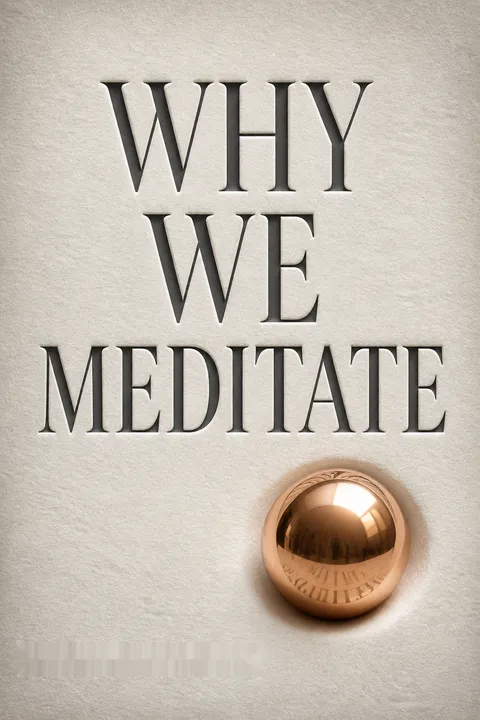
Why We Meditate receives mostly positive reviews, with readers appreciating its blend of Eastern meditation practices and Western scientific research. Many find the book helpful for both beginners and experienced meditators, offering practical techniques and insights. Some readers note the book's disjointed structure and occasional editing issues. The combination of Tsoknyi Rinpoche's spiritual perspective and Daniel Goleman's scientific approach is generally well-received, though some find certain sections less engaging. Overall, readers value the book's guidance on incorporating meditation into daily life and its potential for personal growth.
People Also Read








Glossary
Dropping
A body-based mental resetA brief practice for interrupting mental busyness and grounding attention in bodily sensation. The practitioner lets the hands fall onto the thighs, releases a noticeable breath, and shifts attention from thinking to the felt body. The aim is not to produce a special state or remove thoughts, but to rest in present experience.
Three speed limits
Three kinds of inner paceRinpoche's distinction among physical speed, cognitive speed, and feeling or energetic speed. A person can move quickly and think rapidly without being internally rushed. Stress often comes from agitated feeling energy that insists on urgency even when the situation does not require it. Distinguishing the three helps identify what to regulate.
Subtle body
The feeling-energy dimensionA Tibetan contemplative model of experience situated between the physical body and cognitive mind. It describes feelings and energies, traditionally through channels, flowing energies, and essences. In this book it offers a framework for understanding bodily felt states such as restlessness, groundedness, and warmth. It is a traditional map, not an anatomical claim.
Beautiful monsters
Distorted emotional habitsRinpoche's term for recurring emotional reactions that distort perception and cause suffering. The word monster acknowledges their harmful effects, while beautiful points to their underlying potential and to the possibility that healing can transform them. These patterns may have developed through early relationships, repeated stress, or once-useful forms of self-protection.
Handshake practice
Welcoming difficult feelingsA way of relating to emotions with awareness and nonjudgment rather than suppressing, avoiding, indulging, or immediately trying to fix them. Its four movements are meeting the feeling, staying with it, allowing time, and communicating when the pattern is less defensive. The method emphasizes grounding and caution when emotional intensity is high.
Essence love
Innate inner okaynessRinpoche's term for a subtle sense of well-being that is not dependent on a particular possession, achievement, or relationship. He distinguishes it from self-esteem and from love directed toward another person. The book presents it as an innate capacity that can be obscured by stress and emotional patterns, then noticed and strengthened through practice.
Lojong
Buddhist mind-trainingA Tibetan Buddhist approach to deliberately challenging self-centered habits and cultivating care for others. The exercises described here include reflecting on the shared wish for happiness and freedom from suffering, imagining another person's circumstances, and extending concern beyond familiar people. The aim is to widen compassion without abandoning discernment.
Shamata
Settling and focusingA Buddhist meditation practice for cultivating calm, clarity, and stable attention. The practitioner may rest attention on a support, such as the breath, or settle in present awareness without a specific object. Distraction is met by returning attention gently. The practice is not defined by eliminating every thought.
Four I's
A model of self-experienceRinpoche's framework for recognizing four ways the sense of self can function: the mere I, held lightly; the reified I, treated as fixed; the needy I, centered on obtaining fulfillment for oneself; and the social I, shaped by one's presence in other people's minds. The model helps identify when identity becomes rigid or self-absorbed.
Mere I
A lightly held selfRinpoche's term for relating to identity without treating it as permanent, singular, or independent. The mere I remains functional: a person can use roles, remember, plan, and respond to others. The difference is that identity is held flexibly, as something changing and dependent on conditions rather than as a fixed inner object.
Gom
Becoming familiar through practiceThe Tibetan term for meditation that the book translates as becoming familiar or habituated. It emphasizes repeated training rather than a single exceptional experience. A practitioner gradually becomes more accustomed to grounding attention, meeting emotions, settling the mind, and returning to a less reactive way of being.
FAQ
What’s "Why We Meditate" by Daniel Goleman and Tsoknyi Rinpoche about?
- Science and Practice of Meditation: The book explores both the scientific research and traditional wisdom behind meditation, focusing on how it cultivates clarity, compassion, and emotional well-being.
- Modern Relevance: It addresses the unique psychological and emotional challenges faced by people today, offering practical meditation techniques adapted for contemporary life.
- Dual Perspective: Co-authored by a renowned neuroscientist (Goleman) and a Tibetan Buddhist master (Rinpoche), it blends Western psychology and neuroscience with Eastern contemplative practices.
- Step-by-Step Guidance: The book provides a progressive path, starting from basic mindfulness and moving toward deeper practices for emotional healing and insight.
Why should I read "Why We Meditate" by Daniel Goleman and Tsoknyi Rinpoche?
- Accessible Meditation Tools: The book offers meditation methods that are practical, easy to follow, and suitable for beginners and experienced meditators alike.
- Addresses Real-Life Obstacles: It tackles common issues like stress, anxiety, emotional reactivity, and the feeling of being stuck, providing solutions grounded in both science and tradition.
- Bridges Science and Spirituality: Readers gain insights from both cutting-edge neuroscience and ancient Buddhist wisdom, making the benefits of meditation clear and credible.
- Personal Growth and Compassion: The practices aim not just at personal calm but at fostering compassion, resilience, and a deeper sense of well-being.
What are the key takeaways from "Why We Meditate"?
- Grounded Body, Open Heart, Clear Mind: The book’s core message is that meditation can help us become more grounded, loving, and clear-minded, improving both our inner life and relationships.
- Practical Techniques: Techniques like "dropping," belly-breathing, handshake practice, and cultivating essence love are central tools for emotional healing and clarity.
- Emotional Integration: True transformation comes from integrating mind, body, and feelings, not just intellectual understanding.
- Well-Being as a Skill: Well-being, resilience, and compassion can be cultivated through regular, short, and repeated meditation practices.
How does "Why We Meditate" define and address common obstacles to meditation?
- Restless Mind and Persistent Thoughts: The book acknowledges that most beginners struggle with a wild mind and recurring troubling thoughts, offering specific practices to address these.
- Emotional Blockages: It introduces the concept of "beautiful monsters"—emotional patterns and wounds that hinder progress—and provides the "handshake" method to befriend and heal them.
- Speediness and Stress: The authors distinguish between physical, mental, and energetic speed, teaching how to calm the feeling world without slowing down the mind or body unnecessarily.
- Spiritual Bypassing: The book warns against using meditation to avoid emotional issues, emphasizing the importance of emotional honesty and integration.
What is the "dropping" technique in "Why We Meditate" and how does it help?
- Simple Grounding Practice: Dropping involves physically dropping your hands onto your thighs, exhaling deeply, and shifting awareness from thoughts to bodily sensations.
- Interrupts Rumination: This technique helps break the cycle of anxious or repetitive thinking, grounding you in the present moment.
- Accessible Anytime: It can be practiced in short bursts throughout the day, making it a practical tool for immediate stress relief.
- Mantras for Letting Go: The book suggests using mantras like “So what! Who cares? No big deal,” to reinforce a relaxed, non-attached attitude.
How does "Why We Meditate" explain the role of breath and energy in meditation?
- Three Speed Limits: The book distinguishes between physical, mental, and energetic speed, emphasizing that stress accumulates in the energetic or feeling world.
- Belly-Breathing and Vase Breathing: Techniques like deep belly-breathing and gentle vase breathing are taught to bring restless energy down below the navel, promoting calm and groundedness.
- Body-Scanning: The practice of scanning the body for speedy or anxious energy helps increase self-awareness and prepares for deeper meditation.
- Scientific Backing: Research cited in the book shows that slow, deep breathing activates the body’s relaxation response, reducing stress and improving heart rate variability.
What is "handshake practice" in "Why We Meditate" and why is it important?
- Befriending Emotions: Handshake practice is about meeting your difficult feelings (the "beautiful monsters") with open, nonjudging awareness instead of suppressing, ignoring, indulging, or trying to fix them.
- Four Steps: The process involves meeting, being with, waiting, and communicating with your emotions, allowing for deep healing and transformation.
- Emotional Integration: This method helps heal emotional wounds and patterns, fostering a healthier relationship between mind and feelings.
- Supported by Science: The book connects this approach to research on acceptance, showing that nonreactive awareness reduces emotional distress and amygdala reactivity.
What is "essence love" according to "Why We Meditate," and how can it be cultivated?
- Innate Well-Being: Essence love is described as a subtle, unconditional sense of okayness and well-being that exists beneath all emotions and moods.
- Not Self-Love: It differs from self-love in that it’s not directed or generated by the mind, but is an intrinsic quality present from birth.
- Practices to Reconnect: The book offers methods like noticing, using triggers (music, movement, breath), and the natural method to help rediscover and nurture essence love.
- Foundation for Compassion: Cultivating essence love provides a stable base for healthy love and compassion toward oneself and others.
How does "Why We Meditate" approach love and compassion, and what practices does it recommend?
- Essence and Expression Love: The book distinguishes between essence love (inner well-being) and expression love (outward acts of love and compassion).
- Unbiased Compassion: It encourages expanding compassion beyond close relationships to include strangers and even those we dislike, using mind-training practices.
- Mind-Training Techniques: Practices like equalizing self and others, exchanging self and others, and cherishing others more than oneself are recommended to overcome self-centeredness.
- Balancing Attachment and Boundaries: The book discusses the obstacles of attachment, indifference, and aversion, and teaches how to cultivate compassion without burnout or bias.
What is the "mere I" and the four I’s model of self in "Why We Meditate"?
- Four I’s Framework: The book introduces the mere I (healthy, light sense of self), the reified I (rigid, fixed self), the needy I (self-centered, seeking fulfillment), and the social I (how we exist in others’ perceptions).
- Mereness vs. Reification: The mere I relates to experience with a light, flexible touch, while the reified I clings and creates suffering.
- Insight Practice: Meditation is used to recognize and return to the mere I, loosening the grip of self-centeredness and fostering openness and playfulness.
- Interconnectedness: Understanding the fluid, interconnected nature of self leads to greater resilience, humility, and compassion.
What scientific evidence does "Why We Meditate" present for the benefits of meditation?
- Stress Reduction: Research shows that meditation calms the amygdala, reduces stress hormones, and activates the body’s relaxation response.
- Emotional Resilience: Regular practice leads to less emotional reactivity, faster recovery from upsets, and greater resilience.
- Well-Being and Focus: Studies cited in the book link meditation to increased well-being, improved focus, better working memory, and even positive changes in gene expression.
- Compassion and Altruism: Compassion training increases generosity, empathy, and activates brain circuits associated with caregiving and happiness.
What are the best quotes from "Why We Meditate" and what do they mean?
- “Grounded body, open heart, clear mind.” – This encapsulates the book’s vision of holistic well-being achieved through meditation.
- “Short moments, many times.” – Emphasizes that frequent, brief meditation sessions are more effective than occasional long ones.
- “The feeling is real, but the message is not true.” – Highlights the importance of acknowledging emotions without believing their negative narratives.
- “If you can see the river, you are not drowning in the river.” – A metaphor for mindfulness: awareness creates space around thoughts and emotions, preventing overwhelm.
- “Essence love is always with us, underneath all our changing feelings, emotions, and moods.” – Reminds us that a basic sense of well-being is always accessible, regardless of circumstances.
About the Author
Other books by Daniel Goleman








Download PDF
Download EPUB
.epub digital book format is ideal for reading ebooks on phones, tablets, and e-readers.








