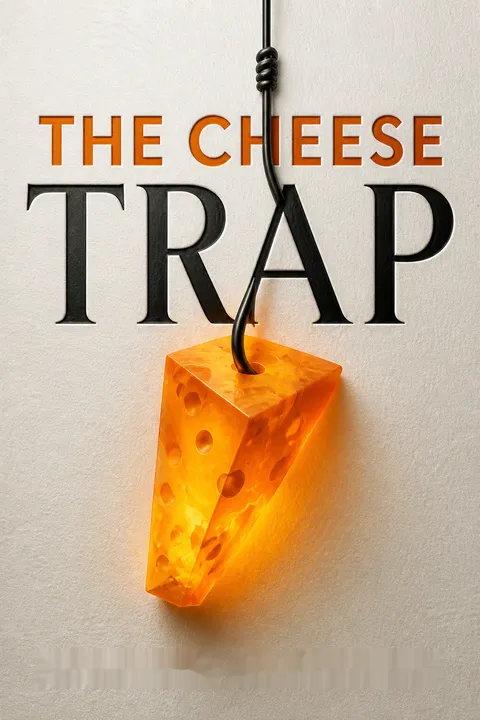


Key Takeaways
Treat cheese as calorie-dense, crave-promoting food, not a harmless garnish
A concentrated package. Cheese-making removes much of milk's water and concentrates its fat, protein, calories, and salt. Barnard compares a cup of whole milk, at about 149 calories, with a cup of melted Cheddar, at nearly 1,000. A two-ounce Cheddar serving contains about 230 calories, along with substantial saturated fat and sodium. Cheese is easy to add to pizza, sandwiches, and casseroles without removing anything else from the meal.
A rising habit. The book reports that average US cheese consumption climbed from less than four pounds per person annually in 1909 to more than 33 pounds in 2013, as fast food and heavily topped pizza spread. That trend is a warning about how a small-seeming extra can become a routine source of energy.
The strongest case here is not that cheese is uniquely toxic, but that it is unusually easy to consume in large amounts without noticing. Nutrition research often distinguishes a food's nutrient profile from its role in a person's overall eating pattern. Cheese can contribute protein and calcium, yet its energy density and habitual use make portion creep plausible. The national consumption trend is suggestive, not proof that cheese caused rising obesity. The useful question is more immediate: does cheese add calories to meals without making them more satisfying?
Use fiber-rich plants to feel full without cheese's calorie load
Build fullness into meals. Cheese contains no fiber, while beans, vegetables, fruit, and whole grains supply fiber that adds volume and helps meals feel filling. Barnard's practical alternative is not simply to remove cheese, but to base meals on these plant foods and keep animal fats and added oils low.
A broader diet test. In a 14-week study described in the book, participants removed all animal products and minimized added oils, but did not count calories or change their exercise routines. They lost an average of 13 pounds. Their after-meal metabolic rate also rose by 16 percent. Because the intervention changed the whole diet, the results cannot show that cheese alone caused the weight loss. They do illustrate how a more filling, lower-fat eating pattern may reduce calorie intake without formal restriction.
This approach shifts weight management from constant calculation toward food structure. Fiber-rich foods generally take up more space per calorie, while a meal built around them can make it easier to feel satisfied. That is a practical advantage over advice that asks people to exercise restraint against foods designed to be rich and easy to overeat. The study's bundled intervention matters: removing cheese, meat, eggs, and added oils together prevents a clean conclusion about any single food. The pattern may be useful even when the book's cheese-centered explanation is too narrow.
Read recurring cheese cravings as cues to redesign, not character flaws
More than preference. A University of Michigan survey of 384 people ranked pizza as the most problematic food among those assessed. Barnard points to its combination of salt, fat, and cheese. He also describes casomorphins, short protein fragments released when casein, the main milk protein, is digested. These peptides can bind to opioid receptors, though the book's evidence does not establish that ordinary cheese eating produces an addiction equivalent to drug dependence.
Look for a pattern. The book suggests asking whether cheese appears every day at a predictable time, whether it is strongly missed when unavailable, and whether eating it continues despite health costs. If those signs fit, reducing cues and access may be more effective than repeatedly trying to eat a little less. The goal is understanding a behavior, not labeling a person.
The addiction framing can reduce shame by treating cravings as an interaction between biology, habit, and surroundings rather than a moral failure. It also suggests a useful behavioral experiment: notice when the urge appears, what cues precede it, and whether changing availability changes the pattern. The biochemical argument deserves restraint. Casomorphins have opioid-like activity, but that fact alone does not demonstrate clinically meaningful addiction in cheese consumers. Salt, fat, learned routines, and the convenience of pizza offer additional explanations for why the food is hard to limit.
Test suspected dairy triggers systematically instead of guessing from symptoms
A personal clue, not a diagnosis. The book recounts people who associated dairy with migraines, respiratory symptoms, joint pain, skin problems, or digestive distress. For instance, Lauren found that avoiding all dairy, not only aged cheeses, coincided with her migraines stopping. Such experiences can identify a question worth testing, but a story cannot prove that dairy caused the condition or that the same trigger applies to everyone.
Use a controlled trial. Barnard's appendix describes a short elimination diet using a limited set of foods considered less likely to provoke pain, followed by reintroducing excluded foods one at a time, every two days. Keeping the test orderly makes a reaction easier to interpret. The restricted phase is temporary, and people with serious symptoms or medical conditions should work with a health professional rather than use diet changes as a substitute for care.
The logic resembles a simple within-person experiment: remove a possible trigger, observe what changes, and reintroduce it to see whether the change reverses. That can be more informative than relying on memory or broad internet lists. The method is strongest when symptoms are tracked consistently and only one variable changes at a time. It also has limits: symptoms fluctuate, expectations can influence perception, and restrictive diets can become nutritionally inadequate if extended. Persistent asthma, severe headaches, or inflammatory disease still warrant clinical evaluation.
Treat a plant-based diet as a metabolic intervention, with medical oversight
Fat and insulin resistance. Barnard explains type 2 diabetes through fat accumulation inside muscle and liver cells, which can interfere with insulin's ability to move glucose into cells. The book argues that a low-fat plant-based diet can help reverse this process and also lower cholesterol and blood pressure.
A life-changing case. Marc, who had obesity, diabetes, high blood pressure, and high cholesterol, lost 50 pounds in three months after changing his diet. His doctor discontinued insulin and several diabetes medicines as his blood sugar improved. This is an individual outcome, not a prediction for every reader. The book also describes research on intensive lifestyle changes that improved coronary artery narrowing, but those programs combined diet with other changes. Diabetes or blood-pressure medicines must never be stopped without a clinician's guidance.
The important insight is that food can be part of treatment, not merely a side note to medication. A complete dietary pattern can influence weight, blood lipids, blood pressure, and glucose regulation at once, which makes it relevant to clinical care. But a dramatic case is not a guarantee, and a multi-part intervention cannot identify which component mattered most. Medical supervision is especially important because improved glucose or blood pressure can require prompt medication adjustments. The book's best practical contribution is to invite a serious dietary trial without treating it as a reason to abandon evidence-based care.
Separate plausible dairy hormone pathways from proven individual risk
Milk carries biological signals. Cows produce milk during and after pregnancy, and Barnard cites research finding that estrogen levels in milk rise over the course of a cow's pregnancy. The book also describes insulin-like growth factor-I, a growth-related signal whose levels can rise with dairy consumption. These mechanisms make it reasonable to investigate how dairy affects human biology.
Association is not certainty. The author reviews observational studies linking higher dairy intake with hormone levels, reproductive measures, and some cancer outcomes. Such studies can reveal patterns but cannot by themselves prove that dairy caused a disease. The book also argues that body fat can produce estrogen and that fiber helps carry excess hormones out of the body, supporting its broader emphasis on plant-rich eating. The claims are not equally established, and mechanisms should not be mistaken for a personal risk calculation.
This section is most useful as a lesson in interpreting biological plausibility. A substance can affect a pathway without producing a meaningful health effect at ordinary exposure levels, and an observed association can reflect other differences between people who eat more or less dairy. The book is right to ask what milk's growth-related biology may mean outside infancy. Its stronger practical argument is broader: dietary patterns influence body weight and fiber intake, both of which can affect hormone regulation. Disease claims require more caution than the underlying mechanisms.
Count the calf and the climate in dairy's real price
Milk has a production story. Dairy cows are repeatedly impregnated to maintain milk production, and their calves are generally separated from them. Female calves may enter the herd; many male calves are raised for meat. Cows whose milk production no longer makes them profitable are eventually slaughtered. Barnard presents this system as a reason some people who already avoid meat also reconsider dairy.
The costs extend outward. The book connects dairy farming with feed crops, water use, manure, fertilizer runoff, and methane from cattle. It points to the large low-oxygen zone in the Gulf of Mexico as one consequence of nutrient runoff from agriculture. These claims make food choice an ethical and environmental question as well as a health question. Barnard's account focuses on industrial production; conditions and practices can vary across farms.
The chapter expands the meaning of a food choice by making the production chain visible. Separating a mother from her calf is not an abstract statistic, and the environmental costs of feed production and waste do not appear on a cheese label. This is a powerful way to bring animal welfare and ecological impact into ordinary decisions. At the same time, readers benefit from distinguishing industrial patterns from claims about every farm, and from comparing products using consistent measures. Ethical concerns can motivate change even when health evidence is uncertain.
Audit who profits when cheese appears on menus and health advice
Cravings can be marketed. Barnard describes Dairy Management Inc., a dairy promotion organization supported by producer contributions, as deliberately targeting consumers who already crave cheese. Its partnerships with fast-food chains promoted new cheese-heavy menu items. The book reports that a Wendy's promotion sold 2.25 million pounds of cheese, illustrating how one corporate menu decision can shape millions of meals.
Public policy is part of the food environment. The author also reports government purchases of surplus cheese and industry involvement in nutrition messaging. The point is not that every food recommendation is corrupt, but that financial ties can create conflicts worth examining. When an organization offers health advice, readers can ask who funds it, what evidence supports the claim, and whether the advice aligns with independent research.
Food environments are shaped by defaults, availability, and repeated exposure, not just private willpower. A chain that adds cheese to popular menu items can alter eating at scale, while a health claim from a familiar institution carries extra credibility. Transparency helps, but disclosure alone does not erase the influence of funding or commercial incentives. The book's investigative stance is valuable when it directs attention to specific contracts and relationships. It is less useful when institutional influence is treated as proof that every industry-linked claim is false.
Build flavor with herbs, beans, and cultured plant-based alternatives
Replace the role, not just the ingredient. Cheese adds saltiness, richness, texture, and savory flavor. The book suggests using herbs, roasted vegetables, mushrooms, olives, beans, hummus, and nutritional yeast to supply some of those qualities. In Rome, Barnard found pizzas made with vegetables and herbs and no cheese, a reminder that cheese is not essential to every version of a familiar dish.
Alternatives vary. Cultured cashew or almond cheeses can mimic some textures, while tofu can stand in for ricotta or feta. But plant-based products are not automatically low in calories, saturated fat, or sodium. Some products labeled lactose-free may still contain casein, a milk protein. Ingredient labels matter, especially for people testing whether dairy proteins trigger symptoms.
A substitute succeeds when it satisfies the function a familiar food served, not when it imitates that food perfectly. Herbs and roasted vegetables add aroma and contrast; beans contribute substance; cultured nut products provide richness. This makes experimentation more promising than treating cheese removal as a subtraction exercise. There is also a useful warning against health halos: a plant-based label says something about ingredients, not necessarily about calories or salt. The range of alternatives allows people to choose according to taste, budget, allergies, and health goals.
Try a three-week menu reset before deciding what works for you
Plan before changing. Barnard recommends spending about a week listing plant-based foods that sound appealing for breakfast, lunch, dinner, and snacks. Then he proposes a 21-day test using those foods, rather than improvising while hungry or relying on willpower alone. The experiment is meant to reveal how the change feels and whether symptoms or weight shift.
Make it complete and safe. The book emphasizes a daily reliable source of vitamin B12 for people eating a vegan diet, such as a supplement or fortified food. It also advises readers taking medicines for diabetes or high blood pressure to consult their health care provider, because dietary changes can alter medication needs. This is a practical test, not a promise of a cure. The result should inform personal choices, alongside appropriate medical advice.
A time-limited trial turns a broad argument into an observable decision. Planning meals in advance reduces friction, while a defined period makes it easier to distinguish an experiment from an indefinite vow. The design could be strengthened by recording a small number of outcomes consistently, such as symptoms or medication changes discussed with a clinician. A three-week window cannot establish long-term effects, and short-term weight shifts may include water changes. Still, it gives readers a manageable way to test whether the proposed pattern fits their lives.
Analysis
The book's persuasive force comes from making cheese visible as more than a topping. It connects an everyday pleasure to food processing, appetite, chronic disease, animal agriculture, environmental burdens, and commercial promotion. Personal accounts provide narrative momentum: people such as Marc, Lauren, and Katherine make the argument feel testable in ordinary lives rather than abstract in a nutrition lecture. The practical turn toward recipes and a structured menu trial prevents the book from ending with accusation alone.
Its central explanatory move is also its main limitation. Cheese is presented as the hidden culprit, but many of the interventions described remove all animal products, reduce added oils, and increase fiber simultaneously. Those studies may support a whole dietary pattern without isolating cheese as the cause of each outcome. The evidence also varies in kind. Controlled dietary interventions can demonstrate effects of a specified program, while observational associations and personal stories are weaker grounds for assigning causality. The casomorphin discussion offers a plausible biological story, but opioid-like activity is not equivalent to demonstrating clinical addiction in everyday cheese consumption.
The most durable lesson is therefore broader and more useful than a blanket indictment: food choices are shaped by density, habit, availability, biological response, and production systems. Cheese can be an easy-to-overlook source of energy, saturated fat, and sodium, and some people may find a dairy-free trial clarifies particular symptoms. Yet individual responses differ, and food is not a substitute for diagnosis or medical treatment. The book is strongest when it combines concrete experiments with practical substitutions, and weakest when suggestive mechanisms or striking anecdotes are made to carry universal conclusions. Read as a case for testing a plant-rich pattern, it offers a consequential experiment. Read as proof that cheese explains every health problem, it overreaches.
Review Summary
The Cheese Trap receives mixed reviews averaging 4.15/5 stars. Supporters praise its scientific research on cheese's addictive properties, high calorie and sodium content, and health risks including inflammation, digestive issues, and hormone effects. Many found it helpful for transitioning to plant-based diets, with practical recipes included. Critics argue the book misleadingly promotes veganism rather than focusing solely on cheese, lacks sufficient scientific backing, makes exaggerated claims, and presents one-sided arguments. Several readers appreciate learning about dairy's health impacts but question the extreme anti-dairy stance and vegan agenda.
People Also Read





Glossary
Casomorphins
Casein-derived opioid peptidesShort protein fragments released when casein, the main protein in milk, is digested. Barnard describes them as able to bind to opioid receptors, the same general receptor family affected by opiate drugs. Their presence provides a possible explanation for why some people find dairy products rewarding or hard to limit, but it does not by itself prove that cheese causes clinical addiction.
Power Plate
Four-group plant-food guideA meal-planning guide developed by the Physicians Committee for Responsible Medicine and presented in the book. It organizes a healthful diet around four groups: vegetables, fruits, whole grains, and legumes. The model is meant to make plant-based meals easy to compose while reducing reliance on meat, dairy products, eggs, and added oils.
Pain-safe foods
Short-term trigger-testing staplesThe limited foods used in the book's temporary elimination phase for people investigating possible food-related pain. The list centers on grains, cooked vegetables, selected fruits, green beans, lentils, and brown rice syrup. After symptoms improve, excluded foods are reintroduced individually to help identify possible triggers. The restricted phase is not intended as a long-term diet.
French Paradox
A contested diet-heart comparisonThe apparent mismatch between France's historically low recorded heart-disease death rate and reports of high cheese, butter, and cream consumption. The book challenges the idea that wine or dairy fat explains the difference, citing variation in death classification, smoking rates, regional diets, and the delay between worsening dietary patterns and later disease statistics.
About the Author
Other books by Neal D. Barnard
Download PDF
Download EPUB
.epub digital book format is ideal for reading ebooks on phones, tablets, and e-readers.








