

Key Takeaways
Combine local democracy, policy experiments, and merit-based national leadership.
The central proposal. Bell uses political meritocracy to mean assigning political power to leaders selected for ability and virtue, rather than by wealth, family ties, or elections alone. His China model pairs local elections with policy testing between local and national government, then relies more on merit-based selection at the center. A viral cartoon that contrasted Barack Obama’s election campaign with Xi Jinping’s long climb through government posts frames the question: might experience and assessment select leaders better than a single national vote?
An ideal, not an endorsement. Bell treats the model as both a description of China’s reform-era system and a standard for improving it. He does not claim China already meets that standard. His proposal is aimed especially at large, modernizing countries, and he argues that its elements may be more exportable than the whole package.
The framework’s strength is that it refuses to treat every level of government as the same job. A village representative needs local knowledge and trust; a national leader must weigh complex, long-range consequences. That resembles the logic of federalism and polycentric governance, where decisions are made at different scales. Yet a long résumé is not proof of good judgment, and a system that controls both selection and evaluation can define merit to reward loyalty. The model is most persuasive when its standards are public and its selectors can themselves be challenged.
Audit elections for four blind spots: majorities, money, outsiders, and polarization.
Four democratic risks. Bell examines free and fair elections, not rigged polls, and identifies four ways voting can fail to produce good government. A majority can choose poorly or oppress minorities; wealthy, organized interests can shape policy more than ordinary voters; voters can ignore foreigners and future generations; and party competition can turn disagreement into tribal hostility. His examples include climate policy that asks present voters to bear costs for future people, and campaign-driven polarization that makes compromise politically toxic.
Knowledge is not automatic. Citing research on political ignorance and cognitive bias, Bell notes that many Americans cannot identify basic political institutions or accurately estimate government spending. The argument is not that elections have no value. It is that equal voting alone does not guarantee informed decisions, fair influence, or protection for people who cannot vote.
This is a useful audit because it distinguishes the fairness of a procedure from the quality and reach of its consequences. Political science adds an important complication: voters can be poorly informed individually while still using elections to punish leaders for visible failures. Elections also give citizens a peaceful way to remove rulers, a safeguard that a meritocratic system must replace rather than merely criticize. Bell’s examples expose genuine weaknesses, but comparing democratic failures with a theoretically improved meritocracy risks comparing actual performance to an idealized alternative.
Select leaders for the work of governing, not the performance of campaigning.
Context shapes leadership. Bell argues that governing a large, mostly peaceful country is different from running a company, leading a church, or commanding during war. A political leader must balance competing public interests, listen to criticism, and remain attentive to disadvantaged people. Profit is a comparatively clear business measure; government must answer contested questions about security, fairness, welfare, liberty, and the environment.
Three necessary qualities. For senior leaders in a modernizing meritocracy, Bell emphasizes intellectual ability, social skills, and virtue. Leaders need enough analytical capacity to understand complex issues, enough interpersonal skill to build cooperation, and a genuine motivation to serve the public. A brilliant, persuasive leader without that motivation could use talent to pursue harmful ends. Bell therefore treats virtue as indispensable, while allowing that expert advisers can supply some of the specialized knowledge a leader lacks.
The distinction between public and private leadership is more than a difference in mission statements. Public officials wield coercive power and must justify decisions to people who cannot simply choose another provider. This connects to the principal-agent problem: citizens delegate authority, but leaders possess information and power that citizens cannot monitor continuously. Bell’s emphasis on character and listening addresses that gap. Still, no selection process can reliably read a candidate’s inner virtue. Institutions need to reward observable conduct and make it possible to correct decisions, not depend on good intentions alone.
Use exams to screen for ability, then test judgment through public service.
A long institutional history. China’s imperial examinations selected officials for more than thirteen hundred years and helped weaken hereditary aristocracy. At their best, exams offered a relatively impartial route into government and gave ambitious families a reason to invest in education. They also had sharp limits: women were excluded, poor candidates lacked the time and tutors available to elites, and rigid essay forms could reward conformity over practical judgment.
Screen, then observe. Bell supports modern examinations as one way to test analytical skills and relevant knowledge, including economics, science, history, and international affairs. But a test cannot establish that someone can govern well. Candidates should also demonstrate administrative competence at lower levels, where their decisions and conduct can be assessed before promotion. The point is not to reproduce the old examination system, but to improve the selection tools and combine them with experience.
Exams can make selection more legible and less dependent on patronage, but measurable performance is not the same as political wisdom. This is a familiar problem in education and management: once a score becomes the target, candidates learn to optimize the score. A better system would use tests as an initial filter, then compare decisions across different contexts and examine how officials respond to mistakes. Bell’s historical account also warns that formal openness is not equal opportunity when preparation itself requires money, time, and access.
Promote officials who listen, cooperate, and earn trust across the hierarchy.
Ability needs social intelligence. Bell draws on research about emotional intelligence, including self-awareness, self-regulation, empathy, motivation, and relationship-building. These capacities matter in politics because leaders must work with colleagues and respond to many groups, not simply issue instructions. Franklin Roosevelt illustrates the point: he relied on capable advisers and allowed them to debate rather than needing to be the smartest specialist in every room.
Assess conduct over time. Exams reveal little about how candidates treat people. Bell therefore proposes giving colleagues a major role in evaluating an official’s character, while also considering assessments from superiors and subordinates. He argues that age can correlate with stronger interpersonal judgment, while also recognizing the risks of cognitive decline. He further urges the promotion of more women, drawing on studies that find strong collaborative and relational leadership ratings among women.
The emphasis on cooperation usefully counters the myth that leadership is mainly individual brilliance. Teams often outperform lone decision-makers when tasks are complex and information is distributed. Peer assessment can reveal patterns invisible in an exam, especially how a candidate behaves when no public audience is present. But group ratings can reproduce favoritism, conformity, and retaliation. Gender and age are also imperfect proxies, not substitutes for direct evaluation. The strongest implication is to measure relationship-building and ethical conduct directly, while protecting dissenting evaluators from pressure.
Build independent checks before asking unelected leaders to earn trust.
Corruption threatens the premise. In a meritocracy, rulers claim authority because they are supposed to be especially capable and public-spirited. Corruption therefore discredits not just an individual, but the system’s claim to deserve power. Bell identifies several pressures: weak independent oversight, blurred lines between government and business, low official salaries beside growing private wealth, and an ethical culture too weak to restrain people when no one is watching.
Use more than punishment. Bell points to independent anticorruption bodies, transparent budgets, protected whistleblowers, clearer boundaries between public and private interests, better pay, and moral education. Hong Kong’s independent anticorruption agency and Singapore’s high public salaries offer different examples. None is a complete cure. The underlying point is that salary increases or dramatic crackdowns cannot replace institutions that investigate powerful officials consistently and fairly.
The argument captures a basic institutional lesson: concentrated authority creates a monitoring problem, even when leaders were selected carefully. In economics, incentives matter, but they rarely eliminate opportunities for self-dealing; credible audits and protected reporting channels change the cost of concealment. Moral education can strengthen internal restraint, yet its effect is difficult to verify and may become political ritual. The most durable package combines external scrutiny with fair procedures. Without independent investigators, an anticorruption campaign can also become a tool for disciplining rivals rather than applying common rules.
Keep merit open, or achievement hardens into inherited privilege.
Elites can close the door. A selection system may begin by rewarding ability, then drift toward a narrow group whose children inherit better schools, preparation, connections, and cultural fluency. Bell points to France’s École Nationale d’Administration, designed to train public leaders through rigorous examinations, yet increasingly associated with privileged backgrounds. In Singapore, public anger at elite arrogance helped make meritocracy sound like a defense of winners rather than a promise of fair opportunity.
Broaden access and standards. Bell recommends opening political institutions to underrepresented social groups, reducing inequalities that shape who can compete, and allowing multiple routes into leadership. He also calls for freedom of speech and local experimentation, which can reveal abilities that a single official definition of merit misses. A meritocratic hierarchy needs ways to change its own criteria, not simply reproduce the qualities of those already at the top.
This is where political meritocracy meets the sociology of social reproduction: advantage can pass through families without appearing in the formal selection rule. A competition can be procedurally fair on exam day and unequal for years beforehand. Representation matters not only as symbolism, but because lived experience can expose problems that distant officials misread. Quotas may help widen access, though they can provoke disputes about standards and categories. The deeper test is whether institutions identify talent outside established networks and provide the resources needed to develop it.
Test policies locally, scale what works, and stop what fails.
Experiment under hierarchy. Bell describes China’s reform process as a cycle in which local governments test policies, central authorities assess the results, and promising approaches may be expanded. Shenzhen’s special economic zone, for example, tried market-oriented policies before similar measures spread more widely. This approach lets a large country learn across different conditions without imposing every reform everywhere at once.
Scaling is political. A successful pilot does not automatically become national policy. Central leaders must decide that it works, and powerful interests may block changes that threaten them. The Great Leap Forward and Cultural Revolution show the danger of suppressing local learning in favor of uniform directives. Bell argues for experiments across economic, social, and political policy, alongside more independent expert assessment of results and clearer ways to share successful approaches.
Policy experimentation resembles the scientific method: test a claim in a bounded setting, observe outcomes, revise, and repeat. It also fits adaptive management, used in environmental policy when conditions are uncertain and feedback arrives over time. The approach is strongest when pilots have clear evaluation criteria and negative findings can be reported honestly. A central government that controls which results count as success may cherry-pick evidence. And a pilot that works in one province may fail elsewhere, so replication should include local adaptation rather than simple copying.
Secure public consent without making national elections the only democratic test.
Performance is not enough. Bell describes Chinese legitimacy as drawing on national identity, government performance, and the belief that officials are selected for merit. These sources can earn support, but they do not settle whether people have a meaningful voice. As needs become more varied, consultation and participation matter more. Bell argues that a political meritocracy must address this legitimacy problem rather than assume that competent outcomes alone authorize rule.
A risky referendum. His proposed remedy is a free and fair referendum asking citizens to endorse a more open form of political meritocracy, with local democracy and wider participation but no multiparty contest for top leadership. He suggests that a clear result could provide explicit consent. The proposal carries a real risk: voters might reject it, and consent is weakened if political expression or the choices on offer are constrained.
The referendum proposal makes the book’s central tension visible. A system may claim that it governs well, but the people must still be able to contest that claim. Constitutional theory distinguishes output legitimacy, which comes from results, from input legitimacy, which comes from participation and authorization. Bell seeks a bridge between them. Yet a vote on a system that limits organized opposition can certify consent only if debate is genuinely free. The challenge is not merely to count support, but to make refusal politically possible and consequential.
Analysis
Bell’s most useful move is to separate political meritocracy from the economic idea of rewarding people according to productivity. The subject is not who deserves more money, but who should exercise public power. That distinction lets him ask a question often obscured by debates over democracy: what qualities should political leaders have, and which institutions can help identify them?
The book’s architecture is deliberately comparative. It first challenges the assumption that elections automatically produce wise or inclusive policy, then develops standards for better leadership, names the risks of elite rule, and proposes a vertical arrangement that assigns different selection methods to different levels of government. The middle layer of experimentation is especially important. It presents China’s reform process not as a fixed blueprint, but as an institutional capacity to test and revise policy across a vast, varied country.
The strongest critique is also the book’s central vulnerability. Failures of electoral democracies are often compared with the potential of a reformed meritocracy. That comparison is not symmetrical. Elections have observable weaknesses, while the performance of an unelected system can be harder to assess when information, opposition, and independent oversight are restricted. Bell recognizes repression and corruption as serious problems, but his case depends on reforms that may weaken the rulers who would need to enact them.
There is a deeper distinction between competence and authorization. Examinations, long service, and peer review may improve the odds of selecting capable officials. They cannot by themselves establish a right to rule. Conversely, popular authorization does not guarantee good judgment, minority protection, or concern for future people. The book is most convincing when it treats these as separate goods that institutions must balance, rather than assuming one can substitute for the other.
The lasting lesson is not that China offers a ready-made alternative to democracy. It is that political systems should be judged by both how they select leaders and how they constrain them, include affected groups, learn from error, and renew public consent. Merit without accountability can become entitlement. Democracy without capacity can become spectacle. The hard design problem is to keep either failure from masquerading as virtue.
Review Summary
The China Model presents a controversial defense of China's political meritocracy system as an alternative to Western democracy. While some readers found it thought-provoking and insightful, others criticized its weak arguments and perceived bias. The book explores the strengths and weaknesses of both systems, proposing a hybrid model combining meritocracy and democracy. Many reviewers appreciated Bell's objective analysis of China's political structure, but some found the book repetitive and lacking in substantial information about China itself.
People Also Read









Glossary
Political meritocracy
Merit-based political leadershipA political system that aims to select and promote leaders according to political ability and virtue, rather than relying solely on elections, family background, wealth, or social connections. In Bell’s account, it differs from economic meritocracy because it concerns the distribution of political power, not the distribution of income or other material goods.
China model
Three-level governance approachBell’s name for a pattern of Chinese political reform built around democracy at the local level, experimentation between local and central government, and increasingly meritocratic selection at the top. He presents it both as a description of reform-era governance and as an ideal for evaluating and improving political institutions.
Vertical democratic meritocracy
Democracy below, merit aboveA proposed way to combine democratic participation with merit-based leadership by assigning them different roles across levels of government. Local communities use elections, while higher levels rely more heavily on selection and promotion based on ability, experience, and virtue. The arrangement is vertical because the balance shifts as authority rises through the system.
Experimentation under hierarchy
Local policy trials, central scalingA policy process in which local governments test new approaches, central authorities evaluate the results, and successful experiments may be expanded to other parts of the country. The hierarchy retains authority over national adoption, while local variation supplies information and allows policies to be adjusted before broad implementation.
Guardianship discourse
Government for the peopleA way of understanding democracy that emphasizes leaders governing in the public interest, rather than citizens directly choosing those leaders through competitive elections. Bell uses the term to describe a perspective found in Chinese public opinion, where many people judge government by its responsiveness, integrity, and results.
Tyranny of the voting community
Voters neglect nonvotersThe problem that democratic governments answer primarily to voters even though their policies also affect people without votes. Bell highlights foreigners and future generations as examples. When the interests of voters conflict with those of these nonvoters, electoral incentives tend to favor the people who can influence the next election.
FAQ
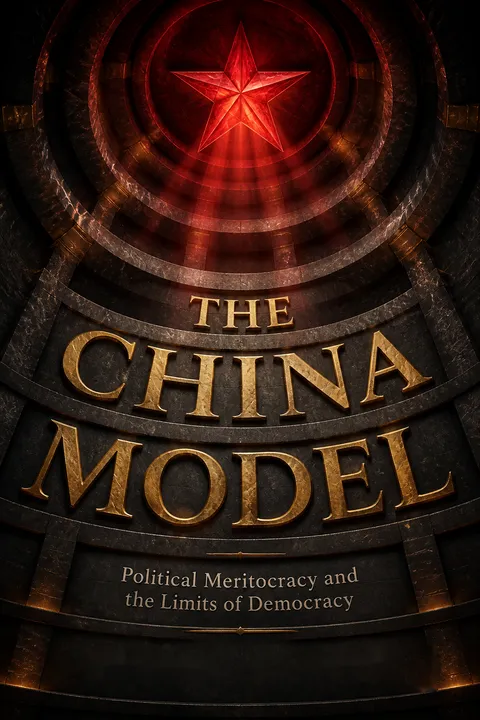
What is The China Model: Political Meritocracy and the Limits of Democracy by Daniel A. Bell about?
- Exploration of political meritocracy: The book examines the theory and practice of political meritocracy, focusing on how China selects and promotes leaders based on ability and virtue rather than popular vote.
- Contrast with electoral democracy: Bell contrasts China’s system with Western-style electoral democracy, analyzing the strengths and weaknesses of each.
- Case study of China: The book uses China’s political system as a primary example, delving into its historical roots, current practices, and implications for governance.
- Proposal of hybrid models: Bell discusses alternative models that combine meritocratic and democratic elements, suggesting ways to improve governance globally.
Why should I read The China Model by Daniel A. Bell?
- Nuanced view of governance: The book offers a fresh perspective on political systems, challenging the assumption that electoral democracy is the only legitimate or effective form of governance.
- Insight into China’s rise: Readers gain a deeper understanding of how China’s unique political system contributes to its stability, economic growth, and global influence.
- Critical engagement with democracy: Bell encourages readers to critically examine the limitations of democracy, such as voter ignorance and special interest influence.
- Practical and philosophical relevance: The book is valuable for anyone interested in political theory, comparative politics, or the future of governance in large, complex societies.
What are the key takeaways from The China Model by Daniel A. Bell?
- Meritocracy as an alternative: Political meritocracy can be a morally justifiable and practically effective alternative to electoral democracy, especially in large, diverse countries.
- China’s hybrid system: China’s governance model combines local democracy, policy experimentation, and meritocratic selection at the top, offering lessons for other nations.
- Limits of both systems: Both meritocracy and democracy have flaws—meritocracy risks elite ossification and legitimacy issues, while democracy faces problems like short-termism and voter ignorance.
- Need for reform and balance: Bell advocates for reforms that enhance meritocratic selection while increasing transparency, accountability, and public participation.
How does Daniel A. Bell define political meritocracy in The China Model?
- Selection by ability and virtue: Political meritocracy is a system where leaders are chosen based on intellectual ability, moral character, and practical skills, not just popular vote or birth.
- Equal opportunity, unequal outcome: While everyone should have a fair chance to compete, the system aims to promote the most capable and virtuous individuals to leadership.
- Historical and cultural roots: Bell traces the concept to Confucian and classical traditions, highlighting its deep roots in Chinese political culture.
- Distinct from economic meritocracy: The focus is on governance and leadership qualities, not economic productivity or wealth.
What are the main criticisms of electoral democracy according to The China Model by Daniel A. Bell?
- Tyranny of the majority: Democratically elected majorities can oppress minorities or enact irrational policies due to voter ignorance and cognitive biases.
- Influence of elites: Wealthy and organized minorities can disproportionately shape policy, leading to inequality and undermining the public good.
- Short-termism and exclusion: Democracies often prioritize current voters’ interests, neglecting future generations and nonvoters, resulting in short-sighted policies.
- Social conflict: Electoral competition can fuel divisive identity politics and undermine social harmony.
How does The China Model by Daniel A. Bell describe China’s political meritocracy in practice?
- Rigorous selection process: China uses examinations, performance assessments, and peer evaluations to select and promote political leaders.
- Historical continuity: The system draws inspiration from the imperial examination system, which emphasized knowledge and virtue over birth or wealth.
- Imperfect but effective: While the system has contributed to economic success and poverty reduction, it still faces challenges like corruption and political loyalty overriding merit.
- Calls for reform: Bell suggests improvements such as better testing for social skills and virtue, increased representation of women, and more transparent evaluation methods.
What are the key flaws and challenges of political meritocracy in The China Model by Daniel A. Bell?
- Corruption and abuse of power: Without electoral accountability, meritocratic rulers may become corrupt or self-serving, threatening legitimacy.
- Elite ossification: The system can become rigid, limiting social mobility and reinforcing elite dominance.
- Legitimacy and participation: Political meritocracy struggles to gain popular consent and may exclude broad participation, risking social unrest.
- Difficulty measuring virtue: Assessing moral character objectively remains a persistent challenge.
What leadership qualities does Daniel A. Bell emphasize for political meritocracy in The China Model?
- Intellectual ability: Leaders should have strong analytical skills and broad knowledge across disciplines to make informed decisions.
- Social skills: Emotional intelligence, empathy, and the ability to build consensus are crucial for effective governance.
- Moral virtue: Integrity, commitment to the public good, and willingness to sacrifice personal interests are essential to prevent abuse of power.
- Experience and wisdom: Political experience and maturity are valued to ensure sound judgment and effective leadership.
How does The China Model by Daniel A. Bell address the issue of corruption in China’s political system?
- Root causes identified: Corruption is linked to lack of independent checks, economic transitions, and low official salaries.
- Proposed solutions: Bell advocates for independent anticorruption agencies, higher salaries, asset disclosure, and Confucian moral education.
- Non-electoral remedies: He argues that these measures can be implemented without full electoral democracy, challenging the idea that only democracy can curb corruption.
- Cultural and institutional reforms: Emphasizes the need for both structural changes and ethical cultivation among officials.
What is the significance of the imperial examination system in The China Model by Daniel A. Bell?
- Historical precedent: The imperial exams institutionalized merit-based selection of officials for over a thousand years in China.
- Promotion of social mobility: The system allowed individuals from diverse backgrounds to rise to power based on ability and knowledge.
- Limitations acknowledged: It was criticized for rote learning and testing the wrong knowledge, highlighting the need for modern reforms.
- Modern relevance: Contemporary public service exams in China draw from this tradition but require updates to better assess political judgment and virtue.
What are the proposed models for reconciling democracy and meritocracy in The China Model by Daniel A. Bell?
- Voter-level adjustments: Proposals like weighted voting for the educated or virtuous, though politically controversial and impractical.
- Horizontal models: Combining democratic and meritocratic bodies at the same level (e.g., bicameral legislatures), but seen as unstable.
- Vertical models: Democracy at the local level, experimentation in the middle, and meritocracy at the top—Bell endorses this as most feasible and aligned with China’s system.
- Hybrid legitimacy: These models aim to balance popular participation with competent governance.
What role does Confucianism play in The China Model by Daniel A. Bell?
- Moral foundation: Confucianism provides a tradition of moral self-cultivation and virtue essential for public officials.
- Institutional inspiration: Confucian mechanisms like the rule of avoidance and examination systems inform modern governance reforms.
- Ethical revival: With Marxism’s declining appeal, Confucian values are being revived to fill the ethical void and strengthen legitimacy.
- Guidance for reform: Confucianism is seen as a source for both moral education and institutional checks on power.
What are the prospects and limitations for exporting the China model of political meritocracy, according to Daniel A. Bell?
- Limited exportability: The China model is deeply rooted in China’s unique history, culture, and political context, making wholesale adoption elsewhere unlikely.
- Selective adaptation: Elements like local democracy and policy experimentation may be adapted by other large, diverse countries seeking stability and reform.
- Challenges in democratic societies: Meritocratic selection at the top is difficult to implement in societies committed to one person, one vote.
- Soft power potential: China can promote meritocratic governance as a form of soft power and assist other countries in building meritocratic institutions.
Download PDF
Download EPUB
.epub digital book format is ideal for reading ebooks on phones, tablets, and e-readers.








