

Key Takeaways
Treat inequality and polarization as a feedback loop, not separate crises
Two arcs move together. Krugman traces American politics and income through three broad periods: the unequal, polarized decades before the New Deal; the more equal, comparatively bipartisan postwar years; and the return of both inequality and partisan conflict. By 2005, the top 1 percent received about the same share of income as in the 1920s. Congressional voting data also show parties drawing further apart as inequality rose.
Politics shapes markets. Krugman argues that political change helped drive inequality by weakening unions, reducing taxes on high incomes, and loosening restraints on executive pay. In turn, rising wealth gave affluent interests more resources to shape politics. He does not deny technology and globalization matter, but argues that institutions and political power explain more than an account based on impersonal market forces alone.
What's valuable here is the feedback model: economic outcomes shape who can influence politics, while political rules shape how economic gains are distributed. That avoids treating inequality as a natural weather system. It also points to a useful test for any political-economic claim: identify the mechanism, then check whether its timing and cross-country pattern fit. The evidence supports a political role, but correlation between polarization and inequality cannot by itself establish which caused which. The strongest version of the argument is interactive: political decisions can start a shift that growing wealth then reinforces.
A middle-class economy is built by political choices, not time
Inequality persisted. Before the New Deal, economic growth did not naturally produce a broad middle class. The concentration of income remained high through the 1920s, despite the nation's growing wealth. The book estimates that the richest 10 percent received 43.6 percent of income in that decade, compared with 44.3 percent in 2005. Poor Americans also lacked the public insurance and income supports that later softened unemployment, old age, and poverty.
Policy changed the pattern. The sharp move toward a more equal society happened in a short period during the 1930s and 1940s. Krugman calls this change the Great Compression. New Deal measures, stronger worker organization, higher taxes on the wealthy, and wartime wage controls helped narrow income gaps. The central historical lesson is that markets alone did not create the postwar middle-class society; public decisions helped construct it.
The historical comparison challenges a powerful form of fatalism: the belief that economic arrangements are simply the natural outcome of modernization. It also highlights path dependence. Once broad benefits and wage norms become ordinary, people organize their expectations around them, making those arrangements politically durable. Still, the compression was not produced by one policy or one leader. Depression, war, labor mobilization, and legislation converged. That complexity strengthens the case for institutions while cautioning against searching for a single switch that can recreate an entire historical period.
Give workers bargaining power so productivity gains reach their paychecks
Unions spread gains. In the decades after the New Deal, union membership rose sharply. Unions lifted members' wages, pushed nonunion employers to compete, and often negotiated larger raises for lower-paid workers than for those already earning more. The 1949 agreement between General Motors and the United Auto Workers became a model for wage increases tied to productivity and for employer-provided benefits. Krugman uses the name Treaty of Detroit for this agreement and the broader pattern it helped establish.
War rules compressed wages. During World War II, the National War Labor Board reviewed wage increases and tended to allow faster gains for low-paid workers than for high-paid workers. Those arrangements helped narrow pay differences, and the compressed wage structure persisted after controls ended. From 1947 to 1973, median family income roughly doubled, growing about 2.7 percent annually.
The important point is that bargaining power changes the distribution of productivity, not just the size of the economic pie. This connects labor policy to the broader idea of countervailing power: organized workers can negotiate with employers on more equal terms than isolated individuals can. The history also suggests that norms can outlast the rules that first established them. Yet the wartime model depended on extraordinary conditions, and the book does not claim wage controls are a routine policy tool. Durable worker representation is the more transferable lesson.
Measure who benefits from growth, not just whether the economy grows
Averages conceal losses. Krugman compares rising average income to a wealthy person entering a bar: the average wealth jumps, but nobody already there becomes richer. From 1973 to 2005, productivity rose substantially, yet median household income grew only about 16 percent, partly because families worked more hours. For men aged thirty-five to forty-four, inflation-adjusted earnings were 12 percent lower than in 1973. These figures complicate the claim that economic growth automatically improves ordinary lives.
The gains concentrated upward. The top 1 percent captured much of the growth, with especially dramatic increases among the very highest earners. The top 0.1 percent saw income rise about fivefold after 1973, according to the data Krugman cites. This disconnect helps explain why a healthy GDP figure can coexist with widespread anxiety about wages, household costs, and economic security.
The distinction between average and median is a small statistical choice with large political consequences. An average describes total resources divided across a population; a median better captures the experience of the person in the middle. Neither measure is complete, since household composition, working hours, public benefits, and changing prices matter too. But reporting only aggregate growth risks mistaking national prosperity for broadly shared progress. The book's deeper point is not that growth has no value, but that distribution determines whether people experience it as improved security.
Look beyond technology to explain America's exceptional inequality
Skill is not the whole story. Skill-biased technical change is the idea that new technology raises demand for educated workers while reducing demand for less-skilled labor. Krugman accepts that technology and trade can widen wage gaps, but notes that most college-educated workers did not share in the largest gains. The biggest rewards went to a narrow elite, including corporate executives whose compensation rose from about 40 times the average worker's pay in the 1970s to 367 times by the early 2000s.
Institutions differ by country. Technology and globalization affected other wealthy nations too, yet their inequality did not rise as sharply as in the United States. Krugman points to weakening unions, changed social expectations about executive pay, and political shifts that reduced restraints on top incomes. He calls the broad reversal of the postwar equalization the Great Divergence.
This comparison is a strong way to challenge technological inevitability: if similar technologies produce different distributional outcomes, institutions likely mediate their effects. The same innovation can create gains without dictating who captures them. Executive compensation makes the point vivid because judgments about a leader's value are difficult to measure and are shaped by boardroom norms. The caution is that international comparisons are not controlled experiments; countries differ in many ways. Still, variation across countries makes a single, universal technology story less persuasive.
Organize institutions that can turn elite goals into electoral power
A movement is infrastructure. Krugman uses movement conservatism to describe a network extending beyond Republican politicians to think tanks, media organizations, advocacy groups, donors, and career pathways. The network supported a consistent political program and rewarded loyalty. It helped shift the Republican Party rightward even when particular policies, such as cutting taxes on the wealthy, were unlikely to win broad support on their own.
Reframe to win. Ronald Reagan helped translate small-government arguments into language that appealed to ordinary voters, including resentment about welfare and racial backlash. Business opposition to unions supplied money, while conservative institutions developed messages and policy arguments. The result was not simply a set of ideas winning a debate. It was a coordinated political capacity to repeat those ideas, recruit candidates, influence coverage, and punish dissent within the party.
This account treats political success as an organizational achievement, not merely a contest of persuasive speeches. Durable networks supply repetition, expertise, recruitment, and incentives, all of which can matter more than a temporary surge of public attention. The comparison also invites scrutiny of asymmetry: a movement may be effective precisely because it coordinates resources across institutions. Yet organization is not inherently democratic or antidemocratic. Its legitimacy depends on transparency, internal accountability, and whether citizens can meaningfully contest its claims.
Protect economic coalitions from racial wedge politics
Shared interests can fracture. Farmers and industrial workers had reasons to support reform in the 1890s, but Populism failed to unite them across urban-rural, religious, and racial divisions. Southern populist Tom Watson briefly argued that poor Black and white farmers shared economic interests, then became a racist. Later, the New Deal coalition included Southern whites partly because it accepted segregation; that alliance weakened as Democrats embraced civil rights.
Race shaped policy directly. In the 1940s, Southern Democrats helped block Harry Truman's national health insurance proposal because they feared it would require hospitals to integrate. Decades later, appeals to states' rights and attacks on welfare helped Republicans attract white voters in the South. Krugman's argument is that racial division repeatedly redirected political loyalties away from economic policies that could benefit people across racial lines.
The coalition problem is more than a matter of political messaging. Racial hierarchy can alter what people consider fair, whose hardship they notice, and whether they accept a policy that also benefits them. This makes universal programs politically important: shared eligibility can help build a common constituency, though it cannot erase prejudice by itself. The account also resists a comforting story in which economic self-interest naturally unites disadvantaged groups. Material interests matter, but identity and status can rival them, sometimes at considerable cost to those who share the same economic vulnerability.
Make universal health coverage the next foundation of economic security
Insurance should pool risk. Krugman argues that illness can bring costs too large for most families to pay alone, so health insurance spreads risk across a population. In the book's 2004 comparison, the United States spent about $6,100 per person on health care, nearly twice the amount spent in Canada, France, and Germany, while life expectancy was lower. He attributes much of the extra expense to fragmented administration, insurer screening, disputes over claims, and high drug prices.
Universal coverage has models. The book describes single-payer coverage as economically efficient, but politically difficult because of tax concerns and fears of losing choice. It also discusses a hybrid approach: require coverage, subsidize lower-income families, prevent insurers from rejecting people based on health, and let a public plan compete with private insurers. The goal is broader coverage with less insecurity and waste.
Universal coverage is presented as both social insurance and institutional design. Pooling risk works best when people cannot be excluded precisely because they are most likely to need care. The hybrid option tries to preserve familiarity while correcting incentives that make private insurers avoid costly patients. That is a useful reminder that policy design often involves a tradeoff between administrative simplicity and political acceptance. The comparative figures make a compelling case, but life expectancy also reflects factors outside medical care, so it should not be treated as a complete measure of system performance.
Reduce inequality through both market rules and public benefits
Use two levers. Krugman distinguishes market income, earned through work and assets, from disposable income after taxes and public benefits. Policies can reduce inequality before income is distributed, by strengthening worker bargaining and raising wage floors, or afterward, through taxes, income supports, and services. The New Deal era used both approaches; neither alone explains the full decline in inequality.
Choose practical steps. The book points to restoring tax progressivity, closing loopholes that favor very high earners, improving the minimum wage, enforcing labor protections, and supporting union organizing. It also argues for benefits such as health coverage, food aid, housing support, and help with child care. Krugman presents these as ways to improve security and opportunity, not as a plan to eliminate every difference in income.
The distinction between market and disposable income clarifies debates that often conflate different problems. Redistribution can cushion hardship after unequal earnings occur, while labor institutions can change how earnings are set in the first place. Each approach has limits: transfers require political support and revenue, while stronger bargaining may affect costs and requires effective representation. Combining them spreads the burden across institutions rather than asking one policy to do everything. The useful question is not whether a policy changes incentives, but which incentives it changes, for whom, and with what social return.
Build a progressive coalition to defend both equality and democracy
Liberalism has two stakes. In Krugman's account, liberalism means supporting institutions that limit economic insecurity and extreme inequality, while also defending civil rights, due process, and democratic participation. He distinguishes this outlook from progressivism, which means organizing politically to protect and expand those institutions. A historical example anchors the distinction: Republicans accepted many New Deal programs in the 1950s, making bipartisan politics possible, but the party's later rightward shift revived efforts to weaken them.
Organization matters. Krugman argues that universal health care could renew public confidence in government by showing that collective action can work. He warns that a new majority needs a real agenda and a coalition capable of sustaining it, rather than assuming that agreement will emerge across parties whose aims have diverged. The desired endpoint is not permanent one-party rule, but a competitive democracy in which both parties accept basic social protections.
The closing argument links economic equality to democratic capacity: citizens need more than formal voting rights if wealth can dominate policy and insecurity limits participation. It also distinguishes a political philosophy from the coalition required to implement it, a distinction useful well beyond this particular party system. The call for partisanship is best understood as strategic rather than permanent. It recognizes genuine policy conflict while preserving a democratic goal: eventually, opponents should compete over how to govern, not whether basic protections and equal civic standing deserve to exist.
Analysis
Krugman's central move is to make inequality political without reducing it to a conspiracy of wealthy donors. His historical sequence supplies a causal story: New Deal institutions and wartime controls compressed incomes; union strength and norms helped preserve that pattern; political realignment weakened those constraints; and inequality then supplied additional resources to political actors seeking further change. The argument's most durable insight is this feedback between economic power and political rules. It replaces the notion that technology mechanically determines distribution with a question about who can bargain, legislate, and set norms. The comparative evidence is persuasive but not conclusive. The United States and peer nations experienced many of the same broad forces, yet had different inequality trajectories. That makes institutions a plausible explanation, though national differences in labor markets, tax design, and social expectations prevent a clean causal experiment. Similarly, the account of racial politics explains why economically useful policies can fail to attract a majority, but it risks making race appear to operate as a single, stable force. The book itself shows a more complicated picture: racial division can block reform, while changing demographics and attitudes can alter political incentives.
The policy case is strongest where it joins moral purpose to institutional mechanics. Universal health coverage addresses insecurity while reducing some costs created by fragmented insurance. Stronger labor institutions can affect earnings before taxes, while transfers can reduce hardship afterward. Neither makes inequality disappear, and each requires political coalitions capable of sustaining it. That is why the book's argument about organization matters as much as its argument about policy. Ideas become durable when institutions make them legible, useful, and politically defensible.
The book was written in 2007, so its forecasts about electoral realignment belong to that moment, not to timeless law. Its lasting contribution is less a prediction about which party will prevail than a method: examine distribution, institutions, coalition-building, and political power together. Growth alone cannot tell whether a society is becoming broadly prosperous, and elections alone cannot explain why voters support particular outcomes.
Review Summary
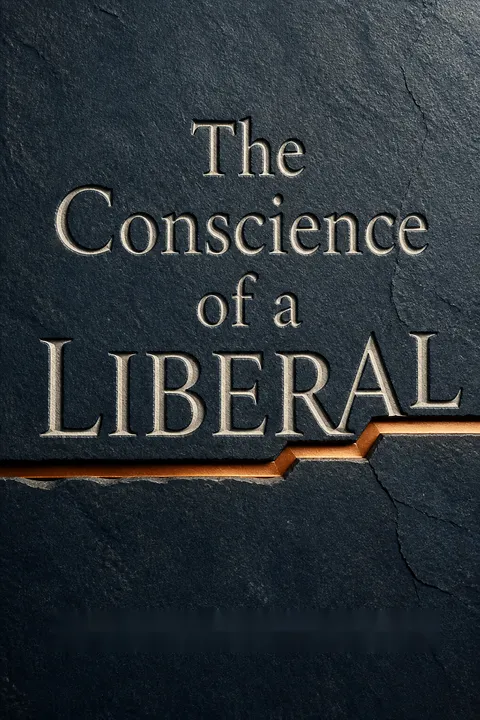
The Conscience of a Liberal presents Krugman's analysis of income inequality, movement conservatism, and the need for progressive policies in America. Readers appreciate his clear writing, historical context, and economic insights. Many found his arguments for universal healthcare and reducing inequality compelling. Some critics felt the book was overly partisan, while others praised its accessibility. Overall, reviewers saw it as an important work for understanding political and economic trends, though opinions varied on its objectivity and conclusions.
People Also Read




Glossary
Great Compression
Postwar narrowing of income gapsThe sharp reduction in income inequality in the United States from the 1930s through the 1940s, described by economic historians Claudia Goldin and Robert Margo. Krugman attributes it to New Deal policies, stronger unions, progressive taxation, and wartime wage controls. The more equal distribution persisted for decades and helped establish a broad middle-class society.
Treaty of Detroit
Productivity-linked labor bargainKrugman's label for the 1949 agreement between General Motors and the United Auto Workers, and the broader pattern it came to represent. Workers received wages linked to productivity, along with benefits, while employers gained labor peace. Similar bargaining standards influenced other unionized workplaces and helped set wage expectations beyond the auto industry.
movement conservatism
Organized conservative political networkA political network that Krugman describes as extending beyond Republican officeholders to include advocacy groups, think tanks, media organizations, donors, and career institutions. It coordinates policy ideas, electoral activity, and rewards for loyal participants. In his account, this network helped move the Republican Party rightward and oppose many New Deal institutions.
skill-biased technical change
Technology favoring skilled laborAn economic explanation for rising wage inequality in which new technology increases demand for educated or technically skilled workers while reducing demand for workers performing routine tasks. Krugman accepts that this mechanism can widen some wage gaps, but argues it cannot adequately explain why the largest gains went to a narrow elite rather than to educated workers generally.
Great Divergence
Post-1970s rise in inequalityKrugman's name for the reversal of the postwar movement toward greater income equality. Beginning in the 1970s, income and compensation rose much faster at the top than for most workers. He links the change to declining unions, altered social norms, lower taxes on high incomes, and political shifts that weakened constraints on inequality.
aftermarket policies
Taxes and benefits reducing inequalityKrugman's term for policies that address inequality after people earn income in the market. Taxes reduce some high incomes, while transfers and public services support lower- and middle-income households. These measures differ from policies that alter market earnings directly, such as wage standards or union bargaining, and include programs such as health coverage and income assistance.
FAQ
What's The Conscience of a Liberal about?
- Focus on Inequality: The book examines the rise and fall of economic equality in America, highlighting the shift from a postwar middle-class society to an era of increasing inequality.
- Historical Context: Krugman provides a historical overview, detailing how New Deal policies created a more equitable society, which has been undermined by conservative policies.
- Political Dynamics: It discusses the relationship between economic inequality and political polarization, emphasizing the need for liberal policies to address these issues.
Why should I read The Conscience of a Liberal?
- Understanding Current Issues: The book offers insights into the economic and political challenges facing contemporary America, relevant for those interested in social justice and economic policy.
- Expert Analysis: Krugman, a Nobel Prize-winning economist, provides a well-researched perspective on inequality and political forces, backed by data and historical examples.
- Call to Action: Krugman advocates for a new New Deal, inspiring readers to engage in political discourse and advocacy for progressive policies.
What are the key takeaways of The Conscience of a Liberal?
- Rising Economic Inequality: Income inequality in the U.S. is now as high as in the 1920s, with a small elite pulling away from the rest, threatening democracy and social cohesion.
- Political Polarization: The political landscape has shifted, with increased partisanship making bipartisan cooperation difficult.
- Movement Conservatism's Role: The rise of movement conservatism is a key factor in the rollback of New Deal policies and the increase in inequality.
What are the best quotes from The Conscience of a Liberal and what do they mean?
- “The arrow of causation points from economics to politics.” This quote suggests that economic inequality influences political polarization, highlighting the need to address economic disparities for political stability.
- “Middle-class societies don’t emerge automatically; they have to be created through political action.” It underscores the importance of proactive policies in establishing and maintaining a middle-class society.
- “The legacy of slavery... is the reason we’re the only advanced economy that doesn’t guarantee health care to our citizens.” This highlights the deep-rooted historical and racial issues affecting American social policies.
How does Krugman define the "Great Compression" in The Conscience of a Liberal?
- Historical Significance: The "Great Compression" refers to the period from the 1940s to the 1970s when income inequality in the U.S. significantly decreased.
- Political Influence: This compression was largely a result of political actions during the New Deal and World War II, creating a framework for economic equality.
- Contrast with Today: Krugman contrasts this era with the current rise in inequality, calling for renewed efforts to address these disparities.
What role does movement conservatism play in The Conscience of a Liberal?
- Political Shift: Movement conservatism is described as a radical force reshaping the Republican Party and American politics since the 1970s.
- Impact on Inequality: It has contributed to rising economic inequality by undermining labor rights and promoting policies favoring the wealthy.
- Need for Resistance: Krugman emphasizes resisting movement conservatism to restore economic fairness and political balance.
How does Krugman connect economic inequality to political polarization in The Conscience of a Liberal?
- Interconnected Trends: Rising economic inequality and political polarization are closely linked, with each exacerbating the other.
- Historical Context: Krugman contrasts the political consensus during the Great Compression with today’s polarized environment.
- Call for Bipartisanship: He advocates for policies that bridge the divide between parties, emphasizing that addressing economic inequality is essential for political cooperation.
What solutions does Krugman propose in The Conscience of a Liberal?
- New New Deal: Krugman calls for policies that expand the social safety net and reduce inequality, starting with universal health care.
- Strengthening Labor Rights: Revitalizing labor unions and workers' rights is crucial for achieving economic equity.
- Progressive Taxation: A more progressive tax system is necessary to fund social programs and reduce income disparities.
How does The Conscience of a Liberal address the issue of health care in America?
- Health Care Imperative: Krugman argues that the lack of universal health care is a significant barrier to economic security for many Americans.
- Comparison with Other Countries: The U.S. health care system is contrasted with those of other advanced countries that provide universal coverage.
- Policy Recommendations: Krugman advocates for comprehensive health care reform, suggesting a single-payer system as a solution.
What historical events does Krugman link to the rise of inequality in The Conscience of a Liberal?
- The Great Depression: The New Deal, established during the Great Depression, created a more equitable society through progressive policies.
- Civil Rights Movement: The struggle for racial equality is intertwined with the fight for economic justice.
- The 2004 Election: This election marked a turning point for movement conservatism, setting the stage for the current political landscape.
How does Krugman view the future of American politics in The Conscience of a Liberal?
- Hope for Change: Krugman expresses hope for a return to more equitable policies through a new generation of leaders.
- Importance of Activism: Grassroots activism and political engagement are essential to combat movement conservatism.
- Vision for Equality: Achieving economic equality requires a collective effort to challenge the status quo, leading to a healthier democracy.
About the Author
Download PDF
Download EPUB
.epub digital book format is ideal for reading ebooks on phones, tablets, and e-readers.








