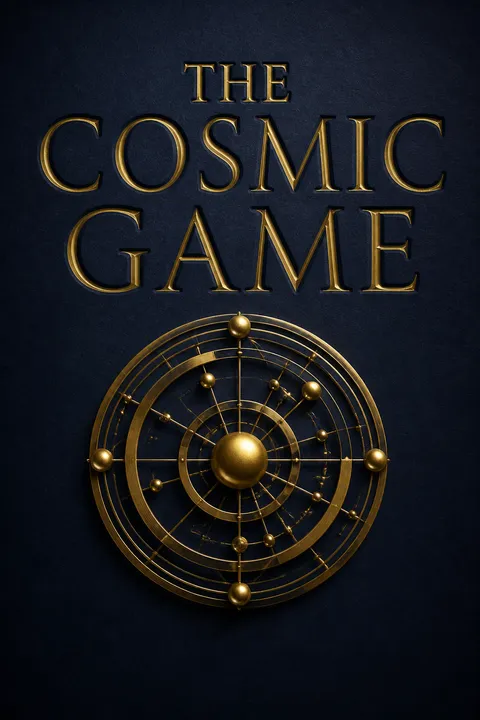


Key Takeaways
Let unusual experiences challenge your map, not certify a new one
A different kind of state. Grof calls certain nonordinary experiences holotropic, meaning oriented toward wholeness. Unlike delirium, these states can involve vivid imagery, powerful emotions, and altered perception while a person remains aware of ordinary surroundings. They may arise spontaneously or through practices such as psychedelic therapy and holotropic breathwork, which combines faster breathing, evocative music, and focused bodywork. Grof draws on more than 4,000 psychedelic sessions he conducted, records from more than 2,000 sessions by colleagues, and over 30,000 breathwork sessions supervised with his wife.
Experience is not explanation. He treats recurring reports as evidence worth studying and argues that they challenge a strictly materialist view of mind. But the reported experience and the claim that it reveals an independent spiritual reality are different kinds of conclusions.
The book is strongest when it insists that an experience can be psychologically important without fitting familiar diagnostic categories. That is a valuable corrective to treating unusual perception as meaningless by definition. Yet vividness, repetition, and personal conviction do not independently establish what caused an experience or whether its apparent world exists outside the mind. Altered states can reorganize attention, memory, and expectation. A rigorous inquiry can respect the experience, study its effects, and test claims of external accuracy without forcing a choice between automatic pathology and automatic revelation.
Map the psyche beyond biography, without confusing depth with proof
Three regions of experience. Grof's map extends beyond memories and conflicts from ordinary life. The perinatal domain refers to experiences associated with biological birth, including intense bodily sensations and emotions. The transpersonal domain includes experiences that seem to exceed the usual limits of personal identity, such as identification with another person, an animal, or nature. Grof also places encounters with mythic figures and ancestral imagery in this wider territory.
A map, not a verdict. In his account, an experience of suffocation or confinement might connect birth-related sensations with images of prisons, underworlds, or other forms of entrapment. These patterns help explain why the same session can feel at once bodily, personal, and mythic. Grof presents them as a broader cartography of experience, not merely a list of symptoms.
This map gives practitioners a vocabulary for experiences that conventional psychological models may leave unexplored. It also resembles a useful feature of many maps: different levels can describe the same event without cancelling one another. A bodily sensation, a personal memory, and a symbolic image can each matter. The difficulty is deciding when a compelling interpretation is more than a useful metaphor. Especially around birth memories, felt certainty does not by itself confirm historical detail. The framework is most responsible when it supports curiosity and integration rather than turning every image into a factual report.
Imagine consciousness as the source, while keeping the claim provisional
The book's boldest proposal. Grof argues that consciousness is not simply produced by the brain. He proposes that a universal creative intelligence, which he calls Absolute Consciousness, generates the worlds of experience from within itself. In some accounts, ultimate reality appears as a field of awareness and creative power. In others, it appears as the Void, an emptiness that contains all possibilities in potential form.
Creation as self-exploration. Grof compares the process to an ocean forming waves: each wave appears distinct but remains water. He describes creation as the source expressing its abundance, discovering itself, playing, or seeking relationship. These motives can seem contradictory, but the book treats them as different experiential accounts of a mystery that reason cannot settle.
The proposal takes the hard problem of consciousness seriously: explaining how subjective experience relates to physical processes remains a genuine philosophical challenge. Grof is right that brain activity correlating with experience does not, on its own, answer every question about consciousness. But that gap does not prove that a cosmic mind creates the universe. Analogies to quantum physics or a dynamic vacuum may illuminate a question, yet resemblance is not evidence of shared mechanism. The distinction between open inquiry and metaphysical certainty matters here: the experiences deserve careful study, while the cosmic explanation remains an interpretation.
Use the cosmic-game metaphor without blaming people for their suffering
A role can feel real. Grof describes creation as a cosmic game in which consciousness takes on distinct forms and temporarily forgets its unity. A person may therefore be both an individual participant and, in the book's metaphysical account, part of a larger whole. The metaphor resembles actors becoming absorbed in a play while still having another identity beyond the stage.
Do not collapse the levels. Grof warns against telling people that their everyday selves chose every hardship. He recalls a workshop where a leader's claim that participants had created their circumstances distressed a mother raising a child with a disability. For Grof, a transpersonal experience does not make the embodied person responsible for every event that happens to them. The metaphor should widen identity, not erase care or accountability.
The warning is essential because spiritual language can quietly become a tool of blame. A claim about ultimate unity does not establish that a person consented to illness, violence, or loss at the level where those events are lived. This distinction parallels a broader ethical principle: explanations of suffering should not be mistaken for justifications of suffering. The cosmic-game image can offer meaning or perspective, but it should never override consent, material support, or a victim's own account of what happened.
Let archetypes be windows into mystery, not rival gods
Mythic figures recur. Grof uses Jung's term archetypes for powerful, recurring patterns represented in images such as the Great Mother, the Trickster, or a culture-specific deity. He recounts a client, Otto, who felt compelled during a session to draw a sacred labyrinth. Years later, mythologist Joseph Campbell connected the imagery to a Malekulan tradition involving a pig-featured goddess guarding the route to the underworld and a labyrinth that the dead needed to navigate.
A symbol is not the source. Grof treats such encounters as psychologically and spiritually significant, but cautions against identifying one deity or image with ultimate reality. He sees archetypal forms as possible bridges between everyday experience and a larger sacred principle. Turning a particular image into the only truth, he argues, can divide people into competing religious camps.
Archetypes offer a compelling way to understand why certain images carry emotional force beyond their immediate setting. They can help people make sense of grief, transition, fear, and renewal. The Otto story also shows how comparative mythology can make an otherwise puzzling image intelligible. Still, a parallel between an individual's imagery and a cultural myth does not prove direct access to a shared metaphysical realm. Common human concerns, cultural transmission, and interpretation are also possible contributors. The symbol can be meaningful without being treated as literal evidence.
Read birth, sex, and death as overlapping thresholds, not separate compartments
Birth becomes a four-part map. Grof's basic perinatal matrices, or BPMs, are recurring patterns he associates with stages of birth. The first reflects the womb, experienced as safe and nourishing or disturbed and threatening. The second centers on confinement and helplessness during contractions before the cervix opens. The third involves passage through the birth canal, often accompanied in sessions by intense struggle, aggression, and sexual imagery. The fourth concerns emergence, sometimes experienced as death followed by renewal.
A threshold, not a diagnosis. Grof links these patterns to broader images of paradise, hell, battle, and rebirth. He also argues that birth, sexuality, and death can each open onto powerful experiences of unity. He draws practical implications for childbirth, including calm surroundings, preparation, and attentive care for mother and infant.
The framework's strength is its attention to how bodily experiences can shape later meaning. It invites discussion of birth and death as emotional events, not merely medical facts. Its caution is equally important: a dramatic image during therapy does not confirm that a person has recovered an exact birth memory, and the framework can influence what a participant expects to experience. Claims about birth conditions shaping later character should therefore be treated carefully. The practical emphasis on safety, support, and respectful care stands independently of the more speculative claims.
Face evil without excusing cruelty or pretending suffering is unreal
Good intentions can harm. Grof presents good and evil as inseparable features of the created world, where life depends on other life and actions can produce consequences beyond their intended purpose. His example is DDT: it was praised as a way to control insect-borne disease, then recognized as a persistent pollutant that accumulated through food chains and harmed wildlife.
Metaphysics is not permission. In Grof's spiritual framework, polarities help generate the drama of creation. But he does not argue that suffering is imaginary in ordinary life. His ethical response is to meet specific situations with compassion and practical judgment. The fact that one cannot remove every source of harm from the universe does not mean that preventable harm should be ignored.
This is a useful pairing of cosmic humility with local responsibility. DDT illustrates why ethical judgment must consider consequences, not just a benevolent intention or a clean theory. The metaphysical claim that evil serves a role in creation is much harder to establish, and it can sound cold when applied to real victims. Grof's insistence that pain remains experientially real limits that danger. A reader can take the lesson in moral complexity without accepting that cruelty is necessary, deserved, or beyond efforts to prevent.
Treat past-life memories as compelling reports, not settled reincarnation evidence
The reports are striking. Grof describes experiences in which people feel they are reliving lives in other times and places. He points to psychiatrist Ian Stevenson's investigations of more than 3,000 cases involving children who reportedly recalled previous lives. Stevenson published a smaller group he considered strongest, including accounts with specific details or birthmarks said to match injuries in the remembered life. Grof also reports that such experiences can accompany changes in symptoms and relationships.
Separate observation from theory. Grof says these accounts merit study but do not prove one interpretation of reincarnation. He considers several possibilities: the same individual returning, a larger spiritual identity sharing experiences, or all lives being expressions of one consciousness. The experience may be vivid and consequential while its explanation remains open.
This is one of the book's more careful arguments because it distinguishes reported phenomena from the theory used to explain them. Independent verification can strengthen an unusual claim, but memory research also highlights the need to guard against suggestion, information leakage, and selective reporting. These cautions do not make a report worthless; they define what responsible investigation requires. A past-life narrative may still help someone explore fear or relationship patterns even if reincarnation is not established as its cause.
Reduce greed and aggression by examining what achievement cannot satisfy
Three poisons drive distress. Grof draws on a Tibetan Buddhist image of a wheel of life whose center contains a pig, a snake, and a rooster. They represent ignorance about reality, aggression, and craving or attachment. He argues that ordinary knowledge alone cannot resolve the first poison; what is needed is a deeper understanding of self and world.
The endless next goal. Grof also suggests that unresolved birth-related fear can feed a habit of projecting satisfaction into the future: more money, status, influence, or success will finally make life feel complete. Yet achievement may leave the underlying dissatisfaction untouched. He recommends systematic inner exploration and spiritual practice as ways to loosen this cycle and increase compassion, rather than treating external success as a cure for existential unease.
The account connects an ancient ethical framework to a familiar pattern of restless striving. It usefully asks whether a goal serves a real need or promises to repair a deeper sense of incompleteness. That question resonates with research on adaptation to positive and negative life changes, though Grof's birth-based explanation is more speculative than the general observation. Inner work can help people examine motives, but it cannot substitute for addressing poverty, discrimination, or other conditions that make material security genuinely necessary.
Keep spiritual insight accountable to evidence and daily responsibility
Experience and institution differ. Grof distinguishes spirituality, based on direct encounters with what people regard as sacred, from organized religion, which can preserve tradition but also become focused on authority and control. He likewise separates scientific method from scientism, the treatment of a materialist worldview as if it were a proven conclusion rather than a philosophical position.
Insight must meet the world. In a peyote ceremony, Grof recalls a Native American participant who initially resented the visiting group. Learning that Grof was Czech, he remembered that he himself had taken part in a wartime air raid on Pilsen. He apologized and rejected inherited group blame. For Grof, inner transformation matters when it supports compassion and cooperation in ordinary life.
The book's most practical bridge is not a choice between science and spirituality, but a demand for better distinctions: methods are not worldviews, institutions are not private experience, and felt revelation is not public proof. The ceremony's story makes the ethical payoff concrete: personal history complicates group stereotypes and can open a path to repair. Yet individual insight cannot resolve structural conflict by itself. Its value is greatest when it motivates accountable action, while remaining open to evidence and to the perspectives of those affected.
Analysis
The Cosmic Game is best read as a daring synthesis of clinical memoir, transpersonal theory, comparative religion, and metaphysics. Its organizing movement is experiential: Grof begins with altered states, expands the map of the psyche, and follows those experiences toward claims about consciousness, creation, ethics, and social life. This gives the book narrative force. Stories of a client drawing an unfamiliar mythic labyrinth or a ceremony dissolving inherited animosity make abstract propositions memorable.
Its central intellectual contribution is a challenge to reductionism. Grof correctly distinguishes evidence that brain states correlate with experience from the further claim that the brain produces consciousness. That distinction identifies a real explanatory gap. The book is less persuasive when it treats that gap, or unusual subjective experiences, as affirmative evidence for a cosmic mind. Phenomenological description, therapeutic usefulness, and metaphysical truth are separate questions. Cross-cultural echoes and reported verification may justify investigation, but they do not alone settle ontology.
The tension is productive. Grof argues for open inquiry while often interpreting ambiguous material through a spiritual framework that can be difficult to falsify. The same experience can support personal reincarnation, a shared Oversoul, or universal consciousness. This flexibility gives the model breadth, but weakens its power to discriminate among explanations. His appeals to modern physics function more as suggestive analogies than as scientific demonstrations.
The book's ethical value is clearest when Grof limits his own cosmic metaphor. He rejects telling people that their ordinary selves chose their suffering, and insists that lived pain remains real. That safeguard matters because nonduality can either deepen compassion or excuse injustice. The strongest practical conclusion is therefore modest: unusual states deserve humane, careful study; inner practice may change how people relate to fear, desire, and others; and no metaphysical interpretation should displace evidence, consent, or practical care. Readers can engage the book's radical possibilities without having to accept its cosmology as established fact.
Review Summary
The Cosmic Game receives mixed reviews, with an overall positive reception. Many readers praise Grof's exploration of consciousness, transpersonal psychology, and spiritual insights. They find his ideas thought-provoking and transformative. However, some criticize the book for repetitiveness, lack of originality, and reliance on anecdotes rather than scientific evidence. Critics also note Grof's challenging writing style and occasional misrepresentation of scientific concepts. Despite these criticisms, many readers consider the book a profound exploration of human consciousness and spirituality.
People Also Read





Glossary
holotropic states of consciousness
States oriented toward wholenessGrof's term for nonordinary states that he distinguishes from delirium and other states involving severe cognitive impairment. They can involve intense emotions, sensory changes, bodily sensations, and experiences that seem to exceed ordinary identity, while the person may remain oriented to everyday surroundings. He associates them with practices such as psychedelic therapy and holotropic breathwork, as well as spontaneous episodes.
perinatal matrices
Patterns linked to birth stagesGrof's framework for recurring experiential patterns he associates with biological birth. The four matrices correspond broadly to the womb, contractions before the cervix opens, passage through the birth canal, and emergence. In his account, each can include bodily sensations, emotions, and symbolic imagery, such as confinement, struggle, or renewal.
transpersonal
Beyond ordinary personal identityGrof uses this term for experiences that seem to transcend the ordinary boundaries of the body, ego, or personal biography. Examples include a felt identification with another person, an animal, nature, or a mythic figure. He treats such experiences as evidence that the psyche may reach beyond the information gained through an individual's ordinary senses and life history.
Absolute Consciousness
The proposed cosmic creative sourceGrof's name for the ultimate creative principle described in some holotropic experiences. It is presented as an expansive field of awareness, intelligence, and creative power, rather than a particular deity or image. In the book's cosmology, it generates the phenomenal worlds from within itself and is ultimately continuous with individual consciousness.
Void
Emptiness containing potentialA mystical experience of primordial emptiness that Grof distinguishes from ordinary feelings of numbness or meaninglessness. Experiencers describe it as lacking manifest forms while somehow containing all possibilities. Grof presents the Void as an ultimate source of creation, sometimes understood as interchangeable with Absolute Consciousness.
hylotropic
Oriented toward the material worldGrof's term for the movement of consciousness toward differentiation, matter, and separate forms. It describes the descending aspect of his proposed cosmic cycle, in which unity appears as a world of distinct beings and experiences. He contrasts it with the holotropic movement toward wholeness and reunion.
spiritual emergency
A potentially transformative crisisGrof and Christina Grof's term for some spontaneous episodes of intense psychological and spiritual upheaval. They argue that certain episodes classified as mental illness may instead involve a process of spiritual opening and can lead to growth when met with appropriate support. The term does not imply that every crisis is harmless or should go without clinical care.
cosmic screenwork
The proposed forgetting of unityGrof's metaphor for the process by which individual forms of consciousness appear to lose awareness of their connection to a universal source and to one another. This forgetting helps create the felt reality of separate identities in his account of creation. He notes that the phrase is metaphorical, since it can imply a mechanical separation that his theory does not intend.
three poisons
Ignorance, aggression, and cravingA Buddhist teaching represented in Grof's account by a pig, a snake, and a rooster at the center of the Wheel of Life. The animals symbolize ignorance about the nature of reality, aggression, and craving or attachment. Grof uses the framework to explain forces that perpetuate suffering and to frame the aims of spiritual practice.
FAQ
1. What is The Cosmic Game: Explorations of the Frontiers of Human Consciousness by Stanislav Grof about?
- Exploration of consciousness: The book investigates the frontiers of human consciousness, focusing on holotropic (nonordinary) states that reveal dimensions beyond everyday awareness.
- Integration of science and spirituality: Grof synthesizes modern consciousness research with ancient spiritual philosophies, challenging materialistic science and affirming the primacy of consciousness.
- Existential questions: It addresses fundamental questions about the universe, the nature of reality, and the spiritual dimensions of human experience.
- Personal and cosmic connection: The book explores how individual consciousness is ultimately connected to the universal creative principle.
2. Why should I read The Cosmic Game by Stanislav Grof?
- Unique perspective: Grof offers a scientifically informed yet deeply spiritual view of consciousness, bridging psychology, psychiatry, and mysticism.
- Practical insights: The book discusses transformative methods like holotropic breathwork, making it relevant for personal growth and healing.
- Comprehensive worldview: Readers gain a broad understanding of the cosmos as a divine play (lila) and the psyche’s connection to the universal creative principle.
- Relevance for seekers: It is valuable for therapists, spiritual seekers, and anyone interested in consciousness evolution and planetary healing.
3. What are the key takeaways from The Cosmic Game by Stanislav Grof?
- Consciousness is primary: The book posits that consciousness is not a byproduct of the brain but a fundamental cosmic principle.
- Holotropic states matter: Nonordinary states of consciousness provide experiential data about the cosmos, human nature, and spiritual realities.
- Birth, sex, and death: These life events are gateways to transcendence and are deeply interconnected in the evolution of consciousness.
- Integration of science and spirituality: Grof envisions a future where scientific and spiritual worldviews are harmonized for a more complete understanding of reality.
4. What are holotropic states of consciousness according to Stanislav Grof in The Cosmic Game?
- Definition and features: Holotropic states are nonordinary states “oriented toward wholeness,” involving profound perceptual, emotional, and cognitive changes without loss of consciousness.
- Experiential content: These states can include intense sensory changes, emotional extremes, and access to transpersonal realms such as archetypes, past lives, and cosmic consciousness.
- Induction methods: Holotropic states can be induced by psychedelics, holotropic breathwork, or occur spontaneously during spiritual emergencies.
- Significance: They are central to shamanic and mystical traditions and provide insights into the nature of reality and the self.
5. What are the Basic Perinatal Matrices (BPMs) in The Cosmic Game by Stanislav Grof?
- Definition and stages: BPMs are experiential patterns linked to four stages of biological birth, each shaping emotional and symbolic experiences.
- BPM I-IV: BPM I relates to intrauterine experience, BPM II to uterine contractions before cervix dilation, BPM III to passage through the birth canal, and BPM IV to actual emergence into the world.
- Emotional and symbolic content: Each matrix carries distinct emotional feelings, physical sensations, and archetypal images, reflecting both personal and transpersonal realms.
- Therapeutic significance: Reliving and integrating these matrices in holotropic states can lead to profound healing and spiritual transformation.
6. How does Stanislav Grof in The Cosmic Game describe the relationship between consciousness and the universe?
- Consciousness as primary: Grof argues that consciousness is a fundamental cosmic principle, not merely a product of the brain.
- Ensouled universe: The universe is presented as “ensouled,” with all aspects of nature possessing consciousness or sentience.
- Unity of individual and cosmos: The psyche’s farthest reaches are commensurate with all existence, implying ultimate identity with the cosmic creative principle.
- Alignment with mystical traditions: This view reflects the perennial philosophy’s insight “Tat tvam asi” (“Thou art That”).
7. What is the cosmic creative principle in The Cosmic Game by Stanislav Grof?
- Absolute Consciousness: The cosmic creative principle is an ineffable, radiant source of infinite intelligence, awareness, and creative power.
- Two experiential modes: It can be experienced as unity with the divine source or as a transcendent observer witnessing creation.
- Creative dynamics: The principle manifests the universe through division and differentiation, creating separate units of consciousness while maintaining underlying unity.
- Holographic analogy: Each part contains the whole, akin to waves on an ocean or a hologram.
8. How does The Cosmic Game by Stanislav Grof explain the process of creation and the illusion of separation?
- Involution and differentiation: Creation begins with Absolute Consciousness splitting into countless individual units, experiencing separation from the source.
- Partitioning and forgetting: A “cosmic screenwork” causes these units to forget their divine origin, creating the illusion of individuality.
- Holotropic return: Evolution is the process by which consciousness seeks reunion with the source through unitive experiences and spiritual awakening.
- Purpose of the illusion: The illusion of separation is necessary for the cosmic drama and meaningful adventures in consciousness.
9. How does Stanislav Grof in The Cosmic Game address the problem of good and evil?
- Ethical complexity: The book explores the relativity and cultural variability of moral values, showing good and evil as inseparable polarities.
- Evil as a separating force: Evil is a necessary element that creates the illusion of separateness, enabling the cosmic drama.
- Not an absolute: Evil is not an independent absolute but part of creation’s duality.
- Transformation through insight: Spiritual insight, compassion, and ethical responsibility can transform our relationship to evil, informed by karma and reincarnation.
10. What does Stanislav Grof in The Cosmic Game say about the relationship between birth, sex, and death?
- Interconnected triad: Birth, sex, and death are deeply interconnected, marking transitions between life and death, individual and species, psyche and spirit.
- Gateways to transcendence: These events often trigger spiritual openings and unitive experiences, serving as portals to the transpersonal domain.
- Perinatal experiences: The trauma and dynamics of birth leave unconscious imprints that influence emotional and spiritual life.
- Spiritual significance: These life events are archetypal motifs and opportunities for consciousness evolution and reunion with the cosmic source.
11. How does The Cosmic Game by Stanislav Grof reconcile science and spirituality?
- Critique of materialism: The book critiques the materialistic assumption that consciousness arises solely from brain processes.
- Complementary approaches: Grof distinguishes true science from scientism and spirituality from organized religion, proposing their complementarity.
- Evidence from research: Findings from quantum physics, parapsychology, psychedelic therapy, and near-death experiences support a cosmology where consciousness is fundamental.
- Integration potential: Grof envisions a future scientific paradigm integrating spirituality and transpersonal psychology for a more comprehensive worldview.
12. What practical methods and advice does Stanislav Grof offer in The Cosmic Game for exploring and transforming consciousness?
- Holotropic breathwork: Developed by Grof and his wife Christina, this method uses accelerated breathing, evocative music, and bodywork to induce holotropic states safely.
- Psychedelic therapy: Grof’s clinical research with psychedelics like LSD and psilocybin reveals their potential for accessing nonordinary states and facilitating healing.
- Spiritual emergencies: The book emphasizes understanding and supporting psychospiritual crises as opportunities for growth, advocating for trained facilitators and proper integration.
- Improving life transitions: Grof suggests natural childbirth practices, raising sexual awareness, and changing attitudes toward death to foster emotional healing and spiritual development.
About the Author
Download PDF
Download EPUB
.epub digital book format is ideal for reading ebooks on phones, tablets, and e-readers.








