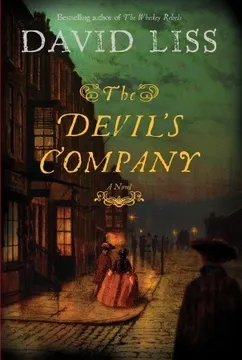


Plot Summary
The Cacho Duel
At Kingsley’s fashionable gaming house, Benjamin Weaver approaches Robert Bailor disguised as a loud, overdressed Scotsman. Bailor’s contempt draws a crowd, and the two agree to settle their quarrel at cards. Weaver signals the dealer when to make him lose, then when to bring him a winning hand. The first losses are easy to accept because he is gambling with Jerome Cobb’s money.
But the dealer gives him a losing hand on the decisive wager, and Bailor walks away with more than eleven hundred pounds. As Weaver tries to leave, Bailor identifies him by name and makes clear that the humiliation was arranged by Cobb. Weaver leaves the gaming room defeated, unsure which of his supposed allies betrayed him.
The opening makes performance the first weapon: Weaver uses disguise, a false accent, and a controlled loss to manipulate Bailor, only to discover that the performance has been scripted against him. His professional confidence depends on reading people and managing appearances; the dealer’s betrayal turns those strengths into liabilities. The crowd matters too. Cobb’s design does not merely take money, it stages Weaver’s public humiliation, making shame part of the coercion. The scene establishes the novel’s central problem in miniature: in a city where nearly everyone is acting, even a successful deception may belong to someone else.
Cobb's Manufactured Debt
The story rewinds to Weaver’s hiring. Cobb, a wealthy stranger, claims that Bailor cheated him and asks Weaver to win back the money through a dealer already in Cobb’s pay. Weaver accepts the work and takes twelve hundred pounds, with Cobb’s nephew Tobias Hammond and servant Edgar present as witnesses to his promise to return it.
After the loss at Kingsley’s, Cobb refuses to investigate the dealer and demands immediate repayment. Weaver cannot pay, so Cobb offers a third choice: work off the debt by serving him. Hammond insists that Weaver has no right to refuse. Weaver rejects the arrangement and walks out, but Cobb has already made the money, the witnesses, and Weaver’s good name into a trap.
The debt is not simply financial pressure. Cobb converts trust into legal exposure by arranging witnesses before Weaver knows the real terms of the encounter. The coercion works because Weaver values his reputation as much as his freedom: the promise to return the money can be used against him precisely because he made it honestly. Hammond supplies a colder, procedural form of intimidation, while Cobb’s genial manner disguises the trap as a reasonable compromise. Their difference in temperament foreshadows a larger contest between overt cruelty and the more effective violence of institutions, contracts, and credit.
Friends Become Collateral
Seeking help, Weaver visits his uncle Miguel, a Portuguese Jewish merchant whose failing health has not dimmed his generosity. Miguel cannot lend twelve hundred pounds because a shipment of Portuguese wine has vanished after reaching the Customs House, leaving his business burdened with debt.
Weaver recognizes Hammond’s position at Customs as a possible link to the attack. His friend Elias Gordon then reveals that someone has quietly bought up several hundred pounds of his debts as well.
Back at Cobb’s house, Weaver learns that Moses Franco, a neighbor he barely knows, has also been targeted. Cobb demands that he break into the East India Company’s guarded London headquarters and steal a director’s report. Weaver accepts because refusal would leave his uncle, Elias, and Franco exposed to prison.
Cobb’s leverage exploits Weaver’s strongest moral reflex: he can endure hardship for himself, but he cannot watch others suffer in his place. The uncle’s missing wine and Elias’s purchased debts show that credit is not a neutral measure of obligation here. It is a weapon that can be transferred, called in, and aimed at a person’s relationships. Miguel’s illness intensifies the pressure without making him passive; he recognizes that Weaver must discover Cobb’s purpose rather than simply submit. The resulting bind shifts the story from a personal swindle to a networked crisis, where every act of investigation risks harming someone else.
The Riot Bargain
Cobb gives Weaver only days to enter Craven House, the East India Company’s fortified complex, and take a report from director Ambrose Ellershaw’s office. Weaver recruits Devout Hale, a sickly silk-weaver leader, to create a diversion. Hale agrees to riot only if Weaver can arrange for him to receive the king’s healing touch for his scrofula.
Before the plan begins, Weaver and Hale witness a constable frame a weaver and a magistrate consign him to unpaid workhouse labor. Hale’s anger makes the bargain easier to keep. On the appointed night, dozens of weavers pelt Craven House with rubbish, drawing guards and soldiers to the gates. Weaver scales the wall carrying rabbits to lure away the mastiffs and slips inside.
The riot is both a tactical diversion and a glimpse of the labor conflict that the Company would prefer to keep outside its walls. Hale’s men risk arrest and musket fire because their livelihoods are being squeezed by imported cloth, while Weaver’s mission depends on their anger being useful to a richer man’s private scheme. Hale’s faith in the king’s touch is not treated as mere foolishness; illness has made hope feel like a practical resource. The scene binds political economy to bodily vulnerability: the poor are asked to spend their safety, while powerful institutions turn their grievances into instruments.
Celia in the Dark
Inside Craven House, Weaver finds the corridors nearly empty and reaches Ellershaw’s office, where he searches through papers as the riot continues outside. A young woman carrying a candle catches him behind the desk. She mistakes him for someone expected, then recognizes that he is new and helps him locate the report.
Weaver calls himself Ward and claims to be Ellershaw’s clerk; she identifies herself as Celia Glade, but her polished speech does not fit the role she seems to occupy. She gives him the marked packet, and he escapes over the wall before the soldiers clear the riot. Cobb praises the burglary but refuses to release Weaver or his friends. Instead, he orders Weaver to remain in his employ and keep the report for a further task.
Celia’s first appearance mirrors Weaver’s own method: both move through the Company by adopting identities that make them temporarily legible to others. Their encounter is intimate without being trustworthy, because she helps him while withholding the reason she knows where the report is. Weaver’s successful escape seems to restore his agency, yet Cobb immediately narrows it again by extending the contract. The stolen document is therefore less valuable as an object than as a credential: it gives Weaver access to Ellershaw and creates the conditions for the next layer of deception. Each apparent success opens a new enclosure.
A Job Inside Craven House
Cobb directs Weaver to return Ellershaw’s report under a fabricated story about recovering stolen property. Ellershaw, an East India Company director who collects prints of Weaver’s prizefighting career, accepts the report and offers him a paid position overseeing the warehouse watch.
Weaver takes the post on Cobb’s orders. Ellershaw explains that Parliament’s 1721 legislation will soon restrict the wearing of imported calicoes, threatening the Company’s domestic market and his standing before the Court of Proprietors.
He wants Weaver to gain the trust of the Company and investigate the death of Absalom Pepper, a silk weaver allegedly killed by the Company. Hammond forbids Weaver from speaking Pepper’s name or asking questions, leaving him an impossible assignment with no usable starting facts.
Weaver’s new position turns the investigator into an employee of the institution he is meant to investigate. Ellershaw sees him as a useful instrument, while Cobb sees him as a useful access point; neither asks what Weaver believes the Company should be. The instruction to investigate Pepper without naming or questioning anyone about him dramatizes how power can make knowledge itself dangerous. Ellershaw’s political account also introduces competing definitions of freedom: commercial access for the Company, protection for domestic workers, and personal liberty for the people caught between them. Weaver is placed inside this conflict before he understands its terms.
Blue Cloth, Hard Power
Weaver learns that Ellershaw intends to counter Parliament’s restrictions by making imported cloth fashionable before the law takes effect. At a dinner, Ellershaw pressures wool-interest parliamentarian Samuel Thurmond to support repeal, then turns the gathering into a threat when Thurmond resists.
He forces the elderly man back into his chair and uses the prospect of hidden violence to secure his compliance. Weaver refuses to become Ellershaw’s enforcer when later ordered to attack Thurmond and assault his wife, risking his Company post rather than commit those crimes.
He also discovers that committee member Forester is secretly involved with Mrs. Ellershaw. These discoveries complicate the political struggle: Ellershaw is ruthless, Forester has private motives, and Weaver cannot tell which apparent alliances are sincere.
Ellershaw’s language of free trade collapses under the physical coercion he uses to advance it. His conduct exposes a contradiction that is more than personal hypocrisy: he treats liberty as a right reserved for powerful merchants, while workers and political opponents are to be managed through force. Weaver’s refusal is a crucial test of identity. He is willing to lie, trespass, and manipulate, but he draws a line at sexual violence and cruelty. That boundary does not free him from the system; it makes him harder to use. The secret affair adds another layer, showing how private desire and public succession can overlap without becoming the same motive.
The Greene House Secret
As Weaver organizes the watchmen, he notices that Forester speaks privately with Aadil, the scarred East Indian already installed as warehouse overseer. A guard named Carmichael tells him that Forester’s men control a locked upper floor in the neglected Greene House.
Weaver asks Carmichael to guide him there after hours. They find crates filled with ordinary Indian calicoes, not the obvious contraband or stolen wealth Weaver expected. When voices approach, Carmichael stays behind to restore the room while Weaver escapes through a high window and hides on the roof.
The next morning, Carmichael is reported crushed to death in a tea warehouse, supposedly while stealing. Weaver suspects Aadil and Forester but has no proof, and the Company’s workers are quick to accept the official explanation.
The secret room frustrates the investigator’s desire for a clear object of wrongdoing: its contents are ordinary, but the secrecy surrounding them is not. Carmichael’s death transforms that uncertainty into personal cost. His willingness to help Weaver arises from trust rather than payment, so the loss cannot be dismissed as a professional hazard. The Company’s practice of tolerating small thefts by underpaid workers makes the cover story plausible, demonstrating how normalized exploitation can supply a ready-made explanation for violence. Weaver’s suspicion is justified but not yet actionable, and the gap between knowing and proving becomes one of the novel’s most punishing constraints.
The Widow’s Annuity
Weaver turns to the meticulous clerk Blackburn, who confirms that a sealed order requires him to pay an annual allowance to Mrs. Absalom Pepper, though the Company has no usual practice of supporting a dead worker’s widow.
The arrangement is hidden from the directors and was begun by a cashier later transferred to India. Weaver travels to Twickenham and meets Heloise Pepper, who believes the silk weavers’ guild funds her comfortable life. She says a representative bought her husband’s books and papers after his death.
Weaver’s questions unsettle her, but she reveals that Pepper kept notes and drawings and once spoke of a private research partner. Before Weaver can pursue the clue, news arrives that his uncle Miguel has died after another severe attack of pleurisy.
The annuity makes concealment visible through excess. A payment meant to suppress suspicion is so generous that it advertises the very anomaly it is designed to hide. Blackburn’s devotion to records gives Weaver a route into the secret, but his rigid faith in orderly accounting also makes him vulnerable to the Company’s authority. Heloise’s sentimental account of Pepper is not simply a false lead; it shows how a person’s desire to preserve a loved one’s dignity can protect a larger deception. Miguel’s death lands amid this investigation, turning the cost of delay from a looming possibility into grief Weaver cannot bargain away.
The Second Mrs. Pepper
After Miguel’s funeral, Weaver returns to work because his aunt Sophia and friends urge him to pursue the truth rather than surrender to Cobb. Hale identifies Absalom Pepper as one of his silk weavers, a clever, vain man who filled notebooks with writing and drawings but kept his work private.
Hale denies that the weavers’ association could have paid Heloise’s large annuity. He points Weaver toward Jane Pepper, a poor, gin-dependent woman in a London slum, who says Absalom was her husband too. Jane recalls his constant notes and promises of future wealth.
She also describes a man called Teaser, a confidant who helped Pepper with his research. Weaver now has evidence that Pepper’s life was built from overlapping marriages, hidden finances, and an invention important enough to attract powerful enemies.
Pepper emerges through incompatible memories rather than a single authoritative account. Heloise remembers a comfortable widow’s life, while Jane inhabits poverty and insists on the same husband’s goodness. Their stories reveal not only Pepper’s fraud but the uneven distribution of its consequences. Weaver’s own grief sharpens his response: after losing Miguel, he recognizes that the people left behind are often forced to make meaning from incomplete evidence. Hale supplies a laboring community’s perspective, yet even he admits that Pepper was not a friend. The inquiry becomes less about recovering an ideal victim than understanding a clever man whose ambition made others pay.
A Marriage in the Fleet
At the Fleet’s clandestine marriage houses, Weaver searches the records for Bridget Alton, Ellershaw’s missing stepdaughter. He interrupts a forced wedding, drives off the abductors, and pays a priest to inspect his ledgers.
One entry shows Bridget married under a false name to Achitophel Nutmeg, a playful alias pointing toward Absalom Pepper. Weaver finds Bridget living modestly and learns that she had brought Pepper a substantial dowry intended to support his claim to an inheritance.
She believes her husband was a gentleman cheated by solicitors, not a silk worker pursuing an invention. Weaver leaves her with more questions than answers, but her marriage explains why Mrs. Ellershaw feared her husband’s interest in the girl and gives Pepper’s tangled finances a new source.
The Fleet episode places a real act of rescue beside the paper trail of a marriage, making the institution’s loopholes tangible rather than merely comic. Bridget’s story complicates the image of Pepper as a simple swindler: she invested in him because she believed he had been wronged, and her loyalty persists even when she does not understand his work. Weaver’s intervention in the forced wedding also reveals a practical moral code. He will use threat and force to stop immediate harm, but he does not assume that all irregular arrangements are equivalent. The same legal disorder that enables exploitation can also give people a way around family control.
Teaser and the Fire
Weaver and Elias find Teaser at Mother Clap’s house, a refuge for men excluded by law and public morality. Teaser recognizes Absalom Pepper as a beloved partner and calls him Owl. Before he can explain Pepper’s work, constables and moral reformers raid the house. Aadil helps Teaser escape, and Weaver and Elias follow them across the river.
Aadil then reveals that Pepper designed a machine to make Indian-like calico from American cotton, an invention that could threaten the Company’s textile trade. He says Moses Franco helped finance it. An arson attack soon engulfs the tavern where they are meeting. Teaser dies in the blaze, and Aadil, shot while trying to save him, dies after urging Weaver to seek Celia Glade.
The raid shows how moral policing can serve political interests while pretending to defend public virtue. Mother Clap’s community is attacked by men who claim authority but behave as opportunistic bullies, and the violence drives Teaser into a danger he did not choose. His grief for Pepper is genuine even though Pepper’s conduct was exploitative, forcing Weaver to recognize that affection does not depend on a flawless object. Aadil’s final disclosure reframes the mystery as an international struggle over technology and trade. The fire then destroys the most direct witnesses, turning knowledge into a scarce and dangerous possession.
Cobb in the Carriage
Following Aadil’s dying instruction, Weaver asks Celia for help. She arrives in a fine carriage with Cobb bound beside her and takes the French agent to the Tower. Cobb admits that he was coerced through debt and that Hammond, not he, held the greater authority.
Celia identifies him as Pierre Simon, one of the men whose names appeared on the life-insurance policies taken out on Weaver. Hammond remains at large with Franco in his house, and Cobb cannot promise that the prisoner is safe.
Celia explains that she is working for the British Crown, not France, and asks Weaver to free Franco and recover the sole surviving copy of Pepper’s plans. Weaver accepts the break-in, though he remains wary of Celia’s motives and the Company’s claim to the invention.
Cobb’s capture reverses the relation of power without erasing the harm he caused. His account of being coerced may be true, but Weaver refuses to let victimhood cancel responsibility. Celia’s revelation also destabilizes the simple categories Weaver has used to navigate the case: the apparent French spy is British, the supposed master is subordinate, and the state’s interest overlaps with the Company’s. Her offer is not morally clean. She asks Weaver to serve a national project that may suppress an invention, while he is chiefly motivated by rescuing Franco and preventing further coercion. Trust remains provisional, built through action rather than confession.
The Tunnel Rescue
Weaver recruits the urchin Crooked Luke, whose gang has learned a secret passage into Cobb and Hammond’s rented house through a neighboring cellar. Using the tunnel, Weaver reaches Franco’s room and learns Hammond has kept him captive by threatening his daughter Gabriella in Salonica.
Franco confirms that Hammond possesses Pepper’s plans. Weaver finds Edgar waiting with a pistol, disarms and binds him, then confronts Hammond upstairs. Hammond gives up the small book hidden under his pillow but reveals that a copy has already been sent abroad.
Rather than face capture, he takes poison and dies before explaining the wider scheme. Weaver escapes with Franco and the original plans, while the apparent copy abroad leaves the French threat unresolved.
The rescue depends on reciprocal knowledge from people whom respectable society would disregard. Crooked Luke’s street expertise opens a route that formal guards cannot see, while Franco’s fear for Gabriella explains why he has endured captivity without making him cowardly. Weaver’s violence is tightly instrumental: he incapacitates Edgar, threatens Hammond, and takes the book, but his purpose is rescue rather than punishment. Hammond’s suicide preserves his loyalty to a political cause while preventing the truth from being fully extracted. The supposed copy abroad gives the victory an unstable edge; possession of the plans does not yet mean control of their consequences.
Forester’s False Fabric
At the Court of Proprietors, Forester announces that a machine-made cloth can replace Indian imports and claims to have secured a sample. The shareholders erupt at the prospect of a new source of profit. Ellershaw interrupts, examines the fabric, and exposes it as genuine Indian cloth rather than a domestic imitation.
The sample has been substituted, undermining Forester’s credibility before the Company’s most powerful members. Ellershaw then presents a small book as Pepper’s plans and argues that he has protected the Company from a future threat.
Thurmond, formerly an opponent of the Company, publicly supports Ellershaw’s position. Ellershaw survives the meeting and turns Forester’s failure into a warning about vigilance, while Weaver watches the Company absorb another conflict into its own machinery.
The meeting converts textile identification into political theater. Forester’s claim depends on the shareholders wanting the invention to be real, while Ellershaw’s victory depends on making the false sample legible as a fraud. The crowd’s rapid shift from excitement to ridicule shows how institutional opinion can be steered by spectacle as readily as by evidence. Ellershaw’s survival is not proof of virtue; it is proof that he can turn a crisis into a story the Company prefers. Thurmond’s change of allegiance confirms that political principle and personal security have become difficult to separate, especially when the Company can offer a future that Parliament cannot.
The Crown’s Hidden Hand
After the meeting, Weaver confronts Celia and Franco, who reveal that both had worked with British intelligence. Franco had been forced into Cobb’s service through debt, then chose to assist the ministry once his daughter was safely abroad.
Celia admits that her concealments protected the state’s effort to keep Pepper’s invention from French hands and preserve British power in India. Weaver resents being manipulated, especially after believing Franco had suffered imprisonment because of him.
Celia acknowledges that the government trusted his loyalty more than his judgment. She also tells him that the ministry will settle the debts used against his friends. Weaver refuses to mistake national advantage for justice, but accepts that he can punish no one openly without risking the larger conflict.
The revelation does not make the British agents innocent; it clarifies the scale on which they judge guilt. They treat deception as an acceptable cost of national security, while Weaver measures it by the damage done to particular people. Franco’s role complicates betrayal because his cooperation is an act of protection as well as concealment. Celia understands Weaver’s ethics but still believes expedience must govern political action. Their disagreement is not merely romantic tension; it is a conflict over whether a state can claim moral authority while manipulating those it asks to serve. Weaver’s refusal to equate loyalty with obedience becomes his clearest political position.
Pepper’s Living Secret
Weaver learns that Hale has handed Ellershaw the decoy notebook in exchange for the promised royal touch, betraying the weavers’ cause for a chance at relief from his illness. The book shown at the Company meeting was not the working design.
Weaver finds Bridget and the real Absalom Pepper alive, then returns the genuine plans to him. Pepper had agreed with Ellershaw to fake his death, surrender a copy, and remain with Bridget, though Ellershaw later threatened the arrangement.
Weaver refuses both the Company’s claim and the ministry’s demand for the invention, preferring that its creator decide its future. Miguel’s widow Sophia takes charge of the family business, Franco is free, and Weaver leaves Celia’s affection unresolved but possible.
The final choice rejects the idea that the only alternatives are French possession, British state control, or Company profit. Weaver returns the plans to Pepper, a deeply compromised inventor, because authorship and consequence should not be confiscated by institutions merely because they are powerful. Hale’s betrayal prevents the silk weavers from becoming a simple moral counterweight to the Company: desperation can reproduce the same bargain-making that has harmed them. Sophia’s decision to manage Miguel’s business offers a quieter counterexample to male control. The ending gives Weaver no clean victory, but it lets him choose a future rather than merely serve someone else’s design.
Analysis
The novel treats power as a contest over who may define a transaction. Cobb calls coercion employment, Ellershaw calls domination free trade, and British intelligence calls manipulation national service. Each vocabulary makes harm sound orderly or necessary. Weaver’s work is to recover concrete facts from these claims, yet the facts rarely offer a morally clean choice. The missing wine, the purchased debts, the concealed annuity, and Pepper’s notebook all show that commerce can act upon bodies and loyalties as directly as a weapon.
The book’s mystery structure repeatedly frustrates the expectation that exposure will produce justice. Carmichael dies without proof against his killers. Pepper’s supposed murder is a fabricated story, and his real invention is passed between agents who intend to control its use. Even Weaver’s successful rescue of Franco does not end the larger contest. Institutions absorb scandal, redirect blame, and survive by converting private disasters into manageable public narratives.
Weaver’s ethical resistance is therefore less a claim to purity than a refusal to let necessity erase judgment. He lies and uses force, but he rejects Ellershaw’s demand for sexual violence and ultimately refuses to hand Pepper’s plans to either the Company or the state. His choice is partial and personal, not a program for reform. It does not dismantle the machinery that exploited him, but it interrupts one transfer of power.
The ending also complicates solidarity. Hale’s illness makes his bargain understandable, yet his decision to trade the decoy book for a royal cure repeats the logic of self-preservation that has harmed the workers. Sophia’s readiness to manage Miguel’s business, by contrast, quietly challenges the assumptions that made her invisible. The novel’s lasting question is not whether trade, government, or invention is inherently virtuous. It is whether people can keep human obligations visible when every powerful institution insists that its own future is the greater good.
Review Summary
The Devil's Company is a historical mystery set in 1722 London, featuring Benjamin Weaver, a Jewish ex-boxer turned detective. The plot revolves around corporate intrigue involving the East India Company, with themes of blackmail, espionage, and economic manipulation. Readers praised Liss's attention to historical detail and complex plotting, though some found the ending confusing. While not considered the strongest in the series, the novel was generally well-received for its vivid portrayal of 18th-century London and exploration of early capitalism.
People Also Read


Characters
Benjamin Weaver
Thieftaker under pressureA former prizefighter turned London thieftaker, Weaver reads disguise, debt, and physical danger with practiced attention. He is proud of his independence and wary of becoming anyone’s instrument, yet loyalty to family and friends repeatedly draws him into risks he would reject for himself. His Jewish identity shapes his experience of London’s exclusions without defining the limits of his sympathies. He can deceive, threaten, and fight, but he maintains boundaries around cruelty and sexual violence. His central struggle is not whether he can survive a web of schemes, but whether he can act effectively without surrendering his own judgment to the people who claim to know what is best.
Jerome Cobb
Smiling debt brokerA genial, affluent stranger who approaches Weaver with the manner of a generous employer and the methods of a coercive creditor. Cobb studies people’s dependencies and uses debt, legal witnesses, and threats against loved ones to make refusal costly. His mild temper distinguishes him from more openly vicious conspirators, but it does not make him humane. He prefers control that appears voluntary, offering a bargain after arranging the conditions that make every other choice dangerous. His role exposes how a polished social manner can conceal a ruthless understanding of leverage.
Elias Gordon
Surgeon and unruly allyWeaver’s close friend and frequent collaborator, Elias is a capable surgeon whose professional skill contrasts with his loose handling of money and desire. He is sociable, witty, and often careless about the risks his romantic pursuits create for others. His appetite for pleasure can frustrate Weaver, but it does not make him shallow: when danger becomes unmistakable, he offers practical help and personal loyalty. Elias also serves as a counterweight to Weaver’s guarded intensity, forcing him to articulate what he values and to recognize that companionship sometimes requires forgiveness as well as caution.
Miguel Lienzo
Ill merchant uncleWeaver’s uncle, a Portuguese Jewish importer whose kindness survives illness and financial strain. Miguel offers help without making generosity feel like a debt, and he urges Weaver to understand his enemy before reacting. He is deeply attached to his trade and reluctant to admit how much his health and business have deteriorated. His steady affection gives Weaver a model of authority based on care rather than control.
Sophia Lienzo
Quiet family strategistMiguel’s wife and Weaver’s aunt, often underestimated because she has lived in the background of her husband’s business. Sophia is observant, emotionally strong, and clear-eyed about the difference between grief and surrender. She understands Weaver’s reluctance to be managed and still knows when to insist that he continue his work. Her practical intelligence suggests a life of competence that others have failed to notice.
Moses Franco
Retired merchant and friendA thoughtful widower and former trader who welcomes Weaver’s friendship despite the failed prospect of a match with his daughter. Franco is warm, cultivated, and accustomed to thinking in terms of risk, markets, and obligations. He treats Weaver with generosity when the younger man is ashamed or cornered, and he worries more about his daughter than his own comfort. His patience makes him a grounding presence amid London’s double-dealing, while his experience in business gives him a sharper understanding of the forces gathering around the East India Company.
Tobias Hammond
Customs House nephewCobb’s severe nephew, employed at the Customs House, Hammond regards people as liabilities to be managed and rules as opportunities to tighten control. He is suspicious of Weaver from the outset and insists on punishment where Cobb prefers a more accommodating surface. His bureaucratic position gives him access to the machinery of credit and customs, while his contemptuous manner makes him a visible threat. He represents the colder, more procedural face of coercion.
Edgar
Cobb’s bruised servantCobb’s odd-featured servant, whose pride in his livery is matched by hostility toward the street children who harass him. Edgar carries messages, watches Weaver, and enforces the household’s will with a sneer. His position between wealthy employers and poor Londoners gives him a brittle sense of status. He is less an independent power than a loyal instrument who takes personal satisfaction in the authority his masters lend him.
Celia Glade
Master of many disguisesA striking, resourceful woman who moves through Craven House under a servant’s identity and is skilled at altering her voice, dress, and bearing. Celia is intelligent, playful, and difficult to read, with a personal history shaped by poverty and the limited choices available to women. She draws Weaver through charm but is also a disciplined operator who knows how to withhold information. Her ambitions are political as well as personal: she believes intelligence work and national security require compromises that Weaver finds morally dangerous.
Ambrose Ellershaw
Company director in crisisA long-serving East India Company director who has spent years in India and sees himself as the champion of commercial expansion. Ellershaw is theatrical, self-regarding, and capable of sudden tenderness or brutality. He believes that trade should be free from political interference, but he is willing to coerce workers and lawmakers when they obstruct his plans. His confidence in his own historical importance blinds him to how others experience the power he wields. He makes a formidable employer because he confuses loyalty to the Company with loyalty to himself.
Mr. Forester
Ambitious committee memberA younger East India Company committee member, Forester is wary of Ellershaw and intent on building influence within the Company. He presents himself as a defender of institutional interests, though personal ambition shapes his judgments. His dealings with warehouse staff and his private connection to the Ellershaw household make him difficult to assess. He is intelligent enough to recognize vulnerability, but not always wise enough to understand the people he is using.
Aadil Baghat
Scarred warehouse overseerA powerful East Indian presence at Craven House, Aadil is first encountered as a hostile overseer with little patience for Weaver’s authority. His scarred face and guarded manner make him easy for others to reduce to a stereotype, while his education and self-command remain concealed. He watches the Company closely and understands the racial humiliations built into his daily life. Aadil’s apparent bluntness is difficult to separate from performance, making him one of the novel’s most carefully masked figures.
Carmichael
Good-natured watchmanA portly, genial guard who knows the warehouses and their informal rules better than the Company’s directors do. Carmichael becomes Weaver’s guide because he trusts him to treat workers fairly, not because he expects a reward. His cautiousness comes from years of living under powerful men whose decisions can cost a laborer his place. He represents the human knowledge hidden beneath official ledgers and management charts.
Devout Hale
Sick silk-weaver leaderA respected master weaver whose influence among workers rests on both solidarity and a readiness for protest. Hale is ill with scrofula and clings to the hope that the king’s touch might cure him. He understands the threats imported textiles pose to his trade, yet his desperation can compromise his judgment. His concern for workers is genuine, but he is vulnerable to bargains that promise relief from suffering.
Absalom Pepper
Vanished silk inventorA handsome, clever silk worker whose private ambitions exceed the life his trade appears to offer. Pepper keeps notebooks filled with designs and ideas, and he understands how charm can open both hearts and purses. He is difficult to admire without reservation: his intelligence coexists with vanity and an appetite for risk that affects the people around him. Those who knew him remember a man they loved, feared, or resented, but rarely one they understood completely.
Heloise Pepper
Comfortable Pepper widowA young widow living in Twickenham, Heloise remembers her husband as a brilliant and devoted man. She is proud of his supposed achievements and protective of the papers he left behind. Her account is shaped by affection and by a desire to believe that her comfortable circumstances have a respectable explanation.
Jane Pepper
Impoverished Pepper widowA neglected widow living in poverty, Jane retains tenderness for the husband who once made her feel cherished. Her grief has been overtaken by hardship and drink, but she still remembers his notebooks and his promise that their lives would improve. Her testimony reveals how differently the same man could shape the lives of those around him.
Bridget Alton
Ellershaw’s missing stepdaughterMrs. Ellershaw’s daughter from her first marriage, Bridget is striking, well brought up, and determined to choose her own life. Her clandestine marriage has estranged her from her powerful household and left her with a narrower social position than the one she was born into. She is loyal to the man she loves and confident enough to defend his dignity, even when she does not understand all of his affairs.
Miriam Melbury
Weaver’s estranged loveWeaver’s cousin’s widow, Miriam once seemed a possible companion but chose a different life and a different faith. Their relationship remains emotionally charged because old hopes and old grievances have never been fully settled. She is private, proud, and unwilling to offer Weaver the easy reconciliation he might want. Her presence reminds him that longing does not create an obligation in another person.
Samuel Thurmond
Elderly wool parliamentarianAn experienced member of Parliament and an advocate for the wool interest, Thurmond is principled but not immune to fear or political calculation. He understands the effects of imported cloth on domestic workers and challenges Ellershaw’s claims about free trade. His age and public standing make him a tempting target for coercion, while his long experience gives him a careful sense of how power shifts.
Mr. Blackburn
Company’s meticulous clerkA painstaking records clerk whose intense need for order shapes his work and his daily life. Blackburn believes accurate ledgers are the foundation of a functioning institution, and irregularities trouble him more than personal rivalries do. He is loyal to the Company, but his devotion to proper records gives Weaver an unexpected way to uncover what its leaders have hidden.
Crooked Luke
Streetwise child guideA sharp, resourceful leader among London’s poor children, Luke knows how to enter houses that guards believe secure. He distrusts easy promises but recognizes when a bargain is worth taking. His knowledge comes from surviving in streets where adults routinely mistake children for harmless or disposable.
Mother Clap
Protector of outcastsThe proprietress of a gathering place for men persecuted for their sexuality, Mother Clap offers shelter while remaining alert to the danger outside her doors. She is practical, outspoken, and protective of the people who depend on her. Her moral arguments force Weaver and Elias to examine the gap between their inherited judgments and their treatment of vulnerable people.
Teaser
Pepper’s devoted confidantA discreet merchant and investor who keeps a private life separate from his public dealings. Teaser’s attachment to Pepper is profound, and his trust makes him financially vulnerable. He is more emotionally open than Weaver initially expects, and his grief exposes the human cost of treating private relationships as mere cover for a scheme.
Plot Devices
Debt and purchased credit
Turns friendship into leverageCobb does not rely only on threats. He arranges a witnessed loan, buys up debts belonging to Weaver’s friends, and makes ordinary financial obligations serve as restraints. Because Weaver values his reputation, the claim that he owes money carries more force than a simple threat of violence. The same mechanism reaches Miguel, Elias, and Franco, showing how credit can travel through a social network and convert affection into vulnerability. The device also echoes the larger world of chartered companies, where financial claims allow powerful actors to control people and goods at a distance.
Disguise and misdirection
Makes identity unstableWeaver’s disguises let him enter gaming rooms, warehouses, and private houses, but the skill belongs to others too. Celia changes her appearance and voice, Aadil performs a crude version of himself, and Cobb hides behind the role of a wealthy employer. The repeated use of masks makes observation necessary but never sufficient: a person’s apparent manner may be an act, and an accurate clue can still be deliberately planted. The device keeps the mystery grounded in behavior, while testing whether Weaver can distinguish a useful performance from a reliable character.
Pepper’s notebooks
Makes invention a contested prizeAbsalom Pepper’s notebooks contain the designs for a machine that could produce Indian-like calico from American cotton. The plans matter to the French, the British government, the East India Company, the silk workers, and Pepper himself, but each group wants a different future from them. A decoy notebook of abandoned ideas allows Weaver to mislead his handlers, while the authentic book becomes the final test of who should control an invention. The device turns a technical design into a moral question about authorship, labor, national power, and the right to profit from knowledge.
The life-insurance policies
Signals a hidden death wagerAn insurance clerk tells Weaver that several men have taken out policies on his life. The arrangement initially looks like a bizarre administrative error, but the French names attached to the policies point toward the international plot and toward people who expect Weaver’s death to be profitable. Insurance transforms murder into an impersonal calculation, allowing an intended killing to appear as a financial instrument. The policies also give Weaver a concrete clue that his danger extends beyond Cobb’s personal vendetta and connects his life to rival states and trading companies.
The decoy textile
Turns expertise into public theaterAt the Company meeting, Forester presents cloth as proof that Pepper’s machine can replace Indian imports. Aadil’s substitution leaves Forester displaying genuine Indian fabric instead. Ellershaw recognizes it and exposes the claim as a fraud, turning the shareholders against his rival. The cloth is more than a clue: it is a stage prop that makes technical judgment visible to a crowd hungry for commercial advantage. The episode shows how institutions can be swayed not only by evidence, but by who controls its presentation and which interpretation best serves their immediate interests.
About the Author




Download PDF
Download EPUB
.epub digital book format is ideal for reading ebooks on phones, tablets, and e-readers.








