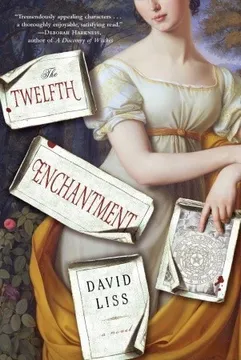


Plot Summary
The Unwanted Betrothal
In 1812 Nottingham, twenty-year-old Lucy Derrick is poised to marry Walter Olson, a mill owner she barely knows. The match promises escape from her uncle Richard Lowell’s oppressive home, where the sharp-tongued servant Mrs. Quince humiliates and sometimes hurts her. Lucy has learned to treat marriage as shelter, not romance.
Her earlier flight with Jonas Morrison ended in disgrace, and her sister Emily died while Lucy was away; guilt has kept Lucy from imagining a life she might choose. When Olson dismisses her sympathy for workers displaced by machinery, she recognizes how little room the proposed marriage would leave for her judgment. Before she can decide what to do, a stranger arrives demanding to see her.
Lucy’s predicament is not simply a choice between love and convenience. In her world, money, shelter, and social respectability are conditions of survival, so obedience can look like practical wisdom. Yet Olson’s dismissal of her opinion exposes the personal cost of that bargain: security would come by surrendering the very judgment she is beginning to reclaim. Her guilt over Emily’s death compounds this learned passivity, making Lucy regard bad fortune as a consequence she deserves. The story begins when those private constraints meet an outside disturbance she cannot explain or politely ignore.
Pins at the Door
The disheveled visitor knows Lucy by name and insists that she must not marry Olson, adding an obscure command to gather leaves. Then he collapses on the steps and vomits a stream of silver pins before a horrified crowd. Olson leaves, while Lowell blames Lucy for the scandal and fears the cost of caring for the stranger.
Doctor Snyder examines the man and concludes that medicine cannot treat his affliction. He sends Lucy and Mrs. Quince to seek Mary Crawford, a well-connected woman reputed to understand hidden arts. The warning unsettles Lucy because its speaker seems to know her, although she has never seen him. For the first time, the danger around her is stranger than the danger she already understands.
The pins make a private social crisis publicly undeniable. Lucy cannot dismiss the stranger as a suitor or a drunk without confronting an event that ordinary explanations fail to contain. Yet the scene also repeats her familiar exposure: men decide what has happened, her uncle calculates the expense, and Mrs. Quince turns uncertainty into an accusation against Lucy. The warning about Olson therefore arrives with no usable explanation, only a demand. That imbalance sets the novel’s pattern: Lucy is repeatedly asked to act before she can know the full terms, and her growth depends on learning how to judge under uncertainty.
A Curse in the Lining
Mary Crawford arrives at Lowell’s house and recognizes that the stranger’s suffering may be a curse, though she says she is no practiced magician. When her attempt to examine him falters, she asks Lucy to quiet her mind and search for the source. Lucy overcomes panic, senses a hostile presence, and tears open the stranger’s coat to find a linen bundle tied with hair.
A dark, shapeless being appears between her and the charm, but Lucy reaches past it and pulls the bundle free. Mary identifies a cloth figure attached to the man by sympathetic magic and destroys it safely. The stranger remains unconscious, yet Lucy leaves the room feeling that, for once, someone has seen her ability rather than her failings.
Lucy’s first act of agency is neither a public rebellion nor a grand declaration. It is a concentrated act of attention, made possible because Mary treats her fear as something she can work through rather than proof of incompetence. The method matters: Lucy does not overpower the dark presence but perceives the connection sustaining the curse and removes its material anchor. This discovery also alters the emotional economy of the scene. Mary’s respect offers Lucy a model of authority unlike Lowell’s control or Quince’s contempt. The new confidence is fragile, but it gives Lucy a reason to trust her own perception.
Byron's Hidden Will
The stranger wakes at breakfast and identifies himself as George Gordon Byron, the local baron and a poet. He remembers little of the days since leaving London, but he recalls Lucy’s face and says she helped him.
Before departing for Newstead, Byron privately gives her papers found on his person: her father Francis Derrick’s will and financial records. They show that Lucy and her sister Martha were meant to inherit a substantial fortune, not the small sum described after their father’s death. The discovery turns Lucy’s dependence into a possible crime.
She cannot safely accuse her uncle or brother-in-law, so she brings the documents to Mary, who agrees to have a solicitor investigate quietly. Lucy also learns Mary was once married, a disclosure that hints at grief beneath her polished kindness.
The will changes the meaning of Lucy’s poverty. What she had understood as the unavoidable result of family debt may instead be the product of deliberate dispossession. That possibility gives her anger a factual object, but not yet a path to justice: the people she might suspect control the resources and relationships she needs. Byron’s papers are therefore more than a financial revelation. They expose how legal documents can manufacture a person’s social reality, while Mary’s offer of discreet assistance introduces a rare alliance based on Lucy’s own interests. The evidence gives Lucy hope and, with it, a new vulnerability.
The Mill Goes Still
Mrs. Quince sends Lucy to Olson’s mill with food, and Lucy sees children and elderly workers beaten beside choking rows of stocking frames. Olson defends the conditions as necessary for profit. Then every worker falls silent and repeats the same instruction the stranger gave Lucy. Shadow creatures swarm above the machines, and a towering figure outside the mill repeats the warning before vanishing into darkness.
Lucy cannot explain what she has witnessed, but she knows she cannot build a home on such cruelty. She writes to Olson ending their engagement. Though the mysterious command remains obscure, the mill has made one decision plain: she will not marry a man whose prosperity depends on grinding workers down.
The mill turns Lucy’s inherited moral sympathy into witnessed evidence. Her father’s criticism of industrial labor had been an idea she could keep at a safe distance; here she sees the dust, the blows, and the child whose work is enforced by a cudgel. The supernatural chorus binds this social reality to the warning around her, without yet explaining their connection. Lucy’s refusal is important precisely because it is not based on a complete theory. She acts on what she can verify: Olson chooses profit over the workers in front of him. Ethical agency begins as a limited but consequential judgment.
A Kiss Without Marriage
Byron returns to Nottingham, walks with Lucy, and urges her to reject Olson without offering a practical alternative. When she challenges his freedom to advise a penniless woman, he kisses her in an alley and asks her to join him in London. His proposal would make her dependent on his protection while leaving her exposed to scandal, so Lucy refuses, despite wanting him.
Olson responds by declaring that their wedding will proceed in six weeks, with Lowell and Quince backing him. Lady Harriett Dyer then arrives with Lucy’s brother-in-law, William Buckles, and threatens to cut Lucy off from Martha and baby Emily if she resists. A private refusal has become a contest controlled by people who can deny Lucy both shelter and family.
The kiss tests whether desire can substitute for material security. Byron’s offer may be sincere by his own standards, but it asks Lucy to accept risks he can afford to ignore. Her refusal marks a crucial distinction between wanting a man and consenting to his terms. The response from Lowell, Quince, Harriett, and Buckles shows that marriage is also an instrument of social discipline: Lucy’s choice is restricted through threats to her home and her sister. The scene deepens the book’s concern with consent, showing how a woman’s apparent decision may be shaped by the people who control the consequences.
The First Working Charm
Mary gives Lucy a book of charms, and Lucy discovers she can distinguish effective talismans by instinct. At the Nottingham assembly, she copies a charm meant to repel Olson and slips it into his coat. He abruptly leaves the room, and that night machine breakers destroy every frame in his mill.
Jonas Morrison, the man Lucy once nearly eloped with, has returned and warns her that the magic she used has drawn dangerous attention to Olson. Before Lucy can understand him, Quince confronts her about the stranger she danced with and slaps her. Lucy endures the blow without retreating. Her power is real, but its effects reach beyond the immediate target, and she must reckon with consequences she never intended.
Lucy’s success is exhilarating because it gives her an instrument where social persuasion has failed. But the damaged mill makes clear that effectiveness is not the same as control. Her charm removes Olson from the assembly; it does not cause the Luddites’ attack, yet the timing entangles her private action with a wider conflict. Morrison’s warning arrives before she has any framework for understanding that danger. Quince’s slap supplies a more immediate measure of change: Lucy no longer collapses into shame. The section makes power morally complicated from its first use, linking empowerment to responsibility rather than treating magic as consequence-free wish fulfillment.
General Ludd Appears
At a gathering hosted by Norah Gilley, Morrison explains that he belongs to the Rosicrucians, a secret order investigating the Luddites and their leader. He also reveals that his wife was murdered, though he withholds the full story. Olson confronts Lucy over dancing with Morrison, then grips her arm and insists she is his to claim.
After Lucy escapes the gathering, a band of machine breakers surrounds her in the street. Their leader, Ned Ludd, destroys the rose Morrison gave her and recognizes Rosicrucian magic in it. He says Lucy must not oppose the workers and repeats the command to gather the leaves. Ludd disappears into shadow, leaving Lucy caught between rival forces that both believe her choices matter.
Ludd’s arrival converts the industrial dispute into a struggle over allegiance, but Lucy refuses the premise that she must immediately choose a faction. Olson’s possessive grip gives the political confrontation a bodily counterpart: both employer and revolutionary risk treating her as territory to claim. The rose becomes evidence that Morrison’s apparently decorative gift carries occult significance, a reminder that social gestures may hide institutional purposes. Ludd’s warning remains as cryptic as Byron’s, yet its repetition suggests a role Lucy cannot escape simply by ignoring it. The scene positions her not as a natural partisan but as someone whose independent judgment threatens every side.
Magic Has a Price
Mary deepens Lucy’s studies and demonstrates that a charm can destroy a rose when Lucy sacrifices a dandelion to power it. She explains that the Mutus Liber, a legendary alchemical book, contains knowledge capable of transforming life and death, and that revenants seek a world dominated by machines because industrial change may extinguish magic.
On a visit to Newstead with Martha, Lucy meets the engraver William Blake and Sophie Hyatt, a deaf young woman devoted to Byron. Sophie reveals that Harriett, Buckles, and a curate once showed her the wordless book, hoping she would identify its genuine pages. Lucy realizes that powerful people have been searching for the same object, and that her own new talent may be the reason they keep drawing her in.
The sacrifice lesson gives magic an ethical structure: power must come from somewhere, and even a small effect requires a cost. The Mutus Liber consequently represents more than a weapon; it raises the question of who may legitimately pay for transformation and who is made to bear its price. Sophie’s account connects Lucy’s occult education to Harriett and Buckles’ earlier search, suggesting that the family’s private misfortunes belong to a longer contest. Blake and Sophie also widen Lucy’s sense of what counts as knowledge. Her task will demand attention to people whom fashionable society treats as eccentric, impaired, or irrelevant.
Emily’s Empty Cradle
Mary tells Lucy the recovered will is genuine but warns that litigation would consume the inheritance. She identifies Buckles as the likely architect of the fraud, then gives Lucy a copy of the Mutus Liber and asks her to sign a will leaving its pages to Mary. Lucy complies, trusting the friend who has helped her. Soon after, Martha’s infant Emily becomes insatiable and strangely restless.
Lucy sees that the child in Martha’s arms is a creature with pointed ears and sharp teeth, invisible in its true form to everyone else. Mary has vanished, her home emptied, and a crate of magical books left for Lucy. The person Lucy trusted most may be involved in the child’s disappearance, and Lucy must act without knowing whom to believe.
The changeling revelation makes private affection a site of epistemic danger: Lucy sees a monster where Martha sees her baby, while the evidence that might persuade others is unavailable to her. At the same time, Mary’s request for the will makes trust feel legally consequential, not merely emotional. Lucy’s earlier deprivation taught her that documents can be manipulated; now she has signed one herself without understanding its purpose. The section does not simply replace friendship with suspicion. It forces Lucy to hold two possibilities at once: Mary may have betrayed her, and the child may still depend on Mary’s hidden intentions.
Emmett Stops the Summoning
Desperate to learn how to reverse the exchange, Lucy prepares to summon a spirit from one of Mary’s books. Mrs. Emmett bursts into the room before the ritual can take hold, points out a flaw in Lucy’s protective circle, and says the summoned being would have attacked her. Emmett reveals that she now serves Lucy and explains that a changeling can be banished only through powerful alchemical knowledge.
Martha leaves Nottingham with the creature, believing it is her daughter, and Buckles forbids Lucy from visiting. Lucy secretly enchants Norah Gilley into inviting her to London, then uses a love charm on Morrison to obtain information and his help. She has crossed ethical lines, but Emily’s absence has made inaction feel worse.
Lucy’s emergency choices expose the danger in treating urgency as moral permission. She risks summoning a being she cannot control, then manipulates Norah and Morrison to secure movement and information. Her motives are protective, but the methods reproduce the coercion she resents in men who decide what women must do. Mrs. Emmett’s intervention is both rescue and warning: talent can identify a path, but it cannot guarantee competence. The section’s tension lies in Lucy becoming powerful before she is wise enough to use power cleanly. Her love for Emily supplies purpose, but it also narrows her tolerance for uncertainty.
Newstead’s Empty Shelves
Lucy and Morrison break into Newstead Abbey at night, taking Sophie with them after finding her waiting outside. They reach Byron’s drawing room, where his books have disappeared and a wolf blocks their exit. Lucy repels the animal with monkshood, but Byron appears and admits he sold the collection. Sophie secretly writes the buyer’s name on her slate: Lady Harriett Dyer.
Lucy conceals this from Morrison, whose Rosicrucian order also wants the pages. Before leaving Nottingham for London with Norah, Lucy meets Olson, who says he no longer wants to marry her and is building another mill with Harriett’s support. His new prosperity links the industrial conflict to the people hunting the book.
The empty shelves frustrate the simplest version of Lucy’s quest, but the raid gives her a crucial advantage: she learns the pages are in Harriett’s hands before Morrison does. Her silence is a strategic choice, not an accidental omission, and it signals that Lucy is no longer willing to surrender information to powerful allies merely because they claim a public cause. Olson’s renewed mill sharpens the stakes. The machine economy is not an abstract future; it has financiers, local beneficiaries, and people like Harriett who can convert political influence into material power. Lucy’s private rescue mission now has unavoidable political dimensions.
London’s Polite Hell
In London, Lucy sees the soot and poverty produced by the new mills, then enters the elite world of Almack’s with Norah. There she meets Prime Minister Spencer Perceval, who says Morrison has reported her involvement and orders her to stay out of the Rosicrucians’ affairs. Byron intervenes when Beau Brummell insults her, and Lucy asks Byron to take her to Harriett’s Kent estate.
He agrees. Before the journey, Lucy visits an occult bookshop and encounters Perceval again, then prepares charms and disguises to enter Mossings. Byron hears that she seeks a book to recover her niece and agrees to help. Lucy has found a route toward the pages, but she is relying on a man whose charm and self-interest have already proved difficult to separate.
London offers Lucy two sharply divided realities: industrial misery outside and carefully curated privilege inside. Her movement between them exposes how fashionable life depends on refusing to look at the labor and deprivation that sustain it. Perceval’s warning is not neutral; his secret order has accepted cooperation with forces Lucy suspects are dangerous. Byron’s defense of her against Brummell feels personal, yet it also draws her into an expedition that risks her reputation and safety. Lucy is learning to use social access without mistaking it for moral reliability, a distinction that becomes essential at Mossings.
Three Pages in Kent
Lucy and Byron enter Mossings using a hand of glory and search the library with a divining charm. Lucy finds three genuine pages hidden inside a book and cuts them free. Harriett appears with the unstable John Bellingham and knocks Byron across the room with a single blow. She commands shadow creatures that pin Lucy in place, then confines both intruders and announces that she will have Buckles marry Lucy to Olson.
In the morning, Buckles confirms that Harriett planned to kill her own daughter, Emily, and that a rival took the infant to thwart her. Lucy forces Buckles to reveal what he knows, but Harriett’s power holds them inside. The stolen pages are hidden, and Lucy faces forced marriage and imprisonment.
The break-in succeeds materially but fails tactically: Lucy gains the pages, while Harriett gains control of her body and immediate future. That reversal demonstrates the difference between possessing knowledge and having enough power to act on it. Buckles’ coerced disclosure is especially damning because he knows the child was targeted and accepted the danger as subordinate duty. Lucy’s use of a truth charm makes him speak, but it cannot undo the harm or free her. The threat of forced marriage returns in grotesquely literal form, showing how social institutions and supernatural power reinforce one another.
The Coach Turns North
Mary arrives at Mossings, shoots the monstrous dog attacking Lucy and Byron, and takes them away before Harriett returns. She admits she arranged for the changeling to replace Emily to prevent Harriett from sacrificing the child, but refuses to reveal the baby’s hiding place.
Mary explains that Harriett is a revenant and that Ludd is an ancient force summoned to resist industrial rule. She then drives Lucy toward Nottingham, insisting London will soon become dangerous.
Lucy refuses to be redirected, jumps from the moving coach, and lands in a stream beside Olson. He captures her and carries her to an abandoned cottage, convinced a spell has restored his claim on her. Mary’s rescue has not ended Lucy’s danger; it has deepened her distrust of the people guiding her.
Mary’s confession makes protection morally ambiguous. She did save Emily from Harriett, yet she did so by deceiving Lucy and Martha and placing a changeling in a mother’s arms. Her strategic reasoning may be sound, but the method repeats the larger conflict’s habit of treating individuals as pieces in a historical design. Lucy’s leap from the coach is an imperfect but decisive reclamation of choice. It nearly costs her life and leads directly to Olson’s capture, but it marks her refusal to let even a trusted ally determine where she must go.
Olson’s Cottage Prison
Olson binds Lucy in the cottage and begins to undress her, insisting that Harriett has made her his. Byron arrives before he can assault her, shoots Olson in the leg, and frees Lucy. She binds Olson’s wound rather than leave him to die, then learns that a revenant named Whitestone has been sent to guard him.
Lucy fires Byron’s dropped pistol into Whitestone’s face, but the creature begins to regenerate, forcing her and Byron to flee. They ride back to London, where Lucy discovers that her absence has lasted two days and Quince has exposed her to the Gilleys. Perceval has been assassinated, and unrest spreads through the city. Lucy has survived physical danger, but her reputation and political circumstances have collapsed at once.
The cottage scene makes the coercion behind Lucy’s engagement unmistakable: Olson treats a prior arrangement as ownership and reads supernatural compulsion as permission. Byron’s rescue is concrete and costly, but Lucy’s first response after freedom is to bind Olson’s wound. That act does not absolve him; it shows Lucy refusing to let another person’s cruelty dictate the limits of her own conduct. Whitestone’s regeneration also teaches her that ordinary violence cannot defeat the immortal threat. On returning to London, social exposure and political assassination converge, leaving her less protected even as her practical courage has grown.
The Father’s Secret Order
After Perceval’s murder, Lucy learns that Mary helped free Bellingham, the assassin. William Blake offers her shelter and carries messages from her dead father. Blake identifies the engravings on the Mutus Liber pages as his own work, though he does not remember making them.
Morrison arrives and explains that he once loved Lucy, that her father led the Rosicrucians, and that the elopement was an attempt to protect her from a curse. The curse meant for Lucy killed Emily instead. Morrison also reveals that he killed Harriett’s husband, Sir Reginald, and that gold, mercury, and sulfur can destroy revenants. Lucy learns her father’s books are still at Harrington and asks Morrison to take her there.
The revelation rearranges Lucy’s past without erasing its pain. Morrison’s apparent betrayal was a protective deception, her father’s distance a strategy, and Emily’s death the consequence of a threat aimed at Lucy. Yet explanation does not make the losses fair or restore the years Lucy spent blaming herself. Blake’s impossible authorship of the pages reinforces the novel’s challenge to linear time and ordinary causality, while the elemental recipe gives Lucy actionable knowledge. Her identity shifts from accidental target to inheritor of a specific responsibility, but she chooses the next step herself: return to Harrington and search.
The Twelve Pages Gather
At Harrington, Lucy and Morrison find that Buckles has stationed armed men against them. Morrison disarms the attackers with sleight of hand and a deadly symbol, then removes a charm hidden in the library door.
Lucy senses that her father’s books, supposedly sold to settle debts, never left the house. Inside a copy of Purchas, his Pilgrimage, she finds two more pages of the Mutus Liber and reads their theme as transformation and insight. The changeling tells her that the remaining pages are at Newstead.
Lucy recognizes the danger but will not abandon Emily or the book. Martha, distressed and still unaware of the exchange, lets them go. Lucy, Morrison, and Mrs. Emmett set out for the abbey, where Ludd’s warnings have been pointing her all along.
Harrington transforms a house associated with Lucy’s lost childhood into evidence of both theft and inheritance. The books remained physically present while the legal story declared them gone, a precise image of how power can conceal possession in plain sight. Morrison’s combat skill clears the immediate obstacle, but Lucy’s sensitivity finds the pages and interprets their direction. She does not mistake discovery for mastery: the final destination is dangerous, and the meaning of the pages remains unfinished. Her decision to proceed rests on responsibility to Emily, not on obedience to Ludd, Mary, or the Rosicrucians.
Newstead’s Final Reckoning
At Newstead, Lucy and Morrison find Byron bound with the last two pages on his lap. Mary arrives and asks Lucy for the complete book, but Lucy refuses to surrender its ownership. When Harriett’s forces surround them at a mill, Mrs. Emmett sacrifices herself to prevent Buckles from destroying her.
Buckles then gives Emily to Lucy, while Mary creates an elemental circle and annihilates herself and Buckles. Lucy uses a talisman to weaken Harriett, forces the alchemical elements into her mouth, and carves a vulnerability charm into her forehead, destroying her.
Byron shoots Morrison; Lucy releases a flawed summoning circle, and its creature kills Byron. She saves Morrison with healing magic, but Sophie leaves with the true pages. Lucy has rescued Emily, though the book is gone.
The climax tests whether Lucy can accept sacrifice without turning it into a license for domination. Mrs. Emmett and Mary make irreversible choices for her, but Lucy refuses Harriett’s bargain and uses the knowledge she has earned rather than handing the book to any faction. Her victory is not clean: Morrison is gravely wounded, Byron dies, and Sophie carries away the pages. That loss prevents the ending from becoming a simple reward for courage. Lucy saves the child and defeats the immediate tyrant, but she does not gain total control of history or magic. Her achievement is survival joined to moral cost.
A Life of Her Own
By summer, Martha and Emily are safe at Harrington, and Lucy has left Lowell’s house for good. Buckles’s death allows her to recover the five thousand pounds owed to her, while documents assembled by Mary’s solicitor confirm her inheritance and restore her father’s library.
Lucy tends Morrison through his long recovery from Byron’s shot. When he visits Harrington, he says neither Ludd’s revolution nor Harriett’s industrial order has prevailed, leaving room for the compromise Lucy wanted. He asks her to marry him without regard for her damaged reputation.
Lucy accepts. She then uses the Mutus Liber’s power to remove the bullet still lodged in his body. Her father’s lost fortune and family are not the only things restored: Lucy now chooses her home, her work, and her marriage for herself.
The resolution answers the opening’s central deprivation by making choice materially possible. Lucy’s inheritance matters because it reduces the coercive force of poverty, not because money alone grants emotional freedom. Her marriage to Morrison is therefore unlike the arrangement with Olson: she accepts it after gaining the ability to refuse. The political balance remains provisional, and Sophie’s possession of the pages leaves the occult future open. Lucy’s final use of magic to remove Morrison’s bullet is intimate rather than imperial. The power that once seemed a route out of helplessness becomes a practice of care, exercised by someone who can now decide what her life is for.
Analysis
The novel makes Lucy’s magical education inseparable from her economic and social condition. At the opening, she considers marriage to Olson because dependence has narrowed her choices. Her discovery of magic expands those choices, but it does not instantly free her from coercion: Lowell controls her shelter, Harriett manipulates family ties, and the men around her treat marriage and desire as instruments. Lucy’s development is therefore not a simple rise from weakness to power. It is a continuing effort to distinguish agency from control, especially when she uses charms on others or accepts sacrifices made in her name.
The industrial conflict gives this intimate story historical pressure. The mill is both an actual workplace, full of coughing children and punitive overseers, and a model of a future organized around efficiency at the expense of human particularity. The supernatural factions disagree over that future, but neither offers an uncomplicated answer. The Rosicrucians fear national decline; the Luddites resist exploitation; Harriett seeks the security of a world where magic can no longer threaten her. Lucy’s insistence on a third way arises from seeing workers’ suffering directly, not from mastering a complete political theory. The book respects the limits of her knowledge while insisting that incomplete knowledge does not excuse inaction.
The Mutus Liber sharpens these questions by making power depend on interpretation, ownership, and cost. Its scattered pages are not merely clues. They test whether Lucy can recognize truth beneath false appearances and whether she will let others decide how its power is used. Sacrifice is the novel’s most consequential moral device: what matters is not only what is given up, but who chooses to give it and for whose benefit. Lucy’s final victories come through courage, learning, deception, and help freely offered, yet they bring grief rather than uncomplicated triumph. The ending grants her material independence and chosen love, while Sophie’s possession of the pages leaves the future unsettled. Lucy has not solved history. She has earned the right to take part in shaping it.
Review Summary
The Twelfth Enchantment received mixed reviews, with some praising its blend of historical fiction and magic, while others found it disappointing compared to Liss's previous works. Readers appreciated the Jane Austen-inspired elements and strong female characters but criticized the writing quality and plot inconsistencies. Many felt the supernatural aspects were poorly integrated with the historical setting. Some enjoyed the unique premise and character development, while others found the story confusing and difficult to follow. Overall, opinions were divided on the book's success in combining romance, magic, and historical fiction.
People Also Read



Characters
Lucy Derrick
Reluctant cunning womanA young gentlewoman without dependable money or family protection, Lucy begins by treating marriage as her only practical escape from an uncle’s house. She is observant, compassionate toward workers, and more intellectually capable than the people around her assume. Years of guilt over her sister Emily’s death and shame about her near elopement have taught her to distrust her own judgment. Her gift for perceiving hidden magic gives her new tools, but the choices she makes with them expose her to ethical danger. Lucy’s defining struggle is to become self-directed without adopting the coercive habits of the people who have power over her.
Jonas Morrison
Secretive Rosicrucian agentMorrison is a clever, theatrical operative whose card tricks and easy charm conceal disciplined service to a secret order. His history with Lucy makes him difficult for her to trust, and his grief over a murdered wife shapes his pursuit of supernatural threats. He can be flippant in society yet decisive under pressure, combining misdirection with practical courage. Morrison’s loyalty to institutions and promises sometimes conflicts with his concern for individuals. His relationship with Lucy is complicated by old injury, hidden motives, and a deeper tenderness neither can safely assume at first.
Mary Crawford
Lucy’s occult mentorMary is a wealthy, elegant woman with an interest in the hidden arts and a rare instinct for recognizing talent in others. She offers Lucy instruction, books, and the emotional respect that Lucy has long lacked. Beneath her warmth is a guarded, strategic temperament; she believes knowledge must be controlled because its consequences can reshape lives and political orders. Mary’s guidance encourages Lucy to study rather than rely on easy tricks, while her reserve complicates the friendship. She embodies the difficult bond between care and control, especially when she believes a dangerous choice is necessary.
George Gordon Byron
Charismatic poet and peerThe baron of Newstead is a celebrated poet whose beauty, wit, and fame make him difficult to ignore. He lives by personal impulse more readily than by conventional morality, and he can be generous and brave without becoming reliably selfless. His attraction to Lucy draws her toward a freedom that may also expose her to social ruin. Byron’s clubfoot and his efforts to conceal it reveal the vulnerability beneath his cultivated image, but he rarely lets vulnerability limit his choices. He functions as both rescuer and danger, forcing Lucy to distinguish desire from trust.
Lady Harriett Dyer
Powerful social patronessLady Harriett is a formidable widow whose influence reaches through clergy, landowners, and fashionable society. She speaks as though protecting family reputation and social order, but her concern for obedience makes her a threat to Lucy’s independence. She knows how to turn favors into obligations and how to make other people enforce her wishes. Her old-fashioned dress and controlled manner give her the air of someone untouched by changing fashions. Harriett represents authority that presents itself as respectable while demanding that others accept its terms without question.
Martha Buckles
Lucy’s devoted sisterMartha is Lucy’s elder sister and the mother of baby Emily. Quiet, bookish, and accustomed to placing security before personal happiness, she accepts a marriage she believes will protect her younger sister. Her reserve should not be mistaken for lack of feeling: she loves Lucy deeply and finds new joy in caring for her child. Martha is one of the few people whose affection predates Lucy’s magical abilities or social usefulness. Her vulnerable position within marriage shows how a woman can be loving and perceptive while still constrained by the power her husband holds.
William Buckles
Martha’s controlling husbandBuckles is a clergyman who inherited Lucy’s childhood home and remains closely beholden to Lady Harriett. He is pompous, socially anxious, and eager to prove himself useful to those above him. His marriage to Martha places him in Lucy’s family while his deference to Harriett makes him an unreliable ally. Buckles often uses moral language to excuse obedience and to judge women whose conduct challenges his authority. His role exposes the intimacy of betrayal: the person who harms Lucy is not a distant stranger, but someone embedded in the family she wants to preserve.
Mrs. Quince
Cruel household gatekeeperQuince is Lowell’s serving woman and Lucy’s daily antagonist, skilled at dressing a young lady and equally skilled at humiliating her. She uses Lucy’s youthful mistake with Morrison as a weapon, reminding her that reputation can be made to outlast an apology. Quince understands the household’s power structure and adapts her behavior to whoever holds authority. Her cruelty is personal, but it also reflects the limited power available to a woman who enforces another person’s rules. Lucy’s changing ability to resist her marks a visible shift in their relationship.
Walter Olson
Industrial mill ownerOlson is a prosperous Nottingham manufacturer who values punctuality, efficiency, and the growth of his business. He approaches marriage as a practical arrangement and initially sees little reason to consider Lucy’s opinions independent of her intended role as his wife. His mill embodies the new industrial order Lucy finds morally troubling: production increases while workers endure dangerous, punishing conditions. Olson is not a grand political theorist, but his faith in profit makes him an effective local representative of a system reshaping labor and family life.
Richard Lowell
Lucy’s miserly uncleLowell is Lucy’s widowed uncle by marriage, a wealthy former trader who prizes quiet and resents the expense of keeping his niece. His household rules reduce care to a ledger of costs, from meals to visitors. He does not need to be openly violent to make Lucy feel powerless; his authority rests on her lack of alternatives. Lowell’s self-absorption is often expressed through petty complaints, but those habits have serious consequences for a young woman dependent on his shelter.
Mrs. Emmett
Uncanny household guardianMary’s cheerful, peculiar attendant wears her bonnet low and speaks with a calmness that makes even alarming events seem ordinary. She is affectionate toward Lucy from their first meeting and appears to know more about Lucy’s path than she can explain. Emmett intervenes when Lucy’s experiments become dangerous and offers practical knowledge about occult risks. Her loyalty is quiet rather than demonstrative, and her odd manner makes it difficult for Lucy to know what she is. She serves as a steady presence in a world where nearly every guide has hidden motives.
Ned Ludd
Luddite leader in shadowLudd is the enigmatic figure claimed as leader by Nottingham’s machine breakers. He appears in moments when workers and shadow creatures surround Lucy, delivering warnings that connect her to the struggle over mills. His presence is commanding, but his instructions are cryptic, and he does not explain what gathering leaves means. Ludd stands for resistance to a system that strips workers of livelihood and humanity, yet he expects Lucy to serve a cause she has not chosen. His mystery makes him both a political force and an unsettling supernatural presence.
Sophie Hyatt
Deaf admirer of ByronSophie is a deaf young woman who communicates through writing and reads people with keen attention. She is devoted to Byron, but her attachment does not make her passive or foolish. She carries knowledge about the wordless book and the people who once tried to test her ability to identify its pages. Sophie’s choices repeatedly influence Lucy’s understanding of the search, even when she remains silent or is overlooked by others. She reminds Lucy that disability does not imply helplessness, and that a person’s private loyalties may be more complicated than outsiders assume.
William Blake
Visionary engraver and guideBlake is an eccentric engraver who sees angels, spirits, and the dead where others see empty rooms. His art joins text and image in ways that unsettle ordinary distinctions between the visible and the invisible. He treats wonder as a form of knowledge, challenging the rigid rationalism of the men who dismiss what cannot be measured. Blake gives Lucy shelter and carries messages from her father, though his explanations arrive in strange, associative turns. He is both a practical ally and a reminder that the world may exceed the categories used to describe it.
Norah Gilley
Ambitious fashionable friendNorah is a Nottingham acquaintance whose sharp appetite for gossip accompanies her excitement about moving to London. She enjoys attention and measures social success through fashionable connections, yet she can offer Lucy a route out of her uncle’s household. Their friendship is real but unequal, shaped by Norah’s privilege and Lucy’s need. Norah’s response to scandal reveals how quickly companionship can depend on status and entertainment. She represents the social world Lucy once hoped to enter and the cost of being cast outside it.
Spencer Perceval
Prime minister and Rosicrucian headPerceval is both Britain’s prime minister and the senior figure in Morrison’s secret order. He treats Lucy’s involvement as a danger to be managed, reflecting the confidence of institutions that believe they can decide who should know what. His political authority and occult authority overlap, linking national policy to the secret struggle over industry and magic.
Mr. Gilley
Norah’s influential fatherNorah’s father is a socially ambitious official who enjoys the company of younger women and relishes his new status. His fear of illness and cold gives his self-interest a comic surface, but his hospitality can become conditional when Lucy’s reputation threatens his household.
Plot Devices
The Mutus Liber
Scattered alchemical keyThe Mutus Liber is a wordless alchemical book whose twelve genuine pages are hidden among false copies and scattered across different hands and places. Lucy can sense which images are authentic and gradually learns to read their principles, including sacrifice, persuasion, transformation, and insight. Its knowledge concerns the creation and destruction of revenants, making the book a source of both rescue and political power. Its pages are drawn to one another and to their rightful owner, but possession alone does not make their teachings easy or safe to use. The search for the book drives Lucy from Nottingham to London, Kent, Harrington, and Newstead.
Sympathetic talismans
Magic through connectionThe charms in Lucy’s books work through correspondences between a target and objects associated with that target. A particular ingredient can intensify the intended effect: lemon strengthens bitterness, sugar carries sweetness, and a personal object can bind a charm to its subject. Lucy must copy each design accurately and enter a focused state before using it. The mechanism gives her a practical way to influence people and defend herself, but it also creates ethical risk. Her early charms affect Olson and Lowell, while later knowledge from the Mutus Liber helps her confront more powerful enemies.
Sacrifice and power
A cost fuels transformationMagic does not produce unlimited effects without a source of energy. Mary demonstrates the principle when Lucy destroys a rose by sacrificing a dandelion, and later explains that a greater sacrifice can support a greater working. The most potent offerings are not necessarily animals or objects; a person’s voluntary loss, especially when made out of love, can strengthen magic and overcome defenses. This principle shapes Lucy’s choices because she must ask who pays for a desired result and whether the cost is freely accepted. It is both a technical rule of the occult system and a moral test of the people who wield it.
The changeling exchange
A child hidden from timeA changeling takes the place of a human infant while the original child is hidden outside ordinary time. The substituted creature may appear to be the real child to everyone except a person able to see its nature. Reversing the exchange requires powerful alchemical knowledge, which makes Lucy’s search for the Mutus Liber urgent and personal. The device turns a large supernatural conflict into a domestic crisis: Martha believes she is caring for Emily, while Lucy alone recognizes that the child has been replaced. It also forces Lucy to decide how much truth her sister can bear before she has a way to restore the infant.
The industrial struggle
Machines reshape magic and laborThe Luddite resistance and the rise of mills create the novel’s political conflict. Machines increase production while displacing handworkers and exposing women and children to punishing conditions. The Rosicrucians fear that opposing industrial development will leave Britain vulnerable, while Ludd’s followers resist a future that turns workers and nature into resources. The revenants have their own interest in a world where mechanization may weaken magic. Lucy first encounters the conflict through Olson’s mill, then discovers it is entangled with the search for the Mutus Liber. The industrial question is not a backdrop but the material stake of the occult war.
About the Author


Download PDF
Download EPUB
.epub digital book format is ideal for reading ebooks on phones, tablets, and e-readers.








