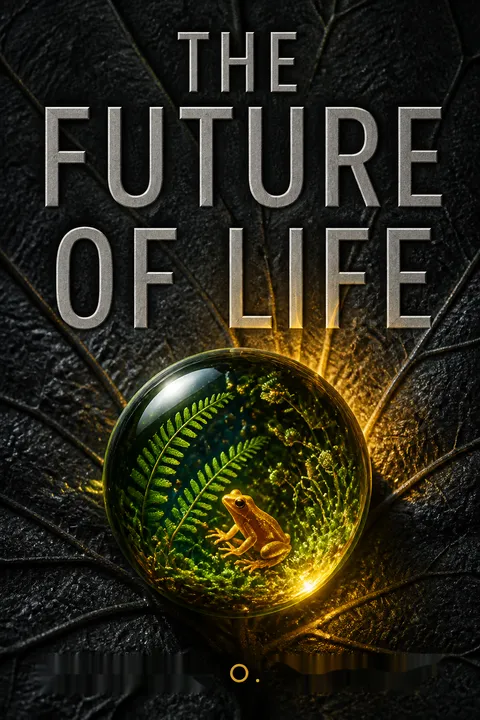


Key Takeaways
Protect biodiversity because human prosperity runs on living systems
Nature is infrastructure. Wilson’s case begins with a simple dependency: human life rests on the biosphere, the thin envelope of organisms and ecosystems covering Earth. Forests filter water, soils sustain crops, and countless species keep materials and energy moving through ecological systems. These functions are not luxuries added to civilization. They are conditions civilization relies on, often without noticing them until they fail.
A personal loss becomes planetary. Wilson opens at Walden Pond, writing to Thoreau about a place whose surrounding landscape has changed and about species disappearing worldwide. He recalls a biodiversity survey near Walden that found 1,904 kinds of plants, animals, and fungi in one day. The delight of naming life sits beside the danger: much of the living world is being lost before it is even recorded.
The strongest move here is to shift conservation from a taste for scenery to a question of dependence. Infrastructure is easiest to ignore when it works, and ecological systems are the ultimate example: their labor is dispersed across soil organisms, plants, water, and climate. That framing can bring conservation into economic and public-health debates. Yet usefulness alone cannot carry the entire argument. A species may have no known service to people, and ignorance of its role is not evidence that its role is negligible.
Look beneath the visible: most of life's variety is still unknown
Life exceeds the naked eye. Wilson defines biodiversity across three levels: ecosystems, the species within them, and genetic variation within each species. The book’s opening examples widen the reader’s scale, from microscopic life in Antarctic dry valleys to bacteria and other organisms thriving near deep-sea vents. Even apparently barren places can support food webs, though their members may be nearly invisible.
The inventory is unfinished. At the time Wilson wrote, roughly 1.5 to 1.8 million species had formal names, while estimates of the total ranged from 3.6 million to more than 100 million. A striking example is Prochlorococcus, a tiny ocean organism discovered only in 1988 despite its abundance and importance in ocean production. The living world is not a completed catalogue. It is a vast, partly unseen field of discovery.
This attention to scale corrects a common bias: people tend to treat large, charismatic animals as the whole of nature. Wilson instead asks readers to see ecological communities as layered systems, where visible creatures depend on microbial foundations. That shift also changes what counts as exploration. A pond sample or patch of soil can reveal unfamiliar worlds without a costly expedition. The caution is that discovery alone does not guarantee protection. Classification creates knowledge, but political choices determine whether that knowledge affects land use.
Cut consumption and stabilize population before the ecological bottleneck tightens
Demand has a land cost. An ecological footprint estimates the productive land and shallow sea used to supply a person’s food, water, housing, energy, transport, and waste absorption. In Wilson’s 2002 account, the global average was about 2.1 hectares per person, compared with 9.6 in the United States. Extending U.S. consumption to everyone with existing technology, he argued, would require four additional Earths. The human bottleneck is the squeeze created by rising population and consumption against finite resources.
Population is not the only lever. Wilson reported that average fertility fell from 4.3 children per woman in 1960 to 2.6 in 2000, approaching the approximate replacement level of 2.1. He links smaller families to urbanization and women’s increased choices. Even if population growth slows, however, high consumption can keep the pressure rising. The challenge is to improve living standards without multiplying resource use at the richest countries’ rates.
The footprint is valuable because it turns an abstract global limit into a question of resource demand per person. It also prevents population from becoming a convenient scapegoat: consumption patterns vary dramatically, and the book’s own figures show why a wealthy high-footprint life cannot simply be universalized. Wilson’s emphasis on women’s agency adds an important ethical dimension. Population policy is most defensible when it expands education, health care, and reproductive choice, rather than treating people as a problem to be managed.
Use HIPPO to find the pressures driving each local extinction
Five pressures converge. HIPPO is Wilson’s shorthand for habitat destruction, invasive species, pollution, population growth, and overharvesting. The acronym is a diagnostic tool, not a claim that every species faces the same mix. In Hawaii, forests were cleared, alien ants and pigs disrupted native communities, and introduced mosquitoes helped spread avian malaria. These pressures reinforced one another, leaving native birds and plants with fewer places and fewer defenses.
Look for the chain reaction. An invasive species is an organism introduced beyond its native range that harms the new environment or its inhabitants. Hawaii’s African big-headed ants, for example, displaced native insects and weakened food supplies for some birds. Feral pigs disturbed forest floors and spread alien plants. The lesson is to investigate interacting causes, rather than searching for one villain or waiting until a species is near extinction.
HIPPO works because it makes environmental diagnosis memorable while keeping attention on multiple causes. It resembles a systems map: one pressure can amplify another, and an intervention aimed at only one link may not restore the whole community. The framework also clarifies why local cases matter. Hawaii’s isolation exposes the effects of introduced species unusually clearly, but its exact history cannot be copied onto every ecosystem. The acronym is a starting checklist, not a substitute for field research into a particular place.
Rescue endangered species; human-caused rarity is not natural old age
Extinction is not retirement. Wilson argues that endangered species usually do not disappear because their evolutionary time has naturally run out. They decline because human actions remove habitat, kill individuals, or add other pressures faster than populations can recover. The Sumatran rhinoceros, already rare in the book’s account, faced forest loss and intense poaching driven by demand for its horn. Its decline was not evidence that the species had become biologically obsolete.
Small numbers magnify danger. Wilson calls species with one hundred or fewer individuals the Hundred Heartbeat Club, a reminder of how little margin remains. The California condor and Mauritian kestrel show that emergency protection and breeding can sometimes reverse a collapse. Such rescue work is costly and cannot replace habitat protection, but rarity is not a reason to give up. A population’s future depends on its threats and conditions, not on a story about nature choosing its end.
This argument challenges a tempting but false analogy between species and individuals: a declining population is not an organism peacefully reaching old age. The distinction matters because it changes responsibility. If people caused the conditions of decline, recovery is partly a practical obligation, not merely an act of sentiment. At the same time, rescue programs can attract attention toward large and familiar animals while less visible species receive little help. Emergency intervention is therefore most effective when paired with protection of the habitats and ecological relationships that sustain many species at once.
Protect large connected habitats before fragmentation makes rescue impossible
Area sets a limit. The area-species principle describes the observed relationship between habitat size and the number of species it can sustain. Wilson explains that reducing a habitat to one-tenth its original area can, over time, cut its species total roughly in half. Fragmentation adds further harm: exposed forest edges dry out, become vulnerable to fire, and admit species adapted to disturbed conditions.
Prioritize the irreplaceable. Wilson highlights biodiversity hotspots, regions rich in species found nowhere else and already under threat. In estimates discussed in the book, 25 terrestrial hotspots occupied about 1.4 percent of Earth’s land yet held close to 44 percent of known flowering plants and more than a third of known vertebrates. Tropical forests are especially important, but a protected patch is not automatically secure. Its size, condition, and connection to other natural areas matter.
This is a strategic argument for protecting habitat before a rescue becomes a species-by-species emergency. Large areas preserve more ecological relationships and give populations room to move, while connected landscapes reduce the isolation that makes small populations fragile. The hotspot approach helps direct limited conservation funds toward places with exceptional concentrations of unique life. It also carries a tradeoff: a narrow focus on the richest regions can undervalue less species-dense ecosystems that still have distinctive communities and ecological roles.
Keep species alive as libraries of food, medicine, and future options
Wild life holds unknown uses. Wilson describes species as stores of information shaped by long evolutionary histories. In his account, about 40 percent of U.S. prescription medicines originated in plants, microorganisms, or animals. Yet only a small fraction of species had been examined for useful compounds. Bioprospecting is the systematic search of living organisms for substances or other products that may benefit people.
A discovery can depend on a single habitat. A rare Bornean tree yielded calanolide A, a compound that showed activity against HIV in laboratory testing. When researchers returned for more material, the original tree had been cut down; they eventually found the same rare variety elsewhere. Wilson also points to a heat-tolerant Yellowstone bacterium that supplied an enzyme used in DNA research. Such cases make biodiversity an option for future science, not a guaranteed catalogue of cures.
The living-library metaphor captures a genuine asymmetry: losing a species is irreversible, while its future value is often unknowable in advance. That uncertainty supports precaution, much as a diverse portfolio preserves options when outcomes cannot be forecast. The metaphor should not, however, make conservation depend entirely on commercial promise. Markets reward products that can be patented and sold, not necessarily ecological relationships or species with no obvious application. The case for keeping life should include both potential human benefits and the value of not destroying what cannot be replaced.
Price nature's services, but never mistake price for total value
The natural economy does work. Ecosystem services are benefits supplied by functioning ecosystems, including water purification, soil formation, pollination, climate regulation, and waste processing. A 1997 estimate cited by Wilson valued such services at $33 trillion or more a year, compared with a measured global economic output of about $18 trillion. The estimate is not a bill that could simply be paid to replace nature; many services cannot realistically be manufactured at scale.
A watershed makes the tradeoff concrete. New York City compared building a filtration plant, estimated at $6 billion to $8 billion plus annual operating costs, with restoring the Catskills watershed for about $1 billion. The city chose to invest in the watershed. Wilson also argues that biodiverse ecosystems can recover more effectively from shocks, though ecological theory allows that relationships between diversity, productivity, and stability are complex.
Economic valuation can make ecological dependence legible to institutions that otherwise treat it as an externality. The Catskills example turns an abstract service into a concrete public decision, with water quality and flood control tied to a living landscape. But a dollar figure is a negotiating aid, not a full account of worth. Monetary estimates can omit cultural attachment, unequal distribution of costs, and the irreversibility of loss. Their best use is to expose hidden dependence, not to imply that every ecosystem can be replaced if the price is high enough.
Turn biophilia into an ethic of stewardship, not just scenery
Attachment can be cultivated. Wilson calls biophilia the human tendency to notice and emotionally connect with living things and natural systems. He links this tendency to people’s preference for certain landscapes and to studies he cites in which views of nature helped people recover from stress. Childhood encounters matter too: exploring a nearby wood, pond, or patch of ground can make living things familiar rather than abstract.
Feeling needs a moral frame. Wilson argues that knowledge of species can deepen attachment and responsibility. He grounds conservation not only in human benefit but also in shared ancestry and the idea of stewardship. His account distinguishes concern for human interests, concern for sentient animals, and concern for life more broadly. These commitments can overlap, but they need not rest on identical beliefs about why nature matters.
Biophilia offers a bridge between scientific knowledge and public motivation. Facts about extinction can be overwhelming at a distance, while direct experience gives people specific things to notice and care for. That makes access to nature more than an amenity: it can help form environmental judgment. Still, affection is not a policy. People can love a landscape while supporting choices that damage it, especially when livelihoods are at stake. Durable stewardship joins emotional attachment to institutions, shared responsibility, and workable alternatives.
Make conservation pay locally and connect reserves into living corridors
Protection needs partners. Wilson’s strategy combines immediate protection of hotspots, preservation of remaining wilderness, restoration around existing reserves, and corridors linking habitats. He argues that reserves cannot endure if local residents lose access to food, fuel, or income. Conservation concessions are agreements in which a government grants an organization the right to manage land for protection rather than logging. In Guyana, Conservation International leased 200,000 acres for a low annual payment, while local people retained customary activities described in the book.
Scale the bargain. Wilson estimated that protecting the most important tropical wilderness and hotspot areas could cost about $30 billion, roughly one-thousandth of the annual world economic output cited at the time. He proposes cooperation among governments, business, science, and conservation organizations, alongside population planning and better use of already converted land. His ambitious vision is that conservation should expand beyond isolated parks toward connected landscapes.
The strategy’s practical strength is its recognition that conservation is a governance problem as much as a biological one. Local residents need a stake in protection, while governments need credible funding and businesses need rules that reward long-term use over rapid extraction. The concession model illustrates how incentives can compete with destructive land uses, though a lease alone cannot guarantee fair representation or durable protection. Effective conservation must make benefits visible to people living with the restrictions, and keep decision-making accountable to them.
Analysis
The Future of Life is a science-based argument for conservation, but its architecture is also moral and political. Wilson moves from wonder at the largely unseen abundance of life, through evidence of population growth, habitat loss, and extinction, to a case for treating biodiversity as both an indispensable resource and an inheritance. The opening address to Thoreau supplies a human-scale frame: the impulse to seek meaning in nature must now be joined to ecological knowledge and deliberate action.
The book’s central strength is its refusal to separate human welfare from environmental integrity. Economic growth depends on soils, water, climate, and biological systems, yet conventional accounting often treats their depletion as if it were free. Wilson’s examples make this conflict tangible, from the costs of replacing watershed functions to the vanishing prospects of the Sumatran rhinoceros. His conservation program is not simply a call to preserve scenic wilderness. It includes biological inventories, protected areas, restoration, corridors, sustainable economic uses, and partnerships with people who live near reserves.
The book also has limits that matter to contemporary readers. Its statistics and projections describe the evidence available around 2001, not present-day measurements, so they should be read as historical claims rather than current baselines. Some estimates, especially global extinction rates and aggregate monetary values, are inherently uncertain. Wilson generally acknowledges scientific complexity, but the force of his prose can make contested numbers feel more settled than they are. His appeals to human dependence and future discoveries are powerful, though they cannot alone establish the worth of every species.
The most durable contribution is a decision principle: uncertainty is not a license to destroy what cannot be restored on human timescales. Conservation is strongest when ecological evidence, ethical concern, and economic incentives reinforce one another. The book asks readers to see humanity not as an outside manager of nature, but as a powerful participant whose choices can either preserve the conditions of life or diminish them irreversibly.
Review Summary
The Future of Life receives mostly positive reviews for its passionate defense of biodiversity and call to action for environmental conservation. Readers appreciate Wilson's eloquent writing, scientific expertise, and balanced approach to complex issues. Many find the book informative and thought-provoking, praising its exploration of ecosystems, human impact, and potential solutions. Some critics note that portions feel repetitive or overly optimistic. Overall, reviewers recommend the book for its compelling arguments on the importance of preserving Earth's biodiversity.
People Also Read



Glossary
biodiversity
variety of lifeBiological diversity at three connected levels: the variety of ecosystems, the species within those ecosystems, and the genetic differences among members of each species. Wilson uses the term for life across the planet or within a particular region or habitat. It includes microorganisms and small invertebrates, not only familiar plants and animals.
biosphere
Earth's living envelopeThe totality of life on Earth, including plants, animals, and microorganisms, and the thin region of the planet they inhabit. Wilson treats the biosphere as a connected system whose organisms interact with the surrounding soil, water, and atmosphere. Its processes help create the conditions on which human societies depend.
ecological footprint
resource demand per personAn estimate of the productive land and shallow sea appropriated, on average, to support a person’s consumption and absorb the resulting waste. The calculation includes resources associated with food, water, housing, energy, transportation, commerce, and other activities. Wilson uses it to compare the environmental demands of different consumption patterns.
bottleneck
squeeze on living systemsWilson’s term for the period in which humanity’s growing population and consumption press against finite resources while natural environments and species decline. The image suggests a constricted passage: human choices can determine how much of the biosphere survives the squeeze and whether people can sustain a decent quality of life.
HIPPO
five extinction pressuresA conservation shorthand for habitat destruction, invasive species, pollution, population growth, and overharvesting. Wilson uses the sequence to organize major human-driven threats to biodiversity and to show how they can reinforce one another. It is a diagnostic framework; the importance of each pressure varies by species and place.
Hundred Heartbeat Club
species near extinctionWilson’s label for species with one hundred or fewer individuals, emphasizing how little buffer remains between their current populations and global extinction. The term highlights the urgency of protecting extremely rare species, but it does not imply that population size alone explains their decline or determines whether recovery is possible.
area-species principle
habitat area limits speciesThe recurring relationship between the size of an island or habitat and the number of species that can persist there over time. As habitat area shrinks, its sustainable species total generally declines as well. Wilson uses this principle to explain why habitat loss and fragmentation can cause extinctions even without direct killing.
bioprospecting
searching life for useful productsThe exploration of organisms and ecosystems for potentially useful substances or other resources, including medicines, crops, fibers, and industrial products. It can involve screening many species or investigating a particular organism with promising properties. Wilson argues that careful, low-impact bioprospecting can support both scientific discovery and conservation.
ecosystem services
benefits ecosystems provideThe flows of materials, energy, and information from ecosystems that support human life. Examples include purification of water, formation of soil, pollination of crops, regulation of climate, nutrient cycling, and the processing of waste. Wilson uses the term to make nature’s economic contribution visible, while noting that many services cannot simply be replaced by manufactured substitutes.
biophilia
attraction to living natureWilson’s term for the human tendency to focus on life and lifelike forms and, in some cases, to form emotional connections with living systems. He discusses it as a predisposition shaped by human evolution and experience, not as an automatic response shared equally by everyone. The concept supports the idea that contact with nature can foster care and attachment.
conservation concessions
land leases for protectionAgreements in which a government grants an organization a lease or other right to manage an area for conservation, rather than granting the land to logging or similar extractive uses. Wilson presents them as a way to secure large natural areas while offering governments income and time to develop less destructive economic uses.
FAQ
What's The Future of Life about?
- Exploration of biodiversity: Edward O. Wilson discusses the critical role of biodiversity in maintaining healthy ecosystems and the threats it faces from human activities.
- Human impact on nature: The book highlights how actions like habitat destruction and pollution have led to a decline in species populations, urging humanity to act as stewards of the planet.
- Call to action: Wilson advocates for a global land ethic and presents solutions to mitigate the environmental crisis, emphasizing the interconnectedness of all life forms.
Why should I read The Future of Life?
- Insightful perspective: Wilson, a renowned biologist, offers a blend of scientific knowledge and philosophical reflection on the future of life on Earth.
- Urgent message: The book addresses pressing issues like biodiversity loss and environmental degradation, serving as a wake-up call for readers.
- Inspiring solutions: Wilson not only highlights problems but also offers potential solutions and a vision for a sustainable future, encouraging conservation efforts.
What are the key takeaways of The Future of Life?
- Biodiversity is essential: The book emphasizes the importance of biodiversity for ecosystem stability and human survival, with each species playing a crucial role.
- Humanity's responsibility: Wilson stresses the moral obligation humans have to protect the natural world, advocating for stewardship and conservation.
- Critical juncture: The concept of a "bottleneck" in population growth and resource consumption suggests that current choices will determine the future of life on Earth.
What are the best quotes from The Future of Life and what do they mean?
- Conservation legacy: “In the end, our society will be defined not only by what we create, but by what we refuse to destroy.” This highlights the importance of environmental protection for future generations.
- Environmental urgency: “The living world is dying; the natural economy is crumbling beneath our busy feet.” This serves as a stark reminder of the consequences of human actions on the planet.
- Value of wildness: “In wildness is the preservation of the world.” This quote emphasizes the need to protect wild spaces to preserve biodiversity.
How does The Future of Life address the concept of the biosphere?
- Definition and complexity: Wilson describes the biosphere as a thin membrane of life surrounding Earth, emphasizing its complexity and interconnectedness.
- Economic and ecological value: The book argues that the biosphere's services are invaluable, estimating their worth in trillions of dollars.
- Threats and protection: Wilson details threats like habitat destruction and climate change, calling for urgent action to protect these vital ecosystems.
What conservation strategies does Wilson propose in The Future of Life?
- Global land ethic: Wilson advocates for a global land ethic prioritizing biodiversity and ecosystem protection, guided by collective moral responsibility.
- Sustainable practices: The book suggests sustainable agricultural and forestry practices to minimize environmental impact, balancing human needs with ecological health.
- Community engagement: Wilson encourages local communities to participate in conservation efforts, fostering ownership and responsibility for natural resources.
How does The Future of Life relate to current environmental issues?
- Climate change relevance: The book addresses the ongoing climate crisis and its impact on biodiversity, linking human activity to species loss.
- Biodiversity loss urgency: Wilson highlights alarming rates of species extinction and habitat loss, providing data to illustrate the severity of the situation.
- Policy change advocacy: The author calls for policy changes at various levels to support conservation efforts, emphasizing the need for political will and public support.
What role does science play in The Future of Life?
- Scientific foundation: Wilson's arguments are grounded in scientific research and data, lending credibility to his claims.
- Interdisciplinary approach: The book integrates insights from ecology, economics, and philosophy, enriching the discussion of environmental issues.
- Future research importance: Wilson emphasizes the need for continued scientific exploration to advance knowledge and inform effective conservation strategies.
How does The Future of Life define the relationship between humans and nature?
- Interconnectedness of life: Wilson emphasizes that humans are an integral part of the natural world, with well-being linked to ecosystem health.
- Moral obligation: The book posits that humans have a moral responsibility to protect the environment and preserve biodiversity.
- Cultural significance: Wilson highlights the cultural and aesthetic values of nature, arguing for the preservation of natural landscapes for future generations.
What is the significance of the term "ecosystem engineers" in The Future of Life?
- Definition and examples: Ecosystem engineers are species that significantly alter their environment, like beavers and corals, creating habitats for others.
- Impact on biodiversity: These species play a crucial role in maintaining biodiversity by modifying habitats and enhancing resource availability.
- Human role: Wilson argues that humans also act as ecosystem engineers, often destructively, and calls for positive practices that support biodiversity.
How does The Future of Life envision the future of biodiversity?
- Optimistic outlook: Despite challenges, Wilson maintains hope that humanity can change its trajectory and restore biodiversity with concerted effort.
- Role of technology: The book discusses technology's potential to aid conservation, from genetic engineering to sustainable resource management.
- Collective action: Wilson emphasizes global cooperation and collective action to ensure a sustainable future for all life forms.
What solutions does The Future of Life propose for conservation?
- Protecting biodiversity hotspots: Wilson emphasizes identifying and protecting areas with high concentrations of unique species as crucial for global biodiversity.
- Restoration efforts: The book advocates for restoring degraded ecosystems to enhance biodiversity and ecosystem services.
- Community involvement: Wilson highlights the importance of local community involvement in conservation, leading to more effective and sustainable outcomes.
About the Author




Download PDF
Download EPUB
.epub digital book format is ideal for reading ebooks on phones, tablets, and e-readers.








