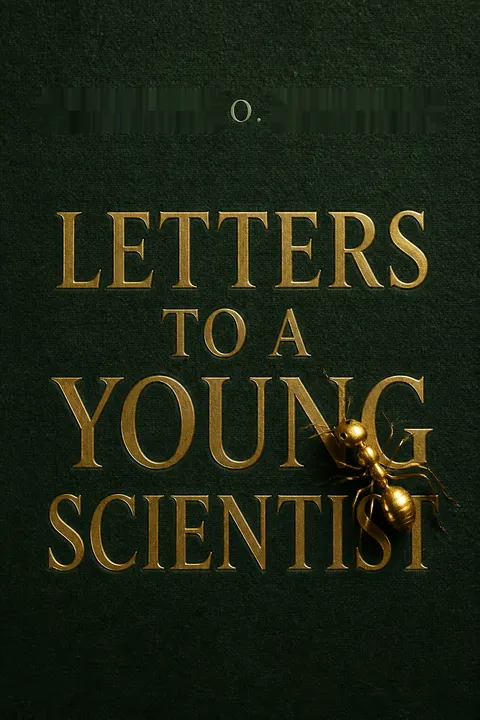


Key Takeaways
Let durable curiosity choose your scientific direction before credentials do.
Interest came first. At fourteen, Wilson was an underprepared nature counselor at a Boy Scout camp. He won over the other scouts by organizing snake hunts, identifying their finds, and explaining what he knew. A venomous bite briefly stopped the work, but not the fascination. By the end of summer, he had settled on a life in science. Later, ants became his focus, and that early curiosity carried him from college to a long research career.
Training feeds passion. Wilson’s point is not to neglect education or copy his casual approach to school. It is to find a subject that holds attention, learn what it demands, and stay open to a stronger interest if one appears. Courses alone, he argues, are a poor substitute for discovering what one wants to investigate.
The story makes motivation concrete: curiosity is not a vague personality trait but a willingness to keep looking, collecting, and asking questions when no one has assigned the task. That resembles self-directed learning, where an active interest gives formal instruction a purpose. The useful qualification is that passion cannot replace access to good teaching, equipment, or time. Wilson’s unusual route worked partly because mentors and institutions eventually supported it. Curiosity is a compass, not a complete career plan.
Learn enough mathematics to enter the conversation, not every equation.
Math is a language. Wilson urges aspiring scientists to become quantitatively literate, but not to treat advanced mathematics as a universal entrance exam. He learned calculus at thirty-two, while already a Harvard professor, and never became highly fluent. He still used mathematical ideas to reason about populations: if the number of ancestors doubles each generation, ten generations back gives 1,024 ancestors. The equation makes a pattern visible without requiring a mathematical career.
Match tools to work. Some fields demand advanced mathematics; others, including taxonomy, ecology, and biogeography, can reward observation and careful data gathering. Wilson argues that visual thinking and knowledge of real phenomena often generate the questions that mathematicians can formalize. Collaboration can fill technical gaps, though researchers should keep improving their own quantitative skills.
This is a valuable corrective to the idea that mathematical fluency and scientific ability are identical. The distinction resembles language learning: basic literacy can unlock a field without making every researcher a poet of equations. It also puts the burden on education systems, which can mistake early difficulty for permanent incapacity. Still, the encouragement should not become an excuse to avoid quantitative work. Choosing a suitable specialty and building competence are complementary, especially as data-heavy methods spread across disciplines.
Look for underpopulated questions before joining fashionable scientific races.
Find room to contribute. When Wilson began studying ants, only about a dozen researchers worldwide worked on them full-time. Ants were abundant, ecologically important, and socially complex, yet comparatively neglected. That imbalance gave a young researcher unusual room to make discoveries. Wilson advises learning about prominent fields, but not confusing prestige with opportunity: a fashionable subject may already be crowded with talented investigators and established programs.
Difficulty can signal value. A sparsely studied topic may feel lonely, and its evidence may be incomplete. But a hard problem can matter precisely because no one has solved it. Wilson’s advice is not to choose obscurity for its own sake. Seek a subject that genuinely interests you, where consequential questions remain open and where focused work can establish real expertise.
The advice treats a research field like an intellectual market: opportunity depends not only on the size of the question but on how many people are already addressing it. That can help young researchers see neglected areas as promising rather than second-rate. Yet low competition is not automatically a sign of hidden gold. A field may lack tools, funding, or a tractable question. The practical test is whether the gap is both meaningful and approachable, ideally with mentors who can help distinguish an open frontier from a dead end.
Let imagination propose explanations, then let experiments eliminate them.
Start with a puzzle. Wilson noticed that ants ignored freshly dead nestmates but carried decomposing ones to refuse piles. He hypothesized that ants recognized chemicals released during decay, then tested possible substances on paper ant dummies. Oleic acid triggered the carrying response; other substances did not. When he applied a trace of the acid to living ants, nestmates carried them away too, until they cleaned themselves and returned.
Keep alternatives alive. A hypothesis is a testable proposed explanation. A theory is a broader account supported by facts and reasoning, while a fact describes a reliably observed result under specified conditions. Wilson calls the practice of testing several possible explanations the method of multiple competing hypotheses. It helps prevent researchers from becoming loyal to the first attractive idea, especially when complex causes overlap.
The ant experiment shows why imagination and discipline are partners rather than rivals. A surprising image suggested a mechanism, but controlled comparisons gave the idea scientific standing. Testing alternatives also counters confirmation bias, the tendency to notice evidence that favors a preferred explanation. In complicated systems, however, experiments may not isolate every cause, and a failed hypothesis can still sharpen the next question. The strongest account is not simply the most elegant one; it is the one that continues to explain evidence while surviving serious attempts to disprove it.
Know organisms closely enough to recognize the anomaly hiding in plain sight.
Expertise makes details legible. Wilson’s early work with dacetine ants began by offering them different small invertebrates in plaster nests. He found that they hunted springtails, insects that escape predators by launching themselves into the air. The ants’ unusual jaws and slow, careful stalking suddenly made sense as adaptations to that prey. What looked like odd anatomy became an explanation only after close observation of the ants and their environment.
Probe, then verify. Wilson also spent years revising the taxonomy of Pheidole ants. His 2003 book described 624 New World species, including 334 new to science, and included more than 5,000 of his drawings. Informal, quick experiments can reveal promising leads, but consequential results require careful testing. Expertise is not just possessing facts; it is knowing enough to see which small difference deserves investigation.
Deep familiarity can function like a finely tuned instrument: it makes small deviations noticeable before they become obvious to outsiders. The ant examples also show how descriptive work can generate theory, not merely catalogue specimens. A useful distinction is between exploratory and confirmatory work. Casual trials can efficiently suggest what to study, while stronger designs are needed before treating a result as reliable. Expertise becomes especially powerful when paired with humility, since a familiar system can also tempt researchers to overlook surprises that do not fit their established picture.
Attempt work beyond your rank, then assemble the team it needs.
Audacity can begin solo. Graduate student Corrie Saux Moreau wanted to reconstruct the family tree of all major ant groups. Researchers leading a large funded project declined to add her. She responded by proposing to do the entire project herself, using Harvard’s ant collection and a postdoctoral researcher skilled in DNA sequencing. Wilson helped provide funding and expertise. Her study was published in Science, and its results closely matched those of the larger team working independently.
Collaboration completes ideas. Wilson argues that an original project may begin in one person’s imagination, but modern research often needs different skills. A mathematician, statistician, technician, field assistant, or specialist may be essential. Moreau’s story is not a case for working alone at all costs. It is a case for refusing to let a rejection define the limits of a worthwhile question, while recognizing the support required to answer it.
The example separates confidence from arrogance. Moreau’s ambition was paired with a fallback, access to a substantial collection, and collaborators who supplied expertise she did not have. That is closer to entrepreneurial risk management than a heroic leap without a net. Scientific institutions can benefit when mentors make room for unconventional proposals, but individual audacity should not become an excuse to romanticize precarious work. A bold idea is strongest when its advocate can identify what would make it feasible and invite others to strengthen it.
Treat a stump, city park, or island as an unexplored world.
The familiar still hides life. In a twenty-four-hour Central Park bioblitz, 350 volunteers identified 836 species, including a frog later recognized as new to science. A rotting stump offers another miniature frontier: insects, worms, fungi, and vast bacterial communities change as the wood decomposes. Wilson estimates that more than half of known species had been added to the online Encyclopedia of Life by the time he wrote, yet the total number of species could exceed ten million. Much of biodiversity remained unnamed and poorly understood.
Discovery supports stewardship. Species identification is not merely a naming exercise. Knowing which organisms exist, where they live, and how they interact helps researchers understand ecosystems and the consequences of disruption. Wilson presents biological exploration as both an intellectual adventure and a practical need: people cannot responsibly manage a living planet whose inhabitants and processes remain largely unknown.
The examples recalibrate attention: a well-trodden park or a dead tree can contain more biological novelty than an ordinary glance suggests. This is a powerful case for basic research, whose benefits are difficult to predict before the organisms and relationships are known. Biodiversity records also depend on sustained curation, not just dramatic discoveries. The book’s urgency is persuasive, though knowledge alone does not guarantee protection. Institutions and communities still have to decide how discoveries inform land use, conservation priorities, and the distribution of costs.
Trust theories only when they connect facts and risk being disproved.
A theory should do work. Wilson and mathematician Robert MacArthur proposed that island species numbers reflect a balance: immigration slows as fewer new species remain nearby, while extinction rises as crowded populations shrink. Smaller or more distant islands should therefore support fewer species. To test the model, Wilson and graduate student Daniel Simberloff fumigated mangrove islets, then monitored the return of invertebrates. Recolonization broadly fit the predicted equilibrium, while also revealing details of the colonization process.
Predictions sharpen explanations. In another example, Wilson and William Bossert developed a theory of chemical communication. They classified signals such as trails and alarms by the jobs they perform. Bossert’s term active space describes the region where a released chemical remains concentrated enough for another organism to detect. This made the theory measurable and open to tests, rather than merely a tidy story about ant behavior.
These examples show theory as a bridge between scattered observations and new experiments. A useful model simplifies reality enough to make predictions, then lets evidence expose where the simplification fails. That is especially important in ecology, where many causes interact and clean experiments can be difficult. The island model’s value lies not in declaring every ecosystem balanced, but in specifying a mechanism researchers can examine. The same standard applies across fields: a theory earns confidence through explanatory reach and testability, not elegance alone.
Link scientific disciplines without reducing every human question to science.
Knowledge can connect. Wilson uses consilience to mean linking findings from distinct areas into a more coherent account. His career connected ant behavior with evolution, chemistry, ecology, and mathematical theory. He argues that scientific knowledge can also illuminate questions about human origins and minds, and imagines intelligent termite-like beings whose culture and senses differ radically from ours but whose science could still be shared.
Difference still matters. The thought experiment separates shared explanation from shared experience. Alien beings might develop comparable mathematics while finding human morality or art incomprehensible, and the reverse could be true. Wilson sees opportunities to connect the sciences with social inquiry and the humanities, but his claim that science can unify knowledge is ambitious. Integration should make connections visible without assuming that every ethical, aesthetic, or historical judgment has a laboratory answer.
Consilience is most persuasive when it operates as translation across levels: a chemical signal can explain an insect behavior, while ecology explains why that behavior matters in a community. The termite thought experiment usefully separates the universality of some explanatory tools from the particularity of lived experience. The caution is that integration can become imperial if one discipline claims authority over questions it cannot settle. Cross-field work is strongest when it clarifies what evidence each method contributes and what remains a matter of interpretation or value.
Protect discovery with honest credit, correction, and carefully stated uncertainty.
Trust is part of the method. Wilson treats accurate credit as essential because scientific work depends on shared findings and recognition of who produced them. Researchers should read and cite prior work carefully, correct ordinary errors, and retract results that do not hold up. Fraud is different: deliberate deception destroys the basis for trust and can end a career.
Say what the evidence supports. When results are uncertain, researchers should repeat the work if possible, or describe conclusions cautiously rather than claiming more than the data show. Wilson sees this restraint as good scientific practice, not weakness. New knowledge can be misused when it is twisted by political or ideological aims, so scientists may act publicly on what they know, but must not betray the responsibility that comes with producing verifiable evidence.
The ethic described here is not merely personal virtue; it is infrastructure for collective knowledge. Clear attribution lets others trace claims, while correction makes the record more reliable than any single researcher’s reputation. The distinction between error and fraud is also crucial: a culture that punishes honest revision too harshly can discourage transparency. At the same time, careful scientific language cannot settle every public dispute, because policy involves competing values as well as evidence. Scientists serve the public best when they separate what findings establish from what society chooses to do with them.
Analysis
Letters to a Young Scientist is part memoir, part career guide, and part argument for natural history. Its structure matters: Wilson does not offer abstract rules first and illustrations afterward. He earns advice through scenes from a life spent looking closely, from a teenage snake counselor to experiments on ants and ecological theory. The recurring narrative is that attention to a particular piece of the world can open onto much larger questions.
The book’s sharpest contribution is its defense of descriptive science as generative. Naming species, mapping distributions, and learning an organism’s habits may appear preliminary beside laboratory breakthroughs, but Wilson shows how such knowledge supplies the raw material for explanation. His career repeatedly moves from observation to question, then to collaboration and test. That sequence is a persuasive alternative to treating theory as the only prestigious form of science.
Its career advice is also deliberately contrarian: pursue durable interest, seek less crowded problems, and do not confuse mathematics or brilliance with the whole of scientific ability. These ideas can widen the imagined routes into research. They should not be read as universal guarantees. Passion does not remove barriers of money, mentorship, or institutional access, and fields differ greatly in how much quantitative training they require. Wilson’s suggestions about ideal intelligence and work habits are personal judgments, not settled rules for every scientist. The book’s vision of unified knowledge is most compelling when it connects concrete mechanisms across disciplines, as in chemical communication or island ecology. It is more contestable when it implies that science can absorb the humanities. Scientific evidence can constrain accounts of human life without replacing interpretation, moral debate, or aesthetic judgment. The strongest reading preserves both ambition and distinction: seek connections, but make each field answerable to the kinds of questions and evidence it can genuinely handle. Above all, Wilson’s letters make discovery feel less like an exclusive gift than a practiced way of attending to reality.
Review Summary
Letters to a Young Scientist received mixed reviews. Many found it inspirational and valuable for aspiring scientists, especially biologists. Wilson's passion and experience shine through, offering encouragement and practical advice. However, some critics felt the book was too narrowly focused on Wilson's field of biology, particularly entomology, and outdated in some aspects. The autobiographical nature appealed to some readers but frustrated others expecting more general guidance. Overall, readers appreciated Wilson's eloquent writing style and enthusiasm for science, even if they disagreed with some of his perspectives.
People Also Read


Glossary
Multiple competing hypotheses
Testing alternative explanationsA research approach in which scientists identify several plausible explanations for a phenomenon and test them against evidence, rather than committing immediately to one favored idea. Wilson presents it as a safeguard against fixation and confirmation bias. In complex biological systems, the full set of alternatives may be difficult to identify, but comparing explanations can still make inquiry more rigorous.
Cafeteria method
Offering varied prey choicesWilson’s name for a laboratory setup used to discover what dacetine ants eat. He placed live mites, springtails, larvae, and other small invertebrates in an adjacent chamber connected to artificial ant nests. Observing which prey the ants captured revealed their preference for soft-bodied springtails and helped explain the ants’ unusual hunting anatomy.
Active space
Detectable chemical signal zoneThe region around a released chemical signal where its concentration remains high enough for another organism to detect it. Wilson and mathematician William Bossert used the concept to model how pheromone signals spread. Its size and shape depend on features such as diffusion, temperature, airflow, release rate, and the sensitivity of the receiving organism.
Consilience
Connected bodies of knowledgeWilson’s term for connections made between findings from different disciplines, allowing separate bodies of knowledge to contribute to a more coherent explanation. He argues that links among biology, chemistry, and physics can also inform social inquiry and the humanities. The idea calls for integration, though it does not require treating every kind of question as scientifically answerable.
Theory of Island Biogeography
Model of island species balanceThe theory developed by Edward O. Wilson and Robert MacArthur to explain how immigration and extinction shape the number of species on islands. Immigration tends to decline as more species arrive, while extinction tends to rise as populations become smaller and competition increases. The model predicts fewer species on smaller or more distant islands and helped inform conservation biology.
Enemy specification
Recognition of dangerous enemiesWilson’s term for the idea that a species can evolve a particular response to a dangerous enemy. In laboratory observations, Pheidole dentata ants reacted far more aggressively to fire ants than to many other intruders, mobilizing workers and soldiers. The behavior suggested that recognizing and attacking a specific threat can help a species survive alongside a stronger competitor.
World Continent Fauna
Widespread northern mammal assemblageWilson’s name for the mammal groups associated with the large connected landmass extending across North America, Europe, Asia, and Africa. During the Great American Interchange, some of these mammals spread into South America after the Isthmus of Panama formed. Wilson discusses their expansion as part of a broader question about why some faunas outcompete ecological equivalents.
FAQ
What's "Letters to a Young Scientist" about?
- Guidance for Aspiring Scientists: The book is a collection of letters offering advice and insights to young scientists, drawing from Edward O. Wilson's extensive experience in the field.
- Personal Journey: Wilson shares his personal journey, from his early fascination with nature to his career as a renowned biologist, to inspire and guide readers.
- Scientific Exploration: It emphasizes the importance of curiosity, passion, and perseverance in scientific exploration and discovery.
- Mentorship and Advice: The book serves as a mentor, providing practical advice on navigating a career in science, from choosing a field to conducting research.
Why should I read "Letters to a Young Scientist"?
- Inspiration for Scientists: The book is a source of inspiration for anyone interested in pursuing a career in science, offering encouragement and motivation.
- Practical Advice: It provides practical advice on how to succeed in the scientific field, including tips on research, collaboration, and overcoming challenges.
- Personal Stories: Wilson's personal stories and experiences make the book relatable and engaging, offering a unique perspective on the life of a scientist.
- Broad Appeal: While targeted at young scientists, the book's insights into curiosity, exploration, and the pursuit of knowledge are valuable to a wide audience.
What are the key takeaways of "Letters to a Young Scientist"?
- Passion Over Training: Wilson emphasizes the importance of passion in science, suggesting that it should come before formal training.
- Mathematics as a Tool: He discusses the role of mathematics in science, encouraging readers not to be intimidated by it but to see it as a tool for discovery.
- Exploration and Discovery: The book highlights the joy and importance of exploration and discovery in science, encouraging readers to pursue their interests.
- Ethics and Integrity: Wilson stresses the importance of ethics and integrity in scientific research, advising readers to always pursue truth and give credit where it's due.
What are the best quotes from "Letters to a Young Scientist" and what do they mean?
- "Put passion ahead of training." This quote emphasizes the importance of following one's passion in science, suggesting that genuine interest and curiosity are more valuable than formal education alone.
- "The ideal scientist thinks like a poet and only later works like a bookkeeper." Wilson highlights the creative aspect of science, suggesting that imagination and creativity are crucial in the early stages of scientific discovery.
- "Real scientists do not take vacations. They take field trips or temporary research fellowships in other institutions." This quote underscores the dedication and continuous pursuit of knowledge that characterizes a true scientist.
- "In science, every answer creates many more questions." Wilson points out the ever-evolving nature of scientific inquiry, where each discovery leads to new questions and further exploration.
How does Edward O. Wilson define science in "Letters to a Young Scientist"?
- Organized Knowledge: Wilson defines science as organized, testable knowledge of the real world, distinguishing it from myth and superstition.
- Method of Inquiry: He describes science as a method of inquiry that involves forming hypotheses, testing them, and refining theories based on evidence.
- Universal Knowledge: Science is portrayed as a universal way of understanding the world, with the potential to connect various disciplines and expand human knowledge.
- Role of Creativity: Wilson emphasizes the role of creativity and imagination in science, suggesting that scientific discovery often begins with creative thinking.
What advice does Edward O. Wilson give about choosing a scientific path?
- Follow Your Passion: Wilson advises young scientists to follow their passion and choose a field that genuinely interests them.
- Look for Opportunities: He suggests looking for fields that are not overcrowded, where there is room for new discoveries and contributions.
- Become an Expert: Wilson emphasizes the importance of becoming an expert in one's chosen field, suggesting that deep knowledge is crucial for making significant contributions.
- Be Open to Change: He encourages flexibility and openness to change, advising readers to switch fields if they find a greater passion elsewhere.
How does Edward O. Wilson view the role of mathematics in science?
- Mathematics as a Language: Wilson describes mathematics as a language that can be learned and used to express scientific ideas.
- Not a Barrier: He reassures readers that many successful scientists are not highly skilled in mathematics, suggesting it should not be a barrier to pursuing science.
- Tool for Discovery: Mathematics is portrayed as a tool that can help scientists make discoveries and understand complex phenomena.
- Encouragement to Learn: Wilson encourages readers to improve their mathematical literacy, suggesting that it can enhance their scientific work.
What is the significance of mentorship in "Letters to a Young Scientist"?
- Guidance and Support: Wilson highlights the importance of mentorship in providing guidance, support, and encouragement to young scientists.
- Learning from Experience: He shares his own experiences with mentors who influenced his career, emphasizing the value of learning from experienced scientists.
- Building Confidence: Mentorship is portrayed as a way to build confidence and help young scientists navigate challenges in their careers.
- Fostering Growth: Wilson suggests that mentors can help foster growth and development, providing opportunities for young scientists to explore their interests.
How does Edward O. Wilson address the creative process in science?
- Imagination and Daydreaming: Wilson encourages young scientists to engage in imagination and daydreaming as part of the creative process in science.
- Scenarios and Goals: He suggests creating scenarios and setting goals to guide scientific exploration and discovery.
- Trial and Error: The creative process is described as involving trial and error, with the understanding that failure is a part of scientific progress.
- Combining Creativity and Rigor: Wilson emphasizes the importance of combining creativity with rigorous scientific methods to achieve breakthroughs.
What ethical considerations does Edward O. Wilson discuss in "Letters to a Young Scientist"?
- Integrity in Research: Wilson stresses the importance of integrity in scientific research, advising readers to always pursue truth and avoid fraud.
- Credit and Recognition: He emphasizes the importance of giving credit where it's due, suggesting that proper recognition is vital for collaboration and progress in science.
- Admitting Mistakes: Wilson advises scientists to admit mistakes and correct them, suggesting that honesty is crucial for maintaining trust in the scientific community.
- Pursuit of Truth: The pursuit of truth is portrayed as the ultimate goal of science, with ethical conduct being essential to achieving it.
How does "Letters to a Young Scientist" address the challenges of scientific research?
- Overcoming Fear of Failure: Wilson encourages young scientists to overcome the fear of failure, suggesting that it is a natural part of the scientific process.
- Persistence and Hard Work: He emphasizes the importance of persistence and hard work in achieving success in scientific research.
- Navigating Competition: The book discusses the competitive nature of science, advising readers to focus on their own work and maintain integrity.
- Balancing Passion and Practicality: Wilson advises young scientists to balance their passion for discovery with practical considerations, such as funding and collaboration.
What role does exploration play in "Letters to a Young Scientist"?
- Central to Science: Exploration is portrayed as central to the scientific process, with Wilson emphasizing the importance of curiosity and discovery.
- Personal Stories: Wilson shares personal stories of exploration, from his childhood adventures to his professional research, to illustrate the joy of discovery.
- Encouragement to Explore: He encourages young scientists to explore new fields and ideas, suggesting that exploration leads to innovation and breakthroughs.
- Global Perspective: The book highlights the global nature of scientific exploration, suggesting that discoveries can be made anywhere in the world.
About the Author




Download PDF
Download EPUB
.epub digital book format is ideal for reading ebooks on phones, tablets, and e-readers.








