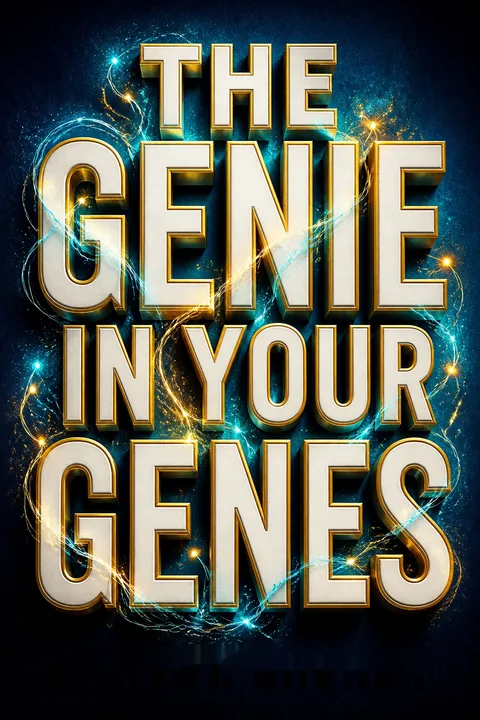


Key Takeaways
Treat genes as a responsive script, not a fixed sentence
Genes are not commands. Epigenetics is the study of changes in gene activity that occur without changing the DNA sequence itself. Church argues that genes provide possibilities whose expression responds to signals from the body and its surroundings, including stress, nutrition, and relationships. In one mouse study, changing a pregnant mother’s diet altered whether offspring expressed an agouti gene associated with yellow coats and metabolic problems. Identical twins, meanwhile, can age and develop differently despite starting with the same DNA.
Influence has limits. These examples challenge genetic fatalism, not biology. Genes still matter, and an environmental influence does not reliably produce a chosen health outcome. The book’s practical point is that inherited risk is not the whole story: conditions around a person can affect which biological processes are active.
The strongest version of this argument is not that people can think their way out of inherited risk, but that biological vulnerability often depends on context. That view fits modern systems biology, where traits emerge from interactions among genes, cells, behavior, and environment. It can replace fatalism with a useful question: what conditions can be changed? But gene regulation is specific to tissues, development, and circumstance. The book sometimes makes this responsive biology sound more directly steerable by consciousness than evidence warrants. Agency is real, but it operates through habits and environments, not a mental remote control for DNA.
Interrupt chronic stress before your body treats worry as danger
Threat responses have a cost. Church contrasts a short-lived physical danger, when fight-or-flight can help someone act quickly, with prolonged modern stress that offers no clear physical escape. The body can react to an anticipated threat, such as possible job loss, with stress chemistry that shifts resources away from digestion, immune function, and repair. In a study discussed in the book, couples who argued before researchers created small skin wounds healed more slowly; the most hostile exchanges were associated with healing rates about 40% lower.
Stress is not just a mood. The study illustrates a pathway by which emotional strain can coincide with measurable bodily changes. It does not show that every difficult feeling causes illness, or that stress reduction can undo every medical condition. Acute stress can be adaptive; the concern is persistent activation without recovery.
This is one of the book’s most grounded bridges between psychology and physiology. Stress research supports the idea that social threat can affect sleep, immune activity, and wound repair, while relationship quality can shape recovery. It also broadens the definition of health: a hostile workplace or chronically unsafe home is not merely an unpleasant backdrop. Still, individual coping skills cannot substitute for changing harmful conditions. Telling someone under sustained financial or interpersonal pressure to simply relax risks turning a social problem into a personal failure. The useful target is both physiological recovery and the source of repeated strain.
Protect childhood nurture as a long-term health intervention
Early experience leaves traces. Church connects research on nurturing rat mothers with the human Adverse Childhood Experiences study, which assessed 17,421 adults. The book reports that people with high scores for childhood adversity had much higher rates of depression, smoking, and suicide attempts than those with low scores. In rat studies, pups that received more licking and grooming later showed less fearful stress responses, accompanied by differences in gene regulation in the hippocampus, a brain region involved in stress and memory.
Prevention starts early. The findings support investing in safe, dependable relationships for children, rather than waiting until adult illness appears. They do not mean that adversity determines a child’s future. Nor do they make parents solely responsible: poverty, violence, and weak social supports shape how much protection families can provide.
The public-health implication is powerful: childhood safety is not a soft extra, but part of the foundation for adult health. The ACE findings helped make the long reach of adversity visible across medical and behavioral outcomes. Their value is clearest at the population level, where prevention and support can reduce exposure and improve access to care. A high adversity score is not an individual prognosis, however, and the study’s associations do not isolate every causal pathway. The humane reading is not that damaged childhoods write an inevitable script, but that reliable support can interrupt risk and widen future options.
Build small daily practices that shift your emotional baseline
Meaning can change experience. The book describes a study of 84 hotel room cleaners. One group learned that their daily work counted as exercise; the other received no such information. After a month, the informed group reported or showed changes including an average loss of about two pounds and a blood-pressure drop close to 10%. Church uses the result to show that beliefs and expectations can alter how people experience their own behavior, though the study does not establish that belief alone caused every change.
Practice, not magic, is the point. Meditation, prayer, gratitude, visualization, and helping others are presented as ways to support calm and connection. Church also notes mixed findings: a large study of standardized intercessory prayer around heart surgery did not find the hoped-for benefit. The sensible lesson is to cultivate practices that help, while treating specific health claims as uncertain.
The maid study is memorable because it turns a familiar idea into a testable intervention: how people interpret routine activity can influence what they notice and how they act. This connects with placebo research, in which expectations can alter pain, symptoms, and treatment experience through real brain and body processes. But expectation is not a cure-all, and results from a short study cannot establish durable health effects. The book is most useful when it treats contemplative practices as low-cost supports for well-being, not substitutes for diagnosis or treatment. A practice deserves attention for both its felt benefits and its measurable limits.
Use learning and safe memory work to keep the brain adaptable
Experience reshapes the brain. Church describes experience-dependent genes as genes whose activity is associated with learning, growth, and repair. Repeated practice can strengthen neural pathways, while unused connections may weaken. The book also explains that recalling a painful memory can make it temporarily more open to change. Psychotherapy and related approaches often pair that recall with a new interpretation or a sense of safety, rather than leaving the person alone with the original distress.
Change needs repetition. Examples include learning a sport, taking on unfamiliar challenges, and building new skills in adulthood. These experiences can support learning and adaptation, but they do not guarantee a specific medical result. The book’s account of memory research is a reason to approach trauma carefully: recalling an event without support can intensify distress, while thoughtful treatment aims to reduce its grip.
Neuroplasticity offers a compelling middle ground between a fixed brain and unlimited self-reinvention. Practice changes what the brain can do, but learning is shaped by sleep, safety, motivation, and opportunity, not simply by choosing to improve. Memory research also complicates the idea that recollection is a perfect recording: remembering can involve reconstruction. That makes therapeutic context important. The book’s emphasis on pairing difficult memories with safety is clinically intuitive, but rapid emotional relief should not be confused with comprehensive recovery. Skilled, trauma-informed care matters, especially when a memory is overwhelming or symptoms disrupt daily life.
Test tapping as an adjunct, while demanding stronger evidence
EFT pairs recall with tapping. Emotional Freedom Techniques, or EFT, is a method in which a person focuses on a troubling memory or feeling while tapping selected points on the body and rating distress before and after. Church tells stories of people whose pain or fear eased quickly, including June, whose shoulder movement improved after an emotional memory was addressed. He also reports a small veterans study in which six EFT sessions were followed by reductions of about 50% in PTSD symptoms, 49% in depression, and 46% in anxiety.
Promising is not proven. The book’s results include case histories and early studies, not definitive evidence that EFT cures trauma or physical disease. A person can explore it as a supportive tool, preferably with a qualified clinician when trauma is severe, while continuing appropriate medical and mental-health care.
EFT has a plausible therapeutic logic even before its proposed energy mechanism is accepted: it combines attention to distressing material with a structured, repetitive action that may help regulate arousal. That combination can be tested without assuming that tapping sends a special signal through meridians. The early results described here justify careful study, not sweeping claims. Small samples, self-reported outcomes, and limited comparison groups can exaggerate apparent effects. Readers should distinguish a technique that may help some people feel calmer from a validated stand-alone treatment for PTSD. Replication, strong controls, and long-term follow-up are essential.
Separate established bioelectricity from speculative energy claims
Cells use electrical signals. The book correctly points to electricity in familiar biology, including nerve impulses, heart rhythms, and the electrical properties of some tissues. It also discusses piezoelectricity, the production of electrical charge when certain materials are mechanically stressed, and suggests that connective tissue may help coordinate signals through the body.
The leap is in the explanation. Church goes further, proposing that connective tissue functions as a liquid-crystal semiconductor and exploring biophotons, acupuncture meridians, and quantum effects as possible mechanisms of healing. These ideas are presented as emerging explanations, but the evidence described does not establish them as accepted clinical mechanisms. The distinction matters: evidence that bodies use electrical processes does not by itself prove that a particular energy therapy works through those processes.
This distinction protects both scientific curiosity and patient trust. Bioelectric signaling and mechanotransduction are legitimate research areas; the body is not merely a bag of chemical reactions. But a plausible mechanism is not evidence that a treatment produces meaningful clinical benefit, and quantum language does not bridge that gap. A strong research program would define measurable predictions, compare the therapy with credible controls, and replicate results independently. The book’s cross-disciplinary instinct is valuable, yet its confidence sometimes outruns its evidence. Readers can remain open to testing novel ideas without treating a proposed explanation as established fact.
Match care to the condition, and never delay urgent treatment
Different problems need different tools. Church argues for combining conventional, complementary, and psychological care rather than assuming one approach fits everyone. He describes an integrative clinic that used a coordinator, called a Navigator, to help patients find suitable practitioners and coordinate treatment. The book also recognizes that conventional medicine is essential for emergencies, serious injuries, and other conditions where timely diagnosis or intervention matters.
Use a safe sequence. For nonurgent concerns, low-risk practices such as movement, relaxation, or psychological support may complement medical care. But the least invasive option is not automatically the right option. Sudden severe pain, breathing difficulty, major bleeding, or suicidal thoughts require prompt professional help. This is an adaptation of the book’s treatment principles, not a recommendation to replace prescribed care with energy therapies.
The Navigator model addresses a real systems problem: patients can be overwhelmed by fragmented services, competing claims, and unclear choices. Coordinated, preference-sensitive care can make treatment more coherent and help clinicians notice psychological and social needs alongside symptoms. Yet the book’s preference for starting with energy medicine is too broad to apply safely across diagnoses. Delay itself can be harmful, and the evidence base varies greatly among complementary practices. A better rule is proportionality: choose care according to urgency, likely benefit, risk, and evidence, and make sure every practitioner knows what else the patient is receiving.
Make the healing relationship part of the treatment
Care is more than a procedure. The book’s story of Irv begins after a near-fatal heart event. His doctor, concerned by his distress and loss of direction, wrote a prescription for regular conversations with his rabbi. Irv later became more involved with his family and community, and found that his pain troubled him less. The point is not that spiritual counsel repaired his heart, but that connection and purpose affected how he lived with illness.
Coordinate, do not substitute. A cancer patient described in the book received energy sessions alongside oncology care and reported relief from nausea and pain, reduced medication, and a return to eating. Her experience illustrates why supportive care can matter during treatment; it does not show that energy work eliminated cancer. Compassionate listening and patient-led spiritual support can be valuable without making claims beyond the evidence.
The relational dimension of care has a sturdy rationale: trust, clear communication, and social support influence how patients understand illness, manage treatment, and cope with uncertainty. These are not decorative extras to technical medicine. They can also help patients disclose concerns that a brief symptom checklist misses. The important boundary is causal attribution. Feeling better, functioning better, and having a disease respond are distinct outcomes. Spiritual care should be offered in a way that respects the patient’s beliefs, never imposed as a test of optimism or faith. A humane relationship strengthens care; it does not guarantee a cure.
Treat childhood safety as public health, not private virtue
Personal healing can have social reach. Church describes an epigenetic social cycle: early care may shape stress responses and behavior, while more secure relationships can support safer communities and better conditions for the next generation. He also recounts trauma work in Kosovo, where practitioners reported that 247 of 249 targeted war memories among 105 people fell to a self-rated distress score of zero. Follow-up suggested many gains endured, but the work was not a controlled trial.
Build structures, not just techniques. The larger lesson is to support children, families, and people recovering from trauma through accessible services and stable social conditions. Individual coping methods can help, but they cannot erase violence, poverty, or war. The book’s most ambitious claim is that better emotional health can contribute to social change; its strongest practical implication is to make care and safety broadly available.
The social vision is compelling because trauma does not stop at the individual: it can affect families, communities, and how people respond to threat. Community-based support may be especially important where formal therapy is scarce or culturally mismatched. Still, a successful trauma intervention for some participants cannot demonstrate that a technique prevents conflict or transforms a society. Claims about intergenerational gene effects and crime also require careful causal evidence. The most defensible civic conclusion is simpler and stronger: reducing childhood adversity and expanding trauma-informed care are worthwhile even without quantum explanations or promises of rapid social transformation.
Analysis
The book’s durable contribution is its challenge to genetic fatalism. Genes are not a complete blueprint for a person’s fate, and biological systems respond to social, behavioral, and physical environments. The strongest material connects that general principle to stress physiology, early adversity, learning, and the importance of supportive relationships. These pathways make self-care relevant without making it magical: practices can influence stress and coping, while disease remains shaped by many interacting causes.
The book is less reliable when it moves from responsiveness to direct control. Its descriptions of connective tissue as an information-processing semiconductor, intention changing DNA at a distance, and quantum entanglement explaining healing are speculative. Quantum theory does not establish that thoughts can select medical outcomes, and a mechanism that sounds plausible is not clinical evidence. Likewise, dramatic case histories and early EFT studies can motivate research, but they cannot establish broad efficacy without replicated, well-controlled trials and comparison with established treatments.
A useful reading separates three levels. First, gene expression and stress responses are biological processes worth studying. Second, meditation, social connection, and emotional treatment may improve well-being and some health-related outcomes, with effects that vary across people and conditions. Third, claims that a particular energy technique reverses serious disease or works remotely require much stronger evidence than the book supplies. That hierarchy preserves its central insight while limiting overreach.
The practical synthesis is therefore neither resignation nor self-blame. Reduce avoidable stress, seek nurturing relationships, keep learning, and use supportive practices that help. At the same time, pursue timely diagnosis, evidence-based treatment, and structural changes that make safety and care accessible. Consciousness matters because people live through bodies, relationships, and institutions. It does not make them sovereign over every biological outcome.
Review Summary
The Genie in Your Genes receives mostly positive reviews, praised for its exploration of epigenetics and energy medicine. Readers find it informative, inspiring, and potentially revolutionary for health care. Many appreciate the scientific explanations and practical applications. Some criticize it for pseudoscience or overreliance on faith-based concepts. The book discusses how thoughts, emotions, and intentions can influence genetic expression and healing. While some find it transformative, others remain skeptical. Overall, it's seen as an intriguing introduction to epigenetics, though scientific rigor is debated.
People Also Read


Glossary
Epigenetics
Gene regulation without sequence changeThe study of changes in gene activity that occur without altering the underlying DNA sequence. In the book, epigenetics describes how signals from the body and environment, including nutrition, stress, and nurturing, can influence whether particular genes are more or less active. It does not mean that a person can freely choose any genetic outcome.
Immediate early genes
Rapid-response genesGenes that can respond quickly to a stimulus, sometimes within seconds or minutes. Church describes them as early links between experience and biological response, including stress-related processes, and notes that they can trigger other genes in a cascade. Their activity is part of the book’s account of how experiences may be followed by broader cellular changes.
Experience-dependent genes
Genes responsive to learningA class of genes that the book associates with learning, novelty, growth, and healing. Church argues that their activity helps support protein production and changes in neural connections in response to experience. The term supports his larger claim that repeated behavior and learning can alter brain structure and function, though it does not imply unlimited control over the brain.
Energy Psychology
Tapping-based emotional methodsA family of approaches that combines attention to distressing thoughts, feelings, or memories with stimulation of selected body points, often by tapping. The book presents it as a way to reduce emotional arousal and sometimes improve physical symptoms. Its proposed explanations involving energy pathways are not equally established, and claims of effectiveness require careful evaluation.
Emotional Freedom Techniques (EFT)
A structured tapping methodA named Energy Psychology technique developed by Gary Craig. A person focuses on a problem, rates its emotional intensity, taps a sequence of points on the body, and then reassesses the intensity. Church presents EFT as a method that can be self-administered for some concerns, while noting that working with severe trauma requires skill and appropriate support.
Tapas Acupressure Technique (TAT)
A gentle acupressure practiceA technique developed by Tapas Fleming that uses a specific hand position on the face and back of the head while the person attends to a troubling issue and considers a series of healing statements. The book presents TAT as a simple practice for emotional distress and describes its use in clinical and self-help settings.
epigenetic health cycle
A reinforcing health patternChurch’s term for a proposed cycle in which choices such as positive emotion, supportive beliefs, prayer, or visualization reduce stress and encourage bodily processes associated with health. Improved well-being may then make it easier to continue those choices. It is a practical model for self-care, not a guarantee that positive thinking will prevent or cure disease.
epigenetic social cycle
Care shaping social well-beingChurch’s framework for linking childhood nurturing with later stress responses and behavior across generations. In the proposed cycle, nurturing supports healthier development and less fear, which may contribute to safer social conditions and more nurturing environments for children. The book presents this as a broad social model; its specific causal claims need more evidence.
Adverse Childhood Experiences (ACE) study
Study of early adversityA Kaiser Permanente and Centers for Disease Control research project that assessed childhood adversity and adult health among 17,421 participants. The book cites associations between higher adversity scores and elevated rates of outcomes such as depression, smoking, and suicide attempts. The study is important for highlighting long-term links, but an individual score is not a fixed prediction of future health.
FAQ
1. What is "The Genie in Your Genes" by Dawson Church about?
- Epigenetics and Consciousness: The book explores how gene expression is influenced by consciousness, intention, and environmental factors, challenging the traditional view of genetic determinism.
- Integration of Science and Healing: Dawson Church synthesizes genetics, medicine, electromagnetism, and social change to propose a new biology of intention that underpins energy medicine and alternative healing.
- Practical Applications: It provides practical exercises and therapies, such as Emotional Freedom Techniques (EFT), meditation, and prayer, to help readers consciously influence their gene expression and health.
2. Why should I read "The Genie in Your Genes" by Dawson Church?
- Empowering Scientific Insight: The book overturns the belief that genes dictate our fate, showing that thoughts, emotions, and beliefs can influence gene expression and health.
- Bridging Medicine and Spirituality: It offers a scientific foundation for energy medicine and energy psychology, making these approaches accessible and credible.
- Practical Healing Tools: Readers gain actionable techniques for self-healing, stress reduction, and emotional balance, supported by extensive research and case studies.
3. What are the key takeaways from "The Genie in Your Genes" by Dawson Church?
- Genes Are Not Destiny: Our environment, beliefs, and consciousness can switch genes on and off, making health and healing dynamic processes.
- Consciousness as a Healing Agent: Thoughts, emotions, and intentions act as epigenetic signals, directly affecting gene expression and well-being.
- Energy Medicine Validated: Techniques like EFT and meditation have measurable effects on gene expression, immune function, and emotional health.
- Holistic Health Model: The book advocates for integrating conventional and alternative therapies, focusing on prevention, self-healing, and treating the whole person.
4. What is epigenetic medicine as defined in "The Genie in Your Genes" by Dawson Church?
- Definition of Epigenetics: Epigenetics studies heritable changes in gene function that occur without altering the DNA sequence, focusing on how environmental and internal signals regulate gene activity.
- Role of Consciousness: The book emphasizes that beliefs, emotions, and intentions are powerful epigenetic signals that can promote or hinder healing.
- Therapeutic Potential: Epigenetic medicine combines integrative medicine and new psychology, offering safe, effective, and rapid healing methods that harness the body’s self-healing powers.
5. How does "The Genie in Your Genes" by Dawson Church explain the relationship between genes and destiny?
- Genes as a Draft, Not Blueprint: Genes are likened to a "first draft of a movie script," with environment and consciousness editing the outcome moment by moment.
- Twin Studies Evidence: Identical twins with the same genes can have vastly different health outcomes, highlighting the power of epigenetic factors.
- Influence of Beliefs and Environment: Nurturing, stress, spirituality, and attitude significantly affect gene expression and long-term health.
6. What role do consciousness and belief play in gene expression according to "The Genie in Your Genes" by Dawson Church?
- Consciousness as a Signal: Thoughts, emotions, and intentions generate biochemical and electromagnetic signals that influence gene activation.
- Scientific Studies: Research, such as HeartMath Institute experiments, shows that intention and positive emotions can alter DNA structure and gene expression.
- Healing Through Belief: Practices like prayer, meditation, and altruism produce measurable health benefits by modulating gene expression and immune function.
7. What is Energy Psychology in "The Genie in Your Genes" by Dawson Church, and how does it work?
- Definition and Techniques: Energy Psychology includes therapies like EFT, Thought Field Therapy (TFT), and Tapas Acupressure Technique (TAT), which combine psychological principles with stimulation of the body’s energy meridians.
- Rapid and Lasting Effects: These methods can quickly reduce phobias, anxiety, depression, and PTSD, often with effects lasting for months.
- Mechanism of Action: Tapping on acupoints while focusing on emotional issues sends signals that decouple traumatic memories from the fight-or-flight response, leading to physiological calming and gene expression changes.
8. How does Emotional Freedom Techniques (EFT) work, and what evidence supports it in "The Genie in Your Genes" by Dawson Church?
- EFT Protocol: EFT involves tapping on specific acupressure points while repeating affirmations related to the problem, taking about thirty seconds per round.
- Clinical Evidence: Studies show EFT reduces phobias, anxiety, pain, and PTSD, with effects sustained over time and supported by clinical trials.
- Physiological Changes: EFT normalizes brain wave patterns, reduces red blood cell clumping, and improves systemic health, often outperforming traditional therapies.
9. What is the significance of the connective tissue system in energy medicine as described in "The Genie in Your Genes" by Dawson Church?
- Connective Tissue as a Conductor: The book describes connective tissue as a liquid crystal semiconductor that rapidly conducts energy and information throughout the body.
- Piezoelectric Properties: Mechanical stimulation of connective tissue generates electrical currents, explaining the systemic effects of therapies like acupuncture and energy tapping.
- Living Matrix Concept: The connective tissue and cytoskeleton form a continuous energetic network, facilitating instantaneous communication between cells and consciousness.
10. How does "The Genie in Your Genes" by Dawson Church incorporate quantum physics and string theory into its explanation of healing?
- Quantum Entanglement: The book suggests that entangled particles can influence each other instantaneously, providing a possible mechanism for distant healing and prayer.
- Observer Effect: Quantum physics shows that observation collapses possibilities into reality, implying that intention and consciousness can affect physical outcomes.
- String Theory and Multiverse: Healing signals may travel through higher dimensions or parallel universes, offering a scientific framework for phenomena like telepathy and instantaneous healing.
11. What practical advice and exercises does "The Genie in Your Genes" by Dawson Church offer for epigenetic healing?
- Conscious Epigenetic Engineering: Readers are encouraged to select positive beliefs, attitudes, and emotions to create a virtuous cycle of health.
- Meditation and Visualization: The book provides meditation and visualization techniques to boost happiness, immune function, and healing.
- Energy Medicine Routines: Step-by-step guides for EFT and energy routines are included, empowering readers to apply these methods for rapid emotional and physical healing.
12. What are the "Ten Principles of Epigenetic Medicine" outlined in "The Genie in Your Genes" by Dawson Church?
- Intentions First, Outcomes Second: Focus on well-being and soul health, allowing clear intentions to open quantum possibilities.
- Healing as a Process: Embrace ongoing lifestyle and consciousness-based practices for sustainable wellness.
- Heart-Centered and Holistic: Healing thrives on compassionate relationships and treating the whole system, not just symptoms.
- Prevention and Self-Healing: Address imbalances before disease manifests and engage the body’s inherent healing powers.
- Global and Spiritual Perspective: Accept death as a transition and recognize the interconnectedness of personal and planetary health.
About the Author
Other books by Dawson Church


Download PDF
Download EPUB
.epub digital book format is ideal for reading ebooks on phones, tablets, and e-readers.








