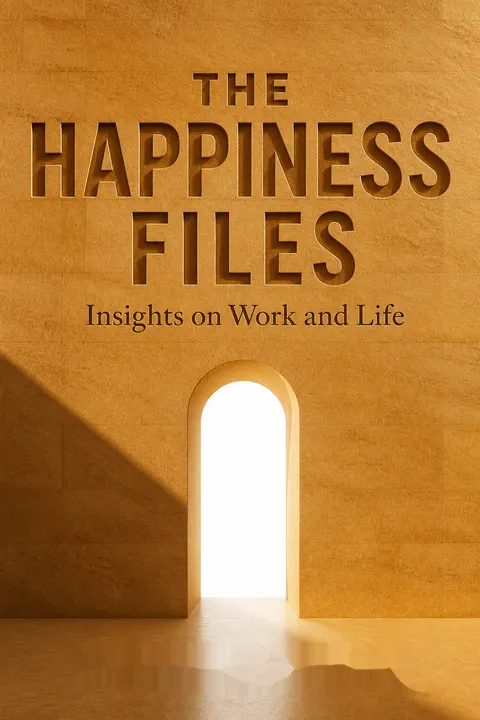


Key Takeaways
Run your life like a venture, but measure returns in love, joy, and meaning.
Choose the right return. Brooks frames life as a start-up: each person must manage limited resources, take sensible risks, learn from setbacks, and decide what counts as a worthwhile return. Money, status, pleasure, and prestige can help meet ordinary needs, but they are poor measures of a flourishing life. The more durable rewards are love, enjoyment, satisfaction, and meaning.
Manage the whole enterprise. This means setting boundaries, choosing work that creates value, and maintaining relationships rather than letting career demands consume them. Goals provide direction, like a navigational course that can be adjusted when conditions change. Progress matters because life is not a business that can be declared finished after one achievement.
The start-up metaphor makes happiness active without reducing life to a productivity project. It encourages experimentation, adaptation, and ownership, while the emphasis on love and meaning sets limits on what should be optimized. That distinction matters: a life can be efficient and still be impoverished if its scorecard rewards only income or rank. The metaphor does have a boundary. Not every hardship is a solvable management failure, and treating people as assets or relationships as investments can distort them. Its strongest use is as a prompt to choose priorities, not as a demand to control every outcome.
Treat failure as information, not a verdict on your identity.
Interrupt the spiral. After a painful defeat, rumination can turn one event into a forecast of permanent ruin. Brooks recommends making failure concrete instead: write down what happened, what was learned, and what remains uncertain. A written record creates distance from the emotion and can reveal that failure is common, not proof of personal worthlessness. One proposed practice is a “CV of failures,” a list of setbacks and lessons rather than accomplishments alone.
Learn instead of merely winning. Research reviewed in the book found that researchers narrowly rejected for early-career grants later outperformed some who had initially succeeded. The lesson is not that failure automatically improves anyone. It is that learning from setbacks can improve later choices. Keeping intrinsic motives in view, such as curiosity or love, also makes rejection less capable of erasing the reason for trying.
This approach resembles scientific practice: a failed experiment narrows the field of plausible explanations, provided the investigator records what happened and changes the next test. That is a useful alternative to both self-condemnation and empty reassurance. Still, failure is not equally instructive in every setting. Repeated exposure to discrimination, poverty, or unsafe conditions is not a personal growth exercise, and some setbacks offer little control over the outcome. The practical question is therefore not simply what a person learned, but which parts of the failure were controllable, which were structural, and what support would make a different attempt possible.
Protect your hours with boundaries, planned leisure, and deliberate refusals.
Spend time on purpose. Time has an opportunity cost: choosing one activity means giving up another. People often underestimate that cost when immediate pleasure is available, as with late-night scrolling or another episode of television. Scheduling leisure in advance can preserve genuine rest without letting distraction take over. Brooks also suggests making new commitments harder to accept by pausing before answering and treating agreement as something to opt into, rather than the default.
Build space around work. Burnout commonly combines exhaustion, cynicism, and a sense of reduced effectiveness. It grows when workload, emotional demands, low autonomy, and blurred work hours feed one another. Defined work hours, fewer meetings, and protected time away from devices can interrupt the cycle. Meetings deserve special scrutiny: the book reports that white-collar professionals average 17.8 hours a week in them, many without a clear purpose.
The emphasis on boundaries connects personal time management to organizational design. A worker cannot individually schedule away a culture that rewards constant availability, and a calendar full of meetings may reflect power relationships as much as poor planning. Still, small defaults matter: a delay before accepting work can protect future time from present excitement or guilt. Planned leisure also avoids a false choice between relentless productivity and aimless distraction. Rest becomes easier to defend when it is treated as a legitimate part of a life, rather than as stolen time that must be justified afterward.
Write worries down, name outcomes, and stop paying for imagined disasters.
Turn haze into a plan. Worry repeatedly rehearses uncertain future trouble, often without specifying what the feared outcome actually is. Brooks recommends listing the main worries, then identifying the best, worst, and most likely outcomes for each, along with a response to each possibility. This metacognitive exercise means thinking about one’s thinking. It gives fear a defined object and separates practical preparation from repetitive mental rehearsal.
Test the supposed benefit. Chronic worriers may believe that worrying helps them stay prepared or prevents bad events. Yet one study cited in the book found that 91 percent of the worries participants tracked did not come true. The figure does not mean every concern is baseless; some problems require action. It does suggest that attention is better spent on what can be prepared for, rather than on treating anxiety itself as protection.
Writing worries down resembles cognitive behavioral approaches that externalize thoughts and test them against evidence. The useful move is not forced optimism, but replacing an undefined threat with a contingency plan. That distinction respects real risks while reducing the extra suffering created by imagined certainty. A limitation is that a list cannot resolve the material causes of anxiety, such as insecure housing, illness, or financial strain. For those problems, practical support matters as much as reframing. The method is most powerful when it helps distinguish a solvable problem from uncertainty that no amount of rehearsal can eliminate.
Choose work with excitement, manageable fear, and little deadness.
Read the whole reaction. For complex job decisions, Brooks argues that feelings can reveal information a spreadsheet misses. His three signals are excitement, fear, and deadness. Excitement suggests anticipated enjoyment or meaning. Some fear can signal a difficult but achievable challenge; dread suggests expected harm or failure. Deadness describes a hollow response associated with boredom, numbness, or hopelessness. A job that offers prestige but leaves a person feeling empty may be a poor bargain.
Expect the adjustment. Job changes often bring an early satisfaction boost that fades after the first weeks. The book cites research in which satisfaction rose from roughly 4.5 to 6 on a seven-point scale, then fell over the following months. Voluntary changes tend to go better than changes forced by dismissal. Leadership also carries costs: new leaders may experience lower satisfaction, anger, and loneliness before adapting.
Intuition is most useful here as evidence, not as an unquestionable command. Feelings can integrate tacit knowledge about a role, but they can also reflect temporary stress, bias, or fear of unfamiliarity. The three signals give a person a structured way to inspect a reaction instead of labeling every anxiety a warning. The career research also cautions against expecting a new title to cure dissatisfaction. Job quality, control, social support, and life outside work shape how an opportunity feels. A good decision weighs those conditions alongside the emotional forecast.
Spend surplus money on shared experiences, reclaimed time, and generosity.
Meet needs before chasing more. Money can relieve unhappiness when it pays for food, safety, health care, and other necessities. Beyond a comfortable standard of living, however, extra income often adds little well-being by itself. Brooks discusses research with differing estimates of where the emotional benefit of income levels off, and argues that the broad lesson remains: wealth alone does not supply love, belonging, or purpose. Making self-worth depend on earnings can instead increase isolation and work-centered living.
Convert money into life. Three uses of extra income are especially promising: experiences shared with people one loves, purchases that free time from disliked tasks, and giving to others. Anonymous giving may be especially rewarding for people whose moral identity is central to their self-concept. The point is not to avoid earning or spending. It is to use money as a means to build connection and reduce unnecessary strain, rather than as a permanent score of personal value.
This account distinguishes money’s ability to remove hardship from its limited ability to create enduring fulfillment. That distinction helps explain why income and well-being can rise together at low levels, then diverge as relationships and time become more important. Spending on others also shifts attention from accumulation toward participation in a shared world. The advice needs economic context: for someone facing unstable income or debt, extra money may still provide substantial security. The useful question is not whether money matters, but what unmet need the next dollar is actually serving.
Make happiness a practice of health, connection, meaningful work, and perspective.
Use a broad foundation. Carl Jung’s five pillars, as presented in the book, are physical and mental health; close relationships; appreciation of beauty in art and nature; adequate living conditions and satisfactory work; and a philosophical or religious outlook that helps put suffering in perspective. The framework makes happiness less like a single mood and more like a life supported by several sources. Exercise and nature can help regulate stress, while meaningful work involves accomplishment and service, not only pay.
Start where life is thin. The strongest emphasis falls on relationships. The Harvard Study of Adult Development is cited for the finding that good relationships support health and happiness. Practical advice includes investing time in family and friends, joining a group, volunteering, exercising, and making room for reflection. No single pillar guarantees happiness, but neglecting several at once makes well-being more fragile.
The five-pillar view is valuable because it resists one-factor explanations. A promotion cannot substitute for friendship, just as social support cannot by itself treat a serious health problem. The pillars also interact: meaningful work can support identity, while overwork can starve the relationships that make work worthwhile. Jung’s framework is broad enough to include religious and secular sources of perspective, which makes it adaptable without requiring identical beliefs. Its main challenge is practical prioritization. When time and money are scarce, the framework is best used diagnostically: identify the weakest support, then choose a feasible next step.
Use self-control to act from chosen values, not every passing urge.
Restraint is not repression. The book challenges the idea that authenticity means expressing every impulse. Behavioral activation draws people toward rewards, while behavioral inhibition helps them avoid harmful consequences. A study discussed by Brooks found the lowest overall well-being among people with low self-control. Unrestrained behavior may feel good briefly, but can damage other people and relationships. Self-control, in this account, is a way to shape the person one becomes through repeated choices.
Make courage deliberate. The same principle applies to speaking a controversial truth. Fear of rejection is a normal response to possible social exclusion, not proof of weakness. Moral courage can be practiced by clarifying the belief, assessing realistic consequences, choosing a suitable moment, rehearsing the message, and expressing it with care. This differs from blurting out a grievance in anger. The aim is neither silence nor provocation, but integrity with judgment.
The useful distinction is between impulse and agency. Restraint can preserve the freedom to act according to considered commitments, rather than merely obeying the strongest feeling in the moment. That idea connects self-management to virtue ethics, where character is formed through practice. Yet restraint should not become a demand to suppress legitimate anger or tolerate mistreatment. Emotional expression can identify injustice and help people seek support. The more precise standard is whether expression serves understanding and repair, or simply discharges an urge at someone else’s expense.
Strengthen relationships by listening well, praising specifically, and choosing trust.
Offer connection, not ammunition. When people try to persuade others by attacking their beliefs, they often provoke the opposite response. Brooks cites research in which perspective-taking conversations, built around careful listening, changed views more effectively than forceful argument. In daily relationships, useful praise should be sincere, specific, and free of hidden demands. Feedback is easier to use when it addresses behavior rather than treating a mistake as a judgment on someone’s character. Praise in public and correction in private can help preserve dignity.
Notice the pattern. A frenemy appears friendly but behaves in ways that undermine trust, through rivalry, betrayal, or manipulation. The book contrasts this with friendship marked by companionship, help, honesty, reliability, encouragement, and emotional security. Parents also have limited control over a child’s personality, but warmth, affection, and consistent example matter. After a breakup, honest reflection can turn painful experience into knowledge rather than repeating the same relationship pattern.
This takeaway joins communication skills to relationship quality: listening makes influence less coercive, while credible praise and usable criticism create conditions for trust. The frenemy distinction is helpful because social harm can be subtle, especially when a relationship is useful in some ways and damaging in others. Still, imperfect behavior alone does not prove bad intent. People can disappoint each other without being manipulators, and relationships sometimes improve through direct conversation. The evidence to watch is the repeated pattern: whether care, honesty, and mutual support are present across situations, not whether someone is flawless.
Define success as meaningful progress, and revise the destination when life changes.
Enjoy movement, not just arrival. Research on work and achievement suggests that satisfaction often comes from making progress in meaningful activity, not from reaching a distant finish line. A goal can orient effort, but treating its completion as the moment happiness begins risks disappointment. Brooks applies this idea to careers, projects, and middle age. At midlife, growth may require subtraction: releasing unnecessary roles and shifting toward teaching, pattern recognition, and contribution. Past awards can also become painful comparisons if they turn current life into a contest with an earlier self.
Let happiness support achievement. The book argues that the usual formula, success first and happiness afterward, is backwards. Positive well-being can support work performance and relationships, while chasing status at the expense of time and connection can lower life satisfaction. The practical test is whether the daily work is worthwhile, whether small milestones are visible, and whether the destination still fits the person pursuing it.
Progress is a more usable measure than a single endpoint because it gives feedback while effort is underway. It also makes revision compatible with ambition: changing direction need not mean abandoning seriousness, especially when circumstances or values have changed. The claim that happiness supports success is more convincing as a reciprocal relationship than a universal law. Health, opportunity, discrimination, and economic conditions also shape achievement, and happiness cannot erase those constraints. Even so, treating well-being as a condition to protect, rather than a trophy to earn, offers a stronger basis for sustainable work.
Analysis
The collection’s central argument is that happiness should be treated as the return on a life, not as a bonus that follows wealth, rank, or completed goals. Its distinctive strength is practical translation. Abstract findings about motivation, social connection, and emotion become choices a reader can test: write down a worry, delay a commitment, protect evenings from work, listen before arguing, or spend money to recover time. The recurring stories, from a failed scientific grant to a leader unsettled by a promotion, make ordinary disappointments legible as problems of judgment rather than personal defects.
The book also resists a simplistic version of positivity. It does not promise constant good feelings. It treats negative emotion as real, sometimes informative, and often worsened by rumination or poor boundaries. Its strongest synthesis is that agency is neither total control nor passive acceptance. People can choose habits, attention, and conduct, while recognizing that luck, biology, institutions, and other people limit what individual effort can achieve.
The essay collection form brings both range and unevenness. Its many compact recommendations make the book accessible, but some claims are presented more confidently than the underlying evidence warrants. Findings from surveys, experiments, and particular populations do not always transfer cleanly to every worker, family, or culture. The discussion of income thresholds, leadership effects, and parenting influence especially depends on context. Readers should take the studies as clues, not universal laws.
A practical reading is to use the book as a diagnostic map rather than a complete formula. When life feels worse, ask which resource is being depleted: time, health, intimacy, autonomy, purpose, or perspective. Then make one small change and observe whether it helps. The larger lesson is not that every life can be optimized, but that happiness becomes more attainable when its real ingredients receive deliberate protection.
Review Summary
The Happiness Files receives mostly positive reviews, with readers appreciating Brooks' insights on happiness in various life aspects. Many find the advice practical and well-researched, though some note familiarity with the content from his previous works. The book's structure, based on Brooks' Atlantic columns, makes for easy reading. Reviewers highlight the sections on career and work as particularly strong. Some readers suggest it's an excellent introduction to Brooks' ideas, while others prefer his other books.
People Also Read






Glossary
start-up life
Life managed as an enterpriseBrooks’s metaphor for treating one’s life as an active project requiring management, risk taking, learning, and adaptation. The person is responsible for setting direction and making choices, but the meaningful return is not simply money or status. It is greater happiness through love, enjoyment, satisfaction, and meaning.
CV of failures
A record of setbacks and lessonsA written list of unsuccessful efforts, rejections, or other setbacks, ideally paired with what each experience taught. The practice differs from rumination because it moves events out of repetitive internal replay and into a concrete record that can be examined more objectively.
hyperbolic discounting
Overvaluing immediate rewardsA strong tendency to prefer an immediate benefit over a larger future benefit, even when waiting would be wiser. In the book, it helps explain why people accept appealing commitments in the moment while neglecting the future time and effort those commitments will require.
financial contingency of self-worth
Self-esteem tied to financial successA pattern in which a person’s sense of personal value depends on income, wealth, or financial achievement. The book links this dependence to loneliness and social disconnection, in part because people may work more and spend less time on relationships while trying to prove their worth financially.
No Club
A group that practices refusing requestsAn accountability practice described in the book, in which colleagues support one another in declining work requests and opportunities that would overfill their schedules. Members make refusals visible and share the goal of protecting time for higher priorities.
Ozymandias problem
Past trophies diminishing the presentThe risk that objects commemorating past achievements make current difficulties feel worse by inviting comparison with an earlier, more successful self. The term refers to Shelley’s poem about a ruined monument and the temporary nature of worldly glory.
invidious intertemporal autocomparison
Unfavorable comparison with one’s pastA self-comparison across time in which a person measures present circumstances against an idealized or more successful past. In the book, trophies can trigger this comparison, turning reminders of accomplishment into evidence, real or imagined, that one has declined.
arrival fallacy
Expecting arrival to deliver lasting happinessThe mistaken belief that reaching a particular goal will produce the lasting happiness one seeks. The book argues that anticipated achievement can overshadow the value of daily progress, while completion may bring emptiness when the activity and its forward momentum stop.
Jung’s five pillars of a good life
Five foundations for well-beingA framework attributed to Carl Jung that identifies physical and mental health, close relationships, appreciation of beauty, adequate living conditions and satisfactory work, and a philosophical or religious outlook as foundations of a good life. Brooks relates these pillars to contemporary research on well-being.
FAQ
What’s The Happiness Files: Insights on Work and Life by Arthur C. Brooks about?
- Science of Happiness at Work and Life: The book explores the science behind happiness, blending behavioral science, neuroscience, psychology, and practical advice to help readers manage their lives as if they were managing a start-up.
- Comprehensive Life Management: Brooks frames life as the most important management task, encouraging readers to approach their personal and professional lives with intentionality, risk management, and a focus on meaningful rewards.
- Practical Essays: The book is structured as a collection of essays originally published in The Atlantic, organized into five parts: managing yourself, building your career, communicating with others, balancing work and life, and defining success.
- Evidence-Based and Actionable: Each essay combines research findings with actionable steps, aiming to help readers understand happiness intellectually and apply it practically.
Why should I read The Happiness Files by Arthur C. Brooks?
- Expert Author: Arthur C. Brooks is a leading happiness researcher and Harvard professor, offering credible, research-backed insights.
- Applicable to Modern Life: The book addresses common challenges like burnout, work-life balance, money worries, and the pursuit of success, making it highly relevant for professionals and anyone seeking greater well-being.
- Actionable Advice: Each chapter provides not just theory but also practical steps and tools that readers can implement immediately.
- Holistic Approach: The book covers happiness from multiple angles—self-management, career, relationships, and personal values—offering a well-rounded guide to living better.
What are the key takeaways from The Happiness Files by Arthur C. Brooks?
- Progress Over Perfection: True happiness comes from making progress toward meaningful goals, not from achieving specific milestones or accumulating wealth, power, or prestige.
- Self-Management is Foundational: Managing your own habits, boundaries, and emotional responses is crucial for both personal and professional happiness.
- Relationships Matter Most: Deep, authentic connections with family, friends, and colleagues are the strongest predictors of well-being.
- Redefine Success: Success should be measured by happiness, love, enjoyment, satisfaction, and meaning, rather than external achievements or material rewards.
How does Arthur C. Brooks define happiness in The Happiness Files?
- Happiness as a Reward: Brooks defines happiness as the ultimate reward in life, focusing on love, enjoyment, satisfaction, and meaning rather than material gains.
- Not Just Positive Emotions: Happiness is not a constant state of bliss but involves progress, resilience, and the ability to manage negative emotions.
- Science-Based Definition: The book draws on decades of research showing that happiness is best pursued through intentional living, strong relationships, and purposeful work.
- Personal Responsibility: Brooks emphasizes that happiness is our own responsibility, not something guaranteed by nature or external circumstances.
What are the main concepts and methods in The Happiness Files by Arthur C. Brooks?
- Start-Up Life Approach: Treat your life as a start-up, where you are the founder and manager, responsible for taking risks and seeking meaningful rewards.
- Progress Principle: Focus on making tangible progress rather than fixating on end goals or achievements.
- CV of Failures: Keep a written record of failures and lessons learned to normalize setbacks and foster growth.
- Practical Application: Each essay includes both scientific background and actionable steps, such as time-blocking, saying “no,” and practicing gratitude.
How does The Happiness Files by Arthur C. Brooks address failure and resilience?
- Failure as Growth: Brooks encourages reframing failure as an opportunity for learning and personal development, not as a reflection of self-worth.
- CV of Failures: He suggests maintaining a written list of failures and the lessons learned from them, which helps process setbacks constructively.
- Focus on Ideals: Keeping core values front and center helps individuals move past failure and maintain motivation.
- Avoid Rumination: The book warns against excessive rumination, which can lead to avoidance and missed opportunities, and instead promotes active management of emotional responses.
What advice does The Happiness Files give about work-life balance and burnout?
- Set Boundaries: Brooks advocates for clear boundaries between work and personal life, such as defined work hours and device-free times.
- Schedule Downtime: He recommends time-blocking not just for work but also for leisure and rest, to prevent burnout and maintain productivity.
- Prioritize Relationships: The book emphasizes that the strength of intimate ties—family and friends—provides the greatest returns on life.
- Benedictine Wisdom: Drawing from monastic traditions, Brooks suggests limiting work hours and accepting that not everything will get done, prioritizing restoration and well-being.
How does The Happiness Files by Arthur C. Brooks approach money and happiness?
- Money’s Limited Role: The book explains that money increases happiness only up to the point where basic needs are met; beyond that, its impact plateaus or can even decrease well-being.
- Financial Contingency of Self-Worth: Brooks warns against tying self-esteem to financial success, as this leads to anxiety and social disconnection.
- Spend on Experiences and Giving: He advises using extra income for experiences with loved ones, buying time, and charitable giving, all of which are shown to boost happiness.
- Address Deeper Worries: Persistent money worries often mask deeper issues related to self-worth or values, which should be addressed directly.
What does The Happiness Files say about relationships, communication, and social connection?
- Quality Over Quantity: Deep, meaningful relationships are more important for happiness than the number of connections.
- Giving and Receiving Feedback: The book provides research-backed strategies for giving and receiving criticism and compliments effectively, emphasizing honesty, respect, and private delivery of negative feedback.
- Combatting Loneliness: Brooks highlights the importance of socializing outside of work and investing in friendships to combat loneliness and isolation.
- Navigating Frenemies: He offers tools for identifying and distancing oneself from toxic relationships, while also encouraging self-reflection on one’s own role in friendships.
How does The Happiness Files by Arthur C. Brooks redefine success and achievement?
- Progress Over Achievement: Success is redefined as ongoing progress and personal growth, not the attainment of specific goals or accumulation of trophies.
- Beware the Arrival Fallacy: Brooks warns that achieving major goals often leads to emptiness or a “post-achievement hangover,” rather than lasting happiness.
- Let Go of Past Glories: He suggests discarding physical trophies and focusing on present joys and relationships, rather than clinging to past achievements.
- Pursue Happiness First: The book argues that happiness leads to success, not the other way around, and that meaningful work and service to others are key components.
What are some unique or surprising concepts in The Happiness Files by Arthur C. Brooks?
- CV of Failures: Keeping a written record of failures as a tool for growth and resilience.
- Mindful Cursing: Swearing, when done intentionally and sparingly, can provide emotional relief and even honesty, but should be used with care.
- No Club: Forming a group to practice saying “no” to unnecessary commitments, increasing time and focus for what matters.
- Rhumb Line Goals: Treating professional goals as navigational guides rather than fixed destinations, allowing for flexibility and adaptation.
What are the best quotes from The Happiness Files by Arthur C. Brooks and what do they mean?
- “Your life is the most important management task you will ever undertake.”
- This quote encapsulates the book’s central message: approach your life with the same intentionality and strategy as a successful entrepreneur.
- “Progress, not meeting a goal, is what brings true happiness.”
- Brooks emphasizes that ongoing improvement and movement toward meaningful objectives are more satisfying than achieving any single milestone.
- “Mother Nature doesn’t care about our happiness; that’s our responsibility.”
- The author reminds readers that happiness is not a given but something we must actively pursue and manage.
- “If you truly want to master these ideas—or any ideas, for that matter—you need to share them.”
- Teaching and sharing happiness strategies with others not only reinforces your own learning but also spreads well-being more broadly.
About the Author
Other books by Arthur C. Brooks




Download PDF
Download EPUB
.epub digital book format is ideal for reading ebooks on phones, tablets, and e-readers.








