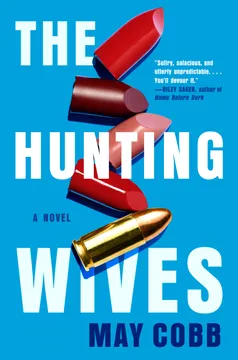


Plot Summary
Prologue
Sophie keeps seeing a girl floating face-up in a blue pool, her hair spread around her. The actual discovery was harsher: the girl lay facedown beside a lake, in mud and leaves, her back torn by a shotgun blast.
The pool image comes from an earlier encounter, before Sophie understands who the girl is or how she came to be there. The opening sets a mystery in motion while warning that Sophie’s first impressions, including her own memories, may be misleading.
The pool image is not simply a preview of death. It shows how Sophie softens what she cannot yet face, replacing mud, blood, and a gunshot with a composed, almost beautiful picture. That act of mental editing anticipates her later tendency to make dangerous encounters seem harmless and to mistake attention for intimacy. The opening also gives the lake two meanings at once: an inviting refuge and the place where the town’s hidden violence becomes visible. The reader begins with the consequence, while Sophie must still discover the causes.
The Quiet Life Frays
Sophie O’Neill has left her magazine career outside Chicago and moved to Mapleton, Texas, with her architect husband, Graham, and their young son, Jack. She wanted open afternoons and a steadier childhood for Jack, but the quiet stretches into loneliness. Her own childhood with a restless mother has left her craving stability while also feeling trapped by it.
When a Facebook request to Margot Banks is accepted, Sophie begins studying the wealthy local socialite’s photographs and comments. Margot’s glamorous home, sharp humor, and apparent contempt for Mapleton’s pieties become a vivid alternative to Sophie’s domestic routine. Sophie knows the fixation is excessive, yet keeps seeking glimpses of Margot online.
Sophie’s move is motivated by love for her family, but it also carries an unspoken hope that geography can remake personality. Her longing for a grounded life collides with an old appetite for glamour and risk. Margot first enters as an image, not a person, which lets Sophie project onto her whatever the new town seems to lack. Facebook turns that projection into a habit: Sophie can approach Margot without risking rejection, while still building an imagined intimacy. The novel’s central vulnerability begins here, in the gap between the life Sophie has chosen and the life she thinks she ought to want.
Margot Opens the Gate
At a fundraiser on the Banks estate, Sophie finally meets Margot and her friends: Callie, Jill, and Tina. Margot invites Sophie to join their secret Friday shooting outings at her lake house.
Erin, Sophie’s old Mapleton friend, warns her that Margot is unkind, but the warning only sharpens Sophie’s curiosity. At the lake, Margot helps Sophie fire a shotgun and celebrates when she breaks a clay target. The women then head to Rusty’s, where Sophie sees Margot draw attention from a teenage football player and learns that the group uses its outings to flirt and test marital boundaries.
Jill leaves in anger after Margot repeats behavior that has strained their friendship before. Sophie leaves early, but Margot’s attention has already hooked her.
The club offers Sophie more than recreation. Its guns, private land, and rules give an air of danger a polished social form. Margot’s invitation makes Sophie feel chosen, while Erin’s warning supplies evidence that the invitation may carry a cost. At Rusty’s, Sophie begins as an observer, but watching Margot command a room is itself intoxicating. The group’s treatment of fidelity as a game lets Sophie stand near transgression without yet admitting she wants it. Her early departure does not restore distance; instead, Margot’s sudden withdrawal makes approval feel scarce and therefore more valuable.
The Lake Dock Almost-Kiss
After Sophie leaves Rusty’s early, Margot barely responds to her messages, and Sophie spends several days checking her phone and wondering whether she has been rejected. Margot eventually invites her alone to the lake for wine and sun. Their conversation turns to marriage, and Sophie rubs oil across Margot’s back while trying to read the charge between them.
Jill’s son, Brad, arrives with his friend Jamie. When Sophie is left on the dock with Jamie, he rubs sunblock onto her shoulders and begins to kiss her. Sophie pulls away when Margot returns from swimming. Margot later texts that she saw Sophie having fun, then invites her back. Sophie hides the encounter from Graham and cancels plans with Erin.
Sophie’s near-kiss with Jamie matters less as a romance than as proof of how easily the group’s atmosphere alters her judgment. The attention is flattering, but she is also drawn to Margot, whose presence shapes the scene even when she is in the water. Sophie stops before the kiss becomes an affair, then hides the episode anyway. That concealment marks a change: she has begun protecting the excitement from the people who make her life stable. Margot’s invitation restores Sophie’s access just as Sophie fears losing it, reinforcing a cycle in which uncertainty intensifies attachment.
Dallas After Midnight
Margot takes the women to Dallas after a shooting night, and Sophie changes into a dress borrowed from Margot’s vast closet. At Club Havana, Margot keeps a hand on Sophie’s knee while the group drinks with men they have just met. Callie brings Sophie a sweet cocktail after the vodka has begun to overwhelm her.
Sophie remembers the room spinning, Margot dancing with one of the men, and then only fragments of the night. She wakes in the back of Callie’s car at four in the morning, with the others asleep around her. Graham’s unanswered messages show how long she has been gone. Sophie lies that her phone died, and Graham grows distant, though she persuades herself the night was only an unusually wild outing.
The missing hours turn pleasure into a loss of agency. Sophie cannot tell whether the drink was tampered with, and that uncertainty lets her minimize the danger rather than confront it. The group’s glamorous excess conceals a practical vulnerability: Sophie is far from home, intoxicated, and dependent on the women whose behavior she barely understands. At home, she lies to preserve the secret world and then treats Graham’s concern as something to soothe rather than answer honestly. The episode rehearses the larger mystery’s central problem: Sophie’s impaired memories leave her exposed to other people’s versions of events.
Abby Enters the Crossfire
At Jill’s pool party, Sophie meets Abby, the polite girlfriend of Jill’s son Brad, and sees Jamie again. Margot draws attention to herself by appearing topless in front of the teenagers, and Jill’s anger reveals how much she resents Margot’s influence over Brad.
The next Friday, Sophie returns to Margot’s lake house. She fires a shotgun, then watches Callie take it away and later handle the weapons. When Brad and Jamie arrive, the evening turns into a drunken game of spin the bottle. Sophie kisses Jamie, then Margot.
After Margot and Brad disappear toward the boathouse, Sophie sees them together. She eventually passes out on the sofa. Callie returns looking for Margot, and Sophie leaves before dawn, running the trail as Harold photographs her at 3:15 a.m.
The party makes the adults’ rivalries visible through the younger characters. Abby’s presence exposes the cost of Margot’s flirtation with Brad, while Jill’s reaction suggests a possessiveness she cannot openly name. Sophie’s participation in the kissing game briefly makes her feel included, but her attention remains fixed on Margot and on the possibility of being chosen by her. The gun passes through Sophie’s hands as casually as a party prop, then through Callie’s, a detail whose meaning is not yet apparent. Harold’s photograph, taken during Sophie’s solitary run, quietly preserves an objective record amid a night she can barely remember.
A Body on Banks Land
The next day, Sophie learns that Abby has vanished after Brad dropped her near home. Nearly a week later, Abby’s body is found on Margot’s land, killed by a shotgun blast. Sophie already knows Margot had sent Brad a message urging him to get Abby out of the way, but she keeps that knowledge to herself. Margot calls and presses Sophie to maintain their account of the night.
When the autopsy reveals that Abby was pregnant, Brad becomes the police’s leading suspect. Sophie attends the women’s gathering at Callie’s house and hears Jill insist that Brad never knew about the pregnancy. Detective Flynn questions Sophie, who conceals the group’s full story and her own involvement with Jamie, hoping to keep her marriage intact.
Abby’s death converts the group’s private games into evidence with real consequences. Sophie knows enough to feel implicated, but not enough to distinguish rumor, threat, and fact. Her silence is therefore both self-protection and a form of participation: she helps preserve the group’s cover while telling herself she is shielding Graham from pain. Jill’s account of Brad and Abby supplies a clean explanation that Sophie cannot verify. The danger comes from that mixture of partial knowledge and social loyalty. Everyone has information, but the women’s shared secrecy makes each person’s version harder to trust.
Fingerprints in the Woods
Police recover a shotgun from the woods and find Sophie’s fingerprints on its trigger. Flynn takes her to the station, where she finally describes Margot’s affair with Brad and the message about Abby, though she still withholds part of the night. Margot has already confessed her relationship with Brad and supplied an alibi, leaving Sophie as the main person of interest.
A newspaper publishes details of Sophie’s entanglement with Margot and Jamie. Graham reads it, realizes she has repeatedly lied, and orders her out of their home, though he does not believe she killed Abby. Sophie moves into a budget motel, loses Erin’s and Tina’s support, and is cut off from Jack except for a brief video call arranged by Graham.
The fingerprints give physical form to Sophie’s worst fear: that a night she cannot fully account for will be interpreted by others as guilt. Her partial confession improves the truth record but also exposes how much she has concealed from Graham. The newspaper collapses private behavior into public spectacle, and Graham’s decision to separate from Sophie follows not from certainty that she is a killer, but from the accumulated betrayal of her lies. Her isolation is therefore both social and domestic. The motel makes her pay for the distance she created, while her separation from Jack turns that cost into something she cannot romanticize.
Margot’s Last Invitation
Sophie drives to Margot’s lake house to confront her about the fingerprints and the damage to her family. Callie raises a shotgun, but Margot calms her and invites Sophie to stay. After wine leaves Sophie suddenly disoriented, she suspects Callie has drugged her. Margot tells Sophie she believes Sophie killed Abby, then the two have sex.
Sophie wakes later to find Brad standing in the bedroom doorway and escapes before he can stop her. Margot is found drowned beside her dock the following morning. Police again question Sophie, who is the last person known to have been with her. With Margot dead and no ally willing to help, Sophie becomes more isolated and begins searching for evidence herself.
The intimacy between Sophie and Margot arrives at the moment when Sophie is most vulnerable, making desire difficult to separate from manipulation. Sophie has pursued Margot’s attention for weeks, yet the encounter offers no reliable reassurance about what Margot wants or knows. Brad’s appearance after Sophie wakes replaces the imagined private bond with immediate danger. Margot’s drowning then removes the person Sophie most wanted to understand, while making Sophie’s last encounter with her look incriminating. The novel refuses to let erotic fulfillment serve as emotional resolution; instead, it deepens Sophie’s confusion and leaves her with more risk than certainty.
The Clinic’s Witness
Sophie finds Jamie at football practice and persuades him to meet at the motel. He says Brad knew Abby was pregnant and had pressured her to end the pregnancy, with Margot encouraging him because she hoped to remain with Brad. Jamie also says Brad did not kill Abby. Sophie searches Dallas clinics and reaches an office where a staff member remembers Abby arriving with two women.
The witness recognizes Callie and tentatively identifies the brunette who pressured Abby as Margot. Sophie alerts Flynn, who obtains security footage and messages her that the brunette was Jill, not Margot. Sophie then asks Jill to meet at her lake house, believing she can explain what happened and clear Brad and herself.
Jamie’s account changes the question from who desired Abby gone to who had the opportunity and motive to control her future. The abortion clinic gives Sophie a witness outside the Hunting Wives’ social circle, a rare source not dependent on their competing stories. Yet the witness’s mistaken identification shows how easily appearance and reputation distort evidence. The security footage corrects that error just as Sophie has placed herself in Jill’s hands. Her willingness to meet Jill reflects both urgency and a lingering belief that personal conversation can repair what secrecy has broken. That instinct is about to prove dangerous.
Jill Takes the Wheel
On Jill’s boat, Sophie receives Flynn’s warning that the clinic footage identifies Jill. Jill sees Sophie’s reaction and admits she killed Abby after taking her from the roadside, where Abby had been crying following Brad’s breakup. Jill wanted to protect Brad’s future and had intended to frame Margot, but mistakenly used the shotgun Sophie had fired.
She also admits that she drowned Margot after learning the affair continued, then plans to kill Sophie and make it look like suicide. Jill drives to the clearing and holds Sophie at gunpoint. Sophie sends Flynn her location before Jill can take her phone. Callie arrives with a shotgun, points it at Jill, and stops the execution as police rush in. Jill is arrested.
Jill’s confession exposes maternal protection as an extreme form of possession. She treats Brad’s future as something she alone must secure, and Abby becomes disposable when she threatens that imagined future. The wrong gun turns Sophie’s impulsive participation into evidence against her, while Jill’s plan to kill her would have completed the frame. Callie’s intervention complicates the group’s loyalties: her attachment to Margot and hostility toward Sophie do not prevent her from stopping another murder. The climax resolves the case through accumulated details, not a sudden revelation, while showing how affection can become lethal when it refuses to recognize another person’s autonomy.
Epilogue
Two months later, Sophie is back in her home, tending a garden scorched by the heat. Jill is in custody, and Callie’s intervention saved Sophie, though the two women have not become friends. Graham lives in a separate apartment and has not decided whether their marriage can recover.
Sophie still misses Margot and continues therapy to understand why she risked her family for a connection she could not clearly name. She plants new vegetables without knowing whether she will be there to harvest them. The uncertain garden becomes her small, practical wager on a future she cannot control.
The ending does not restore Sophie’s former household or erase the harm she caused. Graham’s distance keeps reconciliation unresolved, and Sophie’s grief for Margot remains complicated by attraction, resentment, and unanswered questions. Her return to the garden matters because it is work rather than fantasy: she plants something that requires patience without promising a particular harvest. Therapy also replaces the old strategy of changing towns or attaching herself to a glamorous stranger with an attempt to understand her own patterns. Hope is present, but it is no longer confused with certainty or rescue.
Analysis
The novel’s suspense grows from the difference between being present and understanding what one has seen. Sophie attends the shooting nights, handles the gun, reads a threatening message, and witnesses pieces of Margot’s relationship with Brad. Yet each fact arrives through intoxication, attraction, gossip, or fear, so she repeatedly converts knowledge into a story that protects her immediate desires. Her fixation on Margot is not merely a forbidden romance; it is an attempt to borrow a more vivid self from someone who appears immune to ordinary limits. The cost is that Sophie treats her family’s trust as stable enough to survive any experiment.
The Hunting Wives’ wealth and privacy give their misbehavior room to flourish, but the novel does not make class a simple shield from consequence. Their estates, staff, and social standing help them manage appearances, while the less powerful young people around them absorb the risk. Abby’s pregnancy threatens not only a relationship but the future Jill has imagined for Brad. Jill’s violence grows from an effort to control that future, transforming protection into ownership. The group’s gossip culture helps conceal this shift because it trains everyone to treat other people’s pain as spectacle.
Evidence finally interrupts the women’s competing performances. Harold’s photograph establishes Sophie’s whereabouts, the clinic footage corrects an identification, and the shotgun’s fingerprints reveal how easily a shared activity can be weaponized. These proofs do not make Sophie innocent of betrayal; they separate her moral failures from the murders. The ending preserves that distinction. Sophie survives and returns to her family home, but Graham’s trust remains unresolved. Her garden is not a promise that everything will grow back as before. It is a modest act of care undertaken without certainty, a more honest form of hope than the reinvention she once expected from moving away.
Review Summary
The Hunting Wives received mixed reviews, with some praising its thrilling, scandalous plot and others criticizing its unlikable characters. Many found it an entertaining, fast-paced read reminiscent of "Desperate Housewives" and "Big Little Lies." The story follows Sophie, who becomes obsessed with a group of wealthy women engaged in reckless behavior. Readers were divided on the excessive alcohol consumption and poor decision-making of the characters. While some enjoyed the twists and suspense, others found the plot unrealistic and frustrating.
People Also Read










Characters
Sophie O’Neill
Restless new motherSophie narrates the story as a former lifestyle editor who has left Chicago-area professional life to raise her son in Mapleton. She loves her husband and child, but domestic calm does not quiet her hunger for recognition, novelty, and glamour. Her childhood was unsettled by a father who left and a mother who moved often, leaving Sophie simultaneously drawn to stability and suspicious of it. Her attraction to Margot becomes a way to test the parts of herself she has tried to outgrow. Sophie is perceptive about other people’s behavior, but her need for approval makes her vulnerable to misreading attention and minimizing the consequences of her choices.
Margot Banks
Magnetic socialiteMargot is an oil-rich Mapleton fixture whose polished appearance and irreverent manner set her apart from the town’s conventional social life. She draws people toward her with selective attention, humor, and a willingness to violate rules others quietly obey. Her friendship with Callie is intense, while her marriage to Jed carries visible strain. Margot treats social life as a stage she can direct, though occasional flashes of weariness suggest that the performance costs her something. To Sophie, she represents freedom from ordinary expectations, but Margot’s charm does not make her motives transparent.
Graham O’Neill
Steady architect husbandGraham is Sophie’s husband, a warm and capable architect who embraced the move to Texas and takes an active role in raising Jack. He cooks, listens, and offers Sophie a dependable partnership without demanding that she surrender her independence. His steadiness is genuine, but it also throws Sophie’s restlessness into sharper relief. Graham expects honesty and mutual care, so Sophie’s concealments injure the relationship even when he does not know their full extent. He is not simply a symbol of domestic safety; he is a person trying to protect his family while deciding what trust can survive.
Jill Simmons
Controlled protective motherJill is petite, reserved, and meticulous, married to surgeon Alex and devoted to her teenage son Brad. Her orderly public manner contrasts with the private intensity she shares with the Hunting Wives. She is more complicated than her demure presentation suggests, and she watches the other women closely even when she appears deferential. Jill’s investment in her family and her need to keep life under control shape how she responds to threats around Brad. Her relationships with Margot and Callie are marked by loyalty, rivalry, and long-held grievances.
Callie Jenkins
Margot’s fierce shadowCallie is Margot’s broad-shouldered best friend, a wealthy woman whose blunt manner and physical confidence can make her seem forbidding. She often takes charge of practical tasks and expects others to respect the boundaries of the group. Callie’s attachment to Margot is unusually intense, expressed through closeness, vigilance, and an evident wish to remain indispensable. She distrusts Sophie from the beginning, seeing the newcomer’s interest in Margot as a possible threat. Beneath her hard exterior is a person whose loyalties can override ordinary caution.
Erin Reed
Grounded old friendErin has known Sophie since their Mapleton high-school years and offers a warm, practical friendship rooted in shared history. She is married to Ryan and raises their daughter, Mattie, while volunteering in town. Unlike Sophie, Erin is comfortable with a modest domestic life and wary of Mapleton’s wealthy social circle. She tries to caution Sophie about Margot without making the friendship conditional on obedience. Her groundedness gives Sophie a counterweight to the Hunting Wives, even as Sophie’s secrecy strains that bond.
Tina
Cheerful club insiderTina is the most openly sociable of the Hunting Wives, quick to welcome Sophie and eager to keep the group lively. She is married to Bill and describes herself as more interested in observing the women’s excesses than joining their affairs. Her warmth is real, but so is her appetite for gossip. Tina often carries information between friends, making her a useful source and an unreliable confidante. She prefers the excitement of a story to the discomfort of confronting what it means.
Jack O’Neill
Sophie’s young sonJack is Sophie and Graham’s small son, affectionate, playful, and absorbed in ordinary childhood pleasures such as crafts, cartoons, and the garden. Sophie’s wish to give him a more stable upbringing helps motivate the move to Mapleton. He depends on both parents and remains largely unaware of the adult conflicts around him. His presence makes Sophie’s decisions consequential beyond her marriage: she is not only risking a partnership, but also the daily closeness and security she wants her child to have.
Brad Simmons
Quarterback under pressureBrad is Jill and Alex’s teenage son, a talented quarterback preparing for college and dating Abby. His athletic promise and his mother’s pride place considerable expectations on him. Brad is handsome and accustomed to attention, but his relationship with the Hunting Wives exposes him to adult complications he is not equipped to manage cleanly. He moves between the world of his parents and the wealthy women who gather around Margot, and that divided position shapes the tensions around him.
Jamie Smith
Brad’s observant friendJamie is Brad’s friend, a high-school athlete from a less affluent background than the Banks and Simmons families. His easy confidence and flirtatious manner draw Sophie’s attention, but he is also a longtime acquaintance of Abby and has his own loyalties. Jamie can be evasive when protecting Brad, yet he knows more about the pressures surrounding the teenagers than the adults assume. His position near the group but outside its wealth gives him a perspective that proves useful.
Abby Wilson
Brad’s devoted girlfriendAbby is a well-liked student, cheerleader, and Brad’s girlfriend. Jill admires her and speaks of her as a bright, promising young woman, while Sophie sees her only briefly at a gathering. Abby’s reputation for kindness and achievement makes her seem safely situated within Mapleton’s expected future. Her relationship with Brad is more complicated than the adults around her understand, and she is caught between young love, family expectations, and choices with lasting consequences.
Detective Mike Flynn
Patient local investigatorFlynn is the detective investigating Abby’s death and later Margot’s. He is personable and patient with Sophie, but his warmth does not make him careless about inconsistencies in her account. He relies on interviews, physical evidence, and outside records, and he remains willing to reconsider his assumptions when new information arrives. Flynn’s calm style contrasts with Wanda’s sharper questioning, though he still expects Sophie to be truthful and treats her changing story as a serious obstacle.
Harold
Watchful trail neighborHarold is a neighbor Sophie passes on her running trail, often equipped with binoculars and a phone for birdwatching. His persistent attention makes her uncomfortable, though their encounters initially seem incidental. He becomes an observer whose habits place him near an important moment in Sophie’s timeline.
Jed Banks
Margot’s distant husbandJed is Margot’s handsome husband and a financial adviser under significant work pressure. He belongs to the prominent Banks family, but he is not as socially present as Margot. Their marriage is shaped by shared history, infidelity, and a struggle over who has the upper hand. His guarded public manner leaves Sophie wondering how much he knows about Margot’s private life.
Nikki Jones
Restless motherNikki is Sophie’s mother, a traveling emergency-room nurse who moved frequently and built her life around new places and relationships. She encouraged Sophie’s education and self-reliance, but was often emotionally unavailable. Sophie’s desire to be a more present mother to Jack grows partly from her own memories of waiting for Nikki’s attention.
Rox
Blunt former mentorRox was Sophie’s art director and closest friend at the magazine. Direct, perceptive, and experienced with Sophie’s romantic patterns, she helped Sophie recognize her fear of stable intimacy. Though now living abroad and mostly out of reach, Rox remains a voice Sophie imagines when she needs perspective.
Alex Simmons
Jill’s surgeon husbandAlex is Jill’s husband and Brad’s father, a successful heart surgeon who shares a private life with Jill that differs from her reserved public image. He remains mostly outside Sophie’s circle, but his marriage helps reveal how little the Hunting Wives’ domestic appearances explain what happens behind closed doors.
Ryan Reed
Erin’s steady husbandRyan is Erin’s warm, easygoing husband and Mattie’s father. He welcomes Sophie and Graham into the family’s social life and represents the settled Mapleton community that Sophie once hoped to join.
Detective Wanda Watkins
Hard-edged investigatorWanda is Flynn’s partner, a blunt investigator who questions Sophie with little attempt at reassurance. Her skepticism makes Sophie feel scrutinized, and her presence emphasizes how difficult it is for Sophie to distinguish suspicion from proof.
Stacey
Clinic employee witnessStacey works at a Dallas medical office and remembers Abby’s visit with two women. Her recollection gives Sophie a lead beyond Mapleton’s social circle, though her identification is not fully certain.
Plot Devices
The Hunting Wives
A secret social doorwayThe women’s private shooting club gives Sophie a route into Margot’s world. Its regular gatherings combine target practice, alcohol, gossip, and flirtation, while the group’s rules encourage members to treat transgression as entertainment and conceal it from outsiders. The ritual offers belonging but also creates shared exposure: each outing leaves the women with knowledge they can use to protect or pressure one another. The club’s secluded lake setting makes it easier for Sophie to believe that what happens there can remain separate from her family and public life.
The Shotgun
A weapon turned evidenceThe shotguns begin as equipment for the club’s skeet practice, and Sophie fires one on the night Abby disappears. Her fingerprints remain on the trigger, allowing the actual killer to leave her in danger of prosecution. Later, a gun’s handling and ownership become central to distinguishing Sophie’s innocent participation from Jill’s deliberate use of the weapon. The firearm therefore links the women’s recreational ritual to the murder investigation, transforming an object Sophie treated casually into a record of who had access and when.
Phones and Social Media
Private lives made legibleSophie first approaches Margot through Facebook photographs and posts, turning a curated profile into the basis for fascination. Group texts then connect the women’s schedules and preserve messages that reveal pressure around Abby. Sophie’s snooping on Margot’s phone provides crucial information, while deleted or concealed messages complicate the police inquiry. Social media also helps expose Sophie’s private behavior to Graham and the town. In the novel, the phone is both a tool for intimacy and a source of evidence, but it never supplies the full context needed to interpret what its users mean.
Memory Gaps
Uncertainty under pressureAlcohol and possible drugging interrupt Sophie’s memory at key moments, especially during the Dallas trip and her later visit to Margot’s lake house. The gaps make her dependent on other people’s accounts and leave her vulnerable to suspicion. They also expose how readily she dismisses physical danger when it is entangled with attraction and social approval. The gaps are not a supernatural mystery; they are a practical weakness in Sophie’s testimony, forcing the investigation to rely on fingerprints, a trail photograph, clinic footage, and witnesses who may be mistaken.
Download PDF
Download EPUB
.epub digital book format is ideal for reading ebooks on phones, tablets, and e-readers.








