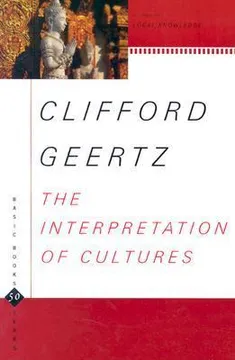


Key Takeaways
Ask what a gesture means before counting what the body does
Movement is not meaning. Two people can make the same motion for different reasons: one boy’s eyelid flicker may be an involuntary twitch, another’s a deliberate signal, and a third’s a parody. The visible movement alone cannot tell which is which. To understand the action, an observer needs the shared conventions, intentions, and audience that make it meaningful. This layered interpretation is called thick description: explaining an act in its social context, not merely recording its physical form.
Context does the work. A wink can signal conspiracy, mock it, or rehearse its appearance. Each description depends on what participants understand and what they believe others understand.
What's striking is how closely this resembles ordinary language: a sentence's meaning depends on who says it, to whom, and under what conventions. Pragmatics, the study of meaning in context, gives a modern vocabulary for the same problem. Yet contextual interpretation can become overconfident. A clever account may mistake an observer's inference for participants' intent. Strong analysis therefore distinguishes what was observed, what informants said, and what the researcher infers, while allowing for disagreement among participants.
Keep interpretations close to events, not elegant theories alone
Fieldwork is already interpretive. In a Moroccan account from 1912, a Jewish trader named Cohen used a customary trade pact to claim compensation after a robbery. A local sheikh helped seize sheep from the offending tribe; French officials then confiscated Cohen's payment. The same transfer of animals could mean restitution, a legitimate raid, or theft, depending on whose rules and authority mattered. The ethnographer is not collecting raw facts so much as recording people's interpretations of events and then interpreting those accounts.
Formal patterns have limits. Geertz challenges theories that reduce cultural meanings to a universal mental code. An elegant structure is not persuasive unless it clarifies actual behavior in its historical and social setting.
This approach resembles case-based reasoning in law and medicine: a general idea gains force when it explains the particulars, not when it merely fits them after the fact. It also places a useful constraint on cultural interpretation. Multiple readings may be possible, but each must account for the participants, institutions, and consequences involved. Ethnography cannot offer the repeatability of a laboratory experiment, and that limits certainty. It can still make interpretations more or less credible through detail, comparison, and openness to counterexamples.
See culture as the public equipment that turns human potential into particular lives
People are unfinished by nature. Geertz argues that human beings depend on learned symbols, practices, and concepts to organize thought and action. Language illustrates the point: people may have an innate capacity for speech, but the words and meanings of a particular language are learned socially. Culture is not just a record of behavior. It supplies shared instructions for turning broad human capacities into specific ways of feeling, judging, and living.
Biology and culture developed together. Geertz draws on evidence that toolmaking and other early cultural practices appeared while human biology was still changing. He treats culture as part of the environment that shaped human evolution, not a decorative layer added after a finished human nature had emerged.
The argument anticipates work on distributed cognition, which studies how thinking relies on tools, language, and other people rather than only on the brain. A child learns to reason through public symbols before many mental operations become private habits. This does not mean culture can explain every behavior or that biology is secondary in every case. The lasting insight is interaction: capacities, environments, and learned systems shape one another, so claims about universal human nature should be tested against actual ways of life.
Religion makes a community's moral world feel like reality itself
Symbols connect values and existence. A religion, in Geertz's account, is a system of symbols that shapes lasting moods and motivations while presenting a general picture of how the world works. He calls the moral and aesthetic tone of a way of life its ethos, and its broad account of reality its world view. Religious symbols make each appear to confirm the other: the way people ought to live seems suited to the way things are.
Ritual makes belief tangible. In Bali, the dramatic struggle between Rangda, a frightening witch, and Barong, a comic protective figure, draws participants into a cosmic contest that has no decisive victor. In Navajo healing ceremonies, illness is placed within a shared ritual story that can help make suffering understandable, even when it cannot cure it.
The framework helps explain why religious practice can shape ordinary conduct without functioning like a rulebook. Ritual lets participants experience a moral order through bodies, objects, and shared attention. In that respect it resembles public art and civic ceremony as much as private belief. The account also demands care: symbols do not produce identical experiences for everyone, and religious authority can be contested. A community's ritual may sustain meaning for some participants while imposing duties or exclusions on others.
When a ritual breaks down, look for a mismatch between meaning and social life
A funeral became a political impasse. In a Javanese town, a boy named Paidjan died while his uncle, Karman, belonged to Permai, a movement seeking funerals without Islamic elements. The Muslim funeral official refused to officiate. Neighbors gathered, but the usual sequence of washing, prayer, and burial stalled as factions hesitated over what the rite meant and who had the right to perform it.
The ritual outlasted its setting. The neighborhood funeral was designed for a community held together by residence and shared custom. In the town, political and religious affiliations increasingly organized relationships instead. The rite still mattered deeply, but it no longer fit the social structure around it. Its failure revealed conflict, not simply fading faith.
The episode shows why institutions can be powerful precisely when their routines stop working. A breakdown makes visible the assumptions that smooth functioning normally conceals. The distinction between cultural meaning and social organization also helps avoid a false choice between ideas causing change and material conditions causing it. Both matter, and their fit can change. Still, one dramatic funeral cannot stand for an entire town. The value of the case lies in showing a mechanism that must be checked across other settings.
Read ideology as a map for public confusion, not merely a lie
Political symbols organize uncertainty. Geertz argues that ideology is often treated as distorted thinking, but that view overlooks how symbolic forms make confusing social situations intelligible. A slogan such as calling a labor law a slave-labor law is not necessarily meant as a literal description. It uses a charged comparison to frame a threat and rally action. Whether such a metaphor persuades depends on whether audiences can connect its meanings to their experience.
Ideologies grow when old guides fail. In Indonesia, independence left people debating what kind of nation they were building and what political principles should govern it. Slogans and doctrines tried to give that unsettled civic world a shape. They could help people act, but they could also conceal failures in government or intensify conflict.
This account complements political communication research, where framing is understood as selecting aspects of reality to make certain problems and responses salient. It avoids assuming that rhetoric is either transparent truth or cynical deception. A metaphor can reveal one dimension while hiding another. The analysis is especially useful when it asks how a symbol travels through institutions and audiences, rather than assigning it a fixed effect. Ideological language can mobilize, but its persuasive force alone is no evidence that its claims are accurate.
Build citizenship without expecting inherited loyalties to vanish
Belonging can feel like a given. A primordial attachment is a bond experienced as natural or deeply rooted, often through language, religion, kinship, region, or custom. Geertz argues that such ties can conflict with allegiance to a new civil state. Independence may even sharpen the conflict by making government a newly valuable prize and bringing state decisions closer to everyday life.
Unity is not the same as sameness. India reorganized states along linguistic lines after leaders saw how strongly language could shape political belonging. In Malaya, a coalition party tried to contain Malay, Chinese, and Indian political interests within one governing arrangement, but later communal tensions showed how fragile that balance could be. The task is to accommodate group attachments within common institutions, not pretend they are merely relics.
The argument is a useful correction to nation-building stories that treat local identity as an obstacle destined to disappear. Comparative politics shows that federal arrangements, representation, and coalition-building can give groups a stake in shared institutions. These mechanisms do not guarantee peace, and they can harden the very categories they recognize. Their success depends on whether people trust the rules and see them as fair. Geertz's deeper point is that citizenship must become meaningful in practice, not just appear in constitutions.
Expect national identity to pull between inherited belonging and modern ambitions
Two visions compete. Geertz calls the pull toward inherited customs and local identity essentialism. He calls the pull toward the presumed direction of modern history epochalism. New states often need both: citizens want to preserve a recognizable heritage while gaining access to education, technology, political power, and wider economic life.
Language makes the tension concrete. A local language may carry intimate memories and literary traditions, while a language used internationally may offer access to modern institutions. Indonesia's nationalist movements similarly tried to combine diverse local traditions with a modern national project. Neither side simply replaces the other. The argument over identity is part of social change, not just a debate among intellectuals.
This tension resembles debates over globalization, where people seek wider opportunity without surrendering local forms of recognition. It also helps explain why appeals to tradition can be politically innovative: inherited symbols may be reorganized to support new institutions. The terms should not be mistaken for fixed camps. Individuals and movements can draw on both at once, sometimes inconsistently. The framework is most useful as a way to map competing pressures, not as a prediction that every society must resolve them in the same direction.
Separate a ruler's cultural reach from the power he can actually wield
The court could symbolize more than it controlled. In nineteenth-century Bali, rulers presented the court as a model of cosmic order and civilized life. Public ceremony, costly cremations, and temple events were not merely tools of government; they were central purposes of government. Geertz calls this arrangement a theatre-state, where political authority was displayed through ritual performance.
Authority remained fragmented. Local communities, irrigation groups, and temples guarded substantial independence. A ruler might aspire to gather people and resources for grand ceremonies while possessing only uncertain political control. The gap between cultural ambition and institutional capacity matters: a state's symbolic grandeur cannot be used as direct proof of centralized power.
The distinction helps historians avoid reading monuments and ceremonies as simple evidence of administrative reach. Political anthropology often finds that public performance creates legitimacy, even where officials cannot reliably enforce decisions. The same caution applies to modern leaders who project unity through spectacle. Yet symbolic authority is not therefore unreal. It can shape allegiance, expectations, and action, while remaining distinct from coercive or bureaucratic capacity. The analytical gain comes from asking how those forms of power interact rather than collapsing them into one.
Notice how social labels and calendars can make change feel timeless
Identity can be organized by roles. In Bali, people commonly addressed one another through birth order names, parenthood-based teknonyms, status titles, or public offices rather than private personal names. These labels emphasized a person's place in social and religious categories. The calendar likewise emphasized what kind of day it was, using overlapping cycles, more than how much time had passed.
The patterns reinforced one another. Geertz connects these classifications to ceremonial manners and a preference for avoiding public awkwardness, a feeling he calls lek, or stage fright. Social encounters tended to be formal, and events often ended without a decisive climax. These customs could make individuals and days seem less singular, supporting a sense of enduring order, though not eliminating personal variation or historical change.
This analysis is a vivid example of how categories shape experience rather than merely label it. Social identity, timekeeping, and etiquette become mutually reinforcing habits. Comparable effects appear wherever calendars organize sacred occasions or professional titles define how people are treated. The account also risks making Bali sound more uniform and timeless than any society is. Geertz signals variation, but readers should treat his description as a historically situated interpretation, not a permanent portrait of every Balinese person.
Read the cockfight as a public drama of status, not just gambling
A police raid opened the village. When Geertz and his wife fled with villagers from an illegal cockfight, their hosts later teased them for running rather than invoking their foreign status. That shared embarrassment helped turn the outsiders into accepted participants. The fight itself joined fierce animal combat to carefully regulated public wagering.
Money measured social risk. Among 57 matches with reliable figures, central bets ranged from 15 to 500 ringgits, averaging 85, while an ordinary manual worker earned about three ringgits a day. Larger bets tended to accompany more evenly matched cocks and more intense side betting. Geertz calls such contests deep play: the money matters, but so do honor, rivalry, and public standing. The fight stages status conflict without directly changing anyone's rank.
The episode combines fieldwork narrative with a sharp account of symbolic action: the event is both sport and a model of social relations. The comparison to other competitive spectacles is illuminating because games let communities stage conflict within accepted rules. The analysis is strongest when it connects betting patterns to local alliances and status. Its limitation is the temptation to make a complex society legible through one vivid practice. The cockfight offers a revealing reading of Bali, not a complete key to it.
Analysis
The book's achievement is to make interpretation a disciplined social inquiry without pretending it is mechanical measurement. Geertz argues that culture is neither a hidden force that causes behavior nor a private store of beliefs. It is a public field of symbols through which people understand actions, institutions, and one another. That shift changes the ethnographer's task: not to collect neutral facts and append a theory, but to reconstruct what acts mean to participants and show how those meanings operate in social life.
The essays demonstrate this method at different scales. A wink, a funeral, a religious performance, a nationalist slogan, a political court, and a cockfight are all treated as meaningful action, but none is detached from material conditions or power. The Javanese funeral shows that shared symbols can persist while social arrangements change. The new states reveal that group identities and civic institutions are not mutually exclusive stages of development, but forces that may collide or be recombined. Bali's ritual and political life shows how cultural ideals may remain influential even when practical authority is dispersed.
The method's strength is also its risk. Thick interpretation can turn a contingent, internally divided society into a coherent text, especially when one spectacular scene is made to stand for a whole culture. Geertz resists this by insisting on contextual detail, concrete behavior, and the incompleteness of every account. Even so, his Balinese and Indonesian descriptions are historically situated, and some of their period-specific claims should not be mistaken for timeless truths. The best use of the book is therefore not to treat its readings as final, but to adopt its discipline: interpret actions in context, compare meanings with institutions, and test elegant explanations against what people actually do. Cultural analysis advances through sharper, contestable interpretations, not a final code that explains everyone.
Review Summary
The Interpretation of Cultures is widely regarded as a seminal work in anthropology. Readers praise Geertz's "thick description" approach, insightful analysis of symbols and culture, and engaging writing style. Many found the book challenging but rewarding, particularly the essays on religion, ideology, and the Balinese cockfight. Some criticized Geertz's occasional contradictions and dated perspectives. Overall, reviewers consider it an essential, thought-provoking text that revolutionized cultural anthropology, though dense and requiring careful reading.
People Also Read


Glossary
Thick description
Contextual reading of actionA detailed interpretation of behavior that identifies the intentions, conventions, and social relationships that make it meaningful. The same physical movement can be a twitch, a signal, or a parody. Thick description explains which action is taking place and how participants understand it, rather than recording only visible motion.
Ethos
A community's moral styleThe tone, character, and moral and aesthetic style of a group's life. Ethos includes the dispositions and values that shape how people behave and feel. In Geertz's analysis of religion, ethos is linked to a world view, so a community's preferred way of living appears suited to its account of reality.
World view
A picture of realityA community's broad conception of how things are, including its ideas about nature, self, society, and order. Religious symbols connect a world view to an ethos by making a particular moral style seem appropriate to the structure of reality. The term describes a cultural model, not an objectively verified account of the universe.
Models of and models for
Symbols that represent and guideGeertz distinguishes symbolic forms that represent how reality is organized from those that guide people in organizing social and psychological life. A theory can model a system, while a ritual or doctrine can serve as a template for conduct. Religious symbols often do both: they depict a meaningful order and encourage people to enact it.
Primordial attachment
A bond felt as givenA connection experienced as natural, absolute, or deeply rooted, commonly associated with kinship, language, religion, region, race, or custom. Geertz uses the term to examine conflicts between such bonds and allegiance to a civil state. The attachment is socially and culturally shaped, even when people experience it as an unquestionable given.
Essentialism
Identity grounded in heritageIn Geertz's discussion of nationalism, essentialism is the effort to define a people through inherited customs, local institutions, cultural traditions, or national character. It offers psychological familiarity and continuity, but can become socially isolating when the symbols of one group are treated as the sole basis of national identity.
Epochalism
Identity grounded in historical changeA nationalist orientation that defines a people through the wider movement of history and the perceived demands of the present age. It stresses modernization, contemporary institutions, and participation in a broader world. Geertz contrasts it with essentialism, while emphasizing that actual national movements often combine both orientations.
Lek
Nervousness before social exposureA Balinese concern with the possibility of failing to perform social conventions smoothly. Geertz argues that translating lek simply as shame can mislead, because it is less about guilt over wrongdoing than anxiety that etiquette may break down and expose the individual behind a public role. He offers stage fright as a closer, though imperfect, comparison.
Deep play
High-stakes symbolic competitionA form of play in which the stakes are large relative to the participants' resources, making a strictly economic explanation inadequate. In the Balinese cockfight, money is materially important but also carries meanings involving honor, masculinity, rivalry, and status. The contest allows these tensions to be staged without directly changing the social hierarchy.
Slametan
Javanese communal ritual mealA communal Javanese meal held on occasions such as births, deaths, religious holidays, and stages of the agricultural cycle. The host offers prayers and symbolic foods, while neighbors share the meal. Geertz describes the slametan as both a religious practice and a means of affirming neighborhood solidarity, especially in traditional village settings.
Theatre-state
Rule organized around spectacleGeertz's term for the nineteenth-century Balinese political order, in which royal ceremony and public display were central purposes of government, rather than mere instruments for administration. Rulers staged an image of cosmic and social order, even though practical authority remained dispersed among local communities and competing political centers.
Download PDF
Download EPUB
.epub digital book format is ideal for reading ebooks on phones, tablets, and e-readers.








