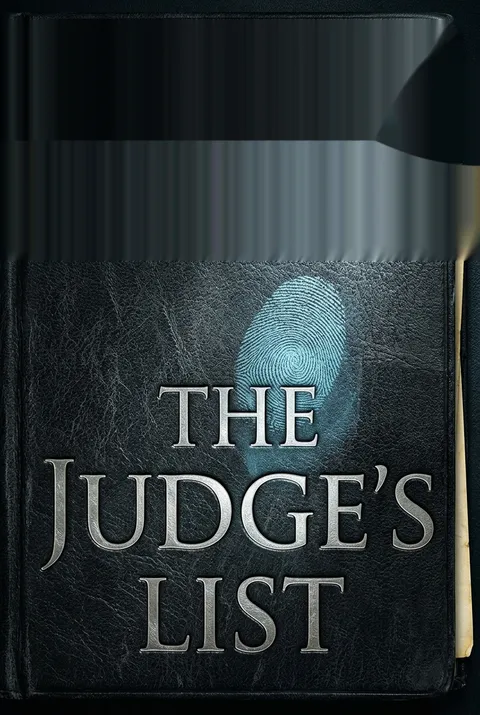


Plot Summary
The Caller Named Margie
Lacy Stoltz has spent twelve years investigating complaints against judges, but most involve ordinary misconduct and a struggling office. Then a frightened woman using the name Margie asks to meet her privately.
She has studied Lacy’s work and brings an organized file, yet resists giving her real name or explaining how the Board stores information. When Lacy describes the complaint process, the woman asks whether a witness can remain anonymous.
At last, she says the accusation is murder: a sitting Florida judge killed her father, a retired law professor, and other people besides. Lacy expects a deluded complainant, but the woman’s fear seems genuine. She agrees to hear more, though the stranger insists on controlling where and how they meet.
The case begins with a conflict between procedure and safety. Lacy’s work depends on people identifying themselves and supplying evidence, while the complainant believes that identification could make her the next target. Her anonymity is not theatrical mystery; it is a survival strategy shaped by years of fear. Lacy’s initial skepticism reflects professional discipline, but also the numbing effect of routine. The woman’s accusation matters partly because she refuses to behave like a conventional complainant, forcing Lacy to decide whether established safeguards can protect someone facing a threat the institution has never handled.
Six Graves, One Knot
At a hotel and then a cemetery in Pensacola, Margie gives Lacy her real name, Jeri Crosby, and recounts her father Bryan Burke’s unsolved murder. A retired professor known for his forceful constitutional-law lectures, Burke had humiliated a combative student who later became Judge Ross Bannick.
Jeri has found five other deaths that she believes connect to Bannick: each victim crossed his path, and the strangled victims bore the same unusual nylon rope and sailor’s knot.
One was scoutmaster Thad Leawood, whose troop included young Ross; others include former acquaintances from college and law. Lacy researches Florida’s judges and identifies Bannick, an admired jurist with no complaints against him. Jeri admits she has no direct proof, only motive, method, and years of painstaking research.
Jeri’s investigation turns memory into an archive. She has gathered newspaper accounts, police records, and recollections because the official system treated each murder as an isolated failure. Her theory joins apparently unrelated biographies through a pattern of grievance, not a conventional criminal profile. That method is intellectually bold but evidentially fragile: the same facts that make the pattern compelling also leave room for coincidence. Lacy’s discovery that Bannick is respected and uncomplained-about sharpens the story’s central institutional problem. Public trust in a judge becomes camouflage, while private certainty remains insufficient to justify public accusation.
The Neely Mailbox
Months before Jeri approaches Lacy, a killer posing as a county inspector enters an unfinished Biloxi house and attacks painter Lanny Verno. He knocks Verno from a ladder, crushes his skull with a telescoping steel weapon, then tightens the familiar rope around his neck.
Builder Mike Dunwoody arrives unexpectedly with Verno’s pay and sees the body; the killer bludgeons him too, leaving without using the rope on this unplanned witness. He steals both phones and mails them to the daughter of Harrison County Sheriff Dale Black.
Police recover the package quickly, but its destination feels less like an escape plan than a deliberate taunt. When Jeri later learns of the murders, the repeated method and Verno’s past in Pensacola give her a fresh lead.
The Biloxi scene gives the reader knowledge that Lacy and Jeri do not yet possess: the killer’s violence is controlled until an accident forces improvisation. Dunwoody’s death exposes the moral emptiness of a system in which victims are sorted into categories, the selected target and the disposable witness. The mailed phones further complicate the killer’s carefulness. He removes evidence, then leaves a conspicuous trail that invites police attention. This apparent contradiction suggests that concealment is not his only aim. He wants control over the investigation as well as over his victims, and the taunt makes that desire visible.
A File Missing Names
Jeri hires private investigator Rollie Tabor to find out whether the murdered painter is the same Lanny Verno who once lived in Pensacola. In an old police file, Tabor discovers that someone blacked out the name of the man who accused Verno of threatening him with a gun. The file’s court summary is blank, unlike the completed forms in neighboring cases.
Tabor locates former officer Norris Ozment, who remembers the dispute: Verno had fought with lawyer Ross Bannick over payment for remodeling work, and Bannick lost the assault case. Jeri now has a concrete crossing between Verno and her suspect, though it proves neither murder nor motive. She brings the finding, her years of research, and a formal complaint to Lacy.
The altered file is a small bureaucratic absence with unusually large narrative force. Jeri does not find a confession or a forensic breakthrough; she finds a discrepancy, then asks who benefited from it. The sequence shows how institutional memory can be manipulated without spectacular hacking: a name obscured, a summary left empty, a routine record made less useful. Jeri’s method is patient reconstruction, but her discovery also reveals the limits of circumstantial proof. She can show that Bannick and Verno collided. She cannot yet show that a courtroom defeat became a murder years later.
A Promotion With Teeth
Lacy’s director refuses to investigate murder and plans to hand any complaint to state police, which Jeri fears would expose her identity. As Lacy weighs whether the Board has any lawful role, its director resigns and retired board members ask Lacy to stabilize the failing agency.
She accepts the interim post, gaining authority to set policy, and uses the Board’s forty-five-day assessment period to open Jeri’s complaint under the alias Betty Roe. Lacy recruits Darren Trope, a curious younger investigator, and Sadelle, the office’s sharp, chronically ill paralegal.
They agree to proceed quietly before involving police. Meanwhile, Lacy and her FBI boyfriend, Allie Pacheco, postpone a decision about marriage and careers, leaving her personal future as unsettled as the case.
Lacy’s promotion converts an abstract dilemma into personal responsibility. Before, she could blame a director’s refusal; now her authority makes inaction her own choice. The Board’s limited mandate is both obstacle and shelter: its complaint process gives Jeri a protected route into the system, but cannot substitute for criminal investigators. The parallel hesitation in Lacy’s relationship with Allie echoes the case without duplicating it. Both confront a future that cannot be made safe through endless delay. Taking the directorship is therefore more than advancement. It is Lacy accepting that leadership means acting before certainty arrives.
Two Cold Case Doors
Lacy and Darren question Sheriff Dale Black and Detective Napier about the Biloxi murders, then travel to Marathon to examine the unsolved killing of retired lawyer Perry Kronke. The Florida investigators learn that Bannick once worked as an intern at Kronke’s firm and was the only intern not offered a job. Jeri also ties Bannick to Verno through the recovered court history.
In Biloxi, the police describe a gray Chevrolet pickup seen near the post office where the stolen phones were mailed. Records show Bannick owned a similar truck, later sold and wrecked, but the eyewitness cannot identify it with certainty. The pattern is tightening, yet no warrant can rest on a theory assembled from old grudges and suggestive details.
The investigation advances through cooperation rather than a single breakthrough. Local officers possess fragments that Jeri’s research can connect, but their guarded files and separate jurisdictions have kept those fragments apart. Lacy’s legal skills help her gain access, though she must conceal enough of the suspect’s identity to protect Jeri. The truck clue demonstrates the difference between a lead and proof: it narrows a possibility without identifying a driver. The team’s frustration is therefore structural, not merely personal. They can see how the pieces might fit, but each agency holds only a small part of the picture.
The Judge Watches Back
Bannick uses spyware he planted in government and police networks to monitor the investigation. When he learns that Lacy and Darren have visited murder scenes, he searches for whoever linked the cases. Jeri, wanting to unsettle him, mails anonymous poems about victims and sends a newspaper reporter a packet connecting four Pensacola figures killed elsewhere.
The resulting story makes the pattern public. Bannick identifies Jeri as a likely pursuer, then travels to Texas and lures former lawyer Mal Schnetzer to a trailer, where he kills him over a long-ago stolen fee. The new murder confirms that Bannick is still acting on old grievances, while the public attention and his surveillance make the danger to Jeri and Lacy immediate.
Jeri’s poems reverse the emotional direction of stalking: for once, the hidden observer tries to make the watched man feel exposed. Yet the tactic carries a cost. Bannick responds not with panic alone but with investigation, using his technological reach to turn her signals into a trail. His killing of Schnetzer shows how a grievance can remain active in his mind long after its practical consequences have passed. Revenge is less a response to injury than a private calendar he refuses to close. By making the pattern visible, Jeri gains leverage but also narrows the distance between herself and the killer.
The Print Without a Name
The FBI examines Verno’s phone and finds a partial thumbprint, but its altered ridges yield no database match. Lacy and Allie consult retired profiler Herman Gray, who sees a patient, educated killer driven by revenge and able to pass as ordinary. He urges them to involve the Bureau. Once the FBI joins the case, agents plan to obtain Bannick’s prints, but he has already hacked reports about the investigation.
He realizes a print has survived, leaves town under a false cancer-treatment story, and scrubs his home and courthouse office. By the time agents search, his computers, files, and many personal belongings are gone. A trace of physical evidence has finally appeared, but Bannick knows it exists and is now on the run.
The print changes the case from an argument about pattern into a contest over time. It is physical evidence, but not yet identifiable evidence; its importance lies in giving investigators a reason to seek a match. Bannick’s surveillance collapses the advantage of institutional secrecy. The more carefully the agencies prepare, the more time he has to erase the places where a match might be found. Gray’s profile is useful not because it proves identity, but because it clarifies behavior: Bannick’s respectable public role and private violence are not separate personalities so much as coordinated forms of control.
The Cabin Interrogation
After Bannick appears at Jeri’s Mobile home in disguise and leaves one of her poems, she flees to a motel, carrying her fear and a pistol. He finds her there, disables the lights, drugs her, and takes her to a remote Alabama cabin. While burning files, he questions her about the investigation and demands the names of the victims.
Jeri lists the people she has tracked, including her father, but admits uncertainty about the sequence. Bannick denies killing Ashley Barasso and reveals that Jeri has missed other names. He does not clearly confess, but his knowledge and reactions deepen her certainty. Then he forces her to call Lacy, claiming she has evidence that will prove his guilt and insisting they meet.
The cabin strips away the ordinary protections of legal process. Jeri has spent years turning records into a case, but face-to-face with Bannick she has no documents, no audience, and no reliable measure of what he will do. His questions are an attempt to regain control of the story, while her refusal to stop speaking lets her preserve a measure of agency. His denial about Ashley also unsettles the neatness of her theory. The confrontation does not deliver courtroom-grade truth. It reveals how incomplete knowledge becomes dangerous when the person being studied can answer back.
Gunther Hits the Dark
Lacy follows Jeri’s invitation to the motel near Crestview, bringing her brother Gunther, who has flown her partway in his plane. When the hallway lights fail, Bannick lunges from the dark. Gunther charges into the fight, giving Lacy time to escape and summon help, but Bannick slips away. At the remote cabin, two teenagers break in looking for valuables and find Jeri handcuffed and chained.
Their frightened call brings police to her before Bannick returns. Jeri is hospitalized, then reunited with Lacy in Tallahassee; the two women cry as the danger finally recedes. Gunther’s impulsive intervention has protected his sister, while Bannick has escaped the FBI’s first effort to capture him.
The rescue depends on ordinary human interruption, not superior force. Gunther’s arrival is improvised and costly, but it breaks Bannick’s carefully controlled plan long enough for Lacy to run. Jeri’s survival comes from another accidental intrusion, teenagers entering a cabin for the wrong reason. These contingencies expose the fragility of Bannick’s self-image as a flawless planner. The emotional payoff is real but incomplete: Lacy and Jeri are safe, while the man who threatened them remains free. Relief arrives before justice, and the characters must live inside that gap.
The Judge's Last Exit
Bannick drives west, checks into an expensive rehabilitation clinic near Santa Fe, and pretends he is seeking help for alcoholism. Before staff find him, he takes an overdose and uses acid to destroy the ridges on his fingers, apparently hoping to prevent identification. He has sent his secretary, Diana Zhang, a will and instructions to cremate him without an autopsy.
The FBI reaches the clinic too late to question him, and his damaged hands defeat the immediate attempt to match the Biloxi print. Jeri and Lacy are left with a dead suspect, a kidnapping account, and years of unsolved murders that may never be prosecuted. Bannick has stopped killing, but appears to have chosen the terms of his own ending.
Bannick’s death is not a conventional defeat. He removes the possibility of another murder, yet tries to control the evidence, the handling of his body, and the public story after he is gone. His final assault on his fingers turns the body into the last site of his resistance. For Jeri, the outcome cuts in two directions: the immediate threat has ended, but the justice she pursued has not arrived. The institution can declare a suspect dead; it cannot easily convert suspicion into an account families can trust.
Proof in the Wreckage
Rather than close the case, Jeri tracks Bannick’s old Chevrolet to a salvage yard outside Pensacola. Lacy and Darren help her search the wreck, and she persuades them to pry open the crushed glove box. Inside an owner’s manual, Jeri finds an insurance card connected to one of Bannick’s businesses.
FBI technicians lift two thumbprints from it; the lab matches them to the partial print on Verno’s phone. The match proves Bannick’s role in the Biloxi killings, though it cannot establish every murder Jeri attributed to him.
Lacy later tells the Kronke family what investigators believe about their father’s death, without promising a prosecution. On a trip to Key West, Lacy and Allie finally commit to marriage and leaving their jobs for a shared future.
The salvage yard turns the novel’s central problem into a material image: evidence survives not in Bannick’s carefully controlled rooms, but in a crushed vehicle discarded as worthless. Jeri’s perseverance finds what the first search could not, and forensic confirmation gives the families a fact rather than a theory. Yet the proof has a boundary. It confirms two murders, not the entire history, so closure remains partial. Lacy’s decision with Allie offers a different kind of ending: not certainty about the past, but a deliberate choice about what to build next.
Analysis
The novel’s central conflict is not simply whether a respected judge is guilty. It is whether knowledge can become justice when the evidence has been scattered across jurisdictions, buried in old files, or erased by the person who understands the legal system best. Jeri’s work is an alternative form of investigation: she assembles memories, public records, police reports, and human connections that official agencies have treated as unrelated. Her achievement is formidable, but the book does not confuse pattern recognition with proof. The eventual fingerprint match validates part of her account while leaving much of the larger history beyond prosecution.
Bannick’s violence grows from remembered humiliation, but his grievance is not presented as an excuse or a complete psychological explanation. He converts injury into a private system of accounting, assigning himself the authority to judge and punish. His work as a judge makes that private fantasy especially corrosive: he publicly represents procedure while secretly treating resentment as law. His technological surveillance extends the same desire for control. He wants not only to escape detection but to manage what others can learn about him.
Lacy’s position offers a counterweight to Bannick’s certainty. She must act with incomplete information, protect Jeri without surrendering institutional responsibility, and accept that procedure can be both safeguard and obstacle. Her eventual commitment to Allie provides a modest but meaningful contrast to the case: where Bannick preserves old injuries and Jeri has allowed the past to consume her present, Lacy chooses a future without requiring perfect certainty. The ending refuses the easy satisfaction of a trial, yet still grants a narrower form of truth. A dead man cannot be punished, but the evidence can name what he did, and the surviving characters can begin to live beyond his reach.
Review Summary
The Judge's List received mixed reviews, with many praising Grisham's storytelling and the intriguing premise of a judge as a serial killer. Readers appreciated the strong female characters and the cat-and-mouse game between the investigator and the killer. Some found the pacing slow at times and the ending unsatisfying. Critics noted that while not Grisham's strongest work, it remains an entertaining legal thriller. Overall, fans of Grisham's writing style and legal suspense novels found it enjoyable, while others felt it lacked the depth of his earlier works.
People Also Read






Characters
Lacy Stoltz
Reluctant agency leaderA veteran investigator at Florida’s Board on Judicial Conduct, Lacy is practical, perceptive, and tired of an agency whose budget and morale keep shrinking. Her experience with a major corruption case has taught her that institutional procedure can expose wrongdoing, but also that success carries personal costs. She initially doubts Jeri’s extraordinary allegation, then becomes responsible for deciding how far the Board should go when conventional police work has failed. Lacy is protective without being sentimental and prefers evidence to dramatic claims. Her relationship with FBI agent Allie Pacheco reflects her broader uncertainty about the future: she values independence, yet begins to consider whether a shared life might be worth choosing.
Jeri Crosby
Patient cold-case hunterA political science professor and daughter of law professor Bryan Burke, Jeri has spent much of her adult life investigating her father’s unsolved murder. She is intelligent, methodical, and resourceful, building a private research network through aliases, public records, and carefully cultivated sources. The pursuit gives structure to grief that her family would rather leave untouched, but it also isolates her and strains her work and relationships. Jeri’s conviction is powerful, though not always matched by courtroom-ready proof; she can be both an effective researcher and an emotionally compromised interpreter of patterns. Her fear of being identified shapes nearly every decision, even as her determination repeatedly pushes her toward greater exposure.
Ross Bannick
Immaculate public figureA popular circuit judge with a clean professional reputation, Bannick is intelligent, disciplined, and deeply invested in being admired. He maintains a polished public life while privately nursing old humiliations and grievances. His interest in technology, security, and surveillance reflects a need to control what others can see, while his careful attention to procedure gives him unusual confidence in avoiding scrutiny. Bannick does not experience slights as passing injuries; he preserves them and builds his identity around settling them on his own terms. His respectable status is central to how others understand him, making the divide between public authority and private motive especially unsettling.
Allie Pacheco
FBI partner and boyfriendAn experienced FBI agent, Allie is committed to demanding work that often pulls him away from Lacy. He is discreet about his cases, professionally ambitious, and accustomed to assessing danger through training rather than instinct alone. His relationship with Lacy is affectionate but hesitant; both value their independence and worry that career decisions may pull them in different directions. Allie gives Lacy a way to think through the case without violating confidentiality, and his knowledge of federal investigative practice helps her judge what the Board can and cannot accomplish. He is supportive, though not always ready to articulate what kind of future he wants.
Darren Trope
Eager junior investigatorA younger BJC investigator, Darren is restless in a chronically underfunded office and hungry for work that feels consequential. His enthusiasm sometimes outruns his experience, but he is capable, curious, and willing to take on unglamorous research. Lacy brings him into the investigation and gives him responsibility as her partner in the field. Darren’s mix of ambition and uncertainty mirrors the agency’s own state: he wants to do meaningful work, yet knows the Board is not equipped like a police department. His loyalty to Lacy grows as the case demands more than routine file review.
Sadelle
Office memory keeperThe BJC’s veteran paralegal, Sadelle knows its history, procedures, and old files better than anyone else. Chronically ill and dependent on oxygen, she continues working because the office gives her purpose and connection. Her dry humor punctures the task force’s excitement, while her institutional memory supplies examples of how anonymous complainants can be protected. Sadelle is not a field investigator, but she understands the machinery Lacy is trying to use. She brings practical caution to a case that could easily overwhelm a small agency.
Gunther Stoltz
Lacy's impulsive brotherLacy’s older brother is an energetic real estate developer and avid pilot who moves through life with confidence, even when his finances and relationships are unstable. He loves his sister and worries about her, but often expresses care as unsolicited advice about her career, money, and romantic choices. Lacy resists his tendency to take over a conversation, while recognizing the bond they share after their mother’s death. Gunther’s bravado can irritate her, but it also comes from a genuine instinct to show up when she needs him.
Denise Crosby
Jeri's independent daughterJeri’s daughter is a graduate student in physics at the University of Michigan, independent and close to her mother despite years of emotional distance around the family’s grief. Denise has built a life beyond Mobile and her mother’s investigation, and she wants their visits to include ordinary subjects as well as painful family history. Her developing relationship with fellow student Link gives Jeri a glimpse of a future shaped by connection rather than the past. Denise cares about her mother, but she also recognizes how consuming the search for her grandfather’s killer has become.
Diana Zhang
Bannick's trusted secretaryBannick’s longtime secretary is efficient, loyal, and accustomed to protecting the privacy of the judge’s office. Her professional closeness to him makes her an important observer of his public life, though she is not privy to everything he does. Diana approaches her work with practical devotion and takes her responsibilities seriously. Her position places her between the routines of the courthouse and the personal demands of a powerful employer, a relationship that requires trust but leaves her with limited knowledge of the person she serves.
Bryan Burke
Beloved law professorJeri’s father spent decades teaching law at Stetson and was renowned for commanding, demanding lectures. He relished spirited argument and expected students to defend their reasoning, a style that could inspire admiration and provoke resentment. Bryan returned to his South Carolina hometown after retiring, where he lived quietly with his wife. His teaching reputation gives Jeri an unusually rich set of memories and former students to investigate, but it also leaves her trying to distinguish a real grievance from the ordinary wounds of academic competition.
Thad Leawood
Boy Scout troop leaderA social worker and devoted scoutmaster in Pensacola, Thad built a public identity around mentoring boys and serving his community. Rumors of misconduct eventually disrupted that image and drove him away from town, though the allegations were never resolved in court. His place in Ross Bannick’s childhood makes him central to Jeri’s theory about how a private grievance might begin. Thad represents the difficulty of interpreting a respected community role when the people affected are young, frightened, and reluctant to speak.
Perry Kronke
Retired law-firm partnerA senior partner at a Miami law firm, Perry supervised summer interns, including Ross Bannick. Years later, he retired to the Florida Keys and spent time fishing. His professional history becomes important because a decision about a job offer may have lingered in Bannick’s memory as a grievance. Perry’s reputation and family connections make his unsolved case harder to dismiss as random, while the lack of direct evidence complicates any effort to explain what happened to him.
Lanny Verno
Drifting house painterA self-employed painter who moved between places and jobs, Lanny had a brief, contentious dispute with Bannick over remodeling work in Pensacola. His old assault case leaves behind a small but significant court record, one whose missing details later draw Jeri’s attention. Lanny’s transient life makes his past difficult for investigators to reconstruct, illustrating how the least documented people can become the hardest victims to connect to a larger pattern.
Mike Dunwoody
Local home builderA respected Biloxi builder, Mike is a family man whose work regularly takes him to construction sites. He has no known connection to Bannick, a distinction that makes his place in the Biloxi case particularly troubling. His ordinary responsibilities, including paying workers and checking on projects, put him in the path of a crime he had no reason to anticipate. Mike’s role underscores how violence directed at one person can engulf someone who merely arrives at the wrong moment.
Mal Schnetzer
Disbarred plaintiff's lawyerOnce a successful plaintiff’s lawyer in the Florida Panhandle, Mal became notorious for unethical dealings with clients and colleagues. His career crossed Bannick’s during an early legal dispute, creating a long-lived grievance. Mal’s history shows how professional misconduct can leave a trail of resentment long after the courts have imposed their own punishment.
Rollie Tabor
Resourceful private investigatorA former police officer working as a private investigator, Rollie is comfortable using a cover story to access records and people who might otherwise refuse to help. Jeri hires him to search old Pensacola files, where his patience and practical instincts uncover a damaged court record. He is a skilled but hired investigator, distinct from Jeri’s long personal pursuit; his work supplies a crucial lead without resolving the larger case.
Dale Black
Harrison County sheriffThe sheriff responsible for the Biloxi investigation, Dale Black is direct, cautious, and protective of his department’s evidence. The discovery of the stolen phones near his daughter’s address makes the case personal as well as professional. He cooperates with Lacy when she demonstrates knowledge the local investigators do not have, but remains wary of outsiders withholding their suspect’s name. His approach reflects the pressure on local law enforcement to solve a high-profile crime with limited leads.
Norris Ozment
Former Pensacola officerA former city police officer now working resort security, Norris handled the old dispute between Verno and Bannick. Years later, he can still recall enough of the case to connect the two men. His memory provides a bridge between a paper trail and the people who created it.
Herman Gray
Retired FBI profilerA retired Behavioral Analysis Unit leader, Herman has spent decades studying serial offenders and enjoys the chance to examine an unusual case. He listens carefully to Lacy’s victim summaries and offers a profile, while acknowledging that behavioral interpretation cannot replace evidence. His experience helps Lacy and Allie understand the likely shape of the threat and why the FBI should become involved.
Ashley Barasso
Former law-school classmateAshley studied law with Bannick at the University of Miami and later built a family life of her own. Jeri knows less about their relationship than about most of the other people in her files, leaving Ashley’s place in the pattern uncertain. Her story reminds investigators that proximity alone does not explain motive.
Eileen Nickleberry
Former college acquaintanceEileen and Bannick moved in overlapping fraternity and sorority circles at the University of Florida. Their college history, reconstructed through secondhand accounts, becomes one of the more personal and humiliating possible grievances in Jeri’s research. The distance between rumor and verified fact remains an important part of how her story is understood.
Danny Cleveland
Pensacola newspaper reporterA reporter for the Pensacola Ledger, Danny wrote about local political and development controversies. His professional work placed him near the public record and the people who wanted to shape it. Jeri sees his reporting history as a possible reason someone might have held a grudge, though the connection takes years to reconstruct.
Darren Napier
Biloxi homicide detectiveThe lead detective on the Verno and Dunwoody case, Napier is experienced and protective of details in an active investigation. He has few leads to offer, but he recognizes that Lacy knows things about the crime scene she should not know by chance. His cautious cooperation helps move the case beyond local jurisdiction.
Plot Devices
The double clove hitch
A signature across jurisdictionsThe repeated length and type of nylon rope, secured with an uncommon knot, lets Jeri connect murders that occurred in different states and were investigated by separate police departments. It functions as both evidence and performance. The killer leaves the ligature behind, making a traceable pattern, yet the pattern is difficult to recognize when agencies do not compare cases. Its persistence helps Jeri build her theory, but it cannot by itself identify the killer or establish a motive. The signature therefore carries the story’s central tension: a visible clue can be deliberately left in plain sight and still fail to become proof.
Aliases and cover stories
Protection through false identitiesJeri uses invented names, disposable phones, encrypted accounts, and fabricated professional identities to gather information without leaving a clear trail. Her methods protect her from being easily identified, but they also make her work difficult for authorities to verify. Bannick uses his own disguises, false accounts, and carefully chosen public behavior to avoid scrutiny. The device makes anonymity a practical necessity for Jeri and a weapon for Bannick. Both characters manipulate information, but with radically different purposes: one is trying to uncover a crime while surviving, and the other is trying to keep control of what can be known.
The forty-five-day assessment
A narrow legal doorwayThe BJC’s assessment period gives Lacy a limited legal reason to investigate a complaint before notifying the judge or referring the matter onward. Jeri chooses the Board because she fears that going directly to police could reveal her identity, and the complaint process temporarily gives her a buffer. Lacy’s appointment as interim director makes that buffer usable. The device brings a small judicial oversight agency into a criminal investigation it is not equipped to solve, creating both access and delay. It also tests the boundary between protecting a complainant and allowing her to dictate how an official investigation proceeds.
Maggotz and Rafe
A killer inside the networksBannick’s spyware and automated data-gathering program let him monitor police, courts, and the Board on Judicial Conduct. The system gives him information investigators assume is private, allowing him to anticipate searches and identify people asking questions. It converts ordinary communications into a vulnerability: a careless email can reveal the FBI’s plans, while routine digital records help Bannick track Jeri. The technology is not magical; it exploits weak security and Bannick’s patience. Its dramatic function is to erase the expected advantage of institutional secrecy and force investigators to confront a suspect who is watching their response in real time.
The partial thumbprint
Physical proof with a delayed matchA partial print recovered from Verno’s phone provides the first physical evidence that may connect a suspect to the Biloxi scene. Its ridges have been altered, so the FBI cannot identify it through ordinary database comparison. Bannick learns that it exists and attempts to destroy the possibility of a later match by damaging his fingers. After his death, Jeri finds his old truck in a salvage yard and locates an insurance card he may have handled before the murders. Prints lifted from that card match the partial. The clue eventually proves his connection to the Biloxi killings, but it does not establish every murder in Jeri’s larger theory.
FAQ
Synopsis & Basic Details
What is The Judge's List about?
- A relentless pursuit of justice: The Judge's List follows Lacy Stoltz, an investigator for Florida's Board on Judicial Conduct, as she is drawn into a chilling case by Jeri Crosby, a woman who claims a sitting judge murdered her father and several others over two decades. Jeri, operating under aliases and extreme caution, has meticulously tracked the alleged serial killer, Judge Ross Bannick, for years, driven by a singular obsession to expose him.
- A high-stakes cat-and-mouse game: As Lacy reluctantly takes on the seemingly impossible task of investigating a judge for serial murder, she and her small team navigate a world of cold cases, elusive evidence, and a highly intelligent, paranoid killer. The narrative unfolds as a tense psychological thriller, with Jeri's deep knowledge of Bannick's methods and motives guiding Lacy through a dangerous investigation.
- The blurred lines of law and morality: The story explores the limitations of the justice system when faced with a cunning adversary who operates outside conventional criminal patterns. It delves into themes of obsession, revenge, and the personal toll of pursuing truth, as Lacy and Jeri risk their lives and sanity to bring a powerful, respected figure to account.
Why should I read The Judge's List?
- Unravel a unique serial killer narrative: Unlike typical crime thrillers, The Judge's List presents a serial killer who operates with extreme patience and a unique motive: revenge against those who have slighted him, often years or decades later. This unusual Judge Ross Bannick motivation adds a compelling psychological layer to the suspense.
- Experience a deep dive into obsession: The novel offers a profound exploration of Jeri Crosby's two-decade-long obsession with finding her father's killer, showcasing the immense personal sacrifice and meticulous dedication required for such a solitary quest. Her journey highlights the emotional and psychological toll of unresolved trauma.
- Witness a Grisham novel with a fresh twist: While retaining John Grisham's signature legal thriller style, this book ventures into darker, more psychological territory, focusing less on courtroom drama and more on the investigative process and the chilling mind of a killer. It provides a compelling analysis of The Judge's List that deviates from his usual formula.
What is the background of The Judge's List?
- A fictionalized judicial oversight system: The novel is set within the fictional "Board on Judicial Conduct" (BJC), which Grisham notes in his author's note does not exist in Florida in this form, though the Judicial Qualifications Commission does. This allows for a narrative exploration of a state agency with limited resources and jurisdiction attempting to tackle a crime far beyond its usual scope.
- Exploration of cold cases and forensic limitations: The story implicitly highlights the real-world challenges of solving cold cases, particularly those spanning multiple jurisdictions and lacking traditional forensic evidence. Bannick's meticulousness and knowledge of police procedures underscore how difficult it is to link seemingly unrelated crimes without a dedicated, cross-jurisdictional investigation.
- Themes of power and societal facade: The book delves into the unsettling idea of a respected public figure, a judge, harboring a monstrous secret. This explores the societal background where status and reputation can mask profound depravity, making it difficult for authorities and the public to suspect wrongdoing.
What are the most memorable quotes in The Judge's List?
- "Murder.": This single word, uttered by Jeri Crosby in Chapter 2, is a pivotal moment that shatters Lacy's mundane routine and immediately elevates the stakes of the entire narrative. It's a stark, shocking revelation that sets the terrifying premise of the book.
- "He's a sick man but he puts up a good front. Church, country club, stuff like that. He's active in the local bar, president of a historical society, even fancies himself as an actor with a county thespian group.": This description of Judge Bannick in Chapter 6, provided by Jeri, perfectly encapsulates the chilling duality of his character – a respected pillar of the community masking a depraved serial killer. It highlights the themes in The Judge's List of hidden evil and societal deception.
- "I've lived in your miserable life for so long and I never dreamed I would one day be able to have a chat like this and tell you what a miserable scumbag I think you are. You're a coward. Your crimes took no courage.": Jeri's defiant outburst to Bannick in Chapter 36, during her abduction, is a powerful culmination of her decades-long obsession. It's a raw, emotional moment where she finally confronts her tormentor, revealing the depth of her hatred and the psychological toll of her quest.
What writing style, narrative choices, and literary techniques does John Grisham use?
- Lean, procedural prose with escalating tension: Grisham employs his characteristic straightforward, unadorned prose, focusing on clear plot progression and investigative details. This John Grisham writing style creates a sense of realism and urgency, allowing the chilling nature of the crimes and the killer's methodical approach to build tension organically rather than through ornate language.
- Alternating perspectives and narrative misdirection: While primarily following Lacy Stoltz, the narrative frequently shifts to Jeri Crosby's meticulous research and, crucially, to Judge Bannick's internal monologues and actions. This narrative choice provides a unique, omniscient view of the killer's mind, revealing his paranoia, cunning, and twisted justifications, often creating dramatic irony as the reader knows more than the investigators.
- Subtle foreshadowing and thematic echoes: Grisham uses seemingly minor details and recurring motifs to foreshadow future events and reinforce central themes. For instance, Lacy's initial boredom with her job and her desire for a "pinnacle" case (Chapter 4) subtly foreshadows the extraordinary and dangerous nature of the Bannick investigation, while the repeated mention of the "double clove hitch" knot serves as a chilling symbolism in The Judge's List of Bannick's signature and his Boy Scout past.
Hidden Details & Subtle Connections
What are some minor details that add significant meaning?
- BJC's crumbling infrastructure: The initial description of the Board on Judicial Conduct's "twenty years old" phone system, "ridiculous" turnover, and "chopped" budget (Chapter 1) subtly establishes the agency's weakness and isolation. This background detail highlights the immense challenge Lacy faces, as she's forced to tackle a serial murder case with severely limited resources, making her eventual commitment even more significant.
- Lacy's "yield sign" memory: Lacy's daily encounter with a yield sign that triggers a flashback to her car crash and Hugo Hatch's death (Chapter 4) is a subtle callback to her past trauma. This seemingly throwaway detail underscores her lingering psychological scars and caution, providing a deeper understanding of her reluctance to engage in another high-stakes, dangerous investigation, yet also her underlying resilience.
- Bannick's "other chamber" as a psychological refuge: The detailed description of Bannick's hidden, soundproof, and heavily alarmed "Vault" (Chapter 21) is more than just a plot device for hiding evidence. It symbolizes his extreme paranoia and fractured psyche, revealing his need for absolute control and isolation from the world he judges. It's a physical manifestation of his internal compartmentalization and hidden depravity.
What are some subtle foreshadowing and callbacks?
- Jeri's knowledge of Darren's photo-taking: In Chapter 1, Jeri immediately calls out Darren Trope for taking her picture, even presenting her own "mug" shot. This subtle detail foreshadows her extensive surveillance capabilities and deep understanding of investigative tactics, hinting at the meticulous, almost professional level of her own "stalking" of Bannick long before Lacy fully grasps it.
- Bannick's early political defeat: The newspaper article detailing Bannick's landslide defeat in his first political campaign due to a "real estate developer" controversy (Chapter 3) subtly foreshadows his deep-seated need for revenge and control. This early humiliation, though seemingly minor, sets a precedent for his later, more violent reactions to perceived slights, linking his public and private personas.
- The recurring "double clove hitch" knot: Jeri's repeated, precise description of the "double clove hitch" knot used in the strangulations (e.g., Chapter 6, 17) serves as a chilling callback to Bannick's Boy Scout past, which is later revealed as the source of his initial trauma with Thad Leawood. This specific detail acts as a unique symbolism in The Judge's List, a signature that links all the murders and hints at the killer's origins.
What are some unexpected character connections?
- Lanny Verno's past altercation with Bannick: The discovery that Lanny Verno, one of Bannick's later victims, had a court case against Bannick years prior (Chapter 13) is a crucial, unexpected connection. This reveals Bannick's long memory for grievances and his extreme patience, showing that even a minor legal dispute could land someone on his deadly "list."
- Bannick's "harem" of affluent women: The revelation of Bannick's carefully curated "harem" of rich, single women (Chapter 25) is an unexpected detail that adds complexity to his character. It highlights his manipulative social skills and his ability to maintain a facade of normalcy and charm, while also subtly hinting at his deeper issues with intimacy and control, especially given his alleged impotence.
- The accidental victim, Mike Dunwoody: The fact that Mike Dunwoody was an entirely accidental victim, killed simply for being in the wrong place at the wrong time (Chapter 8), is a stark and unexpected deviation from Bannick's usual revenge-driven pattern. This detail adds a layer of moral ambiguity to Bannick's character, as he expresses a rare, albeit fleeting, moment of regret for killing an "innocent" person, contrasting with his cold-blooded pursuit of his "list."
Who are the most significant supporting characters?
- Kenny Lee (KL Data): Jeri's anonymous "mad scientist" source (Chapter 11), Kenny Lee, is crucial as he provides the raw, unfiltered crime data that allows Jeri to identify patterns and connect seemingly unrelated murders across states. His role as a detached, data-driven expert highlights the power of information in solving cold cases, even when official channels fail.
- Sadelle: The veteran paralegal at BJC (Chapter 7), Sadelle, despite her declining health, serves as the institutional memory and moral compass for Lacy's team. Her knowledge of BJC's past cases, including anonymous complaints, provides crucial procedural guidance and a sense of continuity in a chaotic agency, while her dry wit offers moments of levity.
- Norris Ozment: The former Pensacola police officer (Chapter 14) who remembers the Lanny Verno/Ross Bannick altercation is a seemingly minor character whose memory provides a vital, direct link between Bannick and one of his victims. His casual recollection, later exploited by Bannick, underscores how easily crucial information can be overlooked or dismissed by authorities.
Psychological, Emotional, & Relational Analysis
What are some unspoken motivations of the characters?
- **Lacy's subconscious desire for
About the Author
Other books by John Grisham






Download PDF
Download EPUB
.epub digital book format is ideal for reading ebooks on phones, tablets, and e-readers.








