

Plot Summary
A Story Summons Fire
Asha, Firgaard’s scarred royal dragon hunter, has spent ten days tracking a gray dragon, and her hunting party is running out of food. To draw the creature close, she secretly tells an ancient story, a crime her father has forbidden on pain of death. She kills the dragon, but its final burst of fire burns her bare hand.
Her cousin Safire notices that dragons have begun breathing fire again, though the old stories supposedly vanished decades ago. Asha hides the wound from the watching slaves and tries to dismiss Safire’s questions. Before she can explain or treat the burn properly, a palace messenger arrives with an urgent summons from the king. Asha rides home, concealing the evidence of her forbidden practice.
The opening makes Asha’s skill inseparable from the rule she breaks: her hunting success depends on stories, the very force her father has made criminal. Her burned hand turns that private compromise into bodily evidence. Asha’s reflex is not to question why the dragon breathed fire, but to hide what its fire says about her. Even Safire’s concern is filtered through danger, since every witness might become a threat to Asha’s carefully maintained public identity.
One Dance, One Secret
Instead of answering her father’s summons, Asha slips into the palace sickroom to treat her hand. There she meets Torwin, a freckled house slave belonging to Jarek, the commandant she is expected to marry. Asha threatens him into silence, but Torwin helps prepare the painful remedy and wraps her hand without quite touching her, obeying laws that forbid a slave from laying hands on a royal.
Then he asks for payment: one dance, at a time and place he will choose. Asha rejects the demand and leaves, unsettled by his refusal to fear her. His request becomes a small crack in the order she relies on: he has seen her injured, knows she needs his discretion, and has made the exchange his own.
The sickroom reverses the expected positions of power. Asha can threaten Torwin, but she cannot treat herself without help, and the law gives him little room to offer it. His careful bandaging exposes the violence built into ordinary etiquette: even a gesture of care risks punishment. The dance he requests is not simply flirtation. By asking for a moment outside his assigned service, Torwin asserts a desire that the hierarchy says he should not have.
Kozu Becomes the Price
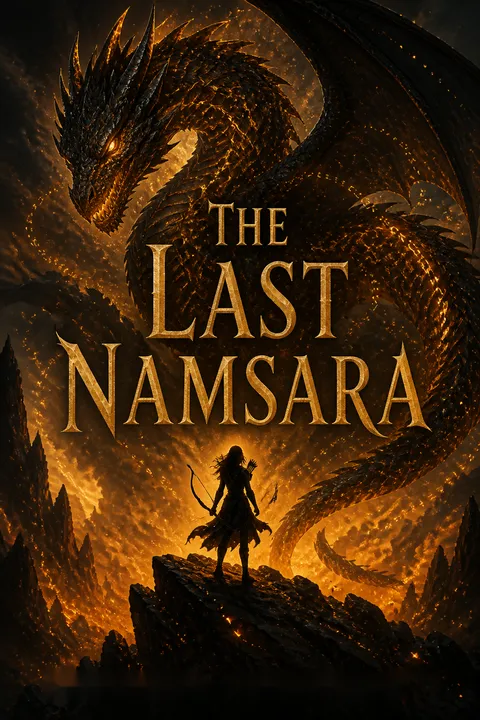
In the throne room, Asha’s father explains why he summoned her. Her brother Dax has returned from the scrublands with a delegation seeking peace, and a black dragon bearing a scar has appeared in the Rift for the first time since the disaster that scarred Asha as a child. The dragon is Kozu, the First Dragon. The king orders Asha to bring back his head.
He promises that killing Kozu will remove the need for her binding to Jarek, whose command over the army makes him both a powerful ally and a possible threat to the throne. Asha accepts the hunt. The decision gives her a deadline as well as a purpose: the red moon is waning, and her marriage is only days away.
The king turns Asha’s private dread into a public instrument. Kozu is not merely the dragon who burned her; he is also the key to canceling a marriage she fears and to consolidating the king’s authority over religious opponents. The offer appears to give Asha agency, but its terms have been arranged by someone who controls both her future and the story of her past. Her acceptance is therefore brave and constrained at once.
The Feast Turns Dangerous
At a palace celebration, Asha sees Dax looking gaunt after his scrubland mission and meets Roa, a proud daughter of the House of Song who travels with a white hawk. Jarek arrives drunk, presses Asha into an unwanted dance, and shoves Dax when he objects. As Asha struggles to pull away, she hears her name called from nowhere, then faints.
Torwin, playing lute among the musicians, catches her before she hits the floor. The incident gives Jarek grounds to punish his slave for touching a royal, while Asha’s collapse exposes how badly the burn has affected her. Safire later conceals the injury from the physician, buying Asha time. The attention Asha cannot control now draws Torwin, Dax, and Jarek into the same danger.
The feast stages Firgaard’s hierarchy as a physical arrangement: Jarek can hold Asha in front of the court, while Dax’s protest earns him a shove and Torwin’s rescue puts his life at risk. Asha’s fainting interrupts the spectacle, but does not free her from it. The call she hears also makes storytelling’s consequences harder to dismiss as rumor. Her body is responding to something the court cannot see, and Torwin is the one who catches her when its rules fail.
Blades With a Command
After dreaming of Elorma, the First Namsara, Asha wakes to find no black blades, then discovers a blacksmith has forged the same weapons for her. She takes them into the Rift, hoping their power will help her reach Kozu. When she finds a young dragon, she strikes it with one blade and kills it. Pain races up her arm, leaving it numb and useless.
Elorma’s warning returns: the sacred slayers can be used only to make wrongs right. Asha resents the Old One’s interference, but refuses to abandon the hunt. Her burned hand and paralyzed arm now make the task nearly impossible. She returns to the palace injured, still determined to finish the mission before Jarek’s binding deadline.
The slayers make power conditional rather than liberating. Asha accepts them because she expects a sharper weapon, then learns that their use carries a moral judgment she cannot control. Her disabled arm echoes the way she has treated dragons as targets instead of beings with claims of their own. Yet she does not immediately reinterpret the punishment. She clings to the hunt, showing how completely she has mistaken obedience to her father for redemption.
Greta’s Bloodied Warning
Dax begs Asha to intervene after Jarek begins whipping Torwin for catching her. Asha enters Jarek’s home and stops the beating, knocking the commandant unconscious long enough to free Torwin. With help from an elderly slave, Greta, she carries him to the temple sanctuary, where guardian Maya treats his wounds. The next day, Jarek forces Greta into the pit because she helped Torwin escape.
Asha watches Greta die rather than expose the fugitive’s hiding place. In the temple sickroom, she then discovers forbidden scrolls containing the old stories, written in Dax’s hand. Torwin asks her to show him an escape route. Asha leads him toward the secret tunnel beneath the temple, but turns back rather than leave him alone in the Rift.
Asha’s rescue is a first choice made for someone beyond her royal family, but it cannot erase the system she has helped enforce. Jarek converts Greta’s loyalty into a public execution, and Asha’s silence preserves Torwin while costing Greta her life. The scrolls complicate Asha’s belief that outlawed stories are simply a source of harm: Dax has risked preserving them, and Torwin’s survival now depends on knowledge hidden by the very institution that banned them.
The Dragon Called Shadow
In the Rift, Asha finds a red-scaled dragon that follows her but will not approach. Torwin urges her to remove her dragonskin armor, and when she finally tells an old story, the creature comes close enough to touch.
It answers with images of the past: Asha’s grandmother enslaving the skral despite a Namsara’s warning, followed by dragons turning against their riders. Asha rejects the dragon’s version at first, but the images unsettle the official history she knows.
Elorma appears in her dreams and gives her a third task: return the sacred flame from the palace throne room to the temple caves. Asha learns that fire cannot burn her. She agrees to steal the flame and promises Torwin a ride to freedom in return for his help protecting the dragon.
The dragon’s story does more than supply historical information. It forces Asha to encounter memory as a contested account, not a settled record delivered by the throne. Her first response is to defend the official version, which shows how deeply political loyalty has entered her sense of truth. Removing her armor also changes the terms of contact: the creature approaches only when she stops presenting herself as its hunter.
The Flame Goes Home
Asha buys a new lute for Torwin after burning the one Greta gave him while hiding the scrolls from Jarek. She and Torwin then arrange for Shadow to create a distraction in the city. While soldiers respond to the dragon, Asha enters the throne room and transfers the sacred flame into a lantern. Dax helps her escape the guards, and she carries the flame through the temple caves to its original place.
There, its light reveals old stories covering the walls. Jarek finds Asha before she can flee and brings her to the king. Asha claims the flame was bait for Kozu, protecting the truth about the Old One’s command. The king orders her confined until her binding day, placing her back under Jarek’s control.
The stolen flame brings the outlawed stories into public space, even as Asha tries to treat the act as a practical step in her hunt. Her lie to her father protects the secret but also shows that she still imagines she can keep competing loyalties neatly separated. The burning of Torwin’s lute has a different cost: Asha’s attempt to erase evidence destroys an object tied to his relationship with Greta, making protection and harm difficult to disentangle.
A Pit Full of Fire
On the morning of her binding, Asha expects to leave for the Rift but is taken to the arena instead. Jarek has placed Torwin in the pit with Shadow, who is wounded and terrified. When Torwin tries to calm the dragon with a story, Shadow begins gathering fire in his belly. Asha drops into the arena and shields Torwin from the blast with her armor.
She removes her dragon-hide gear until Shadow recognizes her. Safire raises the overhead bars, while Dax drops a bow and arrows to Torwin. The three fight off Jarek’s soldiers long enough for Shadow to escape with Torwin. Asha holds Jarek back, and Torwin leaves with her promise not to marry him. Her father grants her two more days to hunt Kozu.
Jarek turns the arena into a trap that weaponizes every relationship Asha has begun to value. Torwin’s storytelling could make Shadow powerful enough to kill him, yet he uses it because the dragon is frightened and needs calming. Asha’s decision to strip off her armor abandons the identity that once made her feel invulnerable. She trusts the dragon to recognize her without the skins of its kind between them.
Kozu Rewrites the Past
Asha lures Kozu into the Rift, intending to kill him before her final deadline. As he pins her, she receives his memory of the day she was burned: her father’s soldiers surrounded the dragon, and the king stepped away while Asha faced the fire alone. Jarek admits he found her telling stories and reported her to the king.
Asha realizes her father let her burn, then used her scars to present her as proof that stories and dragons were evil. Enraged, she stops fighting Kozu. The attack brings dragonfire down on the city as skral rebel in the confusion. Asha tries to ride Kozu away, but Jarek spears the dragon and Asha falls unconscious. She wakes chained in the palace dungeon.
Kozu’s memory revises the moral center of Asha’s life. The girl she believed had caused the catastrophe was also a child abandoned to it by the person who claimed to protect her. Jarek’s admission supplies a human witness, making the revelation harder to dismiss as a dragon’s manipulation. Asha’s decision not to strike Kozu marks her first rejection of the role that has organized her identity, even as the city’s violence escalates around her.
Escape Through Broken Glass
After the revolt, the king orders Asha’s marriage to Jarek and plans to make Jarek his heir. During the ceremony, Asha exposes her father’s use of her and refuses the binding vows. Shadow crashes through the temple’s stained glass with Torwin on his back, and the two carry Asha out of the city. She reaches New Haven, where Dax, Safire, Roa, and Torwin are organizing a rebellion.
Dax explains that Roa secured scrublander support by arranging the seizure of Darmoor, and that he plans to overthrow their father. Torwin objects when Asha chooses to join the fight, since he had hoped to get her safely away. Asha stays because she wants her father to answer for what he has done.
Asha’s public refusal matters because it breaks the performance her father has scripted for her. She does not merely escape Jarek; she names the king’s control as the source of her supposed corruption. Yet freedom does not immediately make her certain. At New Haven she chooses political struggle over private flight, while Torwin’s objection reveals that survival and justice are not the same decision.
The Ring Made Poison
At New Haven, Asha and Torwin draw closer, while Dax and Roa marry and plan an invasion with draksors, scrublanders, and freed skral. Asha insists that Dax prove his intentions by breaking the skral collars. When Torwin grows thin and weak, she recognizes the symptoms that preceded her mother’s death.
The carved bone ring she gave him is the cause: dragon bone can slowly drain life from the wearer. Asha realizes the ring also sickened Dax and suspects her father used dragon bone to poison Amina, then blamed her storytelling. The discovery sharpens the rebellion’s purpose. Before the final attack can begin, Jarek’s forces raid New Haven and seize Torwin, using him to draw Asha back into the city.
The ring converts grief into evidence. For years, Asha has interpreted her mother’s decline through the story her father supplied; now a material object offers a competing explanation. The poison also shows how intimate authority can operate without visible force: a keepsake passed through the family becomes a means of weakening the people who might challenge the king. Asha’s effort to free the skral similarly reframes justice as institutional change, not personal pardon.
An Axe Against the King
Jarek kills Shadow while holding Torwin captive, and Asha enters the palace to stop the king from using her friends as leverage. Her father admits he poisoned Amina and Dax to protect his rule, then forces Asha to choose between Kozu and Torwin. As Torwin recites the binding vows he once shared with Asha, Kozu arrives and is struck by arrows.
The king turns Torwin into a shield. Asha throws her axe into her father’s heart. The rebels then flood the courtyard; Safire kills Jarek after Dax’s forces overwhelm his soldiers. Dax takes the throne, but the law against killing a king still applies. He has Asha imprisoned and schedules her execution, despite the victory that ended their father’s reign.
Asha’s killing of the king is neither a clean triumph nor an uncomplicated act of revenge. She knows the law will condemn her, yet refuses to preserve a ruler who has made other lives expendable. The father who once framed her as a monster is finally judged by the violence he enacted himself. The revolution succeeds politically, but the old law immediately turns against the person who made its success possible.
Namsara at Dawn
Before Asha’s execution, Roa publicly identifies her as the next Namsara, the Old One’s chosen counterpart to the First Dragon. The revelation reframes the gifts Asha has received and the bond she formed with Kozu. Her father’s new government still intends to carry out the sentence, but Torwin disguises himself as a kitchen servant, knocks out the guards, and unlocks her chains.
Safire guides them through a hidden palace passage to Kozu. Asha and Torwin escape together, leaving Firgaard behind. In the wilderness, Torwin finishes the song he has been composing, then tells Asha he has dreamed of her since childhood. She chooses him freely, and they dance beneath the stars, ready to begin a life beyond the roles others imposed on them.
The Namsara revelation does not erase Asha’s history as a hunter; it changes how that history can be understood. The gifts that seemed like commands and punishments become signs of a responsibility she can choose to accept. Torwin’s rescue offers a parallel form of recognition: he helps Asha leave without claiming authority over her. Their final dance answers his first request on new terms, with both free to decide whether to take part.
Analysis
The Last Namsara makes storytelling a struggle over who gets to define guilt. Asha’s father has turned the ancient tales into evidence of danger, while the dragons’ memories and the hidden scrolls reveal that the kingdom’s official history is itself an instrument of rule. Asha’s scar appears to confirm the story told about her: she is the destructive Iskari, responsible for the city’s suffering. The later revelations do not simply clear her name. They show how a child’s injury and a mother’s death were used to train Asha into serving the very authority that harmed her.
That political argument is embodied in the relationships. Jarek treats care as possession, and the laws governing skral make Torwin’s gentleness punishable. Asha initially participates in that system because she has learned to imagine hierarchy as natural and her own violence as necessary. Her shift begins through concrete acts of attention: allowing Torwin to treat her, returning to find him in the Rift, and recognizing that dragons can answer rather than merely attack. These choices do not make her instantly innocent. They make her accountable to other lives.
The novel’s competing images of the collar, the scar, the ring, and the story all concern what is carried on or within the body. A collar announces captivity; a scar carries a political interpretation; a poisoned heirloom disguises violence as affection. A story can preserve a memory, but it can also be edited to serve power. Asha’s task is therefore not simply to defeat a tyrant or find a truer history. She must choose what to do with what she learns, even when justice carries a cost. Her emerging identity as Namsara suggests that repair is not a return to an untouched past. It is the difficult work of making relationships and institutions capable of change.
Review Summary
The Last Namsara received mostly positive reviews, with readers praising its rich world-building, complex characters, and engaging plot. Many enjoyed the dragon lore and the protagonist Asha's character development. The slow-burn romance and unique storytelling elements were also highlighted. Some critics found parts of the book slow or predictable, but overall, it was lauded as a strong debut YA fantasy novel. Readers appreciated the feminist themes and the balance of action, romance, and mythology.
People Also Read






Characters
Asha
Scarred dragon hunterAsha is the king’s daughter and Firgaard’s feared dragon hunter. A childhood encounter with Kozu left her visibly scarred and burdened with the title Iskari, a name associated with destruction. She has made discipline, weapons, and hunting into a defense against shame, while her father’s approval has shaped what she believes redemption must look like. Asha is observant and decisive, but her confidence often conceals fear and grief. Her relationships with Safire, Dax, and Torwin expose needs she has tried to suppress: trust, tenderness, and the right to choose her own purpose. She is drawn to stories even as she fears their power, a contradiction that drives her conflict between inherited identity and self-definition.
Torwin
Lute-playing house slaveTorwin is a skral slave owned by Jarek, trained to serve in a household but also skilled with a lute, a bow, and the practical knowledge Greta taught him. His wit and composure allow him to meet Asha without the fear she expects from everyone else. He seeks a life beyond service and has spent years carrying a recurring dream he cannot explain. Torwin’s care is active rather than submissive: he treats Asha’s injuries, protects others, and challenges her when she confuses duty with self-punishment. His loyalty does not erase his desire for freedom, and his relationship with Asha depends on each learning to respect the other’s choices.
Dax
Tenderhearted heirDax is Asha’s older brother and heir to Firgaard. His charm and appetite for risk often make him seem careless, but beneath that reputation is a strong instinct to defend people who are vulnerable, including Safire and Torwin. He struggles with the expectations attached to kingship and with old judgments about his intelligence. His bond with the scrublands, where he spent childhood summers, makes him a potential bridge between rival peoples. Dax’s idealism is both his moral strength and a political liability: he sees the possibility of a more just realm, but must learn to turn that hope into workable decisions.
Safire
Asha’s fiercely loyal cousinSafire is Asha’s cousin, born to a forbidden union between a draksor prince and a skral slave. Her mixed heritage leaves her precariously placed in the palace, where the law and custom mark her as lesser. She compensates with formidable fighting skill, sharp humor, and an instinctive habit of assessing every room for danger. Safire is one of the few people who can challenge Asha without treating her as either a weapon or a spectacle. Her loyalty is practical and unsentimental: she trains Asha, protects her secrets, and expects her to take responsibility for the people she loves.
Jarek
Ambitious commandantJarek commands Firgaard’s army and is Asha’s intended husband. His disciplined appearance and physical confidence conceal a possessive understanding of relationships: he treats people as things to control, reward, or punish. He is skilled at reading political weakness and uses both military authority and social custom to get what he wants. His treatment of Torwin and his pressure on Asha reveal how violence can be made to look like ordinary entitlement. Jarek’s connection to the king rests on service and shared secrets, making him both a powerful officer and a central force in the palace’s struggle for authority.
The dragon king
Asha’s calculating fatherAsha’s unnamed father rules Firgaard as its dragon king. He presents himself as protective and steady, and his past care for Asha has given her reason to trust him. Yet he governs amid religious dissent, slavery, political rivals, and memories of a city destroyed by dragons. His preference for order turns people into instruments: the army, his children, and even Asha’s scar can serve his rule. The king’s relationship with Asha is emotionally complicated because affection and control coexist. He wants her loyalty, but he also fears the forces she represents and the alternatives she might choose.
Roa
Scrublander peace-makerRoa is a daughter of the House of Song and one of Dax’s scrublander guests. She is poised, proud, and politically perceptive, with a strong sense of what her people need from any alliance with Firgaard. Her white hawk, Essie, often accompanies her. Roa does not shrink from speaking in a hostile court, but she is careful about the leverage and risks involved in negotiation. Her relationship with Dax connects private affection to a larger effort to repair the long conflict between the scrublands and the capital.
Kozu
The First DragonKozu is the oldest and most powerful dragon, a black-scaled creature with a scar crossing one eye. In Firgaard’s official history, he is remembered as the source of the catastrophe that burned the city and scarred Asha. His connection to the ancient stories makes him more than a beast to be hunted: he can preserve and communicate memories that the kingdom has suppressed. Kozu’s immense strength is matched by an old intelligence, and his history with Asha carries both danger and the possibility of recognition. He is a living link between the past and the choices facing Firgaard.
Shadow
Red dragon companionShadow is a young, red-scaled dragon who first follows Asha through the Rift without allowing her to approach. Torwin gives him his name, and the two develop a bond through patience, flight, and mutual care. Shadow is playful when calm but dangerous when hurt or frightened. His presence challenges Asha’s assumption that every dragon must be treated as prey, while his bond with Torwin demonstrates how trust between humans and dragons can be built rather than imposed.
Elorma
First Namsara guideElorma is remembered as Firgaard’s first Namsara and founder, a figure from the ancient stories who appears to Asha in dreams. He brings her sacred weapons and assigns tasks connected to the Old One, including protecting a dragon and restoring the sacred flame. His manner can be cryptic and provocative, leaving Asha to interpret the moral purpose of each gift. Elorma represents a tradition older than the palace’s official version of history, and his presence presses Asha to distinguish genuine responsibility from unquestioned obedience.
Maya
Temple sanctuary guardianMaya is a temple guardian who cares for the injured and helps preserve the temple’s role as a place of sanctuary. She treats Torwin after Jarek’s punishment and accepts Asha’s request for shelter despite the political danger. Maya’s choices show that the temple is not merely an institution aligned with the king; it can still act according to older obligations of healing and refuge. Her quiet courage gives Asha and Torwin a place to recover when the palace offers none.
Greta
Torwin’s steadfast mentorGreta is an elderly skral slave who helped raise Torwin and taught him about hunting and dragons. Her affection for him is evident in the risks she takes to protect him. She carries the practical knowledge of a life spent surviving Firgaard’s rigid hierarchy, while her care gives Torwin a sense of family beyond the household that owns him. Greta’s lute and lessons remain important reminders of the people and skills Torwin carries with him.
Amina
Asha’s late motherAmina was a scrublander queen and the mother of Asha and Dax. She is remembered as gentle, attentive, and willing to meet her children’s needs in ways the court’s physicians could not. Her connection to the scrublands made her a bridge between Firgaard and its old rivals, while her private choices around stories shaped Asha’s childhood. Amina’s memory remains a source of tenderness and grief for Asha, influencing how she understands both her own past and the stories her family tells about it.
Jas
Roa’s steadfast brotherJas is Roa’s brother, a scrublander who joins the resistance and helps coordinate its movements. He is courteous toward Asha despite her reputation and treats her as a person rather than a symbol. His loyalty to Roa and his practical support for Dax make him a useful link between the House of Song and New Haven.
Callie
Skral seamstressCallie is a skral seamstress who helps prepare coats and gear for dragon riders. She works alongside Torwin and knows how to turn limited materials into practical protection. Her presence helps show how skilled labor and expertise exist among people the kingdom treats as property.
Plot Devices
The old stories
Stories summon and teachAncient stories attract dragons and can strengthen them, including their ability to breathe fire. Dragons can answer a spoken tale with images of their own memories. The king has outlawed the stories and framed them as a source of corruption, so each time Asha tells one she risks exposure and physical danger. The stories also preserve histories that official accounts have altered. They function as both a practical means of contacting dragons and a contested archive through which Asha can reconsider her family and kingdom.
The Old One’s gifts
Power with moral conditionsElorma brings Asha sacred slayers, a dragon she must protect, and the ability to withstand fire. Each gift comes with a task or restriction. The slayers punish her when she uses them unjustly, making power inseparable from judgment. Their conditions slow Asha’s attempt to kill Kozu, but also force her to confront assumptions she has treated as unquestionable. The gifts make the Old One’s influence tangible while leaving Asha responsible for how she responds.
The silver collar
Visible mark of bondageSkral slaves wear collars that identify their legal status and restrict their place in Firgaard’s society. Laws forbid them from looking at, naming, or touching draksors without permission. Torwin’s collar makes even acts of care dangerous and gives Jarek a claim over his life. The collars also become a concrete test of whether Dax’s proposed new order will differ from the old one. Their removal would mean more than a change in personal freedom: it would require the kingdom to rebuild its labor and social arrangements.
The carved bone ring
Heirloom conceals poisonThe ring was carved by the king and passed between family members as a treasured object. It is made from dragon bone, which can slowly drain the body when worn. Its presence explains the wasting and tremors Asha recognizes in people she loves, and it offers a material counter-history to the claim that forbidden stories caused their illness. The ring links private family affection to the king’s use of poison and gives Asha evidence that contradicts the explanation she was raised to believe.
The binding vows
Love resists imposed bondsFirgaard’s binding ceremony joins a couple through ritual words and tied wrists. The version used by the king and Jarek distorts the older vows associated with Willa’s story, turning a promise of loyalty into a claim of permanence enforced by authority. The vows recur in Asha and Torwin’s relationship, where their meaning depends on mutual choice rather than legal ownership. They expose the difference between a bond freely accepted and one imposed by people who hold power.
Iskari Series
About the Author
Other books by Kristen Ciccarelli


Download PDF
Download EPUB
.epub digital book format is ideal for reading ebooks on phones, tablets, and e-readers.








