

Plot Summary
Prologue
As a child, Skye watched a condemned traitor lose his hands. Years later, she waits in a cell for the same punishment, certain she has brought it on herself.
The story she means to leave behind reaches back to Crow, the strange boy who once changed her life, and to the betrayal that broke their bond. Her weaving is nearly finished, but when the sentence is carried out, she will have no hands left to weave with.
The opening makes bodily punishment both a political spectacle and a private reckoning. Skye remembers the earlier execution as a child, then finds herself placed in the same machinery of judgment. Her belief that she is to blame turns the scene inward: the coming punishment is not only imposed by authority, but absorbed as guilt. The image of hands matters beyond its horror. Skye’s craft is the means by which she preserves stories and gives shape to other lives, so the threatened amputation announces an assault on memory, agency, and the ability to make meaning.
Thistles in the Palace
Eris, a nimble thief known as the Death Dancer, breaks into the dragon king’s palace to steal a ruby for her pirate captain, Jemsin. Finding a tapestry of the Skyweaver, a god she no longer trusts, she takes that too and leaves a poisonous scarp thistle as her calling card. Her crossing spindle misfires, stranding her inside the palace instead of carrying her away.
There she meets Safire, the king’s commandant, who has recovered the spindle but mistakes Eris for a soldier. Eris slips away before Safire recognizes her. When the commandant discovers more stolen objects and the thistle mark, she realizes the thief may be a woman and begins hunting the intruder who has made her palace feel penetrable.
The theft begins as a practical job but quickly exposes two kinds of value. The ruby is meant to become food for people threatened by famine, while the tapestry matters because it carries the memory of a faith Eris believes has betrayed her. Safire reads the thefts as an assault on her competence, a pointed challenge to the order she is responsible for maintaining. Their first collision is therefore less a meeting of opposites than a misreading: Safire sees a uniform, Eris sees a powerful woman who dismisses her. That slight gives the pursuit its intimate charge.
The Bedroom Snare
Safire studies the Death Dancer’s habits and rigs a loop of silk sheets beneath her bed, waiting with a knife when the thief comes for her favorite throwing blade. Eris takes it, triggers the snare, and is held at knifepoint. Safire demands to know how she enters locked rooms; Eris instead attacks the commandant’s claim to justice, pointing out that Safire’s royal family won power through violence.
When Safire falters, Eris punches her, cuts the rope, and opens a misty passage with the spindle. Safire is left with a stolen knife and a new question about the thief’s impossible escape. Later, in Darmoor, she recognizes Eris’s voice at an inn and follows her inside, determined to discover who commands her.
The bedroom trap briefly reverses the pursuit, but the confrontation is not decided by superior force. Eris escapes by exploiting Safire’s moral uncertainty, forcing the commandant to face the violence behind the legitimacy she serves. Safire’s hesitation is not simple weakness; it reveals that her authority rests on a history she has not fully reconciled with her own standards. Eris, meanwhile, turns humiliation into provocation. Her need to be noticed complicates her practiced invisibility, suggesting that the game with Safire offers something more personal than the thrill of outwitting a guard.
Fire on the Sea Mistress
Aboard the Sea Mistress, Eris reports late to Kor, Jemsin’s protégé, while carrying Safire’s stolen knife. Kor wants more than the ruby and tries to use his power over Eris to force intimacy. When she refuses, he locks her in her cabin and threatens to destroy the spindle that lets her cross between worlds.
Eris remembers the lockpick hidden in her hair, follows Kor to the galley, and stabs him while he opens the box containing the spindle. She recovers it, then knocks an oil lamp onto the floor and sets the ship ablaze. As the crew scrambles to fight the fire, she cuts loose the only rowboat and escapes, leaving Kor and the burning vessel behind her.
Eris’s escape is an act of self-preservation, but it also marks a break in her obedience to Jemsin’s system. Until now, she has treated survival as compliance with the person most likely to hurt her. Kor’s threat to destroy the spindle makes that bargain intolerable: without it, she would lose not merely a tool but the one form of mobility she controls. Fire gives her a route out, yet the method recalls a catastrophe from her past. Her relief at watching the ship burn is therefore entangled with an older, unspoken guilt.
A Hostage for Asha
Safire follows Eris into the Thirsty Craw and hides above the room where she meets Jemsin. She hears him offer Eris freedom if she captures Asha, the Namsara, and brings her to him. Before Safire can escape, Eris spots her; Jemsin’s crew captures her and takes her aboard the Hyacinth. Jemsin demands Asha’s location, but Safire refuses to endanger her cousin.
He sends men to the brig, where Safire fights back until Eris intervenes and insists on taking charge of the prisoner. Eris uses water torture to press for information, but Safire gives her a false lead about Firefall. Eris delays handing her to Jemsin, keeping Safire alive even as the captain’s deadline approaches.
Both women are trapped inside systems that call coercion duty. Safire is treated as leverage because of her loyalty to Asha; Eris is ordered to exploit that loyalty because Jemsin has made her freedom conditional. Their opposing tactics conceal a growing recognition of each other’s vulnerabilities. Safire’s refusal to betray Asha gives Eris a glimpse of loyalty freely chosen, something she doubts exists. Eris’s intervention against the crew does not make her innocent, but it distinguishes her from Jemsin: she can still choose to limit the harm she helps inflict.
Kor’s Burning Return
During a storm, Safire tries to escape the Hyacinth in a rowboat, but Eris stops her before the sea can overturn it. Kor arrives with a second ship and a crew that includes Rain and Lila, then seizes Eris and Safire. His fresh burns mark him as a survivor of the Sea Mistress fire, and he reveals that the Empress Leandra has been hunting Eris for years.
He intends to claim the reward by delivering her to the Lumina, the empress’s soldiers. Kor also accuses Eris of burning the scrin, a temple where children and weavers died. Before he can decide how to use Safire against her, his ship enters the waters around Shadow Isle, where hidden rocks and sea spirits begin destroying the fleet.
Kor’s return converts Eris’s private act of escape into a public accusation. He knows enough about her past to make her seem monstrous, but he also uses that knowledge as currency in his bid for power. The sea spirits and wrecking grounds then strip away the illusion that human command can control every danger. Safire and Eris remain adversaries, yet both are now at the mercy of men who regard them as possessions. The change in scale matters: their struggle is no longer only about capture, but about whether either woman can act outside the bargains imposed on her.
The Scrin’s Ashes
The shipwreck scatters Kor’s party, and Safire uses scarp berries to drug Rain and Lila before escaping with Eris, whose wrists are locked in corrosive stardust steel. Safire leads them inland, despite Eris’s fierce resistance, toward the ruined scrin.
Asha’s gold namsara button lies among the ashes, proof that Safire’s cousin has recently been there. Eris recognizes the ruin as the home destroyed seven years earlier, though she still refuses to explain what happened.
Safire confronts her with the accusation that she burned the temple. Before the argument can become a fight, King Dax and his guards arrive, having tracked Safire. Safire keeps Eris in her custody, and the group sets out for Axis with the fugitive bound and the truth still uncertain.
The ruined scrin makes Eris’s alleged crime physically present before either woman can interpret it. Safire sees evidence of Asha’s passage and a scene that appears to confirm Kor’s accusation; Eris sees the place where her life was broken. The two readings cannot yet meet because Safire is committed to procedure and Eris has learned that disclosure is dangerous. Safire’s decision to retain custody rather than hand Eris to Dax suggests a developing sense of responsibility that exceeds simple loyalty. She still distrusts Eris, but she no longer accepts that another authority should decide the girl’s fate.
A Spirit at the Dock
On Dax’s ship, Safire learns that Eris is wanted by Leandra and that the stardust steel cuffs will eat through her wrists. At the Axis dock, a sea spirit approaches Eris and offers to remove the cuffs. When Safire arrives, the creature’s calm interest turns predatory, and it lunges at her. Eris grabs its leg and holds it back, sacrificing the chance to escape before the spirit retreats into the sea.
Lumina soldiers then take Eris into custody. Safire insists that a blacksmith remove the cuffs before the empress sees her prisoner, and Roa supports her. The party enters a city celebrating Skye’s Night, a festival of courtship and binding, while Safire remains unsettled by the fugitive who has twice chosen to protect her.
Eris’s choice at the dock is decisive because it has no obvious strategic reward. The spirit offers exactly what she wants, freedom from the cuffs, yet she stops it from killing Safire. That action unsettles Safire’s categories of criminal and protector more effectively than any explanation could. The cuffs, meanwhile, embody the violence of a legal system that turns punishment into bodily erasure. Safire’s insistence on removing them is a small but concrete refusal to let the empress’s authority define what justice means. Their relationship begins to shift through action before either woman trusts the other’s account.
A Kiss in Skye’s Dance
As the procession crosses Skye’s Night, Safire sees Lumina soldiers beating a young woman and recognizes the cruelty she endured under Firgaard’s former commandant. She breaks away to shield the victim and strikes one of the soldiers with his own club.
Eris retrieves her spindle and opens a crossing, but their destination is muddled; they emerge inside a betrothal dance, surrounded by couples and watched by searching soldiers. To avoid detection, Eris leads Safire through the steps and kisses her when the dancers are expected to embrace.
Safire responds before pulling away, startled by her own desire. Dax witnesses the kiss. Eris disappears into the crowd, while Safire is arrested for interfering with the empress’s law. Leandra releases her after hearing her account and asks her to help recapture Eris.
Safire’s intervention repeats a choice she once made for herself: she steps between a vulnerable person and sanctioned violence, even when the cost is immediate. Eris’s crossing turns that defiance into an intimate escape, and the kiss works at once as camouflage and genuine contact. Safire’s response complicates her self-image as a disciplined soldier, while Dax’s witness makes private desire politically visible. The empress’s release of Safire appears tolerant, but it also recruits Safire into a pursuit. In this world, authority can punish compassion one moment and enlist it the next, leaving Safire to decide whether obedience and justice still coincide.
Seeds Against the Blight
Leandra gives Roa a seed resistant to the White Harvest blight and promises enough grain for the starving scrublands. The gift lifts the pressure on Dax and Roa, who have watched their people suffer, and Safire sees how much their alliance depends on the empress. Yet the citadel’s murals show Leandra’s rise alongside the Skyweaver, and Safire notices dragons chained and muzzled in their quarters.
She flies south on Dax’s dragon Spark to find Asha, but the village named in Torwin’s message is abandoned. Sorrow, a wary white dragon, appears there but cannot lead her to Asha. Back at the citadel, Safire finds a blue dress left in her room, scented like the sea, and suspects Eris has entered the empress’s stronghold.
The seed is not a simple diplomatic gift. It makes Leandra’s authority materially valuable to people Safire loves, while the chained dragons and historical murals offer reasons to question the polished narrative surrounding her. Safire must hold both facts at once: the empress may be helping the scrublands and still be dangerous. Her failed search for Asha sharpens the conflict between immediate public need and personal responsibility. Sorrow’s brief appearance reinforces that trust cannot be commanded. The dragon approaches only when he chooses, foreshadowing a form of alliance based on patience rather than control.
The Fugitive’s Warning
At the banquet, Eris appears in a stolen Lumina uniform and draws Safire onto a balcony. She reveals that Leandra promised Jemsin free rein over the Star Isles’ waters if he delivered Asha to her. Eris cannot explain why the empress wants Safire’s cousin, but the bargain makes the danger plain. Safire asks for proof, then calls the guards rather than risk allowing Eris to continue hunting Asha.
Eris jumps from the balcony into the fog and survives. Leandra tells Safire to kill the fugitive if she approaches again. Safire hides how troubled she is by that order, especially after learning that Leandra executed Kor and his crew without trials. She has no proof yet that Eris’s account is true, but she cannot dismiss it.
Eris brings Safire information that should unite them, but she cannot offer evidence strong enough to outweigh years of Safire’s training in law and loyalty. Safire’s alarm is therefore not a simple betrayal; it is an attempt to contain a danger she does not understand. Still, the empress’s demand that Safire kill Eris makes the cost of her obedience explicit. Eris’s leap preserves her freedom while leaving Safire with a moral residue that no arrest can resolve. The scene turns trust into a question of evidence: whose testimony counts when one speaker has power and the other has been branded a criminal?
Dagan Remembers Eris
Safire reaches Asha’s hiding place with Sorrow and finds Dagan, an old fisherman who once traded with the scrin. He recognizes the blue dress Eris left behind as a garment from the temple and explains that the weavers secretly sheltered a child named Eris. The Lumina later questioned suppliers about a fire and blamed the child who escaped, but Dagan cannot believe the girl he knew would have killed her only family.
Safire searches the ruined scrin and finds Eris’s tiny cellar bedroom, complete with a loom, yarn, and a rag doll. Eris appears there. Safire apologizes for not believing her and for calling the guards. The confession does not erase the harm, but it gives Eris a reason to listen.
Dagan’s testimony does not function as a perfect proof; it is a witness’s memory, grounded in ordinary details of trade, secrecy, and a child’s habits. That modest evidence matters because the official story has been built by people with the power to name the guilty. Safire’s discovery of Eris’s room turns the past from an abstract accusation into a lived childhood: a loom, stored yarn, a doll. Her apology marks a shift from adjudicating Eris to recognizing her. The scene suggests that moral certainty can loosen when someone attends to the evidence that institutions have excluded.
The Beach Between Worlds
Eris leads Safire to a sheltered beach, where they watch the sunrise and finally speak honestly about their attraction. Eris admits that Safire’s first dismissive glance drove her to keep provoking the commandant; Safire admits that the thief has unsettled her.
They kiss and spend the night together. Eris then takes Safire into Across, the labyrinth between worlds where her loom and hidden doors reside. Safire asks her to come to Firgaard, promising protection, but Eris fears Jemsin’s summoner will find them and knows Safire would eventually have to answer for her crimes.
When Kadenze attacks Safire, the shadowy Crow intervenes and drives the creature away. Eris understands that Jemsin’s deadline is near, and leaves to pursue Asha rather than trust a promise that cannot keep Safire safe.
Their intimacy is real, but it does not dissolve the asymmetry between their lives. Safire can offer protection through a kingdom and a title; Eris knows those structures can also become prisons. Her refusal is not a rejection of Safire’s feelings so much as a refusal to mistake love for immunity. Crow’s intervention expands the danger beyond human politics, showing that Eris’s past is tied to forces neither woman can control. The beach briefly makes a shared world possible, while Across reveals how fragile that possibility is: one can be close in feeling and still be divided by risk, obligation, and unequal power.
A Kingdom’s Price
Dax finds Safire at Dagan’s cottage and offers to protect her only if she hands Eris to Leandra. Safire refuses, convinced that the empress intends to kill the fugitive, so Dax strips her of command rather than let the dispute destroy the alliance that could feed the scrublands. At the same time, Eris follows Asha through the forest with a scarp dart ready.
Dagan recognizes her, and the sight of someone who remembers the child she was shakes her resolve. Instead of drugging Asha, Eris fires at Kadenze, Jemsin’s raven-like summoner, and warns Asha that Leandra wants her. She crosses away before the creature can recover. Safire is left without her rank, and Eris has lost her clearest chance to buy freedom from Jemsin.
Both women make costly choices that refuse the roles assigned to them. Safire gives up institutional authority rather than surrender someone she believes innocent; Eris declines the escape bargain she has pursued for years rather than make Asha a captive. Their actions do not solve the political crisis, but they establish what each values when the price becomes concrete. Dax’s decision is painful because it is also rational: he is trying to protect starving people through an alliance. The chapter resists an easy moral hierarchy, showing how public responsibility can conflict with private conscience without making either obligation trivial.
The Tower’s Prison
Eris climbs the Skyweaver’s tower to recover what Crow calls his soul, but finds the upper room abandoned, its loom broken and its walls lined with stardust steel. The metal blocks her crossings, and Lumina soldiers capture her. Leandra interrogates her, then sends her to a chamber of suspended cages. There Eris meets Skye, a prisoner whose missing hands and familiar features match the tapestry Day once wove.
Skye reveals that Day hid her baby at the scrin and that the child was named Eris. She also explains that the spindle was a key, while the Skyweaver’s knife carries the Shadow God’s stolen soul. Eris recognizes Crow as the god and herself as their daughter. Leandra prepares to take her to the scarps for execution.
The tower’s emptiness overturns the sacred story before the family revelation arrives. The god is absent from her loom, the tool of divine order is broken, and the metal of the empress’s soldiers has made the room a cage. Skye’s recognition gives Eris a history different from abandonment: she was hidden to be protected. The spindle and knife are also reclassified, from useful objects to parts of a family’s survival and a god’s imprisonment. Eris gains belonging at the moment she is most powerless, making identity not an escape from danger but the reason she must face it.
Cargo in the Hold
Leandra arrests Dax and Safire after Dax challenges her account of the scrin and refuses to surrender his cousin. Roa is also detained, while Leandra sends Safire to a ship that trades in human captives. Bound in its hold, Safire frees the other prisoners and organizes them to seize the deck.
Before they can act, Asha arrives with Kozu, Spark, and Sorrow, following the white dragon’s uncanny sense of where Safire was taken. The captives come out of the hold, and Safire learns that Roa is still in Leandra’s hands. Jemsin’s ship approaches through a storm. Safire warns the crew about the nearby wrecking grounds, and the rescued prisoners use their knowledge of sailing to lure the pirate vessel toward the rocks.
Safire’s captivity strips away the rank that once made her effective, but not the habits of command she has built. She organizes fellow captives because she understands that survival depends on coordinated action, not individual heroics. Asha’s arrival reverses Safire’s earlier role as protector: the cousin she tried to shield now reaches her through the bond forming with Sorrow. The rescue also joins personal danger to the wider pirate conflict. Jemsin’s pursuit can be answered not by a royal army but by the practical knowledge of people he treated as cargo, making the oppressed crew central to its own escape.
The Knife Across the Storm
As the prisoners steer the captured ship through the wrecking grounds, sea spirits attack Jemsin’s crew and drag the pirate captain beneath the waves. Safire and Asha fly toward the immortal scarps, where Leandra has chained Eris to a stone altar and raised the Severer to cut off her hands. Safire arrives with the Skyweaver’s knife and throws it across the storm-lashed meadow.
Eris cannot cross while a stardust cuff remains on her wrist, so she lets Leandra sever her right hand; the cuff falls away with it. Carrying the knife, Eris opens a passage to Across by will alone. She brings the weapon to Crow, who breaks it and is released. The freed Shadow God confronts Leandra, defeats her, and recognizes Skye when she reaches him.
The climax makes sacrifice neither clean nor symbolic. Eris loses the hand with which she stole, spun, and wove, but the severing also removes the restraint that kept her trapped in Leandra’s world. The knife Safire throws carries the accumulated meanings of the story: an object of labor, a family inheritance, and a prison for the Shadow God’s soul. Safire’s action cannot spare Eris pain, only make a choice possible. Crow’s release then completes a long chain of consequences, but the reunion with Skye reframes power through recognition rather than conquest.
After the Empress Falls
With Leandra defeated, Roa frees Dax, and the Star Isles begin choosing a new government. Dax and Roa return to Firgaard with the blight-resistant seed, while fish and other food sent by Dagan’s community help the scrublands recover. Eris stays on the islands, where she learns to weave with a wrist hook and works with Skye to rebuild the scrin.
Safire returns home, no longer commandant, and finds herself missing Eris more than the position she lost. Six weeks later, as Safire prepares to travel to the scrublands, Dax apologizes and offers her command back. She declines the easy return, recognizing that she wants to choose her own path. Sorrow comes to her, and she leaves to find Eris; the two meet at sea and begin again.
The ending repairs several forms of damage without pretending that restoration means returning to the past. The scrin is rebuilt, but Eris must learn a new way to work; the scrublands receive food and seed, but their recovery depends on continued care. Safire’s refusal of her former title is not rejection of service. It is a recognition that duty can be chosen rather than inherited from a role. Her reunion with Eris is similarly open-ended: love does not erase distance or injury, but it gives both women a place they can approach without surrendering their independence.
Epilogue
Six weeks later, Eris works at the rebuilt scrin with a hook fitted to her wrist, learning to weave without the hand she lost. Safire, restored to friendship with Dax but uncertain about reclaiming her old command, meets Eris at sea after choosing to leave Firgaard for a while.
Safire admits she came because she could not forget what they had found together. Eris lets her take the ship’s wheel, and the two women face the open water side by side, no longer hiding from the lives they have chosen.
The closing image answers the story’s opening threat to Skye’s hands without offering a magical restoration. Eris remains physically changed, and the work of weaving now requires adaptation and help. Her freedom is not isolation but the difficult practice of depending on others. Safire’s return is equally active: she does not simply reclaim her old post or wait for Eris to come to her. By taking the wheel, she enters a shared future in which authority is negotiated and care is reciprocal. The sea, once a site of pursuit and shipwreck, becomes a space they can navigate together.
Analysis
The novel makes justice a problem of credibility as much as law. Safire begins with faith in procedure because rules once offered her a defense against arbitrary abuse. Eris begins with faith in no one because every promise she has known has carried a price. Their relationship forces both assumptions into crisis. Safire must ask whether lawful authority can be cruel, while Eris must ask whether survival always requires betrayal. Neither woman is transformed by a single revelation. They change through repeated choices: Safire protecting a stranger, Eris refusing to turn Asha into a hostage, and each woman risking something tangible for the other.
The book’s myths deepen that conflict by showing how political power shapes memory. Leandra’s public history presents a savior who restored order, while the ruined scrin and Dagan’s testimony reveal people erased by that account. The old stories are not decorative lore. They are evidence carried in forms that official records cannot fully control: a tapestry, a carved stone, a remembered child, a knife passed between generations. Weaving becomes a metaphor with practical force. It can preserve a history, conceal a weapon, or open a path between worlds. The same act of making can shelter or imprison, depending on who controls it.
The story also resists easy ideas of restoration. Eris cannot recover her hand, and Safire cannot simply return to her former confidence in rank. Their losses remain, but they do not end the possibility of agency. Eris learns to weave with a hook and to accept help; Safire discovers that service need not mean unquestioning obedience. The ending’s hope comes from adaptation rather than reversal. It proposes that home is not necessarily the place one was assigned, but a relationship and a community in which dependence does not cancel freedom.
Review Summary
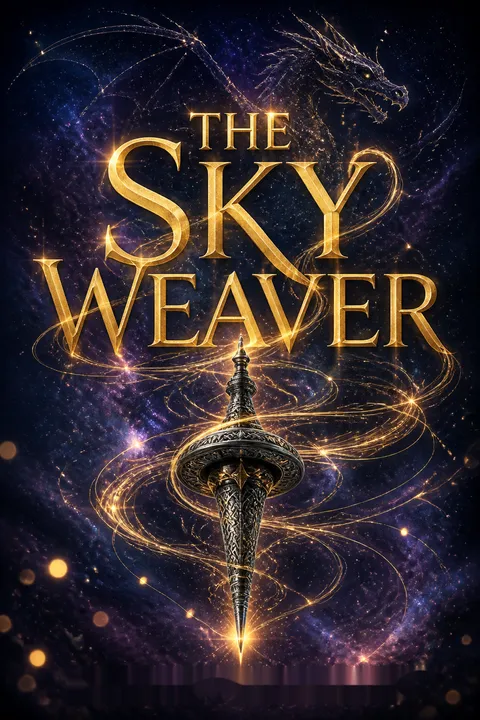
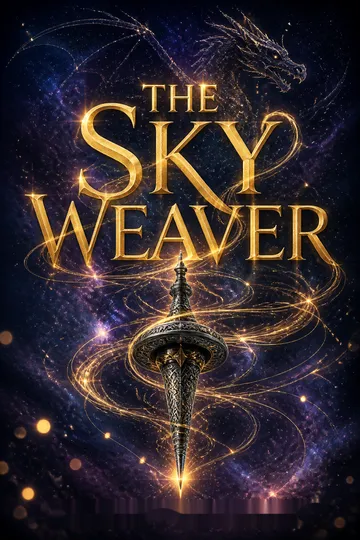
The Sky Weaver is the highly anticipated final installment in Kristen Ciccarelli's Iskari trilogy. Readers praise the book for its engaging plot, well-developed characters, and beautiful writing. Many consider it the best in the series, featuring a compelling f/f romance between Safire and Eris. The novel is lauded for its intricate world-building, mythology, and satisfying conclusion to the trilogy. While some found pacing issues, most readers were captivated by the story's mix of adventure, dragons, and emotional depth.
People Also Read






Characters
Eris
The crossing thiefEris is a quick-witted thief whose spindle lets her cross between the ordinary world and a hidden labyrinth. She survives by staying mobile, reading other people’s weaknesses, and refusing to let anyone mistake dependence for affection. Jemsin’s control has taught her to treat loyalty as a liability, while the loss of her childhood home has made invisibility feel safer than belonging. Her sharp humor and deliberate provocations conceal a more vulnerable need to be seen and chosen. Eris’s relationship with Safire tests the rules she has built around survival: whether she can care for someone without surrendering her freedom, and whether becoming better can mean something even when the past cannot be undone.
Safire
The king’s commandantSafire commands the army of her cousin Dax, the dragon king, and measures herself by how well she protects the people placed in her care. Her childhood under an abusive regime made discipline and vigilance essential forms of self-defense, but it also left her wary of touch and uncomfortable with needing comfort. She trusts rules because they promise a world less arbitrary than the one she survived. Eris unsettles that faith by exposing the violence behind respectable authority and by forcing Safire to decide when obedience becomes complicity. Safire is brave without being fearless, and her growth comes through choosing what she believes is right even when the choice costs her rank and approval.
Asha
The NamsaraAsha is Dax’s sister, the dragon rider known as the Namsara, and Safire’s cousin. Fierce, independent, and drawn to old stories, she is building a school to preserve knowledge and repair the bond between dragons and their riders. She trusts her instincts and resists being treated as someone who must be hidden for her own safety. Her loyalty to Safire is deep, but it does not make her abandon her own investigations or choices.
Dax
The dragon kingDax is Safire’s cousin and the ruler of Firgaard. He values loyalty, practical judgment, and the lives of people who depend on his decisions. His care for Roa and the starving scrublands shapes his diplomacy, sometimes pulling him toward compromise when Safire sees injustice. He respects Safire’s abilities and wants her counsel, but the pressure of leadership can narrow his view of what she is trying to protect.
Roa
The burdened queenRoa is Dax’s wife and queen, whose family and homeland are suffering from the White Harvest blight. Her grief over their hunger makes political promises intensely personal. She is compassionate but not passive, and she speaks up when Safire’s principles are dismissed or when a decision threatens the people she loves. Roa’s emotional endurance is tested by the need to accept help without allowing desperation to erase her judgment.
Torwin
Asha’s trusted companionTorwin travels with Asha, helps collect old stories, and carries the Skyweaver’s knife to the Star Isles. Thoughtful and observant, he is often more patient than Safire with people who have been frightened or hurt. He cares about dragons as individuals rather than weapons, and his relationship with Asha rests on shared curiosity and trust.
Jemsin
The pirate captainJemsin is a powerful pirate captain who uses rescue and protection as tools of ownership. He controls Eris through a debt and makes her responsible for keeping Kor obedient. His ability to read people does not make him empathetic; he treats loyalty as leverage and punishment as an ordinary cost of command. He is feared because his threats are usually backed by force.
Kor
Jemsin’s ambitious protégéKor is a pirate captain raised under Jemsin’s authority, but he wants power that belongs to him alone. He is strategic about winning a crew and quick to exploit a vulnerability, especially where Eris is concerned. His history of being abused has not made him gentle; instead, he is in danger of reproducing the coercion that shaped him.
Leandra
The island empressLeandra rules the Star Isles with a calm public manner and an army that enforces her laws. She presents herself as a protector and offers practical help to people beyond her islands, including the blighted scrublands. Her confidence in authority leaves little room for dissent, and she expects others to accept her precautions as necessary. She is most dangerous when compassion and control appear to be the same thing.
Crow
The shadow in the mazeCrow is a mysterious presence who haunts the labyrinth between worlds. He watches Eris for years without explaining himself, then begins to speak when her injuries and grief become impossible to ignore. His language is spare and his sadness runs deep. He seems to know more about the old stories than he is willing to reveal, and his actions suggest that even a frightening being can be changed by attachment.
Skye
A figure in island legendSkye is remembered in stories as a mortal girl whose life became entangled with a god. The legends disagree about what happened to her, but they preserve her connection to weaving, the sea, and the boundary between life and death. Her story gives the Star Isles a way to imagine both loss and hope, even when the official version leaves important truths out.
Day
Eris’s devoted guardianDay cares for Eris at the scrin and teaches her how to weave, identify useful plants, and pray when fear overwhelms her. He is gentle without being sentimental, offering reassurance through practical care and routine. His devotion helps give Eris a home and a moral inheritance, even as the danger surrounding her forces him to keep secrets.
Dagan
The scrin’s fisherman friendDagan is an old fisherman who traded with the scrin and remembers Eris as a child. His testimony is shaped by personal knowledge rather than official accounts, and he is willing to risk an old oath when he believes the truth can help. He embodies the importance of ordinary witnesses whose memories survive after powerful people rewrite events.
Sorrow
The wary white dragonSorrow is an ivory-scaled dragon with a broken horn, haunted by past abuse and deeply suspicious of humans. Safire approaches him with patience because she recognizes what fear can do to a person’s body and choices. His trust grows slowly, through repeated acts of restraint rather than force.
Kozu
The First DragonKozu is an enormous black dragon with a scar through one eye and a close bond with Asha. His size and age make him a powerful presence, but his relationship with Asha is also built on communication and mutual confidence. He represents the strength that comes from partnership rather than domination.
Kadenze
Jemsin’s summonerKadenze is an ancient, birdlike creature who serves Jemsin as a tracker and enforcer. Its blood-red eyes and ability to follow people across worlds make escape from the captain difficult. Kadenze is not merely a tool, however; its reactions suggest it recognizes powers older than the pirate hierarchy it serves.
Rain
Kor’s first mateRain is a red-haired pirate who serves as a first mate and helps Kor pursue Eris. She is practical, watchful, and capable of acting decisively when her crew is threatened.
Lila
A pirate in Kor’s crewLila is a strong member of Kor’s crew who helps guard Safire and Eris. She follows the group’s orders but remains alert to danger, especially during their passage through the wrecking grounds.
Raif
A young Lumina soldierRaif is a personable young soldier who escorts Safire through Axis and tells her about Skye’s Night. His friendly attention contrasts with the harsher conduct of some of his fellow Lumina, though he ultimately follows the system he serves.
Caspian
The empress’s captainCaspian commands the Lumina soldiers who enforce Leandra’s orders. He is disciplined and confident in his authority, treating the empress’s decisions as the law even when outsiders question them.
Atlas
A captive sailorAtlas is a prisoner aboard the human-trafficking ship who knows how its crew thinks because he has lived close to that world. He helps Safire organize the captives and contributes practical sailing knowledge to their escape.
Spark
Dax’s golden dragonSpark is Dax’s gentle yellow dragon, accustomed to responding to a rider’s commands. Safire borrows the dragon for her search, and Spark’s eagerness to fly contrasts with the restrictions placed on dragons in Axis.
Plot Devices
The Crossing Spindle
A key between worldsThe spindle lets its bearer draw a shining line and open a mist-filled crossing between the ordinary world and Across, a labyrinth between worlds. Eris uses it to escape locked rooms, travel between places, and make doors from woven materials connected to their destinations. The crossings can misfire if her attention is divided, and stardust steel prevents her from using it. The spindle is also a key with a history beyond Eris’s thieving, linking the hidden labyrinth to the old stories of the Skyweaver.
Stardust Steel
A cage that corrodesThe Lumina use stardust steel in cuffs and weapons. It eats into flesh over time and blocks Eris from crossing between worlds, making it both a method of punishment and a way to contain someone whose chief defense is escape. The cuffs turn a relatively small injury into a deadline, while their use against Eris reveals how the empress’s justice can become bodily destruction.
The Skyweaver’s Knife
A blade carrying a soulThe silver knife is treated as a dangerous artifact and is the reason Asha and Torwin travel to the Star Isles. Its glow and connection to the Skyweaver’s stories draw them toward the scrin and the old stones. The knife’s importance grows beyond its ability to cut souls: it becomes the object connecting Eris’s family history, the Shadow God’s imprisonment, and the final choice that can change the balance of power.
Scarp Thistles
A thief’s calling cardThe poisonous thistles grow on the Star Isles and leave a distinctive gray mark at Eris’s thefts. Their thorn poison can put a person to sleep, allowing Eris to evade guards or incapacitate someone without killing them. The plants also connect her present work to her childhood at the scrin, where she gathered them for dyeing. Their repeated use makes a simple calling card carry both danger and memory.
The Weaving Stories
History hidden in mythTapestries and oral legends preserve competing accounts of the Skyweaver, the Shadow God, and the sea. The stories seem at first to be cultural background, but their contradictions help Safire and Eris question the official version of the scrin’s destruction and Leandra’s rise. Weaving is also a practical magic: Eris turns woven objects into doors, while the Skyweaver’s craft is tied to souls and memory. The device links the novel’s plot mechanics to the struggle over who gets to tell history.
Iskari Series
About the Author
Other books by Kristen Ciccarelli



Download PDF
Download EPUB
.epub digital book format is ideal for reading ebooks on phones, tablets, and e-readers.








