

Key Takeaways
Read Sherlock Holmes as the meeting point of Doyle’s reason and wonder
Two inheritances collided. Arthur Conan Doyle grew up between an artistic Doyle family and his mother Mary’s devotion to history, ancestry, and romantic ideals. He became a medical student shaped by Edinburgh’s empirical culture, yet remained drawn to the supernatural and to the possibility of life beyond the senses. The biography presents this tension not as a phase but as the central problem of his life. Holmes embodies its rational side, while Doyle’s stories and spiritual investigations give voice to what reason alone could not settle.
A divided age, too. Doyle came of age after Darwin challenged religious certainties and new sciences promised to explain human behavior. His attempt to reconcile scientific inquiry with spiritual belief reflected a broader Victorian struggle. Holmes was not simply a tribute to rationality. He was one half of a debate Doyle kept having with himself.
What is striking is that a fictional detective can express a creator’s uncertainty without resolving it. Holmes’s confidence in observable evidence gives readers a reassuring method, while Doyle’s spiritual commitments reveal how incomplete that method felt to him. This resembles a familiar tension in modern psychology: people can value evidence while also seeking meaning that evidence cannot supply. The balance is intellectually productive, but it can blur the difference between a question worth investigating and a belief already desired.
Turn childhood instability into a practice of noticing and telling stories
Home offered no certainty. Doyle’s father, Charles, was gifted and affectionate, but alcoholism repeatedly made family life unsafe and unpredictable. His mother, Mary, became the emotional center of the household. She read constantly, recounted vivid historical tales, and taught her son to hold an audience through suspense. Around six, Arthur wrote a story about an adventurer and a tiger, then recognized the difficulty of rescuing characters from the danger he had created.
Imagination became refuge. Sent to boarding school at Stonyhurst, he missed home and struggled under strict discipline. Books and storytelling gave him escape, and he learned to entertain younger pupils with his own dramatic plots. The biography connects these early habits to his later appetite for adventure, mystery, and vivid observation, while also showing how a boy burdened by family worries learned to conceal his feelings.
The connection between instability and creative skill is plausible, but it should not be mistaken for a formula. Adversity can sharpen attention and make imaginative escape valuable, yet it can also constrain a person’s emotional life. Doyle’s childhood appears to have fostered both capacities: narrative invention and a habit of withholding distress. This combination helps explain a productive writer without romanticizing the cost. Creativity may be an adaptation to hardship, but hardship is not thereby redeemed.
Train observation through real cases, then keep inference open to correction
Medicine supplied the method. At Edinburgh University, Doyle encountered forensic medicine, toxicology, and clinicians who made diagnosis from small physical details. His most influential teacher, Joseph Bell, could infer aspects of a patient’s life from appearance and behavior. Doyle later acknowledged Bell as a model for Holmes. Medical professors such as Robert Christison also demonstrated how scientific examination of poisons and corpses could expose crime.
Experience supplied the material. Doyle worked in medical practices, served aboard an Arctic whaler, and traveled to West Africa. He observed people under pressure, unfamiliar landscapes, illness, and danger. These experiences fed stories about ships, explorers, and crimes. Holmes’s celebrated reasoning therefore grew from two sources: medical training and a reporter’s store of concrete encounters. The biography also notes that Doyle sometimes called this process deduction, though it more closely resembles choosing the likeliest explanation from incomplete clues.
The durable lesson is not that a brilliant observer can read a person perfectly. It is that disciplined attention generates better hypotheses. In contemporary science, abductive reasoning means selecting the explanation that best fits available evidence while remaining open to revision. Bell’s dramatic demonstrations made this process memorable, but his own conclusions could be wrong. Observation reduces guesswork; it does not abolish bias, uncertainty, or the need to check an inference against evidence.
Separate a famous character’s success from the work you most value
Holmes began as a gamble. Doyle wrote A Study in Scarlet while still trying to establish himself as a doctor and author. After several publishers refused it, Ward, Lock offered only twenty-five pounds and full copyright. The book introduced Holmes and Watson, but its success did not immediately make Doyle rich or secure. A later story sequence in the Strand Magazine brought wider fame, helped by striking illustrations and a format readers could enjoy one mystery at a time.
Fame had a price. Doyle repeatedly tried to kill Holmes because he wanted to write historical novels, especially The White Company, which he considered more substantial. Yet audience demand and generous magazine fees kept bringing the detective back. His career shows a creator negotiating with a character who had become both an artistic achievement and a commercial asset.
Doyle’s predicament anticipates the modern problem of creative branding: the work that builds an audience can narrow what that audience expects next. Commercial success is not a reliable measure of an artist’s own priorities, and resisting it can be financially costly. At the same time, readers are not merely obstacles. Their appetite helped Doyle refine Holmes into a durable figure. The tension is less a choice between integrity and commerce than a recurring negotiation between them.
Use celebrity to challenge injustice, while testing your own assumptions
Fame became leverage. Doyle used his reputation to campaign for George Edalji, a solicitor wrongly convicted of animal mutilations in Staffordshire. He exposed flaws in the case and helped secure Edalji’s release, though the official inquiry offered neither a full retraction nor compensation. He later pressed the case of Oscar Slater, whose murder conviction was eventually quashed after years of campaigning. His interventions could make neglected evidence visible to the public.
His causes were not consistent. Doyle defended Britain’s role in the Boer War and supported the empire, yet also attacked atrocities in the Congo and criticized the treatment of the Irish. His ideas about race, national duty, and imperial rule could sit uneasily beside his defense of individual justice. The biography portrays a sincere campaigner whose moral concern did not automatically free him from the prejudices of his time.
Celebrity can help reopen a case when institutions have stopped listening, as Doyle’s work for Edalji demonstrates. It can also distort justice if public influence substitutes for transparent procedure. Modern legal advocacy therefore asks two questions at once: who has been excluded from the process, and what evidence could change the judgment? Doyle’s record is valuable partly because it holds both sides in view. His courage mattered, but it did not make his politics uniformly humane or his conclusions infallible.
Recognize when honorable duty still leaves intimate damage behind
One marriage held a hidden imbalance. Doyle married Louise Hawkins in 1885. She supported his early career, and they had two children, Mary and Kingsley. In 1893 Louise was diagnosed with tuberculosis and lived for years with serious illness. Doyle cared about her comfort, but he had fallen in love with Jean Leckie and maintained that relationship while Louise was alive. He married Jean after Louise’s death in 1906, following a decade of waiting.
The family paid for the arrangement. Doyle’s surviving children from his first marriage felt pushed aside after he remarried. Mary, in particular, described distance and hurt, while the younger children were raised within Jean’s household. Doyle could be generous, protective, and deeply affectionate, yet still make choices that wounded those closest to him. The biography resists turning his personal life into either a romance or a simple moral verdict.
This story complicates the easy division between public virtue and private character. Doyle’s care for Louise did not erase the unequal emotional arrangement, and his later generosity toward relatives did not guarantee intimacy with his children. Family systems often preserve several truths at once: a caregiver may be devoted and self-interested, while dependents experience neglect despite material support. The biographical record also has gaps, so judgments about private motives should remain proportionate to what the surviving evidence can show.
Notice when grief turns investigation into a search for confirmation
Curiosity became commitment. Doyle first investigated spiritualism through table-rapping, séances, and thought-transference experiments. In 1887, a medium produced information about an author Doyle had privately considered reading. He treated this as proof that intelligence could exist beyond the body, despite his earlier skepticism and his own doubts about participants influencing the results. His father’s alcoholism and mental illness had already made him wonder what happened to a person’s inner self when the mind deteriorated.
Loss changed the stakes. During the First World War, Doyle’s brother Innes, son Kingsley, and other relatives and friends died. He shifted from studying spiritualism as an unusual phenomenon to preaching it as a new religious truth and source of comfort. He toured widely, arguing that the dead could communicate with the living. Mediums and private séances became part of family life, especially through Jean’s automatic writing.
Bereavement can make spiritual claims feel less like abstractions and more like urgent evidence. Research on grief recognizes that continuing bonds with the dead can help people preserve attachment and meaning. That psychological benefit does not establish that a message came from beyond the grave. Doyle’s experience shows how sincere inquiry can become less skeptical as emotional stakes rise. Compassion for the bereaved and careful standards for evidence need not compete, though his movement often treated doubt as hostility.
Let wartime losses change your priorities without mistaking comfort for proof
War altered Doyle’s public role. He recruited volunteers, wrote propaganda defending Britain’s entry into the war, and spent time at the front in France and Italy. He also tried to write a history of the conflict, though military authorities restricted access and later critics judged the result more patriotic than rigorous. The war’s losses were personal: his brother Innes died in 1919, and his son Kingsley died of pneumonia shortly before the Armistice.
Belief became a mission. Doyle described spiritualism as a direct message of hope at a time of mass death. He lectured, published The New Revelation and The Vital Message, and urged audiences to treat survival after death as knowledge rather than faith. The shift gave him purpose and gave many mourners comfort. It also made him increasingly suspicious of researchers who insisted on skeptical controls or questioned mediums.
War can produce what contemporary clinicians call moral injury: a rupture in a person’s sense of order, justice, and human worth. Doyle’s spiritualism offered a coherent answer to losses that seemed otherwise senseless. That answer deserves to be understood in its emotional context, not dismissed as mere credulity. Yet the more a belief promises relief, the more important independent verification becomes. A humane response can honor consolation while refusing to treat hope as a substitute for evidence.
Guard against certainty when loyalty becomes stronger than verification
The later crusade narrowed his judgment. In old age Doyle defended spirit photography and the alleged Cottingley fairy photographs, even though the images had been staged. He backed the medium Margery against critics, denounced Harry Houdini’s skepticism, and treated predictions from his spirit guide Pheneas as significant despite their repeated failure to come true. His defense of spiritualism increasingly placed loyalty to the movement above the cautious testing he once admired in science.
The old writer kept working. Doyle continued producing Holmes stories, including The Case-Book of Sherlock Holmes, while campaigning for spiritualism and helping overturn Oscar Slater’s conviction. His health declined, but he remained publicly active until his death in 1930. The contrast is telling: the man who created a detective celebrated for testing appearances became increasingly willing to trust claims because he believed the cause, and the people around it, deserved protection.
The tension is not simply that Doyle changed his mind. It is that the same virtues that powered his best work, loyalty, courage, and energetic curiosity, could become liabilities when evidence challenged a cherished cause. Contemporary research on motivated reasoning describes how people scrutinize opposing claims more harshly than supportive ones. Doyle’s late certainty offers a useful warning: intellectual integrity is tested most when doubt threatens belonging, consolation, or a life’s mission.
Analysis
Andrew Lycett’s biography is strongest when it treats Arthur Conan Doyle not as a straightforward genius behind Sherlock Holmes, but as a man repeatedly trying to reconcile incompatible selves. The physician wanted observable evidence. The imaginative writer needed mystery, romance, and movement. The spiritual seeker wanted a reality beyond matter. The public campaigner wanted to act decisively, whether for empire, justice, or the dead. Holmes emerged from these tensions, but Doyle never wanted his detective to become the whole story.
The book’s structure makes that conflict cumulative. Early family instability explains neither the adult nor the author by itself, but it helps show why stories became both pleasure and refuge. Medical training then supplied techniques of observation, while precarious income and magazine publishing turned those techniques into a popular form. Later, bereavement transformed spiritualism from a question to investigate into a mission to defend. The biography’s most revealing pattern is the way a strength changes under pressure: curiosity can become credulity, loyalty can become defensiveness, and public courage can coexist with private failures of care.
The result is more useful than either a celebration or a takedown. Doyle’s work for Edalji and Slater shows how a famous writer could make an institution reconsider evidence. His imperial certainty and his uneven treatment of his family show that moral courage is not a general-purpose virtue that automatically travels from one domain to another. The narrative also relies on letters, diaries, and family recollections that were selectively preserved, contested, or withheld. Its claims about private relationships and motives are therefore strongest when presented as interpretations rather than settled fact.
The final paradox is instructive: Doyle built Holmes around disciplined inference, but his own later life demonstrates how difficult it is to maintain that discipline when grief and identity are involved. His biography is not a warning against belief or ambition. It is a study in how to keep testing what one most wants to be true.
Review Summary
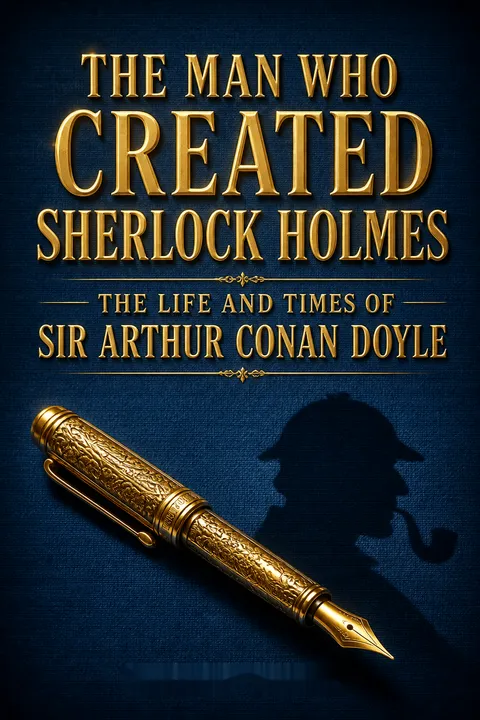
The Man Who Created Sherlock Holmes is a comprehensive but dense biography of Arthur Conan Doyle. Readers appreciate the thorough research and insights into Doyle's life, including his family, writing career, and interests beyond Holmes. However, many find the level of detail overwhelming and the writing style dry. Some praise the balanced portrayal of Doyle's complexities, while others criticize the lack of focus on his literary process. Overall, reviewers recommend it for dedicated Doyle fans but warn casual readers of its challenging nature.
People Also Read





Glossary
The Society for Psychical Research
Investigates paranormal claimsFounded in Britain in 1882, the Society for Psychical Research investigated reported phenomena such as telepathy, apparitions, and communication with the dead. Its members included scientists and scholars who differed sharply over how much evidence was needed and whether experiments could disturb the phenomena being studied. Doyle joined the Society, but increasingly distrusted its skeptical methods.
Phantasms of the Living
Study of apparitions and telepathyPublished in 1886 by researchers associated with the Society for Psychical Research, this large collection examined reports of people sensing or seeing someone who was distant, often around the time that person died. Frederic Myers used the evidence to argue for communication between minds without ordinary sensory contact and introduced the term telepathy.
telepathy
Mind-to-mind communicationA term introduced by Frederic Myers for the supposed transmission of information or feeling between people without the ordinary senses. The Society for Psychical Research used it to describe reports that seemed more systematic than traditional ghost stories. Doyle participated in experiments intended to test thought-transference and later regarded telepathy as evidence of capacities beyond conventional material explanation.
subliminal self
Hidden layer of personalityA concept developed by psychical researchers, especially Frederic Myers, to describe parts of personality that operate below ordinary awareness. Myers proposed that these less accessible mental processes could explain unusual experiences, including telepathy, and might offer evidence that personality continued beyond bodily death. Doyle found the idea useful in trying to connect psychology with his belief in a surviving soul.
psychometry
Reading an object’s pastA claimed psychic ability to learn about an object’s history by touching it. Doyle explored the idea in stories and discussions of paranormal phenomena, including a tale in which contact with an old artifact produces vivid impressions of an earlier event. Psychometry became one of several proposed ways to connect physical objects with memories or experiences beyond ordinary perception.
deduction
Inference from observed cluesThe term Sherlock Holmes uses for reasoning from small observations to conclusions about a person or event. Lycett notes that Holmes’s method is not strict deduction, which guarantees a conclusion from premises, but a form of inference that selects the explanation best supported by available clues. The distinction matters because even careful observation can lead to a mistaken hypothesis.
baritsu
Holmes’s escape techniqueThe name Arthur Conan Doyle gives to a Japanese form of wrestling that Sherlock Holmes says helped him escape Professor Moriarty at Reichenbach Falls. No established martial art by that exact name is identified in the biography. The term appears in Holmes’s fictional account of surviving his apparent death and returning to London.
spirit photography
Photographs claimed to show spiritsA practice in which photographs were said to capture the visible presence of spirits or other paranormal forms. Doyle supported some spirit photographers and believed images could provide evidence of survival after death. Critics, including magicians and psychical researchers, argued that such pictures could be produced through ordinary photographic techniques, concealed images, or substitution of plates.
Download PDF
Download EPUB
.epub digital book format is ideal for reading ebooks on phones, tablets, and e-readers.








