

Key Takeaways
Treat neurological disability as a changed world, not a vanished person
A symptom is not a biography. In these case histories, people lose particular ways of reading, recognizing, speaking, or seeing, but their remaining abilities and personalities vary enormously. Lilian Kallir, a pianist whose brain disease disrupted visual recognition, still made music with striking skill. Pat Hodkin, left with severe aphasia after a brain hemorrhage, remained sociable, opinionated, and eager to take part in life. Their stories resist the shortcut from diagnosis to destiny.
Look for the whole person. Sacks combines clinical observations with patients' accounts of what their altered worlds feel like. A medical label can identify an affected brain system, but it cannot by itself describe what a person understands, values, or can still do.
What's striking is the distance between a damaged function and a damaged identity. The cases make neurological diagnosis more precise, not less important, while warning against treating a diagnosis as a forecast of someone's inner life. This is also a lesson in how evidence is gathered: test results describe performance under particular conditions, while biography reveals what the person is trying to preserve. The hopeful stories should not become a new stereotype, however. Resilience is visible here, but it is not a duty every disabled person must perform to be recognized as fully human.
Build practical systems from the senses and skills that remain
Use surviving routes. Posterior cortical atrophy, or PCA, is a progressive disorder that primarily affects the brain's posterior visual regions. Early in her illness, Lilian could see fine detail but struggled to assemble it into recognizable words, faces, and objects. At home, she navigated by memorized locations, color, shape, smell, touch, and context. She knew where familiar kitchen tools belonged, identified spices by scent, and found products by their label colors.
Adaptation takes design. Her musical memory and ability to learn by ear helped sustain her work even as reading scores became difficult. When an object moved, or a familiar arrangement changed, her strategies could fail. The home visit revealed both her ingenuity and the importance of stable surroundings, clearer cues, and help offered with tact.
Lilian's routines show that independence is often built from an environment as much as from an individual skill. A fixed place for objects can function like an external memory; color markers can make distinctions available at a glance. These supports are not lesser forms of competence. They are intelligent redesigns of a task around the capacities that remain. Yet the case also shows the limits of celebrating clever workarounds: clutter, fatigue, and unexpected changes can undo them, while a person may reasonably resist adaptations that make disability conspicuous.
Protect a person's agency when speech stops being the channel
Aphasia is not an empty mind. It is a language disorder that can impair the ability to understand or express language, rather than erase a person's personality or every form of thought. After a hemorrhage, Pat could not reliably speak and understood little speech, but she communicated through gesture, expression, and mime. Her speech pathologist also discovered that she could recognize many individual written words.
Give communication tools. Pat carried a handmade word book organized by topics, people, and feelings. She could point to entries while using gestures to shape a conversation, and she became a lively presence among patients, staff, and family. Familiar songs sometimes helped release a few spoken words, but mime and the book gave her a more reliable way to express herself.
Pat's story shifts the question from whether someone can speak to whether others have made communication possible. A word book, patient attention, and time to interpret gesture change the social environment, not just the patient's performance. This challenges the assumption that conversation belongs only to fluent speakers. At the same time, her support depended on committed family members and a perceptive therapist. Her experience demonstrates what can work, not what every family or institution can supply without resources and training.
A broken skill can be rebuilt through a different sensory route
Reading has many steps. Alexia sine agraphia means an inability to read despite preserved ability to write. Writer Howard Engel developed it after a stroke: he could write sentences, yet the words on a page looked like unfamiliar symbols. Reading depends on several linked operations, from identifying letter shapes to connecting them with sounds and meaning, so a breakdown can interrupt reading without stopping writing.
Find another pathway. Engel practiced reading slowly, letter by letter, and used context and his vocabulary to infer words. He began tracing letters with his fingers and moving his tongue as he read, using movement to support recognition. A daily memory book helped him keep notes and remain a writer. He eventually completed novels, though revising them required laborious strategies and help from his editor.
Engel's adaptation is a vivid example of skills being distributed across perception, movement, memory, and language rather than housed in one isolated ability. Using touch and movement gives the brain additional clues when visual recognition falters. The story also distinguishes recovery from accommodation: his reading improved, but it remained slow and effortful. That distinction matters in rehabilitation, where success should include a person's meaningful goals, not only a return to the speed or ease they had before injury.
When faces fail, recruit voices, movement, context, and introductions
Face-blindness is real. Prosopagnosia is difficulty recognizing individual faces, sometimes present from birth and sometimes acquired after brain injury. Sacks describes how he could work with someone for years yet fail to identify them outside their usual setting. People with this difficulty may instead use a person's voice, gait, hairstyle, distinctive features, or the context in which they expect to meet.
Make the cue explicit. Sacks found that telling visitors about his difficulty and asking them to give their names prevented needless embarrassment. The condition is not rare: the book estimates that severe congenital prosopagnosia affects at least 2 percent of people, with a larger group performing markedly below average at face recognition. Some people who cannot identify a face can still read its expression.
The social cost of prosopagnosia comes partly from other people's interpretation: a missed greeting looks like indifference when the underlying recognition problem is invisible. Explicit introductions convert a private workaround into a shared social convention. This is a small example of accessibility improving interaction without requiring sophisticated technology. The statistics also make an important point about variation: face recognition is not a simple ability that everyone possesses equally, even when most people assume it is automatic.
Adult perception can change, but plasticity needs the right conditions
A closed window may reopen. Stereopsis is the perception of depth created by comparing the slightly different images received by the two eyes. Sue Barry had grown up cross-eyed and relied on other clues to judge distance. In her late forties, eye alignment and vision exercises helped her fuse the two images and begin experiencing depth directly, after decades without it.
Practice mattered. Objects seemed newly rounded and spaced apart, and she found practical tasks such as driving easier. Her stereo vision improved with continued exercises, while a long break brought a decline. The case challenges the simple claim that adult perception cannot change after childhood. It does not establish that the same outcome is possible for everyone, and the precise neural basis remained uncertain.
Sue's experience separates potential from performance: a capacity may be present but inaccessible until the conditions for using it improve. That is a powerful reason not to treat developmental windows as absolute deadlines. It is also important not to turn one extraordinary case into a promise. Her progress followed a specific combination of eye alignment, guided exercises, motivation, and persistence. The most defensible lesson is that limits deserve investigation, while claims about what any one person can recover require individual evidence.
There is no single inner picture of the world
Blindness does not produce one mental life. John Hull, who lost his sight as an adult, described his visual memories fading into what he called deep blindness. Zoltan Torey took the opposite path: he deliberately strengthened his visual imagery and used it to plan complex repairs. Sabriye Tenberken built vivid, sometimes imaginative scenes from language, memory, and other senses. Their accounts describe distinct ways of adapting, not stages everyone passes through.
Imagery varies widely. Some blind people retain visual images for decades; others rely more on touch, sound, or verbal description. Early blindness can also change how the brain processes information from other senses. The phrase mind's eye therefore names no single universal faculty: imagery, memory, and sensory experience differ between people, and may change after blindness.
The contrast among these accounts complicates the familiar idea that losing one sense simply strengthens the others. Adaptation can involve preserving an old mode, developing a new one, or letting a form of imagery recede. Personal history, age at onset, and deliberate practice all matter in the cases presented. The variety also makes first-person testimony indispensable: a description of blindness from one person cannot stand in for the experience of another.
Depth and space are experiences your brain actively constructs
Seeing is more than receiving light. Stereoscopic depth comes from the difference between the eyes' views, but the brain also uses perspective, overlap, shading, and movement. Sacks's own eye melanoma and its treatment damaged central vision in one eye, disrupting his depth perception. Familiar actions such as reaching for a glass or judging a step suddenly demanded attention, even when he knew what the object was.
The brain can fill gaps. After treatment left a large blind area, Sacks found that the visual system could supply plausible colors and repetitive patterns where information was missing. This completion was useful but not always accurate. Later, the loss of peripheral vision made people and objects appear suddenly on his right, showing that the brain's sense of space depends on signals it may not consciously notice.
These experiences make perception feel less like a camera and more like a working model, continuously assembled from multiple cues. That model is usually dependable enough to guide action, which is why its construction stays hidden. When cues conflict or disappear, the hidden labor becomes obvious. The filling-in examples also set a useful boundary: a convincing percept is not necessarily a faithful record. The brain can make experience coherent without making every detail true.
Test abilities in people's homes, not only in clinics
A test captures a setting. In a clinic, Lilian struggled to recognize drawings and objects. At home, Sacks saw her move through a crowded apartment, prepare tea, and manage familiar routines by relying on remembered locations and sensory clues. The contrast did not mean the clinical tests were useless; they exposed impairments that everyday routines could conceal.
Observe the person in action. Familiarity, context, and practiced strategies can make an ability look stronger in one place than another. An object out of position or a new environment could undo Lilian's confidence. Seeing her at home helped Sacks understand both what she could manage and where she was vulnerable, information a score in an unfamiliar room could not provide.
This is a practical argument for ecological validity: assessment should ask whether a measure reflects functioning in the environments where life actually happens. Standardized tests permit comparison and can isolate specific deficits, but they may remove the very cues people use to compensate. Home observation adds context rather than replacing formal assessment. The strongest picture of ability comes from holding both views together, while remembering that a familiar environment can support performance and conceal risks.
Analysis
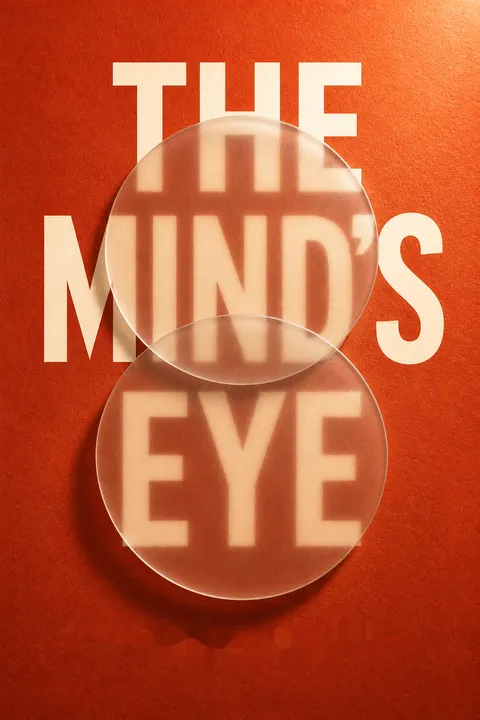
The Mind's Eye is a collection of clinical narratives organized around a question that is easy to underestimate: what does it mean to see, recognize, read, or communicate? Sacks answers by separating abilities that ordinary experience fuses together. Lilian can perceive visual details without recognizing a whole object. Engel can write without reading. Pat can understand and express herself through forms of communication that are not ordinary speech. These are not curiosities at the edge of neurology. They reveal how many distinct operations are hidden inside apparently simple acts.
The book's strongest method is to move between a patient's report, a clinical examination, and observation in daily life. Each perspective corrects the others. A test can identify a specific impairment, but an unstructured visit can reveal strategies the test does not measure. A patient's description supplies the felt quality that neither scan nor checklist can recover. The result is a model of clinical knowledge that treats narrative as evidence, while still placing it beside examination and neuroscience.
The stories also resist a single theory of adaptation. Some people recruit memory, movement, touch, music, or social support. Some gain a new capacity; others find a way to live with a lasting loss. The accounts of blindness make this especially clear: imagery can fade, intensify, or remain vivid. Plasticity is real in these stories, but it is not a universal cure, and individual success should not be used to judge those who adapt differently.
That qualification matters because the book's courage and ingenuity can invite an overly neat moral: every deficit contains a hidden gift. Sacks's cases support a more careful conclusion. People can build meaningful lives through surviving capacities, creative strategies, and relationships, but those adaptations have costs and depend on circumstances. Respect begins not by demanding triumph, but by asking what this particular person experiences, needs, and can still do.
Review Summary
The Mind's Eye explores neurological disorders affecting vision and perception through fascinating case studies. Readers praised Sacks' compassionate approach and engaging writing style. Many found the personal chapter about his own vision loss particularly moving. Some felt certain sections were too technical or lengthy. Overall, reviewers appreciated the insights into brain function and human adaptability, though opinions varied on the book's pacing and depth. Most recommended it for those interested in neuroscience and Sacks' work.
People Also Read


Glossary
Posterior cortical atrophy
Progressive damage to posterior cortexA progressive disorder that primarily affects the posterior parts of the brain, especially regions involved in visual processing. Basic visual abilities such as detecting color or movement may remain while complex tasks, including reading, recognizing faces, identifying objects, or navigating, become difficult. The term describes the main location of brain damage, not necessarily its underlying disease cause.
Visual agnosia
Failure to recognize by sightA disorder in which a person has difficulty recognizing or identifying what they see, despite being able to receive visual information. A person may perceive an object's shape, color, or parts without identifying the object as a whole. Visual agnosia can affect broad categories of objects or more specific kinds of recognition, including faces, places, or written symbols.
Alexia sine agraphia
Reading loss with writing preservedA neurological condition in which a person loses the ability to read while retaining the ability to write. The separation shows that reading and writing are not a single indivisible skill. A person may produce written words fluently but be unable to recognize those same words on a page, because reading relies on visual recognition processes that can be separately disrupted.
Aphasia
Disruption of language abilitiesA disorder of language caused by brain damage, affecting expression, comprehension, or both. It is not simply an inability to speak: a person may also have trouble understanding speech, reading, or writing. Aphasia does not by itself establish what a person can think, feel, or communicate through other means, such as gesture, mime, or music.
Prosopagnosia
Difficulty recognizing individual facesA condition in which a person has difficulty identifying individual people by their faces. It may be lifelong or acquired after brain injury. Some people use other cues, including voice, gait, distinctive features, or context, to recognize others. Face recognition can be impaired even when a person can see facial features or read expressions.
Stereopsis
Depth from two-eye differencesA form of depth perception produced when the brain compares the slightly different images received by the two eyes. It gives a direct visual experience of depth, distinct from judging distance through perspective, overlap, shading, or movement. Stereopsis depends on the eyes working together and on neural systems able to interpret the differences between their views.
Sensory substitution
One sense conveying another's informationA method of presenting information normally received through one sense by using another sense instead. In the book's examples, a camera can translate visual information into patterned stimulation on the tongue, which a blind user learns to interpret. The brain's adaptability allows such signals to support useful spatial judgments and visual-like behavior.
Deep blindness
A nonvisual mode of experienceJohn Hull's term for a state in which blindness involves more than absent sight. Visual memories and imagery fade, and concepts tied to seeing, such as visible appearance or facing a direction, lose their former meaning. Hull described this as a distinct way of being, but other blind people report retaining vivid visual imagery, so it is not a universal experience.
Charles Bonnet syndrome
Hallucinations linked to impaired visionVisual hallucinations that occur in association with visual impairment. They may consist of patterns, lights, faces, figures, or scenes, and do not necessarily indicate a psychiatric illness. The book discusses how reduced visual input can leave the visual system unusually active, producing images without an external visual source.
Visual word form area
Brain region involved in word recognitionA region in the brain's visual system that responds to written letter and word forms. It is a key part of reading, but it does not work alone: recognition connects with sound, language, memory, and meaning. Damage to relevant visual pathways can cause alexia, while intact writing ability may remain.
FAQ
What's The Mind's Eye about?
- Exploration of Perception Disorders: Oliver Sacks explores neurological conditions affecting perception, focusing on visual disorders like prosopagnosia and alexia.
- Personal Narratives: The book combines clinical observations with personal stories, highlighting the impact of these conditions on individuals' lives.
- Interplay of Science and Art: Sacks blends scientific inquiry with storytelling to illustrate how neurological conditions affect perception and identity.
Why should I read The Mind's Eye?
- Insight into Human Experience: Gain a unique perspective on how neurological disorders shape identity and perception.
- Engaging Case Studies: Sacks' storytelling makes complex neurological concepts accessible and emotionally resonant.
- Broader Implications: The book prompts reflection on perception, consciousness, and challenges conventional views of normality and disability.
What are the key takeaways of The Mind's Eye?
- Understanding of Visual Disorders: Highlights disorders like prosopagnosia and alexia, emphasizing unique adaptations and coping strategies.
- Neuroplasticity and Adaptation: Illustrates the brain's ability to adapt, showcasing resilience in individuals facing neurological challenges.
- Interconnectedness of Mind and Body: Emphasizes how perceptions shape experiences, fostering empathy and awareness.
What are the best quotes from The Mind's Eye and what do they mean?
- “The mind is a complex and intricate system.”: Highlights the complexity of the brain, requiring a multifaceted understanding.
- “We are all, in some way, blind.”: Suggests everyone has perceptual limitations, encouraging reflection on biases.
- “The brain is not a static organ.”: Emphasizes the brain's plasticity and potential for change and adaptation.
What is prosopagnosia as described in The Mind's Eye?
- Definition of Prosopagnosia: A neurological condition causing difficulty in recognizing faces, often relying on other cues like voice.
- Impact on Daily Life: Affects social interactions and relationships, leading to the development of coping strategies.
- Case Studies: Includes narratives of individuals with prosopagnosia, highlighting emotional and psychological challenges.
How does Sacks illustrate the concept of neuroplasticity in The Mind's Eye?
- Brain's Ability to Adapt: Discusses neuroplasticity, the brain's capacity to reorganize in response to change.
- Real-Life Examples: Patient narratives show how individuals find alternative ways to navigate their environments.
- Encouragement of Resilience: Neuroplasticity serves as a hopeful message, emphasizing recovery and adaptation possibilities.
What is alexia and how is it portrayed in The Mind's Eye?
- Definition of Alexia: A condition impairing reading ability while leaving writing intact, causing difficulty in comprehending text.
- Patient Experiences: Stories illustrate frustrations and adaptations, like sounding out letters individually.
- Connection to Identity: Explores how alexia affects communication and personal identity, leading to isolation and frustration.
Who is "Stereo Sue" in The Mind's Eye?
- Case Study Subject: A woman who gained stereoscopic vision after years of being stereo-blind through vision therapy.
- Transformation of Perception: Her journey illustrates the brain's plasticity and newfound ability to perceive depth.
- Emotional Impact: Highlights the joy and confusion accompanying significant perceptual changes.
What is the significance of stereoscopic vision in The Mind's Eye?
- Depth Perception: Allows individuals to perceive depth and spatial relationships, crucial for navigation.
- Personal Narratives: Stories like Stereo Sue's illustrate dramatic changes in world experience through stereoscopic vision.
- Neuroscientific Implications: Discusses how the brain processes visual information and potential recovery in visual impairment cases.
How does Oliver Sacks approach the topic of blindness in The Mind's Eye?
- Empathetic Storytelling: Combines clinical observations with personal narratives for a compassionate portrayal.
- Scientific Exploration: Integrates neurological research with personal experiences for a comprehensive view.
- Philosophical Reflections: Prompts consideration of perception, consciousness, and reality through altered vision experiences.
What methods does Sacks discuss for adapting to vision loss in The Mind's Eye?
- Vision Therapy: Highlights its effectiveness in regaining or improving visual capabilities.
- Sensory Substitution: Discusses how other senses compensate for vision loss, enhancing auditory and tactile perceptions.
- Cognitive Strategies: Emphasizes mental imagery and visualization techniques for navigating the world despite impairments.
How does The Mind's Eye address the concept of visual imagery?
- Role of Visual Imagery: Explores how it can persist after sight loss, with vivid mental pictures of past experiences.
- Variability Among Individuals: Illustrates differences in visualization abilities, with some retaining strong internal representations.
- Neuroscientific Basis: Discusses the brain's mechanisms for visual imagery, suggesting the visual cortex remains active even in blindness.
About the Author



Download PDF
Download EPUB
.epub digital book format is ideal for reading ebooks on phones, tablets, and e-readers.








