

Key Takeaways
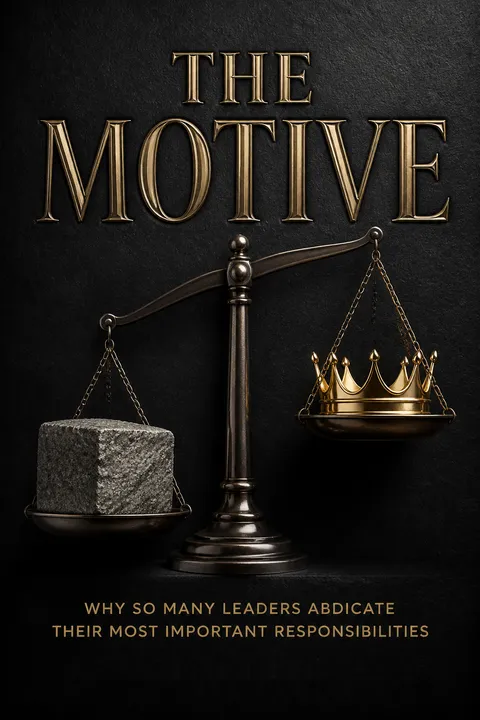
Lead for the people depending on you, not the rewards awaiting you.
Two motives, different jobs. Lencioni distinguishes reward-centered leadership, where a person treats the role as a payoff for past effort, from responsibility-centered leadership, where the role means serving those who depend on the leader. Status, money, and power can be rewards. So can the chance to spend every day on personally enjoyable work. The danger is not wanting recognition; it is letting personal preference decide which duties count.
The fable makes the cost visible. Shay Davis, a newly promoted security-company CEO, likes deal-making and marketing but avoids managing his team and running useful meetings. Liam Alcott, a rival CEO, points out that Shay is doing the work he enjoys, not the work the organization needs. Neither motive describes anyone perfectly, but one tends to dominate daily choices.
The useful distinction is behavioral, not a test of private virtue. A leader can sincerely care about employees and still make choices that protect personal comfort at their expense. That makes the framework practical: examine which duties repeatedly go undone, rather than asking whether the leader considers themselves a good person. There is a nuance, though. Responsibility should not mean limitless self-sacrifice or treating exhaustion as proof of commitment. The stronger standard is whether a leader accepts accountability for essential work and uses authority to help others succeed.
Choose leadership by its daily work, not its title or status.
Inspect the verbs. Liam asks Shay to describe what he actually does to help the company. Shay names finance, marketing, board relations, customer deals, and management. When asked which tasks he enjoys most, his preferences reveal how much he has shaped the role around his strengths and interests. Liam says the CEO's distinctive work is leading and managing the organization, not personally running every department.
A title can conceal a mismatch. In their discussion, Liam describes asking a hypothetical hundred CEOs to name their main daily activities and receiving about thirty-five substantially different answers. The point is not that every CEO must use the same calendar. It is that prestige can make people pursue a job without considering its actual duties. Dani, Shay's wife, recalls declining a principal role because she preferred teaching to managing teachers.
This is a useful antidote to career decisions driven by the next rung of a ladder. The same distinction applies to other professions: loving classroom teaching does not automatically mean loving school administration. Yet job descriptions are not fixed laws. CEOs sometimes need to step into sales, finance, or operations during unusual moments. The better diagnostic is whether these interventions support the leadership system or replace it. A calendar reveals preferences, but the quality of delegation and the needs of the organization give those preferences meaning.
Coach accomplished executives before a crisis exposes what they missed.
Experience does not eliminate the need for management. Shay believes senior executives should manage themselves because they are seasoned professionals. But he also admits that he is often surprised when a problem gets serious, then jumps in to take over. Liam argues for a different approach: set direction with each executive, understand progress, surface obstacles early, and help the executive improve. That is management, not automatically micromanagement.
The duty travels down the org chart. A CEO also needs to ensure that direct reports manage their own teams. Otherwise, neglect at the top can multiply below it. Liam compares executives to elite athletes, who still benefit from coaching. The relevant question is not whether an employee is old enough or experienced enough to need guidance. It is whether the work is aligned and small problems are visible before they grow.
The distinction between oversight and micromanagement depends on purpose and method. Clear expectations, timely questions, and coaching can increase autonomy by preventing surprise interventions. Constant second-guessing can do the opposite, shrinking an employee's room to act. A healthy manager therefore asks about direction, risks, and support, not merely status. The book is strongest when it treats management as ongoing coordination. Its claim becomes less convincing if applied as permission for a leader to intrude in every decision or assume that only the CEO can judge what competent work looks like.
Make team-building a CEO's operating discipline, not an annual outing.
The work is in the relationships. Shay points to an annual event where executives bond through activities. Liam distinguishes that from the ongoing task of helping leaders speak honestly, disagree productively, and address behavior that damages collaboration. A pleasant retreat may create good memories, but it cannot substitute for resolving everyday mistrust or politics.
The leader must own the process. Lencioni argues that team development cannot simply be handed to human resources. If executives do not see the CEO taking it seriously, they are unlikely to treat it as central work. Shay's CFO describes meetings where each executive gives an update, but the group finds the routine tedious and looks for excuses to miss it. That signals more than a scheduling problem: the team is not being developed into a group that can work through shared issues.
Team cohesion is not a mood, and an enjoyable event is not evidence of trust. The practical test is whether people can surface disagreements that affect shared results without turning them into personal battles. That requires the leader to model candor and protect fair discussion, not demand artificial harmony. The framework also guards against a familiar organizational mistake: labeling interpersonal work as soft while treating poor coordination as inevitable. Still, team-building should remain tied to real work. Rituals that never improve decisions, accountability, or cooperation can become another form of theater.
Address small behavior problems while they are still small.
Silence has a cost. Shay knows that his CFO Jackie is blunt and frustrates colleagues, but he has not given her clear, direct feedback. Liam says that if her behavior makes it harder for the team to cooperate, it belongs in a management conversation, even if she delivers strong financial results. He also gives examples from his own company, including asking a sales executive to stop humming during meetings because it distracted colleagues.
Accountability can be humane. Lencioni calls Alan Mulally's approach at Ford and Boeing joyful accountability: a leader explains clearly what must change, treats the person with respect, and makes the consequences plain. Some people improve; others choose to leave. Avoiding a conversation may spare the leader immediate discomfort, but can leave the employee and colleagues dealing with a larger problem later.
The idea is powerful because feedback can be an act of respect: it gives someone a fair chance to understand the effect of their behavior. The emphasis on small issues also makes correction less dramatic and more specific. But not every irritation warrants intervention. Leaders need to separate a genuine obstacle to collaboration from personal taste, cultural difference, or a harmless quirk. Accountability works best when expectations are relevant, consistent, and explained. Without those safeguards, the language of directness can disguise arbitrary control rather than responsible leadership.
Run meetings as decision-making work, not calendar punishment.
Meetings shape the organization. Lencioni treats meetings as the place where leaders debate strategy, budgets, hiring, and other consequential choices. If the CEO regards them as tedious chores, the team is likely to receive unfocused conversations and weak decisions. Shay's weekly executive meeting consists largely of financial updates and reports, and even the executives find it dull. His habit of trying to minimize meetings has become part of the problem.
The standard spreads. Liam and consultant Amy challenge Shay to take responsibility for making meetings engaging and useful. A CEO cannot outsource that responsibility and expect the rest of the organization to value its own meetings. The point is not that every meeting should be entertaining. It is that leaders should design discussions around the decisions and disagreements the team actually needs to resolve.
Meetings are an unusually visible form of leadership: participants can see whether a leader listens, focuses attention, handles disagreement, and closes decisions. They also expose the quality of the organization's information flow. A meeting that feels boring may be a symptom of unclear purpose, passive participants, or decisions made elsewhere. At the same time, more meetings are not automatically better. The useful standard is whether the conversation does work that cannot be done as well through another channel, and whether the people in the room leave with greater clarity.
Repeat purpose and priorities until the organization can act on them.
Communication is repetition, not announcement. Shay thinks a yearly kickoff, a recorded update, quarterly reports, and occasional office visits amount to adequate communication. Amy explains that the CEO has another responsibility: keep reminding employees what the organization is trying to do, why it matters, and how their work connects. Lencioni cites studies suggesting employees may need to hear a message seven times before believing leaders are serious about it.
The role has a name. Amy calls the CEO a chief reminding officer, or CRO. This is not a license to repeat words mechanically. Leaders can use meetings, onboarding, visits, letters, and stories to keep fundamental priorities in view. Lencioni points to Southwest CEO Gary Kelly and Ford CEO Alan Mulally as leaders who returned to core messages rather than constantly replacing them with new themes.
Repetition is often mistaken for lack of originality, but organizational understanding is not created by a single polished announcement. Employees encounter messages amid competing demands, and repetition gives them chances to connect strategy to local decisions. The key is consistency with adaptation: the central idea stays stable while examples and explanations reflect different teams and moments. There is a risk of turning reminders into slogans, however. Communication only works when leaders' resource choices and behavior match the message. Otherwise, repetition can make the gap between stated priorities and lived priorities even more obvious.
Step into the role that fits your strengths, even if it means stepping down.
A promotion is not always progress. After Liam helps Shay see how much of the CEO role he has avoided, Shay reconsiders an acquisition he had been eager to pursue. In a meeting about the deal, he proposes that Liam lead the combined company and asks to be considered for marketing or strategy. Liam warns that Shay would still need to manage well in any senior role. Shay accepts that challenge.
Fit is about the work. The story does not portray changing roles as failure. Shay had built his identity around becoming a CEO, but he is more energized by work closer to his abilities and interests. After the merger, he tells Dani that he does not want the top title again, though he may one day be ready to do the work it requires. The distinction gives him a path to grow without chasing status for its own sake.
This resolution usefully separates ambition from rank. A person can contribute more by choosing a role that fits their strengths than by holding the most prestigious title available. It also makes leadership development concrete: Shay does not merely promise to improve, but accepts a role where he can learn under a leader who expects management responsibility. The story is unusually tidy, as fables often are. In real organizations, demotion can carry financial, political, or reputational costs. The principle still holds, but a role change needs honest discussion about authority, expectations, and the person's genuine willingness to do the new work.
Watch for self-interest disguised as harmless preference or fatigue.
Comfort can look innocent. Lencioni warns that reward-centered leadership is not always driven by obvious vanity or power. A leader may simply prefer entertaining projects and avoid tedious duties, such as difficult conversations or repeated employee communication. Shay initially defends his approach by pointing to deal-making and the work he enjoys. Liam's challenge is that valuable strengths do not cancel out duties only the CEO can perform.
Good motives need maintenance. The book says no leader is purely responsibility-centered. Praise, fatigue, and flattery can gradually make a leader less receptive to criticism. Lencioni advises leaders to notice which responsibilities they avoid and to surround themselves with people willing to tell them the truth. A pattern of omissions may reveal more than a leader's public claims about serving the organization.
This is a compelling account of how self-interest can hide inside plausible preferences. The leader need not be greedy; simply choosing the interesting work can still leave vital needs unmet. A useful safeguard is to ask trusted colleagues what they experience, because a leader's self-assessment is shaped by the authority they hold. Yet omissions are clues, not proof of a flawed motive. Heavy workloads, unclear governance, or competing obligations can also explain what goes undone. The diagnosis should prompt inquiry and correction, not become a moral label that discourages people from raising constraints.
Analysis
The book's central move is to treat leadership failure as a problem of motive before it is a problem of technique. Shay is not portrayed as incompetent: he understands marketing, can negotiate, and works hard. His failure is more revealing. He assumes that promotion entitles him to choose the parts of the job he enjoys. Liam's history gives that claim narrative weight: a technically capable CEO loses his first company to a less experienced rival whose advantage, in the fable, is leadership and management. The lesson is not that expertise is useless, but that expertise does not substitute for the work attached to authority.
The five recurring omissions make the argument unusually actionable. Team development, direct management, uncomfortable conversations, effective meetings, and persistent communication are not glamorous duties, but they are mechanisms through which priorities and standards travel. Together they describe a system: meetings reveal and resolve issues, managers guide execution, candid conversations correct behavior, team development enables disagreement, and repetition keeps decisions aligned. Neglect one area and the others become harder to sustain.
The framework's sharpest insight is also its main risk. It can tempt readers to explain every leadership gap as selfishness. Organizations differ, and some decisions properly belong to executives, boards, or specialized functions. Even a leader committed to service can overreach, confuse personal preference with a standard, or exhaust a team through excessive intervention. Responsibility therefore requires judgment as well as willingness. The book's strongest practical test is not whether a leader enjoys sacrifice, but whether essential work is clear, owned, and done.
Shay's choice to seek a role in marketing or strategy rather than cling to the CEO title gives the fable a valuable ending. Leadership is not the only meaningful form of contribution, and a promotion can expose a mismatch rather than confirm readiness. The deeper measure is whether a person accepts the duties that come with authority, or honestly chooses work whose demands fit better. That distinction matters beyond business: institutions inherit the motives their leaders model, and employees learn what leadership means by observing what leaders consistently do and avoid.
Review Summary
The Motive is highly rated by readers for its concise yet impactful message about leadership motives. Many praise Lencioni's storytelling approach and practical insights. The book contrasts reward-centered and responsibility-centered leadership, emphasizing the importance of embracing difficult tasks and serving others. While some find the fable format cheesy, most appreciate the valuable lessons. Readers highlight the book's applicability to various leadership roles and its potential to inspire positive change in management practices.
People Also Read









Glossary
Reward-centered leadership
Leadership as personal rewardA motive for leadership in which the role is treated as a payoff for prior effort, status, money, power, or personal enjoyment. Because the leader expects the job to be rewarding and convenient, they may avoid duties that feel tedious, uncomfortable, or unrelated to their preferred work, even when the organization needs them.
Responsibility-centered leadership
Leadership as service responsibilityA motive for leadership in which holding authority means accepting responsibility for the people and organization being led. The leader expects difficult, mundane, or uncomfortable work to be part of the role, rather than assuming that promotion grants freedom to choose only enjoyable tasks. The book treats this as the valid basis for leadership.
Chief executing officer
CEO focused on doing the workLiam Alcott's rephrasing of CEO, changing the emphasis from being an executive to executing the responsibilities of the role. The term highlights leadership as active work, particularly managing and leading the team, rather than simply holding a prestigious title or personally performing preferred functional tasks.
Chief reminding officer
Leader who repeats core messagesAmy Stirling's term for the CEO's responsibility to keep employees informed and aligned through repeated communication. The leader continually reinforces the organization's purpose, strategy, values, and priorities through different channels and examples, because a single announcement rarely creates shared understanding or sustained focus.
Joyful accountability
Respectful, clear correctionLencioni's description of Alan Mulally's approach to confronting employees about behavior or performance. The leader states what needs to change, communicates the consequences honestly, and treats the person with respect rather than hostility or evasion. The employee can choose to improve or leave, while the leader remains responsible for protecting the organization.
The Five Omissions of Reward-Centered Leaders
Five neglected leadership dutiesLencioni's grouping of responsibilities that leaders often avoid when they expect leadership to be personally rewarding: developing the leadership team, managing direct reports and ensuring they manage others, having difficult conversations, running effective meetings, and communicating key messages repeatedly. The list is presented as a diagnostic of common neglect, not as a complete inventory of leadership responsibilities.
FAQ
What's "The Motive" about?
- Leadership Fable: "The Motive" by Patrick Lencioni is a leadership fable that explores why many leaders fail to fulfill their most important responsibilities.
- Two Leadership Motives: The book delves into the two fundamental motives for leadership: reward-centered and responsibility-centered.
- Consequences of Motives: It highlights how these motives impact leaders' behaviors and the success of their organizations.
- Practical Guidance: Through a narrative, Lencioni provides practical advice on how leaders can shift their motives to better serve their teams and organizations.
Why should I read "The Motive"?
- Understand Leadership Failures: The book offers insights into why leaders often neglect their core responsibilities, which can be crucial for anyone in or aspiring to leadership roles.
- Improve Leadership Skills: It provides actionable advice on how to become a more effective leader by focusing on responsibility rather than rewards.
- Engaging Storytelling: Lencioni uses a fable format, making complex leadership concepts accessible and engaging.
- Broader Impact: Understanding the motives behind leadership can lead to healthier organizations and more fulfilled employees.
What are the key takeaways of "The Motive"?
- Two Motives: Leaders are driven by either a reward-centered or responsibility-centered motive, with the latter being more effective.
- Five Omissions: Reward-centered leaders often neglect team development, managing subordinates, having difficult conversations, running effective meetings, and constant communication.
- Leadership as Responsibility: Effective leadership is about embracing the difficult and necessary tasks that come with the role.
- Self-Reflection: Leaders should regularly assess their motives and adjust their behaviors to better serve their organizations.
What are the two leadership motives discussed in "The Motive"?
- Reward-Centered Leadership: This motive sees leadership as a reward for hard work, focusing on personal benefits like status and power.
- Responsibility-Centered Leadership: This motive views leadership as a duty to serve others, accepting the challenges and sacrifices involved.
- Impact on Behavior: Reward-centered leaders avoid unpleasant tasks, while responsibility-centered leaders embrace them for the organization's benefit.
- Long-Term Success: Responsibility-centered leaders are more likely to achieve sustained success and organizational health.
What are the five omissions of reward-centered leaders according to "The Motive"?
- Team Development: Reward-centered leaders often delegate or ignore the task of building a cohesive leadership team.
- Managing Subordinates: They may avoid managing their direct reports, leading to misalignment and underperformance.
- Difficult Conversations: These leaders tend to shy away from addressing uncomfortable issues, which can fester and harm the organization.
- Effective Meetings: They often tolerate ineffective meetings, resulting in poor decision-making and lack of engagement.
- Constant Communication: Reward-centered leaders underestimate the need for repetitive communication, leading to confusion and misalignment.
How does "The Motive" define responsibility-centered leadership?
- Leadership as Duty: Responsibility-centered leadership is about serving others and doing what is necessary for the organization's success.
- Embracing Challenges: Leaders with this motive accept the difficult and often thankless tasks that come with their role.
- Focus on Others: They prioritize the needs of their team and organization over personal gain.
- Long-Term Impact: This approach leads to healthier organizations and more engaged employees.
What practical advice does "The Motive" offer for leaders?
- Self-Assessment: Leaders should regularly evaluate their motives and be honest about their reasons for leading.
- Embrace Discomfort: Accept that leadership involves difficult tasks and conversations, and tackle them head-on.
- Prioritize Team Development: Actively work on building a cohesive and effective leadership team.
- Improve Meetings: Focus on making meetings engaging and productive to enhance decision-making and alignment.
What is the significance of meetings in "The Motive"?
- Central to Leadership: Meetings are where critical decisions are made, making them a core responsibility of leaders.
- Common Neglect: Many leaders see meetings as tedious, leading to ineffective decision-making and disengagement.
- Opportunity for Improvement: By improving meetings, leaders can significantly enhance organizational performance.
- Reflects Leadership Quality: The quality of a leader's meetings often reflects their overall effectiveness.
How does "The Motive" address communication in leadership?
- Repetition is Key: Leaders must communicate important messages repeatedly to ensure understanding and alignment.
- Beyond Information: Communication is about engaging employees emotionally and behaviorally, not just sharing information.
- Role of the CRO: Leaders should see themselves as Chief Reminding Officers, constantly reinforcing key messages.
- Avoiding Misalignment: Without constant communication, organizations risk confusion and misalignment.
What are the best quotes from "The Motive" and what do they mean?
- "Leadership is a responsibility, not a reward." This quote encapsulates the book's central theme that leadership should be about serving others, not personal gain.
- "Meetings are the setting, the arena, the moment when the most important discussions and decisions take place." It highlights the critical role of meetings in effective leadership and decision-making.
- "The best leaders are CROs—chief reminding officers." This emphasizes the importance of constant communication and reinforcement of key messages by leaders.
- "Avoiding difficult conversations is an act of selfishness." It underscores the necessity of addressing uncomfortable issues for the health of the organization.
How does "The Motive" suggest leaders handle difficult conversations?
- Confront Issues Quickly: Leaders should address difficult issues promptly to prevent them from escalating.
- Clarity and Charity: Approach conversations with clear intentions and a focus on helping the individual improve.
- Joyful Accountability: Encourage accountability in a positive manner, making it clear that change is necessary for continued success.
- Selflessness: Recognize that avoiding these conversations is often about personal discomfort rather than concern for the other person.
What is the role of self-reflection in "The Motive"?
- Assess Motives: Leaders should regularly reflect on their reasons for leading and ensure they align with responsibility-centered motives.
- Identify Omissions: Self-reflection helps leaders recognize areas they may be neglecting, such as team development or communication.
- Continuous Improvement: By understanding their motives, leaders can make conscious efforts to improve their effectiveness.
- Prevent Complacency: Regular reflection prevents leaders from becoming complacent and ensures they remain focused on serving their organization.
About the Author
Other books by Patrick Lencioni






Download PDF
Download EPUB
.epub digital book format is ideal for reading ebooks on phones, tablets, and e-readers.








