

Plot Summary
A Balloon Over the Pacific
In March 1865, Union engineer Cyrus Harding, reporter Gideon Spilett, servant Neb, sailor Pencroft, and teenage Herbert Brown escape Confederate-held Richmond aboard a balloon caught in a hurricane. Top, Harding’s dog, follows them into the air. As the balloon sinks over the Pacific, they throw away their supplies, then even cut loose the car to keep it aloft.
The wreckage finally reaches an unknown shore, but a wave sweeps Harding and Top away. The four others land alive, exhausted and without tools, food, or any way to know where the storm has carried them. Their daring escape has traded captivity for a wilderness in which survival is not yet assured.
The escape begins as a deliberate act of political allegiance, but the storm strips away the prisoners’ control almost at once. Each discarded possession makes survival more likely while narrowing the world they can rebuild. Their arrival without Harding fractures the group at the precise moment when the leader’s practical knowledge seems most necessary. The balloon is both escape vehicle and cruel bargain: it carries them out of one confinement only to leave them utterly exposed.
Neb Follows the Waves
Neb refuses to accept that Harding has drowned and searches the coast alone. Pencroft and Herbert meanwhile find fresh water, shellfish, eggs, and a shelter among rocks they name the Chimneys. Their first fire depends on a single match Gideon Spilett discovers in his coat. That night, during a violent storm, Top reaches the shelter and leads the others through the dark to a hollow in the dunes.
Neb has found Harding there, unconscious but alive. The engineer wakes, asks whether their new land is an island or continent, then explains that Top must have dragged him from the sea. The group is reunited, but the unexplained rescue leaves Spilett and Harding quietly puzzled.
Neb’s refusal to abandon Harding gives the first crisis its emotional counterweight to the balloon’s mechanical disaster. His devotion is not abstract: it keeps him searching when the evidence offers no comfort, and his persistence brings the group back together. Top’s arrival also introduces a pattern the novel will keep testing. The settlers can explain much through skill and observation, yet their survival repeatedly seems to receive help from beyond what they can see.
Lincoln Island Named
Once Harding can walk, he leads the others toward the island’s highest mountain to determine their situation. From the summit, they see ocean in every direction and no neighboring land. Below lie fertile forests, a freshwater lake, rivers, a barren northern plain, and a volcano.
They estimate the island’s shape and size, then name its features after places and leaders from home, including Mount Franklin and Lake Grant. Harding names the island Lincoln, turning an unknown refuge into a place they can describe and plan for. The view also makes rescue look unlikely. The settlers decide to treat the island not as a temporary camp but as a home they must build together.
Naming Lincoln Island is a practical act of orientation, but it also begins the settlers’ emotional claim on a place that has no human history they can identify. Their map makes the island intelligible without making it safe. Harding’s measured survey turns fear into tasks, while Pencroft’s willingness to call the castaways colonists rather than castaways reframes endurance as a shared project. The language of home grows from labor, not inheritance.
Tools From the Island
The castaways possess no knife, so Harding turns Top’s steel collar into two blades. Herbert identifies useful plants and materials; Pencroft shapes wood and invents workable methods; Neb and Spilett take on every task. They mold and fire bricks, build a kiln, make pottery, and smelt iron from local ore using charcoal and bellows sewn from seal skins.
Harding then produces steel tools and eventually nitroglycerine from island minerals. Each success answers a concrete lack, from cooking vessels to axes and explosives. Their first shelter is still crude, but the settlers have begun to transform natural resources into a store of human capabilities.
The island’s abundance matters only because the settlers can interpret it. Herbert recognizes species, Pencroft understands practical construction, Neb contributes strength and craft, and Harding links observations into processes. Their science is collaborative rather than solitary genius. It also has a cost: the power to make tools and explosives gives them control over their environment, but begins a cycle in which every solution creates a larger capacity to reshape the island.
Granite House Opens
A strange fight between Top and a dugong deepens Harding’s suspicion that unseen forces are at work around Lake Grant. He discovers the lake’s concealed outlet through the granite and uses nitroglycerine to open a second channel, lowering the water enough to expose the passage. The settlers descend through it and find a vast cavern above sea level.
Pencroft and the others cut windows and a doorway through the cliff, turning the cavern into Granite House, with rooms, stores, and a lift powered by water. They block the old entrance and secure their home high above the shore. The cave solves their need for shelter, but Top’s unease near a submerged shaft keeps Harding alert to something unexplained.
Granite House is the first durable answer to the island’s threats: elevation, stone walls, controlled access, and a view over the bay. Yet its discovery depends on altering the island with explosives, an act that will later echo on a far greater scale. The unexplained wound on the dugong and Top’s agitation complicate the settlers’ confidence in causal mastery. Their home is secure, but not every force within it has been understood.
One Grain’s Empire
The settlers turn Granite House into a working colony. They make candles, furniture, bridges, a water-powered lift, and warm felt clothing from musmon wool. A grain of corn discovered in Herbert’s clothing becomes the beginning of a crop, and successive harvests multiply their food supply. They domesticate animals, establish a poultry-yard and corral, and cultivate vegetables.
By the time they can mill grain and bake bread, the island provides food, fuel, clothing, and materials. Their confidence grows from visible results, though the winters remain harsh and the colony still has no reliable way to contact the outside world. A stray lead bullet found in a young peccary abruptly challenges their belief that they are alone.
The corn grain condenses the colony’s broader wager: careful labor can turn a nearly useless fragment into abundance. Their progress is not effortless, since weather, food preservation, and clothing demand repeated work, but competence makes isolation feel manageable. The bullet disrupts that self-sufficiency by reintroducing human danger. It is a tiny object with an enormous interpretive force, proving that their map of the island is incomplete and their security may be an illusion.
A Bullet in the Peccary
The bullet convinces Harding that a person has recently been on Lincoln Island, so the settlers build a bark canoe to investigate the coast. On their first outing they find a chest buoyed by barrels and tow it to shore rather than breaking it open in the surf. Inside are tools, weapons, scientific instruments, books, clothing, and utensils, all protected in a metal lining.
The cache transforms their capabilities and gives them the means to explore more safely. Later, while tracing a suspected shipwreck, they find the remains of their own balloon caught high in a tree, salvaging fabric and rope. The island now contains signs of another human presence and reminders of how narrowly the castaways survived.
The bullet and chest pull the colonists in opposite directions. The bullet raises the possibility of hostile company, while the chest supplies precisely the equipment needed to investigate and defend themselves. Their choice to tow it intact rather than smash it reflects a growing discipline: patience can preserve options. Recovering the balloon then closes a small circle, converting the discarded instrument of escape into material for their life on the island.
The Ladder Comes Down
While the settlers are away, monkeys climb into Granite House and pull up the ladder, trapping the colonists outside when they return. Pencroft and Herbert shoot some of the animals, but the rest stay hidden until an orangutan lowers the ladder for them. The settlers capture the ape, name him Jup, and gradually make him part of their household.
They also build bridges, expand their gardens, and restore the balloon’s cloth for clothing. Their new boat, the Bonadventure, lets them explore farther than the shore. On a trial voyage they find a bottle carrying a plea from a castaway on nearby Tabor Island. The message turns exploration into a rescue mission.
The monkey invasion briefly reverses the settlers’ sense of mastery: their own house becomes inaccessible, and the ladder they built for safety becomes a barrier. Jup’s unexpected assistance shifts the encounter from extermination to accommodation. That choice anticipates the colony’s more difficult effort to restore Ayrton. The message from Tabor Island likewise changes the settlers’ position. Having survived through their own cooperation, they now have enough security to extend care beyond their small group.
A Bottle From Tabor
Pencroft sails the Bonadventure toward Tabor Island with Herbert and Spilett. They find abandoned gardens, an old hut, and tools and weapons left behind, but no one answers their search. In the woods, Herbert is attacked by a feral man, whom Pencroft and Spilett overpower before he can hurt the boy.
The stranger cannot speak or behave like a member of ordinary society, and the three bring him aboard rather than leaving him alone. He eats raw bird greedily and remains silent on the voyage back. The castaways have gone to save an unknown person and instead return with someone whose isolation appears to have stripped away much of his humanity.
The rescue exposes the limits of survival without human contact. The stranger is alive, but the visible signs of his former social self have nearly vanished. The settlers’ decision to bring him back is morally consequential: they do not require proof of worthiness before offering care. Herbert’s near attack also gives the moment urgency, showing that compassion here is not passive sentiment but a choice made under real physical risk.
The Man Called Ayrton
On Lincoln Island, Harding treats the stranger gently, and the man gradually begins to understand and join the settlers. He reveals that he is Ayrton, once the boatswain’s mate of the Britannia and later the criminal Ben Joyce. Years earlier he tried to seize Lord Glenarvan’s yacht, the Duncan, but a mistake in an order thwarted his plan.
Lord Glenarvan left him on Tabor Island to live alone as punishment rather than send him to prison. Twelve years of isolation eroded Ayrton’s reason. Harding and the others accept his remorse without forcing him to live among them, and Ayrton chooses the corral as a place to continue rebuilding himself.
Ayrton’s account makes solitude more than a backdrop: it becomes both punishment and a force that degrades the person meant to endure it. His confession links moral responsibility to the possibility of change, while Harding refuses to reduce him permanently to his worst act. Ayrton’s wish to live at the corral preserves his need for distance without excluding him from the group. Forgiveness here is offered, but trust is allowed to develop at his pace.
The Black Flag
The colony prospers, builds a larger schooner, and connects the corral to Granite House by telegraph. Then a brig displaying a black flag enters Union Bay. Ayrton recognizes its captain, Bob Harvey, as an old criminal associate. He swims to the ship at night, counts about fifty men and four guns, and attempts to blow up the powder magazine.
Harvey catches him before he can ignite it. Ayrton escapes wounded and returns with a warning: the convicts mean to seize the island as a base. Harding’s concerns about piracy have become immediate. The settlers hide Granite House’s windows, remove visible signs of habitation, and prepare to defend the home they built.
Ayrton’s return to danger tests whether his remorse can become action. He risks his life against the very group with which he once conspired, not to escape punishment but to protect the people who restored him. The pirates, meanwhile, threaten more than physical safety: they would convert the settlers’ accumulated labor into a criminal refuge. Hiding the windows reverses the colony’s usual confidence in visibility and progress. Survival now depends on concealment.
The Speedy Breaks
At daybreak, Harding divides the settlers among the Chimneys, the Mercy crossing, and Safety Islet so gunfire will make their numbers seem greater. Their first shots kill or wound pirates in boats trying to land. Bob Harvey then brings the Speedy into the channel, turning its guns toward Granite House.
As cannon fire tears through the concealed windows, the settlers retreat inside, apparently trapped. A sudden surge lifts the brig, splits its hull, and sinks it with most of the crew before the pirates can take the island. Six men who had landed elsewhere survive. The colonists are spared, but the unexplained force that destroyed the ship has left a more dangerous enemy ashore.
The defense succeeds first through planning: Harding uses geography and divided firing positions to make six people appear numerous. Yet the decisive rescue comes from outside their control, arriving only when the brig has exposed Granite House to cannon fire. The survivors prevent the victory from becoming a resolution. The island is saved from one assault, but the unexplained intervention deepens the settlers’ dependence on a protector they cannot identify or thank.
The Corral Ambush
The settlers later travel to the corral, where a hidden convict shoots Herbert as he approaches the gate. Harding kills the attacker, but Ayrton is missing and the others must stay with the wounded boy. Top carries a note to Neb at Granite House; Jup later brings back Neb’s warning that the remaining convicts have invaded the plateau.
Harding risks moving Herbert by cart, and they return to find the poultry-yard, mill, stables, and crops burned or ruined. Neb has tried to limit the damage but cannot stop the destruction. The wounded Herbert and the devastated colony are now confined to Granite House, while the surviving convicts remain at large.
The ambush turns the colony’s old strengths against it. The road to the corral, built for convenient communication, exposes Herbert to a hidden shooter; the telegraph wire is already severed, so messages must travel by animal and hand. The ruined plateau is not just property loss. It is the material record of years of shared labor, and Herbert’s injury makes even recovery of the settlement feel uncertain.
Quinine at Dawn
Herbert’s chest wound seems to heal, but a severe intermittent fever follows, and Gideon Spilett fears that the next attack will kill him. Willow bark does little. During a night of delirium, a box of quinine appears beside the boy’s bed, though no one has entered Granite House.
Spilett administers the medicine in time to prevent another fatal fever attack, and Herbert slowly recovers. The settlers can only conclude that their unseen benefactor has reached their supposedly secure home. Once Herbert is strong enough, they resume the search for Ayrton and for the person whose interventions have repeatedly saved them.
The quinine arrives at the exact point where the settlers’ own expertise has reached its limit. Their care keeps Herbert alive long enough for the medicine to work, but they cannot produce the missing drug. This intervention is intimate in a way the earlier rescues were not: it enters the sickroom, where the group’s fear is concentrated in one vulnerable body. Their gratitude is now inseparable from a desire to understand who has been watching them.
Five Bodies at the Corral
After Herbert recovers, the settlers explore the island to clear the remaining threat and find their missing companion. At the corral they discover five dead convicts, each marked by a tiny wound, and Ayrton alive inside the house after months of captivity. He explains that Bob Harvey’s men tried to recruit him again, but he refused.
They also learn that the convicts stole and wrecked the Bonadventure. The settlers search the island’s forests, caves, and volcanic slopes, but find no trace of the unseen protector. Their safety is restored, yet the identity and methods of their benefactor remain beyond their reach.
The five bodies settle the immediate danger while sharpening the larger mystery. The convicts have been killed with a precision the settlers cannot reproduce, and Ayrton’s survival shows that the unknown hand has distinguished between rescue and vengeance. Ayrton’s refusal to return to his former life completes a moral test begun on Tabor Island, but his ordeal also confirms that the colony cannot rely on goodwill alone. The search for its protector becomes a debt, not merely a curiosity.
The Nautilus Revealed
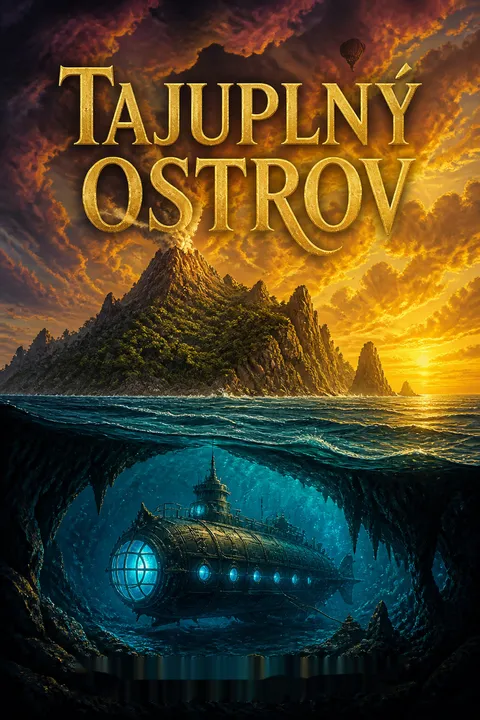
The settlers’ search turns up nothing, and they begin building a larger vessel for a future voyage. Meanwhile, Mount Franklin shows signs of renewed activity. One stormy night, a message arrives from a new telegraph wire leading away from the corral. Following it through the dark, the settlers reach a sea cave and find an iron boat waiting at the entrance.
It carries them through a vast cavern to a brilliantly lit submarine, the Nautilus. There they find its dying commander, Captain Nemo. Harding recognizes him from Spilett’s account of a submarine voyage, and the colonists understand that their hidden benefactor has at last summoned them to meet him.
The invitation changes the mystery from a pattern of inexplicable favors into a deliberate encounter. The wire makes the hidden protector’s reach material and legible, while the boat and cavern reveal that the island’s secret geography is larger than the settlers’ maps. Nemo’s technology has made him nearly omnipresent within their world, yet he has chosen the moment of his death to become visible. The meeting promises explanation, but also asks the colonists to confront the human costs behind his power.
Nemo’s Last Voyage
Nemo reveals that he was Prince Dakkar, an Indian ruler who fought the British during the 1857 rebellion. After the uprising failed, grief and hatred drove him to build the Nautilus and abandon life on land. He admits that he saved Harding, guided supplies and messages to the settlers, destroyed the pirate brig with a torpedo, and delivered the quinine.
He also warns Harding that the sea may break into the volcano through the weakening wall of the cavern. Then Nemo asks to die aboard his submarine and gives the colonists a coffer of treasure. They honor his final wish, sinking the Nautilus with him inside.
Nemo’s history complicates the settlers’ easy division between benevolent protector and dangerous power. His rebellion arose from resistance to domination, but his isolation hardened into a belief that freedom required separation from humanity. The settlers’ gratitude does not erase the harm he caused, especially in the destruction of the frigate, yet Harding refuses to claim final authority over his life. Nemo’s chosen burial preserves his autonomy even as he entrusts his remaining wealth to others.
Lincoln Island Erupts
Nemo’s warning proves urgent. The weakened wall between the sea cave and Mount Franklin gives way, allowing seawater to reach the volcano’s internal fires. While the settlers rush to finish their schooner, the eruption destroys the corral and sends lava across the forests and plateau. They free the animals, but the lake and their settlement vanish beneath fire and ash.
The unfinished vessel is shattered before it can carry them away. When the island explodes, Harding, Spilett, Herbert, Pencroft, Neb, and Ayrton are thrown into the sea and survive on a small rock left from Granite House. Their carefully built world has been reduced to a refuge barely large enough to stand on.
The catastrophe is not simply nature defeating human effort. It is the exact physical chain Nemo identified: the sea enters the volcanic system and converts a hidden weakness into an explosion. The settlers’ engineering buys time but cannot cancel the island’s geology. Their last refuge, a remnant of the home they carved from the cliff, makes survival feel both miraculous and brutally diminished. The island’s resources had sustained them, but its structure was never theirs to command.
The Duncan Returns
The castaways are too weak to leave their exposed rock, until a steamer approaches. It is the Duncan, commanded by Robert Grant, son of the captain Ayrton once served. Captain Nemo had left a note on Tabor Island giving the Duncan the coordinates of Lincoln Island and explaining where Ayrton could be found.
The yacht rescues all six survivors and carries them back to America. They use Nemo’s treasure to buy land in Iowa and found a new settlement, naming its river, mountain, and lake after places on the island they lost. Ayrton is restored to human company, and the group’s shared work begins again on solid ground.
The rescue completes the chain of care that began when the settlers themselves went to Tabor Island for a stranger. Nemo’s final message repays that act by linking Ayrton’s promised return to the whole colony’s survival. The Iowa settlement carries Lincoln Island forward through names and relationships rather than through possession of the original land. Their community survives because its members have learned to build together, and because help, once received, can be passed onward.
Analysis
The novel makes knowledge visible by turning it into objects: a steel blade, a kiln, a bridge, a telegraph, a ship. Survival is therefore neither a miracle nor a purely individual achievement. Harding’s scientific reasoning matters, but so do Herbert’s observations, Pencroft’s craft, Neb’s labor, Spilett’s practical care, and Ayrton’s eventual loyalty. The colony works because expertise circulates among people and is converted into shared capacity.
That confidence in human making has limits. The settlers can alter a cliff, redirect water, and build a defensible home, yet they cannot command the island’s geological structure. The eruption exposes the difference between managing materials and mastering the conditions that produce them. Nemo’s warning gives the catastrophe a precise causal shape, but no invention can create enough time to undo it. The island is not simply a hostile wilderness; it is a living system whose forces exceed the scale of human plans.
Nemo offers a darker counterpart to the colony. Like Harding, he is a scientist and maker, but he has chosen separation as the price of freedom. His technical independence protects him from the institutions he hates while leaving him alone with grief and the consequences of violence. The settlers’ community suggests another response: dependence need not mean submission if people choose mutual obligation. Their treatment of Ayrton makes that ethic concrete. They neither erase his past nor declare him forever defined by it.
The ending carries this model of community beyond the island. The settlers return to America with Nemo’s treasure, but they preserve Lincoln Island through its names, shared history, and continued labor. Their achievement is not that they conquered nature or escaped dependence. It is that they learned to make knowledge, forgiveness, and work serve a common life, and to pass that life forward.
Review Summary
The Mysterious Island is a beloved adventure novel praised for its vivid descriptions, scientific knowledge, and compelling characters. Readers appreciate the survival story of castaways on an uncharted island, their ingenuity in building a civilization, and the gradual unfolding of mysteries. While some find the scientific details excessive, most enjoy the blend of adventure, mystery, and engineering. The book's themes of human resilience, cooperation, and scientific progress resonate with readers. Many consider it one of Verne's best works, citing its imaginative plot and satisfying conclusion.
People Also Read


Characters
Cyrus Harding
Engineer in exileA Union engineer whose practical intelligence becomes the organizing force of the castaways’ life. Harding observes before acting, then turns knowledge into tools, shelters, and plans that others can share. He does not treat science as a display of personal superiority; he uses it to make the group more capable and to keep fear from becoming panic. His authority rests on competence and steadiness, but he also listens to his companions and recognizes the moral dimensions of survival. The island tests both his confidence in human reason and his willingness to accept help he cannot explain.
Gideon Spilett
Reporter and witnessA seasoned reporter who combines curiosity with composure. Spilett records events, notices contradictions, hunts effectively, and proves useful in medicine when the colony has no physician. His habit of asking what evidence supports a conclusion makes him a counterweight to Pencroft’s impulsiveness and a partner to Harding’s scientific method. Yet he is not detached from the people around him. His care for Herbert and his attention to Ayrton show how observation can become responsibility rather than mere documentation.
Pencroft
Practical sailor and builderA bold sailor and former shipyard worker, Pencroft approaches hardship as a problem that can be met with hands, tools, and persistence. His humor lifts the group, while his impatience sometimes pushes him toward rash conclusions. He is deeply attached to the people who become his family, especially Herbert, and takes pride in every shared achievement, from a fire to a ship. His loyalty is expressed through work and protection more readily than reflection. The island gives his practical confidence room to flourish, but also forces him to temper anger with Harding’s caution.
Herbert Brown
Young naturalist and learnerA teenage naturalist whose education becomes immediately useful to the group. Herbert identifies plants and animals, notices environmental details, and learns practical skills from Harding, Pencroft, and Spilett. His intelligence is paired with humility: he is eager to contribute without pretending to know more than he does. The older settlers treat him as a son, while he responds with affection and a desire to prove himself useful. His presence gives the colony a future-oriented quality, since its work is not only about surviving the next day but about preparing for a life that may continue.
Neb
Harding’s steadfast right handHarding’s devoted companion, Neb is strong, capable, and dependable, but his loyalty is not passive obedience. He takes initiative, searches when Harding disappears, cooks, builds, and finds ways to warn the others when ordinary communication fails. His bond with Harding is the colony’s deepest personal tie, shaped by trust and years of service freely given. Neb’s calm helps anchor the group during crises, while his affection for Jup reveals his generous attention to other living beings. His work makes the settlement not merely functional but hospitable.
Ayrton
Repentant castaway in exileA solitary man whose guarded manner suggests that his past weighs heavily on him. When the settlers encounter him, he has lived so long without human company that ordinary interaction has become difficult. He responds to patience and practical kindness more readily than to pressure, and the prospect of belonging is at once tempting and frightening. His connection to Pencroft’s maritime world and to the castaways’ shared vulnerability gives him a place among them, even while he remains uneasy about what he deserves. Ayrton embodies the possibility that a damaged person can choose a different life.
Captain Nemo
Submarine captain in exileA brilliant and intensely private commander who has withdrawn from society into a world of his own making. Nemo possesses extraordinary scientific and engineering ability, along with a fierce desire for independence. His distance from ordinary human life protects him from institutions he distrusts, but it also leaves him isolated from the relationships that give life warmth and continuity. He appears in the settlers’ story first as an unseen presence, making his character a question of motive as much as identity. His generosity and severity exist side by side, shaped by a history he is reluctant to share.
Top
Engineer’s faithful dogHarding’s intelligent dog is a working companion whose instincts repeatedly help the settlers find their way, locate danger, and maintain morale. Top’s loyalty is expressed through action, especially when the group is scattered or threatened. The humans sometimes interpret his behavior as evidence of a hidden presence, but his keen senses also make him a practical guide in unfamiliar terrain.
Jup
Orangutan turned housemateThe orangutan first enters the settlers’ home as an intruder and gradually becomes a trusted helper. Jup is strong, observant, and quick to learn, assisting with loads, climbing, and household work. Pencroft delights in his company, while Neb patiently trains him. His place in the household shows the settlers extending cooperation beyond their own species and treating intelligence as a basis for companionship.
Lord Glenarvan
Scottish expedition leaderA determined Scottish nobleman who organizes a search for the lost Captain Grant after a message from the wreck of the Britannia. His willingness to pursue the search across continents and seas gives Ayrton’s earlier life its moral and historical context. Glenarvan is a practical leader with a strong sense of obligation, willing to negotiate when doing so may protect others or uncover the truth.
Robert Grant
Rescue captain and heirThe son of Captain Grant, Robert is connected to the earlier search for his missing father and to the maritime world that frames Ayrton’s past. As captain of the Duncan, he represents the possibility that old promises and unfinished journeys can still reach people separated by years and distance. His role links the settlers’ isolated life to the wider community beyond Lincoln Island.
Captain Grant
Lost captain of BritanniaThe captain of the wrecked Britannia and father of Mary and Robert Grant. His disappearance sets Lord Glenarvan’s expedition in motion and forms the background to Ayrton’s history. Though absent from most of the island narrative, Grant’s fate shapes the choices of people who continue to search for him.
Bob Harvey
Pirate captain and threatA ruthless escaped convict and former associate of Ayrton, Harvey commands the pirates who arrive aboard the Speedy. He uses force and deception to pursue power, in sharp contrast to the settlers’ cooperative labor. His presence forces the colonists to defend a home built for survival against people who would turn it into a base for violence.
Plot Devices
Island as workshop
Nature becomes working stockLincoln Island supplies the raw materials that make the settlers’ survival possible: clay becomes bricks, ore becomes steel, plants provide food and fibers, and animal products become clothing, soap, and candles. These resources are not magical shortcuts. Harding and the others must identify, process, and combine them, often through repeated experiments. The island’s ecology therefore functions as both setting and practical problem-solving system. Its capacity to sustain the colony encourages confidence, while the later eruption reveals how vulnerable that abundance remains to forces the settlers cannot control.
Granite House
Shelter becomes a fortressThe hidden cavern gives the settlers a defensible, elevated home with room for stores, workshops, and living quarters. Its windows and entrance are cut through granite, and access is controlled by a lift and barriers. Granite House marks the transition from makeshift survival to a settled community. It also becomes the place from which the colonists observe the island and receive unexplained signs of help. Its apparent security shapes their confidence, but the destruction of the cliff later makes clear that even the strongest refuge depends on the stability of the land beneath it.
Scientific improvisation
Knowledge turns scarcity productiveHarding applies engineering and chemistry to the island’s materials, while Herbert’s natural-history knowledge and the others’ practical skills make each experiment useful. The method is cumulative: first a match or steel blade, then a kiln, tools, bridges, a lift, and machinery. These achievements create a convincing chain of cause and effect, allowing the colony to grow without supplies from home. The same technical ability also produces explosives and weapons, so the story does not treat invention as morally neutral. Knowledge protects the group, yet enlarges its power to alter both nature and human conflict.
Messages across distance
Clues turn isolation into pursuitA bullet, a floating message, a found chest, the balloon’s remains, and the telegraph wire each reveal that the island’s history is larger than the settlers first believed. These objects arrive at moments when they change what the group can do: the bullet prompts caution, the bottle sends them to Tabor Island, and the wire eventually leads them toward a hidden meeting. The messages connect isolated lives across great distances, but their incomplete information also generates suspense. The settlers repeatedly have to decide how much can be trusted before the sender is known.
The Nautilus
Hidden power intervenesCaptain Nemo’s submarine is both his refuge and the means by which he observes and assists the settlers. Its technology explains the apparent miracles that have shaped their survival, including rescues, supplies, warnings, and the destruction of the pirates’ brig. The Nautilus also embodies Nemo’s attempt to live beyond the reach of human society. Its presence changes the story’s central question from whether the island is haunted to what a person might do with nearly unrestricted power. Nemo’s final wishes make the submarine a personal tomb as well as a machine.
Download PDF
Download EPUB
.epub digital book format is ideal for reading ebooks on phones, tablets, and e-readers.








