

Key Takeaways
Treat racial privilege as a system, not a verdict on personal hardship.
Privilege is structural. The book opens with a white pastor offended when a Black friend says he cannot fully understand the experience of racism. Wytsma distinguishes personal prejudice from racism reinforced by systems of power that disadvantage people because of race. White privilege does not mean every white person is wealthy or free from hardship. It means that being read as white can bring advantages in access, trust, safety, and belonging.
Compare conditions, not pain. A white landscaper sees the point when asked whether suburban clients might treat a Black or Latino worker differently while he knocks on doors or enters backyards during the day. The question shifts from “Have I struggled?” to “Would this situation be harder if I were another race?”
The distinction between personal hardship and structural advantage is useful because it treats privilege as a pattern of probabilities, not a claim that every individual life is easy. That resembles risk analysis in public health: a risk factor raises the chance of harm without determining any single outcome. This framing can make a defensive debate more empirical. It also needs care. Group-level patterns should not erase class differences or become shortcuts for judging an individual’s motives. The strongest use of the concept is comparative: examine which barriers appear, for whom, and in which settings.
Trace racial categories to the power that invented and enforced them.
Race has a history. Wytsma argues that modern color-based racial hierarchy took shape during European exploration and colonialism, rather than being a timeless, inevitable human instinct. Human variation is gradual, and visible traits do not divide people into clear biological races. Yet constructed categories can have real social consequences when institutions organize rights and resources around them.
Ideas licensed conquest. In 1493, Pope Alexander VI issued a declaration that treated lands inhabited by non-Christians as available for Christian claim. Such religious and political justifications helped Europeans seize territory and exploit its inhabitants. In the United States, the 1790 naturalization law limited citizenship to free white people, while Chinese immigrants were barred from naturalization under the Chinese Exclusion Act of 1882. Law helped make whiteness a boundary of belonging.
This history helps distinguish racial hierarchy from older forms of hostility based on religion, nationality, or status. The distinction matters: prejudice may be ancient, while modern racial systems attach inherited meanings to appearance and embed them in law and economic life. The argument is strongest when it follows particular mechanisms, such as citizenship rules or land claims, rather than treating “race” as a single invention with one origin. The book’s emphasis on social construction does not make race imaginary. It explains how categories gain force through repeated institutional use.
Follow emancipation’s paper victory into the labor and punishment systems that replaced it.
Freedom was reversed. Reconstruction, from 1865 to 1877, briefly expanded Black voting and political participation. After it collapsed, Southern states used Black Codes and vagrancy laws to arrest Black people for minor offenses, then leased prisoners to plantations and businesses for forced labor. The book notes that, in Mississippi in 1882, the reported mortality rate for Black people leased to hard labor was 17 percent, compared with 2 percent for white convicts.
Control changed its language. Wytsma connects convict leasing and disenfranchisement to later drug enforcement and mass incarceration, arguing that formally race-neutral rules can produce racially unequal outcomes. In figures cited by the book, Black Americans were about 13 percent of the population but 31 percent of drug arrests and nearly 40 percent of drug-related incarcerations. The sequence shows why a law’s wording alone cannot establish its fairness.
The chapter’s historical sequence makes policy change easier to understand: institutions can preserve an old power relationship while replacing its legal form. This resembles path dependence, the process by which earlier rules shape later choices and outcomes even after the original rule disappears. The connection is illuminating, but historical continuity should not be mistaken for identical systems or motives across eras. Each policy needs its own evidence and causal account. The practical lesson is to inspect who is targeted, who benefits, and what consequences follow, not only whether a statute explicitly names race.
Look at the map: housing policy turned exclusion into inherited wealth.
Neighborhoods were shaped by policy. From roughly 1915 to 1970, more than six million Black Americans left the South in the Great Migration, seeking safety and opportunity in cities. Federal housing maps then rated many Black neighborhoods as high risk, making them ineligible for federally backed mortgages. Between 1933 and 1936, fewer than 25,000 of the Home Owners’ Loan Corporation’s roughly one million loans went to nonwhite borrowers.
Exclusion compounded. In Chicago, Clyde Ross was denied an FHA mortgage and bought a home through a private contract. He paid far more than the previous owner, while missing payments could cost him the house and every dollar already paid. Such arrangements restricted wealth building. Wytsma links those policies to enduring segregation and large racial wealth gaps, while acknowledging that cities’ present shapes reflect many historical decisions.
Housing is a powerful example because a policy can affect more than where a family lives. Home equity can support education, business formation, and transfers to children, so unequal access may compound across generations. This is a classic case of cumulative advantage: a modest early difference can widen as it shapes later opportunities. Still, the map is not a complete explanation of every modern wealth gap. Wages, family resources, local labor markets, and later policy also matter. Historical evidence is most persuasive when it shows the concrete routes by which exclusion affects assets over time.
Treat justice as part of salvation’s purpose, not an optional church project.
Justice means right relationship. Wytsma argues that biblical language about righteousness also concerns fairness and relationships among God, people, and creation. He distinguishes primary justice, the condition of things as they ought to be, from restorative justice, the work of repairing what has been bent or broken. In this account, Jesus’ life, death, and resurrection reconcile people to God and call them into the repair of relationships with others.
Grace is not passivity. The book does not claim that people earn salvation through social work. Rather, it argues that reconciliation should change how Christians treat neighbors and vulnerable people. This challenges a narrow gospel centered only on an individual’s forgiveness, as well as the American dream’s pull toward comfort, status, and private success. The kingdom ideal asks Christians to use power for others’ good rather than cling to it.
The distinction between earning salvation and living out its implications is a useful way to avoid a false choice between personal faith and public responsibility. In moral philosophy, duties can arise from relationships and institutions, not only from an individual’s intentions. The theological argument extends that insight: reconciliation with God should reshape social conduct. A necessary boundary remains. Calling justice integral to faith does not by itself settle which policy best advances it. The principle is clear, but its application requires evidence, deliberation, and attention to the people most affected.
Measure conversion by the life it redirects, not the words it repeats.
Salvation is a relationship. The book questions the reduction of Christian conversion to a one-time prayer or private transaction. It traces the popular altar call to revivalist Charles Finney, who developed a deliberate method for prompting people to make a decision. Wytsma does not reject such prayers, but warns that counting decisions can make conversion appear complete before discipleship begins.
Belief changes allegiance. The Bible’s recurring image of being “in Christ,” as the book presents it, suggests a shared life shaped by Jesus, not simply a personal spiritual possession. The Golden Rule calls for active care, unlike a passive rule that asks only that people avoid harming others. If conversion is understood as joining a community and following Christ, faith should redirect a person’s conduct, priorities, and relationships.
The critique is especially sharp where institutions count visible decisions while neglecting long-term formation. Measurement shapes behavior: when organizations reward a number, they can overproduce the number and underinvest in the harder outcome. That principle applies beyond churches, from schools tracking test scores to hospitals tracking procedure counts. Yet a simple conversion story can also be a meaningful entry point into faith. The issue is not whether a prayer matters, but whether it is treated as a substitute for ongoing formation, responsibility, and participation in a community.
Slow down snap judgments; unconscious bias can alter ordinary decisions.
Bias can operate unseen. Wytsma uses implicit memories to describe learned reactions that shape responses without conscious recall. Implicit racial bias refers to unconscious attitudes or stereotypes that influence understanding and decisions, even when people reject racism as a belief. The book cites hiring studies in which otherwise similar applicants with white-associated names received more callbacks, and an online sales study in which an iPod shown in a white hand drew more offers than one shown in a Black hand.
Small errors can compound. In the book’s account of Tamir Rice’s death, details from a 911 call were lost as information passed between the caller, dispatcher, and officers. Wytsma argues that racialized assumptions can affect such rapid judgments, even without an explicit plan to harm. He also notes research suggesting that more time, awareness, and exposure to different perspectives can reduce biased responses.
The emphasis on automatic judgment connects the book to cognitive science: people use mental shortcuts when time or attention is limited, and those shortcuts can reproduce learned associations. This helps explain why good intentions are not a sufficient safeguard. It also calls for precision. A bias measure describes a tendency across situations, not a definitive diagnosis of any one person or decision. The most productive response combines individual reflection with procedural protections, such as slower review, clear criteria, and meaningful opportunities to question an initial impression.
Give people affected by injustice authority, not merely a place in your campaign.
Representation changes decisions. Wytsma argues that justice work can silence the people it intends to help when outsiders control the agenda and resources. He points to Christian conferences where white speakers dominate, and nonprofit leadership in which nonwhite people held only a small share of board and executive positions in the figures he cites. Homogeneous teams can overlook knowledge and experience that would change their decisions.
Charity is not enough. Compassion may meet an immediate need, but it can leave the underlying power imbalance intact or reinforce a rescuer’s status. The book urges mutual relationships in which local leaders help define the problem and direct the response. That can mean funding organizations already working in a community, sharing decision-making power, and opening platforms to people whose expertise is often overlooked. Diversity is not a substitute for competence; it requires recognizing competence more fairly.
This section moves beyond representation as symbolism and treats it as a question of who controls decisions, money, and public attention. That aligns with research on group decision-making: varied experience can reveal assumptions that a uniform team misses. But diversity alone does not guarantee fairness. A person may be included without influence, or asked to represent an entire community. The deeper test is whether participation changes the agenda and distribution of resources. A guest speaker is visible; shared authority is structural.
Turn racial concern into four disciplines: listen, lament, confess, and relinquish advantage.
Start with practices. Wytsma offers four ways to move from concern toward responsibility: listen and learn from people with firsthand experience; lament suffering rather than rushing past it; confess the church’s and society’s participation in historical injustice; and lay down privilege by sharing influence and opportunity. These practices are meant to deepen understanding, not to certify someone as morally superior.
Make repair concrete. The book describes yielding speaking time, supporting leaders of color, and directing resources toward organizations rooted in affected communities. It also revisits the familiar claim that formerly enslaved people received “forty acres and a mule,” explaining that the phrase refers to a limited military order, not a lasting federal reparations program. The broader point is that reconciliation requires more than good feelings: it asks what was taken, who still bears the cost, and what repair could involve.
The four practices offer a moral sequence: listening improves diagnosis, lament acknowledges harm, confession accepts responsibility, and relinquishing advantage changes conditions. Together they guard against a common failure in reform movements, where awareness becomes a badge rather than a reason to act. The sequence is not a formula, and it cannot replace policy analysis or the judgment of affected communities. Its value is as a recurring audit: whose account is being heard, whose loss is recognized, and whose authority or resources have actually shifted?
Analysis
The book’s argument gains force from its three-part progression. First, it makes racial hierarchy historically legible through immigration law, colonial theology, convict leasing, and housing policy. Next, it explains why Christians may fail to see these structures: a privatized account of salvation, national exceptionalism, individualism, and a cultural longing for comfort can make inequality seem unrelated to faith. Finally, it turns the diagnosis into practices of listening, lament, confession, and shared power. Personal stories make these transitions memorable without pretending the author speaks for people who experience racism firsthand.
Its central analytical strength is the distinction between intent and effect. A person need not consciously endorse racial hierarchy for a policy, custom, or institutional routine to distribute opportunity unevenly. The book also resists an easy moral escape: formally ending an unjust rule does not automatically undo wealth, geography, habits, or assumptions formed under it. This is a compelling account of institutional persistence, especially where it traces specific mechanisms such as mortgage access and convict labor.
Some claims need careful handling. Describing race as socially constructed does not mean ancestry or population variation is irrelevant; it means visible differences do not form the discrete, ranked biological groups that racial ideologies claim. Likewise, historical continuity does not prove that every present disparity has the same cause, or that every remedy is obvious. The book is strongest when it supplies a chain of evidence from policy to consequence, and less conclusive when broad theological or political interpretations outrun the particulars presented.
The intended audience matters. Wytsma addresses evangelical readers who may accept personal charity while resisting systemic analysis. His theological reframing is therefore strategic as well as doctrinal: justice is not an elective political interest but a test of what reconciliation means in communal life. The resulting challenge is demanding but practical. Move from declaring oneself innocent to examining outcomes, from helping at a distance to sharing authority, and from celebrating equality as an ideal to repairing conditions that contradict it.
Review Summary
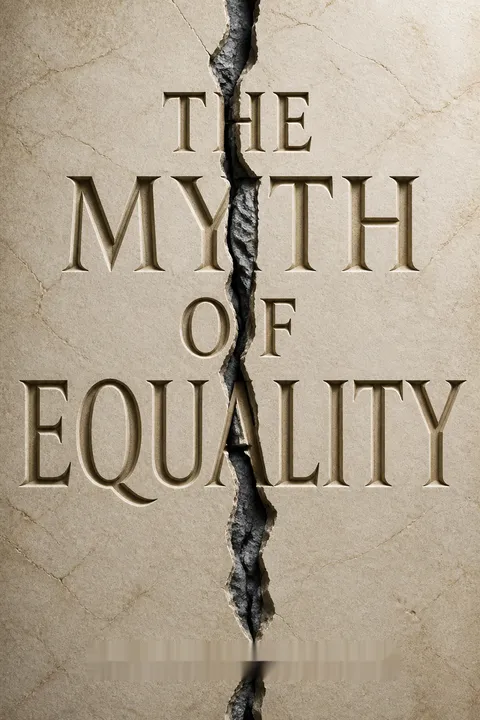
The Myth of Equality receives mostly positive reviews for its insightful examination of racism and white privilege from a Christian perspective. Readers appreciate Wytsma's historical analysis, theological approach, and practical suggestions for addressing inequality. Many found the book eye-opening and challenging, praising its compassionate tone and accessibility for white evangelicals. Some critics felt it lacked depth or disagreed with theological points. Overall, reviewers recommend it as an important read for Christians seeking to understand and address racial injustice.
People Also Read





Glossary
White privilege
Structural racial advantageAdvantages associated with being treated as white within a society shaped by racial hierarchy. In the book, these include easier access, assumed belonging, trust, and reduced suspicion. The term does not mean every white person is wealthy or free from hardship; it describes how racial identity can make some situations less difficult than they would be for a person of color.
Soft white supremacy
Inherited white-centered normsThe continuing influence of systems and cultural standards built to privilege whiteness, even without openly racist individuals or laws. Wytsma uses the term for norms that treat white culture as the default and evaluate other groups against it. Its effects include unequal access and the continued benefit of racialized structures, not merely the persistence of past prejudice.
Doctrine of Discovery
Religious rationale for seizureA set of religious and legal ideas used by European Christians to claim lands inhabited by non-Christians. In Wytsma’s account, papal declarations during the age of exploration helped legitimize conquest, forced conversion, dispossession, and exploitation. The book also connects this doctrine to later legal reasoning that denied Indigenous peoples equal claims to ownership of their lands.
Convict leasing
Prison labor leased for profitA post-Civil War system in which states leased incarcerated people to private businesses or intermediaries for forced labor. Black Codes and vagrancy laws made Black people especially vulnerable to arrest for minor or loosely defined offenses. Employers had little incentive to protect workers’ lives, while states and companies profited from their labor.
Redlining
Racially restricted mortgage accessThe practice of marking neighborhoods with Black residents as high-risk areas, which helped deny them federally backed mortgages and other investment. The term refers to maps used by housing agencies and lenders in the twentieth century. Wytsma shows how this policy restricted homeownership and equity building, while shaping segregation and wealth inequality that persisted after formal discrimination was prohibited.
Primary justice
Life as it ought to beWytsma’s term, drawn from theologian Nicholas Wolterstorff, for a condition in which relationships and creation are as they ought to be. He associates it with shalom, a state of peace and flourishing. Primary justice describes the good condition itself, rather than the actions needed to repair harm after relationships have been damaged.
Restorative justice
Repair of broken relationshipsThe work of correcting damaged, unjust, or distorted relationships and returning them toward the condition of primary justice. In the book, this includes charity and criminal justice at their best, but also broader efforts to establish fair relationships throughout society. Wytsma connects this repair to the Christian account of salvation and reconciliation.
Royal consciousness
Empire-shaped social imaginationA concept associated with theologian Walter Brueggemann, used for the dominant assumptions of a society organized around concentrated wealth and power. This consciousness teaches people what success and reality are supposed to look like, often making the existing order seem natural. Wytsma warns that churches can adopt it when they protect their own status rather than challenge injustice.
Salvation industrial complex
Self-reinforcing conversion systemWytsma’s description of a religious system that can prioritize producing and reporting conversion decisions over the ongoing life of discipleship. Revival methods, institutional incentives, and simple conversion formulas may reinforce one another. The author does not reject conversion prayers, but warns that counting decisions can obscure whether faith leads to changed relationships and sustained responsibility.
Implicit racial bias
Unconscious racial associationsUnconscious attitudes or stereotypes that influence how people interpret situations and make decisions, even when they consciously reject racism. The book links these biases to learned associations and mental shortcuts. They can affect areas such as hiring, housing, education, health care, and criminal justice, and may be reduced through awareness, time, education, and contact across groups.
The Great Reversal
Evangelical retreat from social actionA term used by theologian John Stott for the historical shift in some conservative evangelical circles away from social engagement. Wytsma traces this retreat to theological polarization between saving souls and addressing social problems, alongside fears of association with liberal theology. The result was an individual emphasis on personal salvation that could make justice seem secondary.
Download PDF
Download EPUB
.epub digital book format is ideal for reading ebooks on phones, tablets, and e-readers.








