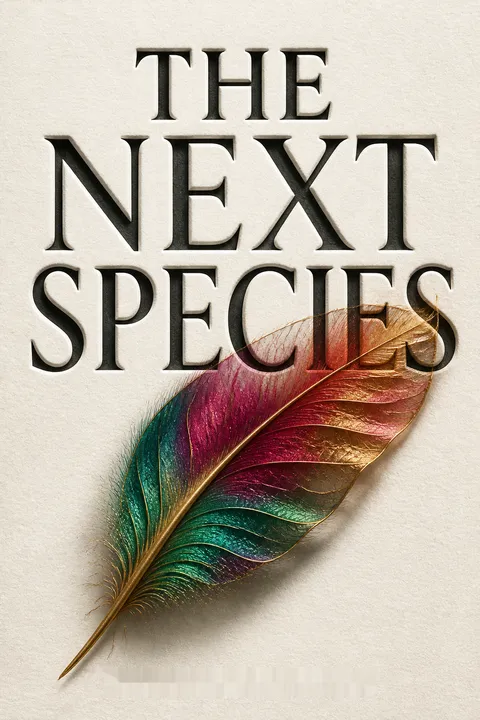


Key Takeaways
Earth can recover from mass extinction, but species and ecosystems pay.
Recovery is not rescue. A mass extinction is a period when at least 75 percent of species disappear. The fossil record shows five such events in the past 600 million years. The Permian extinction, about 252 million years ago, eliminated an estimated 96 percent of species. Life returned, but rebuilding took roughly ten million years, and the species that came back were not the ones that had vanished. Earlier still, oxygen-producing microbes helped make complex animal life possible, showing that evolutionary change can be dramatic rather than smoothly gradual.
The survivors inherit space. After extinctions, surviving organisms spread into ecological openings and diversify. The Permian survivors included Lystrosaurus, a tusked, plant-eating relative of mammals that became widespread. Extinction can therefore create evolutionary opportunity, but that opportunity arrives after immense biological loss and on timescales far beyond human planning.
The distinction between life persisting and familiar ecosystems surviving is essential. It resembles the difference between economic recovery and the recovery of particular households: aggregate activity can rebound while specific losses remain permanent. The fossil record supports resilience at the level of life, not a promise that people, species, or services will be restored. That makes extinction a poor bargain even when it is not the end of biology. A further caution is that prehistoric recoveries do not predict how quickly modern ecosystems can adapt to several simultaneous pressures.
Treat extinction as a chain reaction, not a single-cause disaster.
Several pressures converge. The Permian extinction was not a single dramatic blast. Huge eruptions in Siberia released gases, including carbon dioxide, while warming, acid rain, ocean acidification, and declining ocean oxygen compounded the damage. The book uses this history to frame modern risks: habitat destruction, climate change, pollution, overharvesting, and invasive species can reinforce one another. A species already squeezed by habitat loss may have little room to move as temperatures rise.
The pattern matters. Past extinctions also had multiple contributing causes. The asteroid that ended the Cretaceous was accompanied by volcanic activity and ecological stresses. The lesson is not that today repeats one ancient event exactly, but that interacting disruptions can push systems past the point where ordinary adaptation is enough.
This is a systems-risk argument: dangers become more consequential when they share pathways and amplify one another. Climate research, public health, and financial stability all use similar models because a collection of moderate stresses can produce a disproportionate result. The framing also discourages the search for one villain or one technical fix. Still, historical analogy has limits. Ancient climate, species, and timescales differed from today, so the record is strongest as evidence of possible mechanisms, not as a precise forecast of when or how a modern collapse would unfold.
Isolation creates species; global transport can erase the boundaries that made them.
Geography shapes diversity. Island biogeography studies how isolation and habitat size affect which species arrive, survive, and diversify. Islands can be surrounded by ocean, but a mountain range separated by deep valleys can function similarly. Darwin's Galápagos finches illustrate how isolated populations can diverge as they adapt to different food and habitats. The Vilcabamba mountains in Peru hold many narrowly adapted species, some confined to a small range of elevations.
People reconnect the islands. Ships, planes, and trade carry organisms into places where native species may lack defenses. Sixty starlings released in New York in 1890 grew into a population of roughly 200 million across the United States. The brown tree snake, likely transported to Guam after World War II, devastated native wildlife there. Human transport can undo separation faster than evolution created it.
The island metaphor makes fragmentation and invasion easier to see: a road, farm, or city can act as a barrier for one organism and a corridor for another. In conservation biology, this means that connectivity is not automatically good or bad. A corridor can help native populations exchange genes, while shipping routes can deliver harmful newcomers. Management therefore depends on asking which species are moving, through what pathways, and with what ecological consequences. The examples also show that introductions can be accidental or deliberate, so prevention matters alongside attempts to control species after they spread.
Protect biodiversity as life-support infrastructure, not scenic luxury.
Nature does useful work. Ecosystem services are the benefits people receive from functioning ecosystems, including clean water, pollination, fertile soil, and disease regulation. New York City's watershed provides a vivid example: forest roots, wetlands, and soil microorganisms filter water for nearly ten million people. The city chose to protect land and improve sewage systems rather than immediately build a costly filtration plant.
Diversity adds resilience. A range of species can make ecosystems better able to process pollution, withstand stress, and limit disease transmission. Disease ecologist Richard Ostfeld found that fragmented forests often favor mice and chipmunks, which can efficiently spread Lyme disease, while larger, more diverse forests contain a broader mix of species. The book also describes medicines derived from wild plants, including cancer treatments developed from Madagascar's rosy periwinkle.
Calling these benefits infrastructure changes the economic question. A watershed or pollinator community is not an ornamental extra when a city depends on it for drinking water or food production. Environmental accounting often misses such value because ecosystems provide many benefits without a market price. Yet the argument needs care: biodiversity does not guarantee that every service improves in every location, and some services involve trade-offs. Sound policy identifies the specific function at stake, measures alternatives, and includes the cost of losing natural systems rather than treating that cost as zero.
Rebuild soil while growing food, or today's yields mortgage tomorrow's harvest.
Soil is slow infrastructure. Agriculture feeds larger populations, but it can also erode soil, reduce plant diversity, and pollute waterways. At Rothamsted Research, long-running field experiments found that fertilized plots could yield abundant crops while nearby plant diversity fell from dozens of species to only a few. In the American South, about 150 years of cotton production removed as much as eight inches of topsoil in parts of the Piedmont.
Productivity needs renewal. The Green Revolution's compact wheat varieties greatly increased yields, but modern farming still depends on soil, water, and limited nutrients such as phosphorus. The book points to terra preta, or Amazonian dark earth, enriched with charcoal and organic material, as a durable soil-building practice used by Indigenous communities. It also discusses rooftop farms and lower reliance on meat as ways to ease pressure on land.
The tension here is between immediate output and the condition of the productive base. It appears in many engineered systems: infrastructure can be run hard for short-term performance while maintenance is deferred until failure becomes expensive. Soil makes that delay unusually easy because degradation can be gradual and hard to notice from one growing season to the next. The book's historical examples support long-term measurement and diversified practices, though no single technique, including biochar, fits every soil or climate. The useful principle is to assess yield together with erosion, nutrient loss, and ecological effects.
Restore predators and connected habitat to repair broken food webs.
Predators shape landscapes. A trophic cascade occurs when changes at the top of a food web alter populations and habitats farther down. In the Aleutian Islands, sea otters eat sea urchins. Where otters disappeared, urchins multiplied and damaged kelp forests. Where otters returned, kelp recovered and again provided shelter and feeding grounds for other marine life. The book also describes wolves limiting elk in Yellowstone, allowing willow and aspen to grow back.
Protection must include relationships. Jaguar conservation in Central America aims to preserve connected forest so populations can move and maintain genetic exchange. A top predator can act as an umbrella for many species sharing its habitat. But removing or restoring one animal can have unexpected effects, since food webs are complex and local conditions vary.
This is a powerful correction to conservation plans that count animals while ignoring what those animals do. Ecological function depends on interactions, not just inventories. The idea connects with network science, where the position of a node can matter as much as its abundance. Predators may regulate prey, but outcomes depend on alternative food sources, human activity, and the surrounding habitat. Reintroduction should therefore be treated as a monitored ecological intervention, not a guaranteed repair. The book's examples make a strong case for protecting whole relationships, while leaving room for careful local testing.
Watch for ecological regime shifts when human pressure changes who can survive.
The ocean is changing cast. An oxygen minimum zone is a layer of seawater with very low dissolved oxygen. The book describes these zones expanding as oceans warm and mix less thoroughly. Many fish cannot remain there, but Humboldt squid tolerate low oxygen and can exploit prey that are slowed by it. In the Gulf of California, squid and sperm whales became more prominent as large predatory fish declined from the ecosystem described by John Steinbeck and marine biologist Ed Ricketts in 1940.
A replacement is not a restoration. Squid reproduce quickly and may thrive under altered conditions, while overfishing and acidification harm other marine organisms. The book also warns that acidifying water can threaten shell-forming animals and coral, and that noise changes may interfere with whale communication. An ecosystem can remain full of life while becoming very different.
The regime-shift idea is useful because it distinguishes a living system from a healthy or familiar one. A lake can contain abundant organisms after a change in water chemistry, yet lose species and functions people depend on. This challenges the reassuring habit of treating total biomass as a sufficient measure of ecological condition. The Gulf example also shows the value of historical baselines, since gradual losses can become invisible when each generation compares the present with only the recent past. At the same time, regional observations should not be mistaken for a single universal ocean trajectory.
Human evolution continues, but adaptation is not moral progress.
Culture changes selection. The book rejects the idea that human evolution stopped when people invented tools and language. Allopatric speciation means new species form through geographic separation; sympatric speciation means populations diverge while living in the same region. The book presents these as routes by which populations can become distinct, while emphasizing that a new human species is uncertain.
Recent adaptations are real. Lactose tolerance, which lets adults digest milk, spread in several populations where dairying offered a nutritional advantage. The book also discusses adaptations to high altitude and disease. But evolution selects for reproductive success in particular conditions, not wisdom or fairness. Human technologies may alter those conditions, and genetic engineering could make selection increasingly intentional, with unpredictable consequences when one gene affects several traits.
The distinction between biological change and improvement is crucial. Evolution has no destination and does not reward traits because they are socially desirable; it favors traits that succeed in a particular environment. That insight tempers both fears of a coming superhuman and fantasies of genetic optimization. Human culture also changes the environment faster than genes usually change, so institutions and technology can shape survival without producing a new species. Genetic intervention adds a further governance problem: a decision made for one generation may alter risks and options for descendants who cannot consent.
Rewild lost ecological roles, but test bold restorations before scaling them.
Restoration can look backward. Pleistocene rewilding proposes restoring ecological roles once performed by large animals that disappeared from the Americas. Suggested candidates include elephants to browse woody growth, tortoises and horses to graze, and predators to regulate herbivores. The goal is not simply to display impressive animals. It is to rebuild processes such as grazing, seed dispersal, and predator control.
Proxies bring risks. The proposed animals would not be exact replacements for extinct species. The book points to the Dutch Oostvaardersplassen reserve, where cattle, deer, horses, and birds form a managed approximation of a wilder landscape. It also notes that reintroducing predators raises real questions about safety, land use, and public acceptance. A carefully monitored, limited restoration is different from releasing animals broadly and assuming the ecosystem will sort itself out.
Rewilding is compelling because it shifts conservation from preserving isolated specimens to restoring ecological processes. It also raises a political question: which historical baseline should count as natural, especially when humans have shaped a landscape for millennia? The use of living analogues can be defensible when an extinct species has no direct substitute, but resemblance is not proof of equivalent behavior or impact. Adaptive management offers a practical middle path: set explicit goals, monitor outcomes, and revise the intervention when evidence contradicts expectations.
Treat Mars as an experiment, not a backup planet.
A colony is not an escape hatch. Mars could offer a place to study planetary history and perhaps host a small human settlement. The book outlines proposals to make fuel from Martian carbon dioxide, build habitats, and grow food in greenhouses. It also stresses the obstacles: extreme cold, low gravity, radiation, scarce resources, and difficult travel. People raised in one-third of Earth's gravity might not be physically able to return easily.
Closed systems are fragile. Biosphere 2, a sealed habitat built to test self-sufficient living, struggled with food production, insect imbalances, and falling oxygen. Its occupants needed outside oxygen after levels dropped sharply. The experiment shows how small, overlooked processes can destabilize a habitat. A Mars base could advance science, but it cannot replace protecting Earth's functioning biosphere.
The contrast between planetary exploration and planetary insurance is clarifying. A mission can be scientifically valuable without being a credible refuge for billions of people. Closed-system experiments also expose a general engineering lesson: complexity creates dependencies that designers may not anticipate, especially when there is no easy resupply. Biosphere 2 is not a perfect model of Mars, but it demonstrates why self-sufficiency is a demanding systems problem. The book's caution is strongest when it separates a real research frontier from a comforting story about an effortless second home.
Reduce consumption before ecological feedback forces a harsher reset.
Growth has consequences. The book compares rapid human expansion with Georgii Gause's laboratory populations of microorganisms. In a limited supply of food, their numbers grew quickly, exhausted the resource, and then crashed. Human societies are not test tubes, but the analogy highlights a risk: population growth and rising resource use can outpace the systems that sustain them. The book describes agriculture, urban expansion, soil depletion, and water stress as linked pressures, not separate inconveniences.
Restraint is a choice. The Anthropocene is a proposed name for an era in which human activity has become a major force shaping Earth's systems. The book argues that population and consumption must be considered together. It also points to the end of slavery and the expansion of women's rights as examples of major social norms changing, suggesting that collective behavior is not fixed, even when change is difficult.
The strongest practical implication is to measure prosperity by durability, not simply by throughput. Gause's organisms could not negotiate or redesign their container; human societies can change rules, technologies, and distributions of resources. That difference prevents the analogy from becoming fatalistic. It also complicates any policy focused only on population: consumption varies widely, and access to education, healthcare, and reproductive choice matters. The book's historical examples show that norms can shift, but moral progress does not happen automatically. Institutions must make lower-impact choices feasible and fair.
Analysis
The Next Species is a science reportage book organized around field visits, fossil evidence, and interviews with researchers. Its central move is to connect distant evolutionary history with present environmental change: extinction is not a clean ending, and biological resilience does not mean that current species or human societies are safe. The strongest recurring insight is relational. Soil fertility depends on organisms and chemistry; disease transmission depends on habitat and host communities; predators shape vegetation; and human survival depends on ecological functions that markets often fail to price.
The book's narrative form is effective because it gives abstractions physical settings. A fossil reef makes extinction visible, the Catskill watershed shows nature functioning as infrastructure, and the Gulf of California illustrates how a depleted ecosystem can acquire a different dominant cast. These stories help readers notice ecological change that statistics alone can make remote. The broad range also makes the book unusually useful as a map of connections across evolutionary biology, agriculture, public health, and conservation.
Its ambition creates a corresponding weakness. The book moves from well-established mechanisms, such as predator effects and soil loss, to speculative scenarios about human extinction, Mars settlement, artificial intelligence, and future human species. Those claims do not have equal evidential status. Several population, climate, and technology projections were made in a 2015 context and should be read as the author's scenarios rather than current forecasts. Likewise, ancient mass extinctions provide warnings about mechanisms, not exact schedules for modern events.
The most reliable way to use the book is as a systems-thinking guide, not a prophecy. Ask what ecological function is being lost, which pressures reinforce one another, and whether an apparent recovery restores the original relationships or merely fills the empty space with opportunists. Its deeper challenge is practical: human ingenuity can transform environments, but ingenuity alone does not exempt humans from dependence on the living systems they alter.
Review Summary
The Next Species receives mixed reviews, with an average rating of 3.71/5. Readers appreciate the well-researched content on mass extinctions, evolution, and environmental issues. However, many feel misled by the title, as the book focuses more on current ecological problems than future species. Some praise the accessible writing style and fascinating information, while others criticize the disorganized structure and lack of focus on the titular topic. The book's exploration of human impact on the environment and potential future scenarios sparks both interest and concern among readers.
People Also Read





Glossary
Mass extinction
Widespread species lossA mass extinction is an unusually severe episode in which a large share of Earth's species disappears over a geologically short interval. The book uses the loss of at least 75 percent of species as a general threshold. It distinguishes the survival of life overall from the survival of particular species and ecosystems, which may not recover.
island biogeography
Isolation shapes species diversityIsland biogeography examines how isolation and habitat size influence the arrival, survival, and diversity of species. An island can be surrounded by water, but the term can also describe a mountain habitat surrounded by lowlands or a forest fragment surrounded by farmland. Different organisms experience the same landscape differently depending on their ability to disperse and adapt.
ecosystem services
Nature's benefits to peopleEcosystem services are functions of natural systems that support human life and activity. Examples include filtering drinking water, creating soil, pollinating crops, controlling pests, moderating floods, and providing food and medicines. The concept makes visible the practical value of ecological processes that are often overlooked because they are not purchased directly in a market.
terra preta
Amazonian charcoal-rich soilTerra preta, meaning black earth, is unusually fertile dark soil found at archaeological sites in the Amazon. The book describes it as soil enriched over time with charcoal and organic matter from human activity. Unlike ordinary slash-and-burn ash, this charcoal-rich material can persist in soil and support crop production over long periods.
trophic cascade
Food-web effects across levelsA trophic cascade occurs when changes in predators affect prey populations and, in turn, plants or other organisms lower in a food web. The book's sea otter example shows the process: fewer otters allow sea urchins to increase, and abundant urchins damage kelp forests. Cascades reveal that predators can influence habitat structure, not just prey numbers.
oxygen minimum zone
Low-oxygen ocean layerAn oxygen minimum zone is a layer of ocean water where dissolved oxygen is unusually low. Many marine animals cannot remain there, while species with particular adaptations may tolerate it. The book discusses expanding low-oxygen zones as a threat to fish and other organisms, and as a condition that can favor tolerant species such as Humboldt squid.
allopatric speciation
Species formation through separationAllopatric speciation occurs when populations become geographically separated and gradually diverge. With limited exchange of genes, different environments and evolutionary pressures can make the populations distinct enough to become separate species. The book contrasts this route with divergence among populations living in the same region.
sympatric speciation
Species formation without separationSympatric speciation occurs when populations diverge into separate species while occupying the same geographic area. Differences in habitat use, food, or reproductive behavior can reduce interbreeding and allow populations to evolve independently. The book presents this as one possible route of speciation, while treating the emergence of another human species as uncertain.
Anthropocene
Proposed age of human influenceThe Anthropocene is a proposed name for a period in which human activity has become a major force affecting Earth's atmosphere, land, oceans, and living systems. The book uses the term to frame the scale of human influence, while emphasizing that environmental consequences are shaped by interacting biological, geological, and social processes.
Download PDF
Download EPUB
.epub digital book format is ideal for reading ebooks on phones, tablets, and e-readers.








