


Plot Summary
The Book Finds Jim
At Centrepoint shopping centre, Jim, a former Garda now working as a security guard, sees a customer carrying a black book with a title he recognizes: The Nothing Man. Its author is Eve Black, the twelve-year-old survivor of the Cork attacks that once dominated his work.
Jim’s panic sharpens when his manager opens the book to the only surviving sketch of the killer, a face Jim remembers from the night he was seen on Bally’s Lane. He slips away from his shift, buys the book in another shop, disguises its cover and begins reading alone. The story inside names places and details he had buried for years. Its publication has reached him, and he cannot stop turning the pages.
The novel opens with a reversal of the usual crime narrative: the person who once hunted criminals is now watching a book about his own crimes enter public life. Jim’s security uniform makes him visible as an authority figure, while the book makes the hidden truth visible to him. His reaction exposes the fragility of his carefully maintained double identity. Reading becomes both a threat and a compulsion, since he fears exposure but also relishes revisiting the version of himself he considers powerful.
A New Year’s Call
On New Year’s Eve 1999, sixteen-year-old Tommy O’Sullivan is babysitting when a strange caller gives him no clear explanation and unnerves him with a menacing game-like invitation. Tommy assumes a friend is pranking him and hangs up.
Two weeks later, he wakes to find his bedroom door locked from the outside. His father, Shane, has escaped through a window and calls for the Gardaí. The intruder has taken Alice from her bed, struck and restrained her, then left without harming the children.
Alice survives, but she is badly injured and the family abandons their home. Gardaí initially interpret the attack as a failed kidnapping because Shane manages a bank. Months later, a passing driver’s description gives investigators their only glimpse of the masked intruder.
The O’Sullivan attack begins with a misreading that is both ordinary and consequential: Tommy treats a predatory call as teenage mischief because that interpretation fits his world. The adults and investigators make a parallel error by forcing the attack into a familiar criminal pattern, a kidnapping for money. These mistaken explanations delay recognition of a new kind of threat. The locked doors also invert the home’s promise of safety: the family’s rooms become compartments controlled by the intruder, while the children’s survival depends partly on being kept apart from the violence.
The Neighbor’s Discovery
In July 2000, Christine Kiernan is living alone in her grandmother’s Covent Court home. After she removes the net curtains, greasy handprints appear on a window, and she puts the curtains back. One night a masked man enters her bedroom, rapes and assaults her, then leaves her alive.
Her neighbor, Maggie Barry, had recently found braided blue rope and a clean knife beneath a sofa cushion in her own apartment and reported them to Gardaí. The items disappear from evidence handling before they can be useful.
Christine takes an overdose seven weeks after the attack. During the investigation of her death, a technician checks an unused landline and finds thirteen voicemails from the attacker, left over the weeks after the assault as he returned to her home.
Christine’s story shows how terror can continue after an assailant has left. The handprints and repeated messages turn her home into a place where absence itself feels watched. Maggie’s discovery offers a rare warning, but the evidence is lost within the very institution meant to preserve it. The sequence also complicates the idea of survival as a clean escape: Christine lives through the attack, yet receives little social support and remains alone with its aftermath. Her case makes the killer’s pattern legible only after she can no longer help investigators interpret it.
The Fermoy House
In April 2001, Linda O’Neill stays behind in the isolated Fermoy house she and her husband are renovating while he travels to San Francisco. A series of small intrusions, moved belongings and a missing diary leave her doubting her memory.
One night a masked man threatens her with a handgun, rapes her and ties her in a bathtub. When Linda tries to escape, he returns and smashes her head against the tiles. She lies there for thirty-five hours before a Garda finds her.
The delayed discovery contaminates the scene, and investigators focus on the house’s previous owner, a criminal, rather than considering a serial attacker. Later, Linda recognizes the same caller who had contacted Christine, but police still fail to understand the cases as one pattern.
Linda’s attack is shaped by isolation and uncertainty. Because builders move through the house all day, she has plausible reasons to explain away disturbances, making the intruder’s surveillance blend into ordinary renovation chaos. Her attempt to preserve herself by waiting for him to leave becomes the opening he uses to injure her further. The investigation repeats the earlier institutional failure in a new form: a dramatic detail, the gun, makes an appealing explanation available, and the authorities privilege that familiar story over less comfortable evidence.
Westpark’s Practice Ground
In June 2001, Marie Meara and Martin Connolly have barely moved into a new Westpark house when an intruder attacks Marie and kills Martin by releasing the handbrake on his car. Detective Sergeant Edward Healy is asked to revisit strange thefts from the empty houses during construction.
He realizes the intruder may have used the unfinished estate to practise entering and moving through homes. Phone records reveal short calls to the victims, including one made from a busy hurling match, and Christine’s messages connect the attacks further.
Tommy then recognizes the threatening language from the call he received before his mother’s assault. Healy links four cases and identifies a serial attacker. The press gives the unseen man his name: the Nothing Man.
Westpark changes the case from a collection of horrific but seemingly unrelated events into a pattern of preparation, intrusion and performance. Healy’s insight comes from treating petty construction-site theft as rehearsal rather than motive. The phone records likewise become meaningful only when investigators compare cases rather than isolate them. Yet the attacker’s nickname carries a danger of its own: it makes his elusiveness sound almost supernatural. Healy’s work counters that myth by locating the crimes in concrete habits, access and planning, even as the killer’s identity remains unknown.
Eve’s Missing Years
In October 2001, the Nothing Man enters Eve Black’s family home in Passage West and kills her parents, Ross and Deirdre, and her seven-year-old sister, Anna. Eve survives by hiding in the bathroom after waking to use it.
Her grandmother, Nannie, takes her to Spanish Point, where silence and routine help her endure childhood, but Eve learns to conceal her past and later studies business instead of writing. When Nannie dies, Eve’s grief deepens into depression.
Years afterward, she begins a creative-writing course and publishes an essay about surviving the killer. Reading reports about the case, she remembers finding blue rope and a knife beneath a sofa cushion before the attack. She realizes that this forgotten discovery may have been a warning.
Eve’s survival is not presented as uncomplicated luck. Her body gets her to the bathroom, but the mind that protects her also fragments what she can remember and leaves her with years of doubt. Nannie’s silence offers shelter while teaching Eve that safety depends on hiding the truth. The rediscovered rope and knife then alter the emotional meaning of memory: what seemed like a childhood detail becomes possible evidence, bringing hope for justice and a new burden of imagined responsibility for what she might have prevented.
The Case Reopens
Eve’s essay draws national attention, and her publisher encourages her to expand it into a book. Detective Healy explains that identifying the Nothing Man may not be enough to convict him without physical evidence or a confession. Eve nevertheless joins Healy in reviewing the case files.
They interview Tommy O’Sullivan, compare the victims’ lives and examine the possibility that someone posing as a Garda visited homes after local burglaries. Tommy remembers a uniformed man at his family’s door; construction foreman Johnnie Murphy recalls a suspicious Garda at Linda’s house.
The visits point toward a method, but the burglary records offer no decisive proof. A missing handgun from Garda evidence raises another possibility, then leaves them with no lawful way to identify its holder.
The investigation’s central obstacle is not a lack of information but the difficulty of assigning meaning to fragments gathered under trauma. Eve and Healy find that a remembered visitor, a burglary report or a misplaced weapon can suggest a coherent theory without proving it. Healy’s caution protects the investigation from turning suspicion into certainty, while Eve’s willingness to revisit painful memories gives the case new material. Their partnership is therefore both emotional and epistemic: one supplies access to lived experience, the other tests what the evidence can actually support.
The Guard Behind the Mask
The reader learns that Jim’s crimes began long before the Nothing Man became a headline. As a young Garda, Jim felt mocked by colleagues and humiliated after a teenage babysitter rejected him. He later fixates on Alba, a young woman he meets while canvassing a burglary, and begins entering homes at night to watch women sleep.
He develops a system: use real local burglaries as cover, wear a Garda uniform, collect details from residents and study potential victims’ homes before returning after dark. He grows bolder, uses police knowledge to avoid evidence and stages the attacks as a private performance of power. His career deteriorates, but he maintains his secret for years, eventually retiring and taking a security job.
Jim’s history exposes the gap between institutional authority and moral character. The uniform that should make residents safer becomes his instrument for gathering access, and the public’s trust helps conceal his predation. His grievance at being overlooked does not explain away his choices; it shows how he converts humiliation into a fantasy of superiority and control. The book’s bluntest psychological point is that his crimes do not arise from extraordinary powers. They depend on ordinary opportunities, a practiced lie and the confidence that people will obey a badge.
A Name Kept Back
While tracing Maggie Barry’s missing rope and knife, Eve learns that the Garda who handled the evidence was Jim Doyle, a former colleague of Healy’s. Healy connects Doyle’s postings to the geography of the attacks, and Eve reacts strongly to a photograph of him, recognizing him as the man she saw in her house.
Johnnie’s identification of a uniformed visitor remains uncertain, so the evidence is not enough to accuse Doyle publicly. Eve and Healy decide to use the book as bait. In the manuscript, she describes where she will stay and writes with the intention of drawing the killer out. She keeps Doyle’s name out of the published account, hoping he will read it and act before they can prove who he is.
The discovery of Doyle is a threshold, not a solution. Eve’s bodily recognition carries emotional force, but neither she nor Healy mistakes that force for courtroom proof. Their choice to withhold the name makes the book an engineered encounter: a public narrative designed to reach one reader in particular. This turns authorship into a risky investigative act. Eve is no longer merely describing what happened to her; she is shaping the conditions under which the offender might reveal himself.
The Signing Queue
After The Nothing Man appears in shops, Jim reads obsessively and grows angry at Eve’s description of the killer as ordinary. He watches her television interview, decides she deserves to die and attends her Cork book event with his wife, Noreen. Healy is there too.
Jim tries to pass as an uninterested former Garda, but Eve recognizes him from her visit to Togher station, where he had been the desk officer when she asked about the missing evidence. She keeps the exchange light, tells him his name is in the book and leaves him uncertain about how much she knows. Jim goes home convinced the investigation has found a connection between the victims, though he has not yet found his own name in the pages.
The public event reverses the usual imbalance between a hidden perpetrator and a visible survivor. Jim enters believing he can observe Eve without being observed; instead, she recognizes him and uses the social ease of a book signing to unsettle him. Her restraint is tactical, not passive. The crowd protects her while making Jim feel exposed, and his misreading of her calm as a threat accelerates the very risk she has deliberately created.
Noreen Knows
At home, Noreen reveals that she suspected Jim after he returned from unexplained nights away and that the public sketch matched his eyes. She stayed silent to protect their daughter Katie, but now warns him that a solicitor holds a letter explaining everything if she is harmed. Jim tells himself he can still control the danger.
The next day he attacks his supermarket manager after being fired for watching a customer, and he prepares poisoned dog biscuits for the neighbors’ dog. Noreen urges him to stop and refuses to watch him dress for another attack. He appears to agree, but later puts on dark clothes, takes his old equipment and leaves for Eve’s house.
Noreen’s silence has been a survival strategy as well as a moral compromise. She has spent years managing danger by preserving the family’s outward normality, but Katie’s growing proximity to the truth makes that arrangement impossible. Her ultimatum gives Jim a final chance to choose restraint, yet he interprets even intimacy as an attempt to master him. His attacks on a manager and a neighbor reveal that the book has destabilized the control he once maintained through routine and concealment.
The Bathroom Memory
Eve knows Jim may come and sleeps in her childhood home with a panic alarm ready. When he breaks in, the armed Garda unit is already responding. He finds Eve awake in her sister’s bedroom and threatens her, but she asks why he killed her family. Jim demands to know why she pushed her father down the stairs.
Eve explains that, in the dark, she thought the man at the top of the stairs was the intruder and tried to protect her family. Jim’s certainty collapses; he flees, then returns and begins to assault her. Eve screams, bringing the officers into the room. They shoot Jim, who dies. Later, DNA from a vacuum cleaner bag links him to several victims, confirming the identity the book had concealed.
The revelation about Ross’s fall does not make Eve responsible for the violence; it restores the confusion and terror of a child forced to act without seeing clearly. Jim’s demand for an explanation exposes his need to treat other people’s lives as puzzles that confirm his own power. Eve’s scream, rather than a perfect plan or a confession, brings the police into the room. The conclusion refuses the fantasy of neat justice: Jim dies before answering her questions, while material evidence finally gives the victims’ families a name.
Epilogue
A year later, Katie is working at a resort in France, living with little comfort and trying to turn her father’s crimes into something she can bear. In the reception area, she finds a new edition of Eve’s book, updated with a postscript.
It confirms that Jim Doyle was the Nothing Man and died during the attack on Eve. Katie learns that Eve has since married Healy and is expecting a daughter named Anna. She takes the book into a locked office and begins reading, drawn less to her father’s history than to the survivor whose childhood he destroyed.
Katie’s distance from Ireland is not a clean escape but a form of self-imposed exile. She condemns her father while also grieving the ordinary family life she believed she had, and she cannot separate that loss from her mother’s long silence. Choosing to read Eve’s postscript marks a small movement away from avoidance: Katie seeks the survivor’s present, not further detail about her father’s crimes. The name Anna carries the past into a future that is not defined solely by Jim. Eve’s new family does not repair what was taken, but it makes continuation imaginable.
Analysis
The Nothing Man is built around competing claims to visibility. Jim uses a uniform, a mask and an unremarkable domestic life to control what other people can see; Eve first survives by hiding her history, then chooses to make it public. Their strategies are not morally equivalent. Jim’s concealment protects his access to victims, while Eve’s silence is a child’s and then an adult’s attempt to manage unbearable loss. The book’s suspense comes from the moment those forms of invisibility collide.
The novel also resists the glamour that crime stories often grant their perpetrators. Jim believes that secrecy proves his intelligence and that his crimes make him exceptional. Eve’s writing and Dr Weir’s analysis strip away that fantasy, locating his power in ordinary conditions: a trusted uniform, neglected evidence, assumptions about respectable men and victims whose memories are treated as incomplete. The institutions that fail are not wholly inept, but their familiar explanations repeatedly narrow what they can recognize.
Memory is both the book’s wound and its investigative instrument. Eve’s recollections are fragmented, and the details she has forgotten or dismissed become consequential only when compared with other people’s accounts. That process does not convert trauma into a neat source of truth. It shows how truth may depend on collaborative remembering, careful skepticism and the willingness to revisit what one would rather leave buried.
The final encounter gives Eve neither a confession nor a satisfying answer to why her family was chosen. Jim’s death closes the immediate danger but cannot restore the dead or erase Katie’s inheritance of the truth. The book therefore locates justice less in emotional completion than in naming: the offender is exposed, the victims are remembered as people, and Eve gains a future that is not organized entirely around what he took.
Review Summary
The Nothing Man is a psychological thriller featuring a book-within-a-book structure. Eve Black survived a serial killer's attack at age twelve that killed her family. Twenty years later, she writes a true crime memoir to catch "The Nothing Man," named because he left no evidence. Jim Doyle, a supermarket security guard, reads her book with growing rage—he is the killer. Reviews praise the unique narrative structure, alternating between Jim's perspective and Eve's memoir, creating intense suspense despite readers knowing the killer's identity from the start. Most reviewers found it brilliantly executed and deeply unsettling.
People Also Read






Characters
Eve Black
The survivor turned authorEve survives an attack on her family at twelve and grows up carrying grief, fragmented memories and a careful habit of concealing her history. She is intelligent and observant, but for years directs her energy toward predictable studies and a small, controlled life rather than writing about trauma. Her creative-writing course gives her a way to approach what she has avoided. When a forgotten detail suggests the case may be reopened, her anger becomes purposeful. Eve is not presented as fearless: she weighs what she can endure, what evidence can establish and what risk she is willing to take. Her story turns on the tension between protecting herself through silence and using her own account to seek answers.
Jim Doyle
The overlooked former GardaJim is an aging former Garda who now works security at a shopping centre. He is rigid, contemptuous of people he considers foolish and hungry for the deference his uniform once brought him. At work and at home, he experiences ordinary frustrations as insults to his status. He relies on routine, secrecy and the assumption that others will accept his respectable surface. His sections reveal a man who confuses control with worth and treats attention as something he is owed. The contrast between his self-image and the smallness of his present life gives his presence its menace without making him seem superhuman.
Edward Healy
The case’s dogged detectiveHealy is the detective who first connects Cork’s separate attacks into one investigation. A childhood loss drew him toward police work, but years inside a compromised and bureaucratic force leave him disillusioned. The Nothing Man case restores purpose while consuming much of his private life. He is methodical, candid about the limits of evidence and careful not to promise Eve a conviction that the facts cannot support. His partnership with her depends on more than professional knowledge: he listens to what a survivor remembers, then tests it against records and procedure. He represents persistence without the comforting certainty that persistence will produce justice.
Noreen Doyle
The wife guarding a secretNoreen is Jim’s wife and Katie’s mother, a religious and community-minded woman whose daily routines help keep her household functioning. She is often treated by Jim as foolish or burdensome, but her apparent passivity conceals years of observation and fear. She has reason to suspect that her husband is dangerous, yet sees no safe path to challenge him while her daughter is growing up. Noreen’s choices are shaped by maternal protection, dependence and the cost of confronting a man who has authority and a history of violence. Her character complicates the boundary between complicity and survival.
Katie Doyle
The daughter confronting inheritanceKatie is Jim and Noreen’s university-age daughter. She is disciplined, athletic and increasingly independent, with a life that takes her beyond the home her parents share. Her interest in Eve’s book begins as curiosity about a local unsolved case, not awareness of her father’s secret. Katie’s presence forces Jim and Noreen to consider what she knows and what she may eventually learn. She embodies the family future that Jim believes belongs to him, while her own choices and moral judgment are not under his control.
Nannie
Eve’s protective grandmotherNannie, Eve’s paternal grandmother, takes her away from Cork after the attack and gives her a quiet life in Spanish Point. She protects Eve through routine, guarded conversations and strict instructions about what to disclose. Her silence can feel like care and confinement at once: it shelters a traumatized child but leaves Eve with unanswered questions. Nannie carries grief privately, finding small ways to keep daily life moving even when neither of them can speak openly about the family Eve has lost.
Tommy O’Sullivan
The first call’s witnessTommy is Alice and Shane O’Sullivan’s eldest child. As a teenager, he receives a strange call before the attack on his family and dismisses it as a prank. Years later, he recognizes the wording as part of the same pattern that links the cases. He is direct, persistent and still angry that investigators initially treated his family’s experience as a failed kidnapping. His memory helps Eve and Healy reopen a lead, while his own account shows that one brief encounter can remain unresolved for decades.
Alice O’Sullivan
The first known targetAlice is a mother of four living with her husband, Shane, and children on Bally’s Lane. She is making plans for a more settled family life when an intruder enters her home. Her attack is the first known case in the pattern later investigated by Healy. Alice’s experience affects her husband and children in different ways, demonstrating that the consequences of violence reach beyond the person directly attacked.
Christine Kiernan
The isolated young survivorChristine is a young woman living alone in the home she inherited from her grandmother. She has material privilege but few close relationships, and her family’s distance leaves her with little support when her sense of safety is shattered. Her attack becomes a crucial case in the Nothing Man investigation, partly because traces of his continued presence emerge afterward. Christine’s story exposes how public assumptions about wealth and comfort can obscure private loneliness.
Linda O’Neill
The woman left in FermoyLinda has returned to Ireland with her husband, Conor, after years in San Francisco. She is uncertain about rural life and stays behind to supervise renovations while he travels for work. Her home’s constant flow of builders gives her plausible explanations for unsettling disturbances. Linda’s attack and difficult recovery reveal the damage caused both by the offender and by an investigation steered toward the wrong theory.
Marie Meara
The Westpark business ownerMarie is an energetic confectionery entrepreneur who has recently moved into Westpark with her partner, Martin. She is building a future around her small business and the couple’s new home. Her case becomes the turning point that brings Healy’s scattered clues into sharper focus. Through Marie, the novel emphasizes the ordinary hopes and work of the people reduced in headlines to names in a crime file.
Martin Connolly
Marie’s devoted partnerMartin works in confectionery and shares Marie’s practical ambition and generous nature. Their recent move to Westpark represents the beginning of a life they have built together. His presence broadens the investigation beyond its recurring focus on women, while the circumstances of the attack on the couple force Gardaí to reconsider what kind of offender they are pursuing.
Ross Black
Eve’s steady fatherRoss is Eve and Anna’s father, a serious, conventional man who works long hours and keeps much of his professional life separate from the family. Eve remembers him through familiar routines and a child’s limited view of adult ambitions. As she revisits the past, she begins to imagine that the family life she once found ordinary may have been precious to her parents.
Deirdre Black
Eve’s easygoing motherDeirdre is Eve and Anna’s mother, an illustrator and part-time café worker with a relaxed manner and a sharp sense of humor. She takes photographs of her daughters and fills their home with small domestic rituals. Eve’s adult effort to understand her mother reflects how little a child can know about the inner lives of parents before time runs out.
Anna Black
Eve’s younger sisterAnna is Eve’s younger sister, five years behind her and eager to imitate adult life through elaborate games. Eve remembers the small requests she made, the time they spent together after Anna’s bike accident and the birthday party where Eve stayed at a distance. These fragments become a measure of Eve’s love and regret, and of the future she cannot know for her sister.
Maggie Barry
The neighbor who reported cluesMaggie is Christine’s neighbor at Covent Court and the woman who finds the knife and blue rope beneath her sofa cushion. She reports the objects to Gardaí, then struggles to understand why they were there. Years later, she speaks with Eve about the discovery and its aftermath. Maggie’s recollection gives the investigation a concrete detail that had been available but mishandled.
Johnnie Murphy
The foreman with a memoryJohnnie is the construction foreman overseeing work at Linda and Conor’s Fermoy home. He remembers an unfamiliar uniformed Garda entering the house and asking questions about its occupants. His irritation at the visitor preserves a detail that later becomes central to Eve and Healy’s theory.
Jonathan Eglin
The writing teacherEglin is Eve’s creative-writing professor, a novelist who recognizes the force of her personal essay. He encourages her to publish it, reframing the act of writing as a possible way to reach the person who harmed her family. His influence helps Eve cross from guarded private memory into public authorship.
Bernadette O’Brien
The publisher’s editorBernadette is an editor who sees the potential for Eve’s essay to become a fuller account of the Cork cases. She treats Eve as a capable adult rather than a fragile subject and argues that renewed attention might prompt someone to come forward. Her encouragement helps make the book possible.
Dr Nell Weir
The forensic psychologistDr Weir teaches forensic psychology and challenges popular myths about serial killers. Eve consults her to understand why such offenders may stop, and Dr Weir insists on ordinary explanations rather than cinematic ideas of compulsion or genius. Her perspective helps Eve interpret the Nothing Man without granting him a supernatural aura.
Plot Devices
The book as bait
A public trapEve’s true-crime book serves two purposes. It records the attacks and the long effects they have had on survivors, while also reaching the person who committed them. Eve and Healy have a strong suspect but not enough evidence to accuse him. By describing her research and where she will stay, Eve makes the book a deliberate provocation, hoping the killer will respond. Its publication turns reading into an action within the plot: Jim’s obsession with the book helps draw him back into the open.
The blue rope
A recurring traceBraided blue rope appears in more than one attack and becomes one of the few physical details investigators can compare across crime scenes. A similar rope and a knife are found beneath a neighbor’s cushion before an attack, while Eve later remembers discovering the same kind of objects at home. Those memories make the rope a bridge between present investigation and childhood recollection. It does not immediately identify the offender, but it shows that his visits to the homes began before the attacks.
The false Garda visit
Trust turned into accessA uniformed visitor claims to be warning residents about nearby burglaries. The courtesy call gives him a plausible reason to ask about occupants, locks, routines and building work. Residents see an authority figure and have little reason to treat the visit as a threat. Later, Eve and Healy compare remembered visits with burglary records and begin to see a possible selection method. The device links the offender’s police identity to the vulnerability of public trust.
The anonymous phone calls
A voice connecting casesShort calls and repeated voicemails carry a distinctive threatening style across different households. At first, recipients interpret them as pranks, nuisance calls or isolated harassment. Their timing and wording later help Healy connect attacks that otherwise seem unrelated. The telephone becomes both a tool of intimidation and an accidental record of the offender’s movements, especially when call logs place calls near busy public events.
The split narrative
Two kinds of knowledgeEve’s account follows memory, research and the lives of victims, while Jim’s sections reveal the present-day reaction of a reader who knows the crimes from the inside. The alternating perspectives give readers information that Eve and Healy do not yet possess, creating suspense without turning the investigation into a simple puzzle. The structure also places the killer’s self-image beside the human consequences he tries to ignore, making the distance between his fantasy of importance and his actual behavior increasingly clear.
About the Author
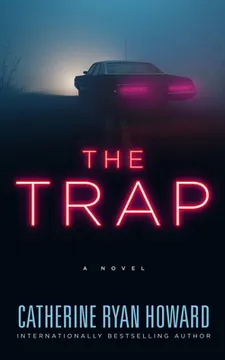
Other books by Catherine Ryan Howard

Download PDF
Download EPUB
.epub digital book format is ideal for reading ebooks on phones, tablets, and e-readers.








