

Key Takeaways
Treat neighborhood inequality as a civic boundary, not a personal failing
A hill divides two cities. In New Haven, Prospect Street separates leafy homes from Newhallville, a historically Black neighborhood where factories closed and basic services disappeared. The figures make the divide concrete: in 2021, four in ten families in Newhallville regularly faced hunger, six in ten residents lived far below the federal poverty line, and life expectancy was fifteen years shorter than in nearby Orange. People on both sides lived close together, but public transit did not cross the hill, and the neighborhoods received visibly different protections.
Separation becomes policy. Prospect Street had panic phones; Newhallville did not. Residents described a one-way view: they could see the prosperous neighborhood, while its residents often knew little about theirs. The book argues that such distance makes deprivation easier to misread as a natural feature of a place rather than the accumulated result of unequal treatment.
What's striking is how geography works here as a social institution. A hill, a transit gap, and unequal public safety can shape who encounters opportunity and whose suffering becomes visible. This is a useful corrective to explanations that locate hardship entirely in individual choices. At the same time, a neighborhood is never a single experience: Newhallville contains mutual aid, pride, and resourcefulness alongside deprivation. A fair account must hold both truths at once, without turning residents into either symbols of failure or inspirational exceptions.
Protect the assets families build, especially land and homeownership
A deed was taken. Pete Fields grew up on a South Carolina farm assembled by his grandfather, David, who owned 192 acres. In the late 1930s, a white highway patrolman repeatedly pressed Pete's father for the deed and bank book. The family eventually lost its title, and its farm became land worked for someone else. The loss was not only property. It interrupted a possible source of security and wealth that could have passed across generations.
The North offered hope, not equality. In 1951, Pete's mother moved the children to New Haven for safety, work, and better schools. Black families still faced housing discrimination, redlining, and exclusion from mortgages. From 1934 to 1968, Connecticut approved almost all government-backed mortgages for white borrowers. The term Dixie Limit described the dangerous, unwritten ceiling on Black prosperity in the Jim Crow South.
The family history shows how inequality compounds through assets, not merely wages. Land can support a household, anchor a community, and give descendants options. When ownership is stolen or blocked, later generations begin with fewer buffers against illness, layoffs, or crisis. This resembles the difference between income and wealth in economic analysis: income pays today's bills, while assets shape tomorrow's choices. The account also cautions against treating migration as a clean escape. Moving north reduced some forms of oppression, but discriminatory housing rules continued to limit where families could settle and what they could build.
When stable work disappears, violence inherits the factory's social role
Work built a neighborhood. Newhallville grew around factories, especially Winchester Repeating Arms. For generations, industrial wages supported homes, shops, taverns, and family life. Black workers were hired in larger numbers during World War II, often for the dirtiest and most dangerous jobs, but factory work still offered a path to a trade and a paycheck. In 2006, Winchester ended production in New Haven. Earlier, urban renewal had removed thousands of buildings, while the city lost much of its manufacturing base.
The replacement never came. Laid-off men described shame, isolation, and the loss of a daily role. Stores and gathering places closed with the paychecks that sustained them. Some young people saw drug sales and armed street status as the few visible routes to money, respect, and control. The book does not make job loss a complete explanation for violence, but shows how the disappearance of work weakened the institutions that had once held neighborhood life together.
A factory is more than an employer when its wages circulate locally and its routines organize adult life. Its closure can remove income, social ties, informal mentorship, and a shared sense of usefulness at the same time. That is why employment policy is also community policy. The account is strongest when it avoids a simple equation between unemployment and crime: most people facing economic hardship do not become violent. The more precise point is that lost work can leave fewer legitimate routes to status and security, while violence and illicit markets offer highly visible, if dangerous, substitutes.
Give young people belonging and agency before the streets do
Major had promise and pain. Teachers remembered him as unusually bright, able to connect lessons across subjects. He lost his mother at five, faced danger in his neighborhood, and began carrying guns as a teenager. Adults who reached him saw a grieving boy who felt there was no future available to him. Major later became a feared stickup kid and was believed to have killed several people. The book neither excuses his violence nor treats it as an inexplicable personal defect.
The street offered a role. In Newhallville, a gun could signal protection, status, and the ability to act in a world where a young person felt powerless. Major's path shows how loss, threat, and unmet need can shape choices without making those choices inevitable. Teachers, coaches, and youth workers sometimes reached him, but the support was intermittent and could not erase the danger around him.
This portrait invites a developmental, rather than purely punitive, question: what forms of belonging and recognition are available before a teenager's identity hardens around violence? A stable adult relationship, meaningful activity, and a credible future can matter because they compete with the immediate rewards of street status. Still, context should not become destiny. Major's victims and their families matter just as much as the conditions surrounding him. The book's difficult achievement is to insist on both accountability for harm and attention to the circumstances that make some young people more likely to inflict it.
Do not confuse being nearby with being guilty
Bobby was just around. At sixteen, Bobby spent time with friends outside the 2-4, an all-night neighborhood store. He liked basketball, music, girls, and sweets, and often looked after his younger sisters. He was not a drug dealer or a regular gun carrier. He also had no after-school activities nearby and lived among people and places shaped by violence. In local language, just around described a young person near the street scene without necessarily taking part in its crimes.
Proximity became a trap. Police suspicion could fall on boys who were present in a neighborhood, even when they had no role in a specific event. Bobby's routines made him familiar to people nearby, but that familiarity did not protect him when investigators needed a suspect. His story shows how a young person can be exposed to the same danger, social codes, and police attention as more deeply involved peers, while having far fewer resources to defend himself.
The distinction between participation and proximity is essential in any system that uses association as a shortcut for evidence. Networks can provide useful investigative leads, but shared location, friendship, or family ties cannot establish who committed a crime. The label just around also captures a broader problem of childhood in a high-risk place: ordinary social life can become evidence against a young person because there are few safe places to gather. A careful response must neither romanticize the corner nor treat everyone on it as interchangeable.
Treat a confession as a lead, never as proof
The investigation narrowed too soon. After Pete Fields was killed, detectives had witness accounts and a palm print from the car. The print was not analyzed until a later training exercise, when it was identified as BlackJack's. Ballistics also linked a gun found on Major after his death to Fields's murder. Yet investigators focused on Bobby and his friend Kwame. In the interrogation room, known locally as the Box, Bobby said officers threatened him, falsely claimed to have fingerprints and eyewitnesses, and offered leniency for a confession.
The story changed with the evidence. Bobby's recorded accounts conflicted with one another and contained basic errors. He said the victim was outside the car, then seated; he initially described a dispute, then a robbery. Bobby said detectives supplied details and corrected his versions. The term hold-back detail refers to information supposedly known only to a perpetrator and police. It cannot validate a confession if investigators have given that information to the suspect.
A confession feels like a conclusion because it appears to come from the accused person's own mouth. But interviews are social encounters shaped by unequal power, fatigue, fear, suggestion, and the interviewer's assumptions. Independent corroboration protects against confusing compliance with truth. The procedural lesson is concrete: record the full interaction, preserve notes, test the suspect's account against physical evidence, and pursue plausible alternatives. None of this assumes that every detective acts in bad faith. It recognizes a more ordinary danger: once a theory feels settled, contradictory facts can be treated as noise.
Police legitimacy depends on protection, fairness, and credible investigation
Silence can be self-protection. Newhallville residents had inherited distrust of police from generations of racist law enforcement, from the South to the North. A neighborhood code against informing was reinforced by fear of retaliation and doubt that officers could protect witnesses. Most residents wanted murders solved, but cooperation could put them or their families at risk. Between 2000 and 2005, New Haven solved only 52 percent of its murders, compared with a national clearance rate of about 62 percent in 2005.
Presence is not the same as trust. Residents described their area as both overpoliced and underprotected. Some officers built relationships, helped children, and learned local networks. Others arrived mainly after violence. The book presents community policing as one way to improve cooperation, but insists that accountability matters: a department cannot ask residents to trust it while overlooking weak investigations or mistreatment.
Trust is not a public-relations achievement. It is a judgment people form from repeated encounters, especially when the stakes are high and the power imbalance is obvious. Research on procedural justice, the idea that people are more willing to cooperate when authorities listen and act fairly, helps explain why respectful treatment can improve legitimacy even when outcomes are imperfect. Yet trust cannot be demanded from people who face real retaliation or see crimes go unsolved. Community ties help investigations, but they cannot substitute for transparent evidence gathering and credible protection.
Prison can educate people, but it cannot repay stolen years
Bobby grew inside a cage. After pleading guilty to a murder he did not commit, he received a 38-year sentence and spent nine years in prison before his conviction was overturned. Prison was crowded, controlling, and frightening. Bobby also found teachers and mentors there. Cellmate Maaly pushed him to read and study; other men helped him earn a GED and build a reading group. Those relationships supported his growth, but they did not make his imprisonment beneficial or just.
Release did not restore his adolescence. Bobby left without job experience, money, or the practical knowledge most people acquire gradually. He missed family milestones and ordinary chances to learn from mistakes. His story rejects two easy conclusions: that prison inevitably destroys every person, and that personal growth can make wrongful imprisonment acceptable. The learning belonged to Bobby and the people who supported him, not to the institution that took his freedom.
The distinction between adaptation and rehabilitation matters. People can build friendships, knowledge, and discipline in almost any setting, including one designed to restrict them. That resilience should not be mistaken for evidence that the setting works. Nor can later achievement reimburse time lost during adolescence, when identity, relationships, and independence are still forming. Bobby's education in prison demonstrates the value of mentors and intellectual community. It also makes the absence of those supports in his neighborhood and school system more visible.
Make reentry a supported transition, not a test of character
Freedom arrived without a user guide. Reentry means the transition from prison back into community life. Bobby had to learn how to use a bank, apply for work, navigate technology, and make daily decisions after years in a highly controlled environment. The book reports that two-thirds of released prisoners are rearrested within three years, rising to 83 percent for people with prison histories like Bobby's. In Connecticut, a felony record could trigger 625 restrictions involving housing, education, and work.
Effort alone could not remove the barriers. Bobby wanted a job and applied repeatedly, but employers required experience and often treated his record as disqualifying, even after his conviction was cleared. A New Haven clinic serving people recently released from prison reported 87 percent unemployment among its clients. Reentry requires practical support, including housing, health care, education, transportation, and employers willing to give people a first chance.
Reentry is often framed as a moral exam: the person has served a sentence, so now the person must prove worthiness through self-sufficiency. That framing ignores how prison interrupts the very experiences that make independence possible. A bridge into work, housing, and health care is not indulgence; it reduces the conditions that make instability harder to escape. Bobby's case sharpens the point because he was innocent, yet faced many of the same barriers as people convicted of crimes. Support should not depend on whether a person can tell a sufficiently inspirational story.
Make powerful local institutions answer for the neighborhoods beside them
Proximity creates responsibility. Newhallville sits near Yale, whose resources dwarf the city's. The book contrasts that wealth with persistent neighborhood poverty and describes Yale's limited, uneven engagement. It also examines Penn's West Philadelphia work, where university investment supported schools, housing, jobs, and retail, while rising property values displaced some residents. There is no simple model to copy, but the examples show that institutions can contribute beyond their walls and must reckon with the effects of their success.
No rescue can replace a system. New Haven tried community policing, violence interruption, and cross-agency coordination. These approaches helped, yet gun violence continued, and DaDa, the son of Bobby's cousin Quay, was killed as a young adult. Bobby eventually found a home and a measure of stability, but neither his release nor compensation could restore his lost years. The book's closing argument is that safer neighborhoods require shared investment in jobs, schools, housing, and accountable public safety.
The institutional question is not whether a university or city agency can solve every neighborhood problem. It is whether powerful organizations can use their capacity in ways that expand, rather than merely protect, shared prosperity. Partnerships can create jobs and improve schools, but they can also accelerate displacement if residents lack power over the changes. The useful standard is therefore not benevolent intent alone. It is durable local benefit, community influence, and honest evaluation of who gains and who bears the costs.
Analysis
The book is a narrative investigation built around a wrongful conviction, but its deeper structure is a chain of institutional inheritance. The Fields family's dispossessed land, Great Migration, racialized housing restrictions, the rise and closure of industrial work, neighborhood violence, coercive investigation, incarceration, and difficult reentry are not presented as separate topics. They are linked conditions that narrow choices across generations. The chain is explanatory, not deterministic: Major's violence remains his responsibility, while the systems around him help explain why violence could become a source of income, safety, and identity.
The case against Bobby reveals a second chain, this one epistemic. Investigators begin with uncertain information, settle on a suspect, then interpret a frightened teenager's inconsistent account as confirmation rather than warning. Their failure to test physical evidence and alternative suspects shows how a flawed theory can become self-reinforcing. The book's account does not require a conspiracy. It shows how pressure to solve a high-profile murder, confidence in interrogation, poor documentation, and institutional loyalty can make ordinary errors catastrophic. The central procedural insight is that a confession is not independent of the process that produced it.
The narrative's strongest ethical move is its refusal to flatten people into roles. Pete Fields is a neighbor and provider, not merely a victim. Major is both a killer and a bereaved child. Bobby is neither a saint nor the crime the state assigned him. This attention to particular lives makes structural claims more persuasive than a purely statistical argument would be. It also limits easy closure: identifying serious failures does not establish every disputed event with certainty, and Bobby's exoneration does not solve Pete's murder.
The book ultimately asks readers to understand public safety as collective work. Policing can matter, but it cannot replace stable employment, education, housing, or neighborhood trust. Universities and governments have resources, yet their contributions should be judged by local outcomes and resident power, not by gestures or reputation. Bobby's eventual stability is real, but it is not proof that the system repaired what it broke.
Review Summary
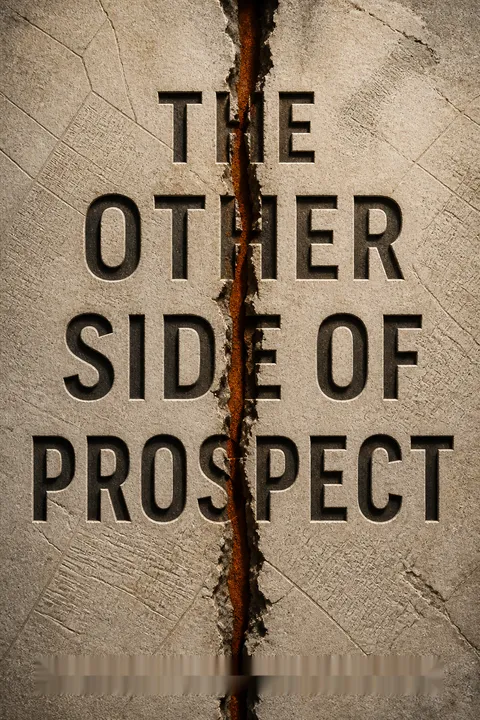
The Other Side of Prospect is praised as a powerful, well-researched work of non-fiction that explores systemic racism, poverty, and injustice through the story of Bobby Johnson, wrongly convicted of murder. Readers commend Dawidoff's intimate portrayal of New Haven's Newhallville neighborhood and its residents, contrasting it with nearby Yale University. The book is lauded for its compelling narrative, detailed characters, and comprehensive examination of social issues. While some found certain sections long-winded, most reviewers consider it a must-read that provides deep insights into urban America's challenges.
People Also Read






Glossary
Dixie Limit
Ceiling on Black prosperityAn informal and dangerous limit on how much wealth and visible success Black families could safely claim in the Jim Crow South. The limit was never clearly defined, which made even ordinary signs of prosperity risky. Families concealed land, crops, education, and possessions to reduce the chance of harassment, dispossession, or violence.
just around
Near street life, not necessarily in itA local description for young people who spent time near the street scene without necessarily selling drugs or committing serious crimes. Bobby was considered just around because he socialized at neighborhood corners and stores, while remaining outside much of the illegal activity. The label captures how proximity could expose uninvolved youth to danger and suspicion.
The Box
Police interrogation roomNew Haven police slang for the small room where detectives questioned suspects. The room's design and procedures gave investigators control over time, space, and access to information. In Bobby's case, much of the preliminary questioning happened without recording, leaving the official tapes with little context about how his statements had been produced.
hold-back detail
Unreleased crime informationA detail about a crime that police have not disclosed publicly and believe only the perpetrator should know. Investigators may use such details to test whether a confession is genuine. The method fails if detectives themselves supply the information during questioning, because a suspect can then repeat it without having committed the crime.
legal estrangement
Alienation from legal institutionsA term used by scholar Monica Bell for the distance between communities and legal authorities produced by experiences of mistreatment, exclusion, or unreliable protection. In Newhallville, historical abuse and contemporary policing shaped residents' doubts that police would treat them fairly or keep them safe. That estrangement could discourage witnesses from cooperating, even when they wanted justice.
CompStat
Data-led crime coordinationA policing approach that uses shared crime data and regular meetings to identify patterns and coordinate responses. In New Haven, meetings brought police together with state and federal agencies, schools, hospitals, courts, and community organizations. The goal was to understand emerging violence across institutions and coordinate prevention, rather than relying only on arrests after crimes occurred.
reentry
Return from prison to communityThe transition from incarceration back into everyday community life. Reentry involves more than release: people may need housing, work, health care, identification, transportation, education, and restored relationships. Bobby's experience shows how prison can interrupt basic adult skills and how legal restrictions and employer resistance can make a return to stability difficult.
Download PDF
Download EPUB
.epub digital book format is ideal for reading ebooks on phones, tablets, and e-readers.








