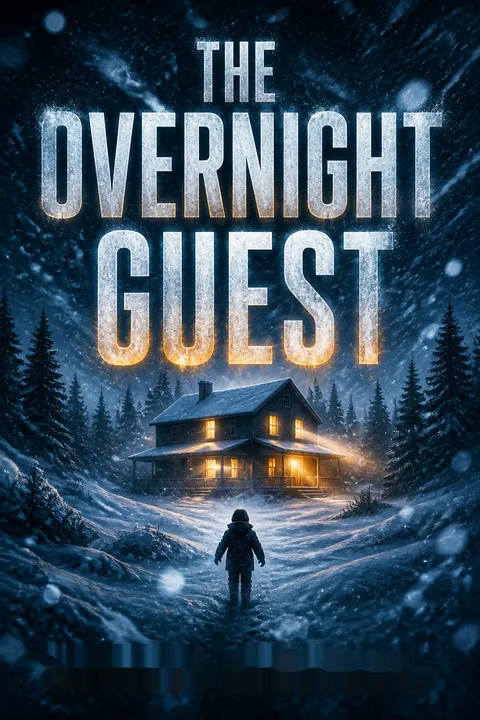


Plot Summary
Burden's Quiet Night
On the eve of a state fair trip in August 2000, twelve-year-old Josie Doyle prepares to spend the night with her best friend, Becky Allen. Josie's older brother, Ethan, has grown angry and defiant, and his father, William, confiscates his shotgun after finding him target-shooting with Becky and their forbidden friend, Brock Cutter.
Ethan walks home furious. Later, Josie and Becky slip outside to play beneath the stars, then hear gunshots and run toward the farmhouse, where they expect to find Josie's family.
A shadow carrying a shotgun emerges near the barn. The girls turn for the cornfield, but Becky falls behind as the gunman fires. Josie is hit in the arm and reaches the corn alone, while the farm's ordinary summer night collapses into a crime scene.
The attack grows out of a household already strained by adolescent rebellion, parental control, and a feud over land. Those tensions make Ethan an obvious suspect, but they do not explain the violence. The girls' first instinct, to run toward home, exposes the danger in their deepest assumption: that a familiar place and familiar adults guarantee safety. The cornfield becomes both cover and disorientation, a landscape Josie knows well that cannot tell her who is hunting her. The story begins by making ordinary closeness feel precarious, then leaves the reader inside the same uncertainty as the child who survives.
One Girl Comes Home
Josie hides through the night among the corn, then follows the morning sun back toward the farmhouse. Inside, she finds her mother, Lynne, and father, William, murdered. Her grandfather, Matthew Ellis, discovers her on the road and brings her back, where he confirms the killings and summons the sheriff. Josie cannot explain who shot her or where Ethan and Becky went.
Sheriff John Butler and Deputy Levi Robbins secure the house, find evidence of a sleepover, and realize another child is missing. At the hospital, investigators question Josie while her grandmother, Caroline, takes her home. Josie is left with a wounded arm, a dead family, and the suspicion she cannot admit aloud: Ethan may have been involved.
Josie's return transforms an unseen attack into intimate knowledge. She has to cross the threshold of her own home and recognize her parents through the evidence of their deaths, then carry that knowledge into the investigation. Her confusion is not simply a child's inability to identify a culprit. Ethan's recent anger and the missing shotgun have already supplied a plausible story, and grief makes that story difficult to resist. The adults offer comfort and ask for facts, while Josie understands that any answer might implicate the brother she loves. Her silence protects him emotionally even as it frustrates the search.
The Wrong Trail
Investigators focus on Ethan after his shotgun appears in the corn and Brock lies about seeing him. Deputy Robbins had stopped Brock speeding near the farm on the night of the murders, but let him go after accepting his story about a movie.
Later, Robbins pressures Brock for answers and learns that he heard gunshots, then drove away; he also hears Brock's claims that Ethan hated his parents. As investigators debate whether Ethan took Becky, Josie's grandfather returns to the farm with her.
Josie finds Ethan's body hidden beneath hay in a barn feed bunk. Robbins, pursuing Brock after learning a call to the Allens came from the Cutter home, crashes into Brock's truck, killing Brock and himself. The search loses a suspect and a source of information.
The investigation's errors are not caused by a lack of effort but by the seduction of a coherent story. Ethan's conflict with his parents, his missing gun, and Brock's accusation form a pattern that investigators can recognize quickly. Robbins's earlier leniency and later aggression are opposite responses to uncertainty, yet both compromise his judgment. The discovery of Ethan's body destroys the theory that he fled with Becky, but it arrives after the evidence has already pulled the search toward him. In this novel, investigative attention is itself consequential: once a misleading explanation takes hold, time and lives are spent pursuing it.
A Burned Alibi
A search dog follows Becky's scent to a bloody rag near the property of Jackson Henley, a troubled veteran who lives with his ailing mother, June. Detectives find Jackson burning tires and destroying possible evidence.
When he resists, a fire breaks out; Agent Camila Santos risks the smoke to save him, and Jackson survives with severe burns. His history and the rag make him a compelling suspect, but the evidence cannot prove he murdered the Doyles or abducted Becky. The investigators find no girl and no missing truck.
Jackson is later imprisoned on weapons charges, while suspicion about the murders settles around him without a conviction. The actual perpetrator remains free, protected by a false trail that turns an eccentric neighbor into the town's accepted monster.
Jackson's apparent guilt exposes the difference between suspicion and knowledge. His past, his evasions, the bloodied cloth, and the tire fire each invite a simple conclusion, and the investigation treats that accumulation as stronger than it is. Santos's decision to save him rather than shoot him recognizes that a living suspect may still provide answers, but survival does not produce truth when evidence is incomplete. The community's desire for closure makes the false explanation durable: Jackson can be punished for other crimes and still become the answer to a crime he did not commit. The novel makes scapegoating feel like an institutional as well as personal failure.
A Basement Without Names
In the years that follow the 2000 murders, a girl grows up with her mother in a locked basement, taught to fear the outside world and to obey the man who controls their food and movement. He alternates gifts and tenderness with beatings, restraint, and threats. Her mother has suffered repeated pregnancies and losses, and the girl learns to tend to her when she is ill, clean up after a miscarriage, and hide their attempts to leave.
They secretly collect money, keys, scissors, and a razor. When the mother finally tries the basement door, its new lock defeats her, so she breaks a window and digs through the snow. She takes an old truck and escapes with her daughter, but icy roads send them crashing into a ditch.
The girl's world is built through coercive contradictions: food is both a necessity and a reward, gifts arrive beside violence, and the man who claims to protect her keeps her imprisoned. Her mother's plans are necessarily incremental, because even small acts of preparation risk punishment. The child is not a passive witness; she learns to clean, conceal, and help solve the practical problem of escape. Their eventual flight is an act of trust under extreme uncertainty, not a sudden transformation into fearless fugitives. The basement's walls have shaped what the girl believes is possible, so reaching the outside is only the beginning of learning how to live in it.
The Overnight Guest
More than two decades later, Wylie Lark is staying alone in the remote Doyle farmhouse to finish a true-crime book about the unsolved murders. She has also fled the arguments and distance between herself and her teenage son, Seth. When a blizzard cuts the phone line, Wylie finds a small, injured child frozen in her yard and carries the child inside.
The child will not give a name and panics when Wylie tries to help. Wylie discovers an overturned black truck nearby, follows its debris, and finds a badly injured woman tangled in a barbed-wire fence. After Wylie leaves to fetch tools, the woman disappears. The child has come out of the wreckage, but Wylie has no idea whether the woman is a parent, a threat, or another victim.
Wylie's professional habit of entering other people's tragedies has become a way to avoid the unresolved demands of her own life. The farmhouse gives her quiet enough to write, but it also places her inside the history she has kept at a distance. Finding the child makes that distance impossible to maintain: her research becomes immediate care, with no reliable phone, medical help, or clear account of what happened. The child's silence challenges Wylie's assumption that good intentions should produce trust. Her first attempts to help are clumsy, and the danger is not solved by her expertise in crime. It requires patience she has not practiced with Seth.
The Hatchet in Darkness
Wylie finds the child hiding inside the house and discovers duct-tape residue around the child's mouth, then learns the child is a girl. The girl has been taught to distrust strangers and tries to protect the injured woman when she returns carrying a hatchet. A falling tree branch knocks out the power, and Wylie fights a panic about the dark while the girl brings her a lantern.
The truck catches fire, destroying anything that might identify it. Wylie and the girl go out for firewood, and Wylie sees the woman approaching the house; the woman slips inside and locks Wylie out. She takes the girl, but Wylie breaks a window to get back in. The woman threatens her and refuses police help, insisting that a man will come to reclaim them.
The sequence reverses the usual roles of rescuer and rescued. Wylie initially reads the child as a boy and the injured woman as a possible danger, while the girl's defensive actions are shaped by experiences Wylie cannot yet see. The power failure makes Wylie's private fear of darkness physically disabling, and the child, who has lived with fear as a daily condition, helps restore her ability to act. Their fragile cooperation matters more than a quick confession. Meanwhile, the burning truck erases practical evidence just as the people inside the house become harder to distinguish as victim, protector, and threat.
A Scar Remembered
As Wylie tends the woman's injuries, she sees a horseshoe-shaped scar on her palm that matches one on her own hand. The recognition brings back the vow she and Becky Allen made as girls, and Wylie understands that the battered woman is the friend who disappeared during the attack. She also reveals to Becky that she is Josie Doyle, now living under the name Wylie Lark.
Becky has believed for years that Josie's family was dead and that nobody was still looking for her; Wylie tells her the truth. Becky explains that the man who abducted her kept her and their daughter in a basement, and that they escaped in Ethan's stolen, repainted truck. The crash brought them to Wylie's door.
The scar makes recognition bodily before it becomes narrative. Wylie does not identify Becky through a document or a recovered memory alone, but through a mark they made together as children. That physical continuity counters years of isolation and deliberate misinformation. Their reunion does not restore the childhood they lost: Becky has been shaped by confinement, and Wylie has built a life around avoiding the place and person she associates with the murders. Naming herself as Josie is therefore an act of exposure. She lets the friend she failed to save see the person she has tried to become, while Becky must reconsider the lies that defined her world.
The Wrong Man in the Snow
A neighbor arrives on a snowmobile, and Wylie recognizes Randy Cutter, Brock's father and a local farmer. Later, a snowplow driver named Jack knocks at the farmhouse, and Wylie recognizes Jackson Henley, whom she has long believed killed her family. Acting on that belief, she lures Jackson into a shed and locks him inside.
Becky hears Randy's voice at the door and identifies him as the man who has controlled her for years. Wylie realizes that she has imprisoned the wrong man. Randy tries to enter the house, so Wylie arms Becky with a knife and hides the girl in the old bedroom's crawl space. Becky explains that Randy's threat is not a memory or a misunderstanding. He has come to take them back.
Wylie's certainty about Jackson is the last inheritance of the original investigation. She has spent years turning an unresolved case into a fixed account, and that account nearly makes her an accomplice to the wrong man's confinement. Becky's recognition forces Wylie to treat firsthand knowledge as evidence, even when it contradicts what she has believed for most of her life. Randy's familiar presence as a neighbor and father had made him legible as ordinary; Jackson's troubled history had made him legible as dangerous. The reversal reveals how easily a community's preexisting judgments can obscure the person closest to the crime.
The Farmhouse Turns
Randy breaks into the dark farmhouse and confronts Wylie, while Becky holds the shotgun but cannot keep it steady. Wylie tells Becky that her family never stopped caring, undermining Randy's claim that everyone abandoned her. Becky fires until the gun is empty, and Randy turns on Wylie. Wylie follows him to the barn, where he searches for the hidden girl.
She strikes his knee with a garden hoe, but he overpowers her and knocks her unconscious. When she revives, Wylie drives her Bronco through the barn wall and hits Randy. He survives the impact, crawls after her, and attacks her again. The girl returns with Wylie's fallen gun and shoots Randy as he strangles Wylie, ending his control over both women.
The climax makes rescue a shared action rather than a single heroic deliverance. Wylie can confront Randy, but she cannot overpower him alone; Becky resists his emotional control even while injured, and her daughter chooses to act when adults have failed to protect her. Randy's attempt to use family language and promised rewards repeats the coercive logic that kept the girl compliant. The girl's decision to use the gun is devastating precisely because it is both an act of agency and a burden no child should carry. The scene does not erase what happened; it interrupts the captor's power and creates the possibility of a future beyond him.
Sunrise Without Him
At dawn, Wylie returns to the house with the girl and tells Becky that Randy can no longer hurt them. Wylie has released Jackson from the shed and finds that he is alive; she recognizes that he, too, was trapped by the accusation that followed him for years. She gathers winter clothes, helps Becky and the girl into layers, and uses Randy's truck to get them to safety and medical care.
The girl tells Wylie her name is Josie, giving the first name she has been able to claim outside her father's control. Wylie has not undone the losses of her childhood, but she has brought Becky and her daughter out of the prison that shaped their lives and begins to see care as something she can offer rather than flee.
The resolution is deliberately practical: warm clothing, transport, medical help, and the release of Jackson matter as much as emotional recognition. Wylie's decision to free the man she misjudged acknowledges that justice includes correcting a false accusation, not only punishing the guilty. The girl's naming is a small but consequential recovery of selfhood after a life in which her father defined her world and identity. Wylie, meanwhile, has chosen to stay present when danger and grief make retreat attractive. The sunrise does not promise uncomplicated healing; it marks a passage from captivity and secrecy toward a life in which choices can begin again.
Epilogue
Fifteen months later, Wylie is touring for the book she wrote about the crime and preparing to return to Burden. She has spent the year rebuilding her relationship with Seth, who joins her on the trip. Becky, her daughter Josie, and Becky's mother, Margo, surprise Wylie at a library event.
Margo thanks Wylie for helping bring them home, while Becky tells Wylie she never blamed her for the night they were separated. Becky chooses to remain near her family in Burden, where she and Josie are receiving counseling. Wylie understands that home is not the place she fled but the bond she is repairing with Seth. She and Becky renew their childhood promise of sisterhood.
The epilogue resists the thriller's temptation to treat survival as a clean ending. Becky and Josie remain haunted and need counseling; Margo's gratitude does not erase the years of absence, and Wylie's public account of the crime still carries the private risk of reopening it. Yet the library gathering lets the survivors choose how their story is told and who may hear it. Wylie reads with Becky's approval, rather than claiming ownership of a shared trauma. Her reconciliation with Seth also reframes home as an ongoing relationship, not a recovered childhood place. Healing here is not forgetting, but making room for attachment alongside memory.
Analysis
The novel's central mystery is not simply who committed the 2000 murders, but how a community came to believe it had already answered that question. Ethan's anger, Jackson's record, and the evidence near Henley's property all make suspicion feel earned. Yet each clue is incomplete, and the investigation's eagerness to impose a coherent story helps the actual captor remain unseen. The plot therefore treats memory as a contested record: Josie's childhood recollections, Wylie's true-crime research, and Becky's lived experience carry different kinds of authority, none sufficient alone.
The book also examines captivity beyond locked doors. Becky and her daughter are confined by a man who controls food, movement, and information, while Wylie has made a quieter prison from avoidance, guilt, and professional distance. Each form of confinement depends on narrowing what seems possible. The storm literalizes that narrowing, cutting off roads and communication while forcing strangers into shared space. Yet survival comes through actions that widen another person's choices: Wylie waits rather than forces the girl to speak, Becky names her captor, and the child finally claims her name.
Parenthood runs through the story as protection that can either enable or dominate. Wylie's separation from Seth reflects her fear of failing him; Becky's mother fights to preserve her child under impossible conditions; Randy uses paternal authority to disguise ownership. The novel distinguishes care from control not by sentiment but by consequence. A caring adult makes room for a child's agency, while an abusive one makes obedience the price of safety. The ending offers no cure for trauma, but it does restore truthful relationships and the possibility of choice. Wylie cannot retrieve her family or undo her silence in the cornfield. She can, however, return to her son, recognize Becky, and help a child reach a world beyond the one her father built.
Review Summary
The Overnight Guest is a gripping thriller with multiple timelines and perspectives. Readers praise its atmospheric setting, tense plot, and unexpected twists. Many found it unputdownable, with compelling characters and a well-crafted mystery. Some criticized predictable elements and an over-the-top ending. The book explores themes of isolation, secrets, and survival. While opinions varied on certain aspects, most reviewers highly recommend it for fans of psychological thrillers, noting its ability to keep readers guessing until the end.
People Also Read









Characters
Wylie Lark
Returning crime writerWylie is a true-crime author who seeks solitude in a remote Iowa farmhouse while finishing a book. Her professional attention to victims is precise, but personal conflict with her teenage son has left her inclined to withdraw rather than repair a painful relationship. She is resourceful, observant, and used to approaching violence through records and testimony, yet a crisis demands that she act without certainty or preparation. Her fear of darkness and her attachment to crime-scene research suggest a complicated effort to manage what cannot be controlled. Wylie is driven by the hope that understanding terrible events might make them bearable, even as her own life resists being reduced to a finished account.
Josie Doyle
Farm girl and witnessJosie is a twelve-year-old Iowa farm girl whose family life is changing as her older brother Ethan grows increasingly volatile. She is energetic, loyal to her best friend Becky, and accustomed to the routines of chores, animals, and wide-open fields. Her closeness to her family makes her alert to the strain between Ethan and their parents, but not prepared to understand its cause. Josie wants to be brave and helpful, yet she is still a child navigating adult danger with the limited knowledge available to her. Her memories of home are physical and specific, rooted in the farm's barn, animals, and paths.
Becky Allen
Josie's devoted best friendBecky is Josie's best friend, a lively girl whose confidence and beauty attract attention as she approaches adolescence. She loves Josie but is also beginning to look beyond their familiar friendship toward older teenagers and new experiences. That growing independence creates friction between the friends, especially when Becky gravitates toward Ethan and his circle. Becky is affectionate with her mother, Margo, though she sometimes finds that care embarrassing in front of peers. Her warmth and curiosity make her open to others, but those same qualities can leave her vulnerable to people who mistake friendliness for permission.
Becky's daughter
Child behind the silenceBecky's daughter has grown up with a severely restricted view of the world and little reason to trust unfamiliar adults. She is quiet, watchful, and deeply attached to her mother and to a few small objects that give her continuity. Her caution can look like defiance, but it is an adaptation to a life in which speaking and moving freely have carried consequences. She is resourceful in ways her age should not require, helping her mother prepare for change and learning to distinguish safety from the rules imposed on her. The girl's gradual willingness to speak reflects a hard-won capacity to choose whom she trusts.
Randy Cutter
Farmer with old grudgesRandy is a local farmer and Brock's father, shaped by a fierce attachment to land and by old disputes with the Doyle family. He is part of a community where property, family reputation, and long memory intertwine. His public role is that of a practical neighbor with deep roots in the county, which allows him to move comfortably through familiar routines and relationships. Randy's confidence in his own authority influences how he treats both his son and the people around him. He represents the ease with which respectability can conceal private control, though his neighbors do not initially see him that way.
Jackson Henley
Isolated veteran and salvagerJackson is a Gulf War veteran who lives on a cluttered property with his ill mother, June, and earns money salvaging vehicles and farm equipment. He has a history of alcohol problems and conflicts with law enforcement, and his reluctance to cooperate makes him appear more suspicious than he may be. Jackson is solitary and distrustful, with a reputation that has accumulated through years of erratic behavior. The contrast between his difficult history and the community's willingness to assume the worst makes him an important figure in the story's examination of suspicion and public judgment.
Ethan Doyle
Angry older brotherEthan is Josie's sixteen-year-old brother, a teenager whose recent defiance has unsettled his parents and sister. He drinks, gets into trouble, resists rules, and carries a shotgun that his father eventually takes from him. He is also a boy whose private motivations remain difficult for his family to read. Josie remembers an earlier brother who taught her practical skills and shared the farm with her, making his changed behavior painful and confusing. Ethan's presence gives investigators an obvious explanation for the crimes, while his relationships leave questions that cannot be answered by appearances alone.
William Doyle
Protective farm fatherWilliam is Josie's father, a farmer who takes safety and responsibility seriously, especially when his son handles firearms. He is firm and sometimes confrontational with Ethan, and their arguments make the household feel increasingly unstable to Josie. William's connection to the land extends beyond livelihood, shaping his dealings with neighbors and his family's sense of home. To Josie, he is also the parent who taught her the routines and practical knowledge of farm life. The difference between his protective intentions and the tension his discipline creates complicates the family's ordinary image.
Lynne Doyle
Gentle farm motherLynne is Josie's mother, a warm and attentive presence who tries to hold the family together as Ethan's behavior worsens. She softens conflicts, worries about her children, and gives Josie the small gestures of affection that make a home feel secure. Her instinct is often to protect others from embarrassment or distress, even when doing so leaves her carrying too much alone. Lynne's relationship with William is affectionate but strained by their son's rebellion and the pressures of farm life. Josie remembers her through ordinary rituals of care, which become inseparable from the family's loss.
Matthew Ellis
Josie's steady grandfatherMatthew is Josie's maternal grandfather, a farmer who responds to crisis by taking practical responsibility. He discovers Josie after the attack, stays close during the investigation, and helps care for the Doyle farm's animals. His tenderness is understated, expressed through familiar routines and the nickname he gave Josie when she was small. Matthew's steadiness cannot remove her grief, but it gives her a dependable adult presence when her parents are gone. His own grief is immense, and he must keep functioning while his family and farm are transformed by violence.
Margo Allen
A mother's fierce hopeMargo is Becky's mother, separated from her husband and raising two younger children while working at the local grocery store. She is attentive to Becky even as her daughter grows more independent, and her instinct tells her when something is wrong. Faced with uncertainty, Margo struggles to remain composed and sometimes directs her fear at the people closest to the last known events. Her response is not a lack of compassion but the desperation of a parent denied information. Margo's love persists through confusion, anger, and the need to imagine a future for her family.
Camila Santos
State investigative leadCamila Santos is an experienced Iowa investigator brought in to organize the search and examine the Doyle murders. She is methodical, decisive, and alert to the danger of allowing one theory to dominate a case. Santos balances evidence gathering with the needs of families in crisis, and she understands that volunteer knowledge of rural terrain can be valuable. Her confidence does not make her infallible; she must work with incomplete records, limited time, and the assumptions of a close-knit community. Santos's role shows both the discipline and the limits of formal investigation.
Levi Robbins
Restless county deputyLevi is a ten-year deputy who volunteers for night shifts and longs for work more consequential than routine patrol. His familiarity with the county and its families can be useful, but personal nostalgia and impatience complicate his judgment. Levi first makes a consequential decision to give Brock a break, then becomes increasingly determined to extract the truth from him. His arc exposes how a law officer's self-image as a decisive protector can become entangled with pride and pressure. He wants to help find the missing children, but urgency does not guarantee sound judgment.
Brock Cutter
Ethan's reckless friendBrock is Randy Cutter's teenage son and Ethan's forbidden friend. He is physically confident, impulsive, and prone to testing boundaries, while his behavior toward Becky shows a troubling entitlement to her attention. His friendship with Ethan gives him access to the Doyle family's tensions, but his self-protective dishonesty makes him difficult to trust. Brock is not simply a delinquent foil: he is a teenager shaped by the adults and loyalties around him, and his choices become consequential as the investigation narrows.
John Butler
County sheriff under pressureJohn Butler is the Blake County sheriff, a seasoned local officer accustomed to quieter rural cases. He knows the families and landscapes he serves, which helps him understand local relationships but can also make assumptions feel like facts. Butler treats the Doyle murders as a community emergency and calls in state investigators when the missing children make the case exceed his department's capacity. He is careful around grieving relatives and tries to preserve the investigation's order, even as the scale of the crime unsettles his confidence.
Seth
Wylie's distant teenage sonSeth is Wylie's teenage son, caught between his mother's expectations and the independence he seeks. Their arguments and his wish to live with his father help explain why Wylie leaves Oregon to work in isolation. He is interested in baseball and has his own life beyond his mother's concerns. Seth's relationship with Wylie gives the present-day story an intimate counterpoint to its violence: affection remains, but it requires attention and repair rather than assumption.
Plot Devices
The Blake County blizzard
Isolation under weatherThe storm traps Wylie, the injured woman, and the child in the farmhouse while roads, phone lines, and visibility fail. It turns basic tasks into risks, forces Wylie to find wood and rescue people on foot, and prevents immediate help from reaching them. Its physical danger mirrors the characters' confinement without making the weather itself a substitute for the human threat. The blizzard also brings the escapees to Wylie's door and makes their survival depend on cooperation before anyone knows whom to trust.
The interwoven timelines
Delayed recognitionThe narrative alternates between the 2000 murders, fragments of a girl's hidden childhood, and Wylie's present-day blizzard. Each strand supplies information the others lack: the old investigation creates a suspect, the captivity scenes reveal the child's world, and Wylie's experience turns the past into an immediate crisis. The girl and mother are initially presented without full identities, so the reader must connect their details to the historical case. The structure makes memory and evidence compete, then converge when the survivors recognize one another.
The false evidence trail
Misdirecting suspicionA bloody rag, Jackson Henley's troubled history, his flight from the sheriff, and his tire fire combine to make him appear connected to Becky's disappearance. The investigators also consider Ethan, whose anger and missing shotgun make him seem culpable. These clues are not meaningless, but the characters draw conclusions beyond what they prove. The false trail shows how reputation and circumstantial evidence can harden into a public verdict, leaving the actual perpetrator free and a missing girl unfound for decades.
The matching hand scars
Recognition through touchA horseshoe-shaped scar on Becky's palm matches the mark Wylie carries from childhood. The shared physical detail links the battered stranger in the farmhouse to the friend Wylie believed lost, converting an inference into recognition. The scar also recalls the girls' childhood promise and gives their reunion an embodied history that survives altered names, years apart, and deliberate lies. It does not repair their trauma, but it makes it possible for Becky to begin trusting Wylie again.
The battered keepsake
A child's private anchorThe small action-figure toy and the worn bunny blanket accompany the girl from the basement into the storm. They are among the few objects she can recognize as hers in a world controlled by adults, and Wylie's return of the toy offers a small, concrete act of care after trust has been damaged. The objects preserve continuity between captivity and escape without requiring the child to explain her history before she is ready. They give Wylie clues about the child while showing what the child values.
FAQ
Synopsis & Basic Details
What is The Overnight Guest about?
- A dual timeline thriller: The story alternates between a 2000 tragedy and a present-day mystery, both centered around a remote Iowa farmhouse.
- A writer's isolation disrupted: A true-crime author, Wylie Lark, seeking solitude to finish her book, finds herself entangled in a real-life mystery when she discovers an injured boy in the snow.
- Unraveling a past crime: The present-day events force Wylie to confront the unresolved details of a horrific crime that occurred at the same farmhouse twenty years prior, blurring the lines between her research and reality.
Why should I read The Overnight Guest?
- Suspenseful and atmospheric: The novel creates a chilling and suspenseful atmosphere, keeping readers on edge with its twists and turns.
- Complex characters: The characters are well-developed, with their own unique motivations and flaws, making them relatable and engaging.
- Exploration of trauma: The story delves into the psychological impact of trauma and the long-lasting effects of violence, offering a deeper emotional experience.
What is the background of The Overnight Guest?
- Rural Iowa setting: The story is set in the rural, agricultural landscape of Blake County, Iowa, which plays a significant role in creating a sense of isolation and vulnerability.
- 2000s timeline: The past timeline is set in August 2000, a time before widespread cell phone use, which adds to the characters' isolation and vulnerability.
- True crime inspiration: The novel draws inspiration from true crime elements, exploring the aftermath of violence and the search for justice, which is a key theme in Wylie's life.
What are the most memorable quotes in The Overnight Guest?
- "It isn't the dark you should be afraid of... It's the monsters who step out into the light that you need to fear.": This quote, spoken by the young girl, highlights the theme of hidden evil and the deceptive nature of appearances.
- "Sisters forever, right?": This recurring phrase, shared between Wylie and Becky, emphasizes the enduring bond of friendship and the hope for healing.
- "You're not making this easy. I have to give you credit for that. You always were a survivor.": This quote from Randy Cutter to Wylie reveals his twisted admiration for her resilience, highlighting the cat-and-mouse dynamic between them.
What writing style, narrative choices, and literary techniques does Heather Gudenkauf use?
- Alternating perspectives: Gudenkauf uses alternating perspectives between Wylie in the present and the events of 2000, creating suspense and revealing information gradually.
- Atmospheric descriptions: The author uses vivid descriptions of the setting, particularly the weather and the isolated farmhouse, to create a sense of unease and tension.
- Foreshadowing and suspense: Gudenkauf employs subtle foreshadowing and suspenseful pacing to keep readers engaged and guessing about the true nature of the characters and events.
Hidden Details & Subtle Connections
What are some minor details that add significant meaning?
- The broken phone: Wylie's broken cell phone symbolizes her isolation and vulnerability, cutting her off from the outside world and forcing her to rely on her own instincts.
- The yellow scarf: The yellow scarf that Wylie leaves as a marker for the injured woman becomes a symbol of hope and a reminder of the woman's desperate situation.
- The Green Lantern figurine: Ethan's Green Lantern figurine, kept in his glove box, reveals a hidden vulnerability and a desire for protection, contrasting with his outward anger.
What are some subtle foreshadowing and callbacks?
- Abby's unease: Abby's initial unease during her walk foreshadows the violence that will soon engulf the community, highlighting the danger lurking beneath the surface of everyday life.
- The mention of Kara Turner: The mention of Ethan's past relationship with Kara Turner foreshadows his volatile nature and his potential for violence, adding to the suspicion surrounding him.
- The description of the barn: The detailed description of the barn, with its "broad red face" and "mouth large enough to drive a truck through," foreshadows its significance as a place of both refuge and horror.
What are some unexpected character connections?
- Wylie and Josie: The connection between Wylie and Josie is revealed through their shared trauma and the fact that Wylie is actually the older Josie, adding a layer of personal investment to the story.
- Randy and Becky: The revelation that Randy Cutter is Becky's captor, not Jackson Henley, is a shocking twist that highlights the deceptive nature of evil and the hidden connections between characters.
- Levi and Brett Cutter: The connection between Deputy Levi Robbins and Brett Cutter, Brock's cousin, reveals a past relationship and a sense of nostalgia that clouds Levi's judgment, leading to a missed opportunity to apprehend Brock.
Who are the most significant supporting characters?
- Matthew Ellis: Josie's grandfather, Matthew, serves as a source of comfort and support for her, highlighting the importance of family in the face of tragedy.
- Margo Allen: Becky's mother, Margo, embodies the desperation and grief of a parent searching for her missing child, adding an emotional depth to the story.
- Deputy Levi Robbins: Deputy Levi Robbins's initial encounter with Brock Cutter and his subsequent investigation highlight the complexities of law enforcement and the challenges of uncovering the truth.
Psychological, Emotional, & Relational Analysis
What are some unspoken motivations of the characters?
- Wylie's need for closure: Wylie's unspoken motivation is her need to confront her past trauma and find closure by writing about the crime that destroyed her family.
- Randy's desire for control: Randy Cutter's unspoken motivation is his desire for control and power, which drives his actions and his need to manipulate and dominate others.
- Becky's fear of abandonment: Becky's unspoken motivation is her fear of abandonment and her need to protect her daughter, which stems from her years of captivity and isolation.
What psychological complexities do the characters exhibit?
- Wylie's trauma: Wylie exhibits symptoms of PTSD, including anxiety, hypervigilance, and a fear of the dark, which are rooted in her past trauma.
- Randy's psychopathy: Randy Cutter displays psychopathic traits, including a lack of empathy, a need for control, and a manipulative nature, which make him a terrifying antagonist.
- Becky's Stockholm syndrome: Becky shows signs of Stockholm syndrome, as she struggles with her feelings for Randy Cutter and her fear of him, highlighting the psychological impact of her captivity.
What are the major emotional turning points?
- Wylie's discovery of the boy: Wylie's discovery of the injured boy in the snow marks a turning point, forcing her to confront her past and take action to protect him.
- The revelation of Randy's identity: The revelation that Randy Cutter is the true villain is a major emotional turning point, shattering Wylie's understanding of the past and forcing her to confront the true source of her trauma.
- Becky's reunion with her mother: Becky's reunion with her mother is a bittersweet emotional turning point, highlighting the enduring power of familial bonds and the hope for healing.
How do relationship dynamics evolve?
- Wylie and the boy: Wylie's relationship with the young boy evolves from one of initial fear and uncertainty to one of protectiveness and care, highlighting her capacity for empathy and compassion.
- Wylie and Becky: The relationship between Wylie and Becky evolves from a shared past to a present-day alliance, as they confront their shared trauma and fight for survival.
- Randy and Becky: The relationship between Randy Cutter and Becky is revealed to be one of manipulation and control, highlighting the psychological impact of captivity and abuse.
Interpretation & Debate
Which parts of the story remain ambiguous or open-ended?
- The extent of Randy's network: The novel leaves open the question of whether Randy Cutter had any accomplices or if he acted alone, leaving a lingering sense of unease.
- The long-term effects on Josie: The long-term psychological impact of the events on Josie is left open-ended, leaving readers to wonder about her future and her ability to heal.
- The nature of evil: The novel leaves open the question of the nature of evil and the motivations behind human cruelty, prompting readers to consider the complexities of human behavior.
What are some debatable, controversial scenes or moments in The Overnight Guest?
- Wylie's decision to leave Seth: Wylie's decision to leave her son, Seth, to pursue her writing career is a controversial moment, raising questions about her priorities and her role as a mother.
- The violence against Randy: The violence against Randy Cutter at the end of the novel is a debatable moment, prompting readers to consider the ethics of revenge and the limits of self-defense.
- The portrayal of Becky's captivity: The portrayal of Becky's captivity and her relationship with Randy Cutter is a controversial aspect of the story, raising questions about the psychological impact of trauma and the complexities of victimhood.
The Overnight Guest Ending Explained: How It Ends & What It Means
- Randy's death: The ending sees Randy Cutter defeated, but not before he reveals his twisted motivations and the extent of his evil, highlighting the destructive nature of unchecked power.
- Becky and Josie's reunion: The reunion between Becky and Josie is a bittersweet moment, emphasizing the enduring power of friendship and the hope for healing, but also acknowledging the lasting impact of trauma.
- Wylie's journey: Wylie's journey comes full circle as she confronts her past and finds a sense of closure, but the ending also suggests that the scars of trauma will always remain, highlighting the complexities of healing and moving forward.
Download PDF
Download EPUB
.epub digital book format is ideal for reading ebooks on phones, tablets, and e-readers.








