

Key Takeaways
Treat destructive ideas as infections of judgment, not harmless opinions.
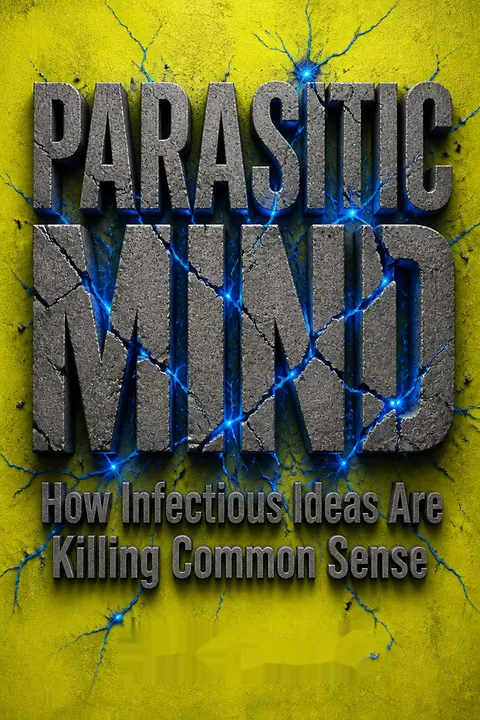
The central metaphor. Saad calls beliefs that disable reason, logic, and evidence “idea pathogens.” Like biological parasites, they can exploit a host and spread through a population. He points to parasites that alter animal behavior, such as one that can make mice less wary of cats, as a model for how an idea might redirect its human host. His warning is that harmful doctrines can travel from universities into politics, business, and popular culture.
A personal origin. The metaphor is rooted in Saad’s childhood in Beirut. As a Jewish boy, he witnessed religious hostility and fled Lebanon during the civil war. He connects that experience of tribalism and dogma to his later defense of freedom and truth in academic life.
The parasite metaphor makes an abstract danger memorable: beliefs do not merely describe the world, they can influence what people notice, repeat, and reject. It also invites a useful question: what conditions help an idea spread, and what makes it resistant to correction? The analogy has limits. Calling a view an infection can imply that its adherents are sick rather than mistaken, and that framing can shut down the very discussion the book wants to protect. The metaphor works best as a prompt to inspect a claim’s evidence and incentives, not as a diagnosis of its believers.
Use emotion for human judgment, but evidence for claims about reality.
Thinking and feeling cooperate. Saad rejects the idea that rationality means suppressing emotion. Different decisions call for different mental routes. A perfume advertisement sells sensation and fantasy, while a mutual fund pitch should emphasize information about risk and return. The Elaboration Likelihood Model describes these as a central route, which evaluates an argument’s substance, and a peripheral route, which relies on cues such as a speaker’s appeal.
Choose the route deliberately. Saad argues that high-stakes choices, including voting, deserve careful attention to policy rather than reflexive attraction or dislike. Emotions can also carry useful information: he describes jealousy as a response shaped by the different reproductive concerns faced by men and women. The failure is not feeling, but letting a feeling settle a factual question.
This is a stronger account of reason than the familiar image of a cold, emotionless calculator. Feelings can direct attention, register danger, and reveal what matters to a person; evidence is still needed to establish whether a factual belief is true. The useful distinction is between an emotion as information about one’s response and an emotion as proof about the outside world. A visceral reaction to a candidate, for instance, may merit reflection without settling whether that candidate’s policies are sound. The framework also depends on context: political choices mix values and facts, so they cannot be reduced to evidence alone.
Protect open inquiry, especially when a question threatens settled beliefs.
Disagreement is a safeguard. Saad treats freedom of speech, scientific inquiry, intellectual diversity, and merit-based judgment as essential to a free society. He describes professors and students who, in private messages, said they feared professional consequences for expressing unpopular views. He also cites a 2014 report documenting 192 efforts to disinvite speakers at American universities between 2000 and 2014. For him, even a small group can narrow public debate if others fall silent.
Speech needs room to be tested. Saad argues that a university should not make avoiding offense its primary purpose. He extends his concern to powerful online platforms that can remove users or restrict their income. His position is that the pursuit of truth requires a broad space for challenge, satire, and uncomfortable questions.
The book makes an important distinction between having a right to speak and being shielded from criticism. Inquiry cannot function if disagreement alone becomes grounds for silencing a question or punishing its author. At the same time, free speech does not resolve every dispute about a university’s duties or a platform’s moderation choices. Those institutions must also address harassment, threats, and unequal access to public attention. The strongest case for open inquiry is not that every statement deserves endorsement, but that claims should be answerable with counterargument and evidence rather than protected from scrutiny.
Test claims against biology without reducing every difference to genes.
Humans are not blank slates. Saad criticizes social constructivism, the view that human preferences and behavior are largely created by social conditions, and argues that it underestimates biological inheritance. He points to studies of children’s toy preferences, including findings among infants and patterns observed in other primates, as evidence that some sex-linked interests are not simply taught by parents. He also discusses hormonal and clinical evidence related to play behavior.
Nature and nurture interact. The book’s objection is to treating socialization as the whole explanation, not to the existence of environmental influence. Saad argues that biology should be allowed into research on human behavior, including sex differences, rather than being ruled out in advance as politically unacceptable.
The useful methodological point is that an explanation should not exclude biology before the evidence is examined. Human development involves both inherited dispositions and environments, and showing an average difference does not establish that every individual fits the pattern or that a difference is immutable. Evidence about toys, for example, may challenge a simple account based only on parental socialization without proving that biology explains every preference. The book’s defense of biological inquiry is strongest when it invites specific, testable questions. It is weaker when a contested scientific interpretation is treated as if it were itself an unquestionable fact.
Notice when victimhood incentives turn ordinary friction into proof of oppression.
Victim status can become currency. Saad uses “Collective Munchausen” for a group-level pattern in which people seek attention or sympathy by presenting themselves, or others, as victims. He links it to “Oppression Olympics,” a competition to rank people’s disadvantages through identity categories. A related idea, “homeostasis of victimology,” describes how the definition of harm may expand when there are too few incidents to sustain an expected narrative of widespread victimization.
Small disputes can become symbols. Saad cites campus controversies over language, costumes, and other everyday interactions as examples of claims that ordinary events have become evidence of systemic harm. His concern is that when victimhood brings moral authority, definitions of offense can keep expanding and disagreement can be recast as proof of malice.
These terms capture how social rewards can shape public behavior without requiring every participant to be consciously deceptive. A culture that grants status to displays of injury may encourage people to interpret ambiguous events through that lens. Yet the reverse error matters too: a complaint that sounds minor to an outsider may point to a real pattern that is difficult to see from one incident. The key question is not whether a person is genuinely offended, but what evidence supports the claim about cause, scale, and remedy. That keeps skepticism from becoming automatic dismissal.
Stop your favorite explanation from becoming the cause of everything.
Beware causal overreach. Saad calls one form of faulty reasoning “Six Degrees of Faux-Causality”: building a long, weak chain of causes until almost any event can be blamed on a preferred culprit. He describes a public argument linking drought in Syria to migration into cities, unemployment, recruitment by terrorists, and an attack in Paris, then using that chain to assign responsibility to climate change. Each link may sound plausible, but plausibility alone does not establish the full chain.
Check every step. Saad recommends resisting the habit of treating one favored tool or ideology as an all-purpose explanation. The idea that a hammer makes every problem look like a nail captures the danger. Occam’s razor, the preference for simpler sufficient explanations, can help guard against elaborate stories unsupported by evidence.
Causal storytelling is persuasive because it gives scattered events a coherent plot. But a chain is only as strong as its weakest link, and several individually plausible steps can produce a highly uncertain conclusion. The remedy is not to reject complex explanations; real causes often interact. It is to separate a sequence of possibilities from a demonstrated causal account, and to ask what evidence would distinguish it from alternatives. This standard should apply equally to explanations involving climate, culture, political ideology, or biology. Saad’s warning is most useful when it turns back on explanations he finds congenial.
Build truth from converging evidence, not one vivid example.
Triangulate the evidence. Saad’s method, “Nomological Networks of Cumulative Evidence,” assembles findings from different methods and sources to test one broad explanation. Instead of relying on a single study of toy preferences, for example, he draws on infant behavior, hormone-related evidence, clinical cases, primate observations, and historical or cross-cultural material. The aim is to see whether independent lines of evidence point toward a shared pattern.
Keep the conclusion provisional. Saad connects this method to Darwin’s synthesis of evidence across multiple fields. He also stresses replication, literature reviews, and meta-analysis, which combines comparable studies statistically. These tools help researchers assess whether a finding holds beyond one sample or method. In science, even a well-supported conclusion remains open to revision if better evidence emerges.
Triangulation is powerful because methods have different weaknesses. A survey can reveal reported attitudes, an experiment can isolate a mechanism, and historical records can show whether a pattern appears across time. Agreement across these sources is more persuasive than repetition of the same method. But convergence is not automatic proof: sources can share assumptions, and researchers may select evidence that favors their hypothesis. A robust network should include failed replications, null findings, and plausible competing explanations. The book’s insistence on cumulative evidence is most compelling when paired with its own stated principle that scientific conclusions remain revisable.
Scrutinize ideologies without treating their adherents as interchangeable.
Separate doctrines from people. Saad applies his evidence-gathering approach to Islam, assembling historical claims, survey findings, terrorism data, and analysis of religious texts. He cites, for example, a U.S. government list on which he reports that 81 percent of designated foreign terrorist organizations were Islamic. He uses this and other evidence to argue that some doctrines and institutions deserve direct criticism rather than automatic defense.
Do not turn group data into individual guilt. Saad explicitly says that criticizing an ideology is not the same as condemning every Muslim, and he acknowledges that most Muslims are kind and decent. His distinction matters: the target of analysis should be beliefs, institutions, and documented outcomes, not the presumed character of every person associated with a religion.
The distinction between criticizing a doctrine and judging its followers is indispensable in any plural society. Aggregate data can identify patterns worth investigating, but it cannot by itself establish what motivates an individual or prove that a text caused a particular event. Terrorism lists and public-opinion surveys also depend on how categories are defined and what period is measured. Careful analysis therefore needs comparison, context, and attention to variation within communities. Saad’s demand that sensitive ideologies remain open to scrutiny is strongest when the same evidentiary caution is applied to his own interpretation of the data.
Speak up in proportion to the stakes, not the applause.
Silence has consequences. In his closing chapter, Saad draws on the bystander effect: when many people witness a problem, each may assume someone else will act. He argues that this logic also encourages people to leave the defense of open inquiry to a few public figures. Students can question unsupported claims, graduates can withhold donations from institutions that abandon their stated principles, and citizens can challenge public officials.
Make participation concrete. Saad distinguishes costly action from symbolic displays that mainly advertise virtue. Sharing a hashtag is easier than risking professional or social disapproval for a reasoned position. He does not claim every person needs a huge audience. Speaking thoughtfully within a family, workplace, or friendship can still make dissent visible and reduce the sense that everyone privately agrees.
The bystander effect offers a useful explanation for why private concern can coexist with public silence. A small act of dissent can also give others evidence that disagreement is possible. Still, courage is not the same as volume, and aggressive confrontation can make persuasion harder. The most durable contribution may be to ask a clear question, state what evidence would change one’s mind, and treat opponents as people rather than embodiments of an ideology. The book’s call to action gains force when participation means sustained, accurate engagement, not merely adopting a combative persona.
Analysis
The Parasitic Mind is part memoir, part polemic, and part guide to evaluating claims. Its organizing metaphor gives the book a clear narrative: Saad’s experience of religious hostility in Lebanon informs his fear of ideological conformity in the academy, and his proposed response is a renewed commitment to reason, free inquiry, and scientific evidence. The practical core is strongest when it moves from slogans to method. Readers are asked to distinguish emotional reactions from factual claims, test causal chains, and build conclusions from evidence gathered across different sources.
The book’s ambition is also its central vulnerability. Saad argues for intellectual openness while presenting many disputed political and scientific interpretations with considerable certainty. Anecdotes of campus excess can illustrate a problem, but they do not establish how common it is. A statistic about a group cannot, without further argument, establish the causes of its behavior or describe individual members. The same standards he asks readers to apply to progressive claims must also apply to his preferred explanations, especially when evidence is selected from politically charged debates.
The book is most valuable when read as an invitation to challenge intellectual taboos, not as a final adjudication of every controversy it raises. Its defense of the right to investigate difficult questions does not require accepting each conclusion Saad draws. That distinction is crucial: intellectual freedom protects inquiry, while evidence determines which claims survive it. The best reader of this book is neither an automatic ally nor a reflexive opponent, but a careful auditor who asks what is asserted, what supports it, what is missing, and what could prove it wrong. The lasting lesson is not that one political camp owns reason. It is that reason depends on applying the same standards when the conclusion is congenial and when it is not.
Review Summary
The Parasitic Mind receives mixed reviews, with supporters praising its critique of political correctness and defense of free speech, while detractors criticize its perceived narcissism and lack of objectivity. Saad's writing style is described as engaging and humorous, though some find it condescending. The book addresses topics like cancel culture, identity politics, and Islamic terrorism. Readers appreciate Saad's courage in tackling controversial subjects, but some argue the book lacks depth and relies too heavily on anecdotes and Twitter exchanges.
People Also Read








Glossary
idea pathogens
Ideas that impair reasoningSaad’s metaphor for beliefs, attitudes, and thought patterns that weaken a person’s ability to use evidence, logic, and science. He argues that such ideas can spread through institutions and culture much as biological pathogens spread through populations. The phrase frames the book’s central concern, though it does not itself prove that any particular belief is harmful.
Ostrich Parasitic Syndrome
Denial of unwelcome evidenceSaad’s term for a pattern of disordered thinking in which a person rejects evidence that conflicts with a favored worldview. He describes the pattern as involving motivated avoidance, distorted causal explanations, and resistance to correction. The label is rhetorical rather than a recognized clinical diagnosis, so its value depends on examining the reasoning rather than treating it as a medical condition.
Epistemological Dichotomania
Overreliance on binary explanationsSaad’s term for the tendency to divide complex questions into two opposing categories, even when the categories are incomplete or misleading. He uses the nature versus nurture debate as an example, arguing that human traits usually reflect interactions between biological inheritance and environment. The term cautions against mistaking a simplifying model for the full structure of reality.
Collective Munchausen
Group pursuit of victim statusSaad’s analogy for a social pattern in which people seek sympathy, attention, or moral standing by emphasizing their own victimhood or associating themselves with the suffering of others. It draws on Munchausen Syndrome, in which an individual fabricates illness to attract care. Saad applies the idea to public and political behavior, not as a formal psychiatric diagnosis.
homeostasis of victimology
Maintaining a victimhood narrativeSaad’s hypothesis that a culture invested in a continuing narrative of victimization may broaden its definitions of harm when obvious examples are scarce. He links this idea to concept creep, the expansion of terms such as trauma, prejudice, or abuse to cover a wider range of experiences. The hypothesis describes a possible incentive, not proof that a particular complaint is false.
Six Degrees of Faux-Causality
A chain of weak causal linksSaad’s phrase for explanations that connect a major event to a preferred cause through a long sequence of plausible but insufficiently established steps. A chain linking drought, migration, unemployment, recruitment, and terrorism illustrates the problem. Each link requires evidence; a coherent story alone cannot establish that the entire sequence is causal.
Nomological Networks of Cumulative Evidence
Converging evidence across methodsSaad’s framework for testing a broad claim by assembling evidence from different methods, populations, and sources. Rather than relying on one study, researchers look for a pattern that recurs across experiments, observations, historical records, or other relevant evidence. The approach can strengthen an explanation, provided it includes contradictory findings and remains open to revision.
Elaboration Likelihood Model
Two routes for processing persuasionA persuasion framework used by Saad to distinguish careful evaluation of a message’s substantive arguments from judgments based on peripheral cues, such as a speaker’s attractiveness or style. The central route involves greater attention to evidence and reasoning, while the peripheral route relies more on indirect signals. Which route people use depends partly on their motivation and ability to process the message.
FAQ
What's The Parasitic Mind about?
- Central Theme: The Parasitic Mind by Gad Saad explores how "infectious ideas" undermine rational thinking and common sense in society. Saad argues that these ideas spread like pathogens, leading to a decline in reason and individual dignity.
- Cultural Critique: The book critiques ideologies such as postmodernism, radical feminism, and social justice movements, which Saad believes contribute to a culture of victimhood and anti-science sentiment.
- Call to Action: Saad encourages readers to engage in the battle for reason and freedom of thought, emphasizing the importance of free speech and intellectual diversity.
Why should I read The Parasitic Mind?
- Insightful Analysis: Saad provides a unique perspective on contemporary cultural issues, making it a valuable read for understanding the current ideological landscape.
- Personal Experience: The author shares his personal history, including experiences during the Lebanese Civil War, which inform his views on freedom and truth.
- Empowerment: The book aims to empower readers to reclaim their voices and engage in discussions about reason and science, countering political correctness.
What are the key takeaways of The Parasitic Mind?
- Importance of Reason: Saad emphasizes that reason, science, and freedom of speech are essential for a healthy society, which are being eroded by ideologies prioritizing feelings over facts.
- Critique of Victimhood Culture: The book critiques the rise of victimhood narratives that stifle discourse and promote a culture of outrage.
- Inoculation Against Bad Ideas: Saad offers strategies to "inoculate" oneself against harmful ideologies, advocating for critical thinking and the pursuit of truth.
What are the best quotes from The Parasitic Mind and what do they mean?
- “Truth shall prevail.”: This quote encapsulates Saad's belief in the ultimate triumph of reason and truth over falsehoods and suppressive ideologies.
- “Tolerance of intolerance is cowardice.”: Saad uses this quote to illustrate the dangers of unlimited tolerance, arguing that failing to challenge intolerant views undermines a free society.
- “I am a parasitologist of the human mind.”: This statement reflects Saad's mission to identify and combat "idea pathogens" that infect rational thought and discourse.
What is the concept of "Ostrich Parasitic Syndrome" (OPS) in The Parasitic Mind?
- Definition of OPS: OPS refers to a form of disordered thinking where individuals refuse to acknowledge obvious truths, akin to an ostrich burying its head in the sand.
- Manifestations: Saad discusses how OPS can lead to science denialism and irrational beliefs, such as rejecting biological differences between sexes.
- Cognitive Dissonance: The syndrome illustrates the cognitive dissonance that arises when individuals cling to ideologies contradicting observable reality.
How does Gad Saad define "idea pathogens" in The Parasitic Mind?
- Nature of Idea Pathogens: Saad describes idea pathogens as harmful beliefs and ideologies that spread through society, undermining rational thought and scientific understanding.
- Examples: He cites postmodernism, radical feminism, and social constructivism as key examples that distort reality and promote victimhood.
- Impact on Society: These pathogens create a culture where feelings are prioritized over facts, leading to a decline in critical thinking and open discourse.
What role does freedom of speech play in The Parasitic Mind?
- Non-Negotiable Element: Saad argues that freedom of speech is essential for an enlightened society, allowing for the exchange of ideas and the pursuit of truth.
- Consequences of Suppression: He warns that suppressing speech to protect feelings leads to intellectual stagnation and societal decay.
- Call to Action: The author encourages readers to defend their right to speak freely and engage in discussions, even when uncomfortable.
How does Saad connect his personal experiences to the themes in The Parasitic Mind?
- Lebanese Civil War: Saad's childhood experiences during the Lebanese Civil War shaped his understanding of the dangers of tribalism and ideological dogma.
- Commitment to Truth: His journey as an immigrant and academic fuels his passion for defending freedom and truth against harmful ideologies.
- Empathy for Victims: Saad's background allows him to empathize with those suffering under oppressive ideologies, motivating his fight for reason and dignity.
What is the "Oppression Olympics" as described in The Parasitic Mind?
- Definition: The Oppression Olympics refers to the competitive nature of victimhood narratives, where individuals or groups vie for the title of "most oppressed."
- Cultural Implications: Saad argues that this competition leads to a culture of outrage, overshadowing genuine grievances with performative victimhood.
- Impact on Discourse: The phenomenon stifles meaningful dialogue and creates divisions, as individuals focus on perceived victim status rather than common ground.
How does The Parasitic Mind address the issue of anti-science sentiment?
- Critique of Anti-Science Movements: Saad discusses how various ideologies, particularly from academia, promote anti-science attitudes rejecting empirical evidence.
- Examples of Anti-Science: He highlights issues like climate change denial, vaccine hesitancy, and rejection of biological differences as manifestations.
- Call for Rational Discourse: The author advocates for a return to reason and scientific inquiry, urging readers to challenge anti-science narratives.
What solutions does Saad propose in The Parasitic Mind to combat idea pathogens?
- Inoculation Strategies: Saad suggests individuals protect themselves from idea pathogens by seeking accurate information and processing it through science and logic.
- Engagement in Discourse: He encourages readers to participate in discussions about controversial topics, using reasoned arguments to counteract harmful ideologies.
- Empowerment through Knowledge: The book emphasizes education and critical thinking as tools for resisting idea pathogens and reclaiming rational discourse.
How does The Parasitic Mind critique the concept of infinite tolerance?
- Paradox of Tolerance: Saad references Karl Popper's paradox, stating that unlimited tolerance can destroy tolerance itself, undermining a free society.
- Real-World Implications: He discusses how infinite tolerance allows harmful ideologies to flourish, posing a threat to societal safety.
- Call for Boundaries: Saad advocates for establishing boundaries on tolerance, suggesting societies must defend core values against intolerant ideologies.
About the Author

Download PDF
Download EPUB
.epub digital book format is ideal for reading ebooks on phones, tablets, and e-readers.








