

Key Takeaways
Make whole plants the default, not a side dish to animal foods
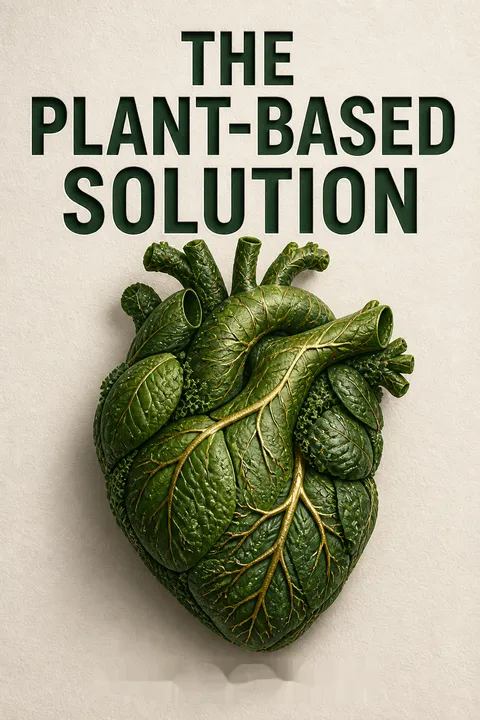
A cardiologist changes course. Joel Kahn says a 1990 study by Dean Ornish changed how he treated heart patients: instead of focusing only on procedures after arteries were damaged, he began teaching prevention through food and lifestyle. His prescription is a whole-food, plant-based (WFPB) diet: vegetables, fruits, legumes, whole grains, nuts, and seeds, with no meat, eggs, or dairy. He often recommends limiting added oil, salt, and sugar, too.
Support comes from several directions. The book points to a vegan option in the 2015-2020 US dietary guidelines, a nutrition academy position paper, and Medicare coverage for the Ornish and Pritikin intensive cardiac programs. A review of 95 studies involving nearly two million people also found lower disease and mortality risks with higher fruit and vegetable intake. These findings support a pattern, not a guarantee for every person.
The strongest version of this case is not that every plant food is beneficial or every animal food equally harmful. It is that a diet built around minimally processed plants changes several exposures at once: fiber rises, while saturated fat and dietary cholesterol tend to fall. That whole-pattern perspective is more useful than arguing over single ingredients. Institutional endorsements add credibility, but they do not mean every guideline endorses a fully vegan diet or proves that one eating pattern treats every condition. The practical test is whether the chosen diet is nourishing, sustainable, and medically appropriate for the individual.
For blocked arteries, lifestyle offers evidence beyond symptom management
A landmark trial challenged fatalism. In the Lifestyle Heart Trial, people with advanced coronary disease were assigned either usual care or a comprehensive lifestyle program. The program combined a low-fat plant-based diet with walking, stress management, and group support. At five years, average arterial narrowing had decreased about 10 percent in the lifestyle group, while it had increased 28 percent in the control group. The control group also experienced about 2.5 times as many serious events, including heart attacks, hospitalizations, and procedures.
The bundle matters. Kahn also tells of Paul, who adopted a strict plant-based diet after being advised to undergo bypass surgery. His angina eased and he avoided surgery for years. That is an illustrative patient story, not proof that diet alone caused his outcome. The trial tested several changes together, and its findings do not justify stopping prescribed cardiac treatment.
The notable contribution here is a shift from asking only how to repair damaged arteries to asking how to change the conditions that damage them. That approach fits prevention science, where multiple modest changes can reinforce one another. The trial is compelling because it measured arterial changes and clinical events over time, but it was small and tested an intensive package rather than diet in isolation. Its results are a reason to discuss comprehensive lifestyle care with a clinician, not a reason to treat bypass surgery, stents, or medication as unnecessary in every case.
Type 2 diabetes can improve as muscle fat and excess weight fall
Insulin resistance has a proposed mechanism. In type 2 diabetes, cells may respond poorly to insulin, leaving too much glucose in the blood. Kahn describes lipotoxicity as excess fat stored inside muscle cells, which can interfere with insulin signaling. A diet lower in fat may help reduce that interference, while weight loss and higher-fiber foods can also improve blood-sugar control.
A trial found measurable change. In a 22-week study of 99 people with type 2 diabetes, a low-fat vegan diet reduced average A1C, a measure of blood sugar over several months, by 1.23 percentage points, compared with 0.38 points for the comparison diet. More participants in the vegan group reduced diabetes medication. Type 1 diabetes is different: it requires ongoing insulin and is not reversed by diet. Medication changes need clinical supervision.
Mechanistic explanations can make dietary advice easier to understand, but they should not be mistaken for a complete account of diabetes. The trial provides more direct evidence than a testimonial, yet it still tests a dietary program under study conditions, not a universal cure. Blood sugar can change quickly when someone eats less or loses weight, which makes medication oversight essential. The useful conclusion is narrower and stronger: food choices can materially affect type 2 diabetes management, and a well-planned plant-based pattern is one option worth discussing with a qualified care team.
Build meals around fiber-rich plants to make weight control more sustainable
Volume can help with appetite. Vegetables, fruits, beans, and whole grains bring fiber and bulk to meals. Kahn argues that this makes it easier to feel satisfied while eating fewer calories, especially when these foods replace energy-dense processed foods and animal products. His examples are practical: keep cooked beans and grains ready, make a substantial salad, and use fruit or vegetables as convenient snacks.
Studies suggest an advantage. In a two-year trial of 62 overweight women, participants following a vegan diet lost more weight than those assigned a moderate low-fat diet: about 11 versus 4 pounds at one year, and 7 versus 2 pounds at two years. Meeting attendance was also associated with better results. The book’s accounts of a podiatrist losing 110 pounds and comedian Penn Jillette losing more than 100 pounds are motivating examples, not typical expected outcomes.
Weight change is not simply a contest between named diets. Food quality, portion size, routines, affordability, sleep, and social conditions all shape what a person can maintain. A plant-based pattern may make calorie reduction less effortful when it emphasizes high-fiber whole foods, but vegan cookies and refined snacks do not acquire special properties by lacking animal ingredients. The book is most persuasive when it links a dietary pattern to practical preparation and support, rather than promising a particular number on the scale.
Treat blood pressure and cholesterol as signals of vascular health
Arteries respond to daily inputs. The endothelium is the thin cell layer lining blood vessels. Kahn explains that it helps regulate vessel relaxation and blood flow through nitric oxide. Leafy greens and beets provide dietary nitrates that the body can use in this process. In a small study he cites, a single high-fat fast-food breakfast temporarily impaired measured endothelial function.
Several measures can improve together. A seven-day plant-based program reported median drops of 8 mmHg in systolic blood pressure and 4 mmHg in diastolic pressure. In a separate one-month study of 46 adults with high cholesterol, a portfolio of cholesterol-lowering foods reduced LDL cholesterol by 29 percent, close to the 31 percent reduction with lovastatin. That short, small comparison does not establish food as a replacement for medication. Kahn also discusses TMAO, a gut-bacteria-produced compound linked in the book to animal-food intake and cardiovascular risk.
This section usefully connects measurements that are often treated as separate problems. Blood pressure, cholesterol, blood sugar, and vessel function can reflect overlapping influences, so a broader lifestyle intervention may affect several at once. Still, a temporary change in a lab marker is not the same as fewer heart attacks, and a short dietary trial is not a medication-equivalence verdict. TMAO research is especially valuable as a research direction, but associations and proposed mechanisms should not be presented as settled explanations of disease.
Separate proven food-related cancer risks from promising prevention research
Processed meat is a clear warning. The International Agency for Research on Cancer classified processed meat as a Group 1 carcinogen, meaning there is sufficient evidence that it can cause cancer. The book reports that each daily 50-gram portion was associated with an 18 percent increase in colorectal cancer risk. This is a relative increase, not an individual’s absolute chance of developing cancer.
Dietary prevention evidence varies. Kahn describes studies linking vegetarian diets with lower rates of some cancers, and an Ornish trial in men with early prostate cancer. After a year, none in the lifestyle group needed additional treatment, while six men in the control group did. The program also included exercise, stress management, and support. These results are encouraging, but they do not show that a vegan diet cures cancer or replaces screening and treatment.
Good health communication separates evidence about a specific hazard from broad claims about a whole diet. The processed-meat finding is specific and actionable; studies of overall dietary patterns are harder to interpret because people who choose different diets may differ in many other ways. The prostate study is notable for testing a lifestyle package, but its design and scale limit what it can establish. This careful distinction strengthens the case for prevention: it avoids turning promising research into a promise that no serious illness will occur.
Feed gut health with plants, but keep autoimmune claims in perspective
Fiber feeds gut ecosystems. The gut microbiome is the community of microorganisms living in the digestive tract. Kahn argues that fiber from legumes, vegetables, fruits, and whole grains helps support beneficial gut bacteria; resistant starch in foods such as cooked potatoes and fermented foods such as sauerkraut are also discussed. These pathways may influence inflammation and immune function.
Some clinical findings are early. In one small study of people with Crohn’s disease in remission, 15 of 16 following a semi-vegetarian diet remained in remission, compared with 2 of 6 in the omnivorous group. The numbers are striking, but the study was small. Kahn also recounts Brooke Goldner’s lupus remission after changing her diet, a personal case rather than controlled evidence. Such stories can inspire inquiry, but autoimmune disease requires professional care.
The gut-microbiome connection is a promising bridge between nutrition and immune function because it offers plausible ways that food could influence inflammation. Yet microbiome research is complex: different diets change many microbial features, and a change in bacterial composition does not automatically mean better health. Small studies and dramatic personal stories are valuable for generating questions, not settling them. The responsible takeaway is to consider a fiber-rich dietary pattern as one supportive measure while keeping prescribed monitoring and treatment in place.
Oxford modeled vegan diets cutting food emissions 70% by 2050
Food choices reach beyond the body. Kahn connects plant-based eating to land, water, and climate impacts, especially the resources used to raise animals for food. He cites an Oxford research model projecting that, by 2050, a global vegan dietary pattern could reduce food-related greenhouse gas emissions by about 70 percent and avert roughly 8.1 million deaths. These are scenario estimates, not observed outcomes from a worldwide diet change.
The ethical case is direct. The book describes concentrated animal feeding operations, where large numbers of animals are raised in confined industrial systems, and argues that avoiding animal products is a way to reduce participation in that system. It also draws on ahimsa, a principle of non-harm and compassion. Environmental impact and animal welfare offer distinct reasons to make the same dietary choice.
This is the book’s broadest frame: meals are personal acts with consequences for shared systems. Modeling studies help compare possible futures, but their projections depend on assumptions about food production, behavior, and policy. They should guide decisions without being mistaken for precise forecasts. The ethical argument does not require a health claim to be true, and the health case does not settle every ethical question. Keeping these arguments distinct makes the overall case more resilient and allows readers to begin with the motivation they find most compelling.
Make the change durable with support, simple meals, and B12
Make the new default convenient. Kahn recommends starting with familiar meals, stocking beans, grains, seeds, and spices, preparing food ahead, and finding people who share the goal. The book offers a 21-day menu, recipes, restaurant strategies, and support-group suggestions. Food rules can also reduce the number of daily decisions: decide what is not on the menu, then choose from enjoyable plant foods.
Plan for nutrition and safety. A fully plant-based diet requires reliable vitamin B12, which Kahn recommends supplementing. He also discusses checking vitamin D and considering omega-3 and iodine sources. Individual needs vary, so supplementation and dietary changes deserve discussion with a clinician, especially during pregnancy, chronic illness, or medication use. The goal is a balanced pattern that can be sustained, not a short challenge followed by a return to old habits.
The book recognizes a central fact of behavior change: conviction is easier to maintain when the surroundings make the desired choice ordinary. A stocked pantry, repeated meals, and social support reduce friction more reliably than relying on willpower at every meal. Nutrition planning is part of that design, not an afterthought. The approach also benefits from flexibility in pace. A gradual transition may suit one person, while another may prefer a structured trial, provided the plan is nutritionally adequate and medically supervised when needed.
Analysis
The book’s central strength is its synthesis of clinical experience, research, practical food guidance, and ethical and environmental arguments. Its narrative begins with Kahn’s own shift after encountering evidence that coronary disease might improve, then moves system by system through possible benefits. This structure makes nutrition feel consequential rather than abstract. Patient stories give the science a human face, while the recipes and planning advice make the proposed change easier to imagine.
Its evidence is not uniform, and the distinction matters. The book draws on randomized trials, observational cohorts, mechanistic hypotheses, and individual success stories. These forms of evidence answer different questions. A randomized intervention can test whether a program changes outcomes under specific conditions; observational studies can reveal patterns but cannot fully separate diet from other differences between groups; a case report can suggest possibilities but cannot establish typical results. Several studies discussed here test a bundle of changes, including diet, exercise, stress management, and support, so their benefits cannot be assigned to food alone.
The most defensible synthesis is that a well-planned diet centered on minimally processed plant foods can improve important health measures and may reduce risk for several chronic diseases. The book’s strongest specific case concerns cardiovascular risk and type 2 diabetes, where it describes intervention studies alongside plausible mechanisms. Claims about reversing cancer, autoimmune disease, or nearly any health problem require more caution than the book’s confident rhetoric sometimes allows. Prevention, disease management, and cure are not interchangeable.
The book also makes a useful distinction, implicitly if not always consistently, between whole-food plant eating and simply avoiding animal ingredients. The former emphasizes legumes, vegetables, fruit, and grains; the latter can still rely heavily on refined products. Finally, the environmental and animal-welfare cases broaden the decision beyond personal health. Readers need not accept every medical claim to find the book’s practical core valuable: make nourishing plant foods central, plan for nutrients such as B12, and treat dietary change as a meaningful part of care, not a substitute for it.
Review Summary
The Plant-Based Solution receives mostly positive reviews for its comprehensive overview of the health benefits of a plant-based diet. Readers appreciate the scientific evidence presented, personal stories, and practical recipes. Some find it repetitive or simplified for beginners, but many recommend it as a good starting point for those considering veganism. Critics note that it may not offer new information for experienced vegans and some question the use of oil in recipes. Overall, reviewers value the book's focus on health, ethics, and environmental impacts of a plant-based lifestyle.
People Also Read




Glossary
Whole-food, plant-based (WFPB) diet
Minimally processed plant eatingIn Kahn’s usage, a dietary pattern centered on vegetables, fruits, legumes, whole grains, nuts, and seeds, excluding meat, eggs, and dairy. The book often recommends limiting added oils, salt, and sugar as well. This is more specific than simply choosing foods labeled vegan, since highly processed foods can also contain no animal ingredients.
The Six Pillars of Support for the Plant-Based Solution
Six evidence sourcesKahn’s overview of institutional endorsements and research he uses to support plant-based eating. Its six sources include federal dietary guidance, the Academy of Nutrition and Dietetics, Medicare coverage of intensive cardiac rehabilitation programs, diet rankings, health-system guidance, and research associating fruit and vegetable intake with health outcomes.
Lifestyle Heart Trial
Ornish heart-disease studyA clinical study led by Dean Ornish that compared usual care with a comprehensive lifestyle program for people with coronary heart disease. The program combined a low-fat plant-based diet with exercise, stress management, and group support. The book highlights reported improvements in arterial narrowing and fewer serious cardiac events in the lifestyle group.
Endothelium
Blood-vessel inner liningThe thin layer of cells lining blood vessels. Kahn describes it as an active tissue that helps regulate vessel relaxation, blood pressure, inflammation, clotting, and blood flow. It produces nitric oxide, a signaling molecule that helps vessels widen. The book presents endothelial health as one way diet and lifestyle may affect cardiovascular function.
Lipotoxicity
Excess fat disrupting cellsThe term Kahn uses for excess fat accumulating inside cells, particularly muscle cells, where it may interfere with insulin signaling. In the book’s proposed explanation, this interference makes cells less responsive to insulin, so glucose remains in the bloodstream. The author presents lowering dietary fat as one way to reduce this problem in type 2 diabetes.
Trimethylamine N-oxide (TMAO)
Gut-derived blood compoundA compound discussed in the book as being produced when gut bacteria process substances found in some animal foods, including choline and L-carnitine. Kahn describes research linking higher blood TMAO levels with cardiovascular risk and proposes that long-term dietary patterns may affect which gut bacteria produce it. The book presents this as an emerging research area.
Adventist Health Study
Long-term diet cohortA series of studies following members of the Seventh-day Adventist Church, whose dietary habits include a range of patterns from meat-eating to vegan. Researchers have used these cohorts to examine associations between diet and outcomes such as diabetes, cardiovascular disease, cancer, and mortality. Kahn emphasizes the studies’ scale and follow-up while noting they are not randomized diet trials.
Blue Zones
Longevity regionsA label popularized by researcher and writer Dan Buettner for regions identified as having unusually high numbers of long-lived residents. The book names Okinawa, Loma Linda, Sardinia, Nicoya, and Ikaria. Kahn highlights shared patterns including regular physical activity, social ties, and diets centered largely on plants, with relatively little animal food.
Concentrated animal feeding operations (CAFOs)
Large-scale livestock facilitiesIndustrial facilities that confine and raise large numbers of farm animals for food production. Kahn describes them as prioritizing efficient production and low costs, and criticizes their effects on animal welfare, the environment, and public health. The book uses CAFOs to explain why avoiding animal products can be an ethical choice as well as a dietary one.
Ahimsa
Non-harm and compassionA Sanskrit principle of nonviolence and noninjury that Kahn applies to food choices. He presents eating plants as a way to reduce harm to animals and to act with compassion toward oneself and other living beings. The book also connects the principle to religious and ethical traditions that value restraint and care.
Download PDF
Download EPUB
.epub digital book format is ideal for reading ebooks on phones, tablets, and e-readers.








