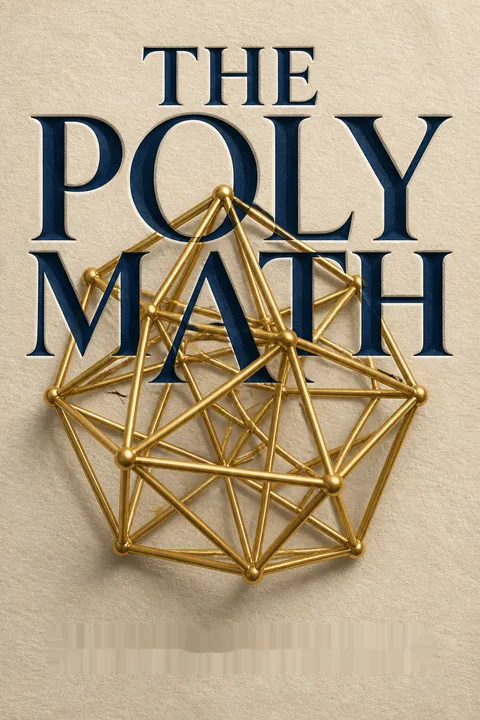


Key Takeaways
Treat polymathy as a bridge between fields, not a claim to know everything
A moving standard. Burke uses “polymath” for a scholar who masters several disciplines, while recognizing practical knowledge as a broader form of human expertise. The threshold changes with history: when knowledge is less divided, broad learning can seem normal; as disciplines fragment, even working seriously across two fields becomes unusual. The book follows 500 Western scholars from the fifteenth century onward, not every versatile person in every culture.
Breadth has limits. The label can hide important differences. Some scholars gather information without producing new work, while others connect fields or contribute original discoveries. And the familiar story of a lone genius who knows everything is often inflated: polymaths master the knowledge of their own age, not the whole universe.
The distinction between breadth and omniscience is useful because it turns polymathy from a superhuman ideal into a historically testable practice. A person can be broadly curious without being equally competent in every domain, and a scholar’s range should be judged against the knowledge and institutions available in that period. This also makes the term less vulnerable to celebrity branding, where a few unrelated interests are treated as proof of mastery. The book’s focus on academic scholarship is a deliberate boundary, but it leaves practical expertise and non-Western traditions less fully represented.
Track the pendulum: every knowledge boom rewards specialists and synthesizers
A changing ideal. Broad learning appears across ancient Greece, Rome, China, the Islamic world, and medieval Europe. Aristotle wrote across subjects; Shen Gua combined scholarship with civil service; Ibn Khaldun drew on history, geography, philosophy, theology, and medicine. In Renaissance Europe, the ideal of the “universal man” linked scholarship with art and action. The seventeenth century then produced a striking concentration of polymaths: 92 people in Burke’s sample were born between 1570 and 1669, compared with 39 born in the preceding century.
The pendulum swings. By the eighteenth century, the admired figure was often the accessible man or woman of letters. From around 1850, expanding knowledge and institutions made specialization dominant. Yet synthesis never vanished. It kept reappearing as a response to the very fragmentation that specialization created.
This history resists the tidy story that humanity moves from general ignorance toward ever-greater specialization. Intellectual life instead moves through competing demands: specialists deepen methods and evidence, while synthesizers reconnect findings that have become isolated. The contrast is not simply between good breadth and bad narrowness. It is a question of which intellectual task a moment makes urgent. The book’s numbers make the seventeenth-century concentration vivid, though the sample is a selected Western prosopography, not a universal census of expertise or creativity.
When books multiply, build systems that connect knowledge, not just collect it
More information, more strain. Printing expanded access to learning but also produced anxiety about abundance. By the beginning of the seventeenth century, roughly 345,000 titles had been printed in Europe. New discoveries added pressure: the number of known plants grew from about 500 in Dioscorides’ ancient account to 6,000 in Caspar Bauhin’s 1623 work, then 18,000 in John Ray’s 1682 description.
Order becomes a project. Johann Heinrich Alsted’s vast encyclopedia tried to classify the disciplines, while Jan Amos Comenius pursued pansophia, a vision of universal wisdom that would bring knowledge into a coherent whole. Leibniz likewise sought shared systems, from a common language to a general science. These projects were not just stores of facts. They tried to make connections visible as knowledge expanded and broke into specialties.
The historical pattern is recognizable: access to more information does not automatically create better understanding. Classification, synthesis, and shared standards are forms of intellectual infrastructure, much like maps that help people navigate a growing city. But a single master system can create its own blind spots by treating one culture’s categories as universal. The strongest version of the synthesis project is therefore not a final, closed encyclopedia. It is a revisable map that helps readers compare claims, see relationships, and notice what its categories leave out.
Use breadth to make connections, then protect time to finish the work
Two directions of travel. Burke distinguishes a clustered polymath, whose expertise spans related fields, from a serial polymath, who moves from one discipline to another over a lifetime. He also describes a tension between centrifugal curiosity, which ranges outward, and centripetal thinking, which seeks a unifying pattern. These are tendencies, not fixed boxes. Leonardo da Vinci ranged across art, anatomy, mechanics, geology, and other subjects, often finding links between them.
Range can scatter effort. Leonardo also left many projects unfinished, a recurring risk Burke calls the “Leonardo syndrome.” Leibniz similarly complained of pursuing more projects than he could complete. Their examples show the cost of curiosity without enough time or selection. Breadth becomes most productive when it feeds a question, and when attention is reserved for completing the answer.
Cross-field thinking is not merely the accumulation of extra facts. Its distinctive value lies in carrying a method, analogy, or question into a setting where it has not yet been tried. That is a real source of discovery, but the same openness can make stopping difficult. Contemporary project management often treats completion as a matter of discipline; this history suggests a deeper issue of intellectual appetite and identity. A useful counterweight is not narrower curiosity, but deliberate choice: which connections deserve the scarce time needed to test and finish them?
A polymath needs a habitat, not just an exceptional brain
Opportunity is organized. Burke finds polymaths in settings that supplied books, time, income, collaborators, or a living. Courts paid scholars and offered protection; monasteries and religious orders provided room for study and far-reaching networks; libraries and journals supported research and exchange. Universities could also accommodate scholars who crossed departments, though their welcome was inconsistent. These settings helped shape who could pursue broad learning, not simply how talented a person was.
Access was unequal. Women in early modern Europe faced barriers to universities and scholarly careers, yet figures such as Anna Maria van Schurman, Christina of Sweden, and Sister Juana pursued learning through private tutors, convents, or courts. Burke’s list also reflects regional differences in institutions and literacy. His story therefore concerns both individual ability and the social conditions that let it develop, become visible, and survive.
The habitat argument usefully shifts attention from exceptional minds to the conditions that make sustained intellectual work possible. Time, access to texts, financial security, and permission to cross boundaries are not decorative advantages; they shape the range of questions a person can pursue. This perspective also complicates the idea that talent alone explains historical prominence. A record built from published work and surviving correspondence will favor people whose labor was preserved and recognized. The uneven visibility of women and less institutionally connected scholars is therefore part of the history, not a footnote to it.
When no one can master every field, build interdisciplinary teams around problems
A collective alternative. As knowledge grew, research increasingly relied on teams: scientific expeditions, laboratories, and large reference works brought people with different specialties together. In the twentieth century, groups such as the Vienna Circle and the Frankfurt School created sustained discussion across fields. Research institutes and projects also tried to unite expertise around questions that no single discipline could answer alone.
Cooperation is not automatic. Some ambitious efforts to merge fields faltered when departments defended their territory or when a shared structure proved difficult to sustain. Area Studies often brought specialists together around a region but did not necessarily produce synthesis. The practical lesson is to organize collaboration around a common problem and create real exchange between participants, rather than assuming that putting several disciplines in one room makes their knowledge interoperable.
The team is a plausible response to the limits of individual polymathy, but it does not automatically reproduce the polymath’s integrative function. A multidisciplinary group can still divide work into sealed tasks, leaving no one responsible for translating between them. Shared objects, explicit discussion of methods, and time to revise one another’s assumptions are therefore as important as diverse membership. The problem-centered approach is especially strong because it gives collaboration a reason to exist beyond institutional fashion. Still, it needs leadership that rewards synthesis, not only specialized deliverables.
Teach students to translate between fields before asking them to synthesize
General learning has a job. Burke traces a long tension between broad education and specialized training. Earlier university curricula offered students a shared base in subjects such as the liberal arts. As universities expanded and departments multiplied, specialized courses became more common. Some institutions resisted narrowness through general education: Chicago’s curriculum under Robert Hutchins emphasized shared study across the humanities, social sciences, and natural sciences. Oxford’s Philosophy, Politics and Economics course offered another combination.
Translation takes practice. The University of Sussex experimented with interdisciplinary teaching through joint seminars led by teachers from different fields. Such courses expose students to contrasting assumptions and vocabularies, not just a longer list of subjects. The aim is not to make every student master everything. It is to help learners recognize what another discipline counts as evidence, how its concepts work, and where its answers may not transfer.
Interdisciplinary education works best when it teaches translation rather than celebrating breadth in the abstract. Students need to learn why an economist, historian, and biologist may define evidence or causation differently before they can combine their findings responsibly. This is a form of epistemic literacy: understanding not just what a field concludes, but how it knows. There is a tradeoff, since every hour spent on shared foundations is an hour not spent in advanced specialization. A sound curriculum makes that tradeoff explicit and prepares learners to collaborate without pretending disciplinary differences disappear.
Treat digital abundance as a new knowledge crisis, not automatic enlightenment
Access is not understanding. The book ends with a possible third crisis of knowledge, following earlier periods when print expanded the volume of information and intensified fragmentation. Digital tools make materials easier to find, and online projects such as Wikipedia draw on far more contributors than traditional encyclopedias. Yet searching and scanning can leave little time to assess, connect, or verify what appears. The problem is not simply that too much information exists. It is that information arrives faster than people and institutions can turn it into dependable knowledge.
The old question returns. Past polymaths built catalogs, encyclopedias, and networks to manage abundance. Today, the same need persists, alongside concerns about biased search results, surveillance, and the weakening of sustained reading. Digital access enlarges the possible field of inquiry, but it does not remove the need for judgment, synthesis, and critical attention.
Digital abundance makes the book’s historical argument newly practical: tools that reduce the cost of finding information can increase the cost of deciding what deserves attention. Search is excellent at retrieval, but retrieval is not the same as verification or explanation. The comparison between online and print reading should remain cautious, since new media support both skimming and serious study, depending on design and use. The deeper challenge is institutional as well as personal: preserving trustworthy archives, transparent ranking, and spaces for slow inquiry while still benefiting from broad access.
Analysis
Burke’s central achievement is to make polymathy a subject of cultural history rather than a gallery of unusually gifted biographies. The book follows a changing relationship between specialization and synthesis. In early periods, limited disciplinary infrastructure could make wide learning seem normal. Print, exploration, new instruments, and expanding scholarship then created a moment in which polymaths could flourish, even as information began to exceed the capacity of any individual. From the nineteenth century onward, universities, journals, societies, and professional identities organized knowledge into increasingly defended territories. Interdisciplinary institutions and general education emerge not as the end of specialization but as recurring attempts to repair its costs.
The historical method strengthens this argument. Individual lives reveal distinctive intellectual paths, while the collective list makes changes in the social conditions of scholarship visible. The same evidence also requires caution. The 500-person sample is explicitly Western and selective, and a record of recognized scholars cannot represent all forms of practical knowledge or uncredited intellectual labor. The category itself shifts over time: a scholar counted as broadly learned in one era may appear only moderately interdisciplinary in another. That instability is not a flaw to eliminate. It is evidence that polymathy depends on the boundaries a culture draws around knowledge.
The book’s most useful implication is therefore not that everyone should attempt universal mastery. It is that knowledge systems need people and institutions capable of translation across boundaries. Such work can expose assumptions, identify useful analogies, and pose questions specialists may not see. But synthesis is not automatically superior to specialization. It can become shallow, overconfident, or simply unfinished. Its credibility depends on contact with specialist evidence and on an institutional habitat that protects time, collaboration, and critical scrutiny. In the digital age, this balance matters even more: greater access widens inquiry, but only judgment and connection turn abundant information into understanding.
Review Summary
The Polymath receives mixed reviews, with some praising its exploration of polymathy throughout history and others criticizing its superficial treatment of subjects. Readers appreciate the book's insights into the traits and environments conducive to polymathy but find the extensive list of names tedious. Many reviewers note the focus on Western figures and lack of in-depth analysis. Despite these criticisms, some find value in the book as an introduction to the concept of polymathy and a starting point for further research.
People Also Read



Glossary
polymath
Scholar across several disciplinesBurke uses polymath for a scholar who masters several academic disciplines, while acknowledging that the threshold changes as disciplines divide and knowledge expands. The term does not mean knowing everything. The book distinguishes original contributors and synthesizers from people who merely accumulate information, and it focuses mainly on academic learning rather than every kind of practical expertise.
clustered polymath
Expert across related fieldsA clustered polymath masters several connected disciplines, often within one broad area such as the humanities, natural sciences, or social sciences. The fields overlap enough to support exchange of methods and ideas. Burke distinguishes this pattern from serial polymathy, where a scholar moves from one subject to another over the course of a career.
serial polymath
Scholar moving between fieldsA serial polymath moves from one discipline to another over an intellectual lifetime, rather than maintaining several fields at once. The move may be prompted by curiosity, new opportunities, or a change in what problems seem important. Such scholars can carry habits and concepts from one field into another, creating unexpected connections.
centrifugal and centripetal
Two directions of polymathic thoughtBurke uses centrifugal and centripetal to describe contrasting tendencies in broad scholarship. Centrifugal polymaths range outward among subjects without necessarily seeking a single system. Centripetal polymaths try to bring different kinds of knowledge together into an ordered whole. Many scholars combine both impulses, moving between exploration and synthesis rather than belonging entirely to either type.
Leonardo syndrome
Many projects left unfinishedLeonardo syndrome is Burke’s term for the risk that a polymath’s broad interests disperse time and energy across too many projects. It is named for Leonardo da Vinci, who produced remarkable work but also left many commissions and planned treatises incomplete. The term describes a recurring tension between intellectual range and the sustained attention needed to finish work.
pansophia
Universal wisdom and synthesisPansophia means universal wisdom, a seventeenth-century ideal associated especially with Jan Amos Comenius. It proposed bringing the branches of knowledge into an intelligible whole and was linked to educational reform, shared language, and wider religious or social harmony. In Burke’s account, it also responds to a growing sense that disciplines were separating from one another.
Republic of Letters
Scholars linked by correspondenceThe Republic of Letters was an imagined community of scholars connected across countries through correspondence, publications, and shared intellectual interests. It was not a formal state or a single institution. In the seventeenth century, expanding postal networks and scholarly journals helped its members exchange information, sustain collaborations, and remain informed about work beyond their local universities.
FAQ
1. What is The Polymath: A Cultural History from Leonardo da Vinci to Susan Sontag by Peter Burke about?
- Comprehensive cultural history: The book traces the evolution of polymaths—individuals with expertise across multiple disciplines—from the Renaissance to the 21st century, focusing on their cultural and social impact.
- Focus on Western intellectuals: Burke examines around 500 polymaths, primarily in the Western world, analyzing their biographies, achievements, and the environments that shaped them.
- Interdisciplinary approach: The narrative blends cultural history, social context, and intellectual biography to explore how polymaths contributed to knowledge and how their roles changed over time.
- Contemporary relevance: The book also addresses the challenges and opportunities for polymaths in the digital age, considering the tension between information overload and integrative knowledge.
2. Why should I read The Polymath by Peter Burke?
- Insight into intellectual versatility: The book provides a deep understanding of the psychological and social traits that define polymaths, inspiring readers interested in broad intellectual pursuits.
- Historical and cultural perspective: Burke’s work offers a sweeping view of how polymathy has evolved and been perceived, helping readers appreciate its role in shaping knowledge and culture.
- Practical lessons on interdisciplinarity: The book discusses the rise of interdisciplinary research and education, offering valuable insights for navigating today’s complex knowledge landscape.
- Reflection on modern challenges: Burke addresses the impact of the digital revolution on knowledge acquisition, making the book relevant for understanding contemporary intellectual life.
3. What are the key takeaways from The Polymath by Peter Burke?
- Polymathy’s enduring value: Despite increasing specialization, polymaths have played crucial roles in integrating knowledge and fostering innovation.
- Traits and environments matter: Curiosity, memory, imagination, and supportive environments are essential for the development of polymaths.
- Challenges of breadth vs. depth: Polymaths often struggle to balance wide-ranging interests with the need for deep expertise, a tension that persists today.
- Interdisciplinary collaboration is vital: The book highlights the importance of crossing disciplinary boundaries to address complex problems in the modern world.
4. How does Peter Burke define a polymath in The Polymath?
- Interest and depth: A polymath is someone deeply interested in and knowledgeable about many academic subjects, not just a generalist or practical expert.
- Exclusion of non-academic figures: Burke excludes entrepreneurs and business leaders whose polymathy lies outside scholarly pursuits.
- Types of polymaths: The book distinguishes between passive (knowledgeable but not creative), active (creators and integrators), clustered (experts in related fields), and serial polymaths (who change fields over time).
- Focus on academic achievement: The definition centers on those who have made significant contributions to academic knowledge.
5. What are the key psychological traits of polymaths according to Peter Burke?
- Insatiable curiosity: Polymaths are driven by a strong desire to know, often described as "libido sciendi."
- Exceptional memory and focus: They possess strong memory and the ability to concentrate deeply, enabling them to master vast amounts of information.
- Imagination and creativity: Polymaths excel at making analogies and connecting ideas across fields, leading to innovative insights.
- High energy and work ethic: They often work long hours and manage multiple interests, supporting their diverse intellectual output.
6. What historical periods and cultures does The Polymath by Peter Burke cover?
- From ancient to modern: The book begins with ancient Greek and Roman polymaths, touches on medieval Europe, Islamic, and Chinese traditions, but focuses mainly on Western polymaths from the Renaissance onward.
- Cultural comparisons: Burke briefly compares Eastern and Western traditions, noting differences in academic disciplines and the social roles of polymaths.
- Knowledge crises: The narrative highlights two major knowledge crises in the 17th and 19th centuries, caused by knowledge explosion and fragmentation.
- Modern era focus: The book continues through the 20th and 21st centuries, examining how polymathy adapts to contemporary challenges.
7. What are the main social and intellectual challenges faced by polymaths in The Polymath?
- Knowledge explosion: The rapid increase and fragmentation of knowledge, especially after the invention of printing and scientific revolutions, made it harder for polymaths to keep up.
- Pressure to specialize: Academic and institutional specialization often limited polymaths’ ability to master multiple fields deeply.
- Social and institutional barriers: Universities, religious authorities, and cultural attitudes sometimes supported but often hindered polymathy.
- Balancing breadth and depth: Polymaths faced criticism for superficiality or dilettantism, especially as specialization became the norm.
8. How does The Polymath by Peter Burke address the tension between specialization and polymathy?
- Historical rise of specialization: Burke traces the increasing specialization of knowledge from the 19th century onward, which created barriers to polymathy.
- Critiques of specialization: Polymaths and some scholars criticized specialization for fragmenting knowledge and stifling creativity, using metaphors like "Balkanization."
- Interdisciplinary responses: The book explores efforts to bridge disciplines through informal clubs, interdisciplinary institutes, and collaborative research.
- Polymaths as integrators: Polymaths often serve as connectors, synthesizing knowledge across fields and balancing depth with breadth.
9. What is the "Da Vinci Syndrome" described in The Polymath by Peter Burke?
- Definition: The "Da Vinci Syndrome" refers to the tendency of polymaths to have scattered interests, which can prevent them from completing projects or publishing works.
- Historical examples: Leonardo da Vinci, Peiresc, and Leibniz are cited as polymaths with many unfinished projects or unrealized ideas.
- Implications: While broad curiosity is a strength, it can also lead to difficulties in focus and follow-through.
- Managing the syndrome: Burke suggests that successful polymaths must find ways to balance their wide-ranging interests with the need for completion.
10. Who are some notable polymaths featured in The Polymath by Peter Burke, and what fields did they cover?
- Leonardo da Vinci: Renowned for his work in art, engineering, anatomy, and scientific observation, embodying the Renaissance ideal.
- Gottfried Wilhelm Leibniz: Contributed to philosophy, mathematics, history, linguistics, and science, representing the "golden age" of polymathy.
- Susan Sontag: A modern polymath known for her work in writing, criticism, philosophy, and the arts.
- Others: The book also highlights figures like Christine de Pizan, Voltaire, Mary Somerville, Benjamin Franklin, Norbert Wiener, and Pierre Bourdieu, illustrating the diversity of polymathic achievement.
11. What role did environment, education, and social context play in shaping polymaths according to The Polymath by Peter Burke?
- Geographic and cultural factors: Polymaths often emerged in regions with high literacy, urban centers, and vibrant intellectual networks, such as Germany, Britain, France, and the Netherlands.
- Religious and social influences: Work ethics associated with Protestantism, Judaism, and other traditions, as well as family background and social class, influenced polymath development.
- Education and self-learning: Many polymaths were self-taught or benefited from rich family libraries and private tutors, while formal schooling sometimes constrained their breadth.
- Institutional support: Universities, libraries, museums, and courts historically provided resources and spaces for polymaths, though modern academia’s specialization poses challenges.
12. What are the best quotes from The Polymath by Peter Burke, and what do they mean?
- On curiosity: Francis Bacon’s "libido sciendi" highlights the polymath’s insatiable desire to know, emphasizing curiosity as a core trait.
- On integrative power: Leibniz’s assertion that "the world needs polymaths because those who connect all things can do the work of ten" underscores the value of synthesis.
- On time management: Darwin’s belief that "whoever dares to waste an hour does not understand the value of life" reflects the disciplined approach of polymaths.
- On specialization: The metaphor of knowledge "Balkanization" illustrates the fragmentation caused by excessive specialization, reinforcing the need for polymathic synthesis.
Download PDF
Download EPUB
.epub digital book format is ideal for reading ebooks on phones, tablets, and e-readers.








