

Key Takeaways
Treat institutions as moral actors, not just collections of individual villains.
Power has an inner life. Wink uses “the Powers” for the institutions and systems that organize society, along with the shared spirit or ethos operating within them. A company, church, or government is more than its current leaders: its routines and incentives can outlast any individual manager. In the biblical language Wink reinterprets, an institution’s “angel” represents its corporate character, while its “demon” names that character when it betrays its purpose.
Look inside the structure. Market competition, for example, can pressure executives to cut costs even when they would prefer to treat workers better. This does not erase personal responsibility. It shows why blaming a few bad actors may leave the forces shaping their decisions untouched.
What's useful here is the distinction between agency and structure. Institutions are not literally people, yet rules, incentives, and habits can produce durable behavior that no single participant intends. That helps explain why replacing a leader often changes less than expected. The spiritual vocabulary also asks what an organization is for, not merely how it functions. Its limit is the risk of making a metaphor sound like an independent supernatural force. Wink leaves that question open, while insisting that the institutional effects are real.
Demand both accountability and redemption from every institution.
Hold three judgments together. Wink describes the Powers as good, fallen, and redeemable. Institutions are good insofar as they serve human needs; fallen when they put their own survival or advantage above the common good; and redeemable because their harmful behavior is not their only possible form. Any one claim on its own distorts the picture. Praising institutions without criticizing them excuses harm. Condemning them without recognizing their purpose can make change seem impossible.
Reform has limits. A business may be necessary, yet its pursuit of profit can endanger workers or the public. Some institutions can be redirected; others, such as Nazism, must be abandoned and replaced. The useful question is not simply whether a system should exist, but what human need it should serve and how it can be made to do so.
This three-part lens resists two familiar traps: treating a system as inherently virtuous because it is established, or as irredeemably evil because it has caused harm. It resembles practical repair work: preserve what serves people, identify what is failing, and replace what cannot be repaired. The framework is hopeful without requiring every institution to survive. Its difficult question is who gets to define the institution’s proper purpose. Those harmed by a system need a real voice in that judgment, not merely a promise that the system can improve.
Question the story that violence restores order.
Violence can pose as salvation. Wink calls this belief the “Myth of Redemptive Violence”: the idea that force defeats evil, restores order, and ultimately saves society. He traces its imagery to an ancient Babylonian creation story in which the god Marduk defeats the chaos figure Tiamat and makes the world from her body. The story presents violence as the foundation of order, not as a problem requiring an answer.
The plot survives in modern dress. Wink sees a similar pattern in cartoons: a hero suffers, defeats a supposedly irreformable villain, and resets the world for the next episode. The same logic can shape national politics, where military victory is treated as moral proof. Repeated exposure can make violence feel inevitable rather than chosen.
The argument is strongest as a reading of cultural habits, not as a claim that one kind of story mechanically causes violence. Familiar plots teach audiences whom to fear, whose force counts as legitimate, and whether conflict can end without a winner crushing a loser. That makes entertainment worth examining without treating viewers as passive products of it. The same scrutiny belongs in political language: calling a violent response “order” can hide who is protected, who pays, and whether the underlying conflict has actually changed.
Build communities that share power, wealth, and human standing.
Jesus challenges the whole hierarchy. Wink reads Jesus’ teaching and conduct as an alternative to a society organized around domination. Leaders are to serve rather than demand deference; wealth is to meet human need rather than confer superior status; and excluded people belong at the table. Jesus welcomed women as followers and patrons, spoke publicly with them, and treated them as full participants in religious life.
Small acts reveal a larger order. When Jesus healed a woman in a synagogue, he challenged both her physical suffering and the customs that restricted her standing. His circle also included people regarded as sinners and outsiders. These actions were not just personal kindness. They offered a model of community in which dignity is not allocated according to wealth, gender, purity, or rank.
This account makes equality concrete: it is visible in who speaks, who eats, who gives, and who is treated as a credible participant. That is more demanding than proclaiming universal worth while preserving unequal access to power. Wink also acknowledges that the church itself returned to male hierarchy, a reminder that movements can reproduce the systems they oppose. A community’s ideals therefore need institutional form, including shared authority and meaningful participation, or its welcome may remain symbolic.
Read the cross as exposure of state-sanctioned scapegoating.
A victim reveals the mechanism. The “scapegoat mechanism” is the practice of blaming and sacrificing one person or group to restore a threatened community’s sense of order. Wink, drawing on René Girard, reads Jesus’ execution as a public exposure of that logic. Authorities treated his death as preferable to the disorder they feared, while the Gospel accounts present the condemned man as innocent of the charges used against him.
The interpretation changes the blame. Wink argues that the cross shows the violence of religious and political powers, rather than a God who needs an innocent victim’s blood before offering forgiveness. He notes that Christian teaching often returned to sacrifice language, presenting Jesus as the final offering. In his reading, that can obscure the human systems responsible for the execution.
This interpretation forces attention onto the social function of a public execution: a community can call violence necessary while avoiding scrutiny of the fear and interests behind it. It also offers a sharp theological contrast between divine forgiveness and systems that demand a victim. The reading need not settle every Christian account of atonement to be valuable. Its challenge is to keep the political insight in view without reducing the cross to a political symbol alone, since the book’s claim is theological as well as institutional.
Resist humiliation without copying the oppressor's violence.
Find a third response. Wink calls Jesus’ approach the “third way”: neither submission to abuse nor violent retaliation, but active resistance that refuses to use the opponent’s methods. He argues that the instruction about a struck cheek was not a command to accept repeated abuse. In the social setting he describes, turning toward the other cheek could challenge the attacker’s attempt to mark the recipient as inferior.
Change the encounter. Jesus’ other examples involve a debtor handing over even more clothing than demanded, exposing the humiliating logic of debt, and a person forced to carry a soldier’s pack continuing beyond the required distance, creating uncertainty for the soldier. These actions do not guarantee safety or victory. They interrupt the expected roles and make injustice visible.
The distinctive insight is tactical as well as moral: resistance can work by changing what the powerful person expects the powerless person to do. That can restore initiative without turning retaliation into the only available language. But such tactics are not universally safe, and their success depends on context, witnesses, and the balance of power. They should never become a rule imposed on people facing abuse. The book’s target is coercive humiliation, not a victim’s right to seek protection or escape.
Train for nonviolence before crisis makes retaliation feel inevitable.
Make nonviolence a practiced capacity. Wink argues that it requires preparation, organization, and courage, not simply a peaceful temperament. He offers two guardrails: the means should fit the society being sought, and resistance should preserve respect for the rule of law even when it challenges unjust laws. Accepting legal penalties for civil disobedience can affirm the importance of law while contesting its misuse.
Organizing changes the odds. In the Philippines, nonviolent organizers trained about half a million poll watchers before the 1986 election; those networks helped form the demonstrations that opposed the Marcos regime. Wink also cites nonviolent revolutions across multiple countries in 1989. Such cases show that ordinary people can act together, but nonviolent struggle may still involve serious personal risk.
Preparation matters because a crisis narrows attention toward familiar reactions. Training, trusted networks, and clear goals can make disciplined action more available under pressure. The Philippines example also shows that a dramatic public moment may depend on quieter organizing beforehand. Still, successful cases do not establish that nonviolence always works on the same timetable or at the same cost. The practical lesson is to build capacity and assess conditions, not to guarantee safety or blame people when resistance fails.
Replace war's moral permission slips with violence-reduction tests.
Keep the standards, change their purpose. Just-war thinking asks whether a war has a just cause, legitimate authority, a peaceful intention, no workable alternative, and a reasonable chance of success. It also requires proportionate force and protection for civilians. Wink argues that these tests have often been used to bless wars after the fact, so he proposes calling them “violence-reduction criteria”: tools for preventing war or limiting its damage, not certifying it as good.
Civilian protection exposes the gap. Using figures available to him, Wink reports that civilians made up about 74 percent of war deaths in the 1980s and nearly 90 percent in 1990. He argues that a standard routinely violated at such scale cannot function as a reassuring moral label.
Renaming the framework shifts attention from proving a war righteous to asking whether violence can be prevented, constrained, or ended. That is a productive change in the burden of argument. Yet standards do not apply themselves: authorities disagree about what counts as a last resort, a civilian, or a proportionate response. The figures are also specific to the period Wink cites, not a current estimate. The framework is most useful as a demand for scrutiny, not as a formula that removes political judgment.
Let the enemy reveal the shadow you cannot see alone.
Notice projection. Wink uses “projection” for the tendency to recognize unwanted qualities in other people while overlooking related qualities in oneself. An opponent may genuinely cause harm; the point is not to dismiss that harm. The enemy can also reveal fears or desires that remain difficult to see without the conflict.
A surprising opening. Cantor Michael Weisser, a Jewish religious leader, was threatened by Larry Trapp, a white supremacist and Ku Klux Klan leader. Weisser eventually offered practical help rather than answering only with hostility. Trapp later left racist organizations, apologized, converted to Judaism, and was cared for by the Weissers as his health declined. Wink presents the change as an example of love opening a path to transformation, not as a guaranteed result.
The idea of an enemy as a mirror can deepen self-knowledge, especially when anger makes one’s own motives hard to inspect. But it must not be used to tell harmed people that the real problem is their projection. Weisser’s actions were his choice, not an obligation owed to someone who threatened him. The story is powerful because it combines moral clarity about racist harm with a refusal to treat a person as permanently identical to his worst beliefs.
Pray as resistance when institutions block the good.
Prayer includes the social world. For Wink, prayer is not only private comfort or self-reflection. It is a way to seek change in the institutions and systems that shape people’s lives, and to keep action rooted in a vision of justice rather than vengeance. He rejects the idea that unanswered prayer automatically proves a person lacked faith or deserved suffering.
Daniel’s delay gives the image. In the biblical story Wink interprets, Daniel’s prayer is heard immediately, but an angelic messenger is held up for twenty-one days by the angel associated with Persia. The story pictures political powers obstructing a good outcome. Wink uses it to explain why prayer and action may be necessary even when change is delayed, and why prayer should not replace confronting the structures causing harm.
The account gives prayer a public role: it can sustain attention to harms that powerful institutions make seem normal or inevitable. It also offers a language for delay that does not automatically blame victims. The theological cost is significant, since it portrays divine action as constrained by the freedom of systems and raises hard questions about providence. Whatever one makes of that claim, the practical boundary is clear: prayer can orient resistance, but it cannot serve as a substitute for protecting people or changing harmful institutions.
Analysis
Wink’s central move is to connect biblical language about angels, demons, and powers with the ordinary machinery of social life. Institutions are neither neutral tools nor simply collections of bad individuals: they carry purposes, habits, and incentives that can serve people or subordinate them. This lets the book move between theology and politics without treating either as an add-on. The Domination System names the recurring pattern; the myth of redemptive violence explains how that pattern earns consent; Jesus’ third way proposes resistance that does not reproduce its logic.
The argument is strongest when it turns religious interpretation into a diagnostic question: what does this institution exist to do, whom does it benefit, and what forms of harm does it normalize? Its readings of the cheek, debt, and forced labor make nonviolence active rather than passive, while the discussion of prayer insists that structural struggle also requires inward discipline. Together, these ideas offer a coherent account of how personal conduct and collective arrangements reinforce one another.
The book’s reach also creates tensions. Its spiritual interpretation of institutions is evocative, but not empirically testable in the same way as an account of incentives or organizational behavior. Its historical examples support the possibility of nonviolent change, not a guarantee that every conflict has a safe or effective nonviolent route. And its account of divine action, limited by the freedom of the Powers, leaves a difficult problem of suffering unresolved. These tensions do not undo the framework; they clarify its use. It is best read as a moral and theological lens for identifying domination, testing claims of necessity, and widening the imaginable forms of resistance.
Review Summary
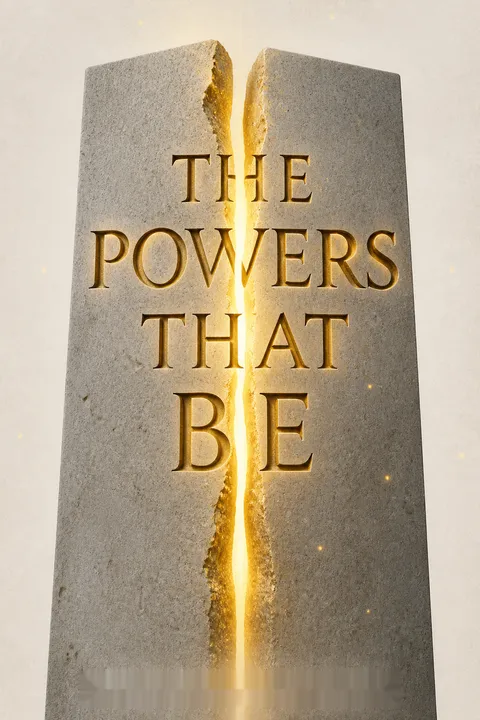
The Powers That Be receives mostly positive reviews for its insightful analysis of nonviolent resistance and the concept of "powers" in society. Readers appreciate Wink's exploration of Jesus' teachings and their modern applications. Some criticize his theological positions and biblical interpretation. The book is praised for its thought-provoking ideas on redemptive violence, domination systems, and Christian approaches to social change. While some find parts of the book challenging or disagree with certain arguments, many consider it an important work on theology and nonviolence.
People Also Read


Glossary
The Powers
Institutions with spiritual forceWink’s term for the visible institutions and systems that organize society, together with their invisible or spiritual dimension: their shared ethos, purpose, and influence. The Powers include governments, businesses, churches, and social structures. They can serve human life, betray that purpose, and become targets of collective efforts to change them.
Domination System
A network sustaining dominationWink’s name for the broad network of political, economic, racial, gender, and social arrangements that preserve unequal power. The system is maintained through institutions and habits, often backed by violence and by stories that make violence seem necessary. No single actor controls the whole network, which is why changing individuals alone may leave its basic patterns intact.
Myth of Redemptive Violence
Violence presented as salvationWink’s term for the belief that force defeats evil, restores order, and saves society. He traces its pattern to ancient creation stories and sees it repeated in popular entertainment and national politics. The myth makes violence appear natural and inevitable, while obscuring the costs it imposes and the possibility of resisting evil by other means.
Jesus' third way
Active, nonviolent resistanceWink’s description of resistance that avoids both submission to injustice and violent retaliation. Drawing on Jesus’ teachings about humiliation, debt, and forced labor, it seeks to recover the agency of the oppressed and expose the injustice of a situation without copying the oppressor’s methods. It is a practice of active opposition, not passive acceptance.
scapegoat mechanism
Blaming one to restore orderA social process in which a community places blame on a victim or outsider and treats that person’s removal as necessary for peace. Wink, following René Girard, reads the execution of Jesus as exposing this mechanism: the authorities present the death of an innocent person as a way to protect society, while the Gospel accounts reveal the injustice of that judgment.
integral worldview
Spirit and matter as one realityWink’s term for a way of understanding spiritual and physical reality as inseparable aspects of one world. In this view, spiritual meaning is not confined to a distant supernatural realm, nor is reality reduced to matter alone. Institutions, bodies, and social events have visible forms and inner dimensions, so spiritual commitments can have practical consequences.
violence-reduction criteria
Tests to limit war’s harmWink’s proposed name for traditional just-war tests, reframed as standards for preventing war or reducing its harm rather than declaring war morally good. The criteria include just cause, legitimate authority, last resort, proportionality, and protection of civilians. He argues that these standards are often weakened when used to justify wars after political decisions have already been made.
Satyagraha
Truth-based nonviolent resistanceA term associated in the book with Gandhi’s commitment to nonviolent struggle. It names a form of resistance grounded in truth and a willingness to suffer rather than inflict suffering. Wink uses Gandhi’s experience to stress that nonviolence is not cowardice or mere passivity; it requires courage, preparation, and a deliberate transformation of anger into persistent resistance.
About the Author
Other books by Walter Wink
Download PDF
Download EPUB
.epub digital book format is ideal for reading ebooks on phones, tablets, and e-readers.








