

Key Takeaways
Run the product like a business, not a queue of features
Think beyond the build. Product management means guiding a product, product line, or portfolio across its life cycle to create value. That includes discovering needs, shaping strategy, coordinating development, launching, and monitoring results. It is not the same as project management, marketing, or a development method. The product manager leads the product’s business, even when specialists do the work and the manager has no direct reports.
See the whole offer. A product may be one part of a larger system. An automobile navigation system, for instance, connects with other technologies inside the car, while customers buy the vehicle as a transportation solution. Understanding how a product fits into the company’s portfolio helps clarify what it can influence and where its success depends on others.
This definition gives product managers a useful boundary: they are accountable for business outcomes, not simply the delivery of requested features. It also explains why the job crosses disciplines. A product’s value depends on engineering, distribution, pricing, service, and customer experience working together. The boundary can still be politically fragile. If an organization gives product managers responsibility without access to decisions, funding, or evidence, the role becomes accountability without authority. The definition is therefore also a test of organizational design.
Map who moves information before the org chart misleads you
Trace the real work. A standard organization chart shows reporting lines, but it rarely reveals who supplies information, makes decisions, or blocks a handoff. An influence diagram is a map of the people connected to a product’s work and the information that passes between them. Build one with names, responsibilities, relationships, and dependencies, then update it as the organization changes.
Look across departments. A launch can stall even when each function appears busy: marketing may miss its campaign date, or ordering systems may lack the new product codes. Clarifying roles and dependencies early helps expose these risks. The book compares a cross-functional team to a theater production: people need distinct roles and cues, or even talented contributors can produce a confused result.
The map is more than a networking aid. It is a lightweight model of how an organization actually functions, including the informal channels that formal charts omit. That resembles process mapping in operations: delays often occur between steps, not within a single team. A map can also become stale or encourage overconfidence, since influence shifts with priorities and personnel. Its value comes from checking it against real interactions, not treating it as a definitive picture of power.
Earn authority by making cross-functional work easier
Lead without command. Product managers depend on colleagues who do not report to them. Their influence grows through dependable delivery, clear direction, trust, and visible results. The book calls the goodwill and credibility built through those relationships political capital. It is not a license for office maneuvering; it is an asset earned by helping the business and keeping commitments.
Make collaboration routine. Align with a manager, build ties with other department leaders, and seek mentors who can explain unfamiliar parts of the organization. For distributed teams, the practical work is to communicate information, coordinate interdependent tasks, and collaborate on decisions. Shared customer visits, concise team meetings, and useful updates can create common understanding without requiring everyone to share a location or reporting line.
Influence here is treated as a form of accumulated trust rather than personal charisma. That framing is powerful because trust lowers the cost of coordination: people are more willing to share bad news, lend expertise, and accept a difficult trade-off when they believe the product lead is fair and prepared. There is a limit, however. Being helpful can become invisible labor if the organization rewards only formal authority or individual credit. Product leaders need to make contributions visible while ensuring collaboration does not become a substitute for clear ownership.
Watch customers work; stated preferences are only one kind of evidence
Study behavior in context. Customers may not notice inefficiencies in routines they have followed for years, and answers to hypothetical questions do not guarantee a purchase. Observation, interviews, digital usage, and customer feedback each reveal different parts of the picture. In one example, watching analysts at a communications company revealed that an unusable system kept them from working for hours each day. The resulting product case connected an observed problem to saved time and reduced regulatory fines.
Define whose need matters. Market segmentation groups customers with shared needs or usage patterns. A persona is a research-based portrait of a customer type, including motivations and circumstances; a journey traces the steps and frustrations around a task. These tools help teams discuss users, buyers, influencers, and decision makers without pretending they are all the same person.
Observation corrects a common weakness in customer research: people are often better at describing what they believe they do than recalling every action or constraint. A customer journey can make invisible friction discussable across design, engineering, and business teams. Still, a vivid observation is not automatically representative. Product teams need enough varied evidence to distinguish a recurring need from an unusual case, and they should avoid treating a persona as a real individual. The strongest insight combines empathy with a testable claim.
Track industry shifts and competitors beyond their feature lists
Read the environment. PRESTO is the book’s framework for scanning political, regulatory, economic, social, technological, and other conditions that can affect a market. Compare earlier and current signals, then consider what they may mean for customers, competitors, and the product. The point is not to collect every report, but to notice changes that could alter the product’s opportunity or risk.
Investigate how rivals win. Compare more than product specifications. Study business models, sales and distribution, support, promotion, technology, and regulation. One team blamed a rival’s market-share gains on richer features, then discovered that the rival had made buying easier with a redesigned website. A competitor profile, including a placeholder for a possible new entrant, can help turn scattered clues into a shared working view.
This broader lens prevents a narrow form of competitive blindness: teams can obsess over features while customers choose based on access, service, or buying friction. The same logic applies to industry signals, which often matter through combinations rather than isolated headlines. A regulatory change, for example, may alter costs and timing as well as customer behavior. The framework is a prompt for inquiry, not a forecasting machine. Its usefulness depends on selecting signals relevant to the product and revisiting assumptions when conditions change.
Build strategy from a product's history, present, and intended future
Start with the evidence. A baseline situational analysis organizes what has happened and what is happening across customers, markets, competitors, operations, and finances. The analysis helps a team explain not just whether results changed, but why. A SWOT analysis can then identify evidence-backed strengths, weaknesses, threats, and opportunities, with opportunities connected to problems the product can actually address.
Make the future actionable. A product strategy links a vision to measurable goals, investments, and a path to results. It should align with the company’s broader strategy, yet remain open to revision as customers and markets shift. A roadmap communicates that direction to different audiences. It is not a permanent promise of fixed features and dates: strategic direction, technology dependencies, and specific release plans serve different planning needs.
The method’s strongest move is to make strategy a synthesis exercise rather than a slogan-writing session. Historical results constrain what is plausible, current evidence reveals where pressure is building, and a future vision gives the data direction. This resembles scenario planning, where decision makers prepare for several plausible conditions instead of betting everything on one forecast. The danger is analytical theater: a detailed template can create the appearance of rigor while weak data remain weak. Every strategic claim should retain a visible link to its evidence and assumptions.
Test the problem and value before committing full development resources
Screen ideas deliberately. The book describes phase-gate planning as a sequence of decision points that narrows ideas before larger investments. It can help organizations compare proposals and manage a portfolio, but a process cannot supply creativity or customer understanding. An opportunity statement and a simple decision matrix can help a team ask whether a proposal fits strategic goals and merits deeper study.
Make value observable. A value proposition explains why a customer would choose or use the product, through measurable gains such as time or money saved, or benefits such as convenience and confidence. Sketches, prototypes, and experiments can test whether the problem is real and which solution helps. The book cites product failure rates above 70 percent as a warning, while emphasizing recurring causes such as misunderstood needs, poor forecasts, and unclear responsibilities.
The central discipline is separating enthusiasm for a solution from evidence of a problem. This is especially important because teams can mistake customer politeness or stated interest for willingness to change behavior or pay. Lightweight tests help expose that gap before expensive commitments accumulate. At the same time, experimentation is not free: it consumes attention, and poorly designed tests can produce false confidence. The appropriate test is the smallest one that meaningfully reduces uncertainty about the decision at hand.
Choose development pace to fit uncertainty, complexity, and market change
Use the process as a tool. Linear development, often organized through phases and approvals, can suit complex products that require extensive coordination and clear responsibilities. Iterative development breaks work into short cycles, with backlogs, user stories, demonstrations, and regular adjustment. Neither approach is product management itself. The book favors choosing or combining methods according to the product, organization, and speed of the market.
Stay responsible for the business. During development, the product manager keeps the customer problem and strategic intent in view, helps prioritize trade-offs, and watches for changes that undermine the original case. Testing may include internal use, performance checks, and beta trials with selected customers. A product owner may manage detailed development priorities, but someone still needs to connect those choices to market and business goals.
This is a useful correction to the habit of treating a methodology as a universal cure. Iteration can shorten feedback loops, while sequential checkpoints can protect systems whose failures are costly or difficult to reverse. The deeper choice is about where uncertainty sits: customer demand, technical feasibility, integration, or regulation. Teams can also combine the methods, but hybrid processes risk keeping the paperwork of one model and the speed expectations of another. The governing question is whether the process improves learning and decision quality.
A launch is an operating system, not an announcement
Prepare the whole business. A launch is a coordinated period of work, not the day a product is announced. Sales teams need to understand the target customers, the proven need, and the product’s value. Marketing materials should communicate that value clearly. Operations must be ready to take orders, deliver or install the product, handle complaints, and provide support. A launch plan makes responsibilities, dependencies, and timing visible.
Choose the market moment. A launch should fit the customer’s buying cycle, competitive context, and readiness of the product and organization, rather than simply a convenient corporate event. Beta trials and limited market tests can expose problems before a broad release. Teams should decide in advance how to assess the launch, including plan delivery, sales, customer response, and operational performance.
The launch view broadens success from awareness to fulfilled promise. A polished announcement cannot rescue a product that cannot be ordered, delivered, supported, or explained by sales staff. This connects product work to service operations, where the customer experiences an end-to-end chain rather than separate departments. The emphasis on readiness is sound, though launch metrics should distinguish execution quality from product-market response. A perfectly coordinated launch can still reveal that customers do not value the offer enough.
Measure connected outcomes, and retire products that consume better opportunities
Diagnose the business. A product scorecard is a compact view of measures used to compare actual performance with expectations. Useful measures can include market share, usage, revenue, margins, customer satisfaction, service incidents, and inventory. Their relationships matter more than isolated numbers. A warehouse scanner, for example, suffered after a cheaper component failed and an operating-system update exposed the weakness, damaging sales and reputation despite an apparent cost improvement.
Act on the life cycle. A product’s health can differ across revenue, profit, and cash flow, so one rising number does not prove sustainable growth. The marketing mix adjusts the product, price, promotion, and channel together. When a product loses strategic value, customers, or profitability, discontinuation may free resources for stronger opportunities. That decision needs a plan for customer communication, support obligations, migration, and operational shutdown.
The scanner example illustrates why local optimization can harm the whole business: a purchasing decision improved one cost measure while degrading reliability, compatibility, and customer trust. A balanced scorecard helps reveal these trade-offs, but metrics still need interpretation. Measures can lag behind real problems, and targets can invite teams to optimize what is easiest to count. Product retirement is equally important as a portfolio decision, not merely an admission of failure. Continuing a weak product has an opportunity cost that should be made explicit.
Treat your product-management skill as a career you must deliberately build
Assess more than confidence. Product management acumen means the ability to understand a product’s business across customers, markets, people, systems, finances, and processes. The book groups capabilities into market and product knowledge, mindset, core product activities, communication, personal effectiveness, and results. It distinguishes knowing a concept from being able to perform it in a real setting.
Turn gaps into practice. Self-assessment can identify areas to develop, but colleagues and managers provide a necessary second opinion. The author recommends translating gaps into applied work: customer visits, strategy projects, mentoring, or other assignments that build and demonstrate capability. A personal SWOT review and a written record of accomplishments can help make development concrete and support useful career conversations.
The focus on evidence-based growth avoids reducing professional development to accumulating courses or titles. Skills become credible through situations in which they produce observable results, and feedback helps correct the gap between self-image and how others experience a person’s work. The framework also acknowledges that expertise is contextual: a strong product manager entering a new industry may need to rebuild domain knowledge. Career ownership is valuable, but it should not imply that individuals alone control their opportunities; managers and organizations shape access to meaningful practice.
Analysis
The book’s central argument is that product management is a business capability, not a job title attached to a backlog. Its operating logic runs from market understanding through strategic choice, investment, delivery, launch, and performance review. Across that chain, the product manager’s distinctive contribution is integration: joining evidence held by customers, engineers, finance, sales, and operations into decisions that can survive contact with the market.
That integration explains both the role’s leverage and its difficulty. Product managers generally lack direct authority over the specialists whose work determines outcomes. They therefore need organizational literacy, trust, and disciplined communication, while resisting the temptation to become a universal fixer. The book’s practical tools, including influence maps, customer portraits, competitive profiles, and scorecards, are most valuable as shared thinking devices. They make assumptions visible and give teams a common object to question.
The book also resists two attractive simplifications. First, customer focus is not equivalent to accepting customer requests: observation and contextual research can reveal needs people do not articulate. Second, agile or phase-gate process does not guarantee sound decisions. Method is useful only insofar as it improves learning, coordination, or risk control. The advice to adapt pace to market conditions is therefore more fundamental than allegiance to a named development style.
A tension remains between the breadth of the role and the time available to perform it. Continuous research, competitive monitoring, financial analysis, team leadership, and launch oversight can overwhelm one person, particularly in a large company with weak product governance. The practical implication is not to do every task personally, but to establish routines and partnerships that keep essential signals flowing. The book is strongest when it treats product management as a system of shared responsibilities and weakest when its extensive checklists risk suggesting that diligence alone can overcome insufficient authority or resources. Its durable lesson is that good product decisions require a connected view of customer value and business performance, revisited as evidence changes.
Review Summary
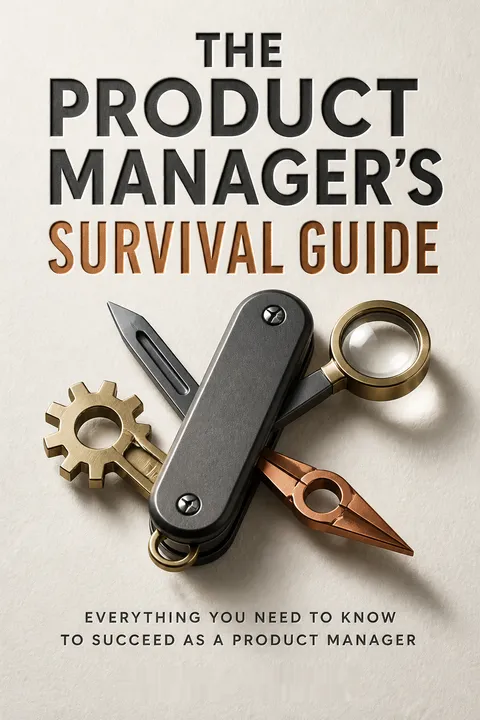
The Product Manager's Survival Guide receives mixed reviews. Some praise it as an excellent overview for new product managers, offering valuable insights and frameworks. Others find it too basic, repetitive, and lacking specific examples. Positive reviews highlight its comprehensive coverage of PM responsibilities and career guidance. Critics argue it's overly generic and outdated. The book is generally recommended for those new to product management or seeking a refresher on fundamentals, but experienced PMs may find limited value. Overall, it's seen as a helpful resource for understanding the broad scope of product management.
People Also Read








Glossary
Product management acumen
Whole-business product capabilityThe ability to understand and manage the interconnected parts of a product’s business, including customers, markets, systems, people, finances, processes, and performance. The book treats it as a combination of practical skills and judgment, developed through experience, rather than mere familiarity with product-management terminology.
Influence diagram
Map of organizational connectionsA working map of the people connected to a product’s work, showing relationships, responsibilities, and the flow of information. It can reveal who supplies decisions or knowledge, where communication may stall, and which relationships a product manager needs to build. Unlike a standard organization chart, it emphasizes interaction across functions.
Political capital
Earned organizational goodwillThe credibility, trust, and goodwill a product manager builds by helping colleagues, keeping commitments, and producing results. It can make collaboration and influence easier because others have evidence that the manager acts constructively. The term does not mean politicking for its own sake; the book distinguishes business-serving relationships from empty maneuvering.
Persona
Research-based customer portraitA composite description of a customer type, based on common characteristics, motivations, relationships, and needs found through research. Personas help product teams consider a particular user’s circumstances when discussing features and experiences. They are useful representations, not literal individuals, and should be grounded in evidence rather than intuition alone.
PRESTO
Market-environment scanA framework for examining political, regulatory, economic, social, technological, and other conditions that can shape a product’s market. Product managers use it to organize past and current observations, notice connections among conditions, and consider possible implications. It supports ongoing market awareness rather than a one-time forecast.
Baseline situational analysis
Evidence-based product snapshotAn organized account of a product’s past and present business conditions. It brings together customer experience, industry and competitor movements, company capabilities, and financial, operational, and market results. The baseline helps a team explain what has happened and why before deciding on goals and future investments.
Phase-gate product-planning process
Investment decisions in stagesA planning approach that moves product ideas through distinct phases separated by decision points. Teams initially screen many concepts, then investigate the more promising proposals in greater depth before committing further resources. The method can support portfolio oversight and role clarity, but it does not itself generate creativity or validate customer demand.
Product requirements document
Description of product requirementsA product manager-authored document that consolidates customer and market needs into a description of what the product should do and how it should perform. It can cover functional requirements as well as usability, performance, physical attributes, interfaces, data, legal obligations, and operating conditions. It should be validated and updated as learning changes the definition.
Product backlog
Prioritized development workAn evolving list of possible product features or requirements considered for development in an iterative process. The team selects a subset for a release or short development cycle, adjusting priorities as it learns. The backlog connects customer problems and product strategy to detailed work, but it is not itself a strategy.
Product scorecard
Product health measuresA consolidated view of selected financial, market, customer, and operational measures used to assess a product’s performance. It can compare actual results with plans and help teams identify patterns, explain variances, and choose actions. Individual figures are most informative when interpreted alongside related measures and the product’s life-cycle context.
Product-business strategy blueprint
Plan linking goals to investmentsA forward-looking structure for connecting target markets, product opportunities, marketing choices, and expected business performance. It helps a team express how investments are intended to support strategic goals and customer value. The blueprint is a planning aid, not a fixed schedule, and should change when evidence or conditions change.
FAQ
What's The Product Manager's Survival Guide about?
- Comprehensive Resource: The Product Manager's Survival Guide by Steven Haines is a detailed resource for both aspiring and current product managers, covering essential skills and knowledge needed to succeed.
- Adapting to Change: It emphasizes the importance of adapting to the evolving business environment, highlighting that transformation is key in product management.
- Practical Frameworks: The book provides practical insights, frameworks, and tools to help product managers navigate their responsibilities effectively.
Why should I read The Product Manager's Survival Guide?
- Foundational Knowledge: Ideal for understanding the fundamentals of product management, making it a great starting point for newcomers.
- Real-World Applications: Includes practical advice and methodologies that can be applied immediately in a product management role.
- Expert Guidance: Offers insights from an experienced product management professional to help avoid common pitfalls and accelerate career growth.
What are the key takeaways of The Product Manager's Survival Guide?
- Role Clarity: Understanding the distinct responsibilities of a product manager versus other roles is crucial for success.
- Customer Focus: Emphasizes the importance of knowing your customers and their needs through direct interaction.
- Strategic Thinking: Encourages adopting a strategic mindset, continuously evaluating market conditions and adjusting product strategies.
What are the best quotes from The Product Manager's Survival Guide and what do they mean?
- "Business is business": Highlights that fundamental business principles remain constant, even as practices evolve.
- "You can easily feel overwhelmed": Reflects the fast-paced nature of product management, where urgent tasks can distract from strategic thinking.
- "Products are moving targets": Emphasizes the need for flexibility and adaptability as customer needs and market conditions change rapidly.
What is the role of a product manager according to The Product Manager's Survival Guide?
- Business Manager: A product manager integrates and synchronizes the work of various functions to ensure product success.
- Cross-Functional Leader: Requires strong interpersonal skills to influence and collaborate with others who do not report directly to them.
- Customer Advocate: Must deeply understand customer needs and market dynamics to create products that deliver value.
How does The Product Manager's Survival Guide define product management?
- Holistic Approach: Described as the business management of products, product lines, or portfolios for maximum value creation.
- Dynamic System: Emphasizes that product management involves continuous iteration and improvement.
- Integration of Functions: Requires collaboration across various business functions, understanding how different parts of the organization work together.
What strategies does The Product Manager's Survival Guide suggest for navigating an organization?
- Build Relationships: Establishing strong relationships across departments is crucial for effective collaboration and influence.
- Create Organizational Maps: Developing diagrams that outline roles and responsibilities can help understand organizational dynamics.
- Engage with Stakeholders: Regular communication and updates with key stakeholders ensure alignment and facilitate smoother project execution.
What methods does The Product Manager's Survival Guide recommend for gathering customer insights?
- Customer Observations: Spending time observing customers in their natural environments can yield valuable insights.
- Interviews and Feedback: Conducting interviews and soliciting feedback directly from customers helps understand pain points.
- Data Analysis: Utilizing digital footprints and customer feedback data provides quantitative insights for product decisions.
How does The Product Manager's Survival Guide address product strategy formulation?
- Dynamic Strategy: Emphasizes that product strategies should be flexible and adaptable to changing market conditions.
- Cascading Strategies: Aligning product strategies with broader company strategies ensures coherence and support.
- Continuous Evaluation: Encourages regular assessment and adjustment of strategies based on performance metrics and market feedback.
What is the significance of competitive intelligence in The Product Manager's Survival Guide?
- Market Awareness: Understanding competitors and industry trends is essential for positioning products effectively.
- Data Collection: Outlines methods for gathering competitive intelligence, including analyzing competitors' strategies.
- Strategic Decision-Making: Competitive insights enable informed decisions that enhance market position and drive success.
What is the SWOT analysis mentioned in The Product Manager's Survival Guide?
- Strategic Planning Tool: SWOT stands for Strengths, Weaknesses, Opportunities, and Threats, used to evaluate a product's market position.
- Data-Driven Insights: Each quadrant should be supported by verifiable data for accurate assessments and planning.
- Holistic View: Analyzing these areas helps develop a comprehensive understanding of the competitive landscape.
How does The Product Manager's Survival Guide address collaboration?
- Cross-Functional Teams: Emphasizes building and working within cross-functional teams to leverage diverse expertise.
- Communication is Essential: Effective communication aligns goals and ensures everyone is on the same page regarding strategy.
- Shared Accountability: Advocates for shared ownership of product outcomes, encouraging responsibility for contributions to success.
Download PDF
Download EPUB
.epub digital book format is ideal for reading ebooks on phones, tablets, and e-readers.








