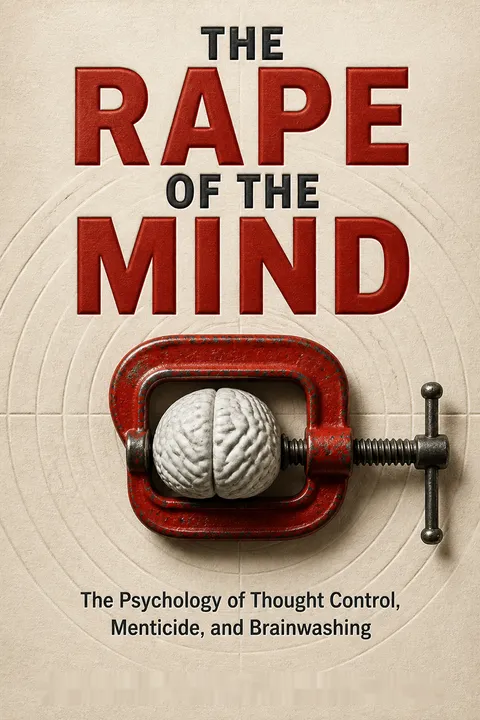


Key Takeaways
Treat a confession under coercion as evidence of pressure, not proof of guilt.
A confession can be manufactured. Meerloo opens with Marine Colonel Frank Schwable, captured during the Korean War. After months of degrading treatment and interrogation, Schwable signed a detailed confession to taking part in germ warfare, then repudiated it after returning home. Meerloo stresses that a prisoner may repeat invented details until they feel like memories, even while knowing the story is false. He also recounts the case of Marinus van der Lubbe, whose passive courtroom behavior he interpreted as the result of coercive handling.
Context changes the evidence. Meerloo argues that severe pressure can make ordinary people produce elaborate false admissions. That does not establish that every confession is coerced. It does mean investigators must examine the conditions under which it was made, rather than treating a signature as self-validating proof.
What's striking is the distinction between verbal compliance and reliable knowledge. Modern forensic practice likewise treats confession evidence cautiously because interrogation conditions, suggestive questioning, and memory limitations can affect what a person reports. The book is especially useful in challenging the popular fantasy that only the weak confess. Its broad claim that nearly anyone can be broken is harder to quantify, and cases differ greatly. The practical lesson is not to assume every confession is false, but to demand independent corroboration and document how the statement was obtained.
Explain surrender through pressure, not a simple label of cowardice.
Submission is a process. Meerloo describes menticide as the systematic assault on a person's mental integrity, designed to weaken judgment and produce conformity or self-accusation. His account traces a progression: isolation and exhaustion unsettle the prisoner; dependence on the interrogator grows; the prisoner may begin repeating the imposed story; and, once free of the pressure, the old account can collapse. Cardinal Mindszenty's reported interrogation involved prolonged questioning, little rest, and deprivation. Schwable's account similarly describes a confession assembled under sustained pressure.
Inner needs matter too. Fear, guilt, loneliness, and the longing for relief can combine with external force. Meerloo's point is not that every victim reacts identically, but that a coerced confession should not be mistaken for a clear, freely chosen decision.
This account brings bodily stress and social dependence into the explanation of behavior, rather than reducing conduct to a stable character trait. That is a valuable corrective to moral judgment made from a safe distance. The sequence also resembles a general stress response: as demands accumulate, people have fewer resources for deliberation. Still, Meerloo's psychodynamic explanations, especially claims about hidden guilt or infantile wishes, are speculative by contemporary standards. The observable conditions of confinement and coercion are stronger grounds for assessment than an assumed unconscious motive.
Repetition can condition responses, but humans are not Pavlov's dogs.
Signals shape expectation. Ivan Pavlov showed that a dog could learn to salivate to a bell repeatedly paired with food. Meerloo explains how repeated pairings can also create temporary associations in people. In a study he cites, twenty college students attended free lunches accompanied by music or pictures. Later, those cues reminded the diners of food more often than they did students who had not attended. Political messaging, Meerloo argues, can similarly attach emotional responses to words, symbols, and slogans.
Conditioning has limits. Repetition, isolation, boredom, reward, and punishment can make people more suggestible, but learned responses can fade, and people are not merely collections of reflexes. The book distinguishes education that develops conscious judgment from taming that seeks automatic compliance.
The useful insight is that persuasion works through repeated cues and context, not only through explicit arguments. Contemporary behavioral science also recognizes that habits and expectations are shaped by associations, while social psychology highlights the influence of group norms. Meerloo's warning against reducing people to reflexes is important: the same conditions do not produce identical responses, and meaning, prior beliefs, and relationships matter. His account sometimes treats Pavlovian theory as more central to political control than the evidence warrants, but the broader lesson about repetition and constrained alternatives remains compelling.
Defend shared reality by checking labels, slogans, and accusations.
Words can obscure facts. Meerloo calls the political use of slogans and double meanings verbocracy: language is turned from a tool for communicating into a device for directing reactions. He describes logocide as the destruction or corruption of a word's meaning, and labelomania as excessive reliance on names and categories instead of examining what they describe. In his account, calling someone a traitor or an enemy can prompt suspicion before evidence is considered. Repeated official claims can create a fog in which people lose confidence in their own ability to verify events.
Slow down the judgment. Ask what a charged term means, who is using it, and what evidence supports the claim. Meerloo warns that even democratic societies can use simplified language to sell products, candidates, or policies.
This section anticipates a central problem of information environments: repetition can make a claim feel familiar, and familiarity can be mistaken for truth. Political labels also compress complex evidence into quick social signals, making them efficient for coordination and dangerous for fair judgment. The answer is not to distrust every shared term. Common language is necessary for public life. The safeguard is to reconnect labels to specific, checkable claims and to preserve access to competing accounts.
Recognize fear's quiet forms: apathy can be as disabling as panic.
Fear does not always flee. Meerloo describes four broad reactions to danger: regression to simpler behavior, hiding or emotional paralysis, explosive fight-or-flight panic, and bodily symptoms such as stomach distress or frequent urination. He recounts Dutch players who welcomed British planes during the occupation, while nearby German officers ducked for cover. The same aircraft carried different meaning to each group. He also describes people in Dover who broke down after German shelling suddenly stopped, once the strain of waiting had lifted.
Notice the freeze. Fear may appear as passivity, denial, distraction, or retreat into routine rather than visible terror. Meerloo argues that people can respond more effectively when they understand these reactions and are less ashamed of them.
The section's strength is its attention to less visible responses. In contemporary trauma research, freezing and emotional numbing are recognized alongside fight-or-flight, though no short list captures every person's response. Meerloo also shows that threat is interpreted through belonging and expectation, not simply measured by objective danger. His explanations sometimes generalize from clinical observation to whole populations, so they should be read as interpretive rather than diagnostic. Still, recognizing shutdown as a possible stress response can prevent observers from mistaking distress for indifference or consent.
Keep medicine and justice from turning trust into interrogation.
Tools can mislead. Meerloo warns that hypnosis, drugs, lie detectors, and therapy can be misused to extract or shape statements. He notes that a polygraph records physiological arousal, which may reflect fear or stress rather than deception. A Yale experiment he cites gave sodium amytal to nine people who had been prompted with a false story. Their responses varied: some maintained it, while others mixed truth and fantasy. The so-called truth serum did not reliably separate fact from invention.
Protect the relationship. Meerloo describes a psychiatrist who presented himself to a suspect as a doctor, then used suggestion to obtain a confession. The resulting conviction was overturned. He argues that clinical trust must serve the patient's welfare, not become an investigative shortcut, and that legal safeguards should apply even when pressure is subtle.
The key ethical boundary is purpose: a therapeutic relationship depends on trust, while interrogation seeks information for another party. Confusing those roles can make consent meaningless. The book is also right that physiological signals do not directly reveal truth. Its account of hypnosis and narco-analysis reflects mid-century assumptions, and modern readers should not treat those methods as reliable mind-reading techniques. The enduring point is narrower and stronger: an expert's authority can shape testimony, so procedures must be transparent and claims independently tested.
Make technology and bureaucracy serve people, not train them into passivity.
Convenience has a cost. Meerloo argues that radio, television, cars, and other devices can save effort while crowding out reflection, conversation, and direct experience. He worries that children who mostly watch ready-made stories may have fewer occasions to question or create. He extends the concern to bureaucracy: rules, files, forms, and committees can become more important than the people they are meant to help. An office created to serve the public may grow into a system that demands compliance for its own sake.
Keep human judgment involved. Technology and administration are not inherently oppressive. Their danger, in Meerloo's view, comes when efficiency becomes the only measure of value and people lose the habit of asking what the system is for.
This argument is strongest when it asks who sets the ends of a system, not whether a machine or procedure is good or bad. Current debates about automation raise a similar concern: tools can amplify capability while shifting control away from the people affected by them. Yet Meerloo sometimes treats passive media use as nearly equivalent to mental coercion. That comparison needs limits. The practical question is whether a technology expands a person's choices and attention, or quietly replaces them with defaults that are hard to question.
Build endurance with bonds and purpose, not toughness alone.
Resilience is relational. Meerloo rejects the idea that physical strength or intelligence guarantees resistance to coercion. He argues that prisoners endured better when they could draw on trusted relationships, a meaningful belief, or a goal that connected present suffering to a future. In camps, even small acts of companionship could counter the isolation that made captors seem like the prisoner's only source of human contact. A person who understood the captor's aims, he adds, could be less bewildered by the pressure.
Prepare without promising invulnerability. Meerloo supports education about coercion and mental pressure, but says no training can ensure that a person will never break. He also describes continuity: the capacity to see the present as one part of a life extending from past experience toward a possible future.
This account places resilience in relationships and meaning, a useful contrast to the lone-hero ideal. Social support can help people regulate distress and sustain a sense of identity, while purpose can make hardship more comprehensible. The qualification matters: connection and conviction support endurance, but they do not guarantee it, and their absence does not imply moral weakness. Meerloo's own caution against predicting who will withstand torture is therefore essential. Preparation should increase understanding and support, not create a new standard for blaming people who succumb.
Teach independent judgment alongside discipline.
Facts are not understanding. Meerloo criticizes schooling that rewards memorization, conformity, and correct recitation while giving students little practice in weighing evidence. He calls the mere accumulation of facts a weak substitute for intellectual judgment. His preferred education invites questions, discussion, creative work, and the testing of claims against experience. In military preparation, he similarly favors teaching people to recognize propaganda and examine their own assumptions, rather than relying only on physical hardening or slogans about never yielding.
Discipline can support freedom. Shared habits and skills may create confidence, but discipline becomes dangerous when it trains people to obey without understanding. For Meerloo, the goal is not rebellion for its own sake. It is self-control joined to the ability to question authority and take responsibility.
The distinction between storing information and using it is still relevant to education, especially where tests reward quick answers over careful reasoning. Meerloo's emphasis on discussion and active work points toward learning that makes students participants rather than receivers. His critique can overstate the harm of formal instruction; structured practice and factual knowledge are indispensable. The more useful standard is whether schooling combines them with interpretation, disagreement, and opportunities to revise a conclusion when evidence changes.
Let loyalty include dissent, or it becomes obedience by another name.
Allegiance can be manipulated. Meerloo distinguishes deliberate betrayal from the smaller compromises people make to gain safety, approval, or advantage. He tells of a Dutch barber who served occupying Germans much as he had served previous customers, accepted a collaborator's membership card as if it were a routine business request, and later faced punishment as a collaborator. The story shows how someone can drift into complicity while insisting that politics is not his concern.
Do not confuse dissent with treason. Meerloo argues that compelled loyalty oaths cannot guarantee sincere allegiance and may encourage suspicion instead. A democracy, he says, depends on citizens being able to criticize the government and oppose one another without being branded enemies. Loyalty is better judged through conduct and mutual trust than through ritual declarations.
The barber's story gives the book's abstract warning a human scale: political passivity can have consequences even when it feels like mere accommodation. At the same time, the account avoids treating every compromised person as equally culpable. Meerloo's defense of dissent is a powerful democratic principle, particularly when fear encourages governments to investigate belief rather than conduct. The difficult boundary is real: actions can threaten others, while private opinions alone should not be treated as crimes. Institutions need evidence-based standards that protect both public safety and legitimate opposition.
Analysis
The book's central contribution is to move the explanation of coerced confession away from a simple contest between heroes and cowards. Meerloo asks readers to see how isolation, exhaustion, fear, repeated suggestion, loneliness, and dependence can alter what a person says and believes. His wartime experiences give the argument urgency, while cases such as Schwable's confession show why a statement cannot be evaluated apart from the conditions that produced it.
The structure widens deliberately. Individual coercion leads into mass propaganda, political trials, family formation, technology, bureaucracy, education, and loyalty. Across these settings, the recurring danger is not influence itself, which no society can avoid, but influence that blocks verification, punishes disagreement, or makes people dependent on a single authority for reality. His strongest democratic defense is consequently not a counter-slogan. It is a social order that allows correction, protects privacy, and treats dissent as part of political life.
The book also needs historical distance. Published in 1956, it frames many claims through Cold War conflicts and sometimes treats contested political allegations as settled fact. Its Freudian accounts of guilt, childhood, sexuality, and political allegiance are often speculative, and its contrast between Western individualism and Eastern collectivism relies on broad cultural generalizations. Those passages should not be mistaken for established psychological findings. Nor should ordinary advertising, television, or bureaucracy be equated with torture. The analogy is useful only when it identifies a shared mechanism, such as narrowing attention or discouraging independent judgment, without erasing differences in severity and intent.
Read critically, the lasting value is a vocabulary for asking practical questions: Was a statement freely made? Could the person check the facts? Was disagreement safe? Did the institution serve the individual, or demand that the individual serve it? Meerloo's warning is not that every influence destroys freedom. It is that people need room, relationships, information, and legal protections to notice when influence becomes coercion.
Review Summary
The Rape of the Mind is praised as an insightful exploration of brainwashing and thought control techniques used by totalitarian regimes. Readers find it relevant today, particularly regarding mass media manipulation and political conditioning. The book's strengths include personal anecdotes from the author's experiences during World War II and analysis of how individuals and societies can resist authoritarian tactics. Some criticize outdated psychological concepts and repetitiveness. Many readers recommend it for understanding current societal issues, though some find it biased against certain ideologies.
People Also Read









Glossary
Menticide
Systematic destruction of mental independenceA term Meerloo coined for organized psychological intervention intended to break a person's mental integrity and impose another authority's beliefs. In his account, menticide can involve isolation, fear, exhaustion, repeated interrogation, and coerced self-accusation. It includes more than physical torture because its aim is to make submission appear voluntary or to make an imposed account seem true.
Brainwashing
Coercive political reconditioningMeerloo uses brainwashing for a deliberate process of indoctrination and pressure intended to change a captive's beliefs, behavior, or public statements. He distinguishes it from ordinary persuasion by the coercive conditions surrounding it, including isolation, deprivation, humiliation, repetition, and dependence on the captor. Its effects may include false confession and temporary adoption of the captor's account.
Totalitaria
Model of totalitarian societyMeerloo's fictional name for a society where one ruling power seeks complete control, dissent is treated as disloyalty, and official slogans replace independent judgment. Totalitaria is not intended as the name of a single historical country. It is a model for examining how terror, surveillance, propaganda, and enforced conformity can turn citizens into instruments of the state.
Barbed-wire disease
Prisoners' stress and withdrawalMeerloo uses this term for psychological reactions associated with imprisonment, including apathy, despair, irritability, homesickness, and retreat from ordinary social life. In his account, confinement, boredom, hunger, uncertainty, and lack of privacy can diminish initiative and make prisoners more vulnerable to pressure. The phrase describes a range of reactions, not a single uniform illness.
Verbocracy
Rule through manipulative languageMeerloo's term for political power exercised through slogans, catchwords, double meanings, and repeated official claims. In a verbocracy, words function less as tools for open communication than as cues meant to trigger fear, loyalty, or conformity. The result is a confusing public vocabulary that makes independent interpretation and fact-checking more difficult.
Logocide
Corruption of word meaningsA term Meerloo draws from R. S. Byfield for the political abuse of language that empties or reverses a word's ordinary meaning. A regime may retain reassuring words such as peace while using them to disguise aggression or control. Logocide weakens communication by making familiar terms serve propaganda rather than shared understanding.
Labelomania
Excessive reliance on labelsMeerloo's term for judging people, ideas, or institutions mainly by their names, affiliations, credentials, or classifications rather than examining their actual qualities. Labels can become shortcuts that discourage inquiry and make disagreement seem settled before evidence is considered. In a coercive political culture, official labels also mark which opinions and people are acceptable.
Perceptual defense
Awareness that resists suggestionMeerloo uses this term for the protective effect of recognizing how propaganda and coercive suggestion work. A person who understands the purpose of repeated claims may be better able to notice and question them. This is not complete immunity: he acknowledges that some influence can still pass through conscious defenses, particularly under sustained stress or isolation.
FAQ
What's The Rape of the Mind about?
- Focus on Thought Control: The book examines psychological techniques used by totalitarian regimes to manipulate and control thoughts and beliefs.
- Historical Context: Dr. Joost A.M. Meerloo draws from his WWII experiences, particularly in Nazi-occupied Holland, to illustrate real-life applications of these coercive techniques.
- Cultural Reflection: It critiques modern society, suggesting that elements of mental coercion are present in everyday life, not just in totalitarian states.
Why should I read The Rape of the Mind?
- Understanding Manipulation: Essential for those interested in psychology, politics, or social dynamics, as it provides insights into how individuals can be manipulated.
- Historical Lessons: Meerloo’s firsthand accounts offer valuable lessons about the dangers of totalitarianism and the fragility of human integrity.
- Personal Empowerment: Learning about thought control techniques helps readers defend against manipulation, encouraging critical thinking and self-awareness.
What are the key takeaways of The Rape of the Mind?
- Techniques of Coercion: The book outlines methods like isolation and humiliation, which can lead to submission and false confessions.
- Psychological Vulnerability: Emphasizes that everyone has vulnerabilities that can be exploited, especially under stress or fear.
- Cultural Implications: Warns that societal norms can lead to mental submission, highlighting the importance of maintaining personal integrity and critical thinking.
What are the best quotes from The Rape of the Mind and what do they mean?
- “The rape of the mind...”: Highlights the long history of psychological manipulation and its impact on human integrity.
- “The moment faith and hope disappear...”: Reflects the psychological fragility under extreme pressure, emphasizing the importance of hope and faith.
- “Fear and intimidation have not only been the result...”: Underscores the dual role of fear as both a reaction and a tool of mental coercion.
What is menticide as defined in The Rape of the Mind?
- Definition of Menticide: Coined by Meerloo, it describes the systematic killing of the spirit or mind through coercive psychological techniques.
- Mechanisms of Menticide: Includes isolation, humiliation, and psychological torture, designed to instill fear and confusion.
- Consequences of Menticide: Leads to false confessions, loss of identity, and surrender of personal beliefs, crucial for recognizing and resisting such tactics.
How does The Rape of the Mind relate to modern society?
- Cultural Reflection: Argues that elements of mental coercion are present in contemporary society, particularly through media and political discourse.
- Psychological Warfare: Draws parallels between historical regimes and modern political strategies, highlighting manipulation in controlling public opinion.
- Call for Awareness: Emphasizes the need for awareness of coercive influences to protect autonomy and critical thinking.
What are the psychological processes involved in brainwashing as discussed in The Rape of the Mind?
- Phases of Brainwashing: Includes artificial breakdown, submission, and reconditioning to a new ideology, each with specific psychological techniques.
- Role of Isolation: Key factor in brainwashing, removing individuals from support systems and making them more vulnerable.
- Psychological Conditioning: Repeated exposure to stimuli conditions individuals to accept new beliefs, often subtly and insidiously.
How does fear function as a tool of terror in The Rape of the Mind?
- Fear of Living: Posits that fear of living can be more paralyzing than fear of death, leading to submission to ideologies.
- Psychological Paralysis: Creates a state where individuals feel unable to act or resist, exacerbated by threats from authorities.
- Manipulation of Fear: Exploited by regimes to maintain control, suppress dissent, and promote conformity.
How does The Rape of the Mind define totalitarianism?
- Totalitarianism Explained: Characterized by absolute state control over thought and behavior, eliminating dissent through propaganda and fear.
- Psychological Mechanisms: Explores how regimes maintain control, highlighting menticide and fear in suppressing autonomy.
- Resistance to Totalitarianism: Emphasizes fostering diversity of thought and independent thinking to preserve democratic values.
What role does education play in resisting brainwashing as discussed in The Rape of the Mind?
- Critical Thinking Emphasis: Education should develop critical thinking skills, equipping individuals to question and analyze information.
- Awareness of Manipulation: Educating about brainwashing tactics helps recognize and resist influences, serving as a protective barrier.
- Fostering Independence: Encourages independence of thought and personal responsibility, crucial for maintaining mental integrity.
How can individuals cultivate resilience against mental coercion as suggested in The Rape of the Mind?
- Self-Awareness Development: Reflecting on beliefs and motivations strengthens mental defenses against coercion.
- Building Support Networks: Strong relationships provide emotional resources to withstand pressures, fostering belonging and security.
- Education and Critical Thinking: Engaging in education that promotes questioning helps challenge manipulative narratives.
What are the psychological effects of totalitarian regimes on individuals as described in The Rape of the Mind?
- Mental Coercion: Leads to confusion and loss of identity, resulting in apathy or compliance.
- Long-term Psychological Damage: Can cause lasting trauma, with survivors struggling with guilt, shame, and disconnection.
- Resilience and Recovery: Emphasizes recovery through understanding and support, involving confronting past traumas and rebuilding self.
Download PDF
Download EPUB
.epub digital book format is ideal for reading ebooks on phones, tablets, and e-readers.








