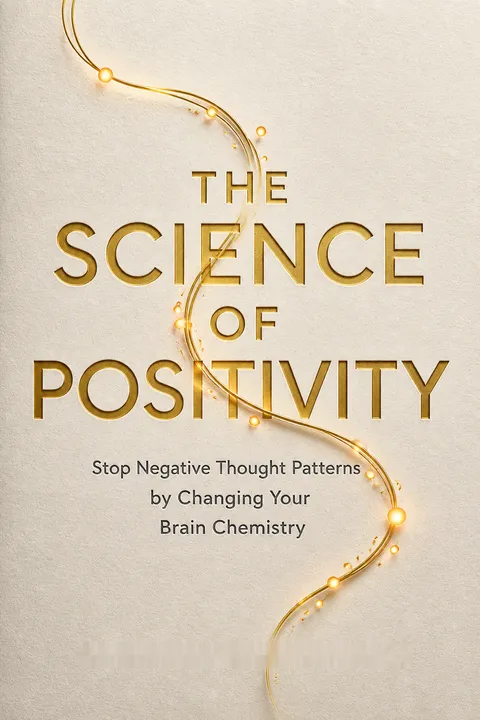


Key Takeaways
Treat cynicism as a learned relief habit, not proof of collapse
Negativity has a payoff. Breuning argues that cynicism can feel reassuring because it gives a bad feeling a target and makes the world seem easier to predict. That comfort does not prove the bleak interpretation is accurate. It may simply be a familiar mental route that briefly eases anxiety or frustration.
The lens can outlast the facts. The author recalls that dog mess was once a routine sidewalk problem, while cleaner streets became so normal that people noticed only the occasional failure. In 1896, a London publication also warned that bicycles would damage social life. Both examples show how easily attention settles on what might go wrong, even amid changes that improve daily life. The point is not that every alarm is false, but that alarm alone is not a reliable measure of reality.
What's useful here is the distinction between noticing a problem and treating a negative interpretation as neutral observation. Attention is selective: once a person expects decline, ordinary setbacks become evidence for it, while improvements fade into the background. This offers a practical question: what would count as evidence that the situation is better than expected? The argument is less convincing if it treats cynicism as merely a personal habit. Some dangers are real, and criticism can expose them. The better use of the idea is to inspect the lens, not to dismiss the warning.
Stop expecting your happy chemicals to stay switched on
Good feelings come in pulses. Breuning describes dopamine as part of anticipation and pursuit, oxytocin as part of social trust, and serotonin as part of feeling able to assert oneself. In her account, these positive signals rise when a need seems likely to be met, then fade. Their return to baseline is not evidence that life has suddenly gone wrong.
Relief matters, too. The book presents cortisol as an alarm that focuses attention on possible threats. Once a threat seems to pass, the relief itself can feel rewarding. This helps explain why a person might repeatedly seek the excitement of a new goal, reassurance from a group, or a feeling of superiority. The useful expectation is modest: positive feelings are signals to pursue, not a permanent emotional setting.
This model helps explain why achieving a goal often produces less lasting contentment than people predict. The value lies in normalizing emotional fluctuation, rather than making every dip a crisis to solve immediately. A caveat matters: neurotransmitters do not function as simple, isolated switches for particular feelings, and emotional life depends on interacting brain systems and circumstances. The chemical vocabulary is most useful as a memorable map of motivation, not a complete account of mental health. That distinction preserves the practical lesson without mistaking a simplified model for a literal dashboard.
When threats feel vague, notice what kind of relief negativity offers
Thoughts can perform actions. Breuning connects negative thinking to four mammalian responses to threat: fighting, fleeing, freezing, and fawning, or yielding to a more powerful person. Humans can carry out versions of these responses mentally. Broad complaints may feel like fighting without a direct confrontation. Obsessing over distant disasters can distract from a personal problem. Declaring that nothing can be done can create a kind of mental freeze, while excusing a bully can help someone avoid conflict.
Relief reinforces the route. If a cynical thought briefly reduces distress, the brain may learn to reach for that thought again. The short-term comfort can then substitute for action that would address the actual need. The author’s advice is not to shame the impulse, but to recognize its function: it may be an attempt to feel safer.
The key question is not whether a negative thought is morally bad, but what it accomplishes in the moment. Does it clarify a threat, prompt a useful response, or merely make helplessness more familiar? This functional approach resembles examining a habit by its immediate reward, rather than relying on self-criticism. It also leaves room for genuine caution: withdrawal, appeasement, or inaction can be adaptive when danger is present. The limitation is that the four-response analogy can make complex social choices sound more automatic than they are. Its best use is as a prompt for curiosity.
Use disappointment to update expectations, not declare the world rigged
Prediction can feel rewarding. In Breuning’s account, dopamine helps energize the search for an expected reward. When events match a prediction, the confirmation itself can feel satisfying, even if the prediction was pessimistic. Cynicism can therefore offer a reliable little payoff: expect unfairness, notice an unfair moment, and feel that the world makes sense.
Rewards lose their novelty. The book describes an experiment in which monkeys accustomed to spinach received sweet juice instead. Their dopamine response rose at first, then diminished as the juice became expected. When spinach returned, the monkeys reacted with frustration. The story illustrates how expectations change the experience of reward. A useful response to disappointment is to revise the prediction and choose another step, not automatically treat one failure as proof that nothing works.
This insight connects expectation to interpretation: disappointment is not just an unpleasant event, but information about the gap between what was anticipated and what occurred. A person can learn from that gap without turning it into a total theory of the world. The experiment also points to a risk in the book’s framing. A disappointing outcome may reveal a bad prediction, but it may also reveal an unfair arrangement that deserves correction. The practical distinction is whether the explanation helps someone test a better course of action or merely protects a fixed expectation from being questioned.
Separate real belonging and respect from cynical one-upmanship
Groups soothe and rank. Breuning links oxytocin with the felt safety of social trust and serotonin with the calm confidence of gaining ground. The needs behind both are social: people want allies, and they notice who receives attention or respect. These motives can coexist with a wish to be fair, which is why other people’s ambition may seem irritating while one’s own feels justified.
Shared complaint can bind. Criticizing a common enemy can create the sense of belonging to a group without requiring the difficulties of close, reciprocal relationships. It can also offer a temporary feeling of superiority over the people being criticized. But the bond may depend on keeping the threat alive, and disagreement can put a member’s acceptance at risk. Seeing these motives clearly can make it easier to seek connection without needing a shared target.
The account is strongest when it treats status-seeking and belonging as ordinary human pressures rather than proof of bad character. That framing can soften judgment and help people notice the emotional rewards of group allegiance. It also highlights a tension: a community built around a common adversary may feel cohesive while narrowing what members are permitted to notice or say. Yet not every shared grievance is empty bonding. Groups sometimes organize around real harms and achieve useful change. The distinction is whether solidarity supports problem-solving and mutual responsibility, or requires constant alarm and conformity.
Your old neural pathways are defaults, not destiny
Experience shapes the lens. The author describes neural pathways as routes strengthened by repeated experience, especially experiences linked to strong emotional responses. She argues that patterns built in childhood and adolescence can become easy, familiar defaults. Myelin, the insulation around nerve fibers, serves as her image for why practiced routes can feel faster and more natural than unfamiliar ones.
Change means building alternatives. The book does not promise that old patterns vanish on command. Instead, it argues that repetition can make a different response easier to access. A person who learned to expect rejection, for example, can practice noticing evidence of support without pretending rejection never happens. The past helps explain why a thought feels automatic; it does not settle what the person must do next.
This is a useful middle ground between blaming early experience and pretending that change is effortless. The idea of a well-practiced route explains why insight alone may not alter an automatic response: a new response needs rehearsal. Still, claims about specific developmental windows and myelin should be treated cautiously. Brain development is complex, and the book’s account compresses many influences into a simple story. The practical point survives that caution: familiar patterns can be strong, but attention and repeated choices can help create alternatives. Explanation should make change more intelligible, not make a person feel fixed.
Practice spotting three real positives daily for six weeks
Train attention on purpose. Breuning proposes a positivity habit: three times a day, spend about a minute identifying something good in a situation already on your mind, and continue for six weeks. The goal is not to invent happy news or focus only on pleasant images. It is to notice useful or encouraging facts in real circumstances, including one’s own actions and capacities.
Keep the practice grounded. In the book’s example, Pat initially finds it hard to name anything positive without immediately criticizing it. Over time, Pat notices that clean water depends on systems working, that one colleague offered support during a difficult meeting, and that helping a friend felt worthwhile. The exercise is not a gratitude list or a relaxation technique. It is deliberate practice in widening attention beyond the first negative interpretation.
The practice turns the book’s theory into a small, repeatable experiment: look for evidence that a threat-focused lens may be leaving out. Its strength is that it does not require a person to deny pain or manufacture cheerfulness. It asks for a fuller account of the situation. The six-week schedule gives the exercise structure, though the book cannot guarantee that every person will form the habit on that timetable. Missing a day need not become another reason for self-reproach. The useful measure is whether the practice improves attention and choice, not whether it produces constant happiness.
Choose the next workable step instead of waiting for a better world
PARE redirects attention. Breuning names her method PARE, built around Personal Agency and Realistic Expectations. Personal Agency means recognizing that one can take actions toward one’s needs. Realistic Expectations means understanding that rewards are uncertain, emotional highs fade, and frustration is not automatically an emergency. Together, these ideas shift attention from condemning the whole situation to choosing a useful next move.
Act without demanding certainty. The author compares progress to crossing a river by testing one stone at a time. Her parking example makes the point more ordinary: take a lawful available space rather than circling indefinitely for an ideal one, then make peace with the choice. This approach does not require pretending that structural problems are imaginary. It asks people to distinguish the part they can influence from the part they cannot, and to invest effort where action is possible.
The framework is compelling because it links acceptance of uncertainty with practical initiative. It resists the trap of waiting for perfect conditions before acting, while allowing a person to learn from each attempt. Its necessary limit is that agency is not evenly distributed. Money, health, discrimination, and institutional power can constrain available choices, so an emphasis on personal action should not become blame directed at people facing real barriers. Individual steps and collective efforts can coexist. The strongest reading is not that people control every outcome, but that they can often choose how to respond within their actual room to move.
Analysis
Breuning’s central move is to reinterpret negativity as motivated behavior rather than a transparent reading of reality. The mammal-brain story gives readers a humane explanation for why complaining, anticipating disappointment, and seeking group approval can feel rewarding even when those habits leave them distressed. Its best practical consequence is not compulsory optimism. It is a pause between feeling threatened and accepting the first explanation the mind supplies.
The book also offers a compact behavioral intervention. Repeatedly looking for grounded positives, while naming personal actions and expecting emotional rewards to fade, gives readers something concrete to practice. That combination is more useful than generic encouragement because it addresses both attention and expectation. The examples of pollution, social trust, and everyday infrastructure make the case that improvements often disappear from view once they become ordinary.
The scientific narrative needs qualification. Neurochemicals do not map neatly onto single psychological experiences, and the brain is not divided into a verbal human system and a separate mammal system in the literal way the book sometimes suggests. The developmental claims about myelin and fixed periods of learning are also cleaner than contemporary neuroscience generally permits. These are memorable explanatory devices, not a precise clinical model. Likewise, a practice of positive attention cannot substitute for treatment when depression, trauma, or anxiety needs professional care.
There is a political risk in applying the argument too broadly. A person can mistake justified concern about unsafe conditions or unfair institutions for a private negativity habit. But the book’s strongest interpretation does not demand silence about real threats. It asks whether attention to a threat leads to informed action or only reproduces alarm. That distinction preserves the value of criticism while challenging the reflex to treat crisis as the only honest posture. Positivity here is best understood as widening perception and reclaiming a next step, not insisting that the world is fine.
Review Summary
The Science of Positivity receives mixed reviews. Many readers find it insightful, praising its explanation of brain chemistry and evolutionary biology. They appreciate the practical tips for fostering positivity and understanding human behavior. However, some criticize the book for being repetitive and overly simplistic. The mammal brain comparisons are seen as both enlightening and excessive. While some readers found the content life-changing, others felt it lacked depth and concrete strategies. Overall, the book's unique perspective on negativity and positivity sparked interesting discussions about human nature and personal growth.
People Also Read










Glossary
Inner mammal
Inherited survival circuitryBreuning’s term for the older brain systems shared by mammals that respond to perceived opportunities and threats. In the book, these systems influence feelings and bodily readiness before a person has consciously explained what is happening. The term is a practical metaphor for automatic motivation, not a separate brain located apart from the rest of the human brain.
PARE
Agency with realistic expectationsBreuning’s named approach to countering habitual negativity through Personal Agency and Realistic Expectations. It asks a person to recognize the actions available to meet real needs while accepting that rewards are uncertain and positive emotional surges do not last. The approach redirects attention from generalized complaint toward workable personal action.
Personal Agency
Action toward one's needsIn this book, Personal Agency is the recognition that a person can take actions to meet their own needs instead of waiting for other people or institutions to do it for them. It emphasizes choosing a next step and accepting its consequences. It does not mean controlling every outcome or denying external barriers.
Realistic Expectations
Accepting uncertain, fleeting rewardsBreuning uses this phrase for the understanding that rewards are unpredictable, emotional highs naturally fade, and frustration does not always signal danger. The idea is meant to reduce the shock of ordinary disappointment and prevent a person from demanding constant approval or pleasure. It supports continued action without a guarantee of success.
Crisis Goggles
A threat-focused lensThe book’s metaphor for interpreting current events primarily through signs of danger, decline, and failure. This lens can be reinforced by personal anxiety, group bonding around shared fears, and repeated reports of crisis. Taking off the goggles does not mean ignoring genuine problems; it means also noticing improvements and possible solutions.
Positivity habit
Repeated attention to real positivesA practice Breuning recommends to train attention beyond automatic negative interpretations. Three times each day, a person spends about a minute identifying something genuinely positive in a situation already on their mind, continuing for six weeks. The practice is intended to include personal effort and practical benefits, not merely pleasant events or passive gratitude.
Cynicism
Negativity that offers reliefBreuning distinguishes cynicism from simple pessimism by emphasizing its possible rewards. A person may criticize the world to feel prepared, socially aligned, or superior, even while experiencing the world as bad. In this account, cynicism is a learned thought pattern that can briefly ease distress but may also reinforce helplessness and threat-focused attention.
FAQ
1. What’s The Science of Positivity by Loretta Graziano Breuning about?
- Explains brain chemistry and negativity: The book explores how our brains are wired to focus on negativity due to evolutionary survival mechanisms and how this impacts our daily thoughts and emotions.
- Focuses on mammalian brain chemicals: It details the roles of dopamine, serotonin, oxytocin, and cortisol in shaping our habits, moods, and responses to the world.
- Offers a practical positivity method: Breuning introduces a six-week, three-minutes-a-day exercise to rewire your brain for positivity by building new neural pathways.
- Emphasizes personal agency and realistic expectations: The book teaches readers to shift from cynicism and helplessness to taking control of their own happiness through actionable steps.
2. Why should I read The Science of Positivity by Loretta Graziano Breuning?
- Understand your negativity: The book demystifies why negative thought patterns are so persistent and shows they are not a personal failing but a natural brain function.
- Learn actionable strategies: It provides a clear, science-backed method to build positive thinking habits, not just theory or vague advice.
- Improve emotional resilience: By understanding your brain’s chemistry, you can better manage stress, disappointment, and social challenges.
- Gain lifelong tools: The insights and exercises can help you break cycles of cynicism and enjoy more satisfaction in daily life.
3. What are the key takeaways from The Science of Positivity by Loretta Graziano Breuning?
- Negativity is natural, not pathological: Our brains evolved to prioritize threats and negative information for survival, making negative thinking a default mode.
- Happy chemicals have specific triggers: Dopamine, serotonin, and oxytocin are released in response to specific survival-related cues, but their effects are short-lived.
- You can rewire your brain: With consistent, intentional practice, you can build new neural pathways that favor positive thinking.
- Personal agency and realistic expectations are crucial: Taking responsibility for your actions and adjusting your expectations to reality are key to lasting positivity.
4. How does Loretta Graziano Breuning define “negativity” and “positivity” in The Science of Positivity?
- Negativity as a survival tool: Negativity is the brain’s tendency to focus on threats, problems, and disappointments, rooted in the need to avoid danger.
- Positivity as a corrective habit: Positivity is not ignoring problems but intentionally adjusting for the brain’s bias by seeking out and acknowledging the good.
- Cynicism as a common negative pattern: The book uses cynicism as a prime example of negativity, showing how it can feel rewarding but ultimately reinforces helplessness.
- Positivity requires conscious effort: Building positivity means actively creating new thought habits that highlight positive aspects of reality, not just passively waiting for good things to happen.
5. What are the main brain chemicals discussed in The Science of Positivity, and how do they affect our thoughts?
- Dopamine: Triggers excitement and motivation when you anticipate or achieve a reward, but quickly fades, prompting continual seeking.
- Oxytocin: Produces feelings of trust and social bonding, but is only released in specific, often fleeting, social situations.
- Serotonin: Gives a sense of social importance or status, but is tied to social comparison and can lead to frustration when expectations aren’t met.
- Cortisol: The “stress chemical,” released in response to perceived threats or disappointments, motivating avoidance or urgent action.
6. What is the PARE method in The Science of Positivity by Loretta Graziano Breuning?
- PARE stands for Personal Agency and Realistic Expectations: It’s a framework for shifting from negativity to positivity.
- Personal Agency: Focuses on recognizing your own power to meet your needs through your actions, rather than waiting for the world to change.
- Realistic Expectations: Involves understanding that rewards are unpredictable and that frustration is not a survival threat, helping to avoid chronic disappointment.
- Daily practice: The method involves a three-times-daily, one-minute exercise of scanning for positives in your current reality, repeated for six weeks to build new neural pathways.
7. How does The Science of Positivity explain the persistence of negative thought patterns?
- Early wiring and myelin: Neural pathways built in childhood and adolescence become “superhighways” for thought due to myelin insulation, making old habits feel natural and hard to change.
- Threat relief feels good: The brain rewards behaviors that relieve cortisol (stress), so negative habits like cynicism can become self-reinforcing.
- Social learning and mirror neurons: We pick up negativity from those around us, especially in formative years, wiring us to repeat those patterns.
- Happy chemicals are fleeting: Because positive feelings are short-lived, the brain quickly returns to scanning for threats, perpetuating negativity unless intentionally redirected.
8. How does The Science of Positivity by Loretta Graziano Breuning suggest you can rewire your brain for positivity?
- Consistent, intentional practice: Engage in a daily exercise of identifying three positive aspects of your current life, for one minute each, three times a day.
- Six-week commitment: Repeating this practice for six weeks helps build new neural pathways, making positivity more automatic.
- Focus on real, relevant positives: The exercise works best when you focus on genuine, present-moment positives, not abstract or wishful thinking.
- Accept initial discomfort: The process may feel awkward or trivial at first, but persistence leads to lasting change in your thought patterns.
9. What role do social dynamics and comparison play in negativity, according to The Science of Positivity?
- Social comparison triggers serotonin: The brain constantly compares your status to others, and feeling “one-down” can feel like a survival threat.
- Herd behavior and oxytocin: Seeking safety in groups is natural, but can lead to conformity, fear of exclusion, and group-based cynicism.
- Common enemies and bonding: Groups often bond by identifying shared adversaries, which can reinforce negativity and a sense of crisis.
- Social disappointment is inevitable: The book emphasizes that social frustration is a universal mammalian experience, not a personal or societal failure.
10. How does The Science of Positivity address the concept of “crisis goggles” and the perception of societal decline?
- Crisis goggles as a habit: The tendency to see the world as perpetually in crisis is a learned pattern, reinforced by social rewards and media.
- Historical perspective: The book shows that every era has believed it was at a turning point or in decline, often overlooking real progress.
- Crisis talk as a bonding tool: Sharing a sense of crisis can create social solidarity and trigger oxytocin, making it feel rewarding even if it’s not accurate.
- Solution focus: Breuning encourages shifting attention from crisis to problem-solving and recognizing positive changes, which helps break the cycle of negativity.
11. What are some of the best quotes from The Science of Positivity by Loretta Graziano Breuning, and what do they mean?
- “Negativity feels good to your old circuits, but you can build new, positive circuits.” — Highlights that negative thinking is a default, but change is possible with effort.
- “Personal Agency is the awareness that you can meet your real needs through your own actions.” — Emphasizes the importance of taking responsibility for your happiness.
- “Happy chemicals are not meant to be on all the time. They’re released when you meet a need. Then they droop and you have to do more to get more.” — Reminds us that ups and downs are natural, and constant happiness is unrealistic.
- “You will not see the good if you are looking for the bad.” — Encourages intentional focus on positives to counteract the brain’s threat bias.
12. What are the most common obstacles to building positivity, according to The Science of Positivity, and how can they be overcome?
- Old neural pathways: Early experiences and repeated negativity create strong circuits that resist change, making new habits feel unnatural at first.
- Social pressure and cynicism: Surrounding yourself with negative people or groups can reinforce old patterns and make positivity seem naïve or risky.
- Unrealistic expectations: Expecting constant happiness or immediate results leads to disappointment and a return to negativity.
- Overcoming obstacles: The book advises persistence, focusing on small, real positives, and accepting that discomfort is part of the rewiring process, with the reward of greater long-term satisfaction.
About the Author

Download PDF
Download EPUB
.epub digital book format is ideal for reading ebooks on phones, tablets, and e-readers.








